What Is In This Newsletter?


  • The Wrong Diagnosis: Rural Washington Is Living With Its Policy Choices
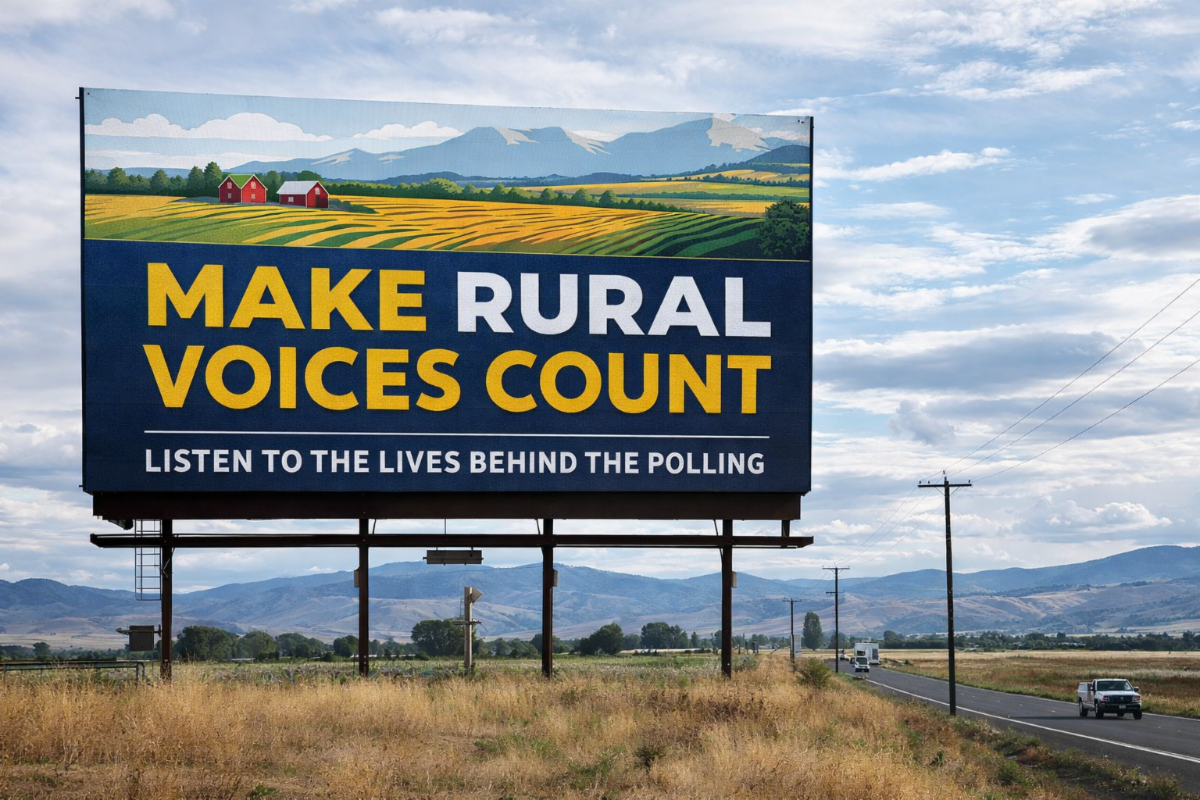
  • Make Rural Voices Count: Our Flagship Project
  • Uncontested Races In Rural Washington!
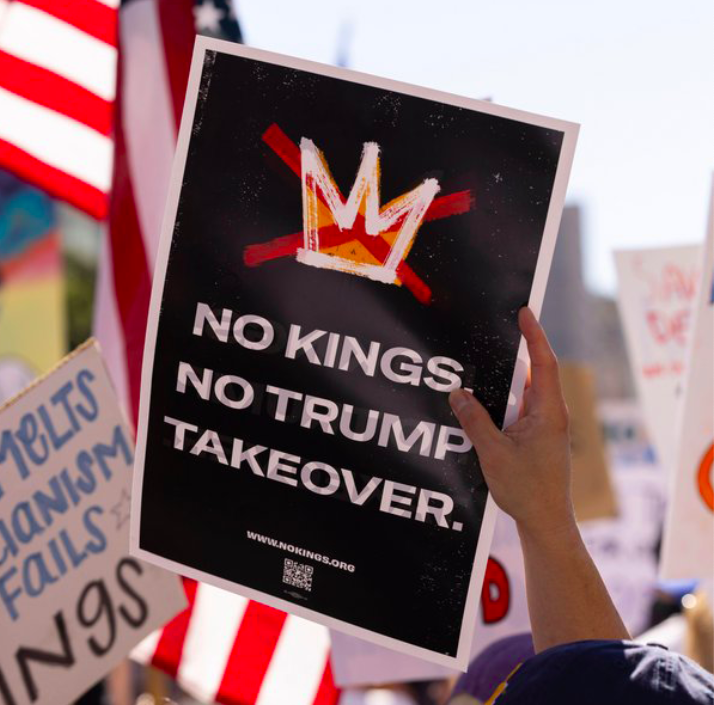
  • No Kings Nationwide Protest March 28, 2026

If you like our newsletter, please send it to a friend. Also, remind your friends to check their spam folder so they don't miss a single issue.

LinkedIn Share This Email

The Wrong Diagnosis: Rural Washington Is Living With Its Policy Choices


About a third of Washington State is agricultural land, roughly fifteen million acres. When you include everyone whose livelihood depends on it, agriculture is one of the largest employers in the state. It is the backbone of rural Washington.


When pressure builds, it spreads through entire communities.


Tariffs close export markets. War drives up fuel prices. Investment in infrastructure, healthcare, and nutrition support weakens. These choices show up in higher costs, tighter margins, and greater instability.


Local TV news station, KIMA recently interviewed a dairy farmer about the impact of war. His answer was simple. Devastating.

KIMA News Interview with Washington State Dairy Farmer: Iran War

He pointed first to fuel. Agriculture runs on energy at every stage. Feed, irrigation, processing, and transport all depend on it. When fuel rises, those costs ripple through the system.


Today’s spike is being driven largely by conflict involving Iran. This is a shock to a major artery of global oil supply. Prices move quickly, and rural economies feel it first.


He also pointed to labor. This is where the explanation begins to break down.


The claim was that labor costs doubled after Washington required overtime pay beyond forty hours. That fits a familiar narrative, but it is not mathematically possible. The first forty hours remain at regular pay. Only additional hours increase. Labor costs cannot double under that structure.


The pressure farmers feel is real, but it is coming from multiple sources at once. Fuel, equipment, inputs, and unstable markets are all rising together. Labor is only one part of that picture.


Tariffs are a clear example. When trade wars disrupted exports, especially to China, farmers lost access to key markets. Prices dropped. The federal government responded with tens of billions in emergency payments to stabilize farm income. That was not growth. It was damage control. Yet that is not what gets talked about.


Instead, the blame lands on wages, state policy, and Democrats. That is the disconnect.


Rural Washington votes Republican. Those votes shape national policy. Tariffs, trade decisions, and tolerance for instability are not accidents. They are the result of political choices.


And then those choices come home. Higher fuel costs. Lost markets. Greater volatility.


But when the effects show up, the explanation shifts to local policies. Minimum wage. Taxes. State decisions. The cause and the effect are separated.


This is not simply a disagreement over policy. It is a disconnect between cause and effect.


There is a second challenge layered on top of this one.


Democrats have struggled to break through a well worn narrative that wages, public programs, and regulation are the primary causes of economic hardship. Facts alone have not been enough to move that belief. The story people hear and repeat often outweighs the data in front of them.


That gap matters because it is where policy support is shaped.


Long term investment in infrastructure, healthcare, and basic support systems is not charity. In rural communities, it is economic stability. Roads reduce costs. Healthcare keeps people working. Nutrition programs help families stay afloat. When those supports are reduced, the impact is immediate.


You can see it in healthcare.


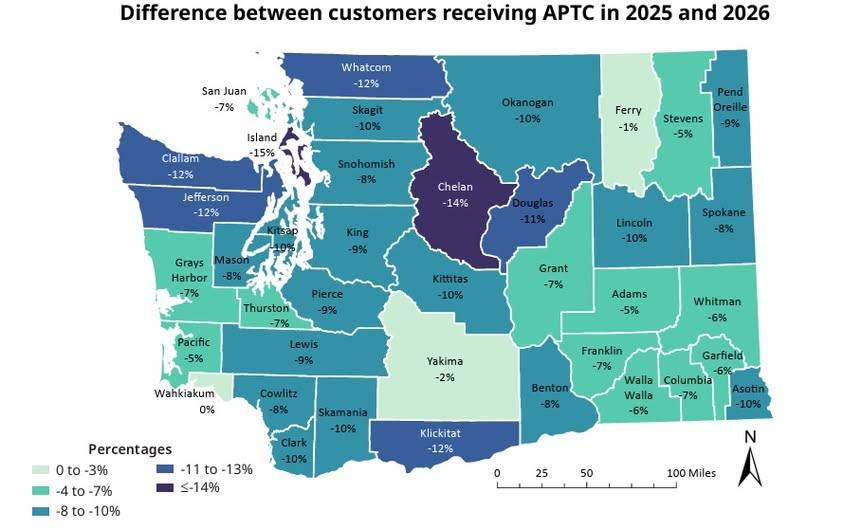
When enhanced ACA subsidies expired, fewer people qualified for assistance in 2026. Across Washington, support dropped in many counties. But Yakima County stands out.

The decline is small. Yakima’s economic hardship keeps more people eligible under tighter rules, leaving fewer people to lose coverage. Lower wages and higher poverty mean more residents were already near eligibility thresholds. There was less room to fall.


Still, the explanation often points elsewhere.


Wages are too high. Government support is wasteful. Regulation is the problem.

Even when the pressure is coming from somewhere else.


This is not just a political disagreement. It is a failure to connect decisions with outcomes.


When export markets close, farm income drops. When global conflict disrupts oil supply, fuel costs rise. When investment declines, infrastructure weakens. These are direct relationships.


But in rural Washington, the explanation often stops short of those causes.

The result is predictable. The same policies are supported. The same pressures return.


And the same communities absorb the impact.


Nothing changes until that connection is made.


This is the work that Rural Americans United does.

WE HAVE A NEW NAME!

Make Rural Voices Count Update


In addition to our new name, we have made real, measurable progress, and we are just getting started.


We have already reached more than fifty organizations across Washington State, building partnerships and inviting collaboration. At the same time, teams are organizing community listening sessions to ensure our messages reflect the voices of the people who live and work in these communities.


Most importantly, we have signed contracts for our first seven billboards.

These are not random placements. They are strategically located in areas facing the most intense far right messaging and the greatest geographic isolation, including Grant, Stevens, and Douglas counties.


We are also launching in Pasco because Franklin County has the lowest voter turnout in the state. That is not just a statistic, it is an opportunity to make a real difference.


This work is already happening. With your support, we can expand it quickly, reach more communities, and ensure rural voices are heard where it matters most.


If you believe rural voices deserve to be heard, now is the time to act. Your contribution today helps us place the next billboard, reach the next community, and move this work forward.

Your donation to Rural Americans United Education Foundation 501(c)(3) is tax deductible.

Uncontested Races in Washington State: You are needed


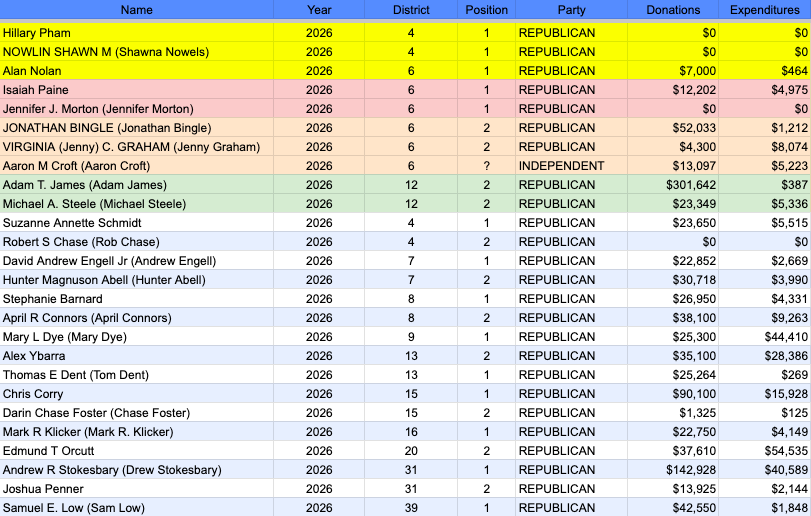
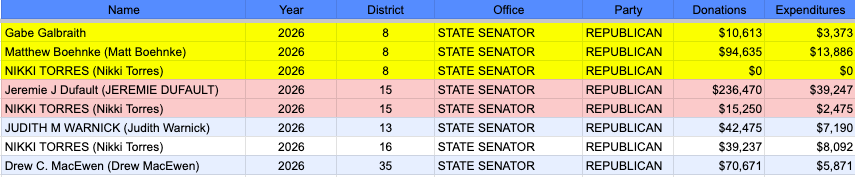
According to the Washington State Public Disclosure Commission, as of March 23, 2026, there are sixteen House races and three Senate races that are currently uncontested. There is not a Democrat or Independent in these races.

We cannot allow this to continue.


Every race matters, but some districts stand out as especially vulnerable, including LD 4, LD 13, and LD 15. In LD 15, Jeremie Dufault is leaving his House seat to run for Senate, creating an open opportunity. In LD 4, the only candidate has raised no money.


These are not just gaps, they are opportunities.


If we do not show up, recruit candidates, and invest in these races, we are handing over representation before a single vote is cast.


This is where your support matters most. Helping us identify candidates, build early infrastructure, and get resources into these districts now can change the outcome before campaigns even begin.


House Races

Key: Yellow, Pink, Orange and Green are races with no Democrat or Independent running. Blue are uncontested races.


I would like to be clearer in interpreting the Senate races, but they appear to be more about PDC reporting violations than a clear understanding of who is actually running where. Matthew Boehnke is not running for State Senate and is instead running for U.S. House in Congressional District 4. Nikki Torres is listed in three different districts, which only adds to the confusion.


What is clear is that the data is not giving a clean picture, and that makes it harder to fully understand where candidates are and are not running. Even with that confusion, we know there are too many races without Democratic or Independent candidates, and that cannot continue.


Senate Races

No Kings Protest March 28, 2026. The largest civil protest in the nation! Click on the pick below to get information about a protest in your area.

 
Facebook  Instagram  Email