| |
| |
| |
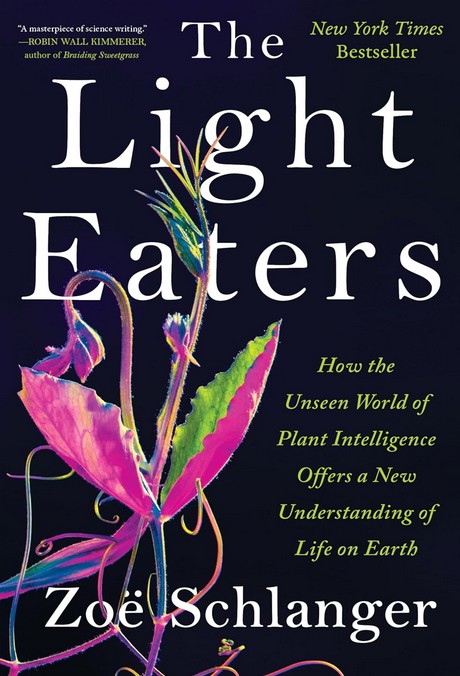
The Light Eaters by Zoe Schlanger -
A Fresh Look at the Other Kingdom
Mike Kluk, UC Master Gardener, Yolo County
This is Part I of an article that will be published over two months.
Scientists currently estimate that one billion years ago, plants and animals diverged from a common ancestor to form separate kingdoms. Since then, plants and animals have evolved radically different approaches to surviving on earth. There is little wonder then that our “light eating” brethren still have a few surprises for us. This book reveals just what an understatement that is.
Zoe Schlanger is a respected science writer for the Atlantic. The book is carefully researched and well documented with an extensive list of references to peer reviewed journal articles. That is particularly important given its rather remarkable subtitle: “How the Unseen World of Plant Intelligence Offers a New Understanding of Life on Earth.” The phrase “plant intelligence” is certain to raise a few eyebrows and probably sell a few books. But Schlanger makes it clear from the beginning neither she nor the scientists she interviewed are equating plant “intelligence” with our common concept of animal intelligence. When...
| | | | |
Growing Lavender
Joy Humphrey, UC Master Gardener, Yolo County 2024
Photos by Joy Humphrey, adapted
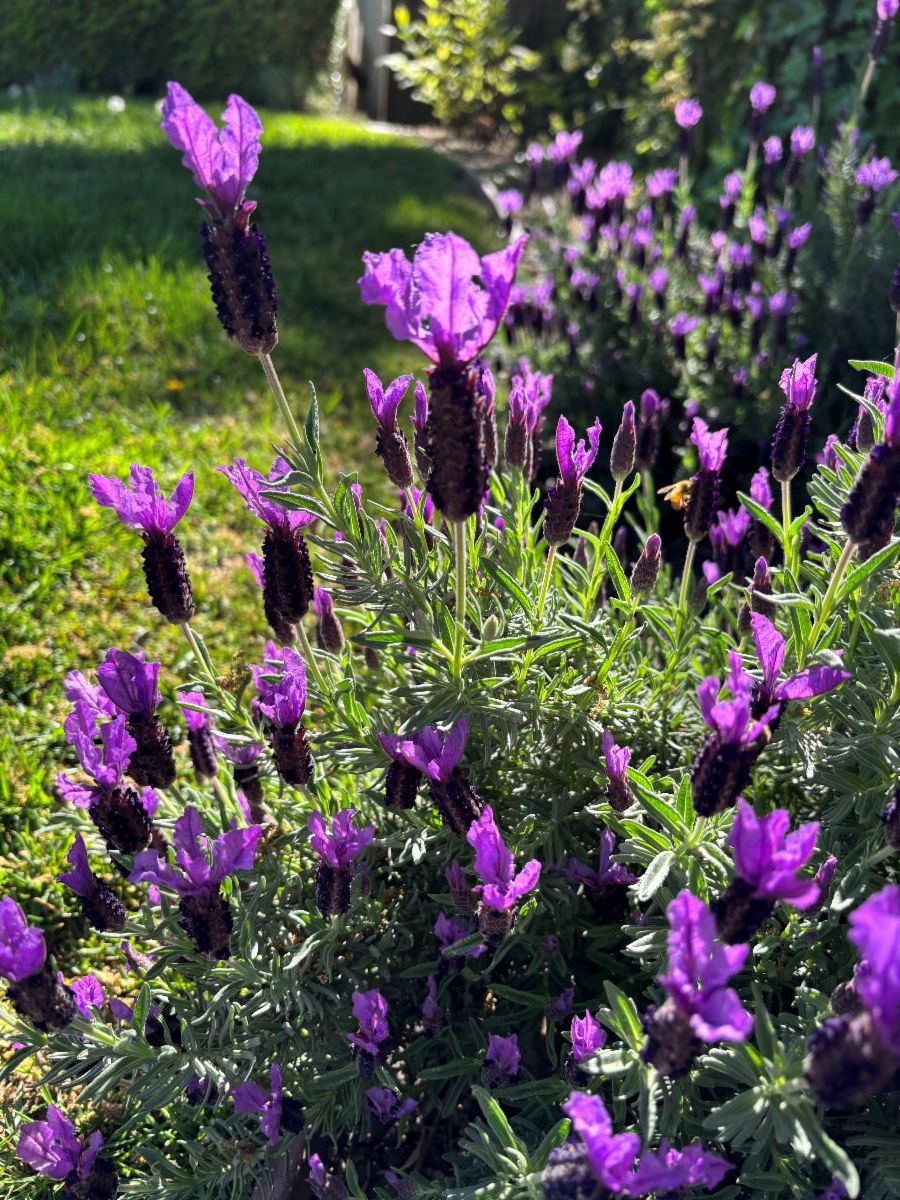
Before I developed an interest in gardening, I thought there was only one type of lavender—just, you know, lavender—and that it made a really nice scent for hand lotion. After I became a gardener, I discovered there is a whole world of lavender out there in numerous shapes, sizes, and colors. Lavender is a gardener’s dream, one with few requirements and an abundance of rewards. Yes, it does make a nicely scented hand lotion, but there is so much more this low maintenance plant has to offer.
A member of the mint family (Lamiaceae), Lavender (Lavandula) originated in Mediterranean climates, so it is an excellent drought-tolerant perennial for Zone 9b gardens where summers are hot and dry, and winters are cool and wet. It has a long blooming season, and depending on the variety, you can have blooms from early spring through late fall. Pollinators flock to the flowers, but the strong scent repels pests. Lavender is a low-maintenance plant with moderate water needs, no fertilizer schedule, and minimal pruning chores. Depending on the variety, it can work as a hedge or a...
| | | | |
The Case for Succession - Planting for Fall in June
Lorie Hammond, UC Master Gardener, Yolo County 2024
Did you plant your summer garden in April or May, and think that you are finished? But do you have spaces in your garden where something did not grow, or where an early crop is now finished? You might be happy to know that June is a great time to plant flowers and other crops such as pumpkins that you want to harvest in the fall. In my case, I have an October wedding in my family for which I hope to grow flowers, so I have been researching the right time to plant so that flowers will be fresh in mid-October. June is also a great time to plant in preparation for fall cultural holidays.
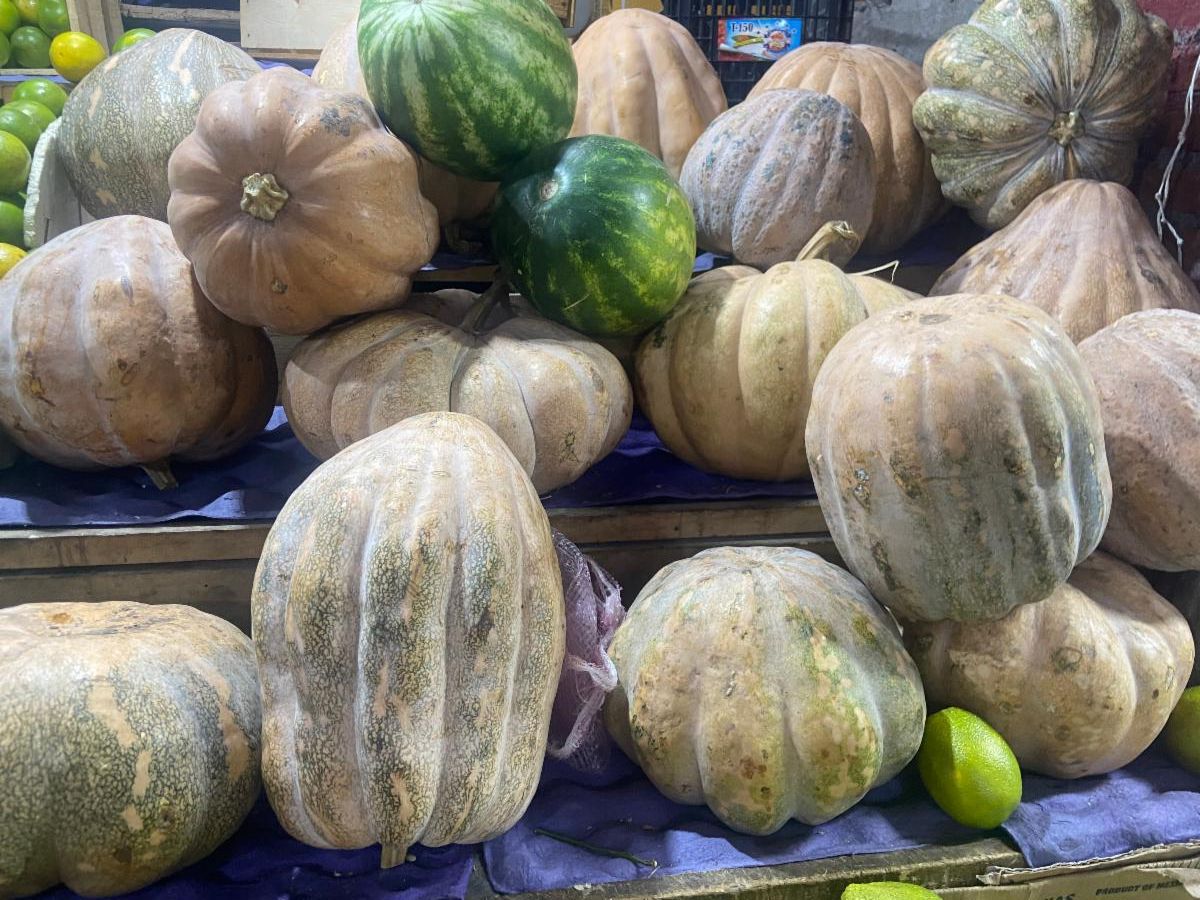
Seed packets list the number of days from seed to maturity for a particular crop. Pumpkins take 90-120 days, or three to four months, to grow. If you plant them in April, you will harvest them in July or August. If your goal is to have pumpkins in October for Halloween, with some lasting for holiday pies, then June is a better planting time.
| |
Likewise, June is a good time to plant a second round of flowers, which will be vibrant when others are fading from hot summer days. Zinnias flower sixty to seventy days after planting, and sunflowers can be planted repeatedly during the summer, requiring 70 to 100 days. Both pumpkins and these flowers can be planted in the garden from seed. The good news about late planting is that all of these plants germinate very quickly in hot weather. The challenging news is that the seeds must be kept moist, watered almost daily, and should be mulched. Once they germinate, plants should be hardy, but will still require more frequent watering than your established plants
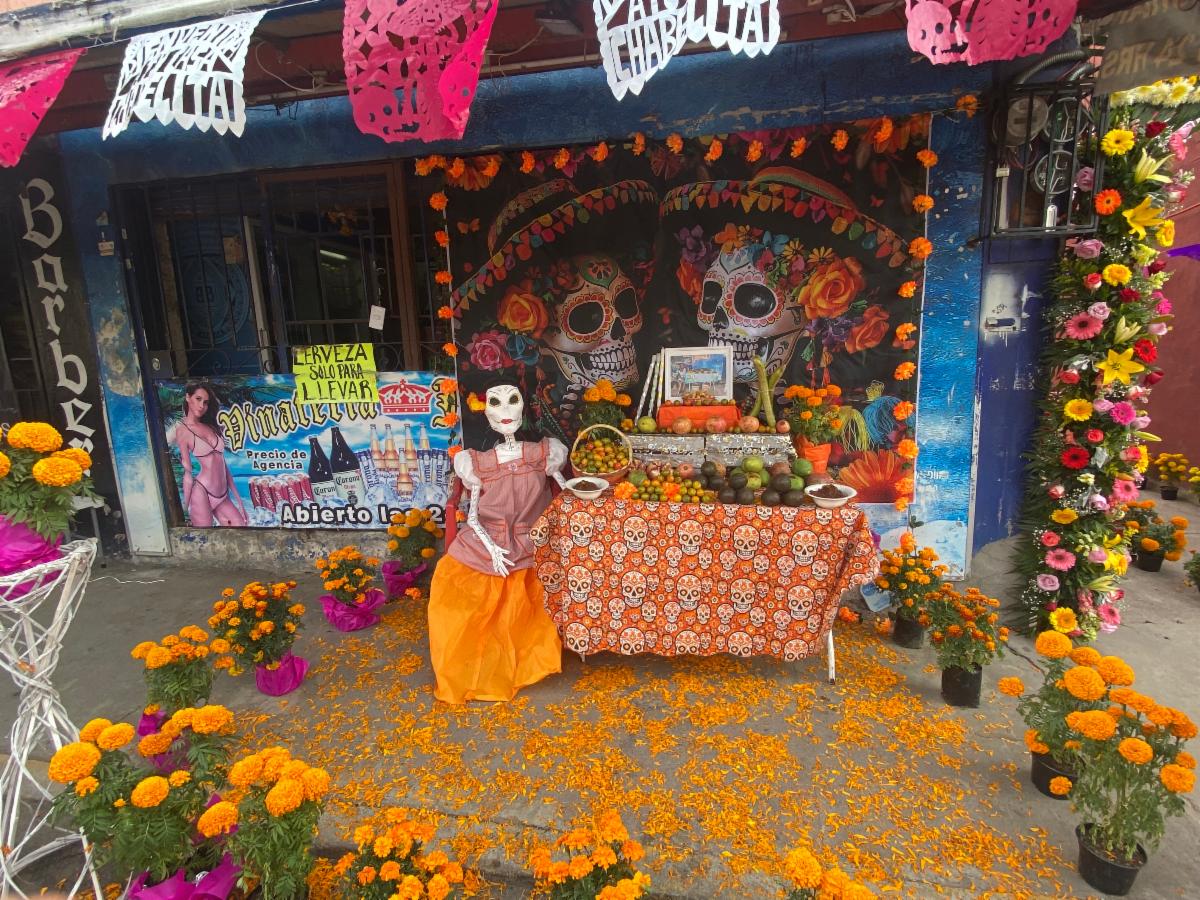
Many Californians celebrate a Mexican holiday, dia de los muertos (Day of the Dead) on November 2nd. This holiday centers around the creation of an altar to honor people or animals who have passed away. Traditionally, this altar features marigold flowers, which were thought by the Aztecs to attract the dead back to visit, due to their vibrant color and spicy odor. If growing marigolds interests you, be aware that there are many types, but I would like to point out two that have captured my interest. The large, colorful Tagetes erecta marigolds are the traditional indigenous variety. They flower in 50-80 days and are an annual plant commonly sold in nurseries. Another marigold, Tagetes lucida is a perennial sometimes called Mexican mint marigold or Mexican tarragon. This plant is hearty and drought tolerant, and produces bright, small orange blooms in the fall. Its pungent, spicy odor is striking, and its leaves can be eaten as an herb. Both can be started in June, and will be ready to grace any Day of the Dead altar in early November.
Photos by .by Lorie Hammond, adapted.
Top: Fall pumpkins in the market at Tepoztlan, Mexico
Bottom: An altar in Ocotepec, a suburb of Cuernavaca, Mexico, featuring marigolds
| | | | |
Apple Bagging Made Simple
Kathy Hill, UC Master Gardener, Yolo County
Photos by Kathy Hill, adapted
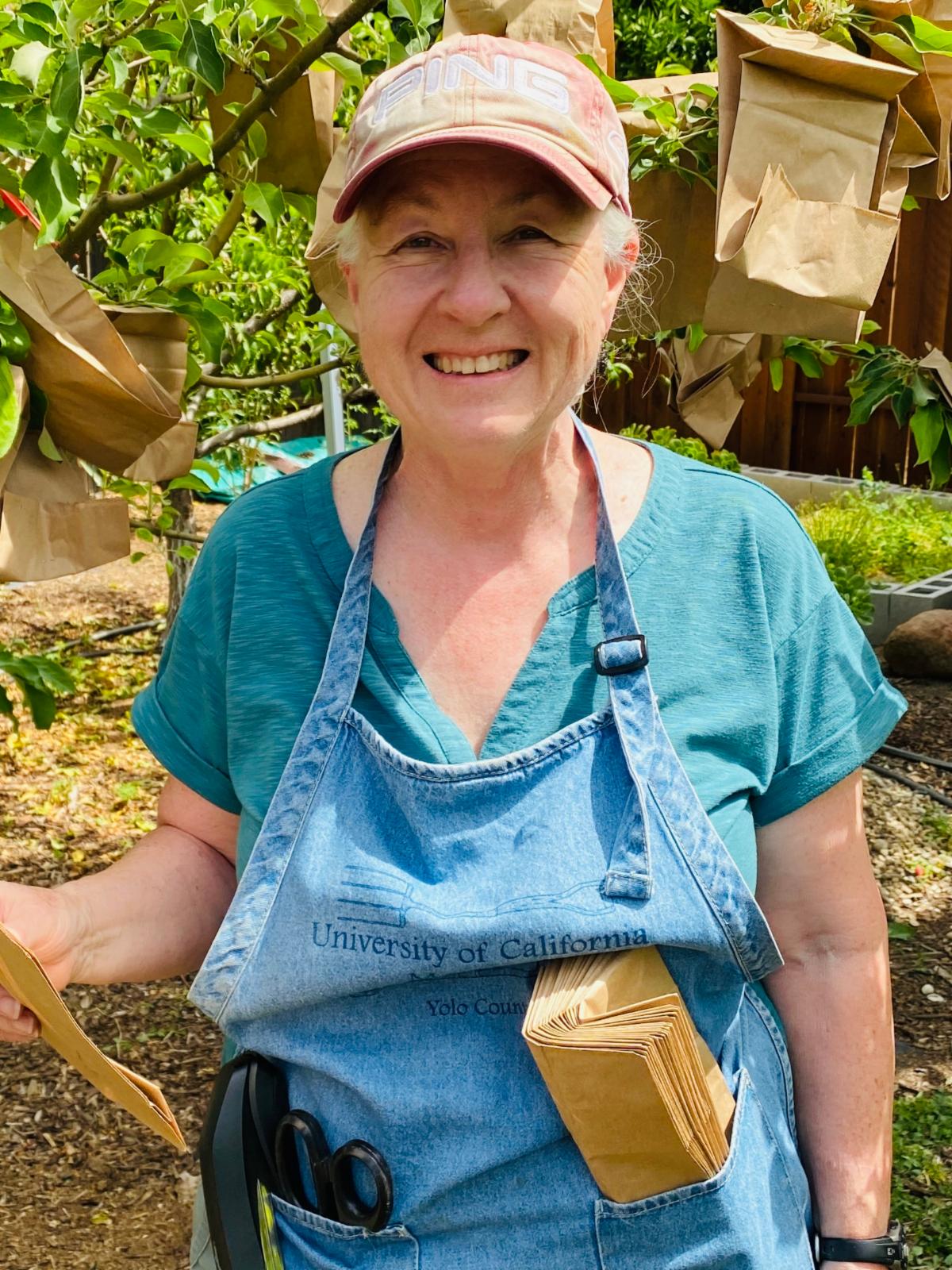
Nearly seven years ago at the beginning of fall, I thought to myself “today is the day.” The apple tree had been lovingly watered, fertilized, pruned, and the fruit had been thinned. It was harvesting time. The excitement was palpable. I had carefully picked close to a five-gallon bucket of apples and with great effort hauled them into the kitchen to start the process for freezing. They were washed and laid out on the counter. I pick up the first apple and cut into it. Excitement turned to disgust, but rather quickly I move onto the next apple with renewed hope. This new hope was quickly dashed as I discovered worms in every apple in the bucket! That was the beginning of my battle with the coddling moth. They won that year, but never again.
I turned to my trusty UC IPM site and began to read about coddling moths and what I needed to win this battle. I tried the cardboard around the trunk. I cleaned up debris and weeds around the tree. I made sure all the fruit had been picked off the tree and no fruit was left on the ground. I spent two more years with zero harvest until as a last resort I decided to try bagging my apples. I followed...
| | | | |
Dirty Stories
Cheri Meyers, UC Master Gardener, Yolo County 2025
Photos by Cheri Meyers, adapted
As a recent graduate of the UC Master Gardener Program of Yolo County, this is my first attempt to share my gardening experiences in the Yolo Gardener Newsletter and Savvy Sage Blog. I hope you find it worth the read.
It’s a lovely but warm spring day here in West Sacramento. I should be shouldering through the heat to work in my yard but I’m just not ready for that type of shock yet, so I’ll sit in my nominally cooler house and write about my yard instead. I’m too stubborn to pay the power company for air conditioning this early in the season and I’m starting to feel the heat radiating from my laptop so I may need to make this quick.
When we left our small, zero-lot line home with a postage-sized backyard seventeen years ago and moved into our brand-spanking new home, I loved the new floor plan, the new location within West Sacramento, and the fact that there is only one other home immediately nearby (and even that is separated from us by very wide side yards on both properties). The location is perfect because I didn’t want to feel closed-in like we were before. Most of all, I loved that the back yard here is about four times larger than the back yard on our previous property, and I wanted to have the garden of my dreams—or at least a backyard I could enjoy with family and friends.
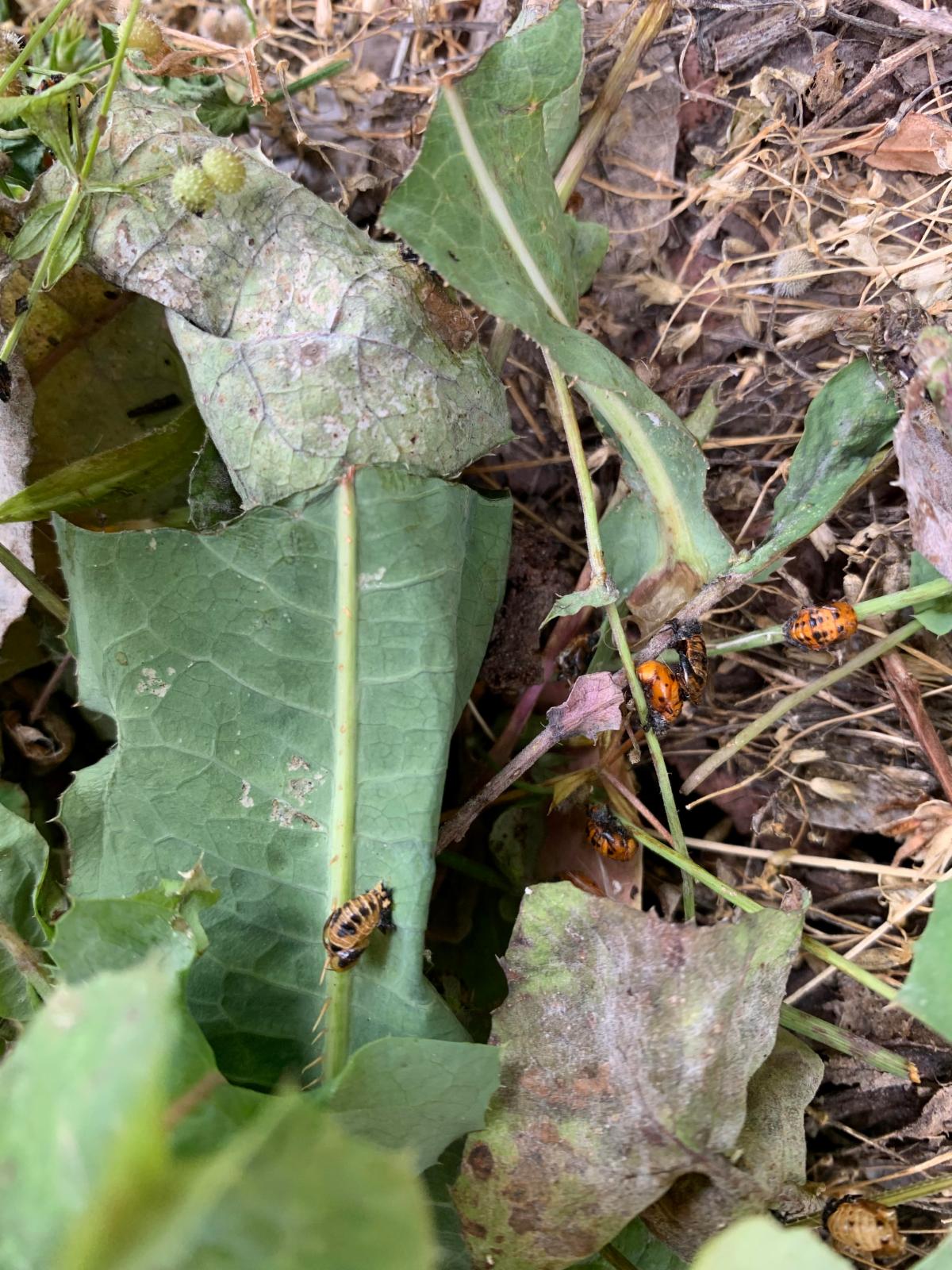
We moved here in the month of November. I happily focused on the inside of the house those first several months of winter. It really didn’t occur to me to look out into the back yard until the weather cleared a bit. I have made many mistakes with our backyard, but that was probably the first. By the time I did venture out, all I saw were two tiny cement pads (one at the sliding patio door, and the other at the door from the garage to one of the side yards) surrounded by an immense sea of tall weeds growing out of drying mud...
| | | | |
June Garden Tips
Peg Smith, UC Master Gardener, Yolo County
Photos by Peg Smith, adapted
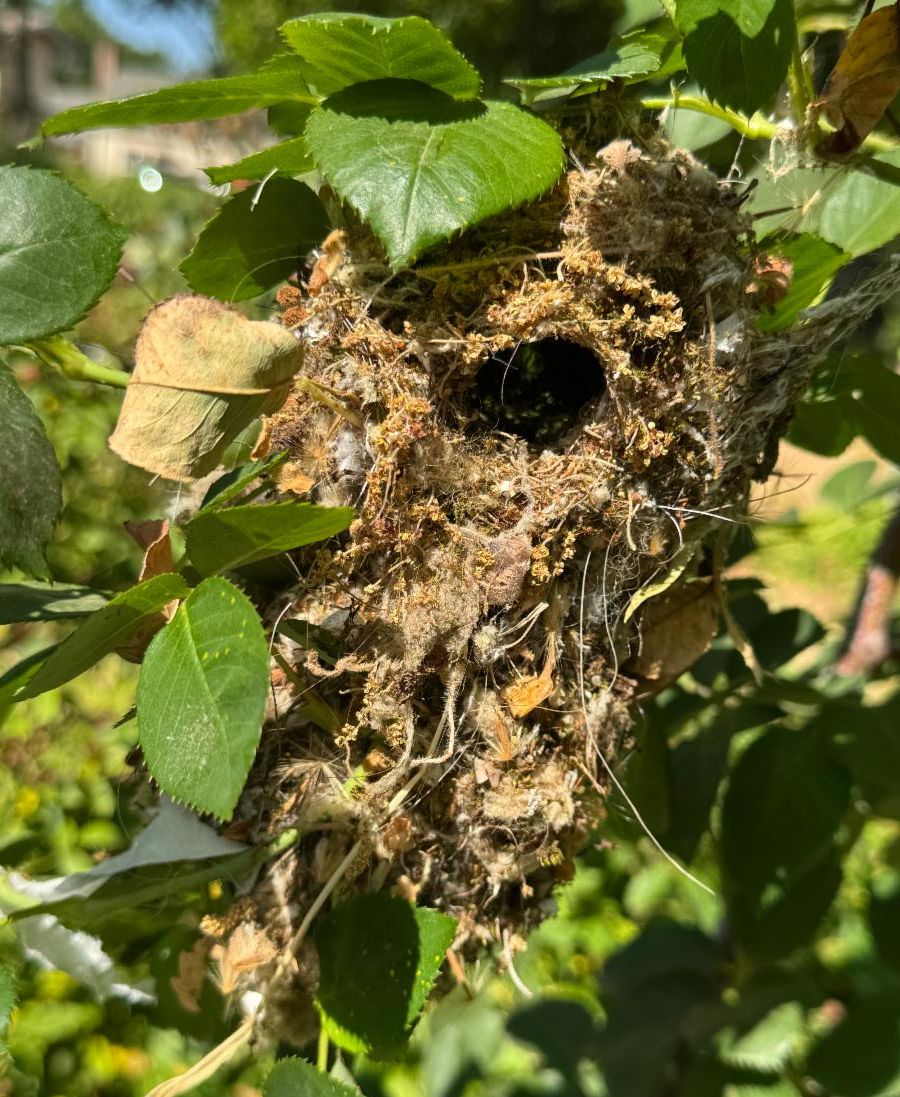
When working in the garden it is wise not to presume that what looks like a collection of garden debris on a branch or limb is of no consequence. It may be of great value to a non-human cohabitant of the garden. Bushtit nests, from a casual look, appear as a collection of leaves and other plant parts but when examined it is clear they are carefully constructed nests to serve a specific purpose.
The bushtit is one of the smallest songbirds in North America at 4.3 inches and weighing only 0.18 – 0.21 ounces. It and has an extensive range from southern British Columbia, Canada to Mexico and east into parts of Texas, Colorado, and New Mexico. They are found from sea level to ten thousand feet. Within that range there are plumage differences, particularly in head coloration. In any location, to tell a male from a...
| | | | |
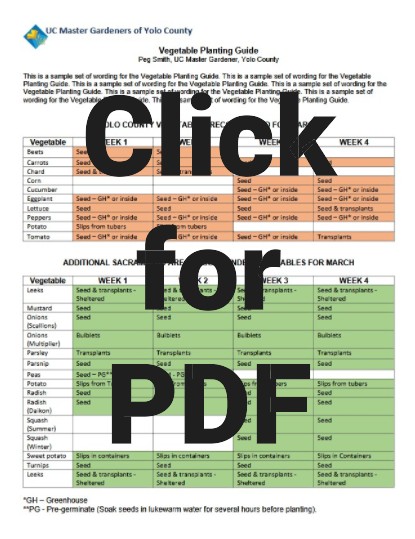
June Vegetable Planting Guide
Peg Smith, UC Master Gardener, Yolo County
June heat can be unpredictable. If you have recent transplants and temperatures soar shade the transplants through the intense heat. As summer heat sets in, adjust irrigation as needed to deliver deep soakings to the vegetables at regular intervals. Mulch vegetables to conserve water, cool plant roots, and control weeds.
| | | | |
| |
|
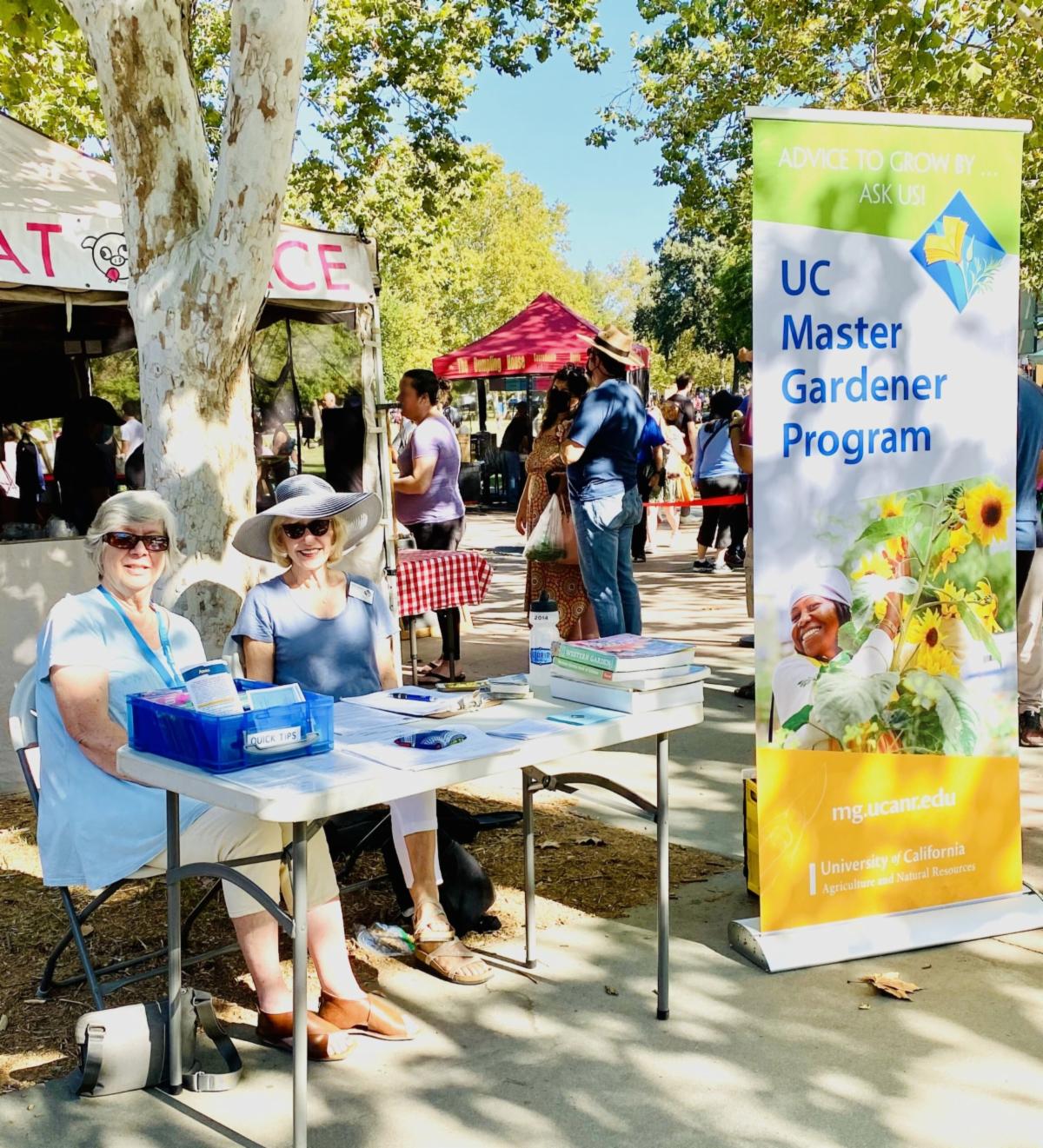
Master Gardeners at Local Farmers' Markets
The UC Master Gardeners of Yolo County will be available at the following weekly farmers' markets to answer your gardening questions.
Davis Farmer's Market
Saturdays - 9am to 11am
Location: Central Park - Corner of C and Third Street, Davis
Woodland Farmers' Market
Saturdays - 9am to 12pm
Location: In front of Woodland Public Library - First St between Court & North, Woodland
Photo: Master Gardeners at the Davis Farmers Market by Kathy Hill
| | | | |
|
Master Gardeners Questions and Answers Desk at Lowe's in West Sacramento
Location - Lowe's Home Improvement - 2250 Lake Washington Blvd., West Sacramento
The first and third Saturday of each month -
Saturday, June 7 - 10am to 12pm
Saturday, June 21 - 10am to 12pm
The UC Master Gardeners of Yolo County will be available to answer your gardening questions from 10am until noon at their twice monthly gardening "Questions and Answers Desk."
| | | | |
|
June 19 - Rose Maintenance Class - Enjoying More Summer Blooms!
9am to 10am (every third Thursday)
Location: Quad Rose Garden at Woodland Community College - 2300 E. Gibson Road, Woodland
Hands-on class - bring your favorite hand shears / pruners, gloves, and kneeling pad.
| | | | |
|
June 7 - Kitchen Garden Chat
10am - 11am
Click Here for Zoom Link
We will discuss what to do in the June Edible Garden, what happens in the vegetable garden when temperatures fluctuate and how to deal with it.
| | | | |
|
June 12 - Yolo County Library - UC Master Gardener Series
Edible Landscaping
Instructor - Tina Saravia - UC Master Gardener, Solano County
3pm to 4pm
Click Here for Zoom Link
Learn how to incorporate edible plants and fruits in your garden. Growing vegetables and other produce is easier than most people think! In this presentation, you will learn how to incorporate edible plants into your yard and garden space. This presentation is ideal for the "casual homesteader," and for anyone interested in growing plants at home that can be harvested and eaten year-round.
| | | | |
|
June 16 - Gardening for Year Round Meals
Micro-climates in Your Garden
11am
Location: Grace Garden - 1620 Anderson Road, Davis (behind the Davis United Methodist Church)
Summer is here! We will discuss micro-climates in your garden and ways to modify them to make your plants produce even when it is hot. Additionally we will talk about when and how to harvest your bounty, how much water is just right and when or if you should feed your vegetables in the summer. This talk is accessible to all, regardless of ability. It is a FREE UC Master Gardener presentation.
| | | | |
|
June 18 - Cover, Smash, Trap: Nonchemical Methods for Pest Management
Webinar - 12pm
Want to learn how to manage pests without pesticides? UC IPM is offering a free webinar on June 18, 2025, at 12pm where we will review nonchemical pest management practices as alternatives to pesticides in the home and garden. UC Master Gardeners of Yolo County can request CE credits for attending. The webinar is online and requires advance registration.
Register here
| | | | |
|
June 26 - Yolo County Library - UC Master Gardener Series
How Plants Adapt to Heat Stress
Instructor - Janey Santos - UC Master gardener, Yolo County
3pm to 4pm
Click Here for Zoom Link.
Learn how plants adapt to heat stress, the importance of choosing the right plants for your garden, and the plants to choose.
| | | | |
The Yolo Gardener Newsletter is a monthly publication and the events posted here are based on information available at the time of publication. Be sure to check the Upcoming Events list at the bottom of the page on the UC Master Gardeners of Yolo County website for up to date events and information. | | | | |
Connect and Learn With Us | | | | |
| |
| |
| |
| |
University of California Agriculture & Natural Resources (UC ANR) is an equal opportunity provider. | | | UC Master Gardeners of Yolo County2780 East Gibson Road Woodland, CA 95776 US | | | | |
| |