|
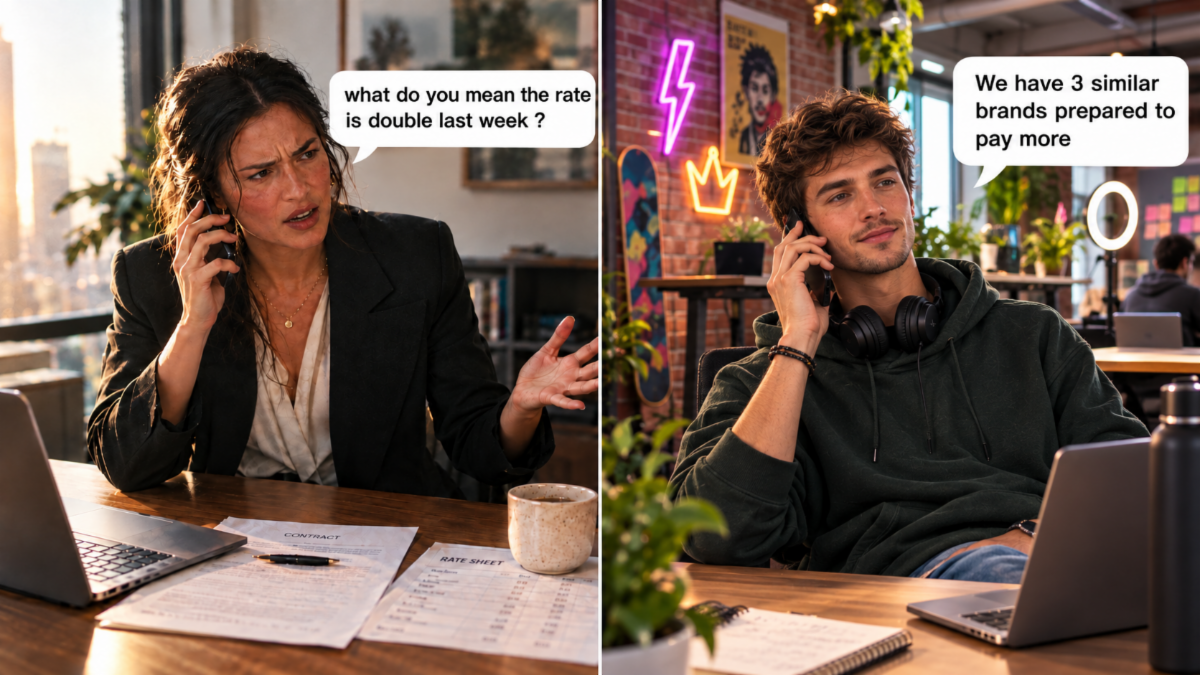
Influencer rates are technically shaped by follower count, engagement rate, niche, platform and production complexity but in practice they're often set by feel rather than formula.
Agent and manager commissions, typically 15-25%, compound the issue, layered onto rate cards that already lack transparent benchmarks, brands can't always tell whether they're paying for a creator's real value or simply for the negotiation itself.
Engagement quality, audience authenticity and conversion data matter more than raw follower counts. Yet many pricing decisions still lag behind, set by people relying on outdated norms or inflated comparables drawn from enterprise budgets.
Without the leverage or data access that larger companies have, smaller Brands and Start ups are often quoted rates calibrated for bigger players, making it harder to plan and scale influencer spend predictably.
Two forces are pushing back against this.
Creators are increasingly leaving large Agencies and Management companies for Self Management or smaller, bespoke agencies where lower overhead and personalised management mean pricing tracks real community reach instead of roster-wide averages.
At the same time, discovery platforms like Creator Data are becoming preferred tools for brands, presenting a clean snap shot of the creators credibility across all of there platforms and a track record of successful activations directly replacing pitch-deck guesswork with evidence.
Pricing itself is following suit so rather than leaning on scraped, surface level KPIs, more of the industry is grounding rates in real experience campaign outcomes, repeat brand partnerships and demonstrated ROI.
The industry doesn't need lower prices. It needs clearer logic behind them.
Disclosure: Image created using Human intelligence and Love Art.
|