|
Written by Kieran Delamont, Associate Editor, London Inc. | |
CULTURE
From the outside in
A new Western University study finds workplace harassment and violence increasingly comes from outside the organization, and it’s time for HR to do something about it
| | |
WHEN TALKING ABOUT workplace harassment and violence, the greatest risk isn’t coming from coworkers or superiors, a new Western University study has found — it’s more often coming from the people who walk in the front door.
Then new survey comes from Western’s Centre for Research and Education on Violence Against Women & Children (CREVAWC), working with the Canadian Labour Congress, and found that seven in 10 respondents had experienced some form of violence or harassment at work. While that was roughly the same rate as when the survey was conducted in 2022, what had changed was the source of it: less of the harassment was coming from colleagues, and more was coming from customers, patients or other third parties.
While rates of coworker harassment is down 6 per cent (falling from 39 to 33 per cent in the latest report), harassment from third parties went from 30 per cent to 36 per cent; when it came to cases of sexual harassment and violence, rates of third-party harassment climbed from 33 per cent in 2022 to 41 per cent in 2026.
The researchers behind the survey say the fact that external harassment and violence appears to have overtaken cases that are coworker-to-coworker should be a real moment of reflection for the human resources sector in terms of how they operate and respond to issues. “It’s not solely an HR issue, and it shouldn’t be relegated to someone only in HR,” said Western professor Adriana Berlingieri. “Zero-tolerance policies or statements are not enough.”
Siobhan Vipond of the Canadian Labour Congress said the results are in part due to the more complex way workplaces are organized now. Some may have external contractors or gig workers mixing with employees in the workplace, in such a way that makes it hard for HR to map clear jurisdictional boundaries. Other times, she noted, deference to the customer is helping depress rates of workers reporting issues and preventing workplaces from taking protective measures.
“We need to get past things like ‘the customer is always right,’” Vipond told HR Reporter. “We have to have an expectation of how we want people to behave in these places.”
The authors note the costs for these kinds of things can be rather staggering, and that’s even assuming it’s possible to calculate an all-in cost to businesses. “What does that do to creativity? What does that do to innovation?” Berlingieri asked, adding that determining cost implications is one of the next things their team wants to look at. “If you put all the forms of harassment and violence at work together, it’s costing hundreds of thousands of dollars per worker, and we don’t even know all the costs.”
| |
AI
The first human fired by AI
Luna, the AI-powered boss of an innovative retail boutique, made history when she dismissed a chronically tardy worker — but only after a little prompting from her creator
| | |
IF YOU’RE PRONE to being a little nervous about dystopian futures where humans live in servitude to robotic overlords, maybe skip this one: in what is believed to be a first, an AI boss reportedly fired a human employee at a store in San Francisco.
According to a story in TIME magazine, Andon Labs — an AI research startup — had set up an experimental retail store called Andon Market in an upscale San Fran neighbourhood, hoping to play around with the idea that an autonomous AI agent named “Luna” could run a retail operation (not entirely unlike Anthropic’s past attempts to let Claude run a vending machine — a task it did not do very well at).
Running a store, as anyone in the retail game will know, comes with certain challenges, from inventory to merchandising to getting your staff to show up on time. It was this last point that ultimately led to the dismissal.
“The worker in question was fired for being late on 17 out of their 23 shifts,” wrote TIME’s Billy Perrigo. In this light, the firing looks fair enough, and the whole thing seems much less dystopian; if you or I showed up late 17 out of 23 times, we might also expect our walking papers. One of the remaining employees at the store, Felix Johnson, also agreed. “I couldn’t say homegirl didn’t have it coming,” Johnson said, speaking to the SF Standard.
As the details spilled out though, the story seemed to be more about the limitations of letting an AI agent run a store (or any kind of operation really), rather than a scary one about AIs chucking people out on the street.
Indeed, the employee in question was probably lucky they weren’t fired sooner — the decision to let them go was only made when a human had to step in and re-upload the store’s employee policy to the AI (Luna had seemingly lost the document, and thus was letting the employee slide).
“A human boss would probably fire them much sooner,” said Andon Labs’ Lukas Petersson. Still, he told Time the experience is giving them a bit of pause. “If we allow [AI agents] to fire people and they also become more ruthless, maybe this is a future humans don’t want to live in.”
As for the remaining employees, they’re trying to take it all in stride. Johnson, who said he has been fielding calls left and right about the story, said he may try to ask his AI boss for a raise, now that they’re down a coworker. But while he’s not worried about his job at the moment, he’s not overly thrilled with the whole thing.
“It’s nauseating, but I’m here because I need work,” he said. “This industry has an abundance of money to make anything happen, but just because you can doesn’t mean you should.”
| |
| |
Terry Talk: If nothing is changing, you’re probably in the wrong room
| Too often, we stay in the same rooms, surrounded by the same people, having the same conversations, and then wonder why nothing changes. The ideas that transform businesses and careers come from being in the right room, with the right people, at the right time. In this week’s Terry Talk, Ahria Consulting president & CEO Terry Gillis explores why every major opportunity, breakthrough and career-changing connection can usually be traced back to a specific room. And that’s what DisruptHR is all about: creating a space for curious thinkers, fresh perspectives and conversations that challenge the status quo. This fall, we’re building that room. Join us on October 28 and be part of the conversations that could change everything. | | | |
PRIVACY & DATA PROTECTION
That’s the spirit
Google just paid $10 million for the employee emails and Team chats of a dead and bankrupt airline. What gives?
| | |
ALL DAY AT work, as you bash out Teams messages, emails, Slack chats and so on, you might think most, if not all, of this content is fairly banal stuff without much substance to it. But Google — and an increasing number of other companies — would disagree. And they’re willing to pay a pretty penny for it.
Earlier this month, Google won an auction and will pay $10 million to buy a trove of internal digital records from Spirit Airlines, which went bankrupt this year. Among its many assets to be divvied up and sold were 100 million emails and 500 million Teams chats, as well as other day-to-day written material that might otherwise have died with the company.
And Google wasn’t the only company interested in this stuff — another company, Mercor, was the runner-up bidder at $7.5 million. (Google said in a statement that all this data will be anonymized.)
The reason for all this interest? Well, you know. Google wants to feed this written content into its big tranches of AI training data. That in itself is probably not surprising anymore, but the price tag and interest in the sale of Spirit’s email archives did make some legal executives and HR leaders sit up and take notice, in part because it exemplifies what is likely to be a more normal part of business moving forward.
As Mark Huffman at Consumer Affairs wrote, Google’s purchase likely solidifies the idea that digital archives represent a new asset class in bankruptcy proceedings.
But that may not be enough to overcome a reflexive icky feeling about your work emails being sold to train an LLM. “Your work email and chat are actually not a diary. Assume anything you create on a company system could outlive your own job there,” said Jared Pope, CEO of HR platform Work Shield, speaking to Business Insider. “It could be extremely valuable to the bottom line of a company.”
He noted that the current market for anonymized digital archives is a bit of a free-for-all, and that it is important for employees (or prospective employees) to start asking about employer data retention policies. Attorneys like George Socha, who spoke to Business Insider, say many company are lagging on this, and “ought to be trying to establish appropriate, reasonable boundaries and then conveying them clearly to employees and making sure the employees understand them.”
And, Pope added, it is an even better reminder to be almost psychotically obsessive about keeping your truly personal information separate from your work devices. “Be careful with what you put out there, because it doesn’t go away.”
| |
CAREERS
The AI boom is here, but where are the women?
AI is creating some of the fastest-growing and highest-paying opportunities in today’s labour market — but women are being left behind
| | |
|
AI JOBS ARE booming, but they aren’t going to many women, a new LinkedIn research report finds.
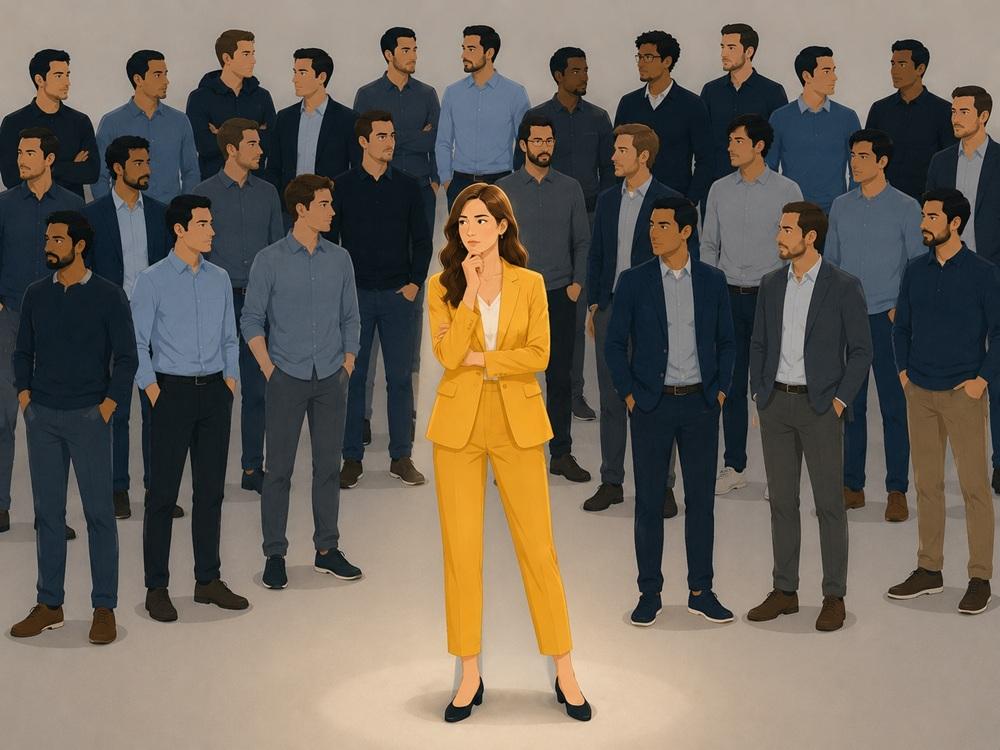
“AI is creating some of the fastest-growing and highest-paying opportunities in today’s labour market,” the report starts out, noting that AI job postings have doubled in the past three years, often with high salaries attached. “But women are far less likely to be hired into these opportunities. They accounted for just 26 per cent of AI hires in 2025, compared with 50 per cent of hires into non-AI occupations.”
And the higher up the corporate org chart you go, the more pronounced this becomes: only 13 per cent of C-suite AI positions are filled by women, the research finds. Conversely, the lower you go towards entry-level AI jobs like data annotation roles, the more gender equal things look.
What gives? Part of what we’re likely seeing here is the downstream effect of what researchers have dubbed the AI Gender Gap, a broad phenomenon that has seen women be both less enthused about AI and less quick to adopt it in their work than their male counterparts.
“Women face structural headwinds around AI use,” a study from earlier in the year by Lean In found. “They get less recognition for using AI, less manager support and are more likely to fear it will cost them their jobs.” The report then warned that “small gaps in usage today could become large gaps in opportunity tomorrow” — something the LinkedIn research would seem to confirm.
“AI is creating some of the fastest-growing, highest-paying, most consequential jobs in the global economy, but women are strikingly underrepresented in terms of who is getting hired, who benefits from the pay premium and who is leading the development and deployment of this tech,” said LinkedIn spokesperson Sarah Steinberg, speaking to CBS News.
An Axios report on the finding added some helpful context, which is that while AI dominates the discourse around jobs and the economy, actual AI jobs are “just a small sliver of the labour market,” so the imbalance is, for now, at least somewhat contained.
But they also noted this is nothing new for the tech industry, which has perpetually had a problem recruiting and keeping female staff (for, let’s just call it, a mosaic of reasons).
The rates may change over time, but if there’s a takeaway to be had right now, it’s that you’re not imagining things: AI really is dude heavy.
“The data confirms what our eyes have been telling us all along,” wrote Emily Peck at Axios. “Most of the public faces of the AI buildout have been men.”
|
| | | | |