Issue 47

May 14, 2026

Time to Read: 6 Minutes


-Hot Take-

Anyone who thinks machining is just pushing buttons has never watched a shop prove out a prototype with limited material, tight tolerances, and no room for failure.

Joke of the Week

Q: Why did the customer ask for ±.0002 on a welded part?

A: Because imagination is free.

Ask a CAM Pro

Real shop problems. Answers from people who have been there.

How do you set up part-off and pickup programs?


Part-off and pickup operations are where things can go sideways fast if you’re not careful. When you’re transferring a part from the main spindle to the sub, or cutting it free from the bar, small mistakes in synchronization or work offsets can wreck a part, or worse, a spindle. The key is precision, coordination, and a clear plan for both sides of the machine.


Start with solid work offsets.

Set separate work offsets for the main and sub spindles. Zero the part in the main spindle first, then pick up that same reference in the sub. Use your probing system if you have one, or a known gage point on the bar or soft jaw. Both spindles must agree on Z-zero or your pickup move will be off.


Plan your cutoff toolpath carefully.

Leave enough material for a clean part-off, but not so much that it wastes cycle time or risks a burred edge. Keep the cutoff tool sharp and rigid, use coolant and slower feed near breakout to avoid tearing or part pull. If the part is thin or flexible, undercut slightly before the final pass to relieve pressure.


Program spindle synchronization.

Use spindle sync codes (often M-code pairs like M150/M151 or M205/M206, depending on your control) to bring both spindles to the same RPM and direction before the pickup. Verify synchronization in dry run mode before you ever cut. Once synced, close the sub-chuck, pause, then stop the main spindle to let the sub take control.


Control handoff timing.

Add small dwell times after synchronization and clamping commands to give both spindles a moment to stabilize. Machines react differently under sync; rushing transitions can cause torque spikes or part slip.


Set your pickup position precisely.

Approach the part slowly during pickup, typically using G0 close to the face and G1 for the final clamp distance. Confirm grip visually on the first run. If your part length is critical, probe or touch off the sub once clamped to re-establish the correct Z-offset for finishing ops.


Cut off cleanly and clear the chip.

When parting, use high-pressure coolant or an air blast to push the chip away from the cut. A chip caught between the tool and part can gouge the face during handoff. Always retract the cutoff tool fully before the sub pulls back.


Use spindle retract and park moves wisely.

After cutoff, move the sub spindle back smoothly to its safe zone, and stop it before indexing any tools. Avoid fast retracts that can sling coolant or spin the part loose before clamping pressure stabilizes.


Verify every motion in simulation.

Run the whole transfer in your machine simulation with both spindles active. Watch chuck open/close commands, rotation direction, and timing. Many crashes happen not because of bad code, but because of mismatched expectations between the control and the CAM output.


Bottom line:

Part-off and pickup are about coordination, not speed. Sync the spindles, control your offsets, and treat the handoff like a relay race; the cleaner the exchange, the smoother the finish.


Have a programming question?


Send it in for the next edition of Ask a CAM Pro!

Weekly Poll

Choose from the answers below.

Where does profit leak out the fastest?

View the results of last week's poll HERE.

From the Floor

Learning to File Before I Could Program


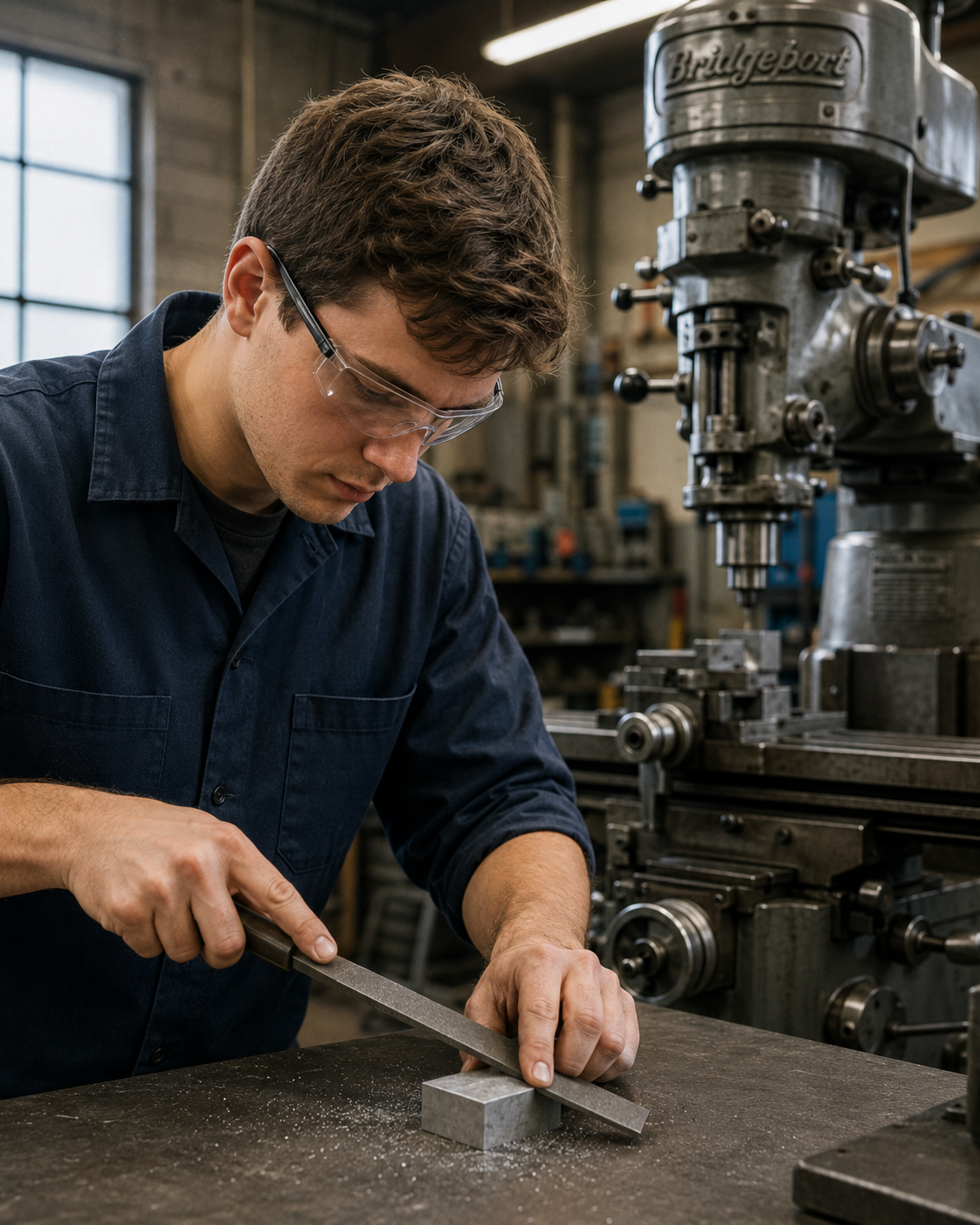
“When I started in the shop, nobody let you near a CNC machine until you had spent weeks on the manual side first. I spent a lot of time with a Bridgeport and a file, knocking saw slugs flat and learning how the material behaved.


At first, I thought it was just busywork, but over time, I started to understand what steel and aluminum actually felt like. You could feel the feedback, the resistance, and the way the material responded.


That hands-on experience changed how I understood machining. By the time I started programming, the numbers on the screen made more sense because I had already felt what was happening at the machine.


These days, everyone is eager to learn CAM first, but I still believe there is no substitute for knowing the basics by feel."


-Machine Shop President

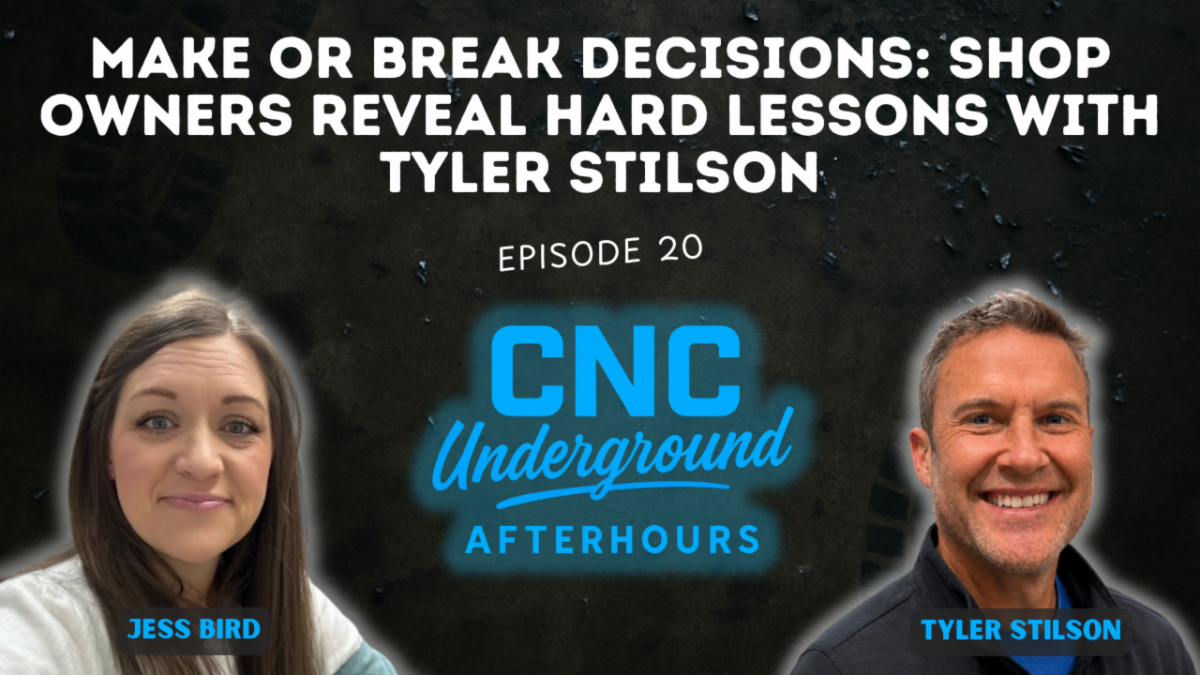
CNC Underground: Afterhours

Tyler Stilson, president and owner of The OpOne Group, joins CNC Underground: Afterhours to reveal how he scaled a multi-location machine shop through tough decisions, automation, acquisitions, and building proprietary products. This episode delivers hard-won lessons on leadership, risk, and why embracing technology is now essential for manufacturing success.


Key Takeaways:

  • Hear why automation is critical for surviving labor shortages and achieving true scalability.
  • Gain honest insight into the risks and realities behind investing in new machinery and growing through acquisitions.
  • Uncover the pitfalls of relying on single customers, and the strategies that keep a business resilient in uncertain times.

Video of the Week (Powered by GibbsCAM)

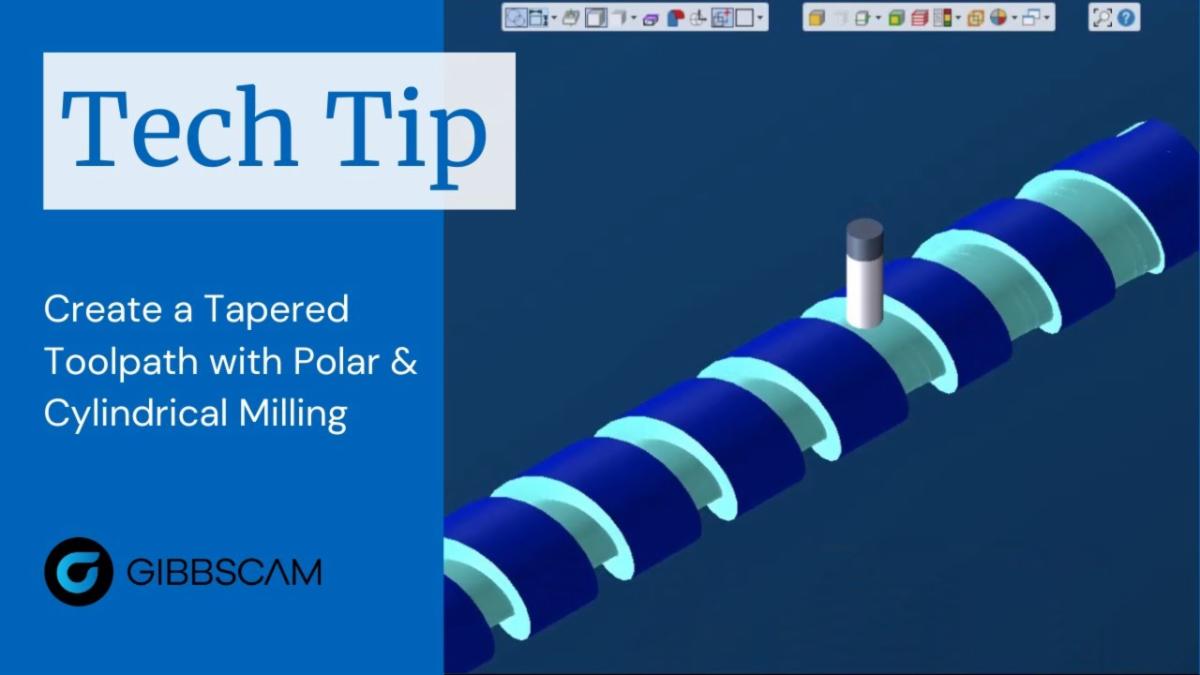
GibbsCAM Tech Tip: Create a Tapered Toolpath with Polar & Cylindrical Milling

Learn how to project a polar/cylindrical rotary milling toolpath onto a solid so you can control variable-depth pockets, tapers, and flat areas on a cylindrical part without needing a five-axis module.

CAMedy Central

Industry Intel

Boeing Invests $1 Billion in Wichita Manufacturing Over Three Years

Boeing announced it will invest $1 billion in its Wichita, Kansas, facilities over the next three years to upgrade factories, expand workforce training, and strengthen production after its Spirit AeroSystems acquisition.


Q1 Earnings Highs And Lows: Tesla (NASDAQ: TSLA) Vs. The Rest Of The Automobile Manufacturing Stocks

The article compares Q1 earnings across automobile manufacturing stocks, noting that Tesla beat revenue and EPS expectations while Ford had the strongest quarter, Lucid had the weakest, and Mobileye delivered the biggest analyst-estimate beat.


Understanding The Global Clean Tech Manufacturing Slowdown

Clean-tech manufacturing investment is falling worldwide despite rising demand, mainly because of oversupply in Chinese solar manufacturing and weakening battery investment after U.S. policy shifts, while European investment has remained relatively stable.

Manufacturing Survey

Manufacturing policy is being shaped now. Shops should have a say.

Tariffs. Supplier risk. Federal policy shifts. The 2026 Reshoring Survey captures how manufacturers are actually responding and what's driving their decisions.


In 10 minutes, you'll be able to see exactly how your strategy compares to peers, and your input shapes data used by policymakers and economic developers across the country.


Take the survey → Get the full results.

Industry Growth (Open Jobs)

A few hot openings across the industry this week:


CNC Application Engineer - Pace Industries - Maple Lake, MN


CNC Machinist III - Tomz Corporation - Big Lake, MN


Tool Designer - LMT Defense - Eldridge, IA


Machinist - Twin City Fan Companies LTD - Mitchell, SD


CNC Machinist - Bullet Central LLC - Fargo, ND


CNC/Manual Machinist - Industrial Engineering Company - Columbus, NE


CNC Machinist - Seiler Instrument & MFG Co Inc - Kirkwood, MO


CNC Programmer - Galaxy Technologies - Winfield, KS

Trade Show & Event Radar

June 22-25

Automate

Chicago, IL

July 29-30

Advanced Manufacturing Expo

Grand Rapids, MI

Sept 14-19

IMTS

Chicago, IL

Oct 6-7

Top Shops Conference

Cleveland, OH

Oct 21-23

FABTECH

Las Vegas, NV

November 11-13

Titans of CNC Boombastic Show

Flower Mound, TX

Did someone forward you this newsletter?

Subscribe to get your own copy every week.