|
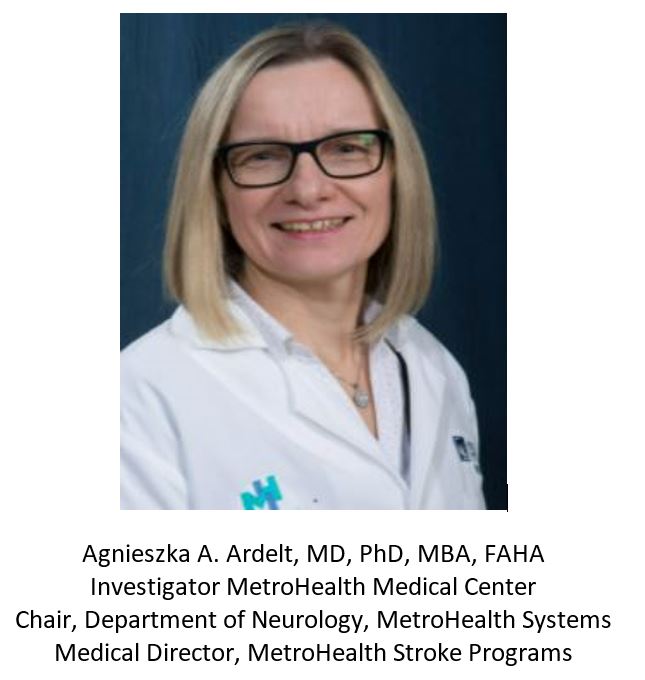
Tell me about yourself and how you are involved with the Cleveland Alzheimer’s Disease Research Center (CADRC).
I came to MetroHealth System as the Chair of Neurology from a basic science and a clinical background. I did a MD/PHD to combine the “micro” and “macro” approach to disease. I became interested in neuroscience and neurology because I thought anything “neuro” was very challenging. I feel that neurology is the best clinical field, because it is based on the understanding of the anatomy of the nervous system, which is fascinating. Being a neurologist is like being a detective: every time you see a new patient you try to figure about where the problem lies in the nervous system and then focus on the diagnostic possibilities and how to help the patient. I initially started my career at the micro level, in a basic lab studying how the brain restores itself after an ischemic stroke. Clinically, at the macro level, I worked in the Neuroscience Intensive Care Unit taking care of stroke patients and other critically ill neurologic patients. More recently, I switched entirely to clinical work and also received an MBA in health care management so that I can organize care for neurology patients in the hospital and in the community. My involvement in the CADRC is to make information available to the community about Alzheimer’s’ disease and other dementias and to facilitate more opportunities for community members to become involved in research at a regional level.
What are your main activities and goals as they relate to brain health?
One of my main goals is to educate the community about the risks involved with smoking and untreated hypertension because these two risk factors are silent killers. What happens in terms of brain function is that after many years smoking and untreated high blood pressure, the small blood vessels in the brain become permanently damaged and cause small strokes to occur. When these small strokes get added up over the years, a type of dementia results. Such patients are not able to process information rapidly. This could be information related to language, recall, and making decisions. This type of dementia does not get a lot of press in the community so people do not know that this can be the consequence of smoking and untreated high blood pressure. My goal is to try to get this information out to the community in a way that will be impactful to the community.
What is the focus of your research currently, and where do you see your work going in the next two-five years?
To achieve the goal of spreading the word about the vascular type of dementia we are focusing on two projects. The first project teaches high school students to teach other students about stroke. The goal of the project is to figure out what type of teaching technique is more successful at teaching young people by comparing two techniques: a standard technique and a technique that the students create. We are trying to determine which method will be most impactful in this population.
The second project is geared toward stroke survivors, specifically to maintain their interest and engagement in secondary stroke prevention. By providing stroke patients with information and resources for at least 1 year after they have had a stroke, and by combining these resources with a support group or other types of approaches that will be meaningful to individual patients, we are hoping that they will continue to be invested in their stroke aftercare. We are hoping to learn what approaches individual patients find most impactful so that we can utilize these ideas with other stroke patients.
How do you see research in brain health/Alzheimer’s Disease/dementia evolving in the next 2-5 years?
The most important area of research to continue to develop in brain health/Alzheimer’s disease is the area of educating the community about the factors that negatively impact physical health, mental health and, therefore, brain health overall. I think it will be important to continue to clarify how stress and lack of access to resources negatively impacts brain health, as well as exactly how exercise or solving sudoku or crossword puzzles promotes brain health. An important next step would be to determine how we implement these approaches in the community.
Do you have any suggestions or recommendations for students or young researchers who wish to get more involved in brain health research?
As a young person you don’t know what experiences are possible. I think that this was one of the challenges that I had faced in high school and even in college: I did not know what opportunities were available in the community and in local clinical or research institutions. The way to overcome this is to be inquisitive, think outside of the box, and investigate a variety of available opportunities. There are many such opportunities that can be found on the internet. For example, one can use sites like the CADRC website, to explore potential avenues in the field of brain health research. My recommendation would be to run searches on the websites of local academic institutions looking for summer internship programs for high school and college students, for example.
|