DEVELOPMENTAL SCREENING PROGRAM

Sparkler Tip of the Month


October 27, 2025 | Issue 3

Due Dates: What Do These Dates Mean?!

Welcome to the third edition of Help Me Grow's Sparkler Tip of the Month. This monthly message offers Help Me Grow Program Partners tips on using the Sparkler dashboard. This month, we want to focus on due dates.


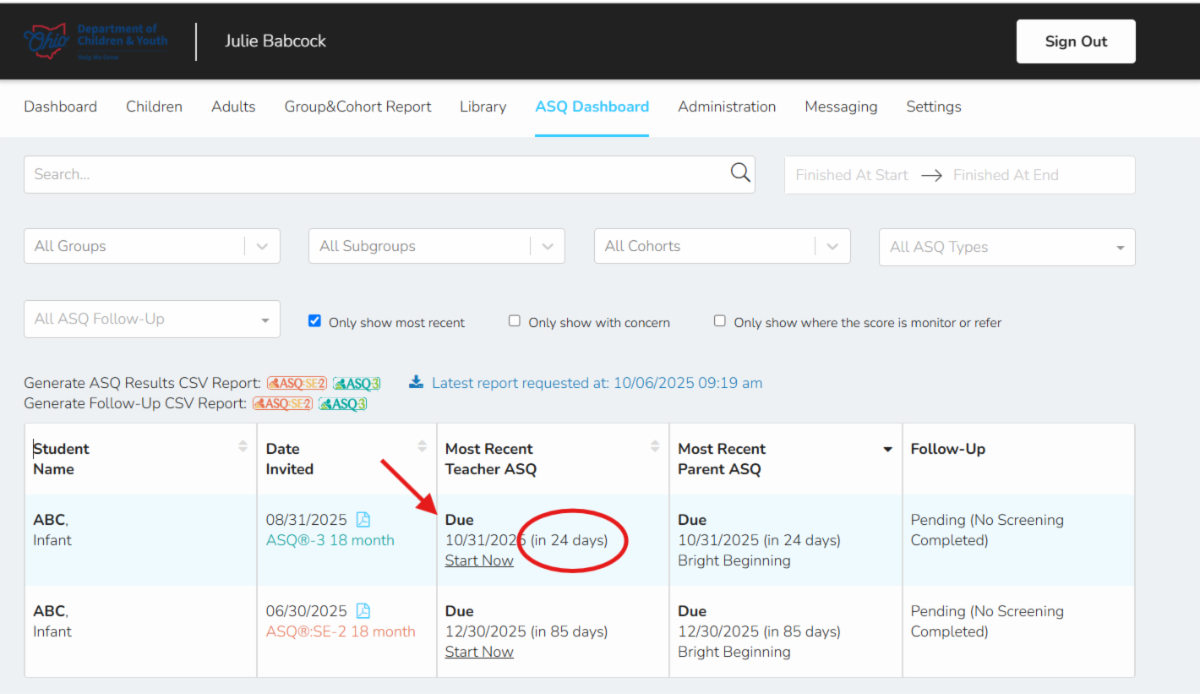
You may be wondering about the due dates on the ASQ Dashboard tab and how frequently you should be screening children in your program.

When viewing your ASQ Dashboard tab on the Sparkler Dashboard, you may notice that the 3rd and 4th column appear to have 'due dates'.


Think of these dates as simply reminders of how many more days a caregiver or provider has to complete a particular age-interval screening before it will be archived and the next age interval screening will be available.


A screening can be completed beginning on the first day the screening is available up until the date indicated. Remember, the following intervals are available for ASQ-3: 2, 4, 6, 8, 9, 10, 12, 14, 16, 18, 20, 22, 24, 27, 30, 33, 36, 42, 48, 54, and 60 months of age. The ASQ:SE age intervals available are 2, 6, 12, 18, 24, 30, 36, 48, and 60 months of age.


Once a screening is archived, a new screening will automatically be available and the caregiver will be notified through a push notification sent from the Sparkler: Play for Parenting app. 


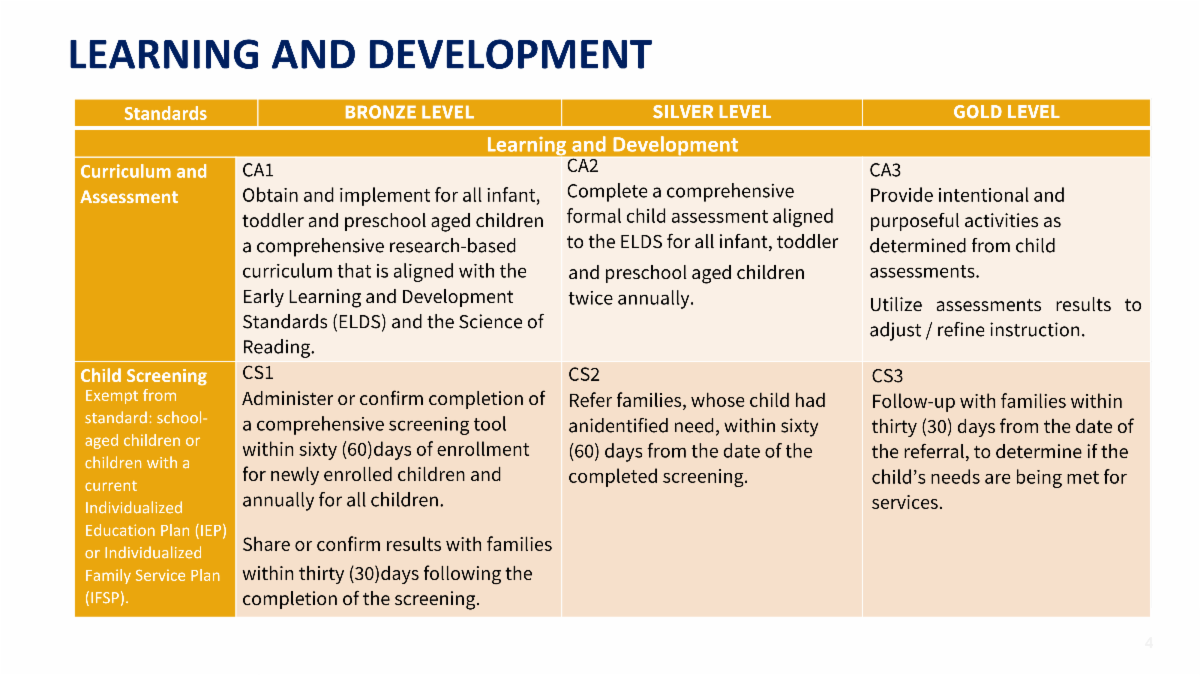
Ohio's Step Up to Quality (SUTQ) Developmental Screening Requirements


All quality-rated programs/providers complete a comprehensive screening tool to screen newly enrolled children within 60 days of enrollment and annually thereafter. See the guidelines below that are required to meet each SUTQ level. 

IMPORTANT REMINDER: School-aged children and children with a current IEP or IFSP are exempt from developmental screenings and referrals.


These children are welcome to use the other features on the Sparkler: Play for Parenting app (e.g. activities, parenting tips, digital scrapbook, communication tool) but should not be asked or required to complete a developmental screening. 


What Brookes Publishing Recommends


ASQ is a flexible system that allows programs to choose the frequency of screening based on what works best with your program’s goals and capabilities. We do recommend that programs screen children on a regular basis from 1 month to 6 years, rather than just once, considering the rapid social-emotional and developmental changes that occur in young children. 
Parents also have different needs at different stages of a child’s development. For example, some parents are very comfortable and at ease about parenting infants but begin to feel challenged when their child becomes a toddler and strives for independence. In addition, any change in children’s homes, schools, or health status may greatly affect their development. The Ages & Stages Questionnaires is designed to be repeated at intervals throughout [the] child’s first years, in much the same way as well-child visits are most frequent at first but decrease as [the] child grows. 
(Ages & Stages Questionnaires Frequently Asked Questions) 

Teacher Completed ASQs: Do we have to?!


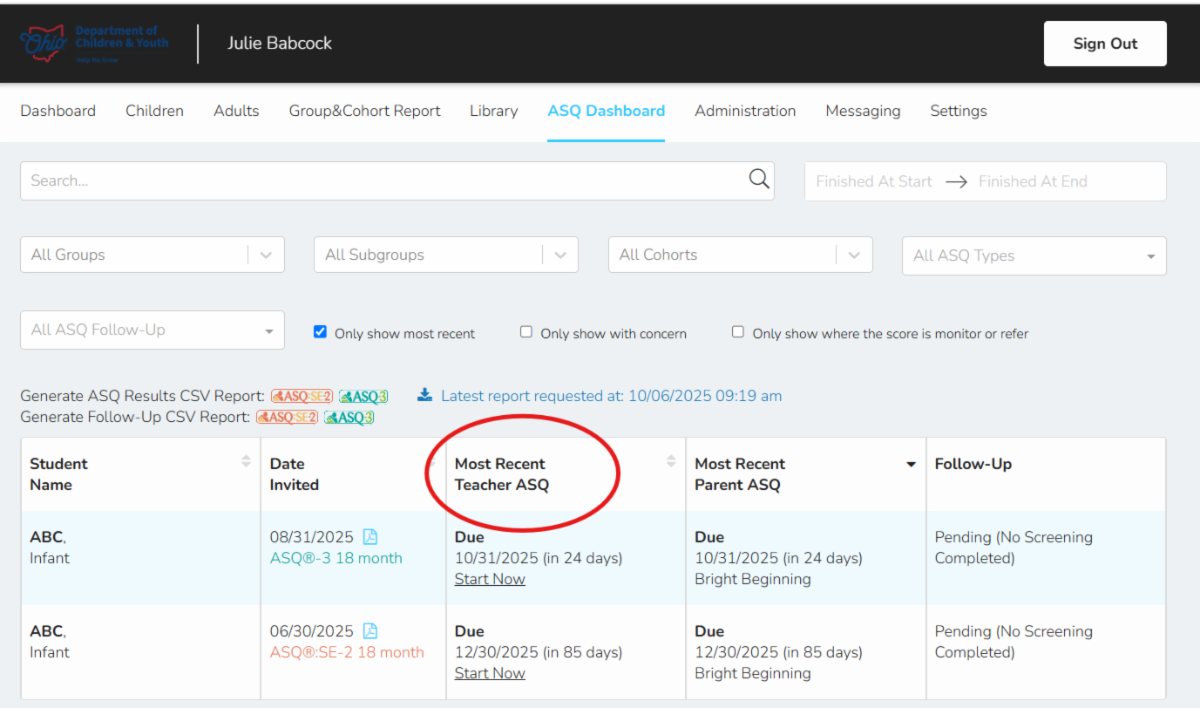
You may notice the third column on the ASQ Dashboard is labeled Teacher ASQ.


This is just an option for programs that would like to complete a screening and/or if a provider needs to manually enter scores from a paper/pencil version.

What Brookes Publishing Recommends

According to both the ASQ-3 and ASQ:SE-2 User’s Guides, practitioners should enlist parents to complete the questionnaires whenever possible. Parents are the experts on their children, especially about their skills and behavior at home. Inviting parents to participate in the screening process not only ensures more accurate results, but encourages ongoing interest and involvement in their child’s development. Research supports parents as being highly accurate when completing screening questionnaires like the ASQ-3. In fact, all of the research conducted on the ASQ-3 (and the ASQ:SE) has been conducted with parents reporting on their child’s development—not teachers.
(Should teachers take the lead in completing ASQ questionnaires?) 
man_scratches_head.jpg

Have more questions?


Register for open office hours Wednesdays at 1:30 via Zoom.


Project Coordinator Julie Babcock from Bright Beginnings will answer questions and share implementation ideas from other professionals.


She welcomes you to share your ASQ success story!


Help Me Grow is a statewide system of supports that promotes the healthy growth and development of young children from pregnancy through early childhood. Services and supports are provided statewide through Home Visiting, Early Intervention, developmental screenings, and connections to community resources.

Supporting Ohio’s families and young children starts with committed professionals like you, who refer families to Help Me Grow. Making a referral to Help Me Grow's system of supports is a simple way to help Ohio's children and their families get the services they need. Anyone can refer a family for Help Me Grow services and families can also self-refer

Other ways to refer

Call (800) 755-4769 (GROW) to speak with an Intake Specialist, or click here for regional contact information.

Email your questions and completed referral forms to HMGReferrals

@helpmegrow.org.


Fax completed referral forms to

(855) 418-3322 or 

(855) 318-3322.


Want more Help Me Grow information?

Schedule a virtual or in-person Help Me Grow presentation tailored directly for your staff, or have promotional and informational materials delivered straight to your office for families you serve. Email communications@helpmegrow.org today to speak with Help Me Grow Outreach and Marketing.