|
This publication celebrates, supports, and empowers neurodivergent individuals and their communities. Each edition explores insights into ADHD (Attention Deficit Hyperactivity Disorder), autism, and other neurodiverse experiences; highlights valuable resources and advocacy updates; and shares stories that reflect lived experiences.
Our goal remains to raise awareness, promote inclusion, and provide meaningful information for individuals, families, and professionals. Thank you for joining us again for our third issue. We are excited to continue learning, sharing, and growing together with every edition.
| | |
"Tired But Wired"
Marlee Boyle BSc RRT CCSH
ADHD and Sleep: A Double-Edged Sword
While sleep deprivation affects everyone, it has a more pronounced impact on people with ADHD. Executive functions like attention, working memory, and emotional regulation, which are already challenging for those with ADHD, are further impaired by lack of sleep. When sleep is disrupted, it exacerbates ADHD symptoms, leading to poorer focus, greater emotional reactivity, and increased impulsivity.
Two processes regulate our sleep: Process S, a homeostatic system that builds sleep pressure the longer we stay awake, and Process C, the circadian rhythm, which follows a 24-hour cycle. These processes work together to help us fall asleep and regulate our sleep-wake cycle. However, ADHD can interfere with both processes.
Research shows that people with ADHD often experience delayed circadian rhythms, meaning their natural sleep-wake cycle is shifted later. Many adults with ADHD are naturally “night owls,” feeling alert in the evening when most people are winding down.
For those with ADHD, factors like stimulant medications, caffeine, and even daytime napping can disrupt sleep pressure (Process S). Stimulants, while helpful for managing ADHD, stimulate the central nervous system, reducing sleepiness and caffeine can delay sleep onset by blocking adenosine, the neurotransmitter responsible for making us feel sleepy, preventing the buildup of sleep pressure. Napping or sleeping in too long during the day can reset the sleep drive, making it harder to feel sleepy when it’s time to rest.
It’s 11:30 p.m., and after a long day, you crawl into bed, ready to rest. But as soon as your head hits the pillow, your mind starts racing.
Thoughts bounce from one to another, keeping you wide awake, and before you know it, hours have passed without sleep. Then, just as you finally drift off, the alarm goes off—another day begins, and once again, you wake up tired. For many people with ADHD, this is an all-too-familiar scenario.
Sleep and ADHD share a complicated relationship that goes beyond the simple struggle to fall asleep. From difficulty staying asleep, to waking up exhausted, the connection between ADHD and sleep is crucial for understanding how ADHD symptoms affect daily life.
Sleep is a vital part of our lives, yet it’s something many of us don’t fully understand. Each night, we cycle through several stages of sleep—REM (rapid eye movement) and non-REM sleep—both playing a role in physical restoration, emotional regulation, learning and memory consolidation.
When sleep is disrupted—whether from not getting enough sleep, waking too early, or having poor sleep quality—these processes don’t happen effectively. The ADHD brain is particularly sensitive to sleep deprivation, leading to a vicious cycle that can make managing ADHD symptoms even harder.
This cycle of sleeplessness and worsening ADHD symptoms can be debilitating, but it doesn’t have to be the final word. Research and treatment approaches offer hope for breaking the cycle.
| |
"Singing and Dancing"
Andrea Dasilva M Ed., RCC
During this beautiful and busy time of year, we often hear about the jingling of bells and joy filling the world. How can such opposites (overwhelm and serenity) ever actually happen together?! By singing and dancing, of course – seriously! When we engage in these activities, our minds and bodies actually work together in harmony to help us out!
Emotions are regulated, attention and concentration improve, social communication and bonding occur (with or without words!) – and so much more.
Whether neurodivergent or neuronormative, listening to or singing songs or dancing around the Christmas tree, stored up emotions get expressed, tensions are released, brain fogs lift, and it is kind of inevitable that we find ourselves smiling.
Whether it is a silent night or drums are pa-rum-pa-pa-pumming, singing and dancing will bring on a regulation that our busy brains simply would not devise on their own – at any season or time of the year!
| NAVIGATING SENSORY OVERLOAD | |
Navigating Sensory Overload During the Holidays: Practical Tips
The holiday season can be joyful, but it also brings intense sensory environments—bright lights, loud gatherings, strong scents, unpredictable schedules, and increased social expectations. For neurodivergent adults, these shifts can quickly move from festive to overwhelming. Whether you are autistic, ADHD, highly sensitive, or managing anxiety, having a clear plan can help you protect your energy, maintain comfort, and move through the season with more ease. Below are practical strategies to help you navigate holiday environments while honouring your sensory needs.
1. Check in With Your Internal Needs
Hunger, thirst, fatigue, and other unmet internal needs make sensory overload much more likely. Carry water, preferred snacks, or regulation-friendly foods (crunchy, chewy, or high-protein) to keep your system balanced.
2. Set Expectations With Yourself and Others
Create clarity before stepping into social environments. Review the plan—where you are going, who will be there, and how long you intend to stay. Let partners or friends know your capacity and share any boundaries you want respected.
3. Communicate Sensory Needs in Advance
Send a brief message to hosts or event organizers outlining helpful accommodations—reduced music volume, a quieter corner to sit in, or permission to step away when needed. Upfront communication prevents awkwardness and empowers you to self-advocate.
4. Keep Anchor Routines in Place
Protecting essential routines—sleep, meals, downtime—helps your nervous system stay regulated. Build in buffer time before and after events so your system is not overloaded by back-to-back stimulation.
5. Bring a Personalized Sensory Toolkit
A small kit can make a huge difference. Consider packing:
- Noise-canceling headphones or discreet earplugs
- Sunglasses or a brimmed hat
- Fidgets, resistance bands, or handheld calming items
- A weighted lap pad or scarf (travel-friendly deep pressure)
These tools help you stay grounded in unpredictable environments.
6. Use Breaks as a Regulation Strategy
Identify a quiet room or low-stimulation space at gatherings. Stepping outside for fresh air, spending a few minutes in the washroom, or sitting in your car are all valid sensory breaks. You do not need to justify them.
7. Choose Clothing That Supports Comfort and Regulation
Wear textures and layers that feel good. Compression garments, soft fabrics, or stretchy clothing can help maintain calm. Avoid outfits that look festive but feel irritating.
8. Manage Food-Related Sensory Stress
If holiday meals are overwhelming—due to textures, smells, or pressure to try new dishes—bring your own food or eat beforehand. Giving yourself permission to honour your sensory profile reduces stress significantly.
9. Pre-Authorize Yourself to Leave Early
Build exits into your plans. You might arrange your own transportation or agree with loved ones on a shared signal when it is time to go. Leaving early is not a failure—it’s a proactive way to maintain regulation.
10. Sensory-Friendly Hosting for Adults
If you are hosting, consider soft lighting, moderate music levels, and a quiet area for breaks. Offering optional seating away from crowds supports guests with sensory sensitivities—many will appreciate the thoughtfulness even if they do not say so.
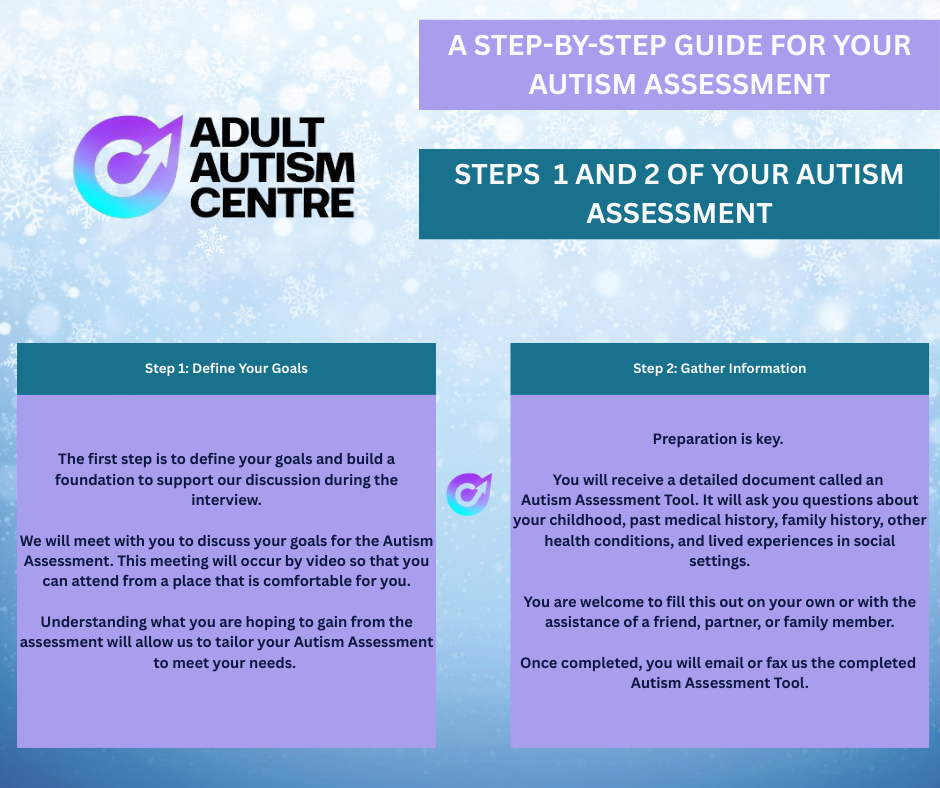
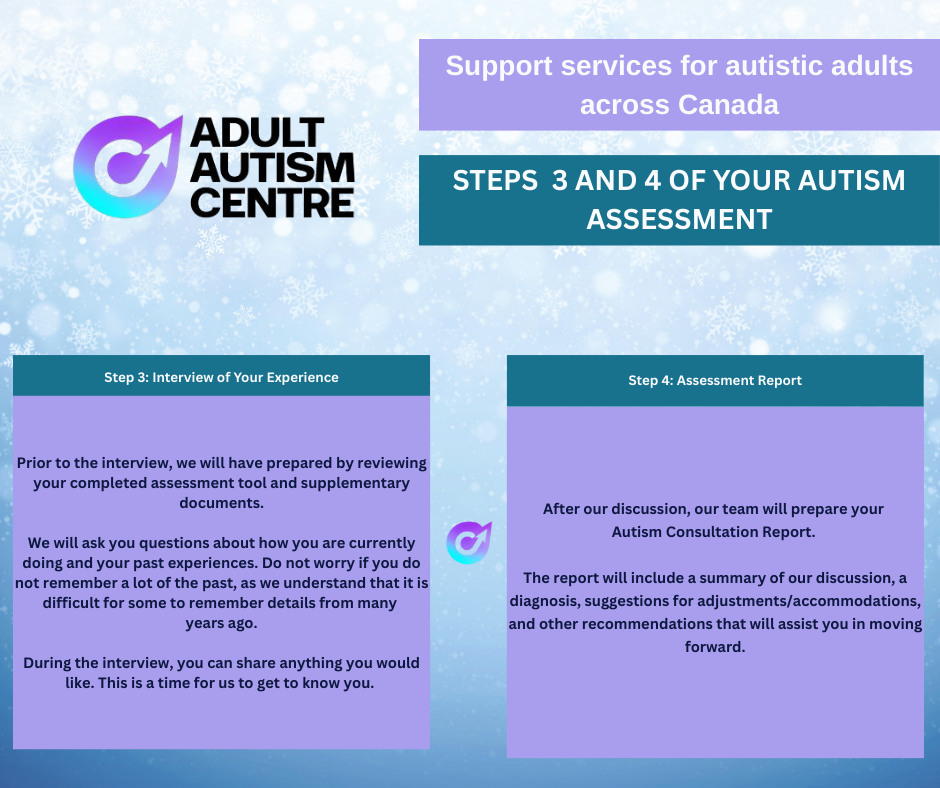
| | | Wondering If an Adult Autism Assessment is Right For You? | | |
Did you know that 50–70% of individuals diagnosed with ADHD also meet the criteria for Autism Spectrum Disorder (ASD)? While ADHD and Autism are distinct neurodevelopmental conditions, they often present with overlapping symptoms. Challenges such as difficulties with attention, interpreting social cues, and managing sensory sensitivities may occur in both.
Suppose you are experiencing symptoms and are uncertain whether they may be related to ADHD, Autism, or both. In that case, the Adult ADHD Centre and the Adult Autism Centre offer accessible, neuro-affirming assessments. Our experienced practitioners are available across Canada and can provide timely support to help you gain a clearer understanding of your experiences.
Most autism assessments cost several thousand dollars and can have lengthy wait times. The Adult Autism Centre is committed to providing timely, affordable assessments for adults in Canada for $2500. To ensure that those struggling financially also have access to an autism assessment, we do offer a Parhar Compassion Program. If a patient qualifies for the Parhar Compassion Program, the total cost of the assessment will be $1500.
Receiving an autism diagnosis can provide access to a variety of accommodations and supports. It can also provide a profound sense of self-acceptance and understanding, and help to guide a plan to move forward. Some of the lifestyle changes that can benefit autistic adults include environmental adjustments, skill development, support systems, routine development, sensory regulation, and social strategies.
An autism diagnosis can empower you to embrace your true self, advocate for your needs, and live authentically. You can trust the Adult Autism Centre to help you through the first steps of this journey.
Are you a Registered Clinical Counsellor or Psychotherapist interested in being involved with Neuroaffirmative Autism Assessments for your clients? The Adult Autism Centre provides training and opportunities to collaborate. Please contact us for for more information regarding training and/or collaboration: affirm@adultautismcentre.com
For more information on the Adult Autism Centre, please visit our website:
https://adultautismcentre.com/your-autism-assessment
To start your Adult Autism Assessment, please click on the button below!
| | | INTERESTED IN BECOMING A BESTie? | | |
Finding a community you truly connect with as an adult can be difficult, and this can feel even more challenging for many neurodivergent adults who often report feeling isolated or misunderstood.
The Bold Education Skills Treatment (BEST) Program offers an engaging way to begin 2026 with a group of peers who share similar lived experiences—people who understand the realities of navigating life with ADHD and can offer genuine support, encouragement, and practical insight.
BEST provides a welcoming, judgment-free space for adults with ADHD to learn, connect, and build confidence. Delivered entirely online, the program includes two monthly webinars that explore important topics such as sleep, medication, impulse control, organization, and focus. Sessions are led by Dr. Gurdeep Parhar—co-founder of the Adult ADHD Centre and the Adult Autism Centre—who brings over a decade of expertise in ADHD treatment and management. The program also features guest experts who share valuable guidance on areas like financial well-being, nutrition, and day-to-day organization.
Beyond the webinars, BEST members have the opportunity to connect with one another, share experiences, and offer support as they navigate daily life with ADHD. Many participants find comfort in meeting others who “get it,” and who can relate to both the challenges and the successes. ADHD does not have to feel isolating. If connection is on your wishlist for the New Year, BEST is a great place to start.
For more information on the BEST program and how to join, please visit this link:
https://adultadhdcentre.com/adhd-course/
To join our BEST Program and become a BESTie today, please click on the button below!
| | |
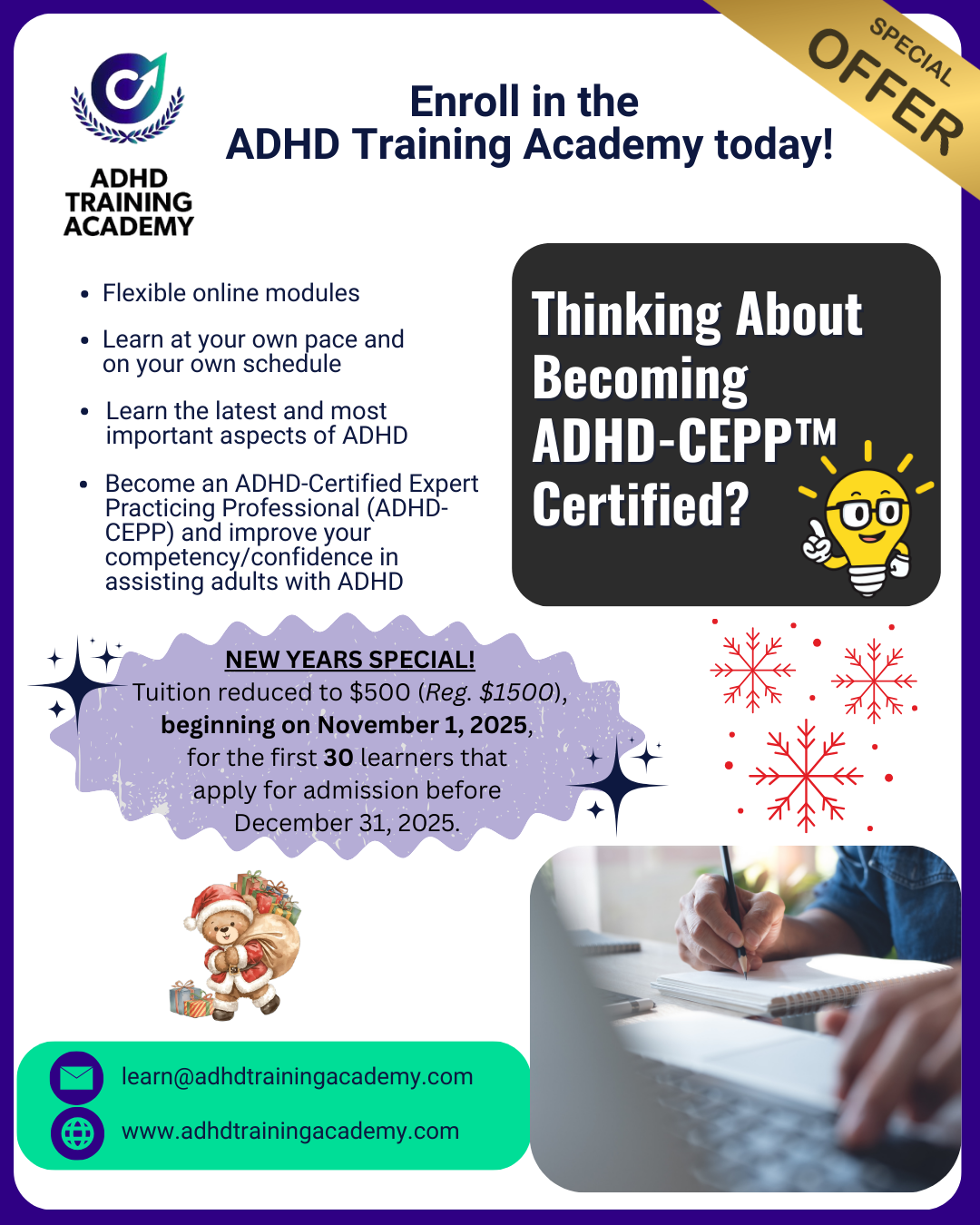
ADHD affects approximately 1 in 20 adults in Canada. Despite its prevalence, adults with ADHD often face widespread misunderstanding across various areas of life, including the workplace, educational settings, and healthcare systems. This challenge is further compounded by persistent skepticism and misinformation about the condition, which can significantly impact the daily lives of those affected. For individuals seeking to better understand and effectively support neurodivergent colleagues, partners, and community members, the ADHD Training Academy offers the ADHD-Certified Expert Practicing Professional (ADHD-CEPP™) program.
This certification provides valuable tools and knowledge to foster inclusive, supportive environments. It is an educational resource for professionals who support individuals with ADHD across a wide range of fields, such as education, healthcare, business, social work, human resources, and communications/marketing.
The ADHD-CEPP program includes 12 learning modules, each covering a distinct aspect of ADHD, such as medications, sleep, and co-existing conditions. Participants are required to complete an examination at the end of each module. Upon successfully passing all modules, learners can apply for the ADHD-CEPP certification, earning the ADHD-CEPP designation that showcases their ADHD expertise and dedication to creating a more inclusive, supportive environment for neurodivergent adults.
To learn more, please visit our website: https://www.adhdtrainingacademy.com/home
To enroll, please click on the button below!
| |
SPECIAL PROMOTION:
Until December 31, 2025, the first 30 learners who apply for admission with the ADHD Training Academy will pay only $500 (reg. $1500). To take advantage of this limited-time offer, please click on the button below.
| | | |
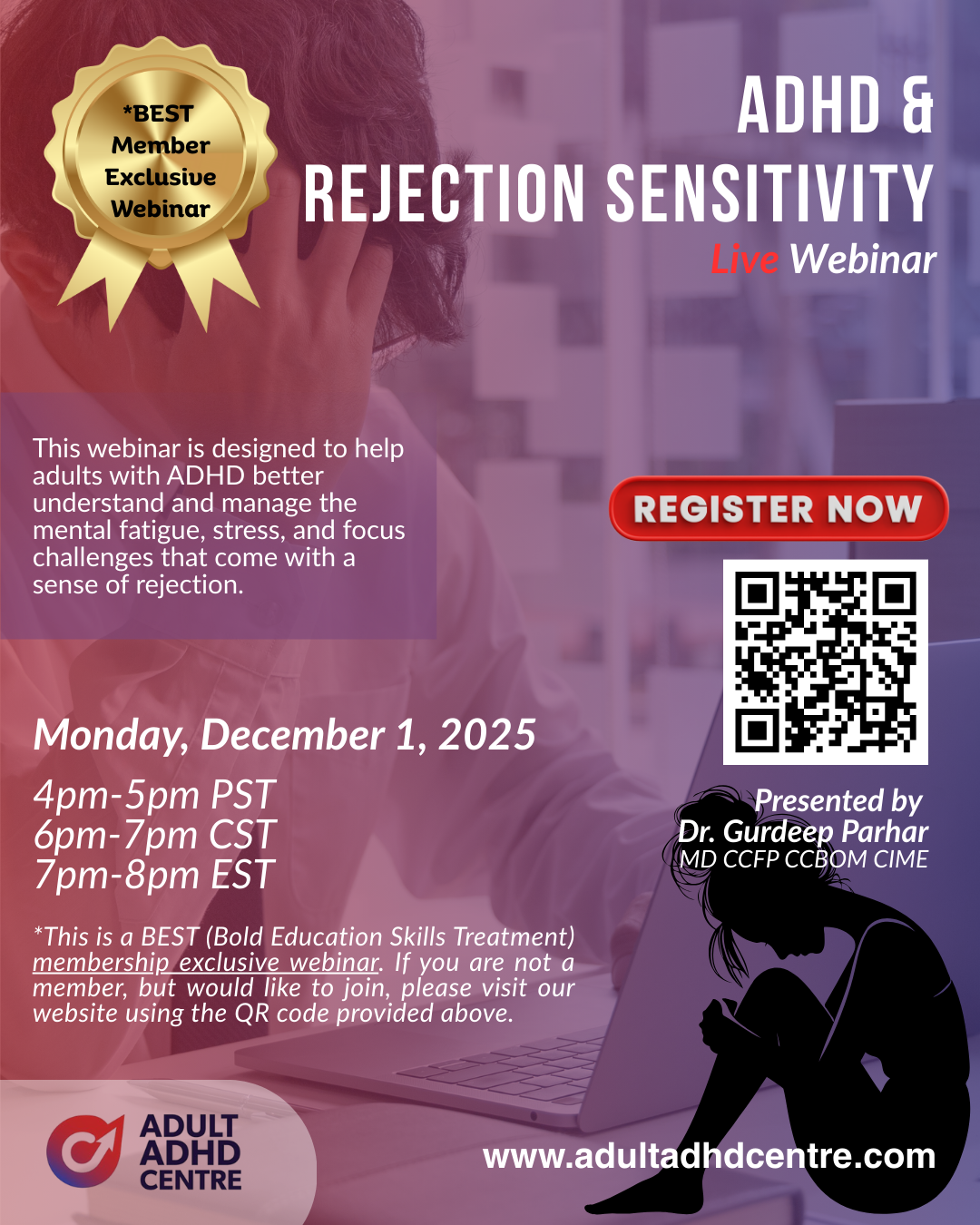
This webinar is a BEST membership exclusive webinar.
This webinar is designed to help adults with ADHD better understand and manage the mental fatigue, stress, and focus challenges that come with rejection in family and workplaces.
For more information on the BEST program and how to join, please SCAN the QR code or click on the button below.
WEBINAR DETAILS:
Monday, December 1, 2025
4pm PST | 6pm CST | 7pm EST
| |
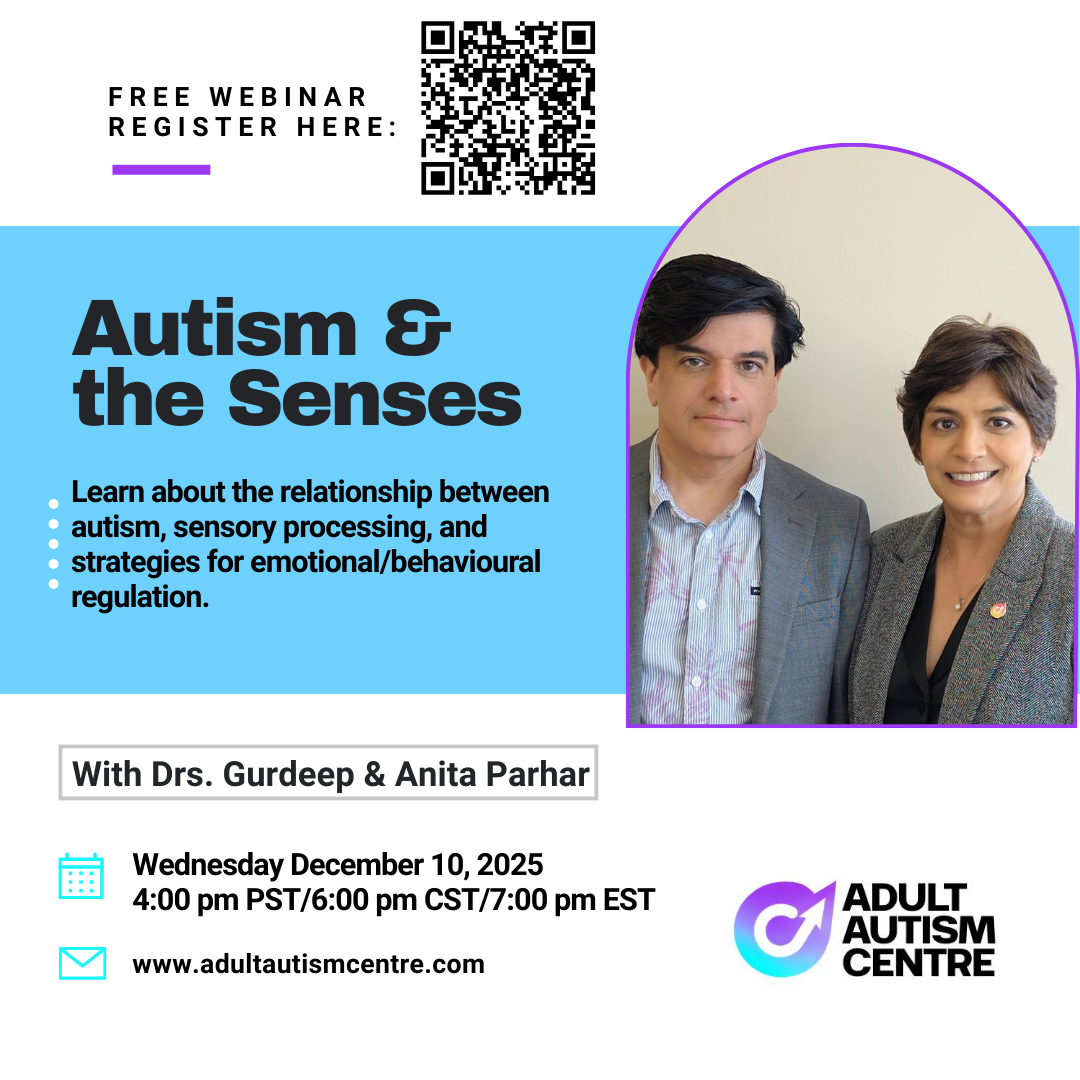
This is a FREE webinar for the public.
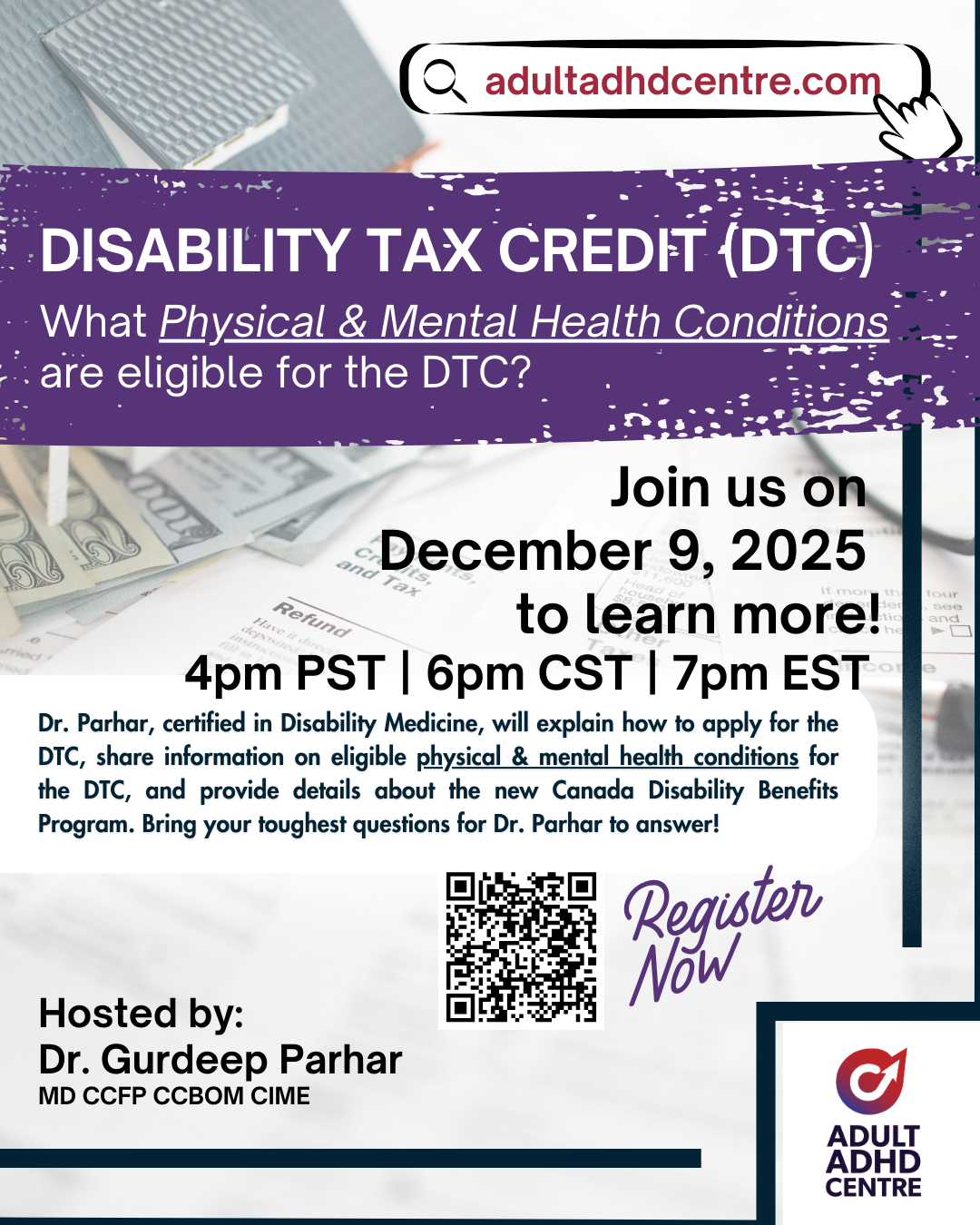
The Canadian Disability Tax Credit (DTC) is a non-refundable tax credit designed to reduce the income tax burden for individuals living with significant and prolonged physical or mental impairments. It aims to offset costs associated with disabilities and helps ensure greater financial equity. Eligibility is determined through an application certified by a medical practitioner and requires meeting specific criteria of impairment. The DTC can also provide benefits for eligible dependents and open access to other financial programs like the Registered Disability Savings Plan (RDSP).
WEBINAR DETAILS:
Tuesday, December 9, 2025
4pm PST | 6pm CST | 7pm EST
| |
This is a FREE webinar for the public, hosted by:
Dr. Gurdeep Parhar
Co-Founder, Adult ADHD Centre
Co-Founder, Adult Autism Centre
Dr. Anita Parhar
Co-Founder, ADHD Centre for Women
Co-Founder, Adult ADHD Centre
Co-Founder, Adult Autism Centre
Explore how ADHD and autism can impact sensory experiences and why it’s important for adults living with neurodiversity. This session is ideal for individuals with ADHD or autism, caregivers, family members, and professionals.
WEBINAR DETAILS:
Wednesday, December 10, 2025
4pm PST | 6pm CST | 7pm EST
| |
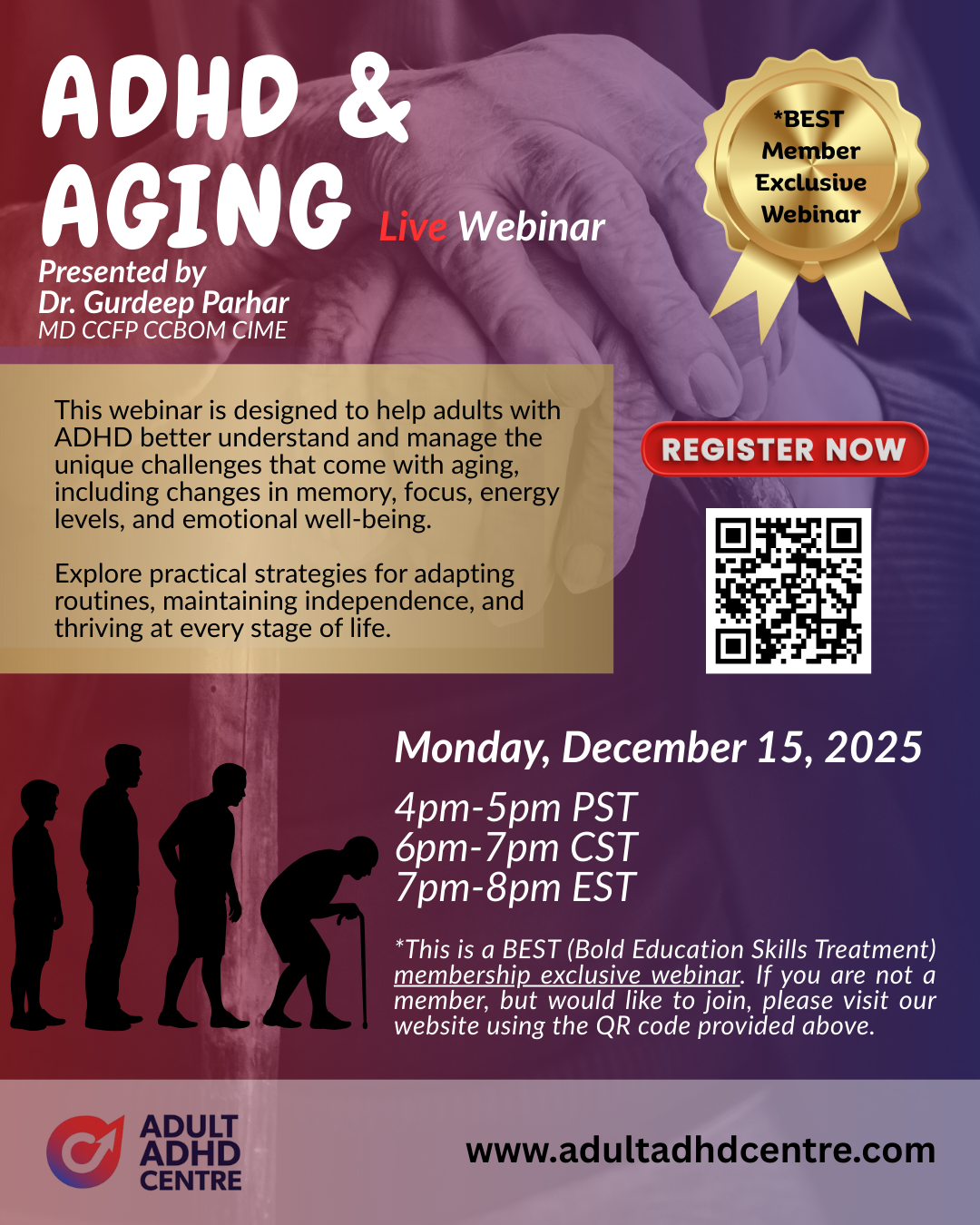
This webinar is a BEST membership exclusive webinar.
This webinar is designed to help adults with ADHD better understand and manage the unique challenges that come with aging, including changes in memory, energy, and emotional well-being. Participants will learn practical strategies for adapting routines, maintaining independence, and thriving at every stage of life.
For more information on the BEST program and how to join, please SCAN the QR code, or click on the button below.
WEBINAR DETAILS:
Monday, December 15, 2025
4pm PST | 6pm CST | 7pm EST
| | | | |