This edition of Neurodiversity News continues to celebrate, support, and empower neurodivergent individuals and their communities. Each issue shares insights into ADHD, autism, mental health, sensory experiences, accessibility, and other neurodiverse experiences; highlights helpful resources, learning opportunities, and advocacy updates; and shares information that reflects the needs of individuals, families, and professionals. Our goal remains to raise awareness, promote inclusion, and strengthen understanding across the communities we serve. We are excited to keep learning, sharing, and growing together. | | RESEARCH SPOTLIGHT OF THE MONTH |
Spring, Stress, and ADHD: How to Reset Before Summer
As spring moves toward summer, many students and families feel the pressure of the end of the school year. Final assignments, exams, schedule changes, and upcoming summer transitions can all increase stress, especially for people with ADHD.
Research and clinical guidance consistently show that ADHD is closely tied to executive functioning challenges, including planning, organization, emotional regulation, and transitions. The Centers for Disease Control and Prevention (CDC) notes that students with ADHD often benefit from school supports, clear routines, frequent feedback, and extra warning before changes in routine.
READ MORE!
💡 Insight of the Month
For many people with ADHD, the end of the school year is not just “busy.” It can be mentally draining.
The shift from structured school days to less predictable summer routines can create stress for children, teens, parents, and adults with ADHD. CHADD (Children and Adults with Attention-Deficit/Hyperactivity Disorder) highlights that summer break is one of the biggest annual transitions for families affected by ADHD, and maintaining basic routines can help reduce overwhelm.
READ MORE!
What Helps?
A spring reset does not need to be complicated. Small supports can make the transition easier:
-
Review what is left: List final deadlines, exams, events, and appointments.
-
Reduce unnecessary pressure: Focus on what matters most instead of trying to perfect everything.
-
Keep basic routines steady: Sleep, meals, movement, and screen-time boundaries can help create stability.
-
Prepare for summer early: Talk through upcoming schedule changes before they happen.
-
Build in recovery time: Rest is not wasted time. It helps the brain reset after a demanding season.
Why This Matters
ADHD support is not only about productivity. It is about creating systems that make daily life more manageable.
As the school year ends, the goal is not to push harder. The goal is to reset with structure, support, and realistic expectations before summer begins.
| | |
SOMEONE TO LEAN ON
Andrea Dasilva, Registered Clinical Counsellor
Somebody to Lean On
Growing up, we very quickly learn about physical health: pains in our tummies, scraped knees, sneezes, runny noses: we experience these discomforts for a little while and then they disappear. Mental health, on the other hand, is more complex: these experiences are not talked about much, they last longer, and they are hard to explain. Although both forms of health are essential parts of life, they do not always receive equal attention. When seen from a neurodivergent lens, the two dynamically influence each other in varied ways.
It Is All Connected
For everyone, mental health inevitably affects physical health. Emotions give colour to physical experiences. Given the additional challenges often in place for neurodivergent individuals, there is a greater risk of depression, anxiety and burnout – as well as autoimmune and connective tissue disorders. Chronic masking, societal stigma, and environmental stressors add to these existing complexities. Feelings of loneliness, isolation, overwhelm, and exhaustion might be crushing!
Dropping Anchor
When mental health is given greater priority, it is like dropping an anchor in a boat caught in a storm. Acknowledging the reality of difficult experiences and increasing awareness of helpful strategies to regulate emotions and physical sensations are very effective and accessible options for coping. Reach out and accept the help around you. Whether you lean on friends, family, coworkers, or even helpful bystanders, or find comfort in online support groups, there are always people eager to offer a listening ear or a helping hand.
During particularly tough times, it might seem like there is no other choice, but we do not need to go through such times on our own. In affirming communities, it is possible to connect with someone to lean on for support or help with advocacy; to boost our mental wellbeing.
| | CENTRE FOR ADHD AWARENESS, CANADA (CADDAC) | |
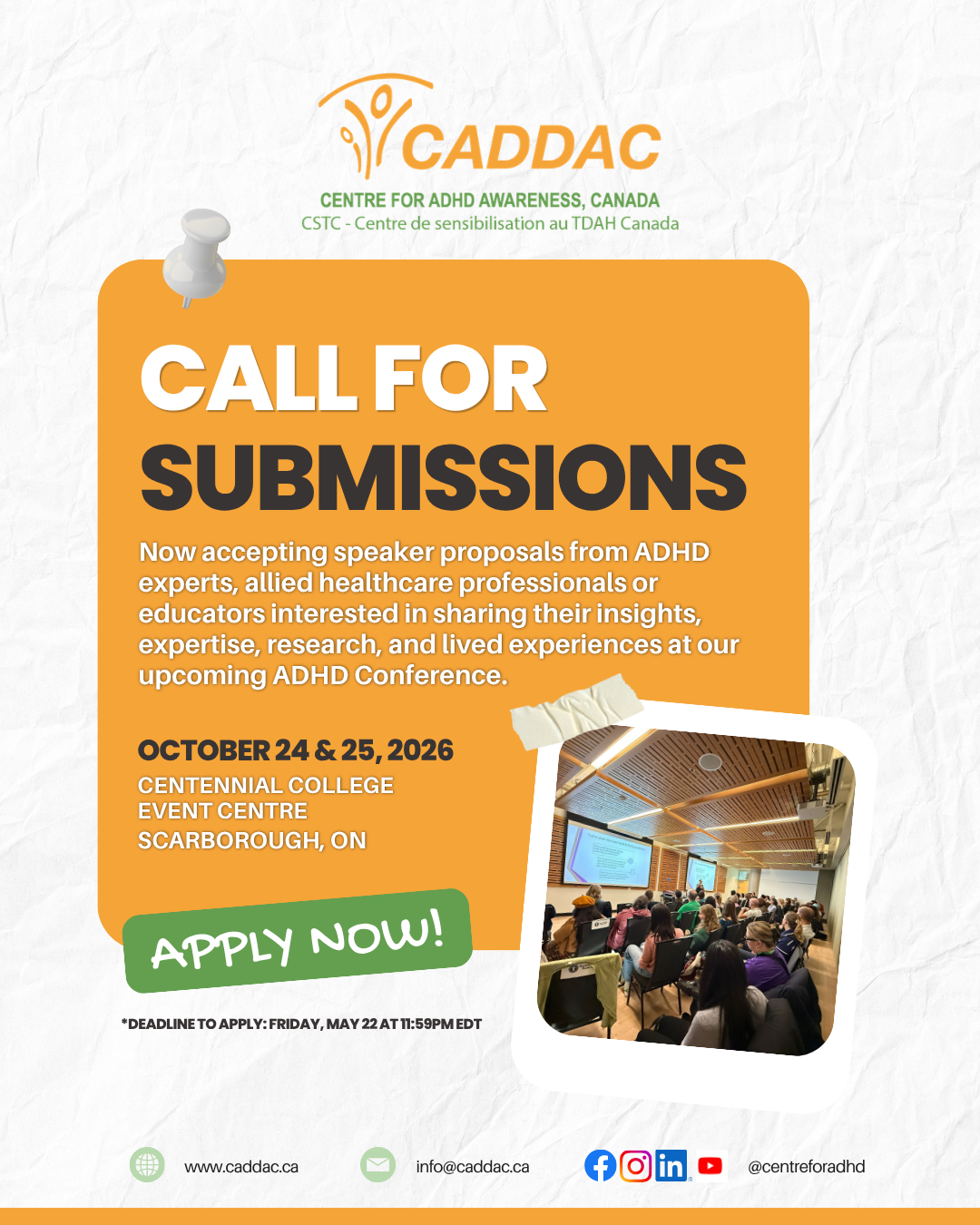
CADDAC is now accepting speaker proposals for their upcoming 18th Annual ADHD Conference at Centennial College in Scarborough, Ontario!
If you are an ADHD expert, allied healthcare professional, or educator with insights, research, or lived experience to share, they would love to hear from you.
⏰ Apply by Friday, May 22 at 11:59 PM EDT.
| | B.E.S.T. MEMBERSHIP PROGRAM | | DISABILITY TAX CREDIT (DTC) | | AUTISM AWARENESS WEBINARS | | |
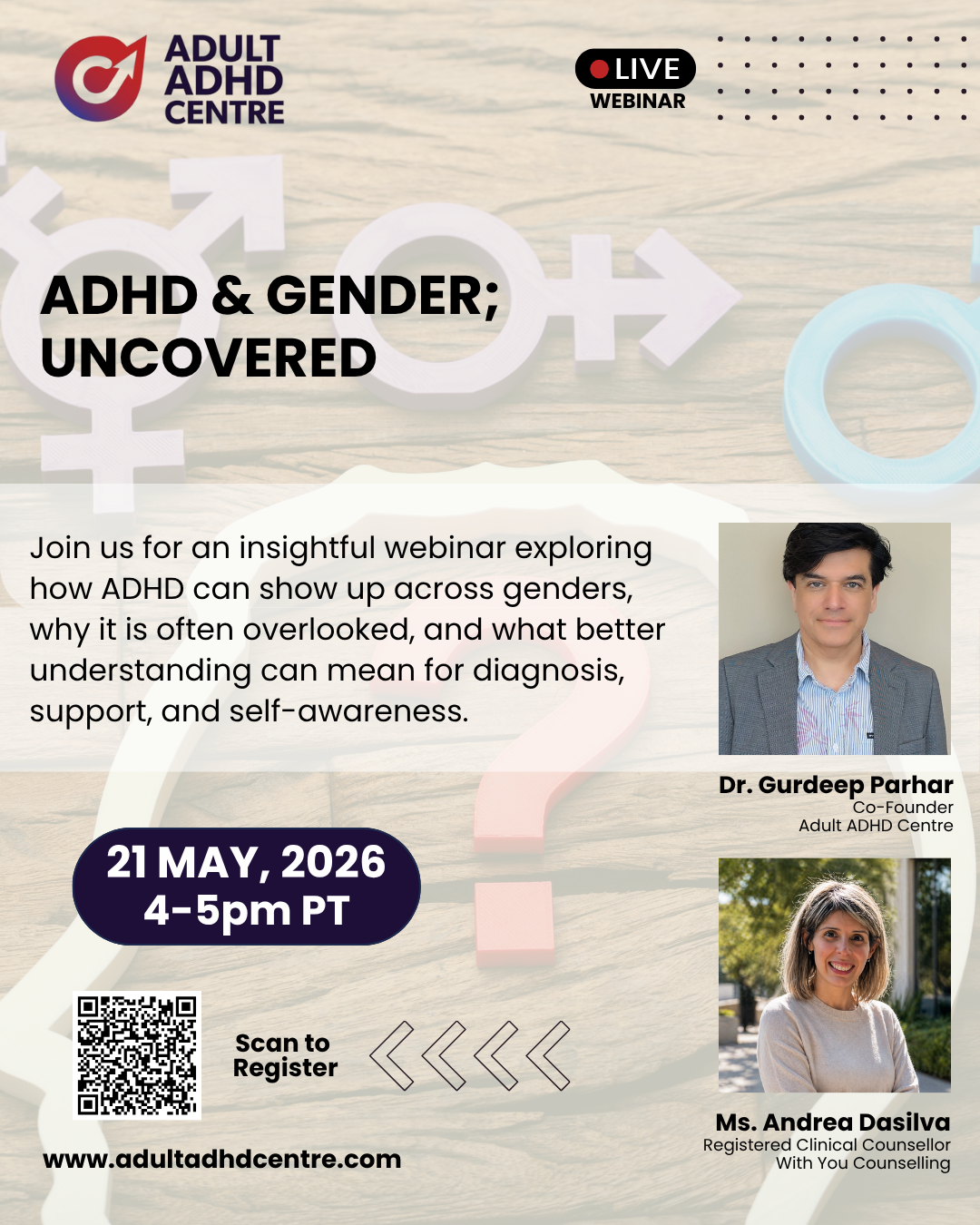
ADHD can present differently across genders, which is one reason it is often overlooked or misunderstood. Join us as we explore how symptoms may show up in different ways, how masking can affect recognition, and why a better understanding of gender matters in diagnosis and support.
WEBINAR DETAILS:
Thursday, May 21, 2026
4pm PT | 7pm EDT
| |
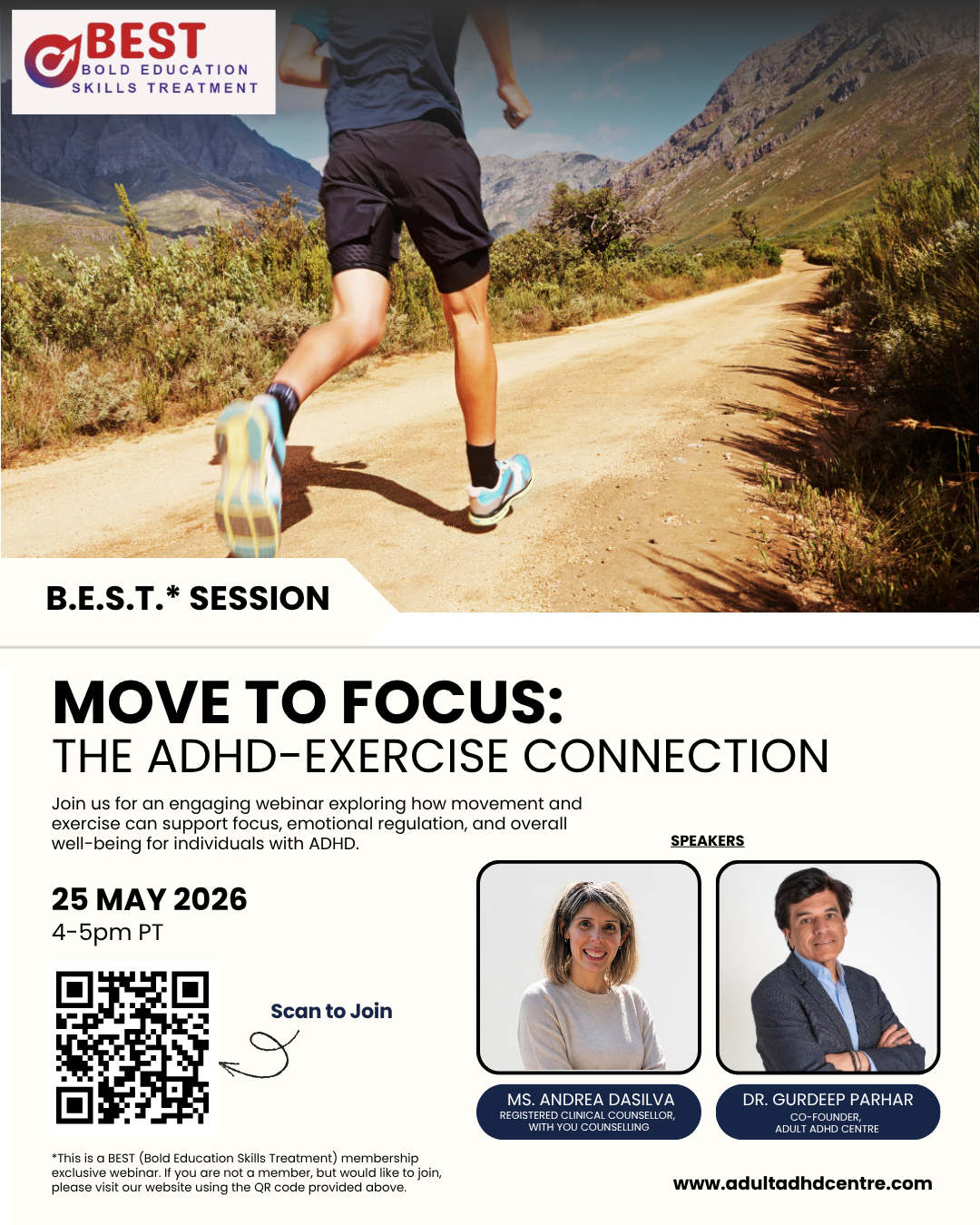
ADHD and movement are closely connected, yet the role of exercise in focus, regulation, and daily functioning is often underestimated. Join us to build a clearer understanding of the ADHD-exercise connection and why movement can be an important part of support.
WEBINAR DETAILS:
Monday, May 25, 2026
4pm PT | 7pm EDT
| |
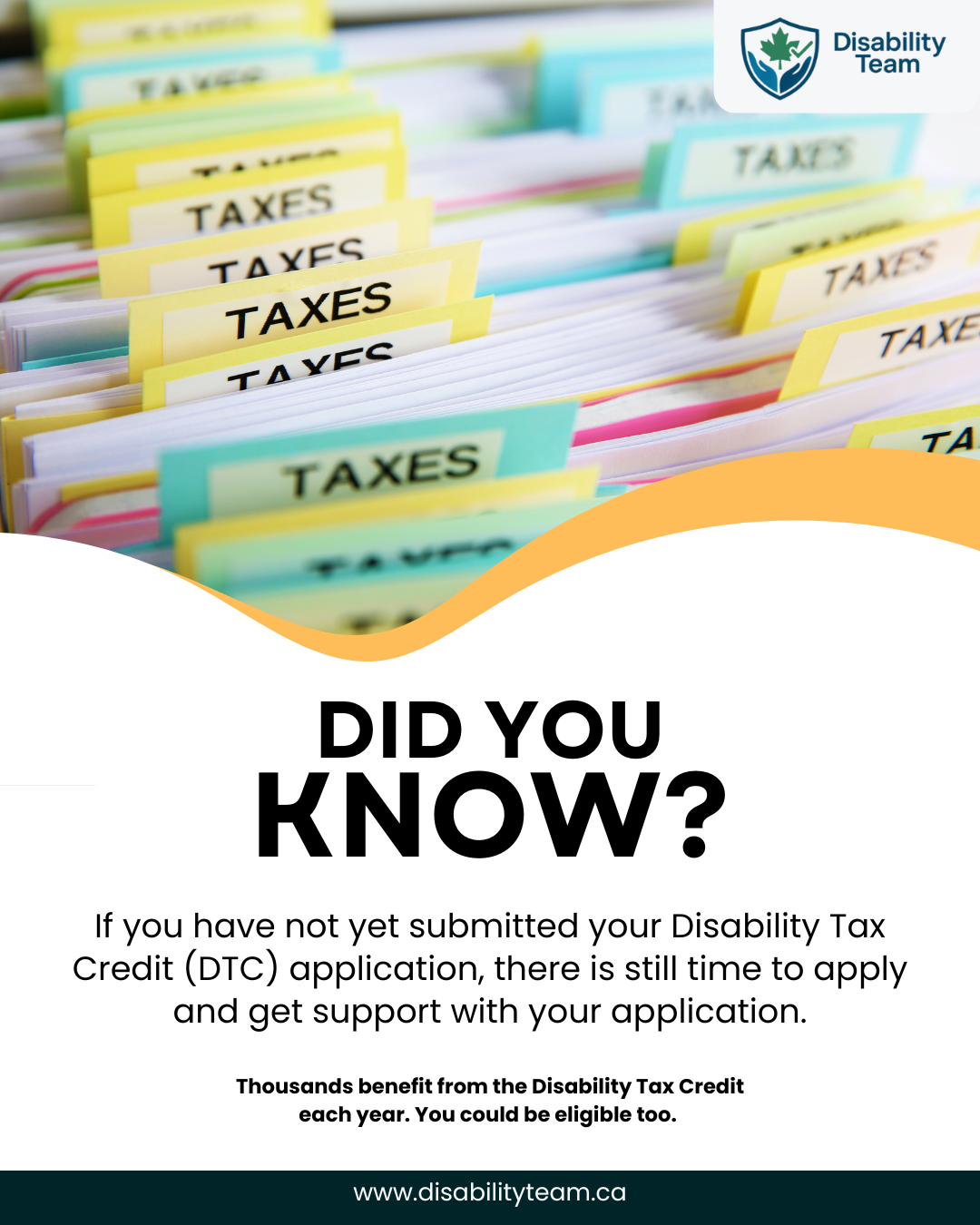
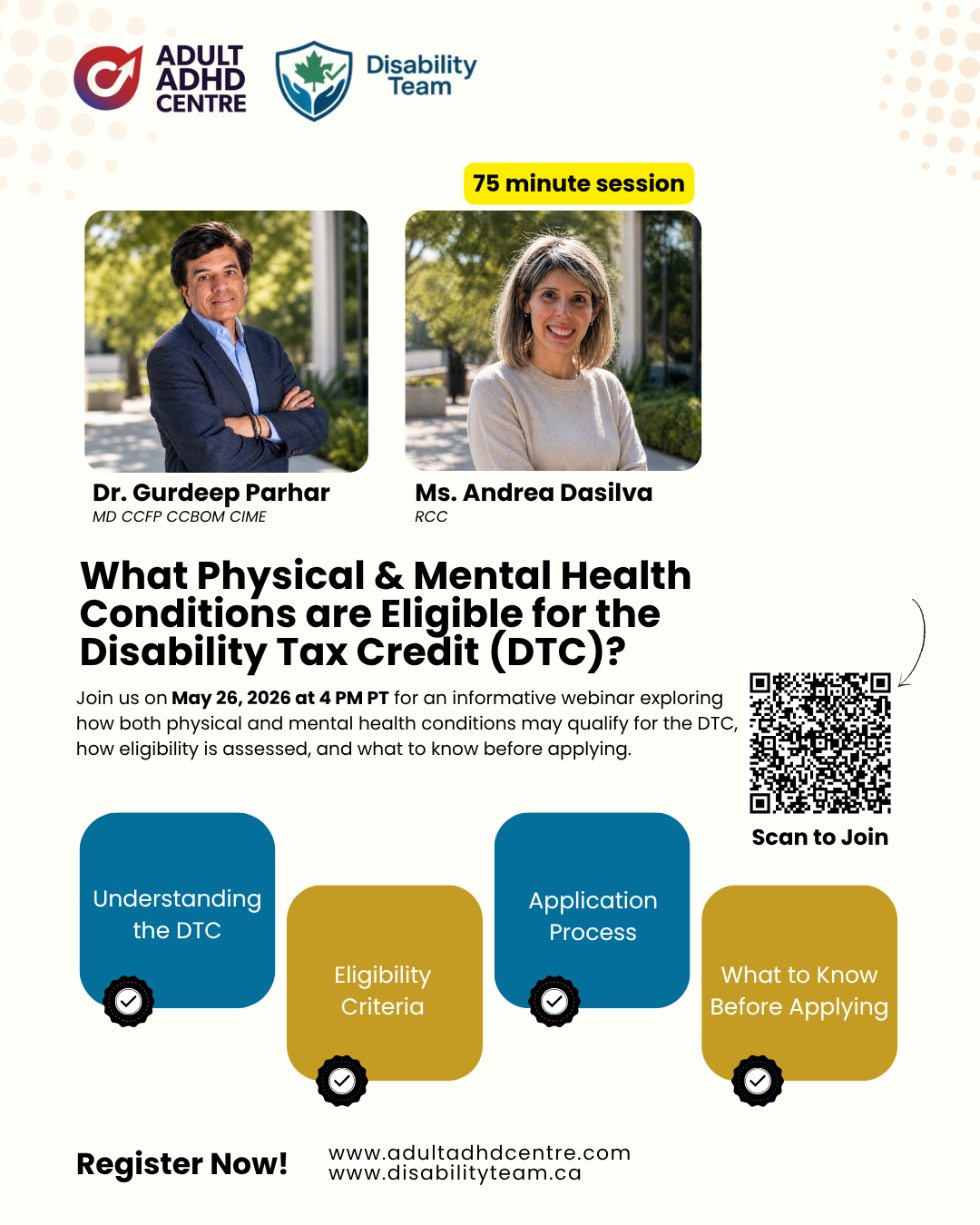
Mental health conditions and physical health conditions may qualify for the Disability Tax Credit, but eligibility is often misunderstood. Join us to learn more about which conditions may be considered, how eligibility is assessed, and what to know before applying.
WEBINAR DETAILS:
Tuesday, May 26, 2026
4pm PT | 7pm EDT
| |
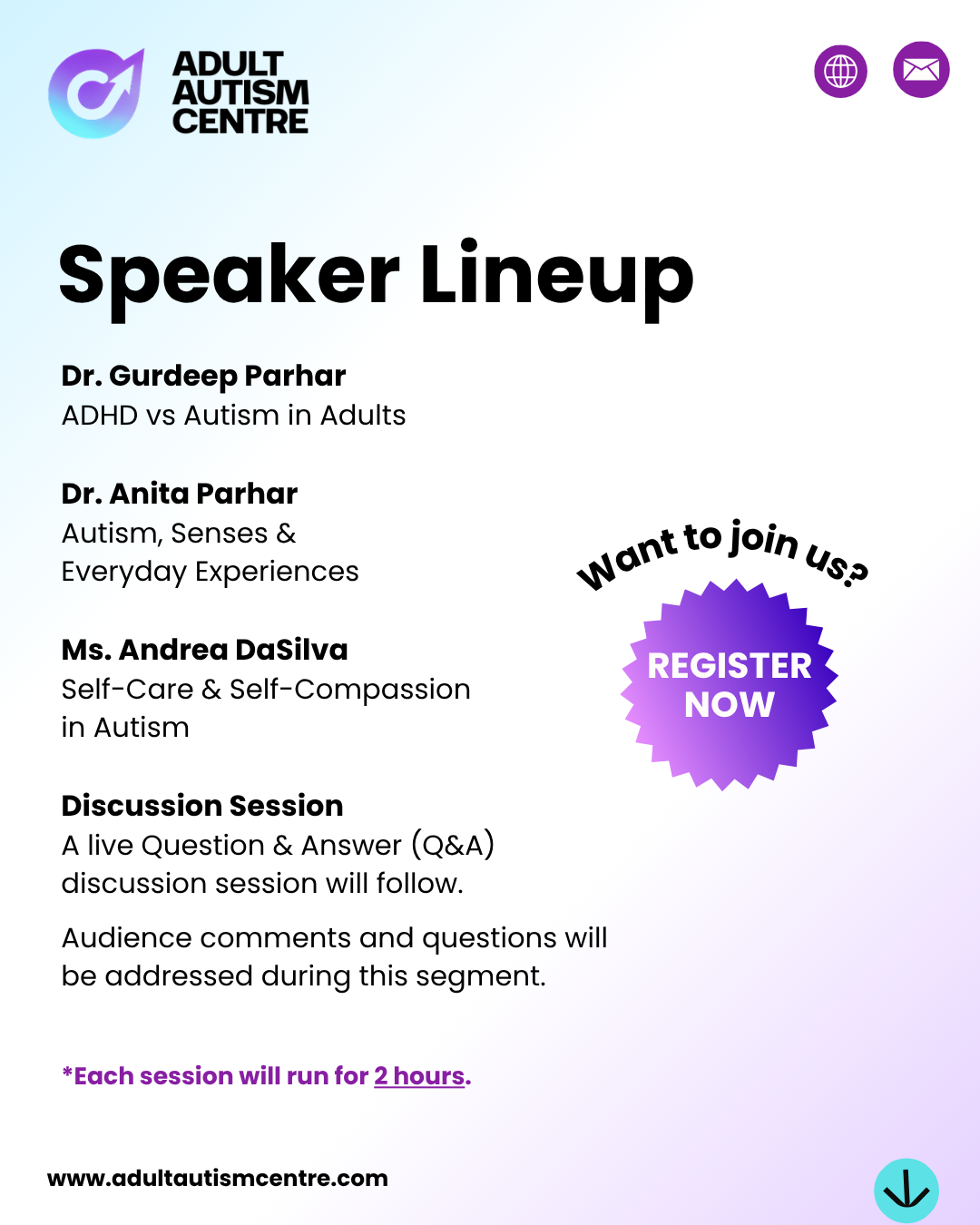
Sensory differences can shape how people experience everyday life in ways that are often misunderstood. Join us as we explore how sensory processing can affect seeing, hearing, touch, and overall daily functioning, and why understanding these differences matters for meaningful support.
WEBINAR DETAILS:
Thursday, May 28, 2026
4pm PT | 7pm EDT
| | |
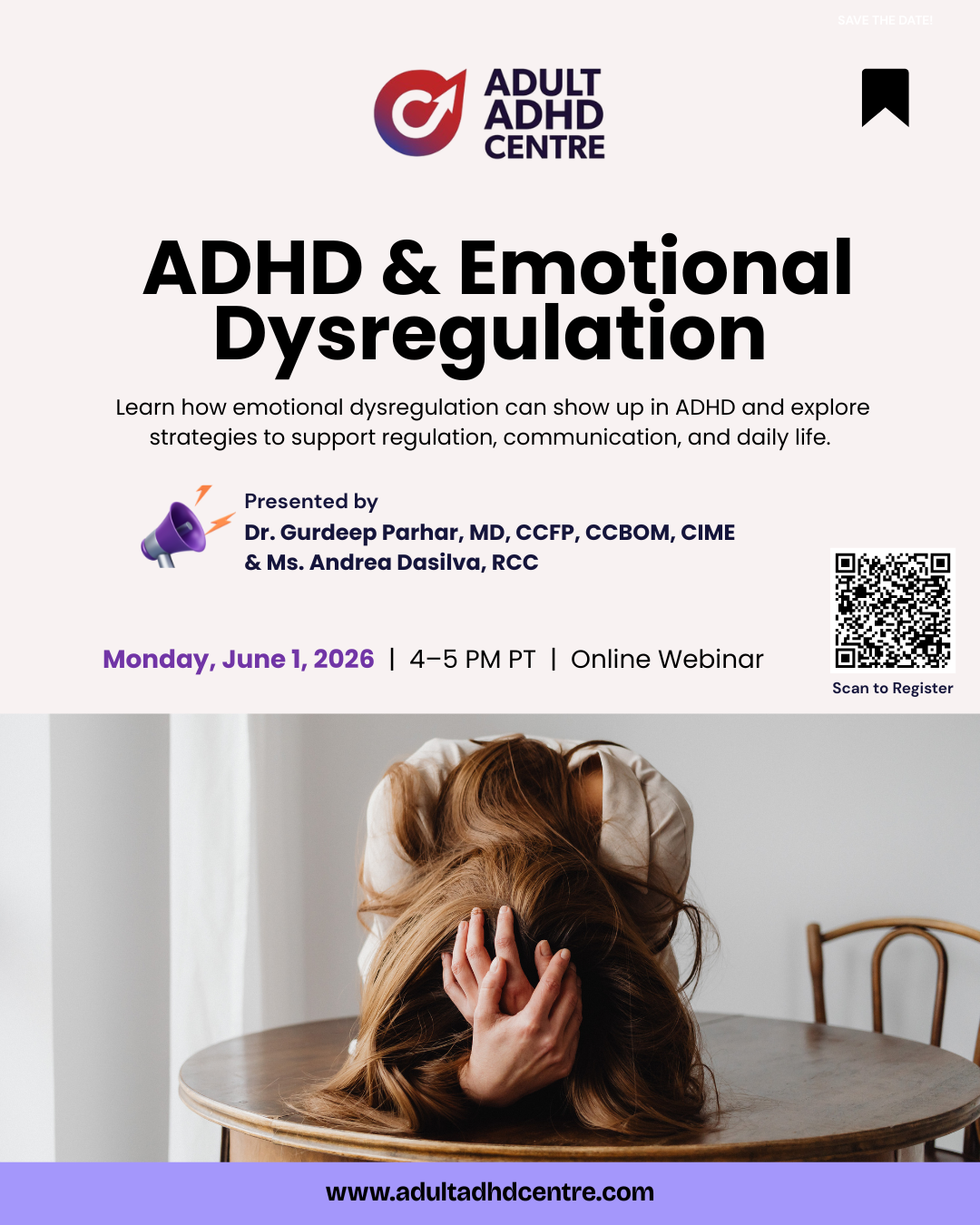
Emotional dysregulation can affect how people with ADHD respond to stress, frustration, overwhelm, and everyday challenges. Join us to learn how emotional dysregulation may show up in ADHD, why it is often misunderstood, and practical strategies that can support regulation, communication, and daily life.
WEBINAR DETAILS:
Monday, June 1, 2026
4pm PT | 7pm EDT
| |
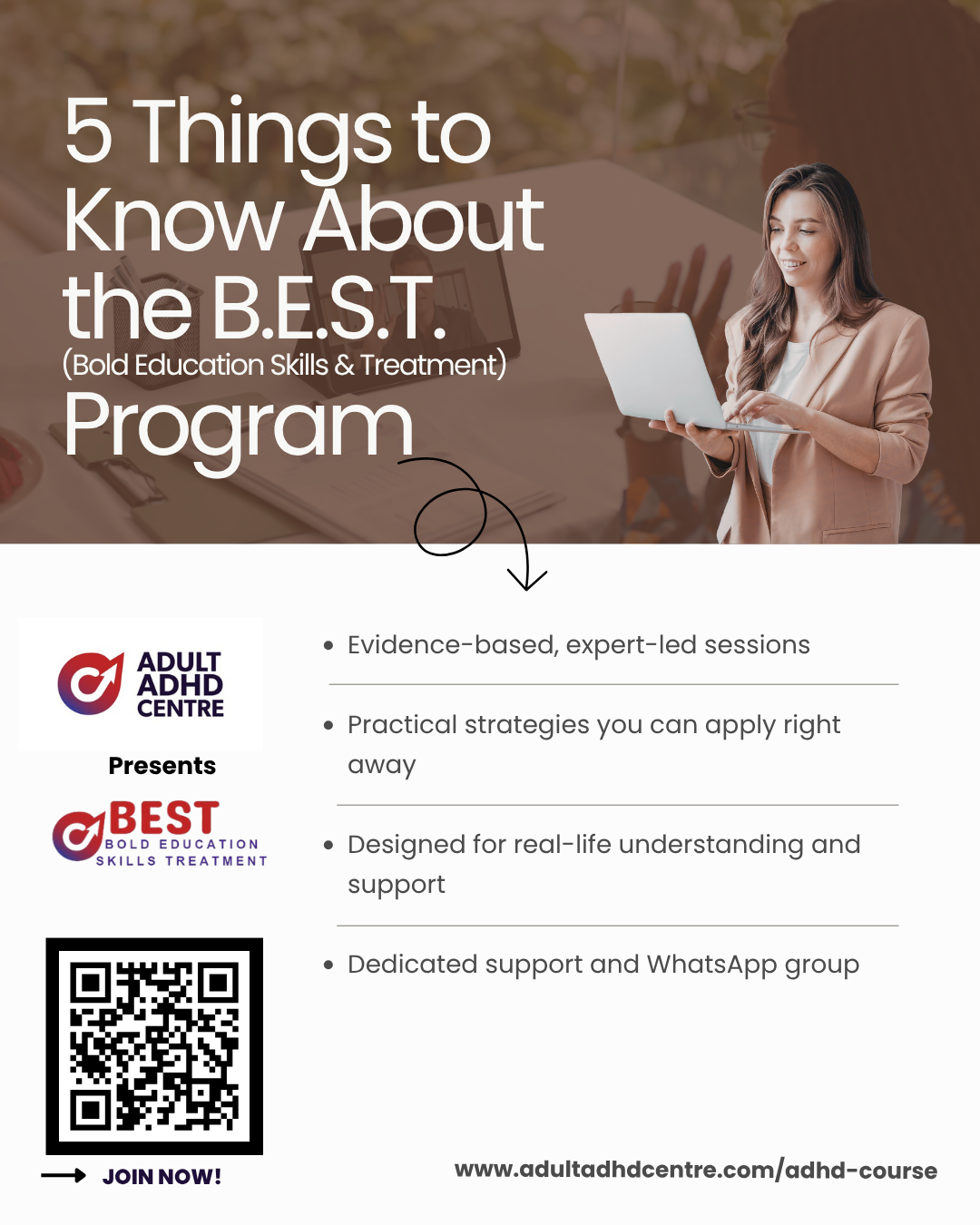
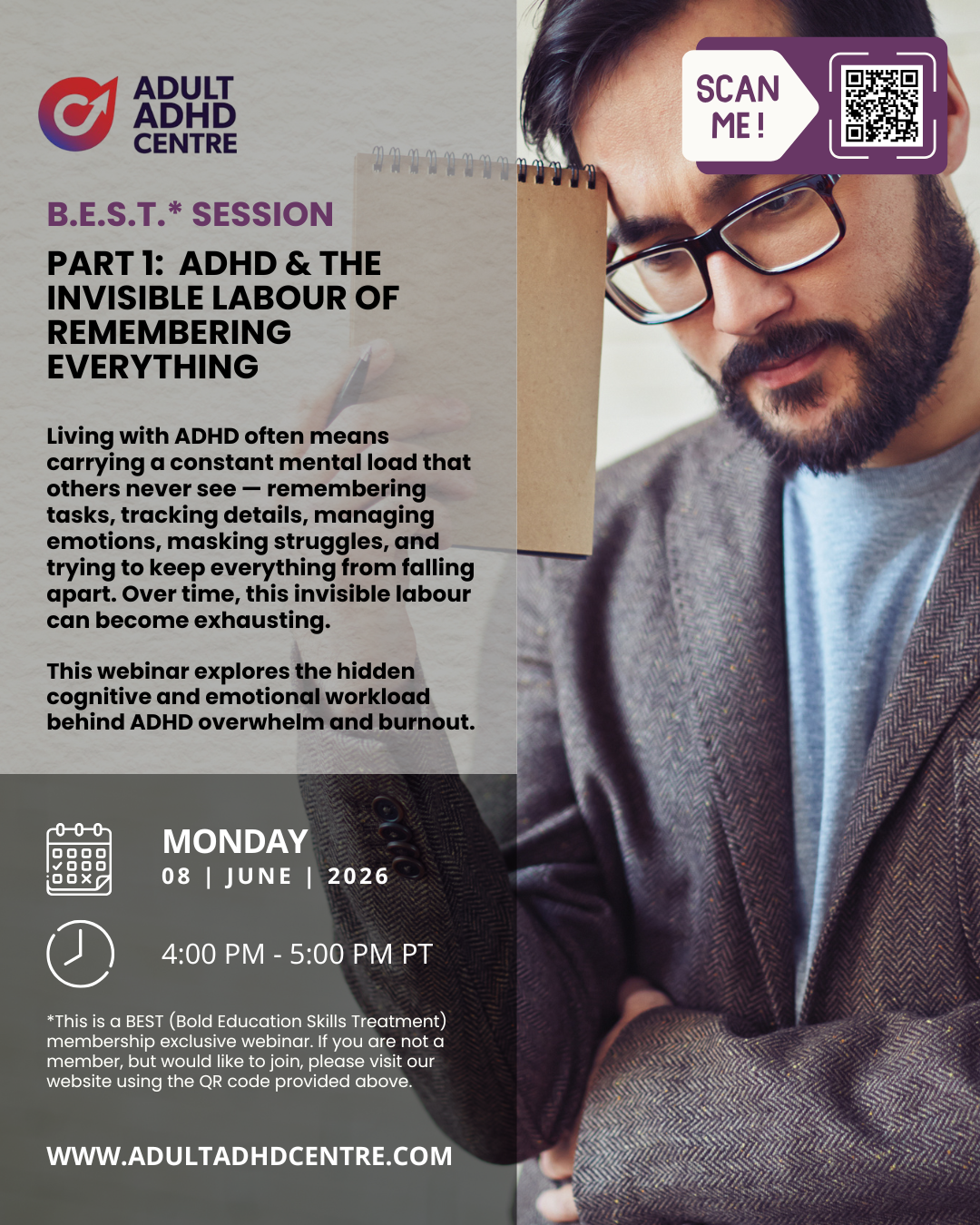
Become a BESTie and join this very informative two-part webinar series.
Scan the QR code to learn more about our B.E.S.T. membership program.
WEBINAR DETAILS:
Monday, June 8, 2026
4pm PT | 7pm EDT
| |
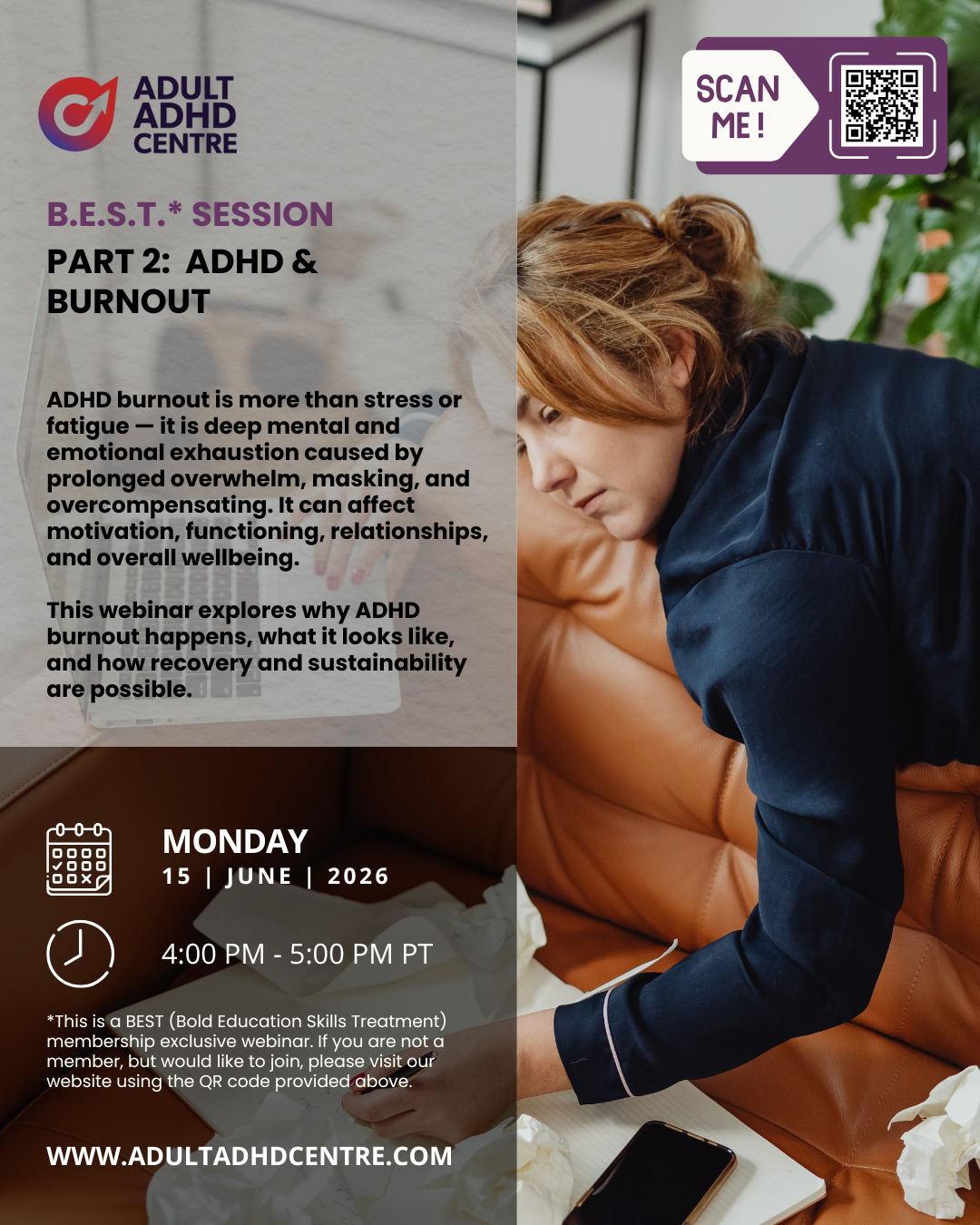
Become a BESTie and join this very informative two-part webinar series.
Scan the QR code to learn more about our B.E.S.T. membership program.
WEBINAR DETAILS:
Monday, June 15, 2026
4pm PT | 7pm EDT
| |
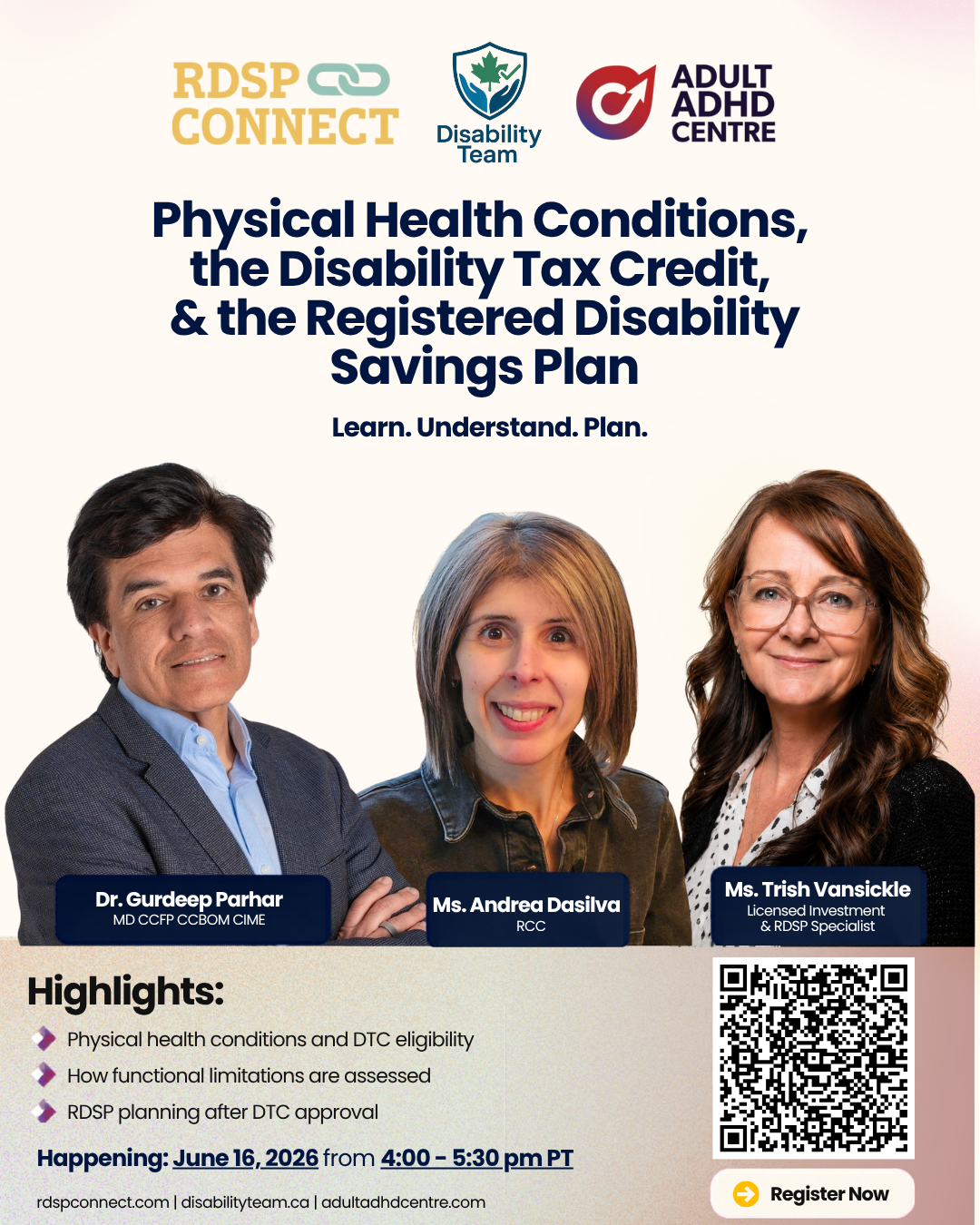
Physical health conditions may qualify for the DTC, but eligibility is often misunderstood. Join us to learn which conditions may be considered, how DTC eligibility is assessed, and what to know before applying. The session will also discuss how the DTC can support access to the RDSP.
WEBINAR DETAILS:
Tuesday, June 16, 2026
4pm PT | 7pm EDT
| |
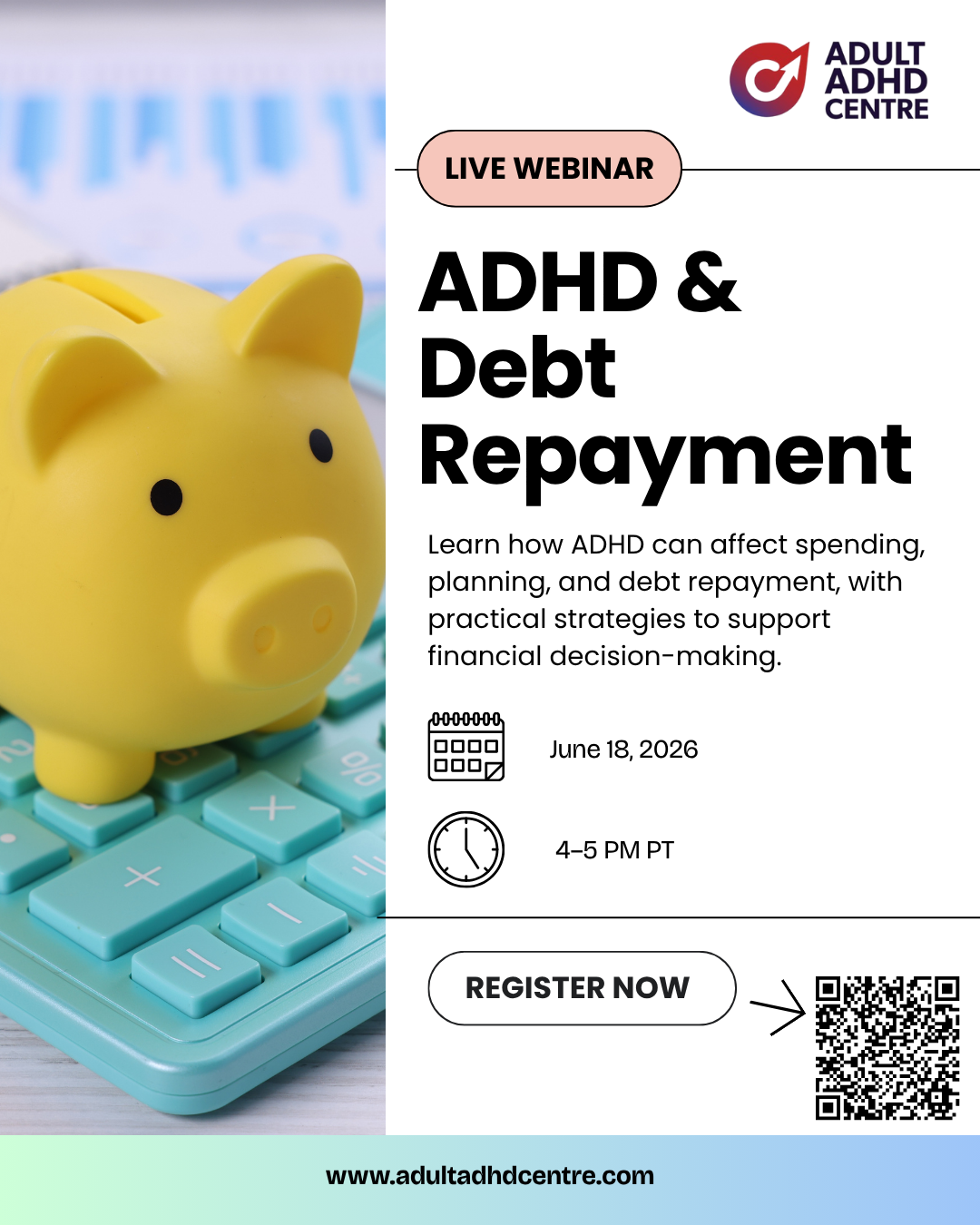
Managing debt can feel overwhelming when ADHD affects planning, impulse control, organization, and follow-through. Join us to learn how ADHD can impact spending, repayment, and financial decision-making, and explore practical strategies to support budgeting, debt management, and greater financial confidence.
WEBINAR DETAILS:
Thursday, June 18, 2026
4 pm PT | 7 pm EDT
| |
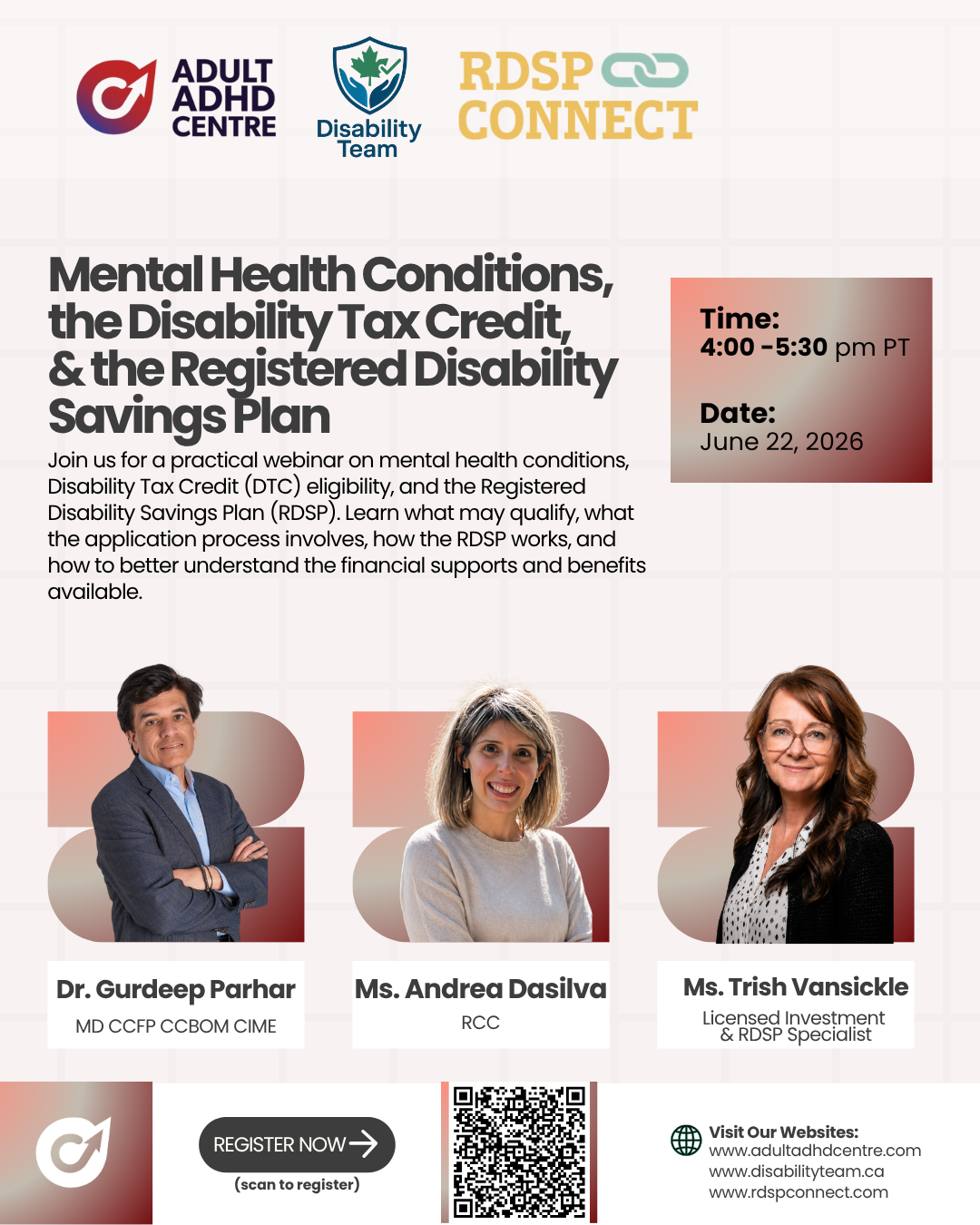
Mental health conditions may qualify for the DTC, but eligibility is often misunderstood. Join us to learn which mental health conditions may be considered, how DTC eligibility is assessed, and what applicants should know before applying. The session will also discuss financial supports and benefits that may be available through the DTC and RDSP.
WEBINAR DETAILS:
Monday, June 22, 2026
4pm PT | 7pm EDT
| | | | |