2023 Fishing Licenses are Available Online | | |
|
Fishing Fuels Conservation!
100% of your investment funds fish and fishing
| |
Latest Updates from the Fisheries Division
To advance the conservation, enhancement, restoration, use, and appreciation of Connecticut’s fish, fisheries and fish habitats.
| |
|
Marine Fish Seasons
Open or Closed this Month
| |
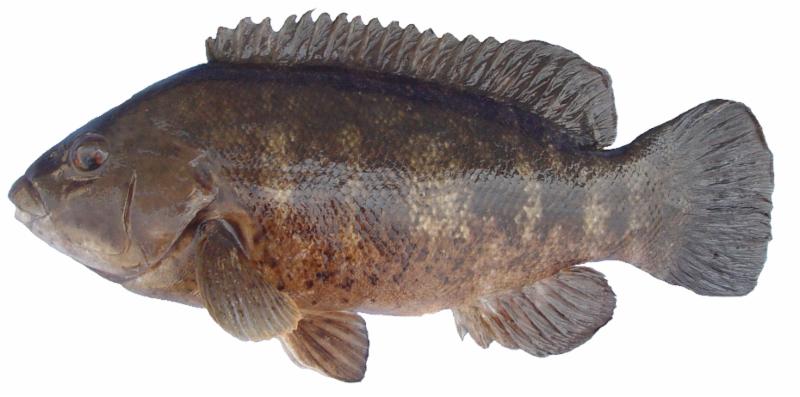
OPEN: Tautog (Blackfish)re-opens on July 1 and runs until August 31. Two fish per angler. 16 inch minimum length. | |
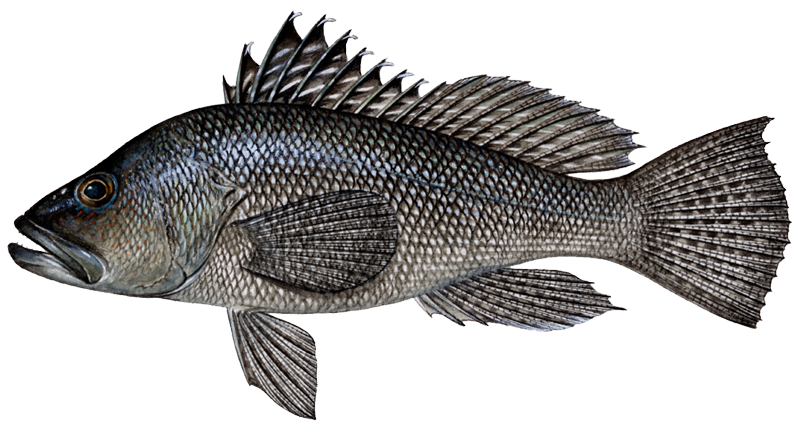
CLOSED: Black Sea Bass is closed thru July 7 and RE-OPENS on July 8. Daily limit of 5 fish, 16 inch minimum length. | |
First Fish! Congratulations | |
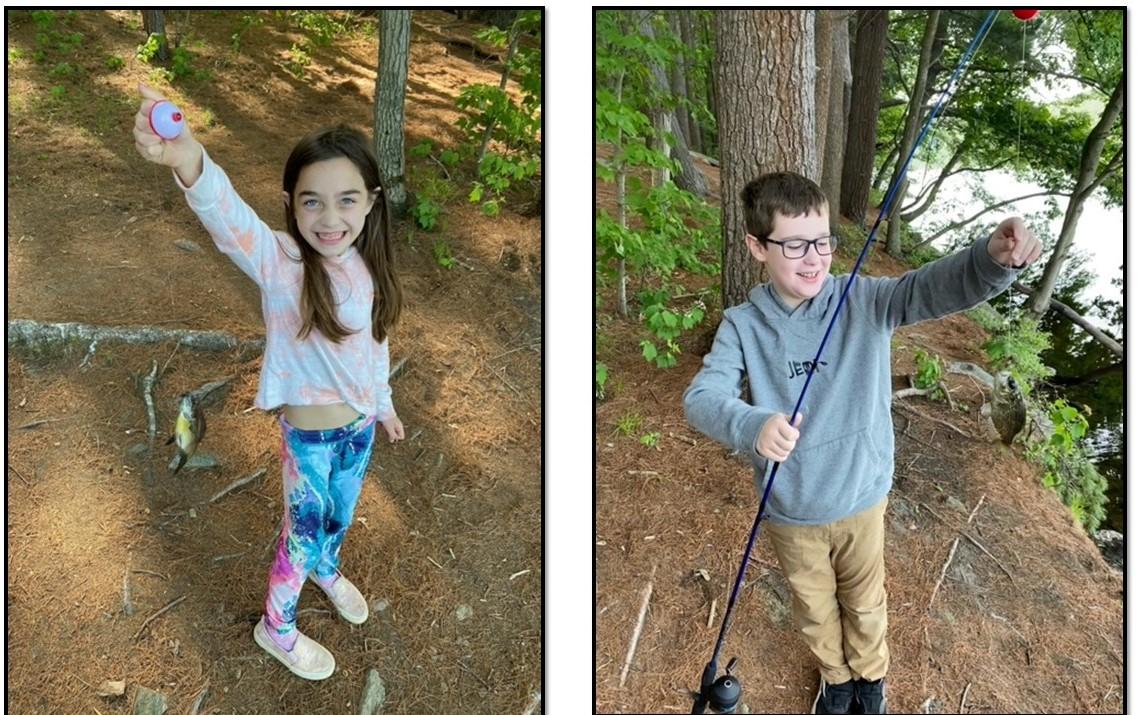
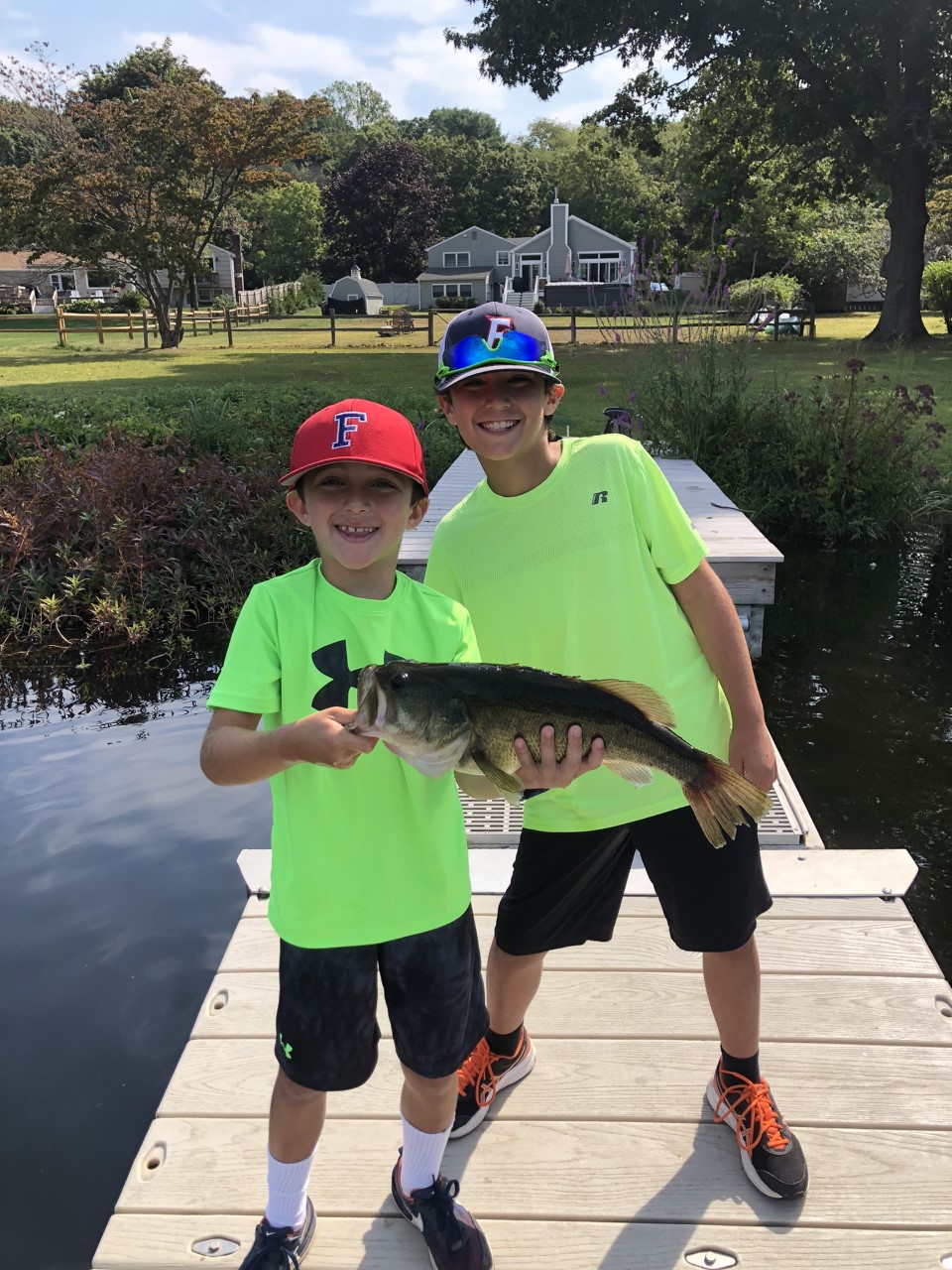
Congratulations Nora and Jack for catching your First Fish!! We are sure this is just the beginning of many. Welcome to this lifelong sport. | |
New State Record(s) - one is Actually a Fluke | |
|
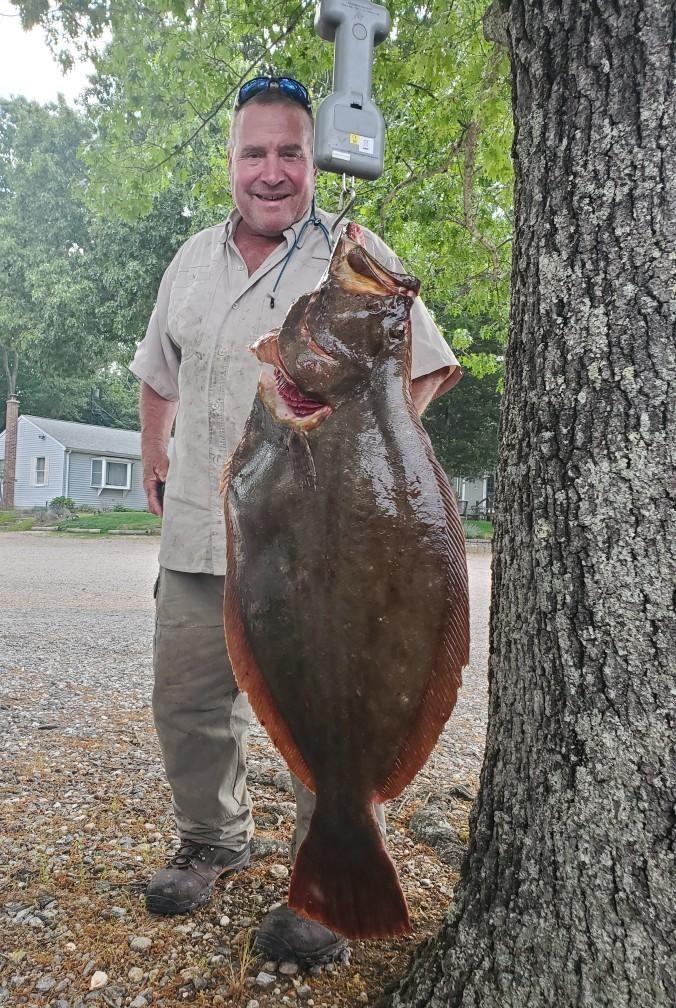
Congratulations to Bill Proulx for his new state record Summer Flounder (Fluke). It weighed in at 15.3 pounds, at 32 5/8 inches long with a girth of 26 1/4 inches. It surpasses the previous record caught by Michael Maffucci of 14lb 13.76 oz and 31.5 inches back in 2019. Awesome fish!
If you catch a big one, the CT Trophy Fish Award Program and Angler Recognition program offers a simple and easy way to submit your trophy - learn more here.
| |
New Common Carp State Record | |
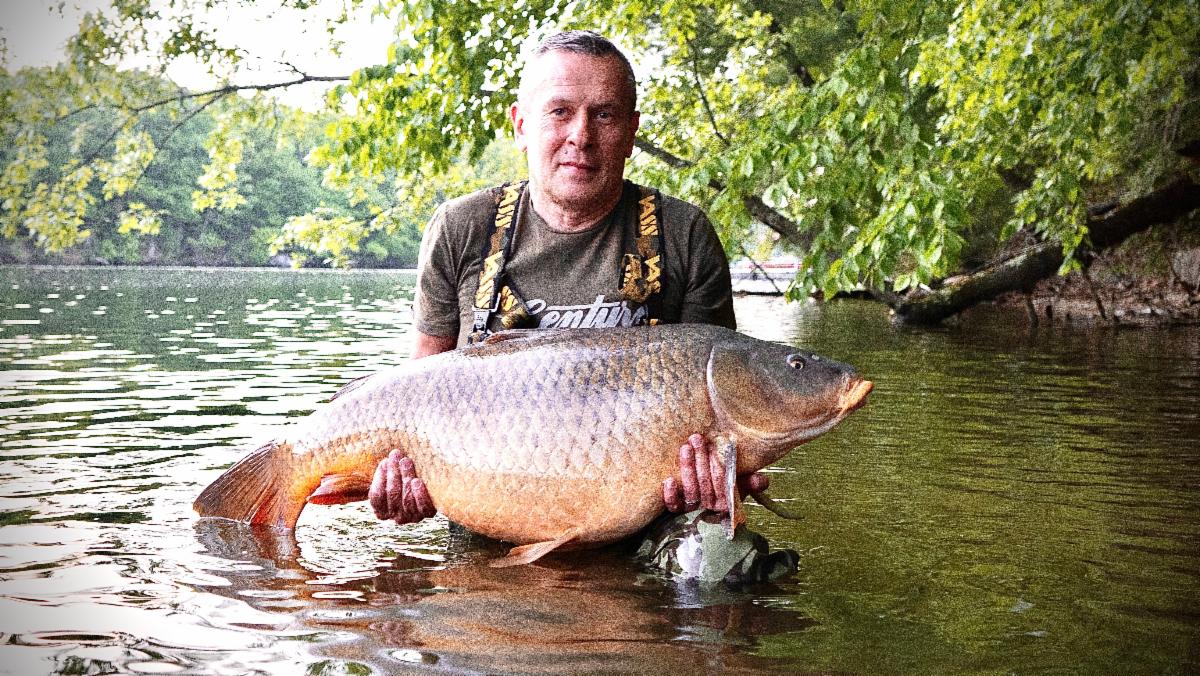
Please join the Fisheries Division in congratulating Robert Jagiello on the catch of a 45 pound 1 ounce Common Carp from Lake Lillinonah on May 27, 2023. This fish takes down the 2012 record held by Mike Hudak, which was 43 pounds 12 ounces from the Connecticut River. | |
|
New Bowfin State Record
Catch and Release
| |
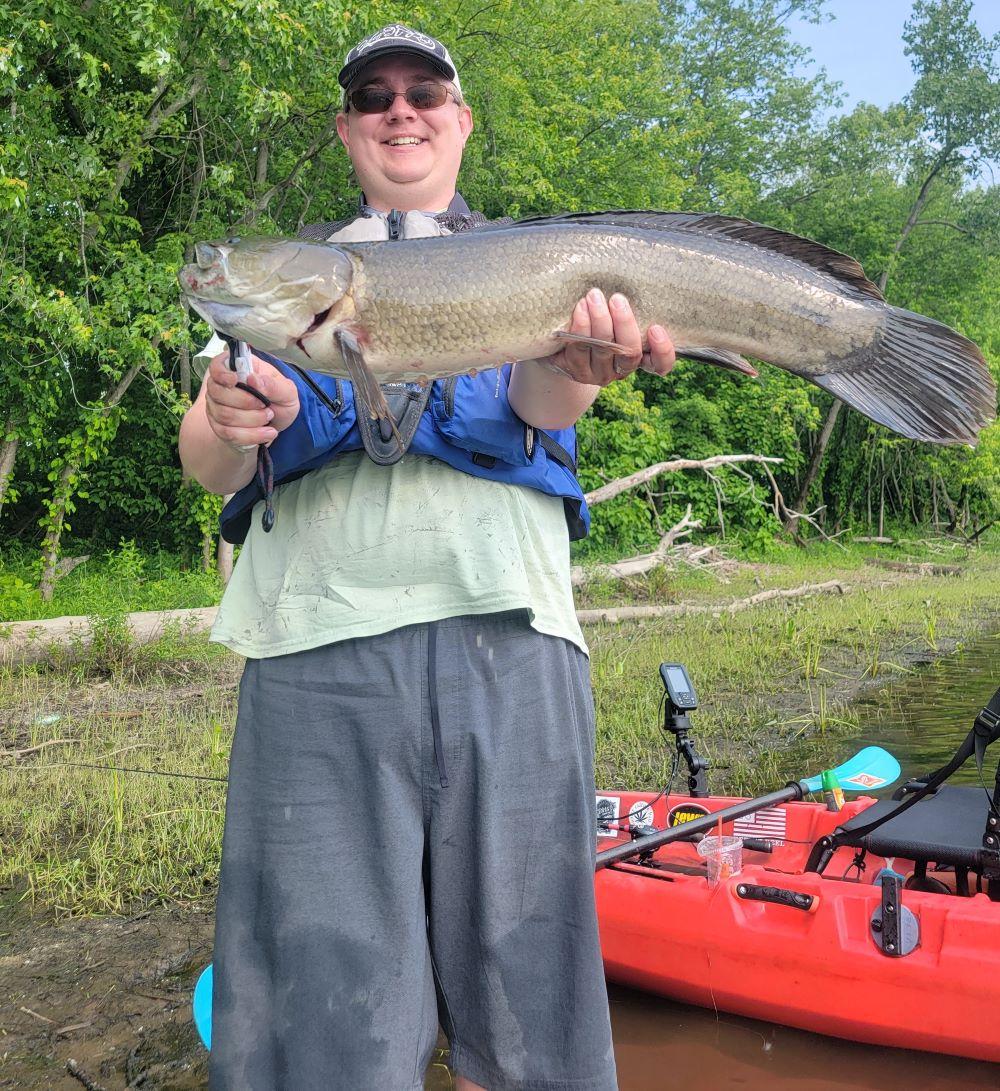
Please join the Fisheries Division in congratulating Benjamin Florian on the catch of a 28.5 inch Bowfin from Crow Point Cove in Wethersfield. This fish takes down the 2022 record held by Adam Chrzanowski, which was 28.25 inches from Pecausett Pond, Portland. | |
Fish Consumption Advisory for 2023 | |
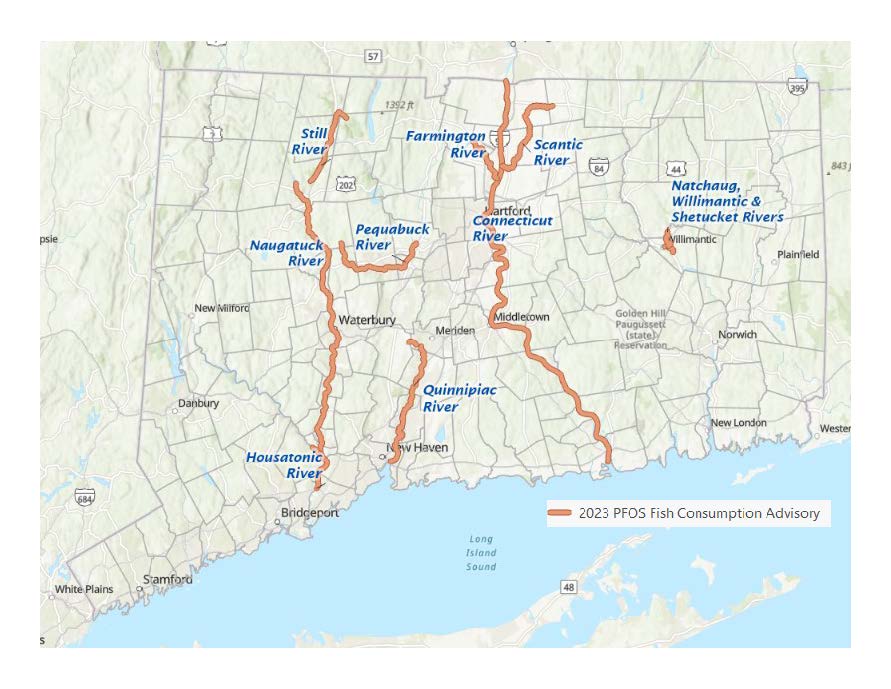 | |
The Connecticut Department of Public Health (DPH) issued new or modified consumption advisories for certain fish species caught in several waterbodies in Connecticut on June 16th. DPH is taking this action in close coordination with the Department of Energy and Environmental Protection (DEEP).
View the advisory More information on PFAS can be found here
Upon evaluating perfluorooctane sulfonic acid (PFOS) concentrations in fish tissue sampled in 2017-2022 from 14 waterbodies using DPH’s recently derived PFOS health risk values, DPH has updated or issued new consumption advisories in 11 waterbodies as shown in the table below. These updated consumption advisories are for the general population and are also protective of sensitive populations.
New or modified consumption advisories are issued for the following rivers: Connecticut, Upper and Lower Farmington, Housatonic (near O’Sullivan’s Island in Derby), Natchaug, Willimantic, Shetucket, Naugatuck, Pequabuck, Still (Winsted), Scantic, and Quinnipiac.
This accompanies existing statewide advisory for freshwater fish caught in Connecticut for pregnant women, women who could become pregnant and children under 6 years old (high risk groups) is to eat no more than one meal per month.
For all other groups, the advice is to eat no more than one meal per week of freshwater fish. This statewide advice is due to mercury contamination found in Connecticut freshwater fish. This statewide advisory does not apply to sunfish or trout as there are no consumption limits for these fish species, except otherwise noted.
Additional information on DPH fish consumption advisories can be found here or by calling a DPH staff person at 1-877-458-FISH (3474).
Consumption advisories:
Connecticut River
One meal per month of all species except for shad due to PFOS levels.
Lower Farmington River (below Rainbow Dam)
One meal per month of yellow perch and bass due to PFOS levels.
Hockanum and Tankerhoosen Rivers
No one should eat any species due to PFOS levels.
Housatonic River, near O’Sullivan’s Island
One meal per month for all species due to PFOS levels.
Housatonic River, upper and above Lake Lillinonah
People at high risk should not eat bass. People who are low risk should only eat one meal/2 months due to PCB Levels.
Natchaug, Willimantic and Shetucket Rivers, Willimantic and Mansfield
Do not eat bass due to PFOS levels
Natchaug, Willimantic and Shetucket Rivers, Willimantic and Mansfield
One meal per month of all species except for bass due to PFOS levels
Naugatuck River
One meal per month of bass due to PFOS levels
Pequabuck River
One meal per month of American eel due to PFOS levels
Quinnipiac River, gorge south of Meriden through Wallingford to Long Island Sound
One meal per month of all species due to PCB and PFOS levels
Scantic River (below Somersville Mill Pond)
One meal per month of American eel due to PFOS levels
Still River, Winchester
One meal per month of bass due to PFOS levels
| |
EMERGENCY
Size Change for Striped Bass
| |
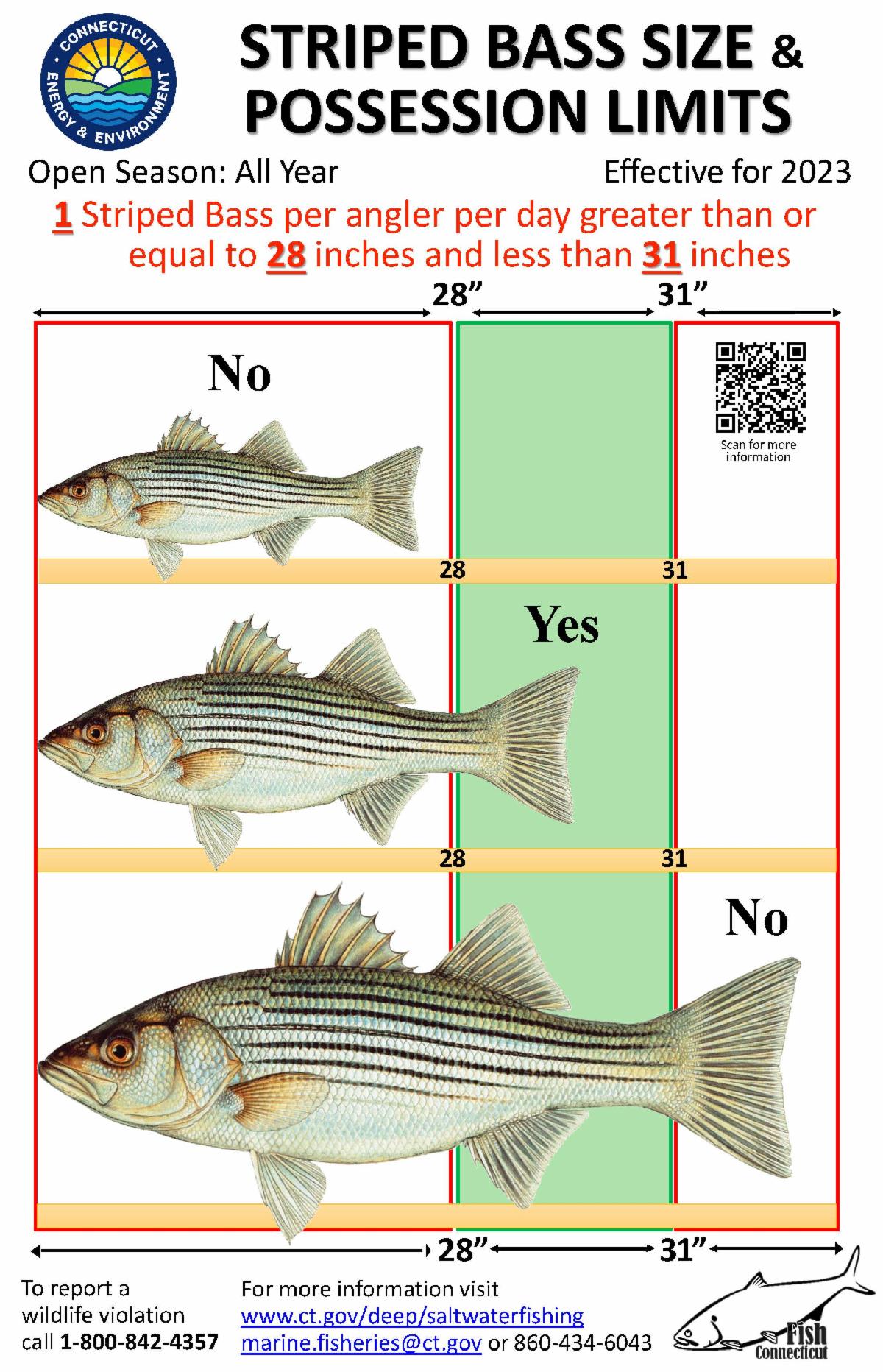
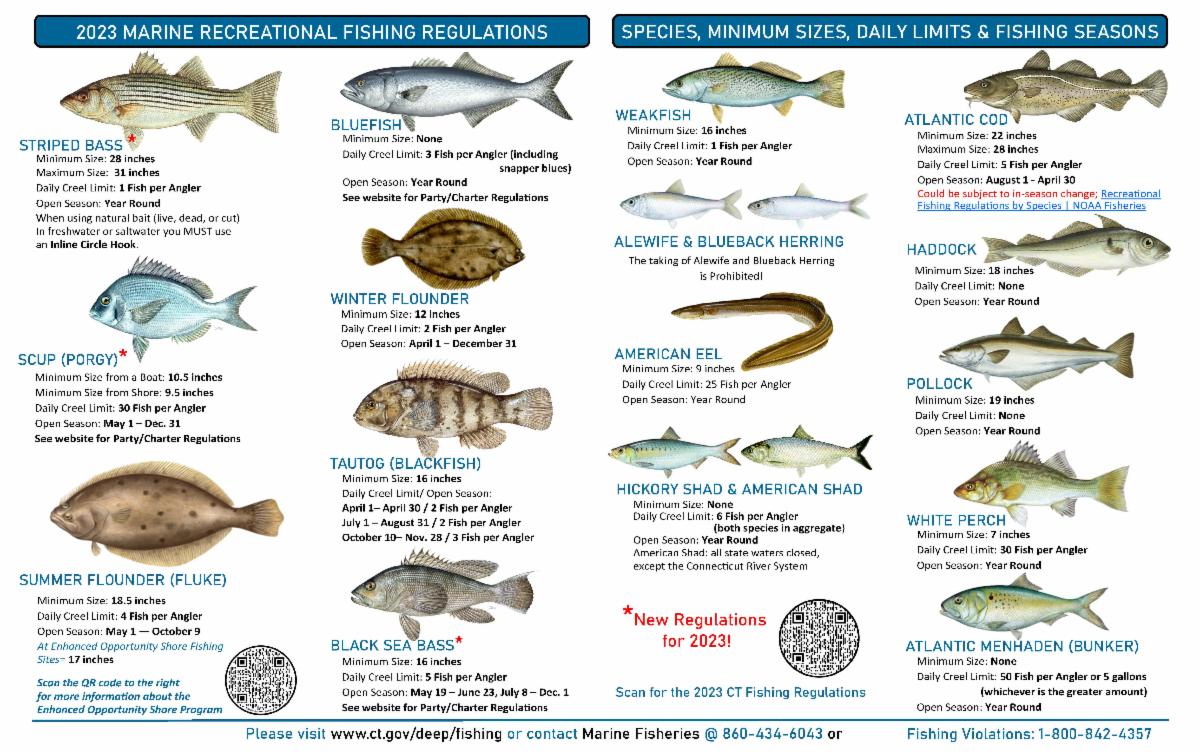
Effective May 26, 2023 the legal size for a striped bass has been changed to be 28 to 31 inches. This is a decrease from prior slot of 28 to 35 inches. This change is the result of emergency action taken by the Atlantic States Marine Fisheries Commission. Please be advised that the 2023 CT Fishing Guide Books were printed and distributed prior to this unforeseen emergency action. | |
|
On May 2, 2023, the Striped Bass Management Board of the Atlantic States Marine Fisheries Commission (ASMFC) took emergency action to implement a coastwide 31-inch maximum size limit on recreational striped bass harvest. The emergency action was taken because coastwide recreational harvest of striped bass in 2022 increased substantially from 2021 (2021 estimated harvest = 1.87 million fish or 15.84 million pounds; 2022 estimated harvest = 3.48 million fish or 35.88 million pounds). The steep increase in striped bass harvest in 2022 jeopardizes the success of the ongoing ASMFC striped bass stock rebuilding plan which mandates that ASMFC must rebuild striped bass Spawning Stock Biomass (SSB) to target levels by 2029.
The 2022 ASMFC Striped Bass Stock Assessment Update completed in November 2022 estimated that striped bass SSB was 143 million pounds in 2021; the target SSB for 2029 is 235 million pounds (64% greater than estimated 2021 SSB). The 2022 stock assessment concluded that if the striped bass fishing mortality rate remained constant at the estimated 2021 rate for the remainder of the rebuilding period, the probability of SSB reaching the target by 2029 was approximately 78%. However, the 2022 assessment only considered data available through 2021, and therefore did not consider the substantially elevated striped bass harvest observed in 2022.
In March 2023, at the request of the Striped Bass Management Board due to concerns about the impact of elevated 2022 harvest upon stock rebuilding, the ASMFC Striped Bass Technical Committee completed updated stock assessment projections that incorporated estimated 2022 striped bass harvest. The updated projections indicated striped bass fishing mortality rose substantially in 2022, and therefore the probability of successful stock rebuilding by 2029 had declined to approximately 15%. The substantial increase in striped bass harvest in 2022 was driven by the new availability of the very abundant 2015 striped bass year class (age-7 fish) in the prevailing coastwide harvest slot of 28-35”. Approximately half of the 2015 year class was 28-inches or greater in length in 2022; in 2023, almost all striped bass in the 2015 year class will be 28-inches or greater, meaning that availability of striped bass in the 28-35” harvest slot, and therefore striped harvest, would likely continue to increase substantially in 2023 without changes in prevailing regulations. The emergency action taken by the Striped Bass Management Board, which will narrow the coastwide harvest slot limit to 28-31”, was intended as a precautionary action to reduce potential striped bass harvest in 2023, mitigate further declines in rebuilding probability, and hopefully avoid the need for even more restrictive regulations in 2024-2025.
To come into compliance with the ASMFC emergency action, CT DEEP will implement a new 28-31” harvest slot limit for striped bass effective May 26, 2023. The new 28-31” harvest slot limit that will become effective on May 26th means that any striped bass that is less than 28 inches or greater than or equal to 31 inches must be released immediately without avoidable injury. This regulation will apply to all waters of the state (marine and inland district). Unfortunately, CT DEEP produced printed 2023 Fishing Guides and distributed them to various outlets statewide prior to the ASMFC emergency action. These printed Fishing Guides therefore display a striped bass length limit (28-35” harvest slot limit) that will no longer be in effect as of May 26th. CT DEEP is working to correct the printed fishing guides that have not yet been distributed to the public and apologizes for any inconvenience to individuals who have already obtained a printed guide. A
corrected version of the printed guide is available for download.
Questions on the new striped bass harvest slot regulation can be sent via e-mail to
deep.marine.fisheries@ct.gov, or call 860-434-6043 and leave a voicemail and someone from DEEP Marine Fisheries will return your call as soon as possible.
For more information about the ASMFC emergency action, please read the ASMFC news release as well as the informative FAQ page compiled by the Massachusetts Division of Marine Fisheries.
The 2022 ASMFC Striped Bass Stock Assessment Update can be found here.
| |
The CT Fisheries Division has partnered with FishBrain, the world's largest fishing APP to provide CT's fishing regulations right to your smart device. These regulations are available in the FREE version of the APP. As with any APP if you would like to have access to premium features there is a subscription fee. | |
|
2023 Marine Regulations at a Glance | |
NEW! Marine Regulations for Black Sea Bass and Scup (Porgy) | |
|
View the 2023 Marine Recreational Fishing Regulations here.
Black Sea Bass
Min Length
Season
-
From private boat or shore: May 19 – June 23, July 8 – Dec.1, season closed June 24 – July 7.
- For-hire boats: May 19 – Dec. 31
Bag Limit
- Boat, shore: 5 fish
- For-hire boats:
- May 19 – Aug. 31: 5 fish
- Sept. 1 – Dec. 31: 7 fish
| |
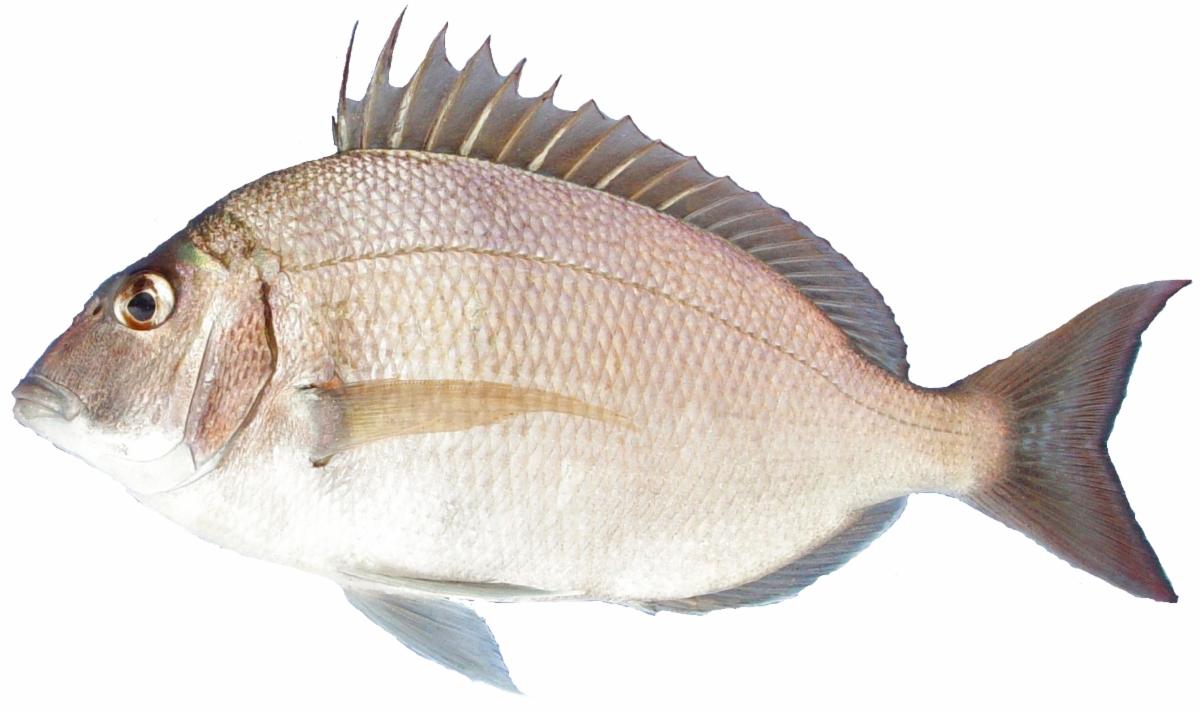
Scup
Minimum Length
- Boat anglers: 10.5” (increase from 10” in 2022)
- Shore anglers: 9.5” (decrease from 10” in 2022)
- Enhanced Opportunity Shore Locations: 9.5” (increase from 9” in 2022)
Season
- All anglers: May 1 – Dec. 31 (decrease from year-round in 2022).
Bag Limit
- From private boat or shore: 30 fish.
- For-hire boats:
- May 1 – Aug. 31, Nov. 1 – Dec. 31: 30 fish
- Sept. 1 – Oct. 31: 40 fish (decrease from 50 fish in 2022).
| |
|
Partners on the Water
A Year-Long Focus on Women Anglers
| |
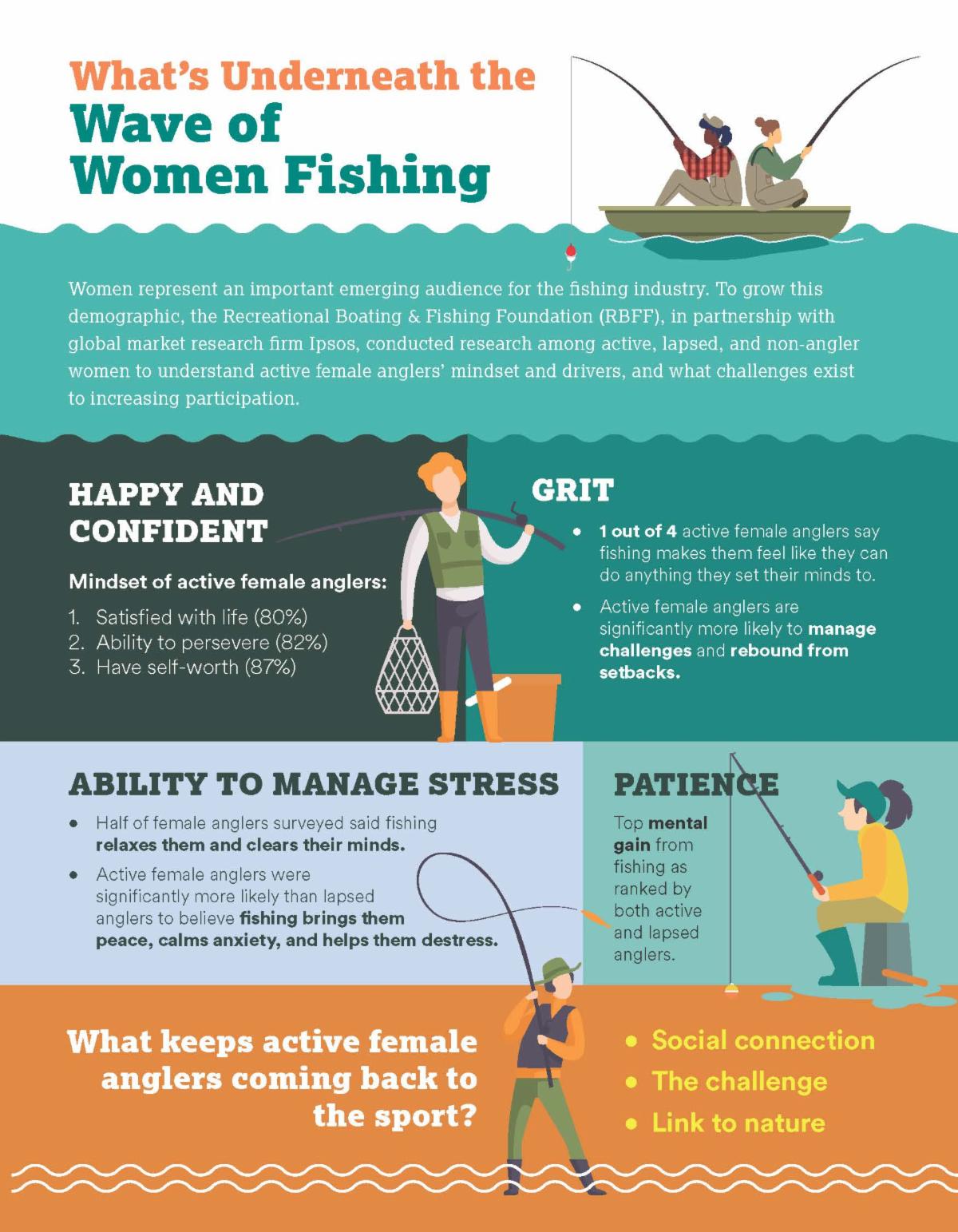
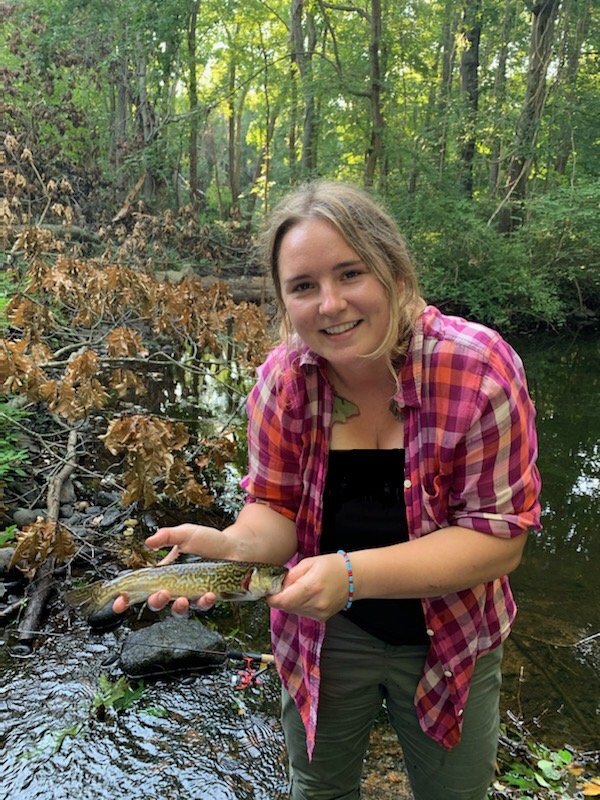
Each month in 2023, CT Fishin' Tips will highlight one of Connecticut's many inspirational female anglers. The featured anglers have a deep passion for Connecticut's fisheries and serve as role models for all of us. | |
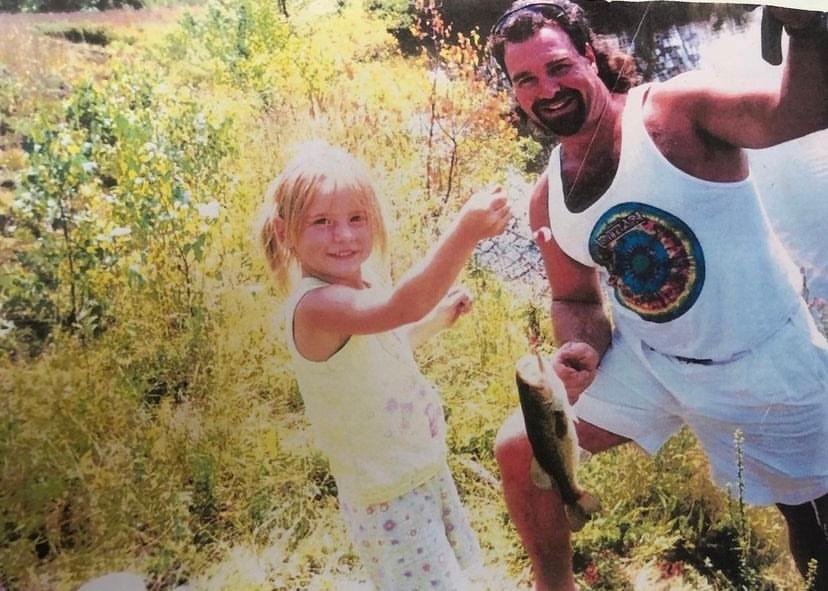 | |
Growing up on the Niantic River in Waterford CT, I’ve always been mesmerized by the water and what creatures it holds. My neighbor taught me how to cast a spinning rod from shore and catch snapper bluefish when I was merely 4 years old. From the very first bite on a snapper popper, I was hooked.
Since then I do all sorts of fishing. I enjoy spearfishing yearly for Tautog, black sea bass and fluke, fly fishing in CT’s rivers and streams for trout, and freshwater bottom fishing for big channel catfish and walleye. I frequently love to shore fish at night for Striped bass and am proud to say that my personal best was just under 51” in length and safely released.
Aside from the norm, of enjoying the pursuit and many successes of landing large fish, one of my favorite learned fishing activities has been micro-fishing. It involves targeting some of the smallest fish that are out there both in fresh and saltwater, anytime and anywhere. All you need are the smallest hooks known to man, tied on some very fine line, a tiny sinker or two and a speck of fresh bait that covers just the very tip of the hook. I typically use hand line wrapped around a piece of wood for line storage or even a small ice fishing rod.
Micro-fishing is compact, easy to try anywhere and “on the fly” and it allows you to experience a whole new target size-class of fishes you may have never seen before. Micro-fishing even gives you the chance to catch juveniles of some of your favorite large predatory fish which may help to better understand where they grow up in areas that are more protected from predators. With this type of fishing: the smallest fish landed can be the most impressive!
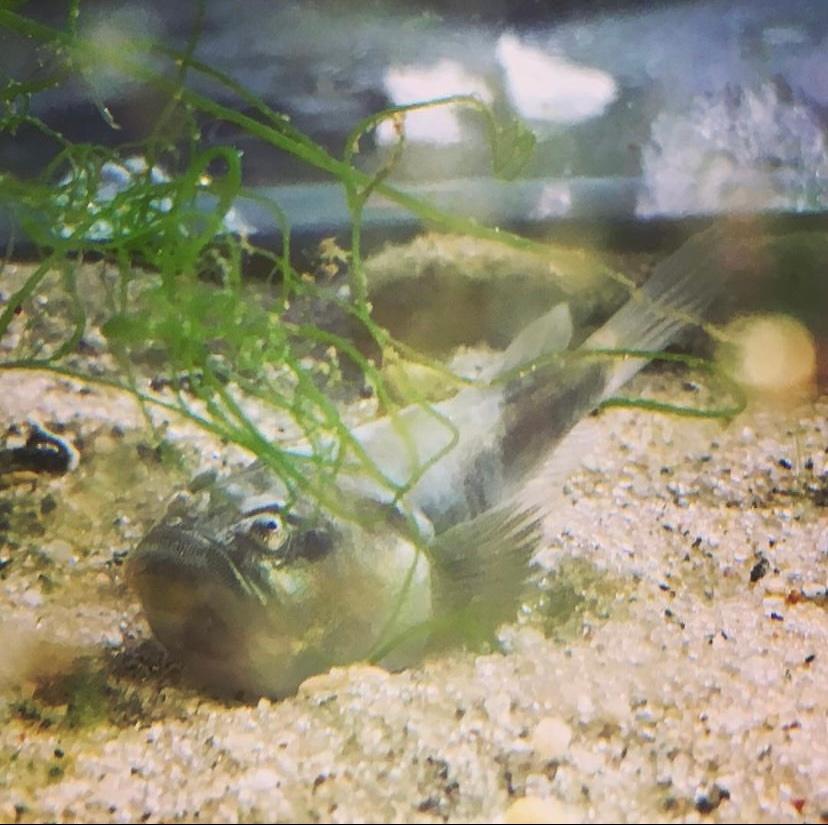
Some of my favorite micro-species that I’ve personally caught are (freshwater) juv. brook trout, juv. rainbow trout, rainbow darters (out west), (saltwater) juv. Black Sea bass (see photo), banded killifish, rock gunnels and my absolute pinnacle treasure catch of my micro-fishing career would have to be the 1 1/4” total length juvenile stargazer fish caught near Sandy point in Stonington Borough (see photo).
My love for fishing has guided me to working seasonally for CT DEEP’s Atlantic Sturgeon and American Shad program, DEEP’s Long Island Sound Trawl Survey Program, and to achieve a Bachelors Degree in Marine Biology and now presently a Full-Time position as a Fisheries Technician for CT DEEP’s Inland Fisheries.
|  |  | |
More From Lily....
At what age did you start fishing? 4 1/2
Who introduced you to fishing?
Growing up in an apartment one house in from the Niantic River in Waterford CT, my late neighbor Mark McDowell set me up with a light weight spinning rod (none of this button pushing business) and a classic snapper popper rig in early October, during the constant flurry blitzes of snapper blues in the harbor.
Casting and reeling a spinning rod came relatively quickly to me, I think, because of how much fun I was having. As soon as the foam popper hit the water, the splash would activate the feeding frenzy and I would instantly have a fish on! Snappers were between 7-12" this time of year and very active, offering a fun, memorable fight for someone of my size. I certainly learned how to cast farther and farther because I was chasing the visible fish school not far from the surface.
I remember feeling so proud (again as an almost 5-year-old) catching a whole bag of snapper blues that Mark then cooked up on the grill for us to enjoy later. I was HOOKED! Nearly every morning, I would wake up before my parents and impatiently wait for them to wake up so I could walk back down to the beach and catch more snappers!
What is your favorite fish to try to catch?
If spearfishing counts, then I would say Blackfish (Tautog). Snorkeling has been something I've loved since I was a kid. When I learned that spearfishing was legal in CT and it was basically hunting, fishing and snorkeling combined, it quickly became something I looked forward to doing every year.
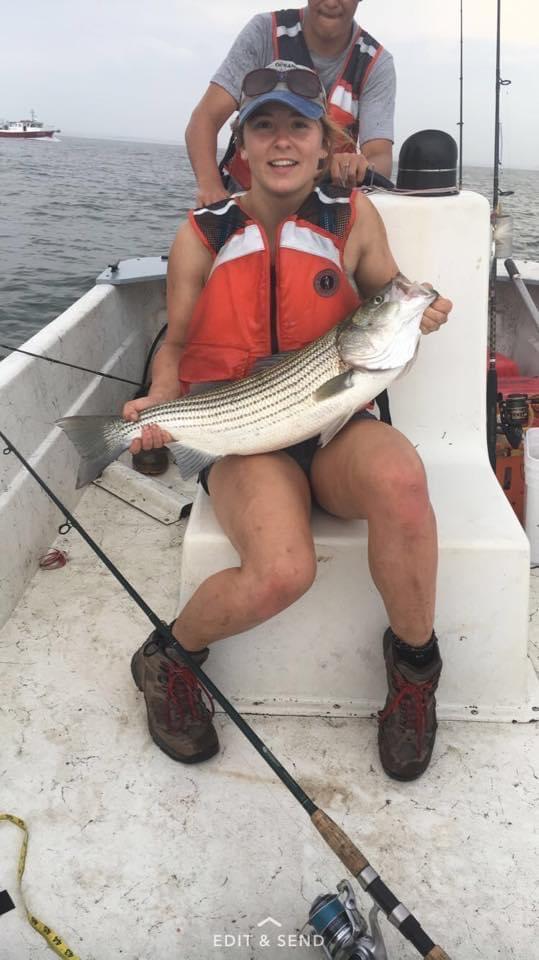
If spearfishing doesn't count, then I would have to say that my favorite fish to angle using a fishing rod would have to be striped bass. They are not always easy to target. Sometimes they like a bright white top water rig splashing the surface, and sometimes the only way you'll get one all day is with a big live eel on a circle hook close to the bottom. They are both challenging and beautiful fish to catch, with a pair of delicious fillets as a reward if lucky enough to catch one within the slot limit. They can grow very large and, personally, it is a pleasure to release the big females I've been lucky enough to fight to the surface safely back to the water to breed more healthy fish into our ecosystem.
Why do you like to fish?
I like to fish because it is a great excuse to, not only, get outside to explore somewhere new or get to know a familiar area better, but to also, try to outsmart a creature you will only get to see up close if you successfully are able to catch it!
To me, not knowing what fish inhabit a body of water can be exciting. You never know what might go for a bite at the end of your line, species and size wise. And other times you can refine your skills from previous experience, get to know a body of water well enough to successfully target a particular species you are after.
Fishing is rewarding to me for the fun and exciting fight, or for a therapeutic and calming time out in nature, or feeling that sense of accomplishment when I catch a fish worthy of a delicious dish to share at the dinner table. I have a great time fishing even if I don't catch anything because I love just being outside in general, catching fish, large or small, is a bonus.
What were some barriers that you had to overcome? (and maybe still battle)
Dressing appropriately and being comfortable is the most important thing to me. Learning by trial and error, being too cold, too hot, got wet because I forgot my rain jacket, didn't wear appropriate footwear, forgot to bring my plyers, forgot drinking water or snacks can make being out in nature less enjoyable for sure.
Before going out into nature, especially to go fishing, I set up a grab and go bag with all the things I know will make for a fun adventure as easy as grabbing it and tossing it into my car: with water, snacks, layers, extra socks, phone charger pack and anything else that will make my adventure care free. Planning ahead.
Another barrier is other people. I like to trout fish especially in seclusion and without noisy humans. Unless I have a friend who I know will make for a good team on the river or stream, I usually prefer to go alone and will seek out locations where others will usually not be. Not always easy.
Much if not all of the clothing and gear is male focused and does not fit women. What advice could you give to a new female angler about this problem?
Interesting thought. I feel like I haven't had much trouble finding gear that fits me... But I suppose I don't necessarily target specifically fishing brands for my fishing attire. For warmer weather trout fishing or lake and pond fishing, I have a few pairs of women's synthetic long and short pants that are light weight, quick drying and preferably stretchy. Same with a synthetic long-sleeved shirt or even t-shirt depending on the sun exposure for the day.
For winter gear it's important to know how to layer up properly. If you get cold you need to have a layer you can throw on to warm up and de-layer if you get too hot (sweating is the enemy during the cold winter months). The typical layering system I go with is such: thin wicking layer, fleece layer (or two) exterior comfort layer for blocking wind and weather. The wicking layer is to literally ""wick"" any perspiration/sweat away from the skin to keep you dry and warm (synthetic long sleeve), then some sort of fleece layer or two depending on how cold it is outside and what you have available (cuddl duds makes excellent fleece and doesn't break the bank, also fleece layers are cheaply available at Goodwill).
Some other brands I've noticed make particularly excellent outdoor women's wear include Eddie Bauer, Kuhl, Columbia, Patagonia and Fjallraven. Some of these brands can be expensive but there are many outlets to finding nice women's outdoor clothing for a bargain at sites like www.theclymb.com and www.backcountry.com
| |
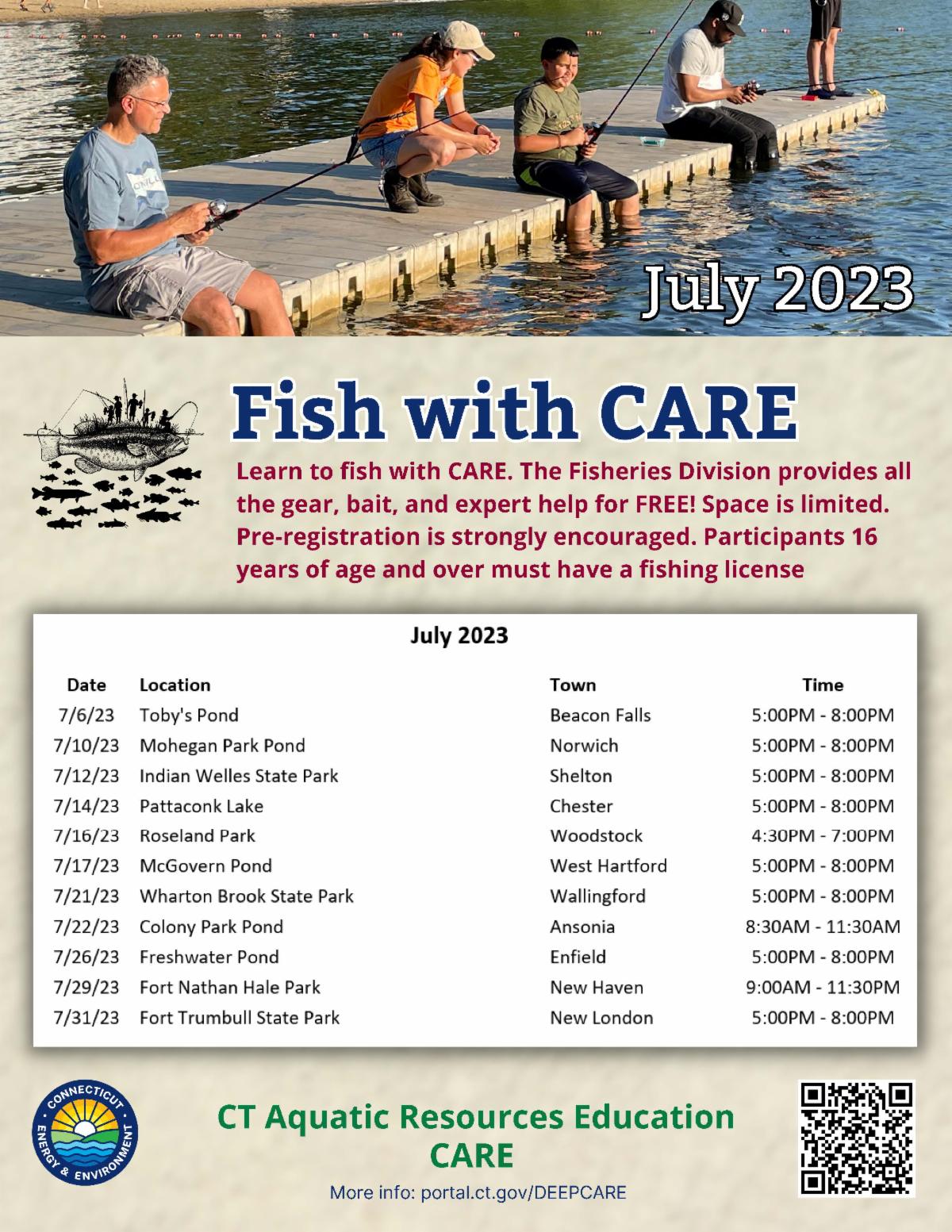
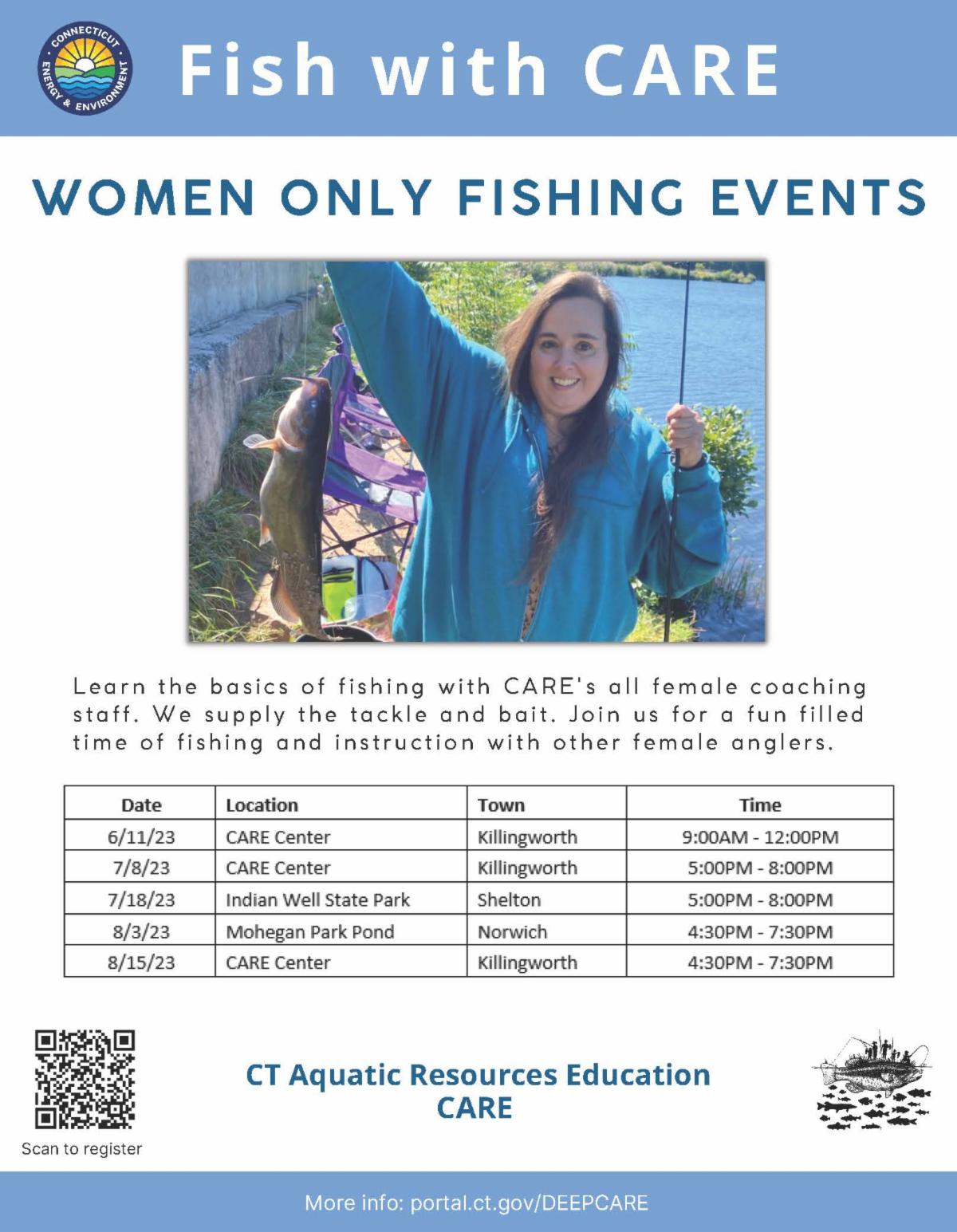
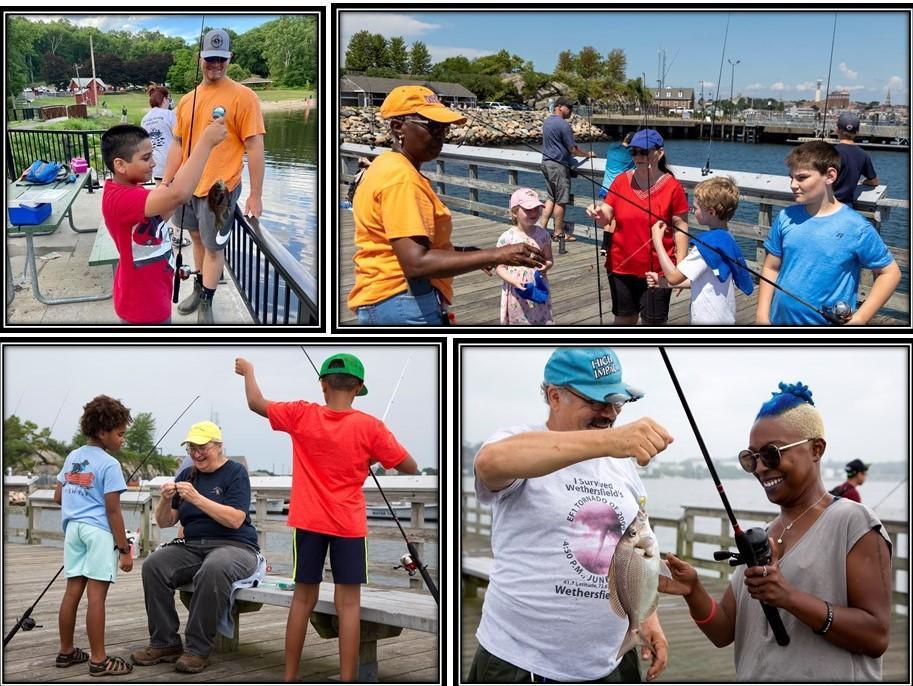
Calling all women who would like to learn to fish (or brush up on your skills). Join our all female fishing coaches as the CARE program offers Women only fishing June thru August. | |
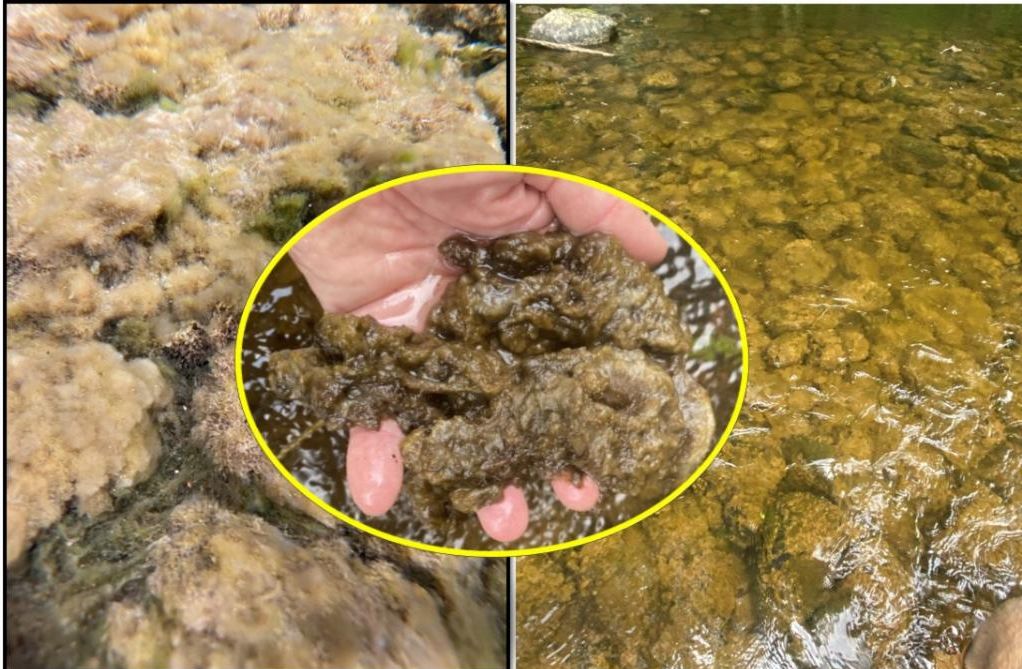
Rock Snot - it is blooming again. Please be advised that “Rock Snot” a descriptive name for a diatom (single cell algae) that makes a long stalk (billions combined make thick mats) is blooming (growing like crazy) in the West Branch Farmington River in Riverton. Anglers fishing between Route 20 and the natural gas pipeline crossing are urged to clean and disinfect their waders after fishing in this section. Good methods are to completely dry for several days, freeze waders overnight, use a 10% bleach solution and then dry, or a highly concentrated salt solution and then dry. Thank you for helping to prevent additional spread. | |
|
CARE to Teach Fishing? We do!
We Need You!
| |
|
The Fisheries Division – Connecticut Aquatic Resources Education Program (CARE) is seeking volunteers to join our team of certified Fishing Coaches! FISH with CARE program hosts classes and events all over the state where we teach basic fishing skills to adults, families, and youth. FISH with CARE coaches work with Fisheries staff to educate and engage the public in the outdoors through the sport of fishing. If you are interested in sharing your love and knowledge of fishing while creating the next generation of environmental stewards, consider joining our Fishing Coach team! Our next certification training is being offering in April, information to get involved can be found HERE!
| |
Would you like to see your catch highlighted in upcoming issues of CT Fishin' Tips? If so, please email your photo to mike.beauchene@ct.gov | |
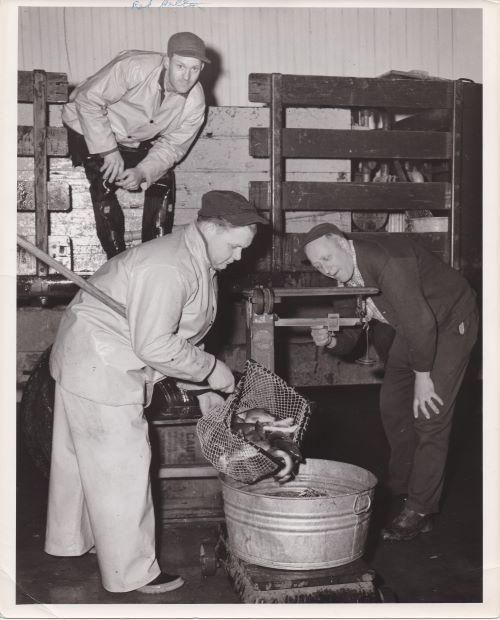
The Burlington State Fish Hatchery turns 100 this year! Fish are being weighed prior to stocking by Robert (Red) Holten, Ed Colleen, and Ted Reeve. Today the fish produced by staff at the hatchery average about 1.2 pounds each. A great fish to catch for sure. | |
|
Video of the Month
Smallmouth on the Housatonic River
| |
The temperature is heating up and so is the Smallmouth Bass fishing on the Housatonic River. Great scenery accompanies the catches on one of CT's most exciting fisheries. | |
Fishing Challenge - For YOUth | |
NEW for 2023 - The list of species has been increased to include many popular fish, both freshwater and saltwater. The challenge is ON! Start catching and submitting, you can be CT's next "Top Angler" | |
The Youth Fishing Passport Fishing Challenge is a year long fishing scavenger hunt. To have your catch count, simply snap a photo of your fish (from our scorecard) and use our online submission form. The top four anglers (who catch the most different types on our list) receive a prize pack full of fishing swag.
| |
CT's FREE Youth Fishing Passport is your child's ticket to all of the amazing outdoor discoveries fishing has to offer. Fishing involves knowing about habitat, environmental quality, food webs, life history of species, and so much more. You can get a Youth Fishing Passport, for those 15 or younger, using our online licensing system. Register your child as a new user. If you have questions please contact us.
| |
|
How to get the Youth Fishing Passport | |
This Month's Mystery Fish | |
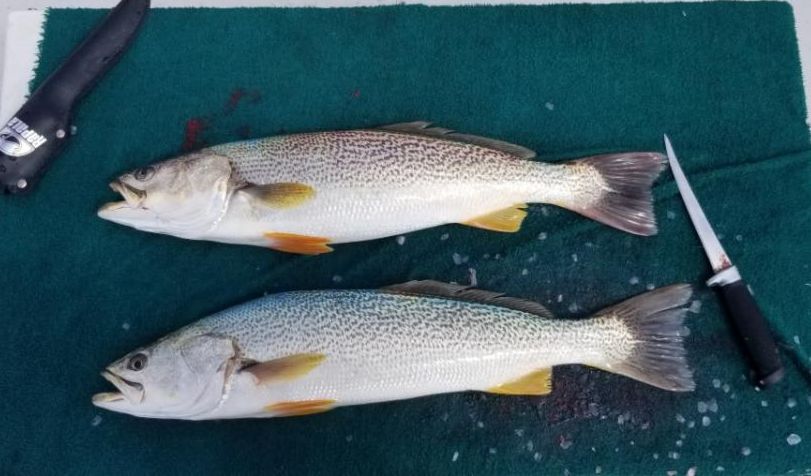
Last month's mystery fish was a double challenge. They Yellow Bullhead (Ameiurus natalis) on the left and the Brown Bullhead (Ameiurus nebulosus) on the right. Bullhead and catfish are in the same family of fish (Ictaluridae). All species in this group lack scales, have chin whiskers (barbels) and have an adipose fin (a small fleshy lobe between the dorsal fin and tail). Watch out for the very stout first ray in the pectoral fins and dorsal fin, which can puncture your skin easily if the fish are not handled with care. Learn more about these fish here. | |
How to get your License Online | |
Información disponible en español
| |
The Connecticut Department of Energy and Environmental Protection is an Affirmative Action/Equal Opportunity Employer that is committed to complying with the requirements of the Americans with Disabilities Act. If you are seeking a communication aid or service, have limited proficiency in English, wish to file an ADA or Title VI discrimination complaint, or require some other accommodation, including equipment to facilitate virtual participation, please contact the DEEP Office of Diversity and Equity at 860-418-5910 or by email at deep.accommodations@ct.gov. Any person needing an accommodation for hearing impairment may call the State of Connecticut relay number - 711. In order to facilitate efforts to provide an accommodation, please request all accommodations as soon as possible following notice of any agency hearing, meeting, program or event.
| |
This program receives Federal financial assistance from the U.S. Fish and Wildlife Service.
Under Title VI of the 1964 Civil Rights Act, Section 504 of the Rehabilitation Act of 1973, Title II of the Americans with Disabilities Act of 1990, the Age Discrimination Act of 1975, and Title IX of the Education Amendments of 1972, the U.S. Department of the Interior prohibits discrimination on the basis of race, color, national origin, age, sex, or disability.
If you believe that you have been discriminated against in any program, activity, or facility, or if you need more information, please write to:
Office of Diversity, Inclusion and Civil Rights
U.S. Department of the Interior 1849 C Street, NW
Washington, D.C. 20240
| | | | |