The Lutheran Advantage
News from our Concordia Universities
| | |
Greetings!
Welcome to "The Lutheran Advantage," an e-journal of the latest news across the Concordia University System.
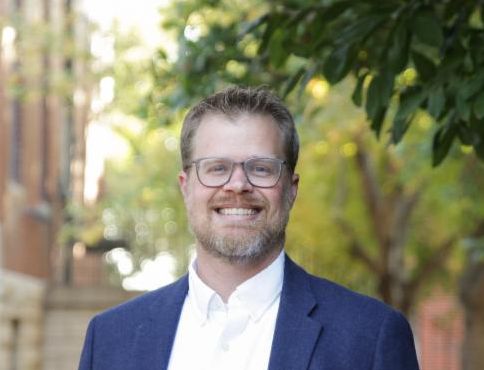
| | Rev. Dr. Peter Jurchen, Assistant Professor of Lutheran Education and Faith Formation | | |
God Holds Us In the Gospel at CUNE
Greetings from Concordia University, Nebraska, where God's grace holds us stable and steadfast, never shifting.
Our academic theme this year at Concordia University, Nebraska (CUNE) revolves around God’s steadfast grace to us in Christ (Colossians 1:23). Though this is a reality for every Christian, it is something we dare not take for granted. In a world filled with so many temptations to abandon the faith – from the culture, from our flesh, from Satan himself – we cling to the cross of Christ. Called to faith through the Spirit working in Word and Sacrament, we stand firm in our faith, trusting God’s promise to hold us stable in the midst of every trouble we face. Jesus is Lord, and this reality remains true forever.
At CUNE, faculty and staff have a wonderful opportunity to live out this faith in our professional practice. We strive to faithfully and joyfully live as a Christ-centered community shaped by our Lutheran theology. To do so, we first emphasize the receptive life of faith. This means gathering together, with each other and with students, in our daily chapel, around devotions in meetings, in prayer, and in Christian community. We also do so in our classrooms and meetings, where we strive to teach and pursue God’s truth at the intersection of faith and learning. In our various vocations and disciplines, we have many opportunities, not only as Christian scholars but also as faith-filled mentors, to live out our mission to equip future generations for lives of service in the home, church, and world. We pray with and for our students, and encourage them to remember how God’s grace holds them stable in the faith.
At CUNE, this steadfastness is also seen in the way our students live in community together. In class, I often ask my students to identify all the different ways that they can engage in spiritual life together during their time at CUNE. After brainstorming, they list not only the obvious opportunities like morning chapel, local congregational worship, evening prayer, praise, and campus-wide Bible studies, but also the less obvious opportunities, like resident hall Bible studies, team devotions, prayer groups, service groups, ministry teams, and many more. When this happens, I have the privilege of sharing with them the reality that they will likely never have more opportunities to gather with other Christians to receive the gifts of God’s Word in Christian community than they do right now at CUNE. This is not only facilitated by our fantastic campus ministry team, but also through our Lutheran Christian ethos. We live this out as faculty and staff as well as through the leadership of Christian students who build each other up and encourage each other to hold fast to God’s promises.
So, once again, greetings from Concordia University, Nebraska, where we gather around God’s Word and promises in this excellent academic and Christ-centered community, and work to equip men and women for lives of learning, service, and leadership in their various present and future vocations. As we do so, we remember how God’s grace in Christ holds us stable and steadfast in our mission and in the Gospel.
| | | Concordia University Chicago | | |
Stand Tall for Freedom: Concordia-Chicago to host series of events in honor of America’s 250th anniversary
In honor of the United States’ semiquincentennial, Concordia University Chicago will host a year-long series of events for students, faculty and staff, alumni, and community members. The series includes guest lectures by nationally recognized scholars and historians, interactive workshops, and cultural events. Most events are free and open to the public.
The series will kick off on March 9 at 4 p.m. in Concordia-Chicago’s Christopher Center, where constitutional scholar Jeffrey Rosen will present “Pursuit: The Founder’s Guide to Life, Liberty, and Virtue.” The lecture—part of the Lectureship in Christianity, Humanities, and Public Life Series, generously funded by Dr. and Mrs. C. Ross Betts—will examine how the founders' understanding of happiness, virtue, liberty, and power helped shape American democracy.
Additional events include:
· April 14 at 7 p.m. – Journalist Jonah Goldberg will present “Freedom and the Founding,” sponsored by the American Enterprise Institute, examining the American Revolution’s role in the development of a free society.
· June 27 at 6:30 p.m. – The University Band, conducted by Dr. Richard Fischer, will present its annual Patriotic Pops concert on the Pillars lawn.
Additional events will be announced throughout the year. For event details and updates, visit cuchicago.edu/events.
| |
‘Enduring with Jesus:’ Concordia-Chicago’s Kapelle embarks on spring tour across Florida
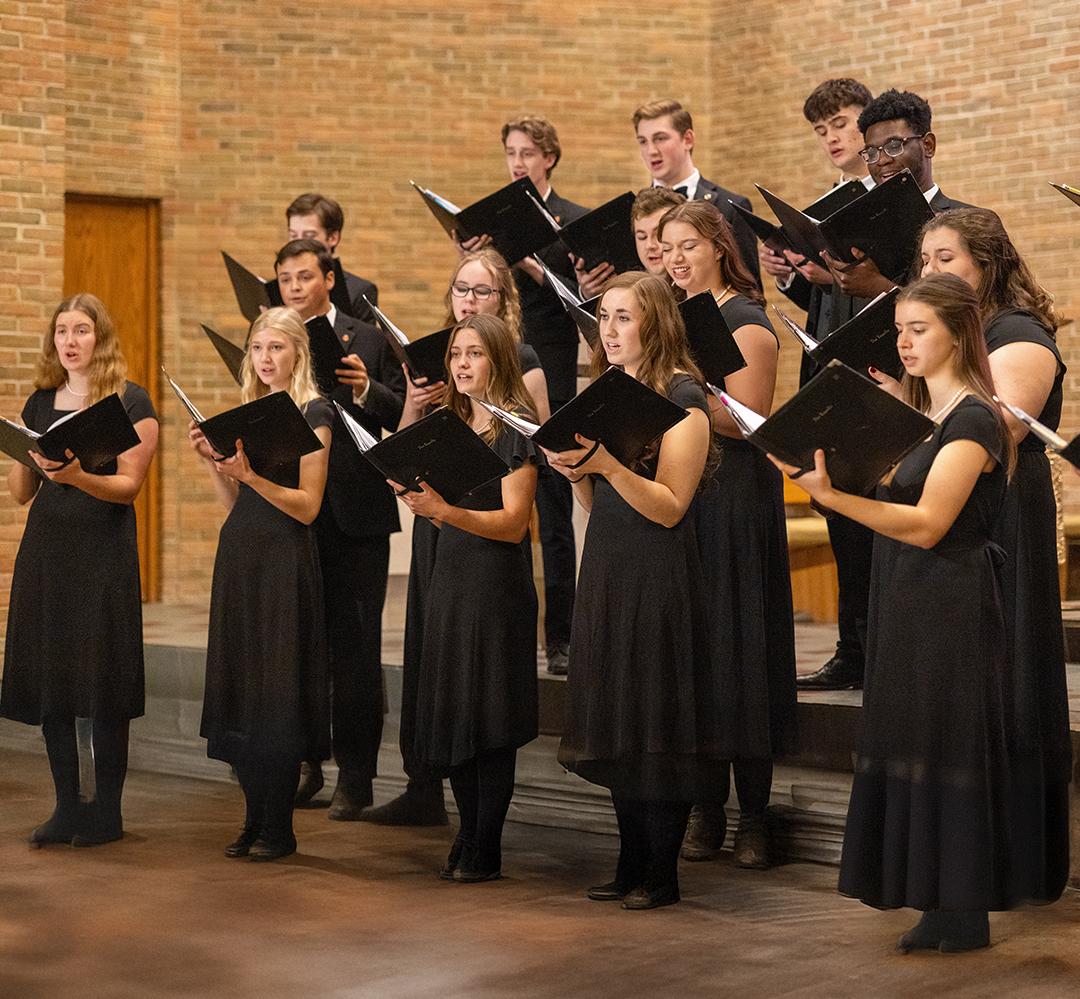
The Kapelle, Concordia University Chicago’s premier choral performance ensemble, will set out for its spring 2026 tour February 27–March 6, presenting a deeply meaningful program titled “Enduring with Jesus: Songs of Faith and Hope.” This tour brings the ensemble to congregations and schools across Florida, culminating in a home concert on Sunday, March 15 at 4 p.m. in the Chapel of Our Lord on Concordia-Chicago’s River Forest campus. For more information, visit cuchicago.edu/kapelle.
|
| Concordia University Irvine | | |
Mental Health First Responder Serves in the Disaster Zone
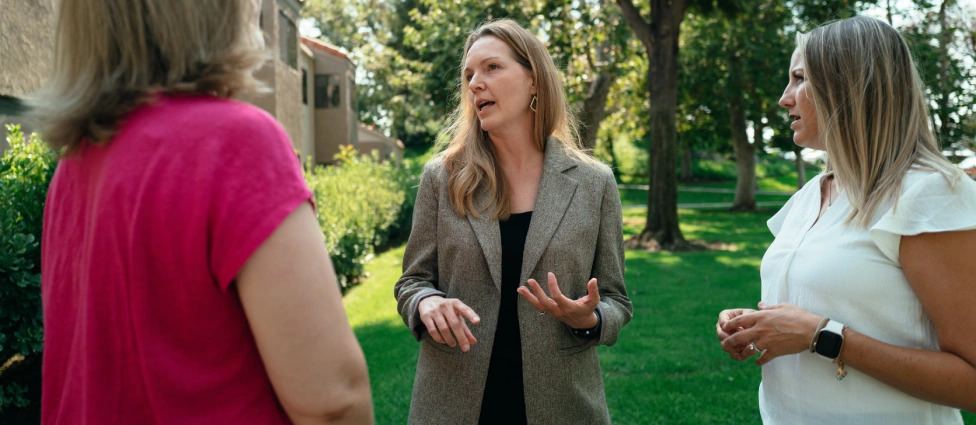
Dr. Christi Myers, professor of counseling in the Townsend Institute, was among the first disaster mental health professionals to arrive at the site of this summer’s catastrophic floods in rural Texas. Providing service through the American Red Cross challenged and inspired her to become involved further in disaster work, and to train her Concordia students in this specialized area, too.
“I’ve always prayed for the courage to show up when things are hard,” Myers shares. “In disaster work, I see it as sacred space — to stand with people when their world has been shaken and to walk alongside them through it. That’s an incredible honor.”
Myers and her husband live in San Antonio, an hour south of where the worst flooding took place. She has been a faculty member for five years in the Townsend Institute’s Master of Arts program in Counseling and PhD program in Counselor Education and Supervision, teaching counseling theories, supervision, internships, and, in the PhD program, advanced multicultural skills and research courses.
She also co-leads, with fellow Townsend Institute assistant professor Rachel McCormick, mission trips each semester to a small village in Belize with Townsend Institute students. There, they give mental health support to students and teachers in local schools.
But the situation that developed on July 4, 2025, was well beyond Myers’ typical assignment.
Early that morning, as she was helping set up for a race she intended to run in San Antonio, her husband, a soldier in the U.S. Army, called to say he was being deployed to help search and rescue along the Guadalupe River. This popular camping and RV spot in central Texas had been hit by catastrophic flash flooding beginning at 4 a.m., and with waters cresting at 39 feet before receding, many along its banks were missing. Among the victims, it would be discovered, were at least 135 people, including 27 young people from Camp Mystic.
An hour later, Myers received a notice that Red Cross disaster mental health volunteers were needed as well. She skipped the race, ran home to gather supplies, and was in the Red Cross’s first team to enter the disaster area that afternoon.
Myers had volunteered with the Red Cross since high school, providing emergency shelter, food, and water in the aftermath of hurricanes and other natural events. She had earned disaster mental health certification with the organization, and her appreciation for crisis work stemmed from her childhood. Raised by a father who was a mortician, she observed his empathy and compassion while helping people through some of their darkest days.
“Dad felt this was his vocation,” she says. “I watched him carry those emotions with such grace. My parents have always viewed it as an honor — and I do too — to sit with people in their darkest moments. That was really the catalyst for my desire to walk alongside people in pain.”
Riding in a small convoy of Red Cross trucks carrying medical supplies and recovery items such as tarps, shovels, and rakes, Myers and a team entered the hardest-hit area, which was still reeling from events. She knew the area well, having run trails and hiked there frequently, but now the scene was unrecognizable.
“Houses were gone, all the cabins were gone. RVs had been washed down the river,” Myers says. “All these huge cypress trees were uprooted and displaced. All the roads were torn up from flooding.”
Across the muddy landscape, survivors roamed, calling the names of missing loved ones. Blackhawk helicopters hovered overhead to drop rescuers into the scene and conduct searches from the air. Police officers put boats in the water and, with the help of dogs, searched for those still living.
“Time was of the essence,” Myers says. “They were pulling people out.”
The river had returned to a normal level, and the bright, sunny weather belied the horror that had just taken place. Myers calls the contrast “surreal.”
Her job, and that of her team, was to establish a stable presence and provide people with comfort and physical items of immediate need. They drove up and down the river banks, finding people to serve, jumping out of the truck to provide aid, then jumping back in and moving on.
“Our first interaction was to hand them something tangible and tell them ways we could support them,” she says. “I told them, ‘I’m Christi with the Red Cross. I’m with mental health. We’re out here checking on people’s physical and emotional needs. Can we help you in any way?’”
On the first day, they assisted fifty people. She drove home that night for fitful sleep and returned the next day, a routine she would follow at a sprinter’s pace for nearly a month. Her husband, also working long shifts, slept on-site.
It was Myers’ first mass-casualty deployment, and her job, in a phrase, was to “listen and link.”
“In those moments, our role is to offer compassion, bring comfort, and remind people they are not alone,” she says. “We model a service rooted in Christ’s love. It isn’t traditional therapy — it’s about helping individuals feel safe, listening deeply to their stories, identifying stress reactions, and connecting them with community providers who can support them long-term.”
One of the more difficult things was to encounter people who had come across terrible scenes while searching for lost loved ones. Some survivors returned daily to keep searching. Myers regularly visited a list of people who had chosen to shelter in the disaster area, some of them living in partially destroyed homes.
Within two weeks, the nature of the needs changed from immediate rescue to the desire for counseling and long-term assistance. At Red Cross reunification centers in the nearby town, people came looking for medical or psychological support. Myers and others set up counseling centers in the centers.
“A week or two after the disaster, they were no longer in survival mode and were able to articulate how they were feeling,” she says. “They had been able to process some emotions on their own and needed help to process more.”
Responses ranged from “absolute numbing” to hyper-vigilance, sadness, and anger. Volunteers like Myers, too, had to work through their own reactions to seeing tragedy up close.
“I rely a lot on my training for how to respond, but you are also in a disaster yourself,” Myers says. “We were processing with each other back in the car on the drive home and at headquarters. This was devastating for everybody. We were checking in on everybody’s emotional needs and how we could hang in there the next month.”
Colleagues from the Townsend Institute played a big part in her own wellness and resilience. Mark Newmeyer, a fellow professor, had experienced a mass-casualty event years prior and “was incredibly instrumental throughout this process, to talk to about spiritual concerns I was having,” says Myers. “He was able to mentor, guide, pray for me, and shepherd me through this process.”
Many fellow faculty and staff members regularly checked in on Myers and continued processing with her afterwards about the devastation she had seen and the sense of loss.
“Whenever there are children involved, it’s always going to be so difficult,” Myers says. “Working with families that are still looking for their children or have just been told they were recovered is always a challenge, but I felt honored to be able to sit beside them in those times.”
Townsend Institute Counseling Program Director Matthew Paylo says Myers has “high-level professional competency, warmth, and a collaborative spirit” that make her “an exceptionally respected faculty member.”
“She is deeply dedicated to the mission of Concordia, to do all she can to love and serve those around her,” he says. “Her work with the Red Cross speaks to servant-leadership in action. It speaks volumes to me and challenges me to reach out in my own community.”
When it was over, regular sleep and normal life slowly returned.
“The unfolding of the day was constantly in mind, and you were amped when you got home,” she says. “That eventually leveled out.”
She and her husband found it helpful to give each other plenty of space while recovering.
“Both of us needed our own processes to happen before we talked to each other about our experiences,” she says. “It took a couple of weeks. It was very emotionally challenging.”
But Myers emerged from the catastrophe with a strong desire to engage in more disaster mental health work.
“I had such a sense of purpose when I was in those situations,” she says. “I felt very much aligned and stepping into my calling while I was there. Going through it and recounting the experiences was really deep-seated in terms of purpose. I would love more experience in it.”
She also hopes to create opportunities such as workshops, trainings, and maybe a course in disaster mental health for students in the Townsend Institute, to equip them to offer hope in similar circumstances.
“Disaster mental health is a way I get to live out my calling,” she says. “I’m most proud of being able to remain present in that moment when people’s lives were absolutely falling apart.”
| | Concordia University, Nebraska | | |
Seeds of Generosity
This March, Concordia University, Nebraska will celebrate the university’s supporters during Seeds of Generosity, a month-long event focused on how God works through the faithful giving of His people to sustain the mission of Christ-centered education at Concordia University, Nebraska. Throughout the month, the university will share stories of its “joyful givers” and feature several special events on campus for faculty, staff and students.
“We’re so thankful for the generosity of our donors whose gifts reflect God’s heart,” said Derek Engelbart, Vice President of Institutional Advancement. “Their support goes far beyond a financial contribution. It’s a partnership in something truly meaningful, with a lasting impact. Because of our generous donors, Concordia University, Nebraska can continue its mission of Christ-centered education, preparing servant leaders to make a difference in the church and the world. Their faith-filled giving inspires us every day, and we couldn’t be more grateful!”
Throughout the month, alumni, friends, faculty, staff and parents are invited to take part in planting seeds that support scholarships, student experiences and the daily mission of Christ-centered education. Together, the Concordia community is sowing seeds of faith, service and learning, trusting God to bring the growth, now and for generations to come.
Learn more about Seeds of Generosity at cune.edu/seeds.
| | Concordia University St. Paul | |
Golden Bears Celebrate Athlete
Concordia University, St. Paul sophomore Makenna Nold has been named a finalist in volleyball for the Collegiate Women's Sports Awards (CWSA) Division II Honda Athlete of the Year. Nold, a sophomore nursing major from Jamestown, N.D., adds to an impressive list of accomplishments and accolades during her time with the Golden Bears.
In addition to this prestigious honor, Nold, who holds a 4.0 GPA, was named the Academic All-American® of the Year for Division II volleyball by the College Sports Communicators (CSC). CSP now has the fourth most volleyball academic All-Americans across all levels, trailing only Nebraska, MIT, and Stanford.
Leading the Golden Bears volleyball team to a national runner-up finish this past season, Nold has been recognized as the 2025 American Volleyball Coaches Association (AVCA) Division II Player of the Year, 2025 AVCA Central Region Player of the Year, and 2025 Northern Sun Intercollegiate Conference Player of the Year.
"Makenna is the epitome of what it means to be a scholar athlete, and we could not be more proud of her," says CSP Head Volleyball Coach Brady Starkey.
| | Concordia University Wisconsin | |
Concordia University Wisconsin Strengthens State Economy, Supports 1,780 Regional Jobs
Wisconsin’s private, nonprofit colleges and universities are, collectively, one of the state’s top 10 employers and powerful economic drivers, according to new statewide data, showing the sector supports tens of thousands of jobs.
The new analysis demonstrates that Wisconsin’s private colleges collectively created 39,242 jobs statewide, including 18,688 full- and part-time workers employed at the institutions and 20,554 jobs in other sectors of the economy.
Concordia University Wisconsin directly employs more than 880 faculty and staff. In total, the institution generates and supports 1,780 jobs across the region, attracting and retaining talent, and strengthening both community and municipal tax bases.
As part of this statewide impact, CUW plays a major role in sustaining local employment, strengthening regional economies, and developing the workforce Wisconsin needs to compete.
These jobs span education, healthcare, research, technology, construction, retail, and service industries, demonstrating the broad economic reach of private, nonprofit higher education.
“Our alumni are more than just graduates; they are the backbone of Wisconsin’s essential workforce,” said Eric Vogel, director of Alumni and Parent Relations at CUW. “When we see over 16,000 Concordia degree-holders choosing to live and work right here in our state, we are seeing a daily commitment to the common good. Whether they are serving in churches, classrooms, clinics, or corporate offices, our alumni carry the mission of Concordia into the marketplace, turning their education into a multi-billion-dollar economic engine that fuels our local communities and supports the next generation of Christian leaders.”
Over the past five years, capital investments at Concordia generated $4.9 million in economic activity in 2024-2025, supporting 11 additional jobs. Its operations contribute $255,984 in federal, state, and local tax revenue.
CUW also plays a critical role in developing Wisconsin’s talent pipeline. Across nearly 180 academic programs, including high-demand and emerging fields, Concordia prepares students for the careers that fuel Wisconsin’s competitiveness.
With 16,287 Concordia University-Wisconsin alumni living and working in Wisconsin, CUW graduates generate $2.9 billion in annual economic activity, strengthening important sectors such as healthcare, manufacturing, technology, and public service.
“Concordia nursing alumni are a vital part of the $2.9 billion in annual economic impact generated by our graduates across Wisconsin,” said Dr. Jessica Leiberg, dean of Concordia’s School of Nursing. “Beyond the numbers are the countless lives they touch and save each day through patient- and Christ-centered care grounded in skill, compassion and integrity. Our nursing alumni impact healthcare and our communities by living out their vocations to serve Christ.”
Sixty percent of Wisconsin’s private college graduates stay in Wisconsin after earning their degrees, contributing to the state’s workforce, tax base, and long-term economic growth.
The campus’ impact extends beyond dollars. Students, faculty and staff contribute 49,923 volunteer hours annually.
| |
Informal Visitation to Concordia University, Nebraska
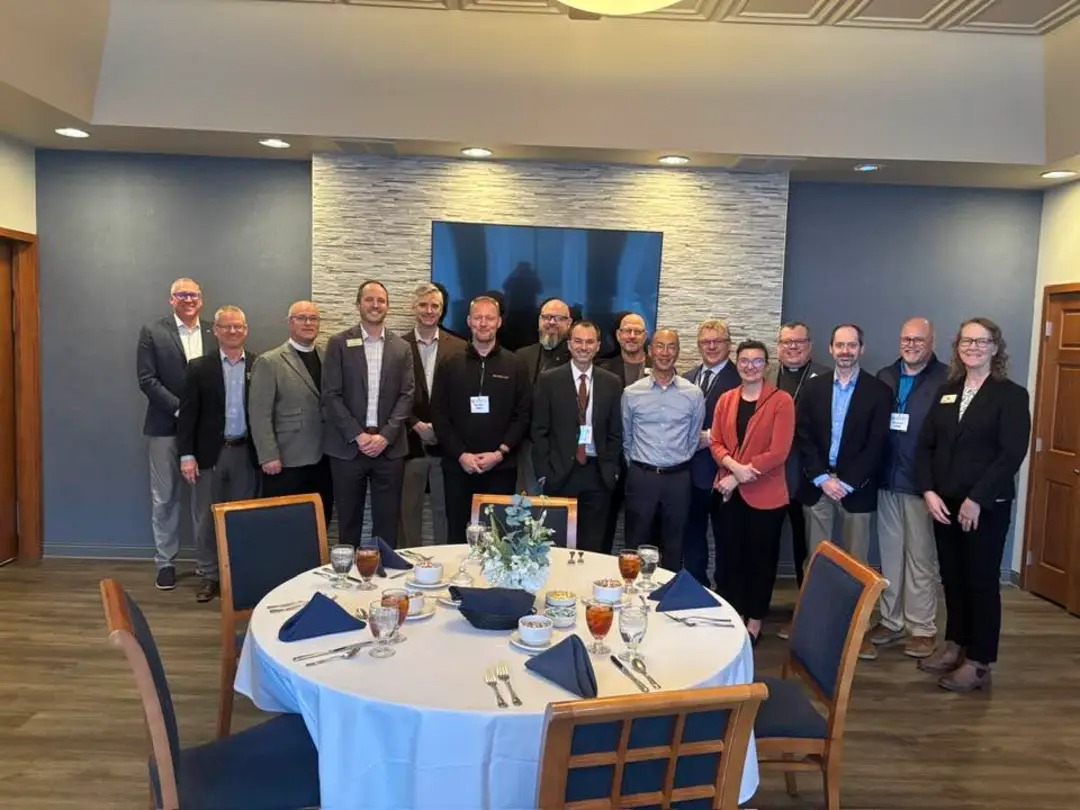
CUS made an informal visit to Concordia University, Nebraska (CUNE), on February 23-24, 2026. Informal visits are intended as follow-ups to synodical formal visitations. These visits are conducted by CUS staff and board members, a district president, or another interested party. Informal in nature, these visits center on conversations with administrators, faculty, and students to discuss the general spiritual health of the university, progress since the last formal visitation, ways in which CUS may be of help, and best practices that CUS can learn from the university to share with the rest of our system.
The meetings in Seward were pleasant and productive, strengthening the ties among CUNE, the Concordia University System, and our beloved Synod. The team was treated to attend the largest gathering of church-work undergraduate students in the United States at the annual CUNE church-work student luncheon. Over 300 students attended. We are thankful for the good, Christ-centered work that is being done at Concordia University, Nebraska.
| |
Share this newsletter with your friends!
They can subscribe by clicking the button.
| | | | |