|
Gates Mills Land Conservancy
| September 10, 2024 | Newsletter Issue #8 |
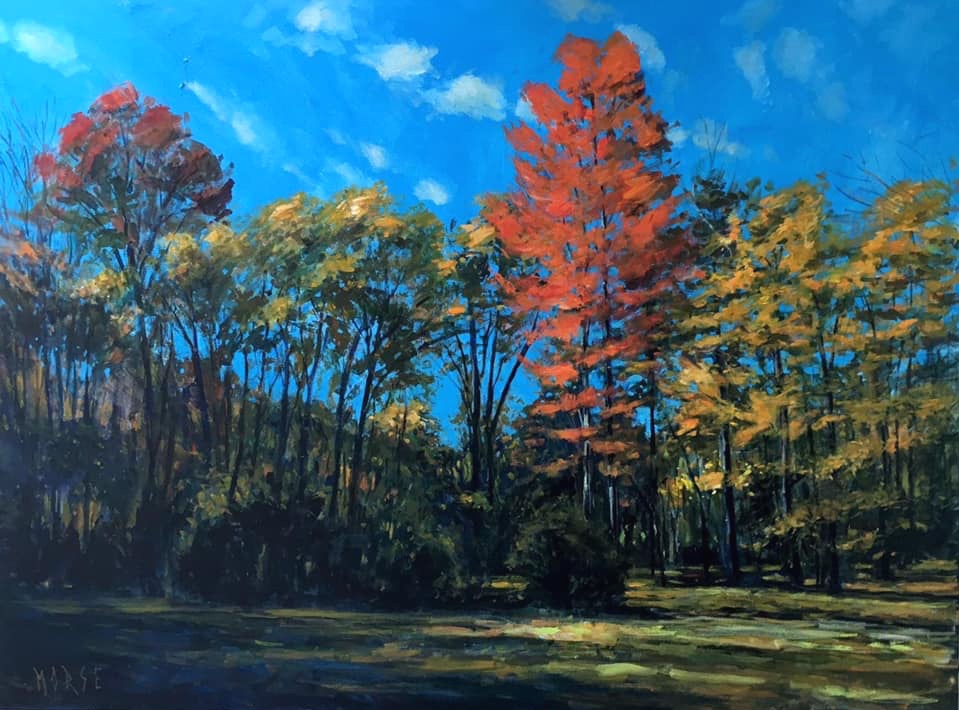
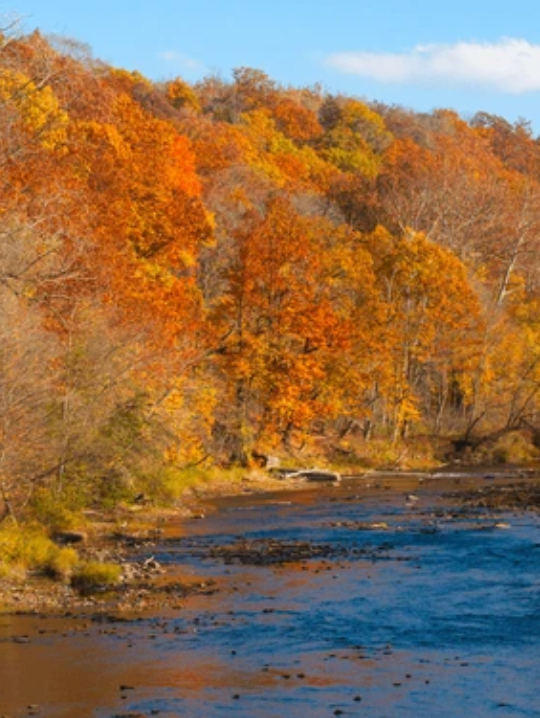
"Red Tree Evening" by Jamie Morse | Collaborating for Conservation | |
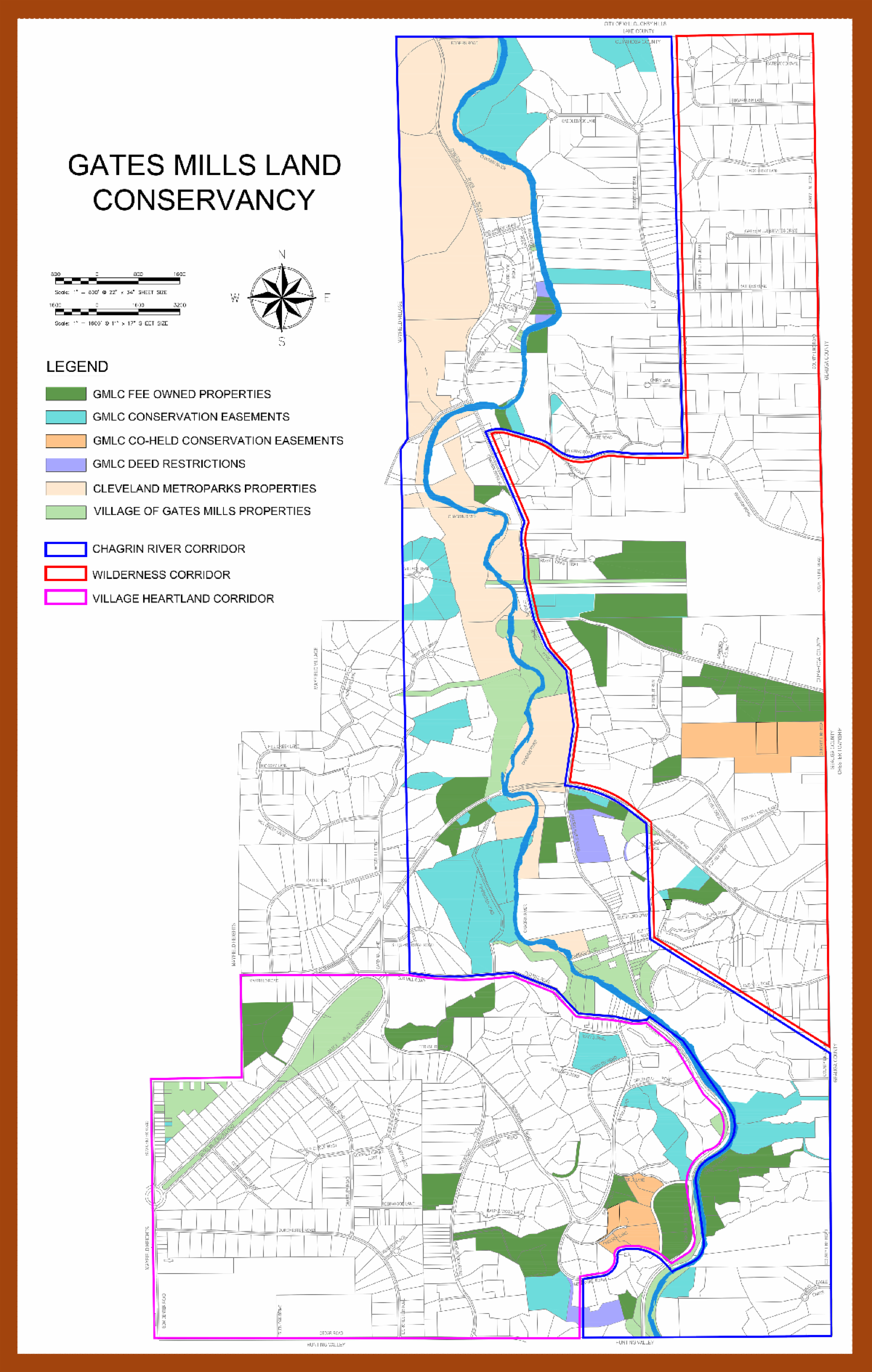
Several conserved properties in Gates Mills, which are under the stewardship of the Gates Mills Land Conservancy, have been preserved through the thoughtful efforts of groups of neighbors. In the individual areas of Fox Hill Drive, Austin Woods and Riverview Road, neighbors have worked together with GMLC to preserve the natural beauty and privacy of land abutting their properties. Conserving these parcels not only impacts wildlife and native plants, but it can also impact environmental issues of neighboring properties.
For example, preserving the Austin Woods parcel is particularly impactful because of the steep descent of the eastern hillside heading toward Chagrin River Road. The development of the eastern and western ridge valleys is affected by water and septic use, tree cutting, and rain, stream, and watershed runoff. Homes along Chagrin River Road that border Austin Woods are annually impacted by this runoff and subject to flooding. Preserving this parcel against further development is a good demonstration of environmental responsibility.
|
|
|
This year we have been highlighting important collaborations for preservation, and the responsibility that we all have to preserve and protect the amazing native landscape of our community.
On September 21st, GMLC will hold our second Fall Seminar entitled, “Our Collective Responsibility Moving Forward “. We will be hosting speakers from Western Reserve Land Conservancy, the Healthy Urban Tree Canopy, and Ecological FX. This is a free seminar held at the Gates Mills Environmental Education Center. Additional information is located below under “Events” and is posted throughout the community.
Specific collaborations between groups of residents and Gates Mills Land Conservancy, to protect their surrounding land from overdevelopment, has made significant impact to the preservation of our woodland beauty. Another effort by the GMLC was to help the Village create a conservation easement on the prized bird sanctuary of the former Baldwin estate, a jewel in the crown of the community.
We have also been updating you about the Tree-of-Heaven. This invasive which is extremely hard to eradicate, has taken hold throughout Gates Mills. Its poisonous root system can kill surrounding plants and trees. For a native forest like Gates Mills, and a major tributary like the Chagrin River, this is a great concern.
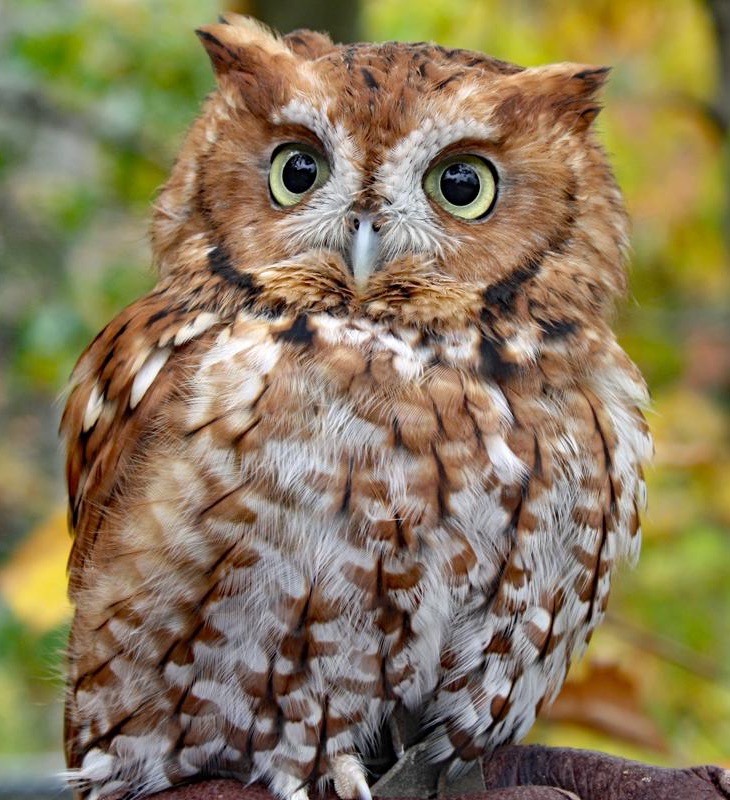
New to our Newsletter is the opportunity to collaborate with the Penitentiary Glen Wildlife Center, who will provide articles and white papers about our native wildlife. Knowing with whom we share this land and how to protect their habitats is extremely important to the balance of our ecosystem.
We hope that you will join us on September 21st for “Our Collective Responsibility Moving Forward” to learn more about what we personally can do to support and protect the environment.
Sincerely,
| |
|
Nathaniel Smith
and the GMLC Board
| |
Every 30 seconds, the United States loses a football field of natural lands to roads, houses, pipelines and other development. Since 1970, North America has lost 3 billion birds — 29% of its avian population. Forty acres of farmland in the United States are lost to development every hour. (Land Trust Alliance) | |
|
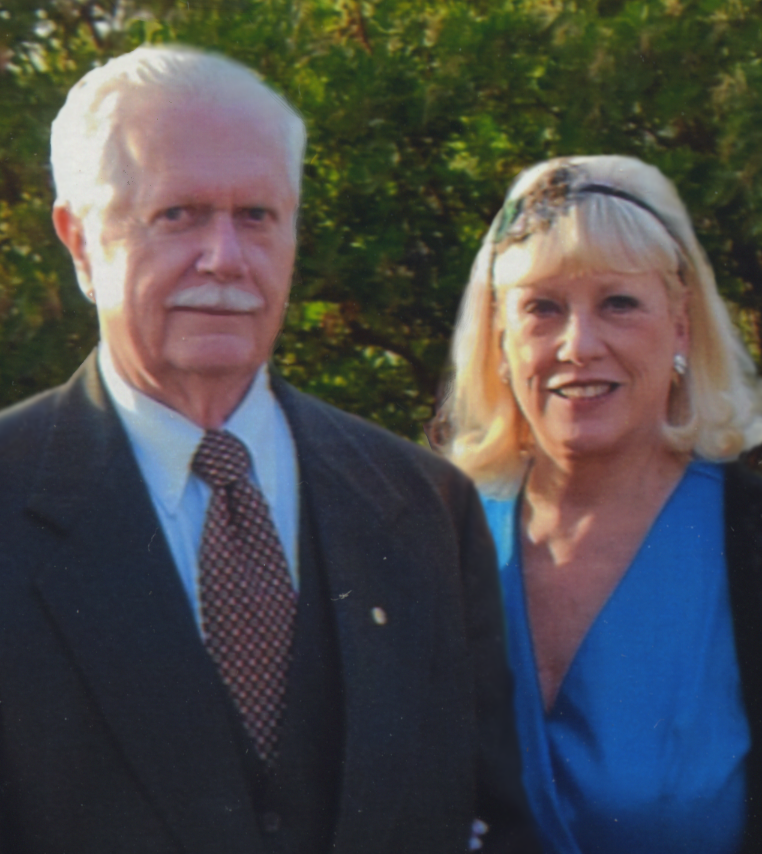
Dr. John and Chris Kramer
The Land Conservancy Board is forever grateful for John’s thoughtful and focused leadership.
| |
Dr. John Kramer
Dr. John R. Kramer has been a mayoral appointee to the Gates Mills Land Conservancy for the past 24 years. His lifelong career as an in-depth researcher, his balanced thought process, and his devotion to preserving the natural environment of Gates Mills is invaluable to the GMLC.
Dr. Kramer not only made his mark as a leading cardiologist in Cleveland, but has expanded his expertise to include the details of land conservation and preservation. In 2012, John was elected President of the Gates Mills Land Conservancy, where he helped lead the GMLC through a difficult accreditation process to earn our status in the national Land Trust Alliance.
John provides creative thinking, and has been a balanced voice and a thoughtful decision maker for the GMLC Board. Despite his gentle and quiet demeanor, he is a powerhouse of leadership who has helped create and guide this organization.
Read More
| | | |
|
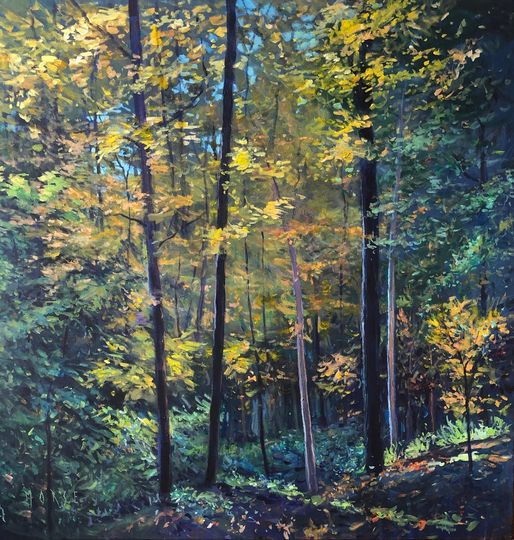
"Autumn Ravine" by Jamie Morse
The Board is grateful to Drs. Patra and Vichai Duangjak, who support the GMLC through their membership, affirmation and participation in Land Conservancy events.
| |
|
A Member's Perspective -
by Patra & Vichai Duangjak
“When Vichai and I first moved here, 40 plus years ago, we decided to support as many organizations as we had time to participate. Gates Mills is where we live, where we live is home, and home is a family. Gates Mills is our family. As a family, we should know each other, help and support each other.
Thanks to a group of villagers who founded GMLC many years ago, we now have large protected areas with trees and plants to support wildlife. Gates Mills is not just a sanctuary for birds and other animals, it is also a sanctuary for myself and for everyone who enjoys peace and a quiet place to live. Also, for children to grow up with nature, breathe fresh air. When my grandchildren come, they love to be outside, catch toads and frogs and fire flies. Things they cannot do in the big city where they live.
When I was still working, there was nothing I loved more than coming home after a long busy work day, to my quiet, peaceful home in Gates Mills. My sanctuary.
The Mission of GMLC is to protect land and the environment of Gates Mills. The GMLC is run by volunteer villagers. They volunteer their time and effort to keep Gates Mills Village the best place to live. We support GMLC, because GMLC works to keep our home the way we love it – open space, lots of trees and wildlife, for us, and our younger generations to come. All the things I love, and I assume all villagers love also.”
Patra Duangjak
| | | |
|
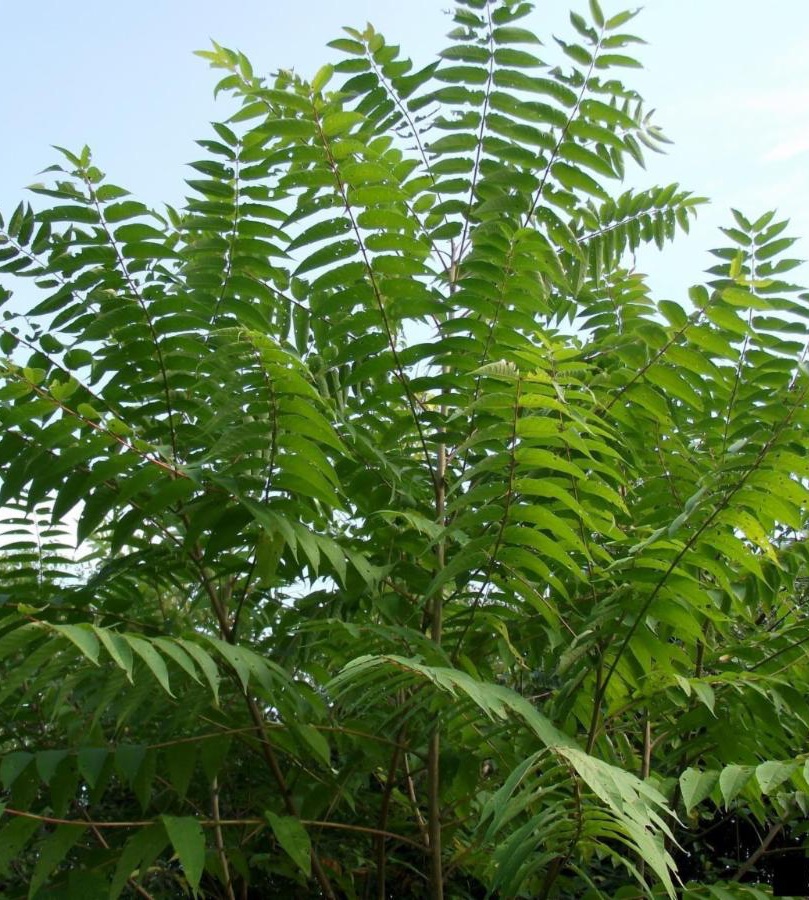
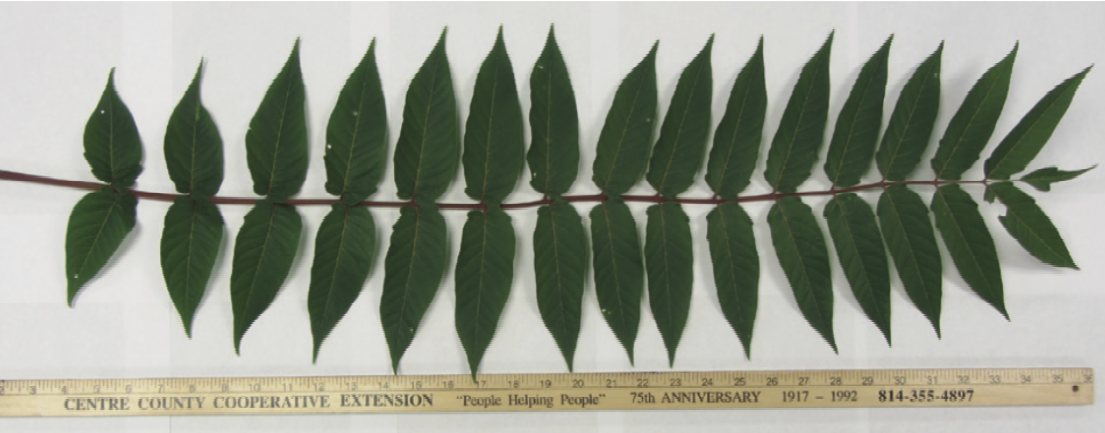
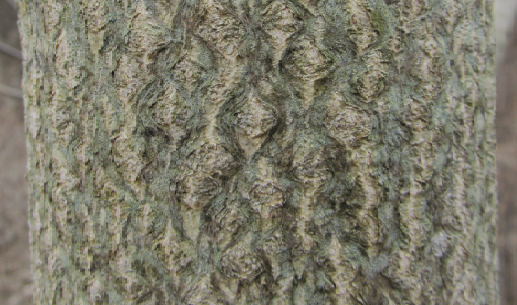
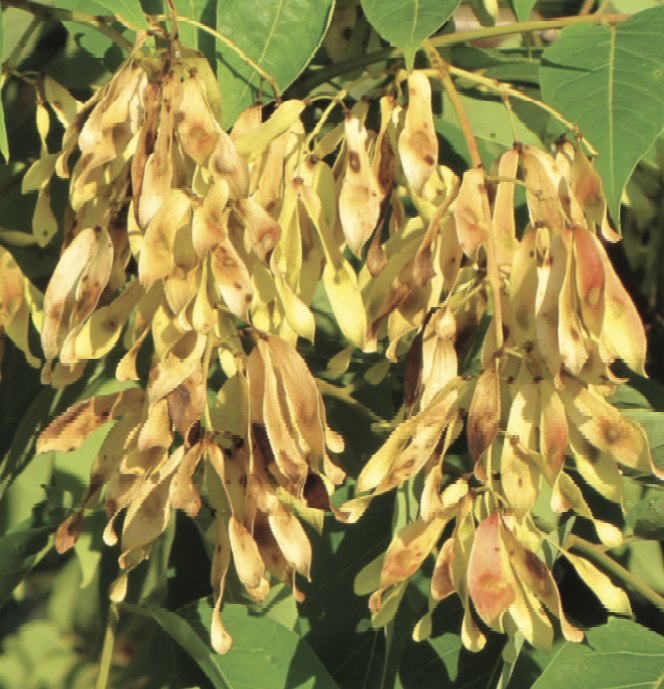
Tree-of-Heaven Identification
|
The application of harsh chemicals to kill Tree-of-Heaven can be dangerous to human health and the environment. A licensed mitigation specialist can provide focused applications to avoid leaching into the soil, water and surrounding plants. | |
|
Project Grant -
Mitigating the Tree of Heaven
In 2024, the GMLC was award a grant to mitigate the relentless invasive "Tree-of-Heaven” on our fee-owned properties. The danger of Tree-of-Heaven to our environment in Gates Mills, is that it produces ‘allelopathic’ chemicals in its leaves, roots, and bark. This means it produces biochemicals that influence the germination, growth, survival, and reproduction of other plants, becoming a danger to our Tree Canopy.
To tackle this relentless invasive the GMLC has hired a professional certified arborist for the mitigation. The spread of Tree-of-Heaven is rapid and may not be evident until it is well underway. It spreads by seed and by underground runners, so the spread is quick. If the plant is cut without treatment the roots send up numerous shoots.
Usually, a trail of the spread can be easily identified, as we have found on a property off Mayfield Road east of Chagrin River Road. The trail of growth heads down the hillside toward the village where several private properties have much growth and are also in the process of mitigating the invasive from their land.
Mitigating Tree-of-Heaven (Ailanthus altissima) requires a multifaceted approach that combines technical expertise with environmental awareness. In May/June when tree leaves unfolded, we began identifying these trees on GMLC properties with the assistance of our mitigation expert. The GMLC has identified and documented Tree-of Heaven in several areas of our fee-owned properties, and we will begin the mitigation process as fall approaches. These efforts to eradicate Tree-of-Heaven will take several years of repeated treatments.
Please help us prevent this invasive species from spreading throughout our Village, the Chagrin River and your own properties by being able to identify it, by contacting a licensed mitigation specialist and by preventing it's spread to neighboring properties.
| | |
|
Research provided by Rob Galloway.
| |
|
Creating a Conservation Easement Law
"Congress temporarily enacted the Tax Reform Act of 1976, which served as the first congressional act, to create an economic incentive for private parties to donate land that had scenic and historical value to the United States.
In order to qualify for a tax deduction, the Tax Reform Act required the donor to grant a conservation easement for a term of at least 30 years. The Treasury department also played a crucial role in providing a tax deduction only to donors who granted permanent conservation easements.
The motive behind this was due to a growing concern that donors would take advantage of the federal subsidy on land that was merely held for eventual development, which went against the statute goals of conservation.
On December 17, 1980 Congress permanently codified a conservation easement tax deduction provision, deciding to establish a well-planned conservation easement program. That same year, this statute became law in Ohio. The Ohio statute adopted limits for conservation easements only to those who fall within “qualified organizations”, and limited its purpose to preserving open space and agricultural land."
| | | | |
|
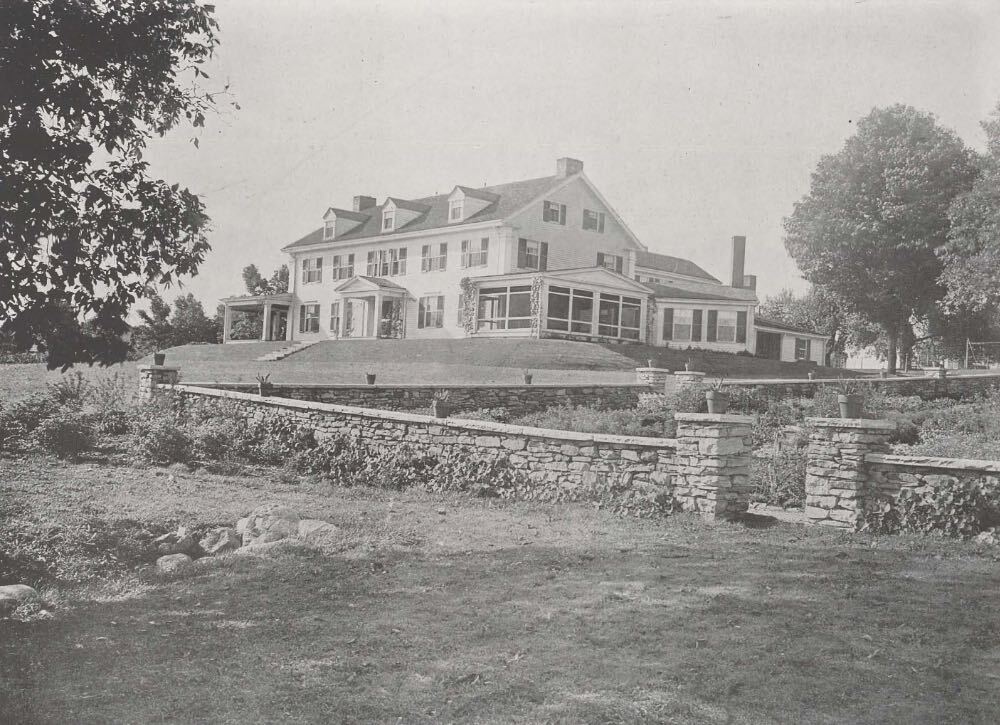
Hillcrest, the Prentiss & Lillian Baldwin Estate on Carpenter Road at the top of Old Mill Road.
Samuel Prentiss Baldwin was a noted ornithologist, naturalist and lawyer. He established the Baldwin Bird Research Laboratory and helped organize The Cleveland Museum of Natural History.
In 1914, Baldwin founded and directed the Baldwin Bird Research Laboratory at Hillcrest, his Gates Mills estate, to study live wild birds.
Creating a conservation easement on the former Baldwin Estate helped to protect the efforts that Mr. Baldwin began when he started the Bird Research Laboratory.
| |
|
A Conservation Collaboration for an Historical Property
In 2007 the Gates Mills Land Conservancy entered into discussions with the Village regarding permanent protection of specific lands that had long been identified by the Conservancy as “priority” conservation properties. The properties that the Village owned included approximately 79 acres identified as the “Carpenter Road” property.
These properties had originally been donated to the Village in 1943 and 1950 by S. Prentiss and Lillian Baldwin (71 acres) and by Walter and Evelyn Kinder (7 acres). The negotiations culminated in the purchase of over 9 land parcels of habitat and scenic area, designating them as "protected property" by a 2009 conservation easement grant.
Read More
| | | |
Article provided by Penitentiary Glen and the Lake Metroparks. | |
Nature's Neighbors
by The Wildlife Center at Penitentiary Glen
"The Wildlife Center is delighted to participate in the GMLC Newsletter by providing stories, information, insights and updates about the native wildlife that share their home with us.
Penitentiary Glen is known for the deep gorge that divides the park in two. Settlers in the early 1880's called the gorge "Penitentiary Glen" because it was difficult to get out of the deepest part, much like a prison or penitentiary. The gorge is a sensitive area and has limited access because of its steep 100ft. walls, exposed rock and fragile vegetation.
In 1912, the Halle family, owners of Halle Bros. Co. in Cleveland, bought this property for their summer estate and working farm. The farm was managed by the Burnett family, who lived here year-round. The only remaining structure is the horse barn, which now houses the Nature Center.
In 1983, the Wildlife Center opened and accepted its first patient, an injured snake. Since it’s humble beginnings, the Center has grown not only in size but also what we offer. The Wildlife Center has become an environmental education, state-of-the-art wildlife rehabilitation and research facility. We present up to 300 outreach programs a year and rehabilitate anywhere from 1,200 to 2,000, native Ohio wildlife annually.
We look forward to sharing more about our native wildlife and the what we are doing at Penitentiary Glen Wildlife Center through the GMLC Newsletter.”
Tammy O'Neil, Wildlife Care Manager
| | | |
|
|
In The News -
The Tree Canopy Committee
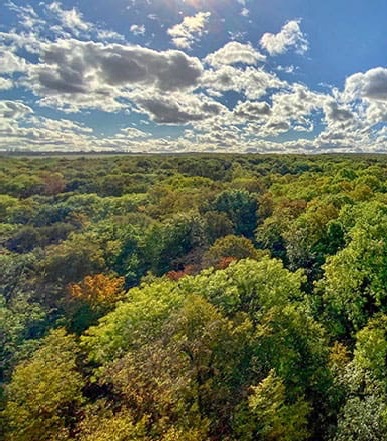
At the beginning of 2024, Mayor, Steve Seimborski established an Environmental Committee based upon the highest ranked villager’s objectives derived from the 2023 Comprehensive Plan. Three main goals of this environmental committee are to address the Tree Canopy, Waterways, and Wildlife for the community.
Recently appointed to the Tree Canopy Committee are villagers: Mitch Bass, (Chair), David Atton, Lucy Chamberlain, Erick Carlson, Holly Mathews, Nat Smith and Sandra Turner.
The Committee will study current research and best practices for tree canopy care, develop recommendations for pilot projects, advise Council about sources of grant funding, identify possible initiatives to be approved by Council, and report on this progress to the community.
Committees to address Waterways and Wildlife are forthcoming.
| | |
|
Upcoming Events
GMLC's Fall Seminar
"Our Collective Responsibility Moving Forward"
-------
Saturday, September 21, 2024
9:00am - 2:00pm
Gates Mills Environmental Education Center
390 County Line Road, Gates Mills
-------
Ed Meyers, WRLC, Legal Counsel
"The Importance of Conservation Easements"
Pete McDonald, WRLC, Land Stewardship
"The Longterm Plan of Stewardship"
Jarod Bartley, Cuyahoga Soil & Water - Healthy Urban Tree Canopy
"Growing a Healthy Urban Tree Canopy"
Craig Morten, Ecological FX
"Aquaponics - How It can help Restore Biodiversity"
-------
Come Join Us for this Free Event!
RSVP today... gmlc44040@gmail.com
| | | | | |