Having trouble viewing? Click here: View as Webpage

July 2025 Volume 15 number 7


ShipShape

News, Tips and Happenings

4th of July sale


10% off all Bluejacket kits on orders entered from

12.01AM July 4th to midnight Sunday July 6th.


NRG'S MODEL SHIP WORLD

Model Ship World is an on-line forum of over 40,000 ship modelers. Topics range from kits to scratch builds, in-process continuing stories, tips, manufacturer information, technical topics. Too many to list here. Go take a look! And yes, BlueJacket is one of the sponsors.


www.modelshipworld.com

Notes from the General Manager

We are happy to announce that our Square ended Scow schooner kit is in production and available. you can find it on our website, or order by phone. Kit# K1118 is $199

Nautical terms and origins

Bibbs (also bibs) - Heavy brackets on a mast, to support the tretle trees. The origin of the word in this sense is not known.


Cutter - (1) A fast, small ocean-going vessel, usually a government type (i.e., Coast Guard and earlier the Revenue Service) for patrolling and police duties. (2) A single-masted sailboat, fore-and-aft rigged, the mast of which is located farther aft than that of a sloop, and which usually is rigged for two or more headsails. (3) A ships pulling boat, of eight oars or more, also rigged for sail; usually lug rigged. The term appears to come from the Middle English kittere, a sharp boat.


Lug - A sail and rig of several types for small craft. The word is probably Old English in origin, borrowed by the Dutch with their word logger, and taken back again into English.


Yankee - Other than the usual American meaning, this was the name of a large jib topsail carried by some American racing yachts, copied and so named by the British.


Information is from the book "Origins of Sea Terms" by John G. Rogers

copyright 1985 Mystic Seaport Museum, Inc. and available from BlueJacket.

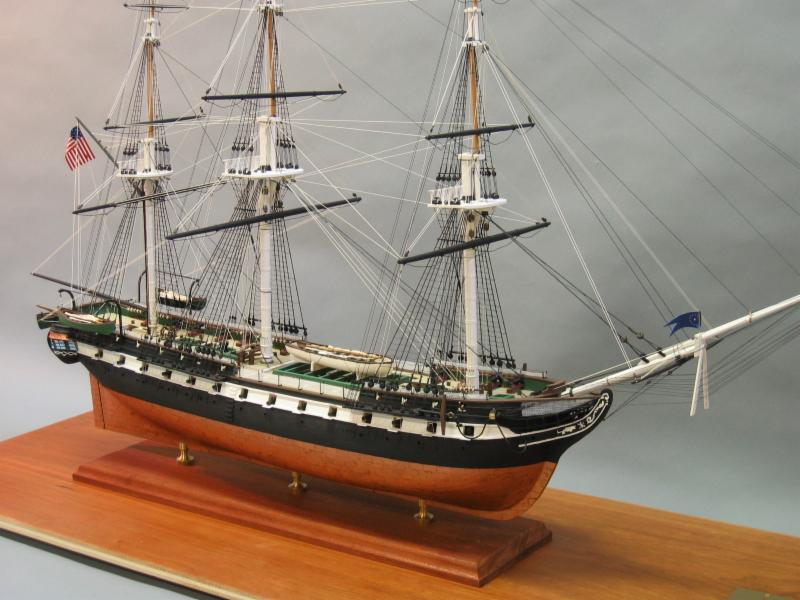
Model of the month -

The smile of proud accomplishment.

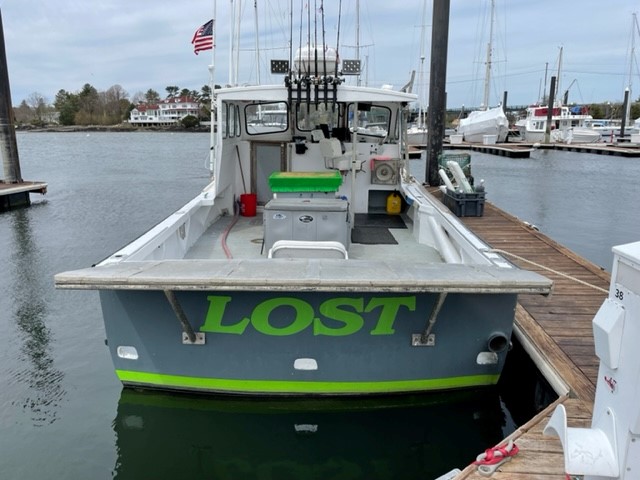
Real Boat Names

Vanity plates seen in Maine

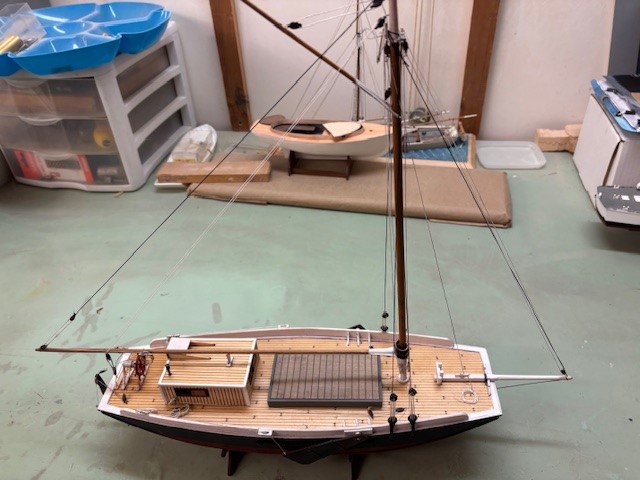
Let's see YOUR workbench

From Carl H. of CA:


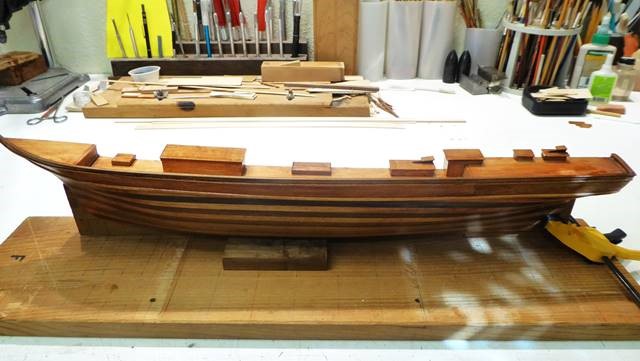
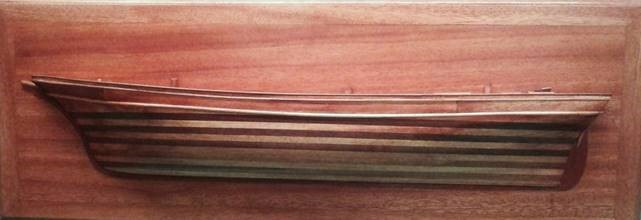
Below are 2 pictures of a half hull model I recently competed.


It depicts the clipper Sea Witch, launched in 1846 and unfortunately wrecked off Havana in 1856. Although having a short lifespan she was one of the fastest clippers of her day.


The alternating waterline lifts are black walnut and poplar. The deck houses and hatches are also poplar. The 26” X 9.5” display board with biscuit joined edging is African mahogany. Both hull and display board were stained with a combination of Golden Pecan and Colonial Maple then finished with four coats of marine spar varnish.


On the building board (without stub masts and bow sprit).

Completed with sheer and main rail moldings, stem, keel and rudder.

What's on the workbench?

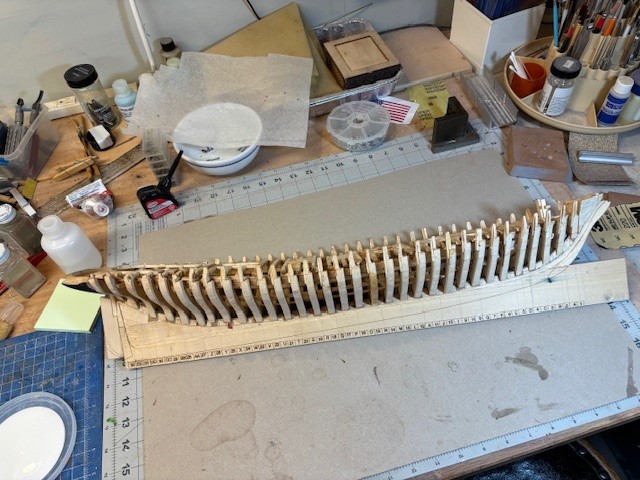
Nic's bench - Starting a job to plank a framed America hull, deck, and deck furniture for an elderly customer who wants to do the masting / rigging himself.


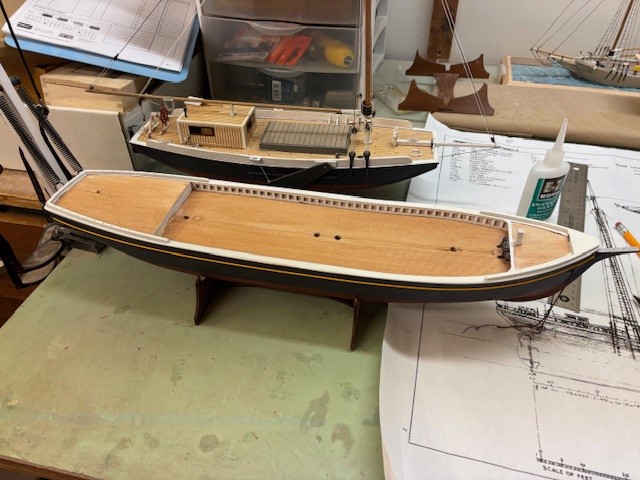
Al's bench - Al is making good progress on the West Coast Lumber schooner model. Finished Scow schooner in the background.

Something Fun

Interesting facts on longevity:


The inventor of the treadmill died at age 54.

the inventor of gymnastics die at the age of 57.

The world bodybuilding champion died at the age of 41.

The best soccer player in the world, Maradona, died at the age of 60.


And then...


KFC inventor died at 94.

The inventor of Nutella brand died at the age of 88.

The inventor of opium died at the age of 116 - in an earthquake.

Hennessy cognac, Irish inventor, died at 98.


How did doctors come to the conclusion that exercise prolongs life?


The rabbit is always jumping, but it lives for only 2 years.

the turtle that doesn't exercise at all, lives 400 years.


So...


Have a glass of wine...

Take a nap...

And IF you wake up, have bacon & eggs.


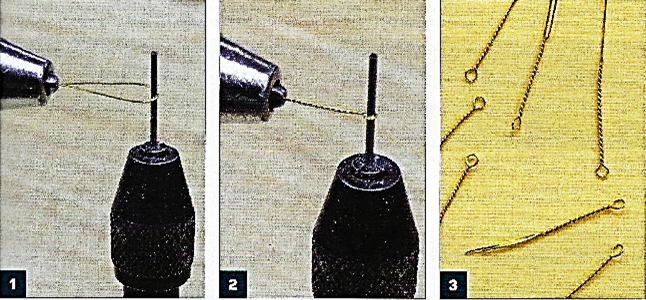
Tip of the Month - making eyebolts

From Shipwrights of Ohio newsletter:


The following topic comes from the “Ship Modeler’s Handbook” that I originally learned from Steve Wheeler many years ago. The subject is “Making Round Eyebolts”. Tools required are two pin vises, a small drill set and wire.

1 – determine the size of the round eyebolt.

2 – choose a drill bit to match the eyebolt size

3 – fasten the ends of the wire into the second pin vise

4 – loop the wire over the drill bit

5 – twist the pin vise with the wire ends until the eyebolt is formed 


This method lets you make any size eyebolts, from a size 70 drill bit for thread to slide through to an eyebolt large enough to fit over a mast trunk.

Blatant Publicity
A Final Thought...

At our r/c flying field, Guy B. arrived with this really funny T-shirt. His son gave it to him for Father's day.

Nic Damuck
BlueJacket Shipcrafters