PART TWO
THE 2nd COURSE
We would like to extend our deepest appreciation to Glenys and Noel Harper for their first hand input into this article. Their contribution definitely enhanced the finished product.
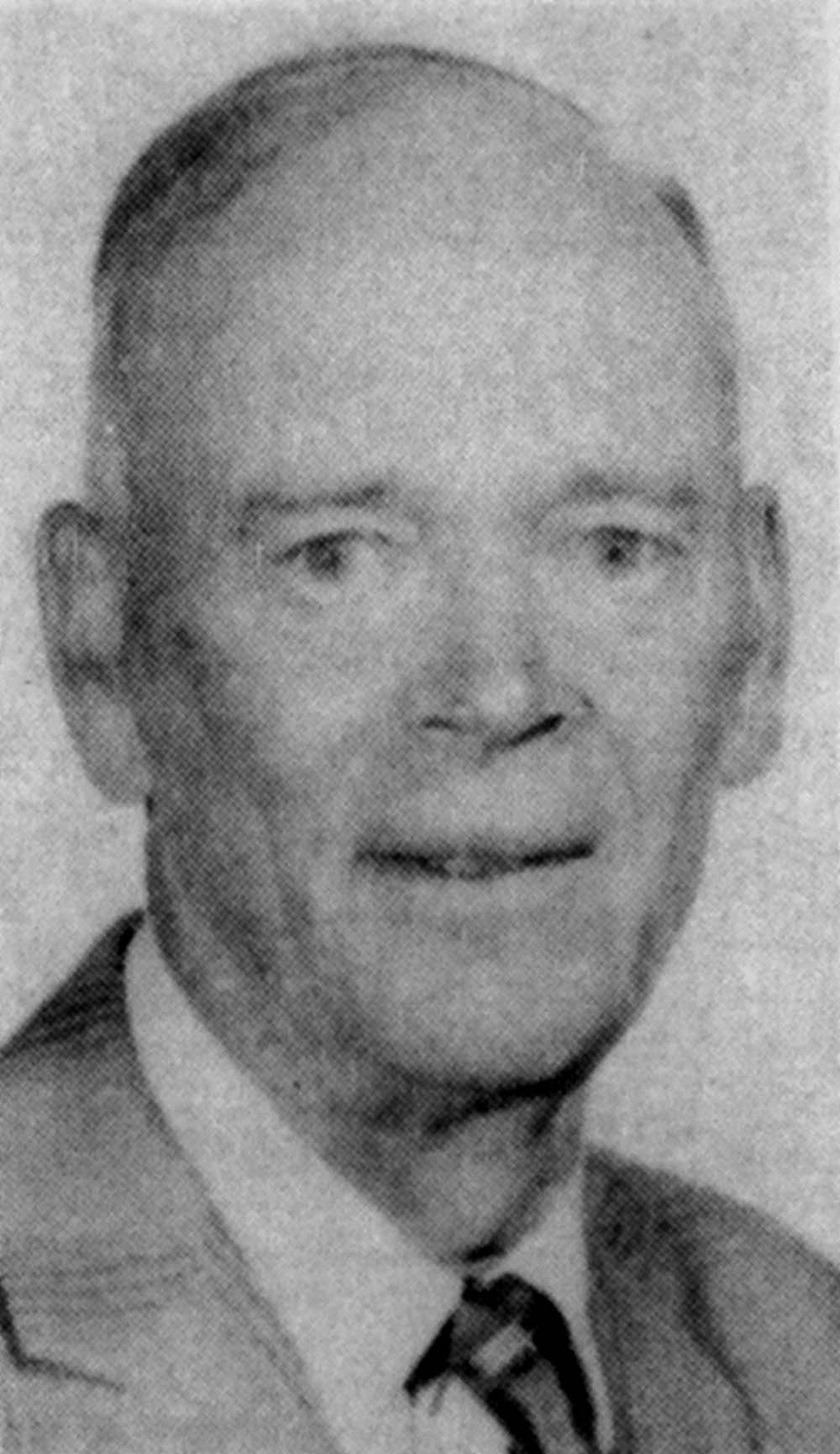
Lloyd Harper – “Visionary and Volunteer”
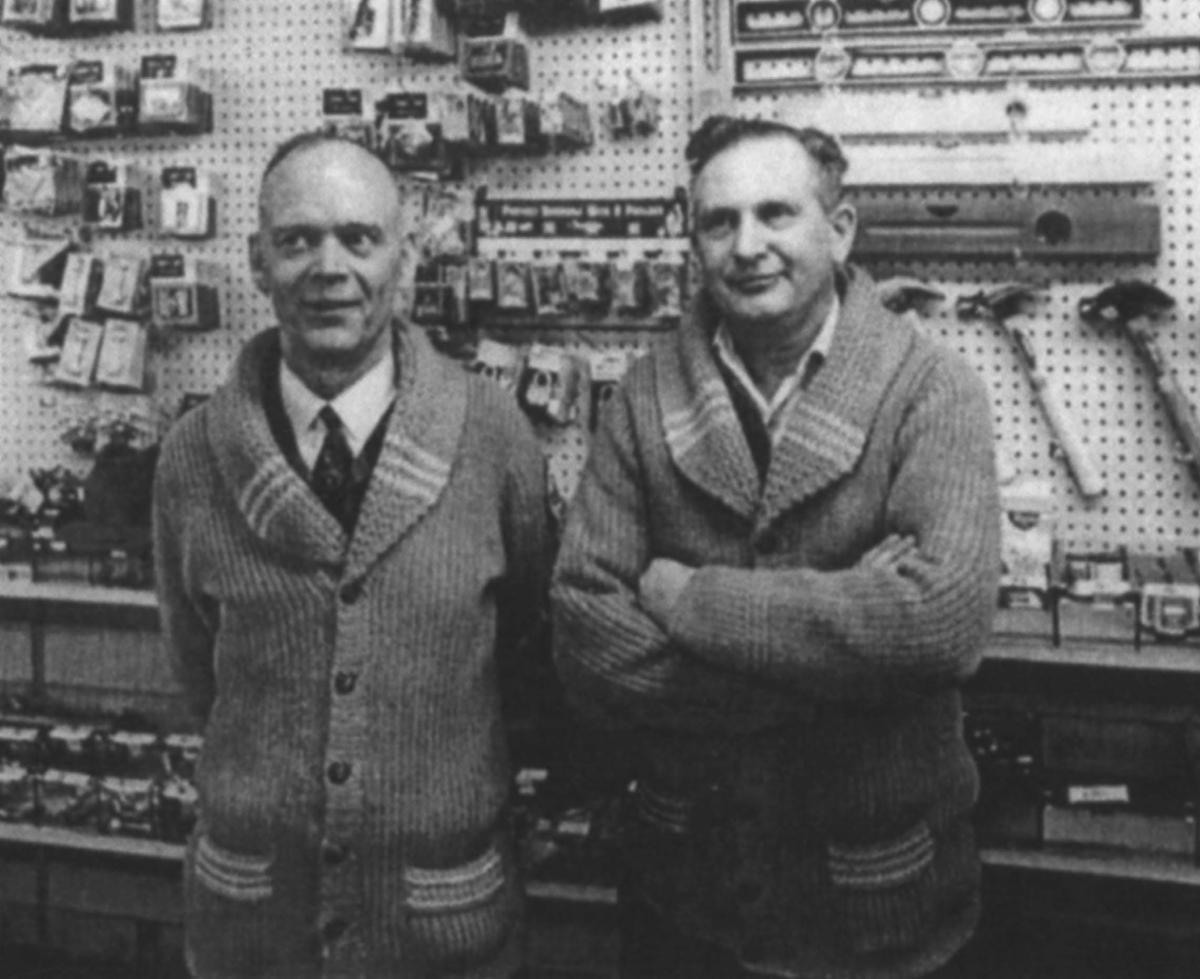
Lloyd Harper, born in Cupar, Saskatchewan, moved to Prince George at age six, where his father had a Sheet Metal Shop. Lloyd and his brother Len opened a Sheet Metal shop on Reid Street in Quesnel, three years after the opening of the original Willingdon Links. It is unknown if he realized at that time, golf would play an important part of his life until his passing on July 3, 1996. When Len was killed in action near the end of the Second World War, Lloyd continued with the Sheet Metal Shop until he and partner Bill Willis purchased the Northern Hardware Store Quesnel Branch from the Moffat family of Prince George. The partners served the Quesnel community with a simple company policy. “An aggressive sales policy, coupled with a vow that their store would only sell recognized brand name quality merchandised, and that every customer, rich or poor would be given equal consideration, resulted in the firm equating with the growth of the community. The company has been an integral part of the community, supporting and promoting Quesnel activities.”
In 1953 the days for the Willingdon Links appeared numbered. Each winter large logging trucks used the course to off load their logs for the local mills. The stockyards infringed on the property. News clippings show the Willingdon golfers experienced greater challenges each spring to make their riverside course playable. Fortunately one person had the foresight to begin searching for a new location. Lloyd Harper led a group of golf enthusiasts in the search for the perfect location. “We discovered an old abandoned farm (the Spring Ranch) owned by Johnny Holt and family, 3 ½ miles north-west of Quesnel. We concluded this property would be ideal for a golf course. Half of the 190 acre property was already cleared, there were two creeks, and two springs running through it, and the soil was excellent.”
Now the challenge began. How does the group raise the finances to make the purchase feasible? “Originally we (Lloyd and his group) tried to get members of the Quesnel Men’s Club to put up $200 each to buy the property so the club could own it. We had a helluva time. We then tried to get the golf club to put up the $200 for each member, but the club refused. So the group finally got twelve guys to put up $1,000 each to form the Cariboo Properties Ltd. The selling price was actually $15,000, but there was an agreement if we could come up with two $6,000 cash payments, one August 5th and another November 5th, that would be enough.”
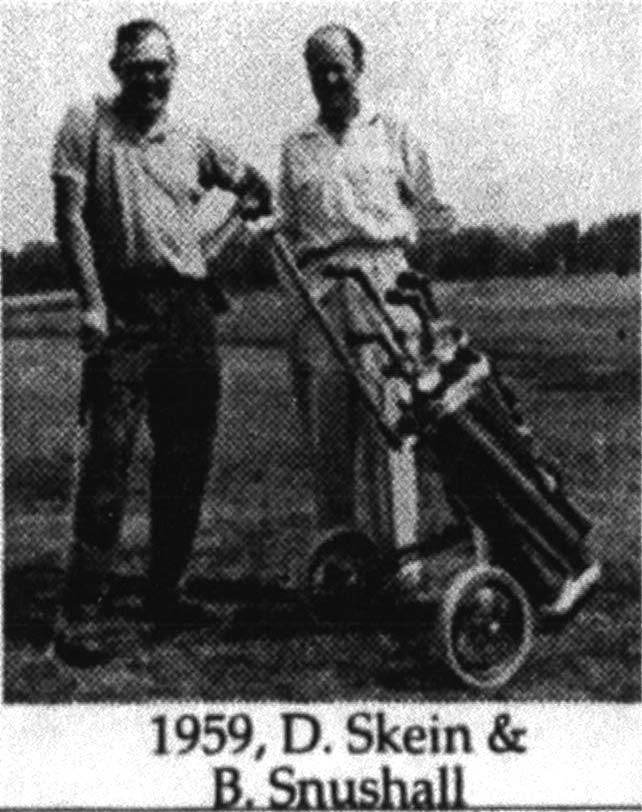
” The original shareholders included: Lloyd Harper, Bruce Harper, Harry Keen, Bill Willis Sr., Bill Willis Jr., Jim Watt, Roy Patchett, Don Patchett, Barry Snushall, Jack Ritson, Stan Bjornson, and George Hamilton.
The original investment was $1,500 each to pay for the farm, clubhouse, and machinery. The total investment was $18,000. The shareholders further agreed to leave any profits in the company to improve the course. To further supply capital funding the company sold $100 memberships. (approximately 40 originally). The memberships were non refundable and non transferable. The theory was that if you played as a member for over five years you got your money back. Over Time, shares were transferred to children and grandchildren, and some were sold to present shareholders.
In 1955 the group established the Cariboo Properties Ltd to begin the transforming the farm into a nine-hole golf course with sand greens. Lloyd Harper served the company as President until 1990 when he turned the reins over to his daughter Glenys and son-in-law Noel Pumfrey. With two fields, one on each side of Blackwater Road cleared and time of the essence, the partners decided to establish the first nine holes on the larger field. “ The first year we ploughed up the field, cleared off all the dead thistles and weeds, burned down the old barn and corrals, and pulled out the stumps.” Bill Wear, our professional at the old course, laid out nine holes. The new par 36 layout (3200 yards) had two par five’s two par threes, and five par fours. By the end of the summer, we were ready for seeding the course. This was good planning because in the spring of 1956 the PGE Railway ordered the golfers off the Willingdon Links course. The Quesnel golfers had a place to go.
As the members of the Willingdon Links prepared for their move, Lloyd and his crew frantically prepared the sand greens and tees for the opening of the new course. Some people in town actually celebrated the move. “ Outfielders at the ball park will no longer have to dodge golf balls and golfers will no longer be heckled by ball fans.”
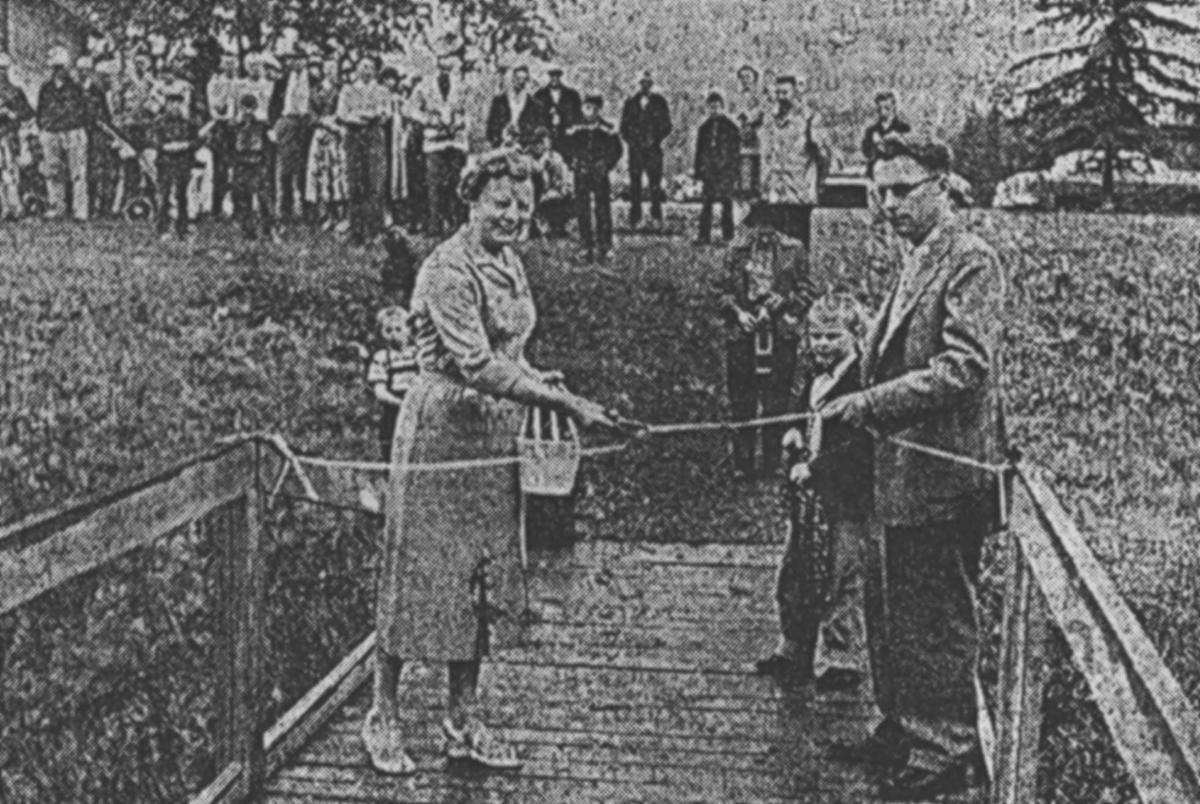
Sunday June 3rd, 1956 marked the opening day for the new Cariboo Golf Course. Because the membership did not like the name, the course soon changed to the Quesnel Golf Course. “Sunday will be the pay-off in the conversion of a large portion of the old “Holt” ranch located on Six Mile Road, now known as Blackwater Road, into a nine hole golf course. The new course is almost square and there is little to distinguish one fairway from another. Ornamental trees will be planted this year and next to add definition to the holes. The new Quik-Lock building, donated by Gardner Building & Lumber, will be completed in August and serve as the new clubhouse.” Mrs. Fraser, wife of Alex Fraser chairman of the Quesnel Board of commissioners, cut the ribbon to officially open the new course. Mr. Fraser had the honour of striking the first ball on the new course. Large contingents of golfers from Prince George and Williams attended offering their support for the new venture. Alex’s career led him to Victoria , where he served as MLA, but he never forgot his roots. Today the Alex Fraser Bridge in the lower mainland recognizes his contribution to the province.
In 1969 Lloyd retired from the hardware business. He did not sit and let the grass grow under his feet. Basically he was a workaholic. He rolled up his sleeves and began the process to transform the remaining acreage into another nine holes. First Lloyd thought about using the original acreage on the opposite side of the road. “Because more than half the original acreage laid across the road, we always thought of expanding there. After walking and thoroughly studying the property Lloyd realized it would be better to expand to 18 holes on the same side as the original nine. The new nine will the opposite type of nine to the original. The holes will be shorter, but very demanding. The positioning of shots will be more important than power. On the new nine, golfers will have to gauge shots to avoid clusters of cottonwoods towering more than thirty metres high. The player will need to be careful. There’ll be more premium on accuracy than on distance. I find the layout of the land lays the course. You want a long and short par.”
Lloyd a player since 1933 won many championships throughout the north during his playing career. As the new nine proceeded to completion, the Cariboo management team planned to officially open in 1981 but Course Manger Noel Pumfrey postponed the date to 1982. “The greens just aren’t ready. It makes it easier for us to finish it off if there’s no one playing on it.” In the fall of 1983 golfers played the entire layout. But a problem arose on number tenth green and eleventh fairway, which were referred to as the quagmire holes by the local paper. About 1985 Phil Gamache Logging with prominent local player, Real Gamache leading the way, donated property for the tenth and eleventh holes. The Novak twins, affiliated with Dunkley Lumber, gave a small section of land to complete the new holes. The Quesnel GC celebrated the opening of the new holes on June 4th, 1995.
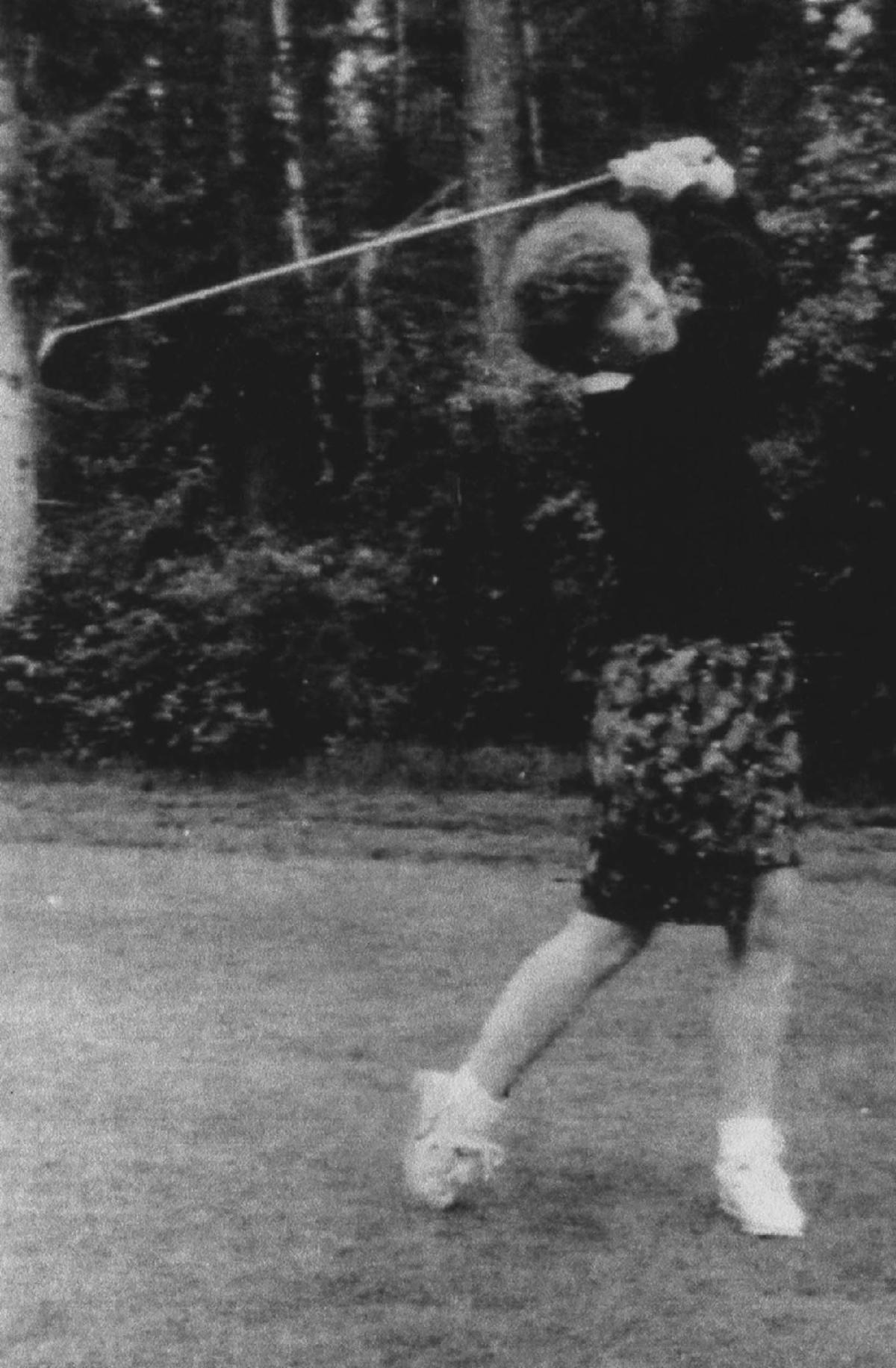
Glenys Pumfrey, Lloyd’s daughter, celebrated the occasion by striking the first shot in honour of her father’s total devotion to the course. “He loved this place. It was his heart. I think when he gave me his shares, he gave me his heart. It’s been a wonderful legacy that he’s left to my husband and me. I hit that shot for my Dad. It’s wonderful because we’ve worked really hard to get the course in good shape.” Glenys related a story that shows the extreme dedication everyone had to make the Quesnel course the best. “
Dad was always wheeling and dealing. When Noel first started preparing the new holes, he had to drag hoses across the fairways, constantly moving them, backbreaking work. Dad drove his pickup to Castlegar GC where the club was installing a new sprinklers system. Dad came home with a load of salvages fittings for our system. Dad and Noel installed them. Mom planted seedlings in buckets at home, and many evenings they would be at the course Dad digging holes and Mom planting the trees. We planted 80 trees fort Dad’s 80th birthday. Today they are huge.”
The hitting of the first shot on the full course was a tribute to a man who had the vision and dedication in 1953 to make certain golf did not die in Quesnel when the original Willingdon Links closed in 1956. The Quesnel golfers should appreciate his efforts everyday. He was the leader, the visionary, and the dedicated volunteer.
In one newspaper interview Lloyd Harper recalled playing on the "swampy Wells Golf Course"
This will definitely be a future research project.