- Thank you to Secretary Burgum for Withdrawing the Biden Administration's Withdrawal
- 2025 Irrigation Season Outlook - Not enough water yet for a full season
- 2025 Oregon Legislative Session Outlook - The largest number of water bills seen yet
- 2025 Sucker Symposium - an after-thought
- 2025 Mid-Pacific Conference Review
- 2025 ESA Conference Highlights
- Upcoming Events
- Opportunities
- Your District in the News
- What We Are Reading
| |
Please stop by the K.I.D. HQ if you would like to add your signature to this thank you letter. | |
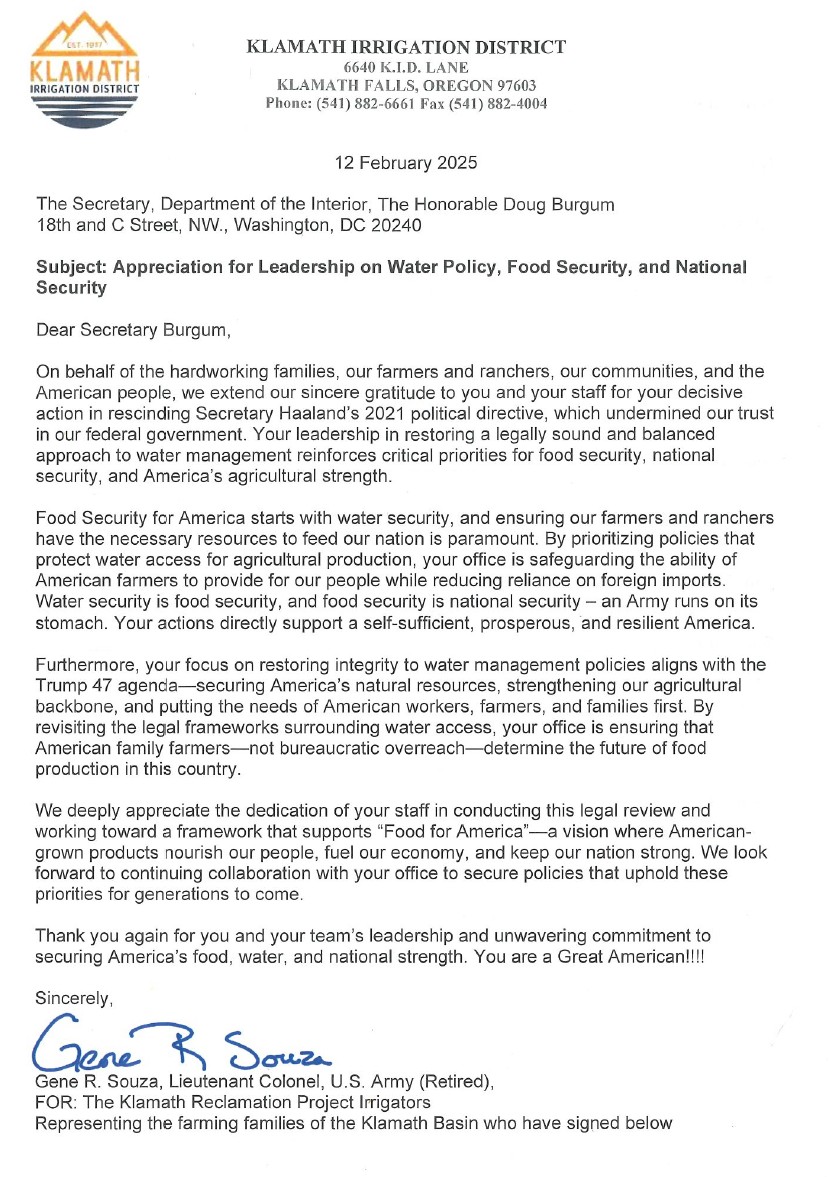
A Much Appreciative Thank You to Secretary Burgum for providing attention to the Klamath issues.
Dear Secretary Burgum,
On behalf of the hardworking families, our farmers and ranchers, our communities, and the American people, we extend our sincere gratitude to you and your staff for your decisive action in rescinding Secretary Haaland’s 2021 political directive, which undermined our trust in our federal government. Your leadership in restoring a legally sound and balanced approach to water management reinforces critical priorities for food security, national security, and America’s agricultural strength.
In just 36 hours we gathered the numerous signatures in the link expressing our gratitude. When we visit D.C. later this spring, we will bring a much larger list of folks who want to express their appreciation.
Click here for Full Letter and initial Signatories
| | | |
2025 Irrigation Season Outlook | |
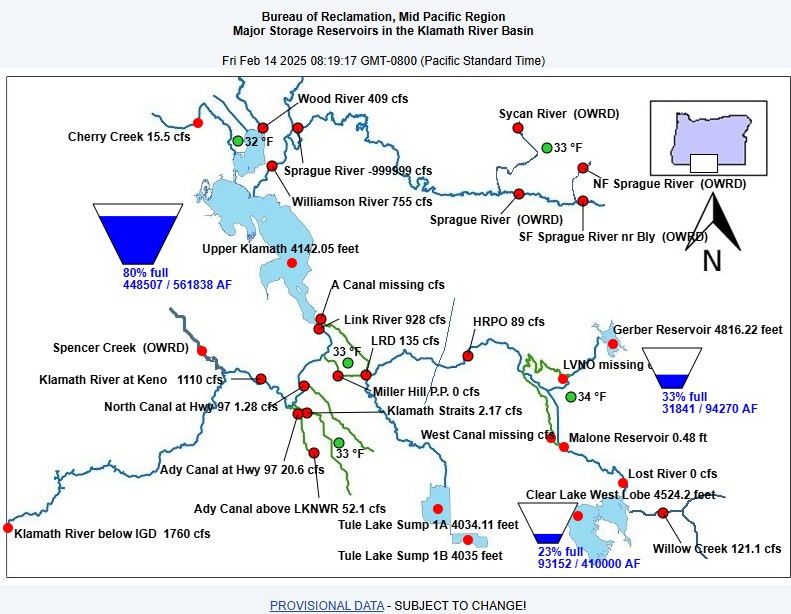
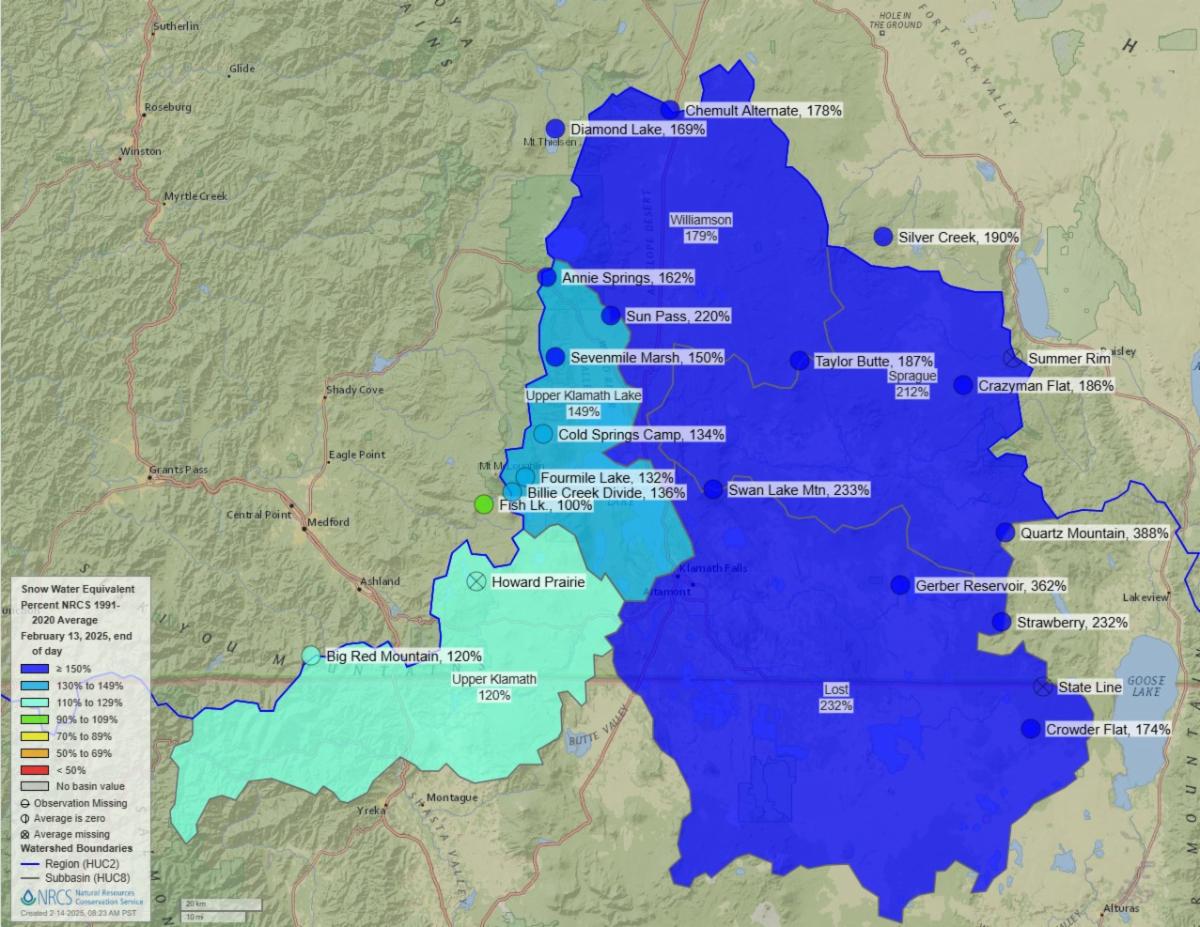
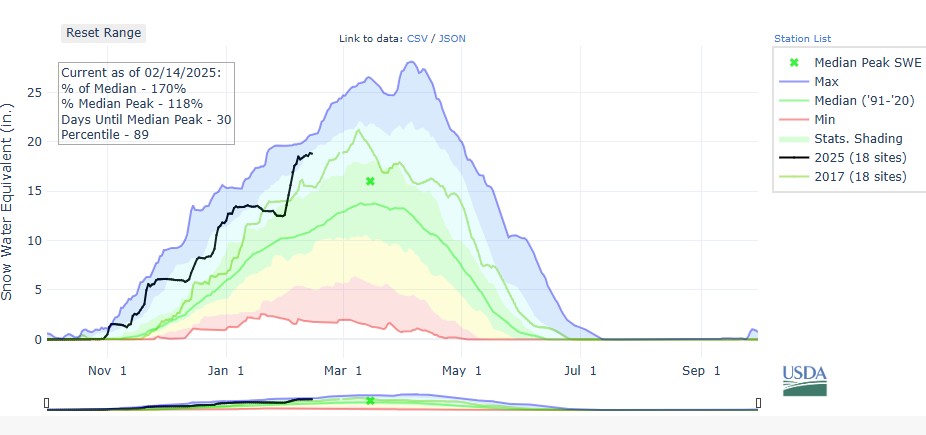
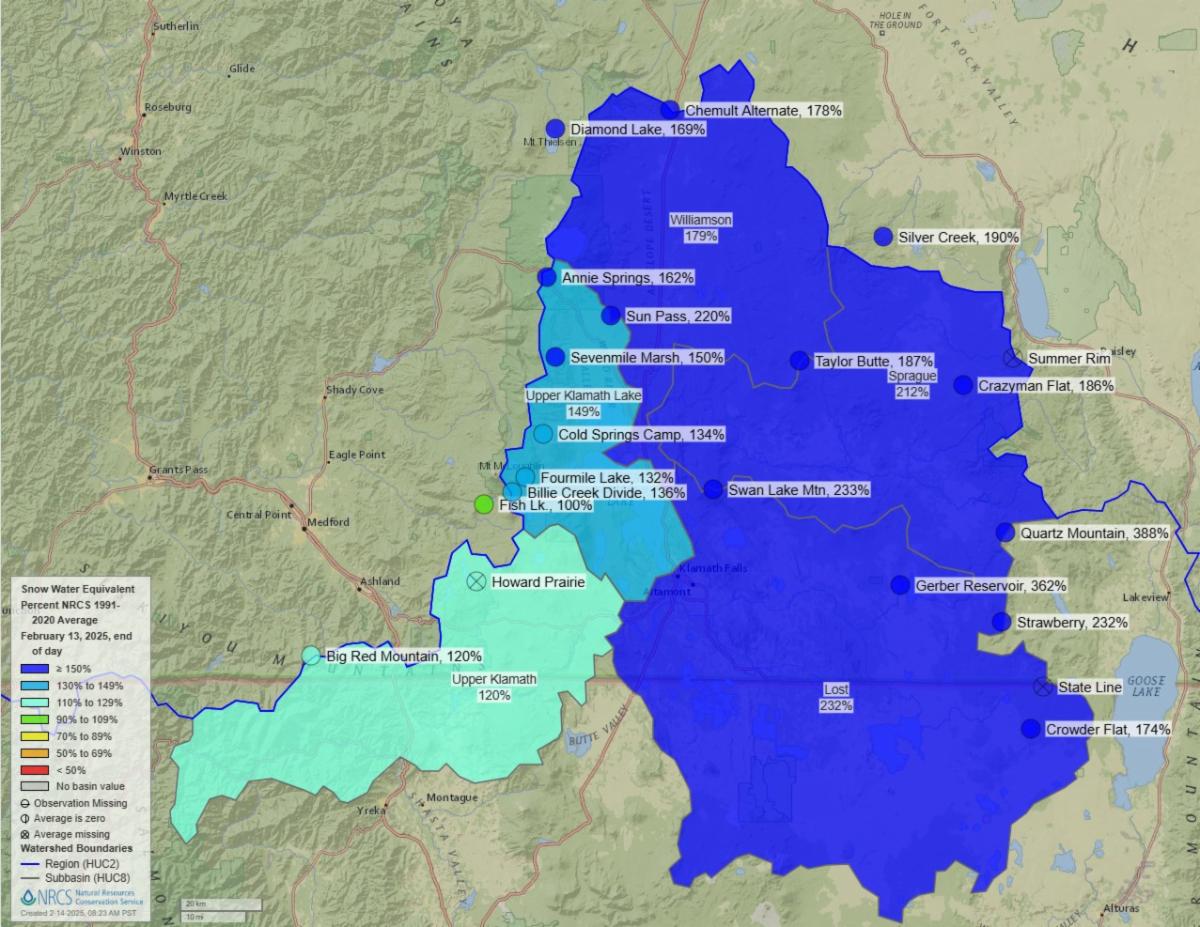
In January 2025, local weather turned dry, causing our above-average early snowpack to shrink slightly. However, recent wet weather and a favorable extended forecast keep our projections optimistic.
Current situation:
| |
Early-Season Water Demand and Forecast
The district anticipates lower early-season irrigation water demand, with weather forecasts predicting a wet February and March. This should ease pressure on our system demands as the season begins.
Reclamation’s Proposed Action Effects
Reclamation has introduced a new proposal that, if unchallenged in court, will allow the irrigation season to start without conflict. This is expected to further smooth the transition into the season. While snowpack conditions are impressive, drought conditions have abated, and flood operations on Upper Klamath Lake are anticipated, we are by no means assured of an adequate supply from Upper Klamath Lake with Reclamation's current policies.
Irrigation Season Start Date
The K.I.D. Board of Directors will determine the official start date for the 2025 irrigation season during their April meeting. We will keep you updated as soon as a decision is made.
K.I.D. Staff Preparations and Maintenance
System Preparations: Staff will begin system preparations at the A Canal Headworks in early March to validate our emergency repairs to the gates this fall. We are currently on track to be ready for full water deliveries by late April if conditions become dry.
Emergency Repairs & Routine Maintenance: All necessary emergency repairs and routine maintenance are scheduled for completion by late March to ensure our infrastructure is in top condition. We have over 42 turnouts to replace before the irrigation season.
We will provide further updates as the season progresses.
For any questions, please contact us.
|
|
Water year Outlook still similar to 2017 with developing La-Nina conditions | |
Looking at Reclamation model results for its new Proposed Action officially put into place in December 2024, the possible amount of water that could be made available for the 2025 irrigation season gives us a range between 227,000 (1993) to 279,000 (2006) acre feet for Klamath Reclamation Project farmers. Local conditions are still similar to 2017 which would allow for 255,000 acre-feet of water.
In the last week of January, Reclamation briefed that 200,000 acre-feet was the anticipated volume before the most recent storm events.
The estimated full demand for 2025 is over 335,000 acre-feet given the wet conditions going into the spring.
| |
Uncertainty Persists
Over 21,000 acre-feet of Lost River water has gone over the Keno dam; some of this water may be made available to farmers (above the numbers reported above) this year IF Reclamation does not enter flood control operations at Link River Dam. If releases for flood control purposes are made, this volume of water is likely to be reduced as Reclamation has deemed in their plan that they will spill this volume of water first in flood control releases.
Members of the farming community are talking with federal and tribal government representatives to determine how to best address flood waters for maximum benefit for the ecosystem and our farmers.
Reclamation has stored 35,000 acre feet of water for NMFS (without a water right to do so) to augment flows later this year. It is unclear at this time if any of this volume of water will be spilled during anticipated flood control operations to assist farmers in loosing the water stored from Lost River additions.
| Federal Agencies coordinating with districts to maximize ecosystem health and economic growth. | |
Reclamation intends to coordinate with Tulelake Irrigation District (TID) and Klamath Drainage District (KDD) to move water from the Lost River that TID does not divert to the Tule Lake National Wildlife Refuges (NWR) Sumps 1A/1B or pump through D Plant.
The agencies are discussing that water captured at Lower Klamath National Wildlife Refuge and its relationship to the "Deferred Project Supply" - also referred to as "uncertain water" (purple in color) in the KID Proposed Action analysis chart.
Initial discussions focus on the ability for the water to be put into the system in a way that it can used later in the season to help with irrigation demands for the water right holders (farmers) or to support sucker fish habitat in Unit 2. How this water is used later will depend on agreements between the Districts and the National Wildlife Refuges.
Bottom line, it is too early in the discussion process to understand if these actions will solidify and remove uncertainty from the 2025 irrigation water supply this fall or if this action will improve the ability for K.I.D. to meet all of its legal and contractual obligations.
We acknowledge that the continued uncertainty does not help our farmers and our community plan for, purchase seed, hire labor, or otherwise develop a solid 2025 on-farm plan.
| | | |
|
Reclamation Adaptive Management Communication 14 February 2025
Reclamation and its partners have identified a unique and time-limited opportunity to adaptively manage water for maximum beneficial use in the Project in this WY 2025-26. Therefore, for the February 14-March 1, 2025, period, Reclamation authorizes the following Action:
Effective immediately, Reclamation will continue to divert Lost River flows that cannot be stored by TID in TLNWR Sumps 1A or 1B or pumped via D Plant through the Lost River Diversion Channel (LRDC) to the Klamath River. KDD is hereby notified of the opportunity to divert all or a portion of the Lost River flows entering the Klamath River via the Ady Canal, North Canal, or the Klamath Straits Drain (KSD) or some combination of those. The total volume diverted will not exceed the instantaneous flows from the LRDC at any point. Any Lost River flows from the LRDC not diverted by KDD will be counted as Deferred Project Supply under normal calculation purposes. Any water diverted by KDD from the Klamath River between now and 1 March 2025 is expected to be delivered to LKNWR and will not be accrued to Deferred Project Supply. This Action will be re-evaluated after March 1st, 2025 as Reclamation adjusts operations in consideration of changes to the KRM for the Spring/Summer irrigation period. Reclamation will send a follow-up communication to either update or conclude the Action by 7 March 2025.
| | |
Early Season Wet Conditions Operations Plan
- Anticipate water in the infrastructure early
-- Yes, it is absurd that we need an early wet-conditions operations plan while we wrestle with the fact that Reclamation has implemented an operations plan that promotes conditions that result in not enough water to meet legal and contractual obligations. It is more absurd that these obligations were met in the conditions in every year between 1883 and 2000 (including the Dust Bowl), and even with pseudo-coho mitigation (everyone now seems to agree the releases are for non-listed Chiniook, not the threatened coho) river releases in similar years. In 2017 all ecosystem and irrigation needs were met --- this is not anticipated to occur in 2025 without having.
Interestly, the 2017 Chinook cohort of Salmon returned to the Klamath River between 2020 and 2021...here is what the Pacific Fisheries Management Council reported on this cohort. It appears the 2017 conditions in which farmers were able to bring all of their lands into production did not negatively effect the Chinook populations.
| |
|
In collaboration with our sister irrigation districts, the District is monitoring potential early-season wet conditions to present themselves on or about March 15. This District is prepared to implement the following actions. Coordination with Reclamation will occur as needed.
- As needed: Operate the Melhase Pumps to prevent flood damage near Spring Lake. If maintenance on the lower C Canal is complete, this water may be directed into the C Canal and be made available to Van Brimmer Ditch Company to prepare their infrastructure; otherwise, it will flow into the Lost River for downstream management by TID.
- The first week of March: Conduct an A Canal gate exercise and calibration using the new controllers installed during an emergency repair this fall.
- Early March: Begin a slow fill of the A Canal in preparation for flood control operations.
- Mid-March: Operate pumping stations for maintenance and flood preparation. During these maintenance operations, water may be present in the C, D, E, F, and G main canals.
- If maintenance and turnout replacements are complete, water is expected to be used to prepare all canals, including flushing the canals, for the 2025 irrigation season.
- Groundwater recharge: We have identified viable locations in the former marshland and lake beds, which have been fallow for several years, where there is an opportunity for groundwater recharge; some fields may be intentionally flooded for this purpose.
- Anticipate our District watermaster or ditchrider to be in coordination with individuals farmers to address any concerns.
| |
2025 Oregon Legislative Session Outlook | | |
Representative Ken Helm and Representative Mark Owens, who are co-chairs from the Oregon House Agriculture, Land Use, Natural Resources and Water (ALUNRW) Committee, provided an overview of their “2025 Water Policies and Investments Legislation.” A copy of their presentation is available at the link below. | |
Our team of trade organizations and lobbying groups are keeping a close eye on water issues this session. Anticipate K.I.D. to engage when appropriate to address issues that will impair our ability to perform our core function and mission. Our immediate attention is on HB 2801 and SB 0427. | |
|
HB 2801
House Bill HB2801 is introduced at the request of Governor Tina Kotek for Water Resources Department…it appears to simply be an extension of the 2015 law (The original 2015 law on the Klamath Adjudication is at 0445.) which expires in January 2026. Please note that in the original law, Section 1. (2)(c) “Does not allow a person to purchase, lease or accept a gift of a determined claim for conversion to an in-stream water right as described in ORS 537.348(1).” This language does not appear to be changing. However, it can be argued that OWRD did not abide by all of the limits while processing a recent transfer.
SB 0427
SB 0427, introduced by the Oregon Conservation Network / Oregon Watershed Partnership / Oregon Water Watch and others, could be damaging to water-right holders across the state of Oregon.
Some of the bill's language is highly concerning for us in Klamath: "A holder of a water right certificate that authorizes the storage of water may change the type of use identified in the water right certificate, as described in paragraph (a) of this subsection, without losing priority of the right." This provision would allow Reclamation, which holds water storage rights exclusively for irrigation with priority dates from 1883 to 1928, to reallocate stored water to other uses. Such reallocation could conflict with existing contracts and infringe upon the water rights of farmers holding claims KA1000, KA1001, and KA1004, as well as the Klamath Tribes' claim KA622.
| |
2025 Sucker Symposium - an after-thought | |
|
On 28 January, the District's executive director hosted an ad-hoc tour for a couple of visiting professionals in the ecosystem and fish biology arena prior to the Sucker Symposium on the 29th. We visited the forebay of the A Canal where fish are recovered every fall, evaluated, and sent to the former "Gone Fishing" facility (now being expanded by the USFWS in the Klamath Falls National Fish Hatchery). We looked at the fish ladders on the Link River and the outlet of the A Canal fish bypass. We then traveled south along Lower Klamath Lake Road to California where we examined Tule Lake Sump 1A and the adjacent rearing pond that a local farming family worked with USFWS to build on private lands. We also stopped by the spawning site by Anderson Rose Dam. Later in the day we visited Nylox (Hagglestein) Pond, LakeSide Farms, the ODOT pond, and Odessa Creek. It was a day filled with questions, and few answers.
On 29 January, the USFWS and associates hosted the annual Sucker Symposium at Oregon Institute of Technology. A large crowd of professionals were present in the room with several dozen more on-line. James Esqueda with the Klamath Tribes and John Vrandenburg with USFWS provided the group with solid foundational knowledge. This was a great tone-setter which allowed us to spend the day starting with a large view of our ecosystem and then dive into the technical biology of individual fish species.
After the symposium, we made an early morning brisk visit to the former farmer-sponsored "Gone Fishing" facility for endangered sucker rearing, which is now the USFWS's Klamath Falls National Fish Hatchery. The expansion and development of rearing ponds has greatly expanded since our last visit with anticipation that there will be sufficient room for this year's catch for rearing of the endangered fish to exceed 200mm before releasing them back into natural conditions. Other efforts in rearing suggest a length of 300mm increases survivability; however, the space and time needed for these 100mm has a cost. Do we take the approach of quality (300mm fish) or quantity (200mm fish) as the species numbers in Upper Klamath Lake continue to decline?
In our visit to Lakeside Farms and accompanying presentation during the symposium, there appears to be a great deal of promise in rearing programs which appear to have 1+ to 3+ year old fish surviving.
Very little information on the listed species conditions in other water bodies, such as Gerber Reservoir, Clear Lake, Tule Lake, Lower Klamath Lake, Staunton Ponds, or the ODOT pond.
Walking away from the symposium, our notes reflected the following:
- The two endangered populations of fish observed spawning at the springs in Upper Klamath Lake in 2024 are much lower than observed over the past 20 years years. Most of the remaining population was from the 1992 cohort (making these remaining fish close to 33 years old). 1992 was the last year that Upper Klamath Lake levels were able to fluctuate and be drawn down to more natural fall levels.
- Populations of the endangered fish in other water bodies have been studied less, but they are stable.
- Experimental populations of juvenile SARP fish (Sucker Assisted Rearing Program) in farmer-created habitats (such as Westside Improvement District, Lakeside Farms) appear to be surviving, even with all of the predation. Funding and investment in these private ventures are uncertain.
- Monitoring and data collection of the experimental populations could be improved.
- The fish reared in the ODOT sucker pond (by the Klamath port of entry scales) allowed the fish access to Upper Klamath Lake. Some of the pit-tags from those fish have been found on bird colonies.
- There is a need for private engagement and investment in habitat conservation plan-type opportunities in the former wetlands to allow for various habitats to evaluate the conditions that promote positive results for juvenile fish.
- Like Tule Lake Irrigation District and Klamath Drainage District, there may be an opportunity for Klamath Irrigation District to become more involved with recovery efforts throughout our region.
| |
2025 Mid-Pacific Conference Review | |
|
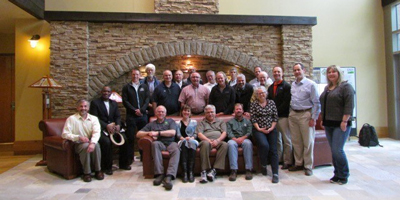
Rodney Cheyne, Dave Hamel, and Jaxsen Sikorski represented Klamath Irrigation District in the Reno conference, Ry Kliewer joined the team from Klamath Basin Improvement District, while Shane McDonald represented Langell Valley Irrigation District and Enterprise Irrigation District. Other farmers and managers from the Klamath Reclamation Project attended, including Tulelake Irrigation District and Klamath Drainage District. However, many others who historically attended this annual event did not attend this year as a result of frustration with the Regional staff and the previous administration's approach to engaging with the American people.
Klamath Water Users Association provided a Klamath Reclamation Project Report to over 400 attendees. Attorney Brittany Johnson and Moss Driscoll provided an excellent explanation of the severely flawed approach to the Endangered Species Act Section 7(a)(2) Consultation approach in the Klamath Reclamation Project. Moss participated in the Biological Opinions panel, highlighting the inconsistencies in individual biological opinions and the conflicts between the BiOps.
During the conference, the District was given 30 minutes to discuss the future of the Klamath Reclamation Project with Reclamation's Regional Director Karl Stock and determine what Reclamation's 5-year "Bridge Period" is directing us towards. Unfortunately, Reclamation's staff was unable to express, verbalize, or otherwise provide their vision of the future they have put us on a bridge towards.
Klamath Water Users Association was also provided 30 minutes to discuss Klamath issues. The very large group in this meeting focused on the problems of the most recent ESA Section 7(a)(2) consultation, addressed dissatisfaction that our input was not acknowledged or incorporated into the process, and made recommendations for how to improve the process when we do it again, hopefully correctly.
The team was able to engage with other irrigation district and government officials during their visit. Reports indicate that the most productive interactions occurred during the bowling event.
| |
2025 Endangered Species Act Annual Conference Review | |
|
The 32d Annual ESA Conference by The Seminar Group was held in Portland, Oregon in late January 2025. This two-day event provided updates to recent case law, changes in federal law and policy, best practices in agency engagement, and ethics.
Gene Souza noted that this is one of the few years in the past five years of his attendance when Klamath has not been a main topic at the conference.
The conference started with regulatory updates provided by NOAA Fisheries and the U.S. Department of the Interior. The discussion focused on publishing updates to 50 Code of Federal Regulations, Parts 17, 402, and 424, which changed, eliminated, or otherwise modified language that the Trump 45 administration had bilateral support in providing clarity to the agencies' rules.
Significant Section 7 Rulemaking changes relevant to the Klamath issues included the refinement of the definition of the environmental baseline, which Reclamation failed to adequately describe in the 2024 consultation process. K.I.D. provided Reclamation a Biological Assessment 18 months earlier in the process outlining the "effects of the action" as it relates to existing structures.
It is interesting to note the different approaches taken by agencies in Oregon and Washington. In Skagit County, a failing gate needed to be replaced, and the ESA process determined the exact opposite approach to existing infrastructure compared to the agencies in the Klamath ESA consultation. Failure to clearly identify the environmental baseline and how the environmental baseline is in relation to existing structures provides for faulty interpretation. Had the Klamath process been implemented in Skagit, all would be in line with no (or at least little) litigation. Had the Skagit approach to the ESA been applied to the Klamath Project, the non
The regulatory update also included a change in language for "Reasonable and Prudent Measures" to mitigate harm to listed species. This language change was leveraged by both NMFS and USFWS to implement controls on the operation of the Klamath Reclamation Project and nearly eliminate Reclamation's introduction of "adaptive management" language in its action. As in the past, the regulatory agencies demanded that Reclamation strictly adhere to modeling functions of a decision support tool rather than give Reclamation flexibility to address conditions that were not modeled, such as the breach of the Barnes-Agency dike in January of 2025.
Habitat Conservation Plans (HCP) were addressed by USFWS as opportunities to encourage voluntary conservation programs to gain Section 9 incidental take coverage. As the District pursues title transfer, an HCP may need to be discussed as one of many options to ensure the continued operation of the facilities that return water to the former lakes and marshlands. Absurd, but this is how the CFRs are written.
USFWS also discussed Section 7 as a "Conservation Tool," highlighting that "Section 7(a)(1) mandates that ALL Federal agencies SHALL utilize their authorities to further conservation of endangered and threatened species." The USFWS highlights that both sections are part of the consultation process. When pressed, our local Reclamation, USFWS, and NMFS officials stated they had no guidance from D.C. to develop Section 7(a)(1) plans, to bring their programs into consideration during the consultation process, nor address any actions taken that could result in regulatory relief under Section 7(a)(2) for our farmers and water-right holders.
Klamath Irrigation District, the applicant to the Klamath Reclamation Project (if it were not for the over 700 applications signed between 1905 and 1908 held by K.I.D. in our vault, there would be no federal Reclamation Project), is prepared to engage in another Section 7 Consultation in the immediate future to determine where the "bridge" is.
| |
K.I.D. 13 March Board Meeting
K.I.D. will hold its March Board of Directors meeting on 13 March at 1pm the K.I.D. Board Room at 6640 K.I.D. Lane.
Visit our Website
| |
| |
|
Klamath Water Users Association 12 March Board Meeting
Klamath Water Users Association will hold its 12 March Board Meeting in the KWUA Conference Room at 2pm.
Visit the KWUA Website
| | |
Western Nutrient Management Conference | The 2025 Western Nutrient Management Conference program is now available. You can view the oral program and the poster presentations. With the NEW livestream options for this year, below are some additional details about each of the partial day sessions! | | | | |
|
Klamath County Farm Expo
Great family activity. 50 educational booths with interactive learning opportunities.
Tuesday, 18 February 4-7:30
Text Link
| | |
INVITATION TO BID - TRACTOR MOWER | INVITATION TO BID Invitation No. EQ-212-16 Attention Bidder: Sealed bids will be received at Klamath Irrigation District's office, 6640 KID Lane, Klamath Falls, OR until 4:30pm PST, 3 March 2025 for one (1) new, standard production triple gang flail mower mounted to one (1) new, standard production tractor. | | |
2nd Annual Renaissance Tour - KWUA | 13 March - Registration required -> | | | |
|
|
Klamath Basin Improvement District 2nd Quarter Board of Directors Meeting
8 April 2025 at 10am..
| | | |
Klamath Irrigation District is currently recruiting for a Maintenance Specialist II
The Klamath Irrigation District is currently recruiting talent to join our Maintenance Team in Klamath Falls, Oregon. U.S. Military Veterans are encouraged to apply.
First Review: 14 February (Open until filled)
Please find our application on our website at https://klamathid.org/wp-content/uploads/2018/10/KID_JobApplication.pdf
Complete the application and apply through LinkedIn with your resume and upload your application.
| | |
Klamath Water Users Association Executive Director
The Executive Director (ED) is an at-will employee selected by KWUA’s board of directors to lead and manage the Association. The ED will have full responsibility for the Association’s work and will be directly responsible for delivering results. The position receives policy direction from the board; the ED in turn works to implement this policy utilizing his or her skills and by directing staff and consultants. The ED will provide day-to-day operational oversight and direction through the use of financial, human, and technology resources to effectively and efficiently achieve KWUA’s goals and enhance the organization's capacity and performance. The ED’s work will be focused on managing a variety of issues and processes including annual Project operational issues, state and federal legislation, public relations, oversight of agency rulemaking, writing and editing letters and comments, reading and understanding technical information, coalition building, internal and external outreach and other duties as assigned. The ED must be a self-starter and capable of working with a variety of stakeholders, personalities and other interests in the Klamath Basin.
Learn More and Apply on LinkedIn
| |  |
Director of Marketing And Public Relations
The Director of Communications (Director) reports directly to the Executive Director and is responsible for the development and execution of the marketing and engagement plan to direct KWUA’s community relations. The ideal candidate is poised, well-spoken, a good writer, and has the ability to communicate concisely about complex and policy-laden issues. They enjoy a fast-pace work environment and is ready, willing, and able to do a variety of public relations activities, including, content creation, media inquiries, social media strategies, strategic planning, and building relationships.
Learn More and Apply on LinkedIn
| | |
Your District in the News | |
|
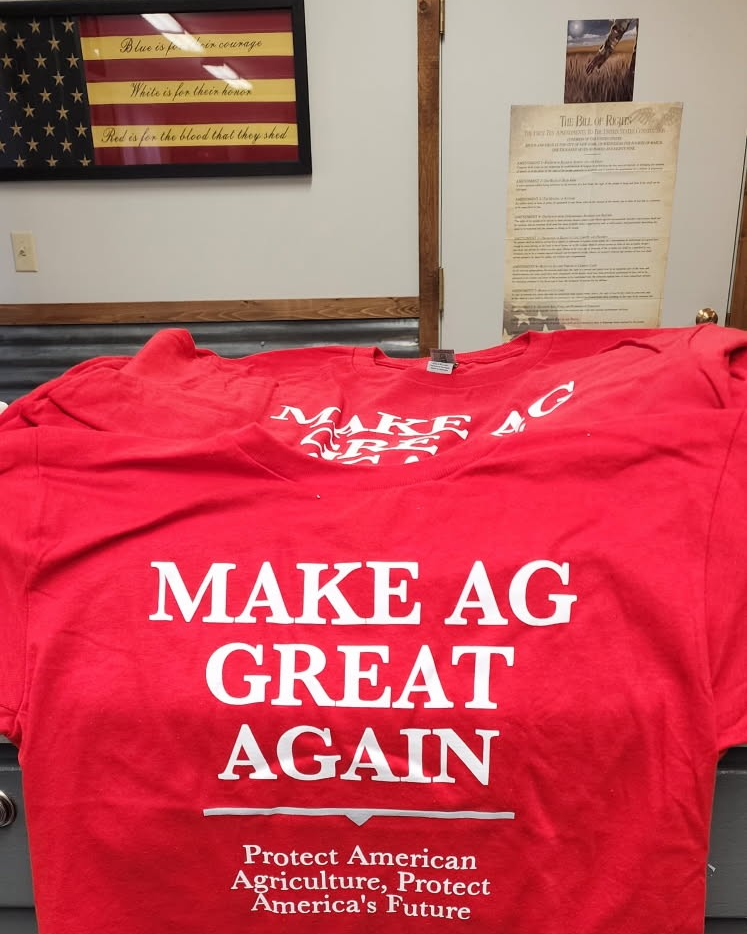
A collective of water users restoring American food security and American farming. The Make Ag Great Again team recently stopped by the K.I.D. Headquarters after our February Board of Directors meeting and interviewed some of the farmers and leaders in the Klamath Basin.
Check out some of the stories people had to share on x.com
| | | |
What we are Reading - and you should too... | |
Ruling: Federal contract controls non-federal Klamath water diversions - capitalpress | The U.S. Bureau of Reclamation can restrict a non-federal water diversion under its contract with the Klamath Drainage District, according to a federal appeals court. The 9th U.S. Circuit Court [...] | | | | |
| How did you like this email? | | |
| | | |