Feature Story: Pro Bono Innovation In Action | |
Partnering to Build to Better Legal Aid Workflows with AI
How can legal expertise, pro bono support, and artificial intelligence help organizations serve clients more effectively and expand access to justice?
This is the question at the heart of a new pro bono partnership between Nelson Mullins and Harvey AI, with Legal Aid of North Carolina (LANC) serving as the partner legal aid organization. Working collaboratively, the three organizations will explore how responsible AI and thoughtfully designed innovations can strengthen legal aid service delivery, improve efficiency, and expand our capacity to serve clients. The work will be guided by LANC’s priorities, the experiences of frontline staff, and our understanding of the needs and challenges facing the communities we serve.
Each organization brings distinct expertise and perspectives to the partnership. Through our Innovation Lab and subject-matter experts, LANC contributes firsthand knowledge of client needs, legal aid workflows, and experience developing practical, technology-enabled solutions. Nelson Mullins brings legal expertise, pro bono resources, and experience improving legal workflows, while Harvey AI contributes its technology platform and expertise in developing AI-enabled legal solutions. Together, we will explore and develop AI agents and workflows designed to reduce administrative burdens, support legal professionals, and improve client service, with the longer-term goal of sharing successful approaches and resources with other legal aid organizations.
| From Challenges to Solutions | |
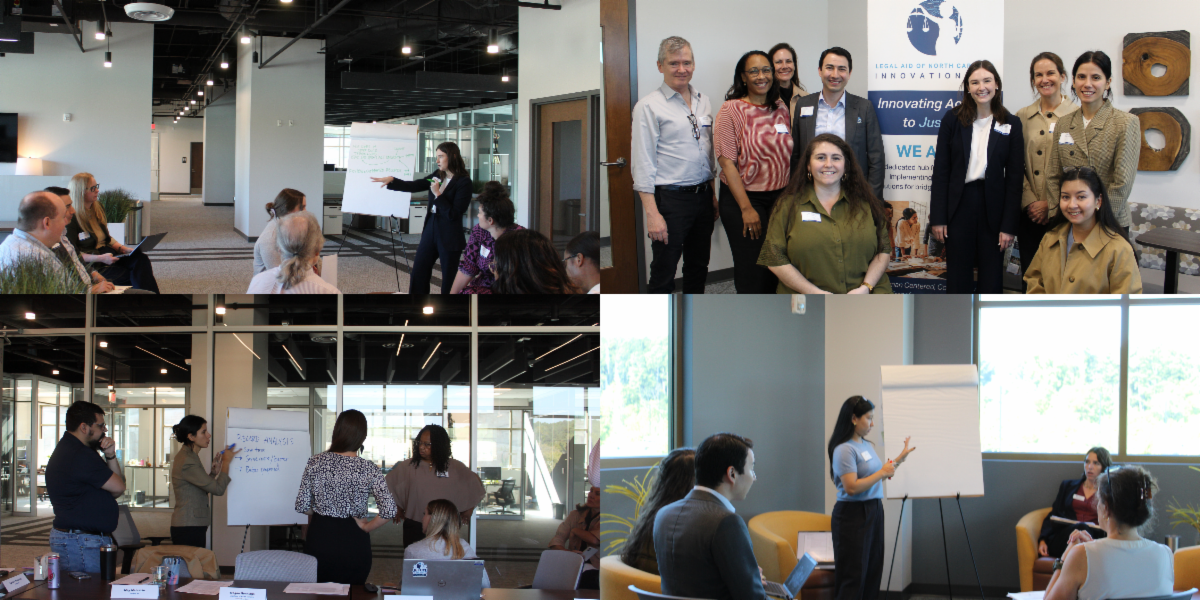
On October 16, representatives from Harvey AI and Nelson Mullins joined us for an in-person design session to identify where technology could best support our day-to-day work with clients. The focus was on identifying challenges that affect client service and staff capacity in three of LANC’s greatest areas of need. Our practice groups examined current workflows, identified priority challenges, and explored practical ways to address them together. Potential approaches included process improvements, clearer handoffs, pro bono support, technology, or a combination of these strategies.
Each group worked to define a clear problem, propose an approach, and outline a concrete next step. Throughout the session, our guiding question was: where can this partnership make a meaningful, responsible difference for our staff and the people we serve?
| What We’re Building and Testing | |
We're continuing to test and evaluate AI-powered tools developed by the Innovation Lab to help the public find, understand, and access legal information and services. Our testing focuses on accuracy, reliability, accessibility, and the overall user experience, including whether these tools provide clear, relevant, and useful information while maintaining appropriate safeguards. Through structured testing and user feedback, we're identifying opportunities for improvement and evaluating how effectively these tools help reduce barriers to legal assistance.
| A Smarter Way to Find Legal Help and Resources Online | |
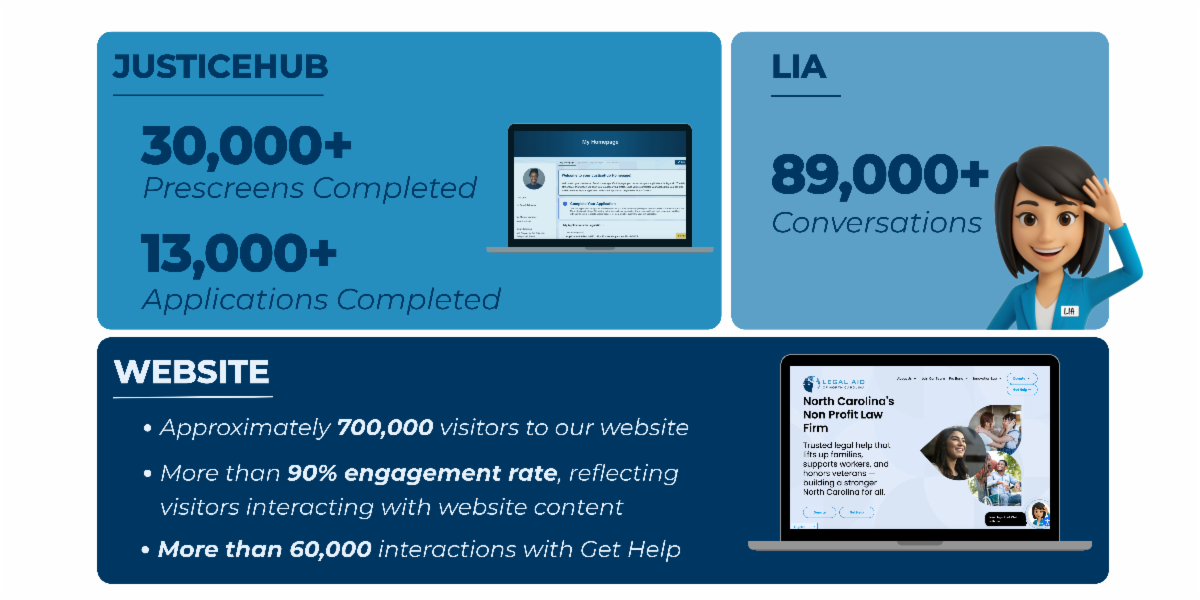
Finding legal help often begins with knowing where to look, but people seeking assistance may not know how to describe their legal problem, which legal category applies, or what resources are available. As part of LANC's Modernizing Access initiative, the Communications Team and Innovation Lab are working together to make our website a more accessible, intuitive, and useful starting point for people seeking help.
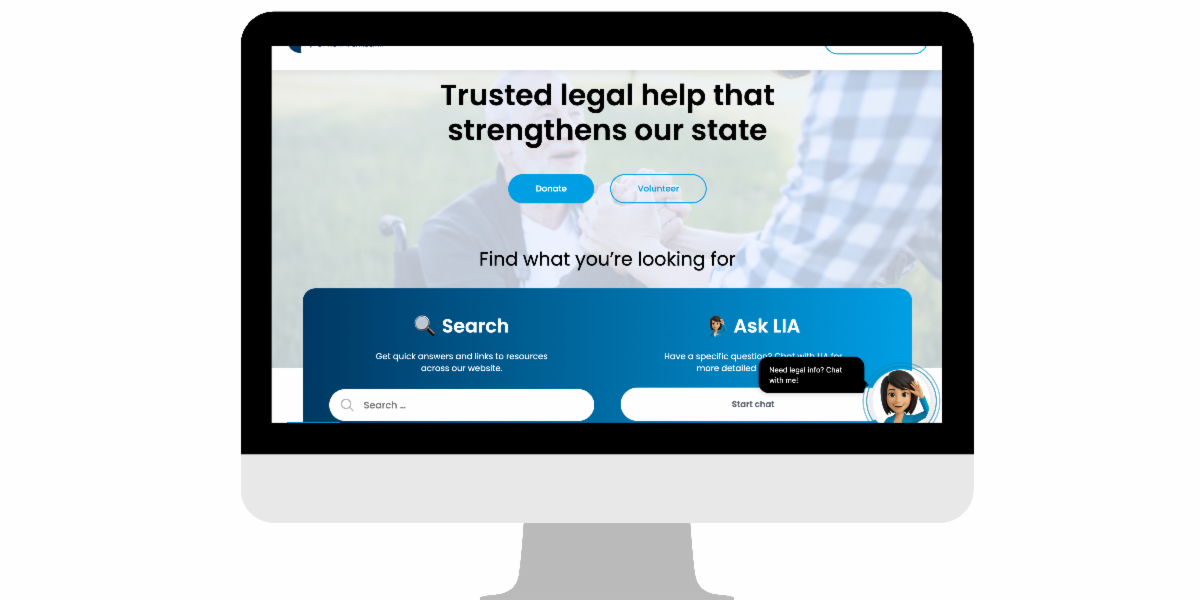
This effort includes a more client-focused homepage that integrates "Get Help" into the main website experience, along with a new AI-powered search tool. Rather than requiring visitors to navigate unfamiliar legal categories, the tool will allow users to describe their situation in their own words and receive a plain-language overview with links to relevant legal information, videos, clinics, and options for accessing services. The goal is to help visitors understand the resources available to them and identify meaningful next steps.
| |
Before making the tool publicly available, we're using a staged, iterative testing process to evaluate its accuracy, usefulness, accessibility, and ability to provide appropriate information without crossing the boundary into individualized legal advice. The process incorporates targeted internal validation, broader staff testing, feedback from people outside the organization, and a controlled pilot. Findings from each stage help guide refinements and determine readiness for expanded testing or public use.
Testers use scenarios across legal categories, with variations in wording, complexity, and potential risk. They're also encouraged to conduct realistic searches using everyday language, misspellings, and questions involving multiple legal issues. Testing examines not only whether responses are accurate, but also whether they're understandable, relevant, and useful in helping someone identify an appropriate next step.
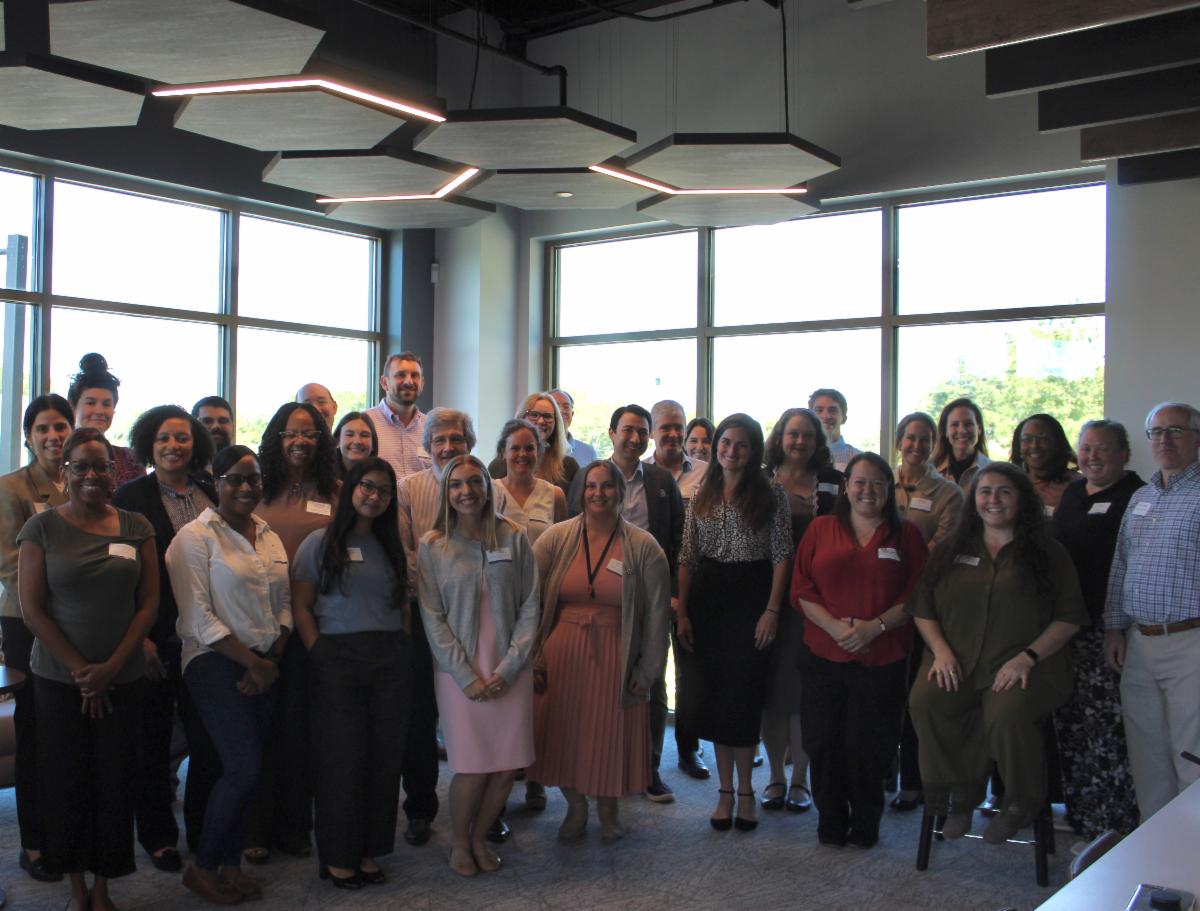
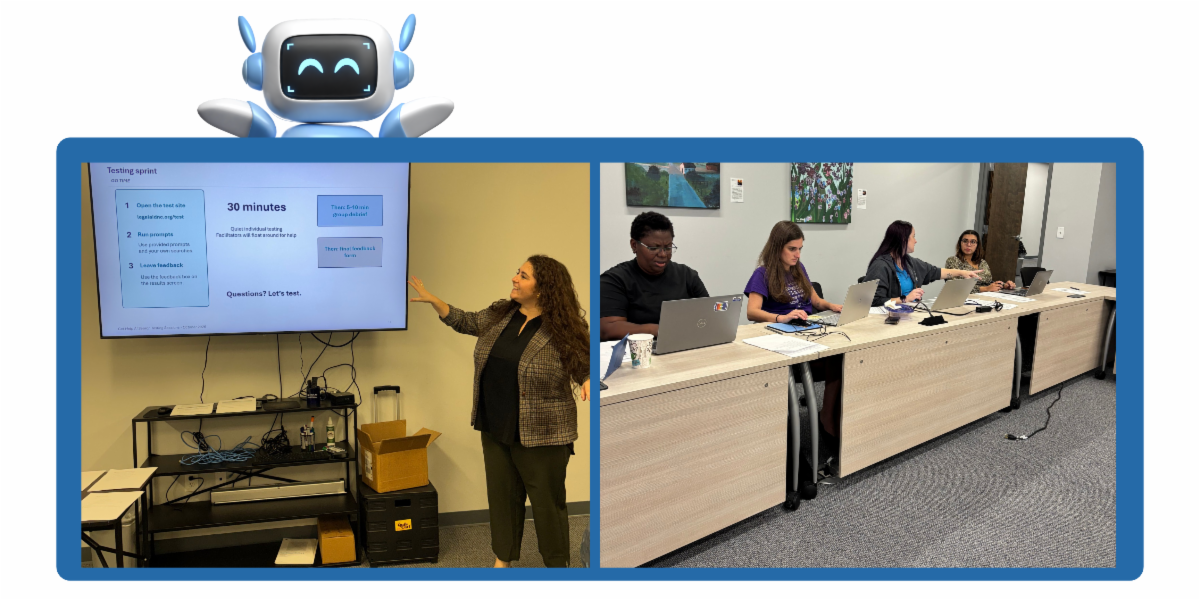
On October 8 and 9, the Lab hosted in-person and virtual sessions as part of our monthly "Treats and Testing" initiative. Staff joined the Communications Team and Innovation Lab to evaluate AI-generated summaries, recommended resources, clarity, tone, and appropriate boundaries between legal information and legal advice. Feedback was submitted directly through the search results page, allowing the team to evaluate responses in context and identify needed improvements.
To date, we've conducted more than 400 tests. Upcoming testing with Client Council members and community partners, followed by a structured pilot, will provide additional perspectives and opportunities for refinement. The team is working toward a public launch by the end of 2026, with continued monitoring, evaluation, and improvement after deployment.
| Two Tools, Different Ways to Find Help | |
The AI-powered website search tool and LIA, our Legal Information Assistant, serve different but complementary purposes. The search tool helps people find relevant resources, while LIA helps them explore and understand legal information through conversation. Together, they recognize that people seek legal help in different ways and may need different levels of information and support.
The website search tool helps visitors quickly identify relevant information and services available through LANC's website. LIA offers a more interactive experience, allowing users to ask follow-up questions and explore legal topics in greater detail. Both tools provide general legal information rather than individualized legal advice.
By offering multiple pathways to legal information and assistance, we're working to accommodate different communication preferences, accessibility needs, and levels of familiarity with legal resources. This approach reflects our broader Modernizing Access strategy: meeting people where they are, reducing barriers, and helping users better understand their options and next steps.
| |
AI Governance: From Policy To Practice
As AI tools become part of more workplace conversations, we are learning that effective governance requires more than a policy. Staff also need clear, practical guidance that helps them understand when and how to use AI responsibly, protect client information, recognize potential risks, and know where to turn with questions. That learning is shaping how we support implementation across LANC.
The goal is to make responsible AI use easier to put into practice— not by expecting staff to become technology experts, but by giving them straightforward tools for making informed decisions in their daily work.
LANC’s AI Governance Policy is now in effect, and the next phase is putting its principles into practice through support staff can easily access and apply. In addition to making resources available to staff, we’re developing practical, role-based trainings and workshops to help staff understand what responsible AI use looks like in their day-to-day work.
A new ShareCenter resource page is also being developed to bring AI governance materials and information together in one place. It will serve as a central starting point for staff to review guidance, find resources, and reinforce what they learn through trainings and workshops.
| | |
AI, Privilege, and Confidentiality
As artificial intelligence becomes more integrated into legal practice, courts are beginning to address important questions about attorney-client privilege, confidentiality, and the discoverability of information shared with AI tools.
Recent decisions, including United States v. Heppner, Warner v. Gilbarco, and Morgan v. V2X, illustrate how courts are applying longstanding legal protections to AI-assisted communications and litigation preparation, with differing outcomes depending on how the technology was used and what safeguards were in place.
These developments are particularly relevant to legal aid organizations as we expand the use of AI in legal workflows and client-facing services. We're watching how the law evolves, what protections courts recognize, and how emerging decisions may inform organizational policies, vendor agreements, client communications, and responsible AI practices.
Further Reading: When Does Client Use of AI Waive Privilege?| American Bar Association (2026).
Other Topics Worth Watching:
AI and access to justice for self-represented litigants.
As more people turn to AI for help navigating legal problems, courts are confronting important questions about accuracy, accountability, and access to justice. How should courts respond when self-represented litigants rely on AI to research legal issues or prepare court filings? And how can the legal system establish appropriate safeguards without creating additional barriers for people who cannot afford an attorney? These questions are particularly relevant to LANC’s work to make legal information and self-help resources more accessible through AI-powered tools. We're watching how courts and legal professionals navigate these issues and what emerging guidance means for our efforts to expand access to justice while maintaining accuracy, reliability, and responsible AI practices.
Further Reading: When courts meet GenAI: Guiding self-represented litigants through the AI maze | Thomson Reuters Institute (2026).
| |
Greg Siskind, Co-Founder of VisaLaw AI
Immigration attorney Greg Siskind has spent more than three decades exploring how technology can help lawyers and the people they serve. Today, that work includes VisaLaw AI, an immigration law platform supporting research, analysis, and drafting that our Immigration Pathways for Victims (IMMPAV) team is piloting.
Greg began practicing law in 1990 and launched his own immigration practice, Siskind Susser, in 1994. His interest in legal technology eventually led him to begin building AI expert systems in 2015 and co-found VisaLaw AI in 2023. The platform is now used by more than 600 firms and organizations.
Throughout his career, Greg’s work has been shaped by a persistent challenge: too many people face immigration matters without access to legal help. That concern inspired his support for our immigration team and other organizations working to close that gap.
“I saw AI as a way to further narrow that access gap,” Greg shared, describing the potential for technology to help attorneys work more efficiently and serve more people.
For legal aid teams, Greg sees opportunities to support client screening, research legal issues, prepare initial drafts of briefs and other documents, and improve communication with clients who face language barriers. He emphasizes the value of tools designed by immigration lawyers who understand the work and its demands.
Through our IMMPAV pilot, we’re exploring how those capabilities can support our staff and, ultimately, the people we serve. We’re grateful to Greg and the VisaLaw AI team for supporting that work and sharing our commitment to expanding access to justice.
Learn more about VisaLaw AI: Explore VisaLaw AI
| | | | |