|
| Innovating | Empowering | Leading | | LAKES AREA MANUFACTURERS DIGEST | | |
During the month of January, each member company will receive its membership renewal invoice. As you renew your membership in LAMA for 2026, we want to take a moment to share with you LAMA’s impact in 2025.
-
In 2025, LAMA became an affiliate of the Midwest Manufacturers’ Association, strengthening our presence in the Brainerd Lakes region. This partnership offers access to professional staff, grants, training, and other programs for manufacturers. Membership dues are now a low of $250 per company, allowing all employees to participate in events and services. Visit our new website for more about MMA and LAMA’s offerings. Lakesareamanufacturers.org
- In March, our Manufacturing community partners engaged over 2,500 students from 22 schools at Career Exploration Day at CLC. Students participated in manufacturing activities such as building mini-ATVs, welding with guidance from CLC students, and learning about robotics, CNC machining, print reading, programming, and quality inspection.
- LAMA members hosted their first high school Youth Skills Training students from Brainerd High School, Crosby-Ironton High School, and Pequot Lakes High School. LAMA guided several of our member companies through certification with the Department of Labor to provide this opportunity and presented the opportunity to the schools.
- LAMA successfully launched its Field of Interest Fund with support from the Initiative Foundation to provide not only scholarships to graduating students for continuing their post-secondary education in advanced manufacturing and engineering, but also to aid funding of programs of benefit to manufacturing careers.
- LAMA awarded scholarships to four outstanding students who will pursue studies in manufacturing and engineering technology. To date, we’ve raised pledges of over $90,000 to help graduating seniors continue their post-secondary education.
- LAMA graduated its second Emerging Leaders class, where over 20 cohorts learned key leadership skills and gained a better understanding of the manufacturing enterprise. A special Leadership Summit was held for 2024 graduates, and this fall,l we will host a Leadership Summit for 2024 and 2025 graduates, providing an opportunity for them to refresh their skills.
- LAMA’s Locally Manufactured event hosted over 150 students to tour area manufacturers, exposing them to outstanding career opportunities available in their own backyard.
- In October, Ted Schick of Schick Corporate Learning provided an awesome keynote for Celebrating Manufacturing, followed by an important update from the Minnesota Chamber of Commerce and a networking exercise led by Matt Kilian of the Brainerd Chamber of Commerce. We give our heartfelt thanks to our event sponsors, WiDSETH and Weizenegger Engel Insurance.
Your membership dues supply essentials for the organization, including meaningful events and leadership training, website, newsletter communications, Youth Skills Training program, scholarship program, and basic association supplies. We value your continued support of the Lakes Area Manufacturers Alliance, and we would love to hear your thoughts on how we can best be your partner.
On Behalf of Your LAMA Board of Directors,
Deborah Hoel, LAMA Executive Secretary
Deborah@lakesareamanufacturers.org
| | |
IRS Issues Guidance on HSAs
IRS issued IRS Notice 2026-05 on December 9, 2025, provides guidance on new tax benefits for Health Savings Account (HSA) participants under the One Big Beautiful Bill (OBBB).
Key changes include:
Telehealth Services: The ability to receive telehealth and remote care services before meeting the high-deductible health plan (HDHP) deductible is now permanent, effective for plan years beginning on or after January 1, 2025.
Bronze and Catastrophic Plans: Bronze and catastrophic plans available through an Exchange will be treated as HSA-compatible, regardless of whether they satisfy the general definition of an HDHP. It is effective for months after December 31,2025.
Direct Primary Care Service Arrangements: Individuals enrolled in certain direct primary care service arrangements may contribute to an HSA and use HSA funds tax-free to pay for periodic DPC fees.
It is effective for months after December 31, 2025.
These changes aim to expand access to HSAs, allowing more individuals to save and pay for healthcare costs through tax-free accounts. The IRS invites comments on this notice by March 6, 2026.
For a copy of the IRS Notice 2026-05, please click on the link below:
Expanded Availability of Health Savings Accounts under the One, Big, Beautiful Bill Act (OBBBA)
What Constitutes Discrimination?
Federal Discrimination Laws Overview
- Federal law prohibits discrimination based on protected classes, including age (40+), disability, genetic information, national origin, race, religion, sex (including pregnancy and sexual orientation), citizenship, and military status.
- Employers are also prohibited from retaliating against individuals who assert their rights under these laws.
- The Equal Employment Opportunity Commission (EEOC) enforces several key laws, including the Age Discrimination in Employment Act (ADEA), Americans with Disabilities Act (ADA), Equal Pay Act (EPA), and Title VII of the Civil Rights Act.
Key Federal Laws
- Age Discrimination in Employment Act (ADEA): Protects individuals aged 40 and older from age-related discrimination.
- Americans with Disabilities Act (ADA): Prohibits discrimination against qualified individuals with disabilities and mandates reasonable accommodations unless it causes undue hardship.
- Equal Pay Act (EPA) and Lilly Ledbetter Fair Pay Act: Protect against sex-based wage discrimination, allowing claims for each discriminatory paycheck received.
- Genetic Information Nondiscrimination Act (GINA): Prohibits discrimination based on genetic information.
- Pregnancy Discrimination Act (PDA): Makes it illegal to discriminate against employees due to pregnancy or related medical conditions.
- Pregnant Workers Fairness Act (PWFA): Requires reasonable accommodations for employees affected by pregnancy unless it causes undue hardship.
- Title VII of the Civil Rights Act: Prohibits discrimination based on race, color, religion, sex, and national origin.
Additional Protections
- Immigration Reform and Control Act (IRCA): Prevents discrimination based on citizenship or immigration status.
- Uniformed Services Employment and Reemployment Rights Act (USERRA): Protects individuals from discrimination based on military service.
Protected Classes and Activities
- Employers cannot make employment decisions based on protected classes. Discrimination can be manifested as disparate treatment, disparate impact, failure to accommodate, harassment, or retaliation.
- Protected activities include filing complaints, requesting accommodations, and reporting unsafe conditions.
This summary encapsulates the essential elements of federal discrimination laws, emphasizing protections for various classes and the legal framework governing workplace discrimination.
| | Have you set your business goals for 2026? | | |
This is a great time to review last year’s successes and shortcomings and move your company forward by engaging your team to set goals for this new year.
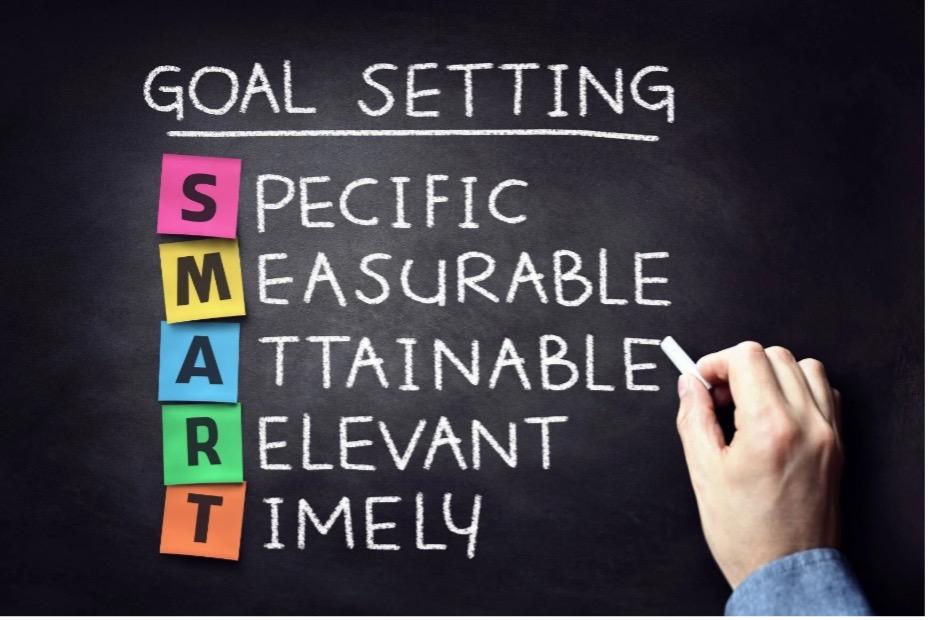
Many of us have used the SMART Goals framework: Setting goals that are Specific, Measurable, Achievable, Relevant, and Time-bound. Another valuable practice is to Conduct a SWOT Analysis: Identify Strengths, Weaknesses, Opportunities, and Threats to pinpoint areas needing improvement.
Once you’ve evaluated last year’s performance and leveraged tools like SMART Goals and SWOT Analysis, the next step is to align these insights with your company’s vision for 2026. Encouraging collaboration and open discussion among team members can foster innovative ideas and promote accountability. By translating your analysis into actionable objectives and tracking progress throughout the year, you empower your organization to adapt quickly and reach new milestones.
| | |
OECS is officially now U.S. Compliance, so please note that their classes, webinars and website have a new look, bit it is the same great quality! LAMA members receive a discount on class fees.
Upcoming January Classes: Reminder- share our classes with your members to continue to receive the membership discounts.
What is OSHA’s Industrial Hygiene Testing Requirements?
Industrial hygiene plays a crucial role in identifying, evaluating, and controlling these hazards to ensure worker safety and regulatory compliance. As organizations strive to create healthier workplaces and reduce occupational illnesses, understanding the principles of industrial hygiene and its regulatory implications becomes essential. This article will explore the fundamentals of industrial hygiene, whether industrial hygiene testing is required by the Occupational Safety and Health Administration (OSHA), the general requirements employers must follow, what is commonly tested in workplace settings, and the U.S. Compliance testing process.
Read more and learn how US Compliance cand help your company avoid costly injuries and fines HERE
How to Respond when Employees Call OSHA
Employee complaints to the Occupational Safety and Health Administration (OSHA) are a reality for many organizations, even those with robust safety programs. A single complaint can trigger a review or inspection, sometimes catching employers off guard. While not every complaint results in a citation, the process can be stressful, time-consuming, and disruptive if an employer is not prepared. Understanding how complaints arise, which OSHA considers most serious, and how to respond effectively is critical for maintaining compliance and protecting both the organization and its employees.
Read more and learn how they occur and how OSHA Categorizes Complaints HERE
| | |
Question:
Can we terminate someone for taking FMLA leave during a major project they committed to helping with?
Answer:
It is important to know that FMLA as well as Minnesota’s Paid Family & Medical Leave are Job Protected Leave.
The answer is No. When a leave of absence is “job protected,” like the Family and Medical Leave Act (FMLA), or the Minnesota Paid Family & Medical Leave, it means you can’t terminate or demote the employee or take away any benefit they earned or were entitled to because they took that time off. Upon their return, you generally need to restore them to their original job or an equivalent position with the same pay, benefits, and other terms and conditions of employment. These protections enable employees to take time off without having to worry about losing their job or facing other adverse employment action.
Job-protected leave does not, however, provide safeguards against layoffs or job changes that would have occurred even if the employee hadn’t taken leave—it’s not intended to give employees on leave more benefits or protections than employees not on leave. It also doesn’t prohibit you from disciplining or terminating an employee after their leave for reasons unrelated to their absence. That said, if you need to take adverse action while they’re on leave or shortly afterwards, it’s especially important to document the legitimate business reasons for the action in case the employee claims your motives are retaliatory. Reviewing your company’s situation with legal counsel is advisable before acting. This situation also points to the importance of performance management, and not ignoring underperformers until a crisis situation evolves.
| | |
IRS Updates 2026 tax guidance for Paid Leave benefits
On Friday, December 19th, the federal Internal Revenue Service (IRS) changed its guidance regarding federal tax treatment for state Paid Leave programs in 2026. Specifically, it delayed certain federal tax withholding and reporting requirements for paid Medical Leave until 2027. This should simplify tax compliance requirements for Minnesota employers in 2026.
The initial guidance from the IRS on the taxability of Paid Leave benefits is outlined in Revenue Ruling 2025-4. The decision to delay implementation is outlined in IRS Notice 2026-6.
As a result of this new guidance, Medical Leave benefits received in 2026 will not be treated as “third-party sick pay” for 2026 and do not need to be reported on an employee’s W-2.
How to review a leave application.
When an employee applies for Paid Leave, you will be asked to review certain details of their leave application. Your review helps confirm information about the employee’s work and leave schedule – so that we can verify whether they are eligible for Paid Leave and calculate their payments.
More information and step-by-step instructions for reviewing an application are now available on our website. How To Review A Paid Leave Application
| | | | |