VOICES FOR CHILDREN

Kindred Kids Child Advocacy Center Newsletter | March 2026

A Message from Our Executive Director


Dear Friends and Supporters,


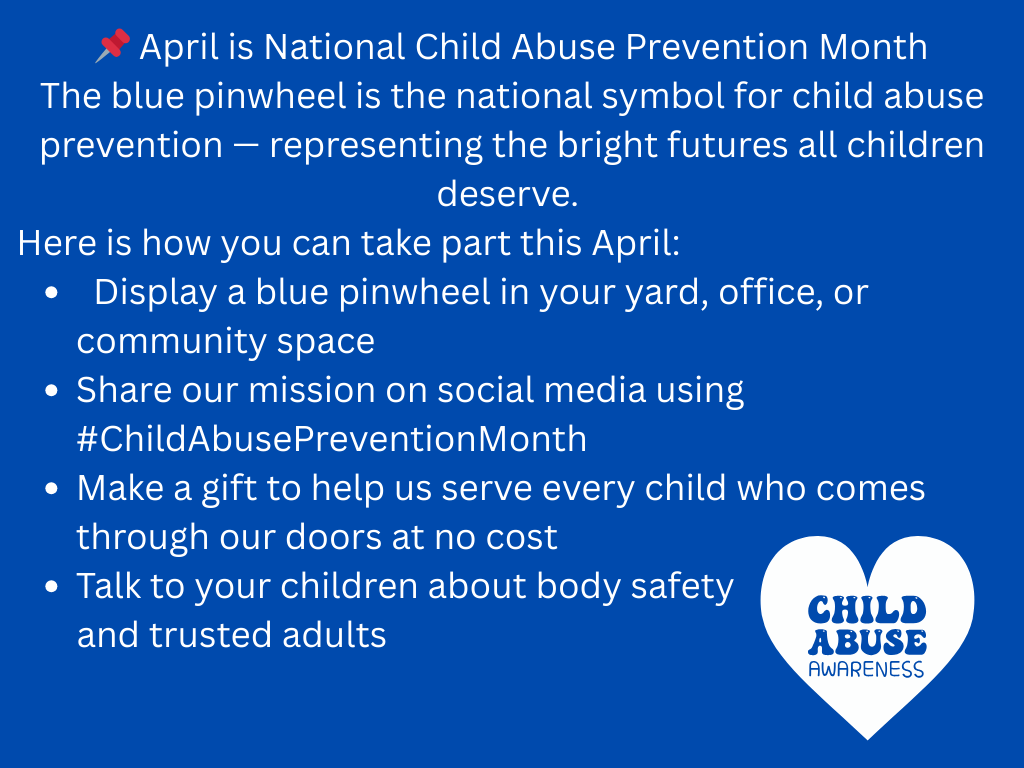
Spring is here — and with it comes one of the most meaningful times of year for our center: National Child Abuse Prevention Month in April. As we move through March, we are gearing up for a month of awareness, advocacy, and action — and we need your help to make it count.


This month, we want to focus on something that every parent, grandparent, teacher, and caregiver can do right now — today — to help protect the children in their lives: teaching body safety.

Body safety education is one of the most powerful and underutilized tools we have in child abuse prevention. When children are taught from an early age that their body belongs to them, that no one has the right to touch their private parts, and that certain kinds of touches or requests from adults are never okay — they begin to develop an internal compass. That compass helps them recognize when something feels wrong, even when the person asking them to do something is someone they know and trust.


Research tells us that most child sexual abuse is perpetrated by someone the child knows. Offenders often use tactics like secrecy, manipulation, and gradual boundary-pushing to gain access to children. When children have a strong foundation in body safety, they are far more likely to recognize those tactics for what they are — and to feel empowered to say no, walk away, and tell a trusted adult.


That last piece is so important. The goal of body safety education is not to frighten children or make them distrust every adult in their lives. It is to give them confidence. When a child knows that they will be believed, that they will not be in trouble, and that there are safe adults who will protect them — they are more likely to speak up. And when a child speaks up, we can help.


In this month’s newsletter, you will find practical tips for starting these conversations at home, along with recommended books and resources to help facilitate them. We also want you to know that our center offers free body safety books to any family who needs one. This is just one of the many ways we work to equip our community — not just respond to harm after it occurs, but actively work to prevent it.


All of our services remain completely free of charge to every child and family we serve, regardless of age, background, or circumstance. That is our promise — and it is a promise we keep because of the generosity of people like you.


Thank you for standing with us. Thank you for believing that every child deserves to be safe. Together, we are making that possible.


With deep gratitude,

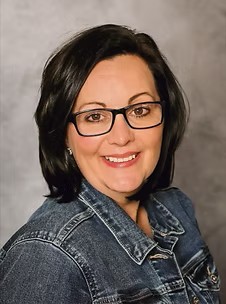
Lori Jenkins, MPA

Executive Director/Forensic Interviewer

Our Mission: Kindred Kids Child Advocacy Center’s mission is to empower and strengthen victims who have experienced abuse and their non-offending family members through advocacy, education, healing, and justice.  

Service Spotlight

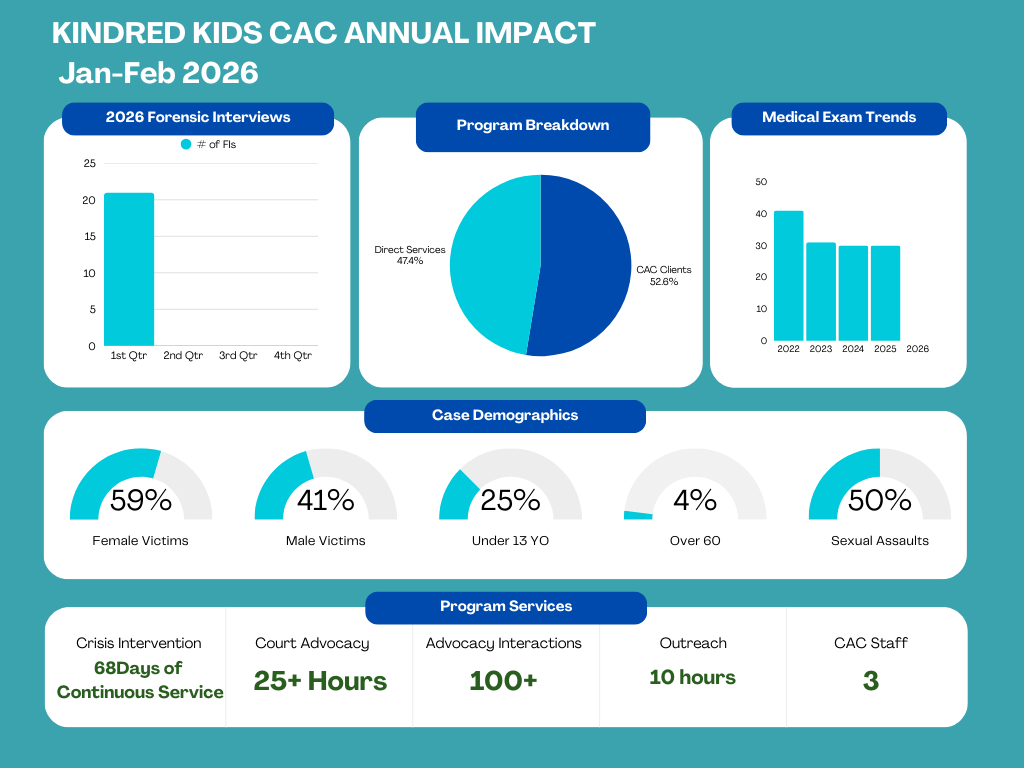
Our Impact

Stats_Info_slide_for_newsletter_p1.png
Stats_Info_slide_for_newsletter_p2.png

Child Safety Tip of the Month

Teaching Children About Body Safety

One of the most important things a parent or caregiver can do is give children the language and confidence to speak up if something feels wrong. These conversations do not need to be scary or complicated — in fact, the more naturally and regularly they happen, the more effective they are. Here are some practical steps to get started:

         Use correct anatomical names for body parts. This helps children communicate clearly if something happens and signals to adults that a child is being taken seriously. Children who know the proper names for their body parts are also more likely to be believed and understood.

         Teach the concept of private parts — explain that no one should touch those areas except a doctor with a parent present, and that this rule applies to everyone, including people they know and love.

         Explain the difference between safe touches and unsafe touches. Safe touches make us feel comfortable and respected. Unsafe touches make us feel scared, confused, or uncomfortable — and children should always tell a trusted adult when that happens.

         Talk about body autonomy. Children have the right to say no to any touch that makes them uncomfortable, even hugs from relatives. Honoring this teaches them that their boundaries matter and deserve to be respected.

         Practice the difference between secrets and surprises. Surprises are short-lived and make everyone happy when revealed. Secrets that make you feel bad, scared, or confused should always be told to a trusted adult — no matter who asks you to keep them.

         Help children recognize warning signs. Teach them that it is never okay for an adult to ask them to keep a secret from their parents, show them pictures or videos of private parts, or offer special rewards for doing something that feels wrong. These are signs that something is not right.

         Identify at least 3 trusted adults together. Ask your child to name people they would go to if they ever felt unsafe or uncomfortable. Practice what they would say. Make it clear they can always come to you first.

         Reassure children they will never be in trouble for telling the truth — no matter what. Children often stay silent because they fear getting in trouble or not being believed. Your consistent reassurance removes that barrier and makes it safe to speak up.


Why This Matters: Building the Courage to Tell

Body safety education does more than teach children what is appropriate — it gives them the tools and the confidence to act if something goes wrong. When children have the right words, a clear understanding of boundaries, and the assurance that a trusted adult will listen and help them, they are far more likely to report abuse early — or prevent it altogether.

Early disclosure is one of the most critical factors in a child’s healing and in holding offenders accountable. The simple act of having these conversations at home can make all the difference.


📚 Recommended Books for Families

These age-appropriate books make it easy to start body safety conversations at home. They are written for children but designed to be read together with a parent or caregiver:

“My Body Belongs to Me” by Jill Starishevsky — Ages 3–8

A simple, rhyming book that introduces the concept of body autonomy and what to do if someone touches you inappropriately.

“No Means No!” by Jayneen Sanders — Ages 2–6

Teaches young children the power of saying no and that their feelings and boundaries deserve to be respected.

“My Body Is Private” by Linda Walvoord Girard — Ages 4–8

A gentle introduction to private parts, appropriate vs. inappropriate touch, and the importance of telling a trusted adult.

“Some Secrets Should Never Be Kept” by Jayneen Sanders — Ages 3–8

Helps children understand the difference between fun surprises and unsafe secrets, and empowers them to speak up.

“Let’s Talk About Body Boundaries, Consent and Respect” by Jayneen Sanders — Ages 5–10

Covers body boundaries, consent, and respectful relationships in an accessible, child-friendly way.

“I Said No! A Kid-to-Kid Guide to Keeping Private Parts Private” by Kimberly King — Ages 4–10

Written partly from a child’s perspective, this book walks through real-life scenarios and gives children the words to respond.


🎁 Get a Free Body Safety Book

We believe every family should have access to these important resources. Contact us to receive one of our body safety books completely free of charge — no strings attached.

[719-285-7531] | [Lori@kindredkidscac.org] | [www.kindredkidscac.org]

Support our Mission, One Month at a Time

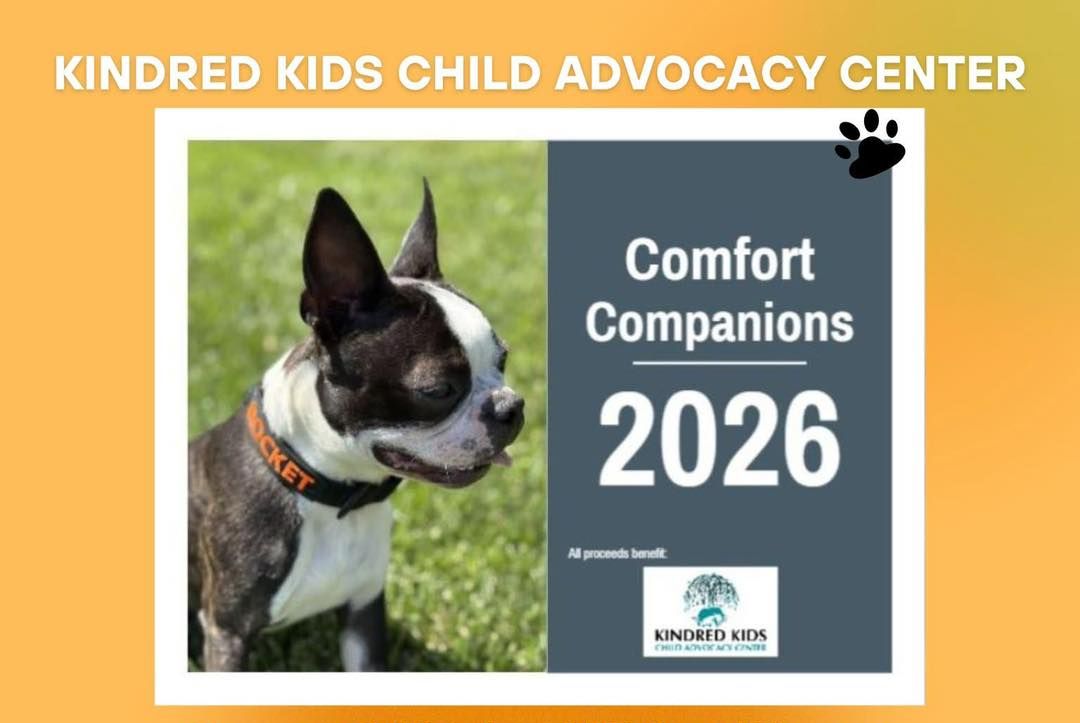
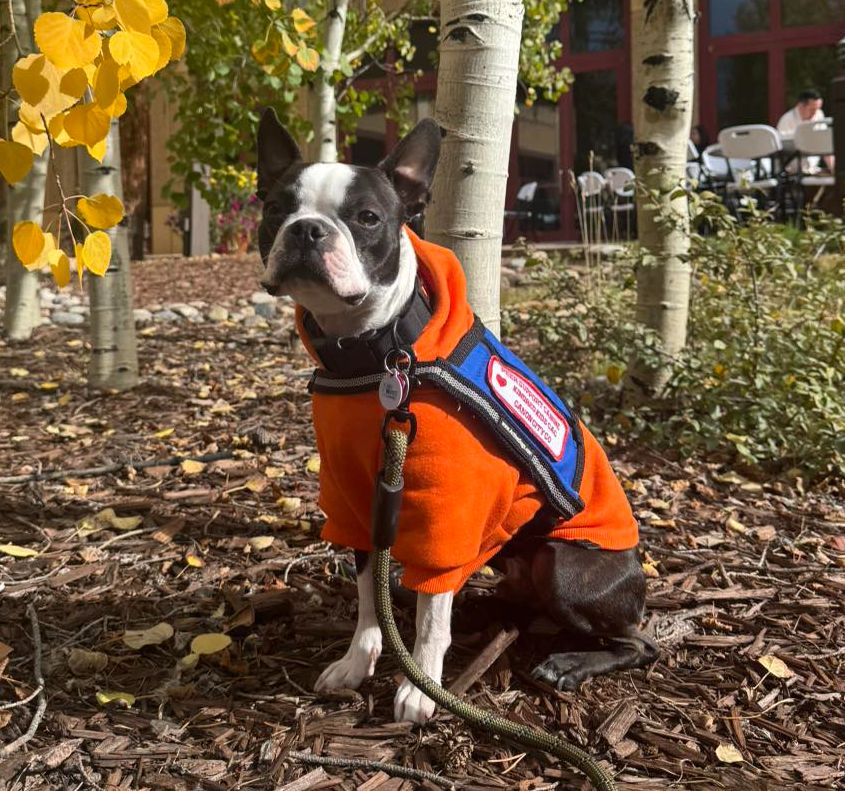
Our 2026 calendar features 12 amazing service dogs that support our community, families, and first responders – including our very own Rocket!


Each calendar is $25, and 100% of proceeds directly support our forensic interviews, crisis response, and victim advocacy services. Your purchase helps us serve the children and families who need us most.

donation_jar_give.jpg

Every donation helps us answer the call when a child needs us most. Your generosity ensures we can continue providing free crisis response, forensic interviews, medical exams, and advocacy services 24/7 to families across our four-county region. No gift is too small – every dollar directly supports children and families on their healing journey.

Rocket's Corner

Safety Town - April 14, 15 & 16th


Take Back the Night - April 23rd


Safety Jam - May 30th

Facebook  Instagram  TikTok