Gates Mills Land Conservancy
|
June 13, 2023 | Newsletter Issue #4 |
|
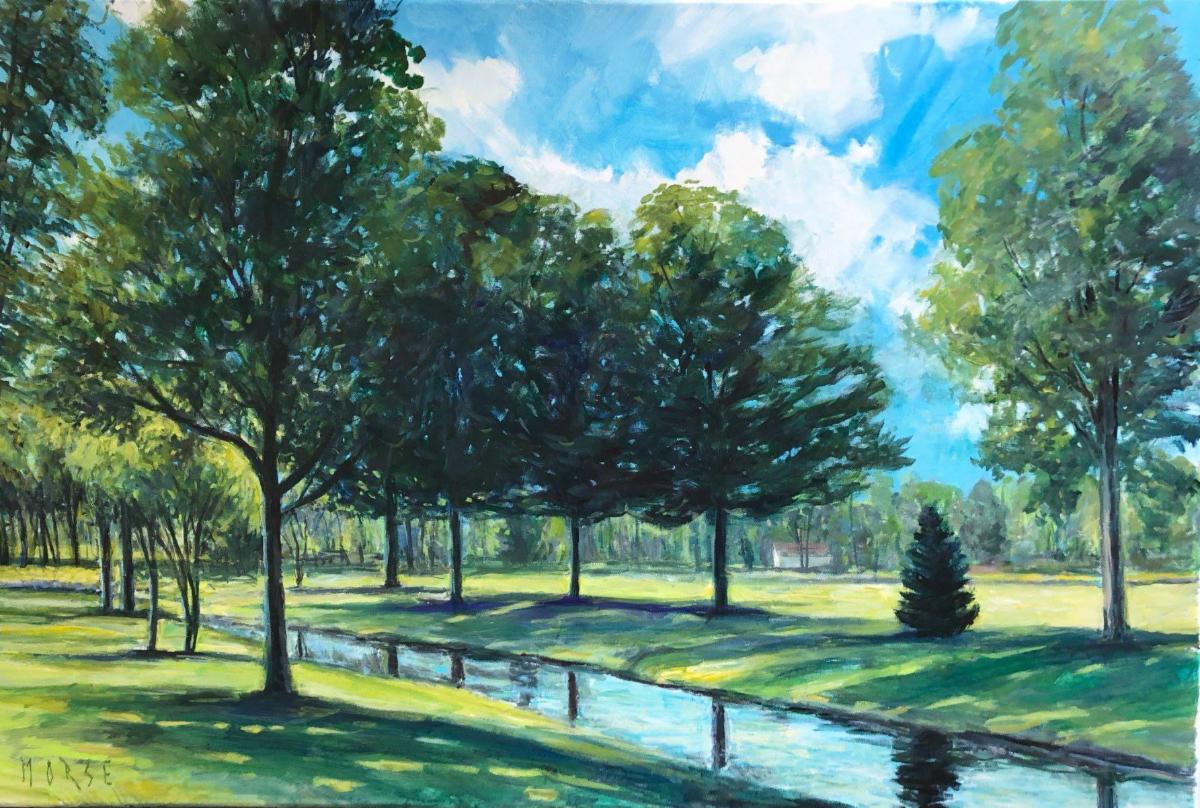
"Gates Mills Village Green" by Jamie Morse |
|
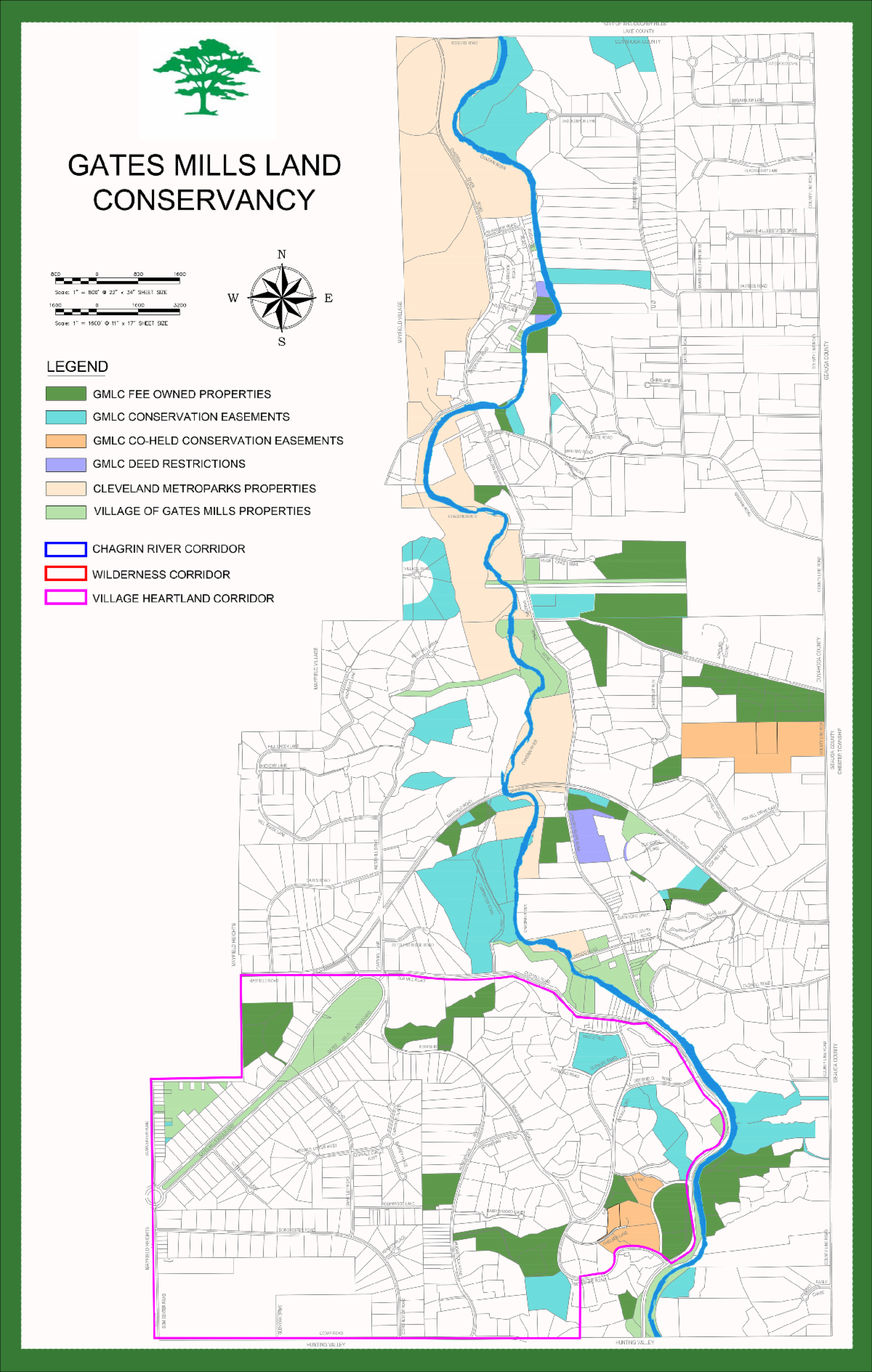
This newsletter focuses on the Heartland Corridor, the southern portion of Gates Mills surrounding the "village center". In 1792, 500,000 acres of land were given to Connecticut inhabitants for losses inflicted by the British army during the Revolutionary War. These lands were known as the Western Reserve.
When the Connecticut Land Company was formed in 1795 to buy three million acres in the Western Reserve, it included the Gates Mills and Mayfield areas. The Connecticut Land Company sold the lands to pioneers who were speculators and settlers and brought their New England way of life, customs, values and design style to the area. This “Western Reserve” style is the aesthetic that gives the unique charm and quaintness to the Heartland Corridor.
GMLC’s original vision for this corridor was to protect approximately seventy-five acres of land to preserve the natural woodland beauty of the area along Beverly Lane. We also hoped to minimize development on the land along Epping Road, keeping the vistas of wide green lawns, stone walls, and split rail fences which identifies the “Western Reserve” style.
|
|
 |
The opening of the Cleveland Eastern Interurban electric rail service in 1900 provided, for the first time, reliable transportation to the rural communities located in eastern Cuyahoga and Geauga counties. Wealthy Cleveland families, seeking to escape from the industrial pollution of the city, were attracted to Gates Mills. They began to purchase the old houses in the village center as summer cottages and acquire large tracts of land for country equestrian estates. In 1909, the new Village residents purchased the former Maple Leaf Inn and established The Chagrin Valley Hunt Club, thereby preserving its open grounds for equestrian and polo activities.
As we celebrate the Gates Mills Land Conservancy's 35th year, we remember where the preservation of Gates Mills began in its historic Heartland corridor. It is here that so much of our history took place. Where the Western Reserve style, brought here from Connecticut, created our aesthetic beauty. It is where the trees covering its hillsides and valley floor were the commodity for its lumber sawmill in the mid 19th century. By the early 1900’s, the establishment of large estates would lead to the restoration of that tree canopy. It was in the Heartland that a vision for conservation and preservation established the Gates Mills Land Conservancy. It is the location of our first property and first donation.
In this newsletter, we discuss how a group of forward-looking citizens, concerned about the risk of unchecked development, founded the Gates Mills Land Conservancy in 1988. They were motivated to ensure that the rural character of the Village, with its woodlands and open pastures which had attracted wealthy Cleveland families more than a century ago, would be preserved for future generations to enjoy and treasure.
Respectfully,
Nathaniel Smith
and the GMLC Board
|
|
|
|
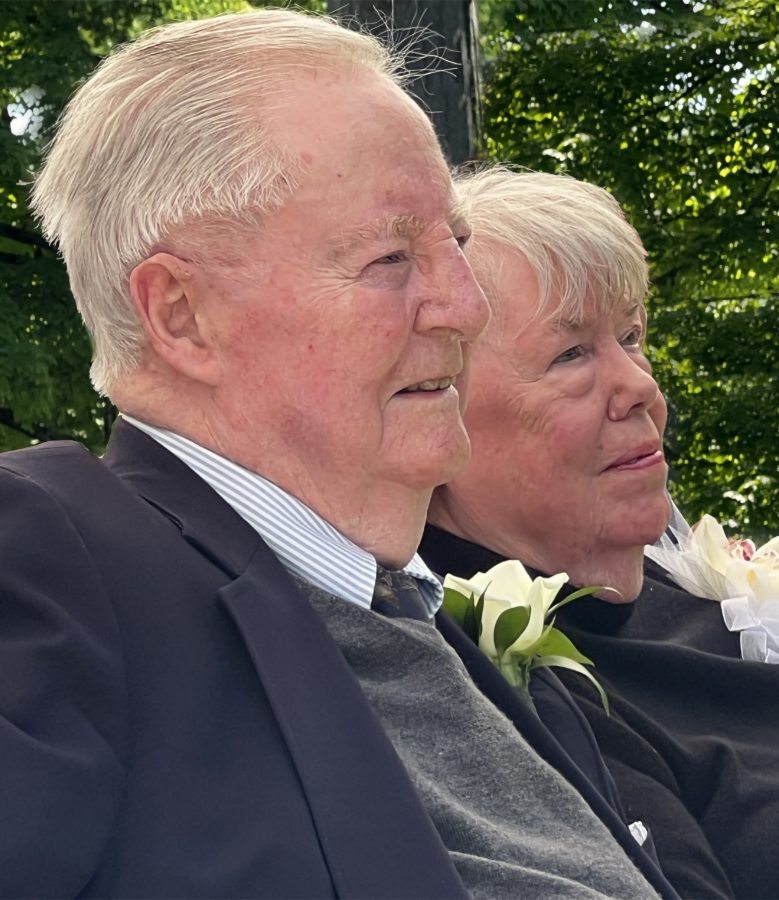
“Living in Gates Mills is a privilege and privilege requires giving back.”
Rindy and Daniel R. Collister,
Honorary Member and a Founding Father of the Gates Mills Land Conservancy.
|
|
Daniel R. Collister,
Honorary Member
|
Daniel R. Collister was the Mayor of Gates Mills from 1988 to 1995. In his very first year he along with a group of Gates Mills visionaries created The Gates Mills Land Conservancy.
This Village owes so much to their vision of a pastoral community, which today is a bastion of good stewardship for environmental preservation.
Dan’s own words say it best…
“Gates Mills was blessed with a cadre of wise leaders and an informed electorate who shared a single belief: If you love something, cherish it, don’t destroy it. Thus followed the Gates Mills Land Conservancy, preserving much of our open areas, supported by voters who passionately protect our environment and fiercely oppose any who would profit from it.”
|
|
|
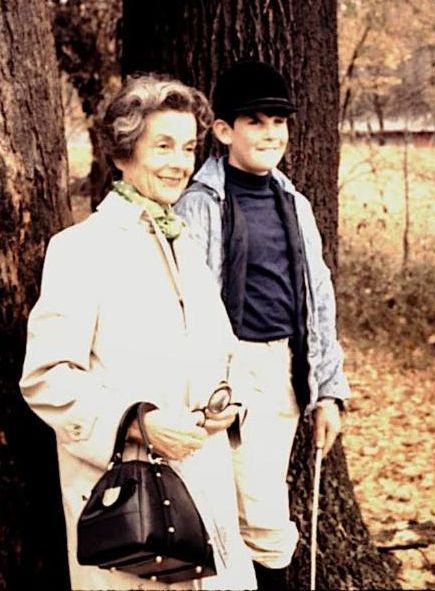
Margery Soltz and her grandson, Douglas Hyams, c.1970
It is said that Margery Soltz,
“Cared for nature and people.”
|
|
In 1989, the Conservancy’s first property (the 14.1-acre Soltz Woods) was generously donated by Margery Soltz. Located between Mayfield Road and Gates Mills Boulevard, it is a red maple forest where white-tailed deer and owls reside. The property was purchased by Alfred I. Soltz and Margery Black Soltz in 1957. The original property was over 35 acres, stretching along Gates Mills Boulevard north of Feller Field.
Mrs. Soltz was a visionary and concerned about the environment for many years. She and her husband, Alfred came from families who were actively involved in Cleveland development and were contributors to many philanthropic organizations in the Cleveland area.
|
|
|
What Is Green Infrastructure? |
|
|
Recently, there has been much talk of "green infrastructure", but it is important to understand the derivation of the term and how it is demonstrated. Basically, green infrastructure filters and absorbs stormwater where it falls. Green infrastructure is not architectural green design.
In 2019, Congress enacted the Water Infrastructure Improvement Act, which defines green infrastructure as "the range of measures that use plant or soil systems; permeable pavement or other permeable surfaces or substrates; stormwater harvest and reuse; or landscaping; to store, infiltrate, or create evapotranspiration of stormwater and reduce flows to sewer systems or to surface waters."
Green infrastructure elements can be woven into a community at several scales.
At a “neighborhood scale”, green infrastructure could include acres of open park space outside a city center, planting rain gardens or constructing a wetland near a residential housing complex. At the “landscape or watershed scale”, examples could include protecting large open natural spaces, riparian areas, wetlands or greening steep hillsides.
The Gates Mills Land Conservancy has been putting Green Infrastructure into practice at a landscape and watershed scale for the past 35 years. When green infrastructure systems are installed throughout a community, city or across a regional watershed, they can provide cleaner air and water as well as significant value for the community with flood protection, diverse habitat, and beautiful green spaces.
|
|
|
|
Pollinators - the lifeblood of Nature |
|
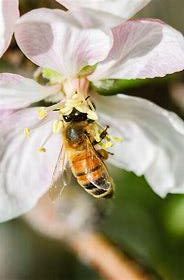
Bees and other pollinators play a vital role in our ecosystem. Pollinators are essential for the reproduction of wildflowers and other plants that support biodiversity and provide habitats for many other species. They are also responsible for pollinating plants, which in turn produce the fruits, vegetables, and nuts that make up a significant portion of our diet.
Bees are the most well-known pollinators, and for good reason. They are incredibly efficient at what they do, and there are over 20,000 species of bees worldwide. The most familiar are the honeybees, which live in hives and are managed by beekeepers for the production of honey and other hive products. However, there are many other species of bees that are important pollinators, such as bumblebees, mason bees, and leafcutter bees.
|
|
|
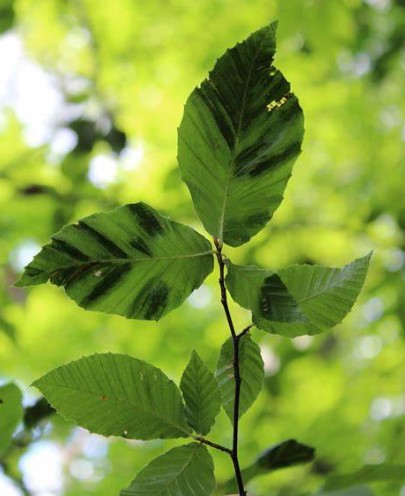
Leaf Striping symptoms of BLD |
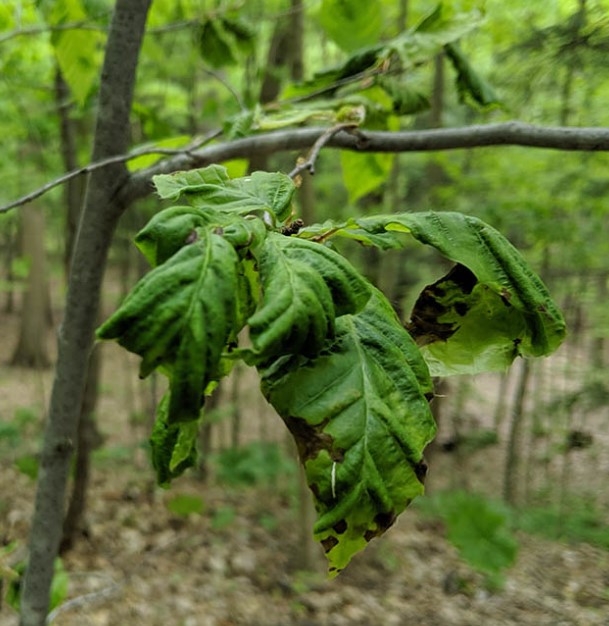
Leaf Deformation and Thickening |
|
Our forests are a balanced ecosystem of native Ash, Beech, Hickory, Sycamore, Dogwood, Redbud, Cottonwood and Maple. Any disease in the tree canopy creates a disruption to this balance, in which trees are contributing to soil fertility and nutrient cycling for each other in the forest ecosystem.
Beech trees are an important component of this ecosystems. They provide food and habitat for a variety of wildlife species, including birds, mammals, and insects, especially habitat and nesting sites for cavity-nesting bird species. Beech nuts are an important food source for many animals.
Beech Leaf disease (BLD) is indeed affecting the beech tree canopy in Ohio. When the disease causes widespread tree mortality, it disrupts this natural nutrient cycling processes creating gaps in the canopy and leads to changes in the forest's successional dynamics as other tree species may fill the available space. This shift in species composition can have cascading effects on the overall structure and function of the forest ecosystem.
|
|
|
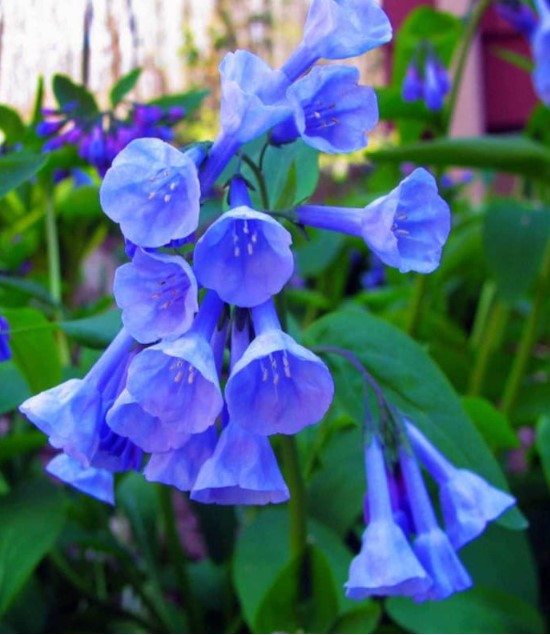
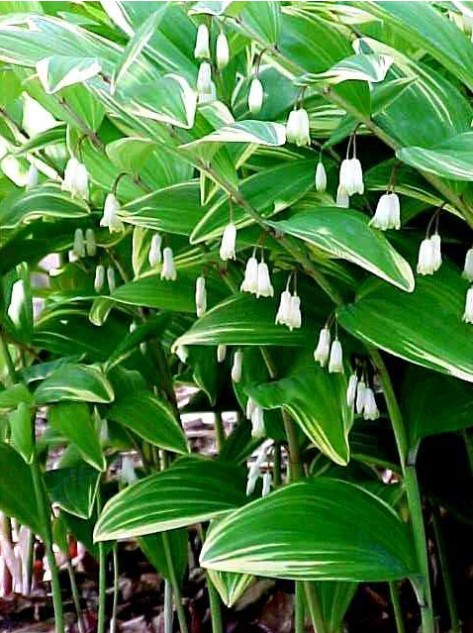
Native Virginia Bluebells and
Solomon's Seal
|
|
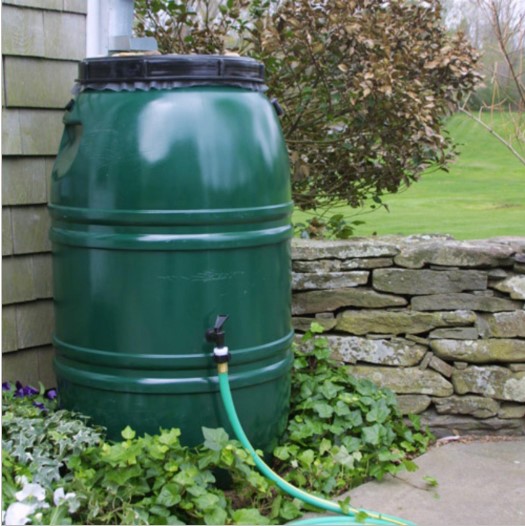
When Kate Chapel from Cuyahoga Soil & Water Conservation District, hosted our Rain Barrel event, she noted the following natives along the river in the Village...
Virginia bluebells, pawpaw, ramps, bloodroot, violets (purple, white, and yellow), trout lily, dogwood, redbud, witch-hazel, buckeye, cottonwood, mayapple, hickory, sycamore, Jack-in-the-Pulpit, lady’s thumbprint, ash, maple, golden Alexander’s, two-leaved toothwort, ferns, Solomon’s seal, and spicebush.
All around us in Gates Mills are beautiful plants and flowers which are native to Ohio. They are often overlooked in favor of nursery bought annuals and perennials. But what many people don’t realize is that so many garden plants that are familiar to us, were brought here from foreign countries. And some old-time favorites, like lily of the valley, forsythia and ajuga are actually considered invasive plants. While beautiful, many non-native plants take resources such as sunlight, water, nutrients, and space from our native plants. This summer start your own wildflower garden using local Ohio natives and help to preserve our natural habitat.
|
|
|
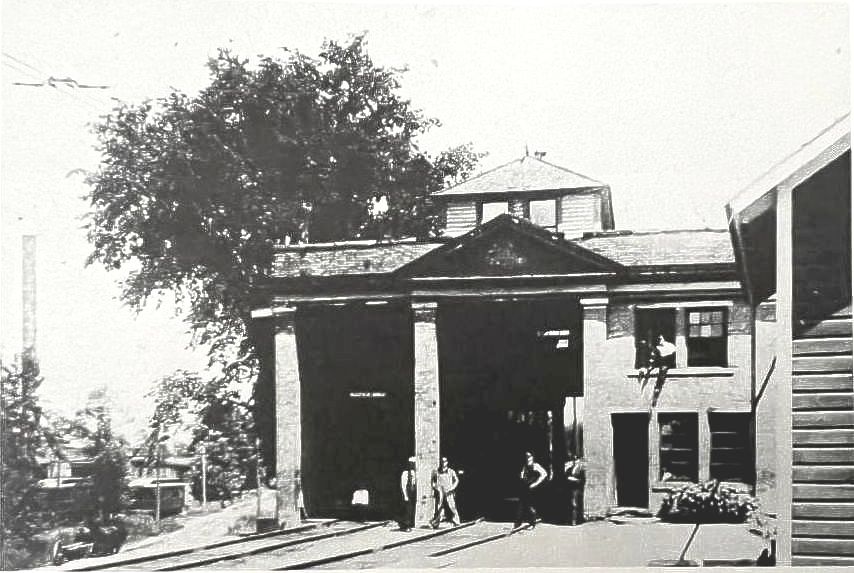
The Dispatch office located where the Library, Sara's and Cindy Halle's is today.
Cars going to Chardon, Burton and Middlefield passed through the center.
The Waiting Room and Shipments were to the right.
To the left is River Road with the Powerhouse (smokestack) and Car Barns, which is now the Village Green, Town Hall and Post Office.
|
|
A Piece of History -
The Interurban Route
|
At the end of the 1890’s, The Maple Leaf Land Company saw Gates Mills as a “suitable site for suburban development”. They bought 3,000 acres of these beautiful eastern lands to build country residences. At this same time, The Cleveland Eastern Traction Company created the first electric car connecting Chardon, Burton and Middlefield with Cleveland through Gates Mills. This was known as the Interurban.
These two business enterprises stimulated growth and development to Gates Mills. A map of the Interurban route and description are in the link below.
|
|
|
Rain barrel irrigation is one method of utilizing natural conservation techniques. |
|
GMLC In The News:
Sustainable Gardening
|
Natural treatments for gardens and lawns not only provide a healthier and more sustainable approach to landscaping but also foster an ecosystem that thrives harmoniously with nature.
By incorporating five sustainable gardening practices: composting, mulching, companion planting, natural pest control methods, and water conservation techniques, you can create a beautiful and vibrant outdoor space while minimizing the negative impact on the environment. Embrace these natural remedies and discover the joy of nurturing your garden while caring for the planet.
|
|
|
"Preserving Gates Mills"
Uniting for Land, Water and Tree Preservation
hosted by
Gates Mills Land Conservancy &
Gates Mills Environmental Education Center
with
Dr. Roy Larick, PhD.
Bartlett Tree Experts
Chagrin River Watershed Partners
- Learn about the Environmental Educational Center
- Tour the facility and the 40-acre site
- See remnants of the former Coast Guard Station
- Walk the half mile prairie garden trail
- Event is free with your reservation
Children are Welcome!
Sign up for the Children's Environmental Program,
with Excel TECC instructor-led environmental activities.
Saturday, September 16, 2023
GMEEC, 390 County Line Road, 9:00am - 2:00pm
|
|
|
Subscribe at:
Gates Mills Land Conservancy
|
|
|
|
|
|
|
|