|
Key Symbolism:
· Authority and Dignity: The miter is a formal headdress that signifies a bishop's high spiritual authority and dignity within the Church.
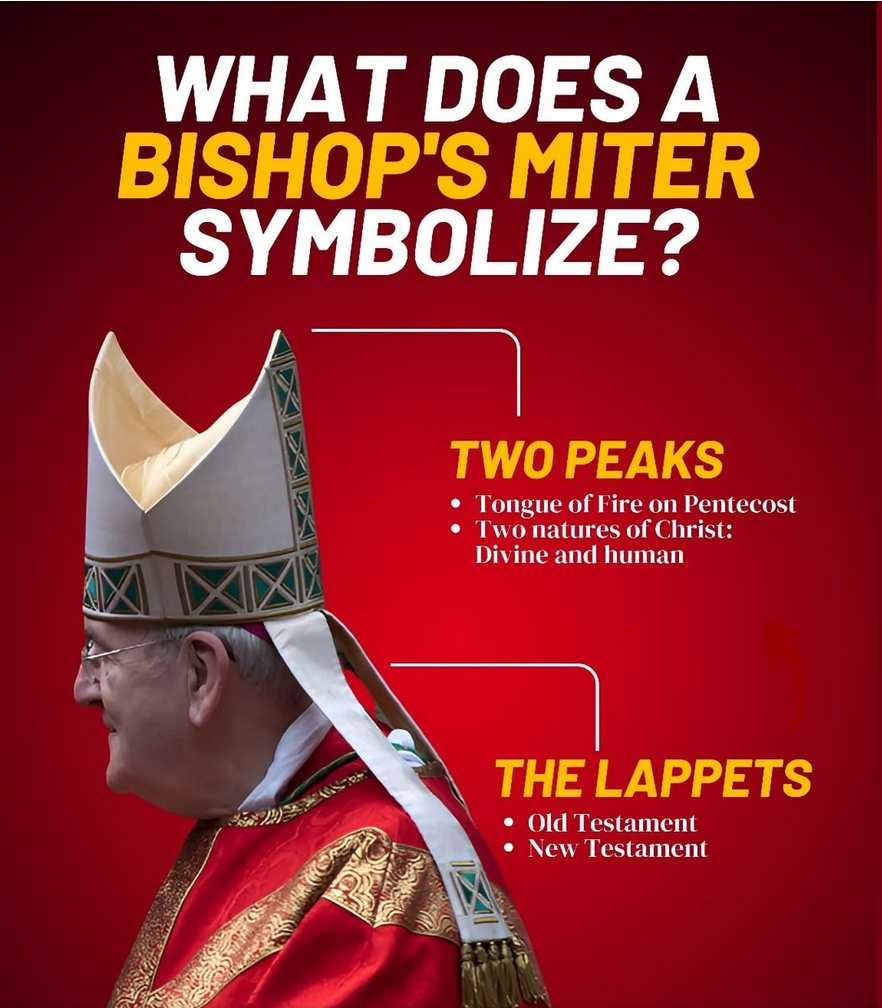
· Teacher of Scripture: The two peaks of the miter symbolize the Old and New Testaments, reminding the bishop to faithfully preach the Scriptures to the faithful.
· The Holy Spirit: The shape of the miter is said to resemble the tongues of fire that descended on the apostles during Pentecost, representing the bishop's endowment with the Holy Spirit.
· Shepherding the Flock: The miter, along with the crozier, serves as a reminder of the bishop's pastoral duty to care for and protect their congregation, the “flock.”
· Christ's Dual Nature: The two sides of the miter can also symbolize the dual nature of Jesus Christ, 100% human and 100% divine.
Historical Context:
· Evolution of the Miter: The miter evolved from a simple cone-shaped bonnet in ancient times to the distinctive two-peaked form seen today, with its use for bishops becoming widespread by the 12th century.
· Liturgical Significance: The miter is worn during specific liturgical ceremonies to emphasize the bishop's spiritual role and authority, though it is removed for prayers to God, acknowledging a higher authority.
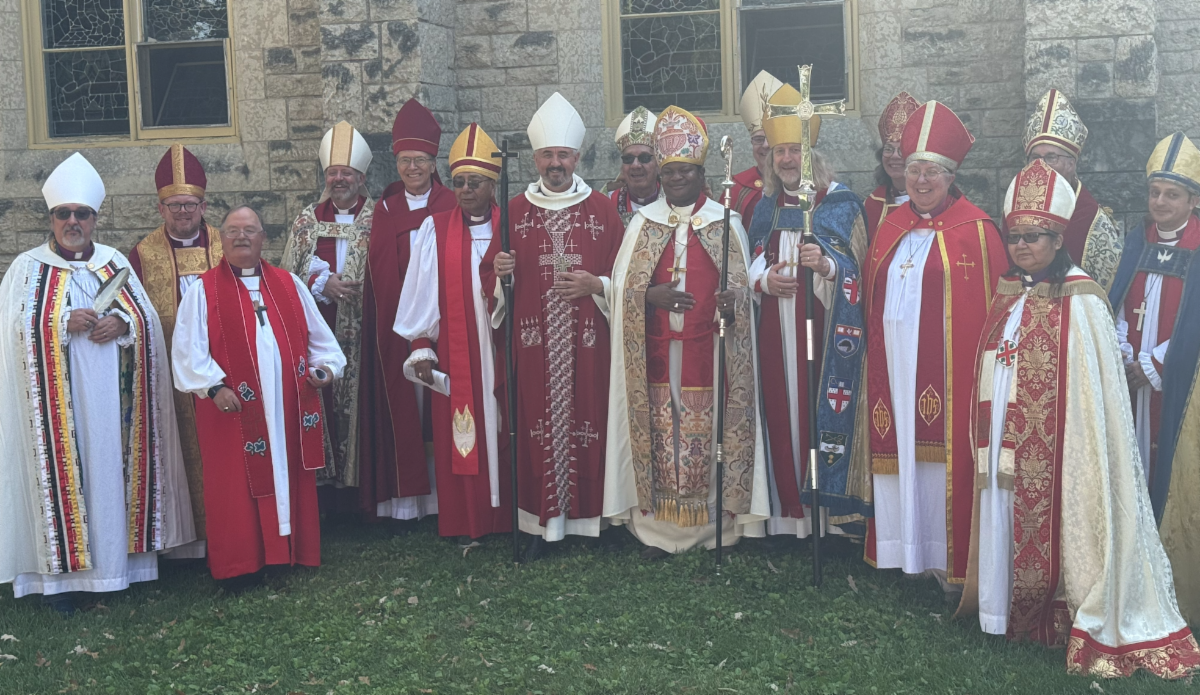
Think of this when you next see Archbishop John’s miter when he visits us next or when you see any of our bishops.
And seeing that we now have a new Archbishop of Canterbury, in the Rt. Revd. and Rt Hon. Dame Sarah Mullally, next week I will talk about this primate, the First Among Equals in the Anglican Communion.
Yours in the service of Christ
Rev. Monte
|