|
|
Network News
Djilba 2025
|
| GeoCatch acknowledges the Wadandi Saltwater people, the Traditional Owners of this land, and recognise their continuing connection to lands, waters and communities. | | |
Greetings!
Update from GeoCatch Chair, Vicky Winton
Thanks to everyone across the catchment who is acting to improve our water quality and environment. As Chair of Geographe Catchment Council I would like to acknowledge the on-going connection of Noongar First Nations People to Geographe Bay catchment and pay respects to Elders past, present and emerging for the responsibilities they take on. GeoCatch is currently developing training and two-way learning opportunities to support the next generation of Aboriginal custodians locally. Working together, we can do more and improve outcomes for our environment and community.
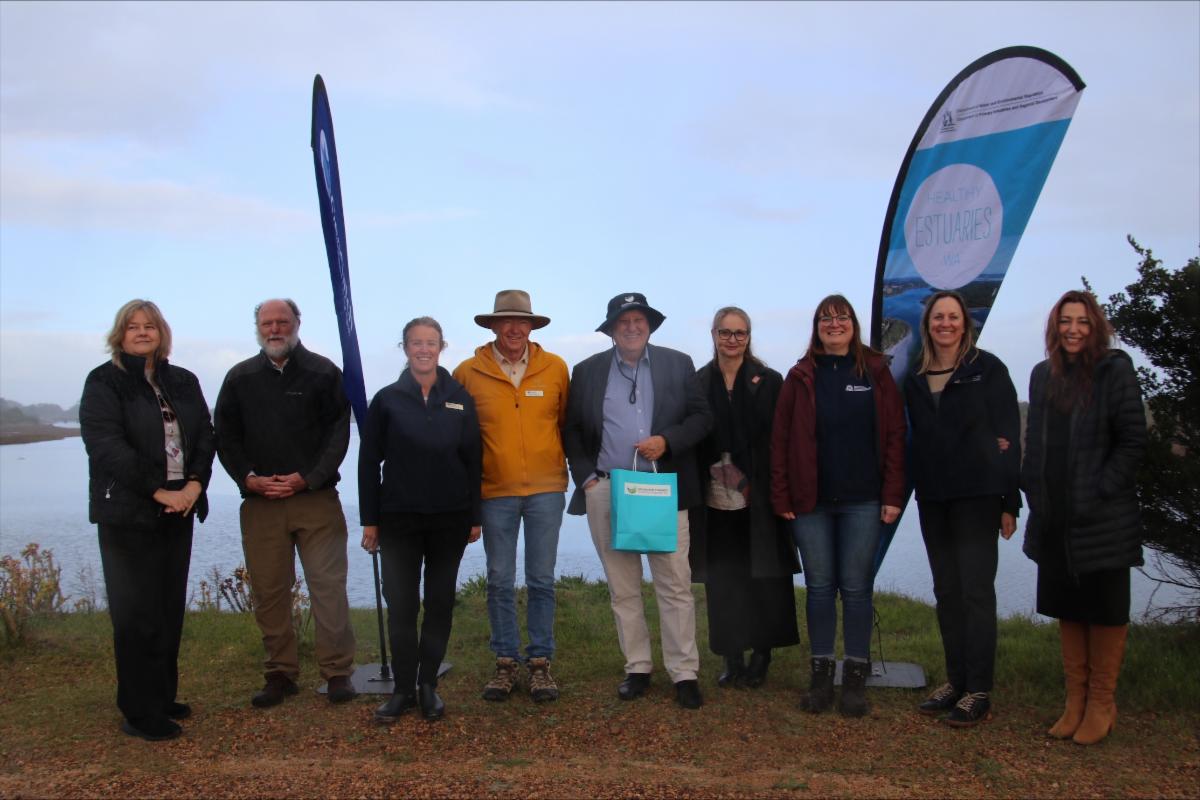
It was an honour to be the catchment group chosen for the official launch of the Healthy Estuaries WA 2 funding at the Vasse-Wonnerup Estuary on the morning of 8th July. The rain held off and a rainbow stretched across the sky behind the Minister for Water, Hon Don Punch MLA, as he made the announcement and congratulated the community as partners with Department of Water and Environmental Regulation in on-going work to protect the waterways, estuaries and marine environment.
It’s planting time and with more than twice the usual monthly rainfall this July, now is a great time to get tube stock established. Visit the Geographe Community Landcare Nursery located at 366 Queen Elizabeth Avenue, Ambergate, Busselton to find plants that will thrive in your soils. For smaller landholders, the State government is helping out with ‘treebates’ and will pay for your tree of choice via a scheme that is open to all WA resident adults. You can apply on their Treebate webpage.
Join us with the City of Busselton on the evening of Thursday 14th August to find out about environmental management in our catchment. Visit this webpage for more information and to register.
Enjoy the latest news from GeoCatch – your community getting active to care for this beautiful place we call home.
| | |
Read on for all the news on what we have been up to in the Geographe Catchment.
And if you’ve been working on something interesting, whether on your farm or in your garden, we’d love to hear from you. Get in touch with us to share your stories or photos—we’re always keen to celebrate the work across the catchment.
| |
GeoCatch's new funding to protect Geographe waterways
GeoCatch is thrilled to announce the extension of the successful fertiliser management (rural and urban) and Stream Restoration programs (including stock-exclusion fencing and riparian projects); communication and engagement for Revitalising Geographe Waterways; and Aboriginal engagement, for another four years.
The Minister for Water, Hon Don Punch MLA, launched the Healthy Estuaries 2 Program in Busselton earlier this month, providing valuable funding to protect at-risk estuaries across Western Australia, including our very own Vasse-Wonnerup Estuary.
This support will help local Geographe farmers improve nutrient management on farms, fence livestock from waterways, and restore degraded riverbanks.
| Above (left to right): Karen Barlow (DWER), DWER Aquatic Science Manager Malcolm Robb, GeoCatch Project Coordinator Jenelle Schult, GeoCatch Deputy Chair Robin Belford, Minister for Water Don Punch, GeoCatch Chair Vicky Winton, DWER Healthy Estuaries Coordinator Jennifer Stritzke, DWER Waterways Program Manager Sally Clifton-Parks, Allison Christou (South West Development Commission). | |
Vicky Winton, Chair of GeoCatch, says the funding will help a wide range of people within the community.
“This funding will see us through the next four years of our work with farmers and the local community working together to protect our waterways and the estuaries,” she says.
“The partnership is very important because it brings science directly into the community where we can benefit from that scientific knowledge.”
Healthy Estuaries 2 also supports other regional groups including Leschenault Catchment Council, Oyster Harbour Catchment Group, Peel-Harvey Catchment Council, South Coast Natural Resource Management, Torbay Catchment Group, Wilson Inlet Catchment Committee and Lower Blackwood LCDC.
Healthy Estuaries WA launched in 2020, and this is the second round of funding for the program.
| | |
Planting habitat for our wildlife: many hands make light work
Thank you to all the wonderful volunteers who have helped at our recent tree planting events!
We had a stellar turnout from the local community at our Holgate Rd planting day, enhancing habitat in that area for our local wildlife, especially the critically endangered Western Ringtail Possum.
Thanks to support from Busselton Water, Busselton Toyota, City of Busselton, Water Corporation, Healthy Estuaries WA and StateNRM that make these tree planting projects possible. Read more
| |
Schools and corporates unite for Dolphin Rd planting day
We had another successful planting day at Dolphin Road and the lovely sunny weather was a bonus. A whopping 900 seedlings were planted by 50 hard-working tree planters from Busselton Senior High School, Georgiana Molloy Anglican School and Country Builders Busselton crew. Read more
| |
Catio rebate still available until 31 October 2025
There are only a few catio rebates left available!
Make the most of this $200 rebate opportunity to keep your cat safe and happy while protecting our native wildlife!
Register by 31 October 2025 and complete your catio by December 2025.
To register, visit https://form.jotform.com/241351043456853
| | |
New book from Paul H. Brown
Paul H. Brown recently launched his new book Dryandra Woodland National Park: Unique Mammals and South-West Endemic Birds.
The book explores the 27 mammals and 122 bush birds that call the 30,000ha national park home. It also covers vegetation, predator control and the Park's fantastic landscapes, an oasis for many unique mammals that once occurred across the Australian continent – most notably, WA’s animal emblem, the numbat.
| | |
Author Paul H. Brown out in Dryandra Woodland discussing his new book.
Paul's book is now available to purchase at the Collie and Narrogin Visitor Centres, Williams Wool Shed, Barna Mia and from the Lion’s Village caretakers.
Busselton locals can buy the book through eBay searching on Author Paul H Brown or contact Paul, who is a West Busselton local, directly on his email address brownieph60@gmail.com to arrange a copy.
| | |
Bin stickers for our wildlife
Did you know you can grab free 'Pets Away Possums Play' and ‘My cat can’t roam, it's safe at home' bin stickers from the GeoCatch office in Busselton?
These large, high-quality stickers look great on wheelie bins and spread awareness to keep pets safe inside at night so our nocturnal wildlife can roam their habitat safely too!
Come by anytime Monday to Friday between 9am-4pm.
| | | |
Have you visited the Bay OK demonstration garden at Vasse Diversion Drain?
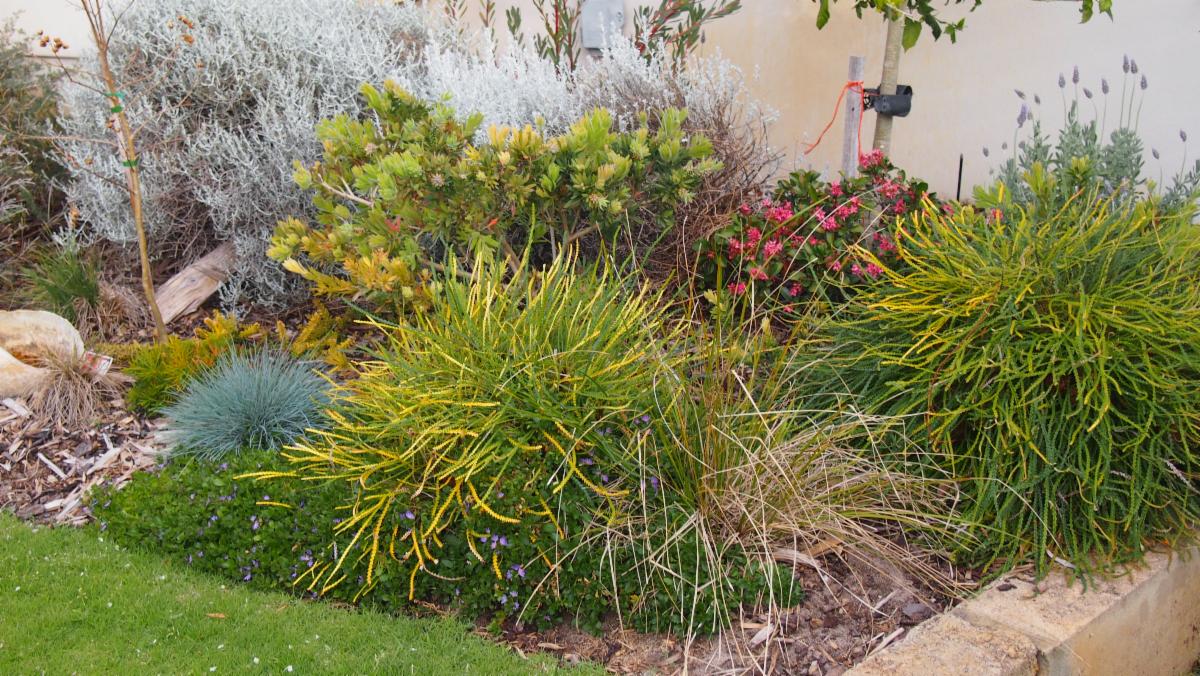
The fantastic Bunnings Warehouse Busselton crew gave GeoCatch's Bay OK demonstration garden by the Vasse Diversion Drain a recent makeover. They spent a long morning pruning, weeding, auguring holes and replanting native plants.
With so much TLC, this Bay OK demonstration garden will continue to showcase low nutrient and water efficient approaches that can be used in your own garden. Thank you so much for your amazing work!
If you haven't seen the garden yet, it's a great place to visit on your morning walk!
The project is supported by Water Corporation and Healthy Estuaries WA.
| | |
Kids paint & plant a pot at popular workshop
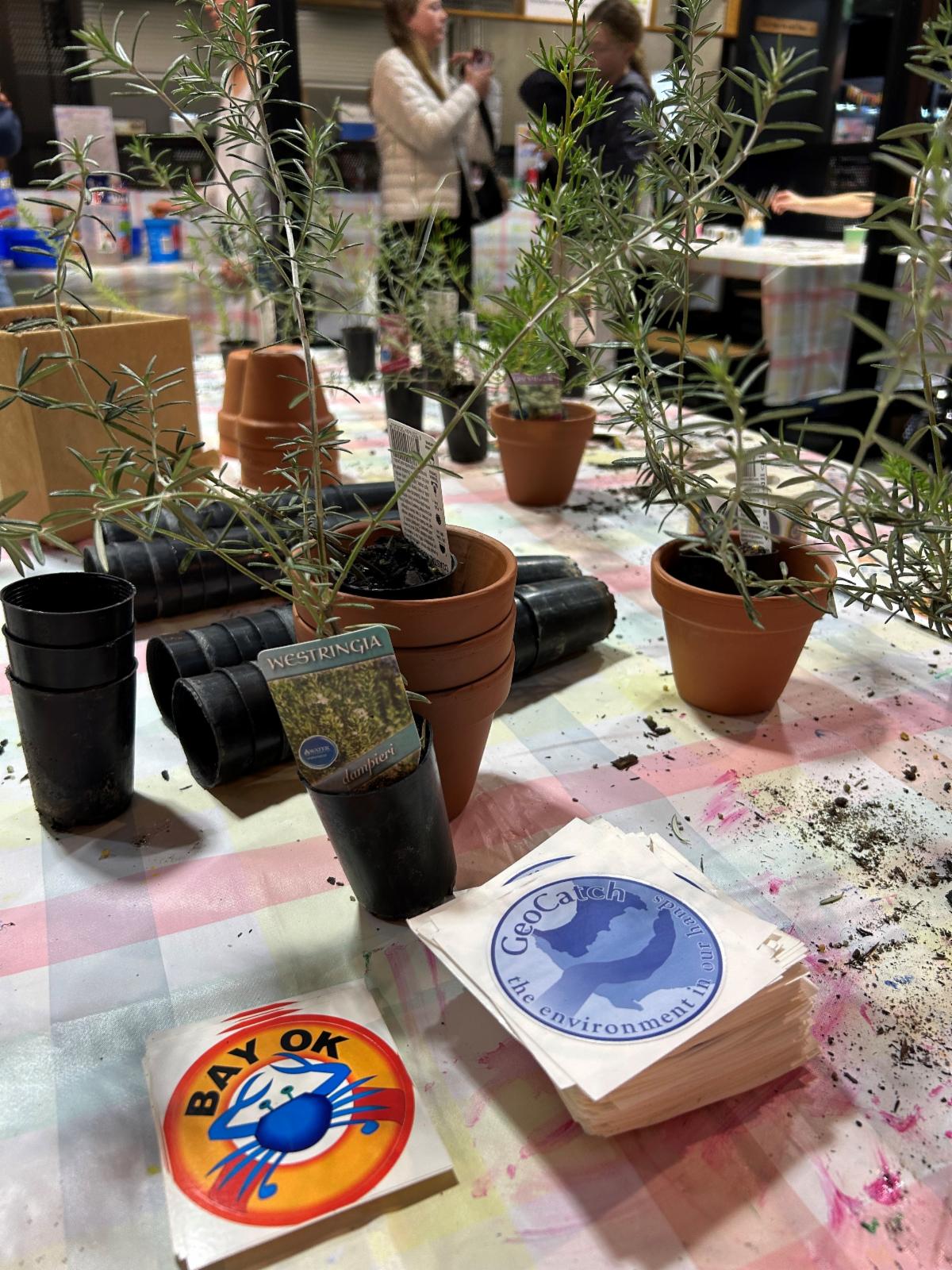
Thank you to Origins Market Busselton and the community service students that helped out at our hugely popular Bay OK Paint & Plant a Pot workshop!
70 kids enthusiastically made up a Bay OK-recommended soil mix to pot a native plant into and then creatively decorated their pots.
The stall also had lots of Bay OK garden resources available for the community packed with garden tips that help gardens grow best in an environmentally-friendly way!
Bay OK Project Officer Lisa Massey was very thankful for the wonderful help from MacKillop College students Vera and Zelika who worked very hard! Also a big thank you to Candice and Origins Market for supporting and hosting GeoCatch’s Bay OK project.
| | | | |
Busselton Jetty youth leadership team learn more about seagrass
Seagrasses are marine plants that grow in shallow waters and form meadows in estuaries and shallow coastal waters with sandy or muddy bottoms. They are underwater plants that actually produce flowers and have root systems that grow on and stabilise sand.
An incredibly wet and stormy evening in July saw Lisa Massey giving a presentation on seagrasses to the Busselton Jetty youth leadership team, expounding the value and benefits of seagrasses in Geographe Bay to our community, namely allowing biodiversity to flourish; absorb and store vast amounts of carbon; defend for our coastline; supporting fisheries and removing nitrogen. This session was going to be a walk and talk on the beach but seeing the storm forecast, Lisa collected a washing basket of seagrass wrack and interesting organisms from the beach that morning so that the students could identify different species, compare them to macroalgae (seaweed) and learn about the organisms that grow on and amidst their leaves.
| | | |
Bay OK winter gardening
The winter solstice is now passed and the lengthening days signal to our plants to get ready to grow! Even in winter, keep an eye on general plant health and growing conditions. If plants are not thriving, you might need to reconsider and start again. The right plant should thrive in the right place and with the right conditions. Winter is the perfect time to plant natives in the south west because the cool, mild conditions and regular rains give new plants plenty of time to establish before the warmer weather hits. The best thing about natives is that most species like 'dry feet', perfect for the growing conditions we have through summer.
Winter is a good time to amend your soil for spring and summer gardens. Adding clays and compost to your beds will prepare the soil to retain moisture and nutrients in the root zone where they can support plant growth. If you finish your home batch of compost, it’s a good time to make-up another batch so it’s ready to use in early summer plantings.
Keep up that layer of coarse chunky mulch to protect the soil microbiology from the winter cold and stop those weeds from appearing! Use a local source of mulch to ensure you are not introducing pests and disease to your garden.
| | |
Winter gardens can be a bit dull. However, many native plants are winter flowering and can be used to create stunning and colourful displays throughout winter as well as attracting birds and insects to the garden with their habitat and food supply. There are plenty of native plants to choose from to keep your winter garden bright - Grevilleas, Hakeas, Banksias, Eremophilas, Philotheca, Callistemons, Lilly Pilly and Boronia.
Becoming a Bay OK gardener means you are joining a community of gardeners who want to create beautiful, healthy gardens that have a positive impact on the environment. Key characters of Bay OK gardens include:
- Minimising nutrient runoff
- Conserving water
- Planting a variety of native plants that support local biodiversity
If you would like to be part of a group, join our online Bay OK Garden Club and interact with local gardeners on Facebook.
For further information on Bay OK gardening, visit the GeoCatch website at geocatch.asn.au
| | |
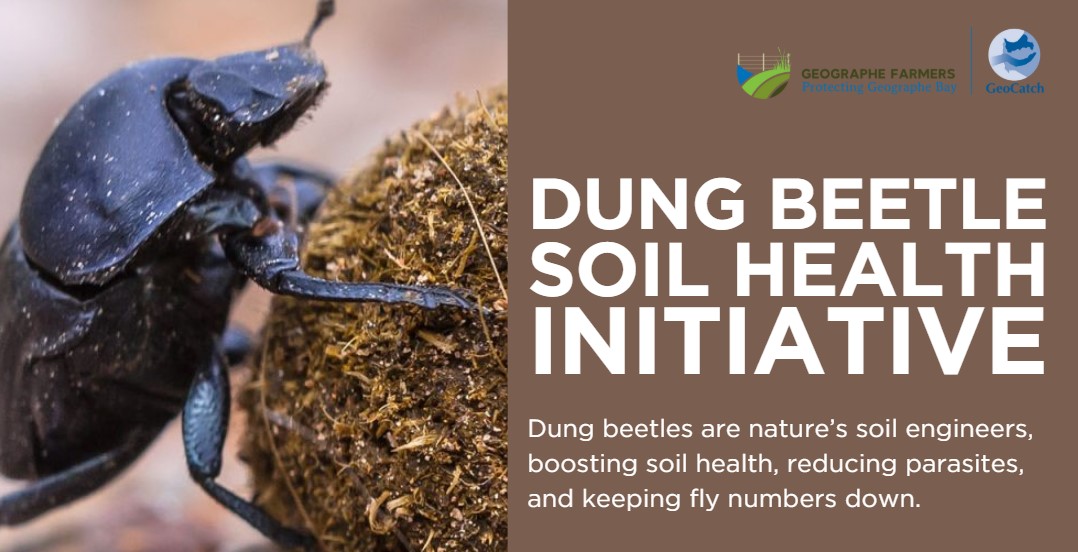
GeoCatch is teaming up with Department of Primary Industries and Regional Development (DPIRD) and Southern Forests Community Landcare, to participate in the Dung Beetle Soil Health Initiative, and we’re calling on landholders to help us understand more about these underground heroes of the South West!
Dung beetles are nature’s soil engineers—boosting soil health, reducing parasites, and keeping fly numbers down. But in many areas, their populations are patchy or missing.
This project aims to change that and create an Action Plan to:
- Leverage the benefits of dung beetles to improve pasture quality and enhance soil structure
- Address the gap in dung beetle activity during late winter and early spring
- Reduce bush fly populations
Want to host a monitoring site on your farm?
We are looking for farmers that would like to host a monitoring site on their property. Please send us an email if you are interested in getting involved!
We’re kicking off with a short survey to understand your experience with dung beetles and how they fit into your farm system. Your input could guide where we run workshops, set up monitoring sites, and even release new beetle colonies!
Click here to take the survey or scan the QR code below!
| |
Grazing Matcher explores winter stock health
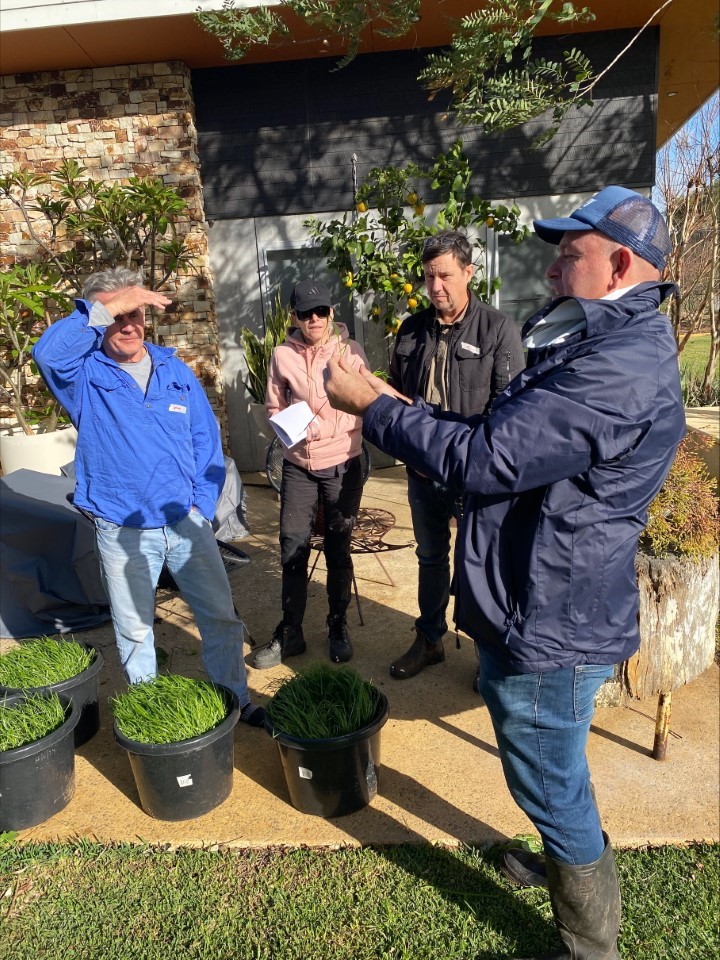
At the latest GeoCatch Grazing Matcher session, local farmers rolled up their sleeves to tackle one of winter’s biggest grazing challenges – making sure livestock are getting the nutrition they need from lush, but often low-fibre, winter pastures.
Just because paddocks look green doesn’t mean they’re delivering the goods. Winter grass can be high in water content and low in dry matter, meaning animals may not be getting enough energy or fibre to meet their needs—especially when they’re burning more to stay warm.
Image: Dan Parnell walks participants through his 'rotational grazing paddock simulation' and checks the pasture to see if it’s ready for grazing.
So how do you really know if your animals are getting enough?
Simple: check their poo and feel their fat.
That’s right—participants learned two practical tools to stay on top of livestock nutrition:
• Manure monitoring – A quick look behind the cow can help indicate if their diet is doing the job.
• Condition scoring – Everyone got hands-on, learning to assess key areas on cattle to check body condition. It’s a much more reliable measure than just watching from the ute.
The key message? Don’t just rely on what you see in the paddock. Getting hands-on gives a clearer picture of how well your animals are tracking through winter.
This project is supported by the Australian Government through funding from the Natural Heritage Trust under the Climate-Smart Agriculture Program and delivered by South West NRM, a member of the Commonwealth Regional Delivery Partners panel.
| | |
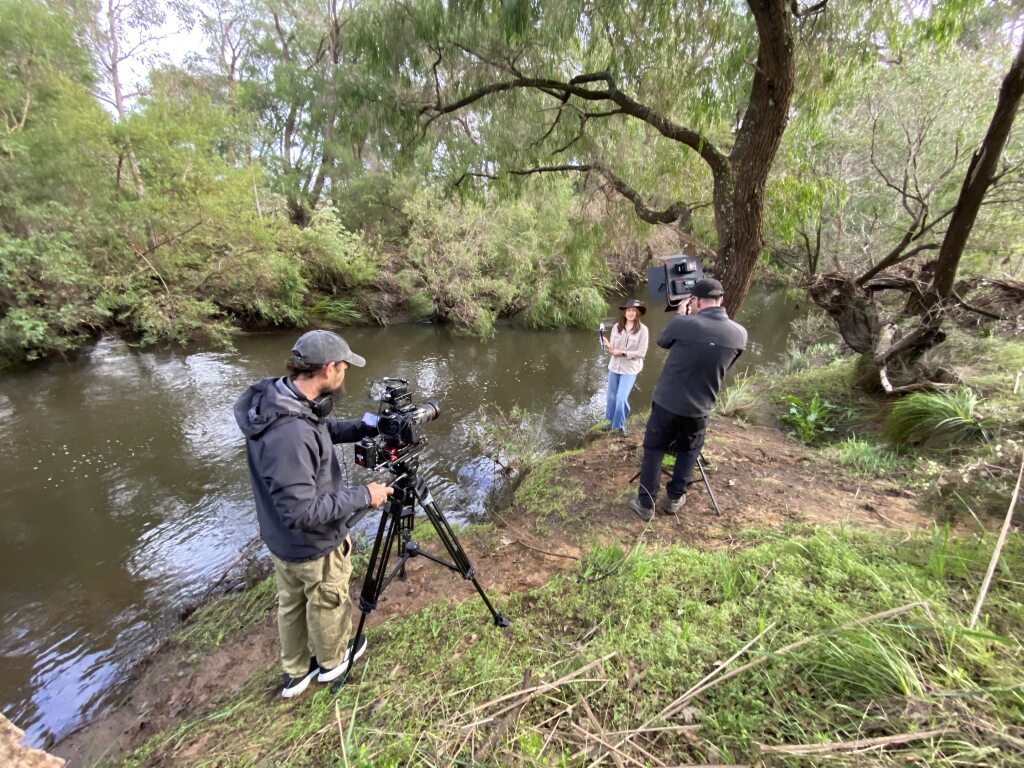
In production! Stream Restoration how-to video series coming soon
Many local landholders are already getting stuck into planting through GeoCatch’s Stream Restoration Program, collecting native seedlings from local nurseries and planting along waterways throughout the catchment.
GeoCatch has a very useful how-to series in the works that will outline step-by-step how to undertake a stream restoration project on your own property. Stay tuned!
Learn more about stream restoration
| | |
GeoCatch on panel at Wilding documentary screening
As part of the Film Harvest Geographe movie series, Cape Naturaliste Conservation Enterprise recently screened the “wildly” popular Wilding documentary at Orana Cinemas Busselton.
The sold-out event held an exclusive panel discussion after the screening, which included GeoCatch's very own Olivia Tunney!
Olivia said an interesting question from the audience was how people living in urban environments can contribute to re-wilding. A few ways to help include:
- Planting local native species in your gardens
- Planting a diverse range of species and plant types
- Selecting species that provide habitat or food for local fauna
- Buying food/produce that is in season and locally grown
| | | Revitalising Geographe Waterways | |
New Chair of Vasse Taskforce
The Western Australian Government has appointed Ms Neema Premji as the new Chair of the Vasse Taskforce.
Ms Premji brings more than 25 years of experience as an independent Chair across a broad range of sectors including infrastructure, utilities, and mining.
With a professional background in civil engineering, Ms Premji offers significant expertise in the infrastructure, water, power, mining, and transport industries, along with a strong understanding of planning and governance at Federal, State, and local government levels.
As Chair, Ms Premji will lead the next phase of work for the Vasse Taskforce, which plays a key role in managing the health of the Geographe waterways. Read more
| | |
Vasse-Wonnerup Wetland System in focus
The Vasse-Wonnerup wetlands are recognised on a local, state, national and international level for their conservation, social and cultural values.
They are recognised as one of the most important waterbird habitats in Western Australia. More than 30,000 waterbirds comprising 90 different species make use of the habitat provided by the wetlands each year.
Due to the importance of the Vasse-Wonnerup wetlands and threat from increasing nutrients there have been a number of major initiatives to protect and better understand the wetlands, such as the development of the Vasse-Wonnerup wetlands and Geographe Bay water quality improvement plan (2010) and in recent years a comprehensive science and monitoring program. Learn more about Vasse-Wonnerup wetlands
| | Upcoming Events and Workshops | | |
GeoCatch have a range of resources that can be loaned from our Busselton office.
This includes:
- Pottiputkis and belted planting buckets to help with your winter planting
- Tree planting augers (75mm x 450mm) to fit standard drill
- Fox & feral cat traps
- Library resources such as CSIRO’s latest book ‘Natural Asset Farming: Creating Productive and Biodiverse Farms’
To organise a loan of any of our resources, contact GeoCatch on 0491 069 078, email geocatch@dwer.wa.gov.au, or complete the form here.
| | |
Phone: 0491 069 078
Email: geocatch@dwer.wa.gov.au
Website: geocatch.asn.au
| | | | |