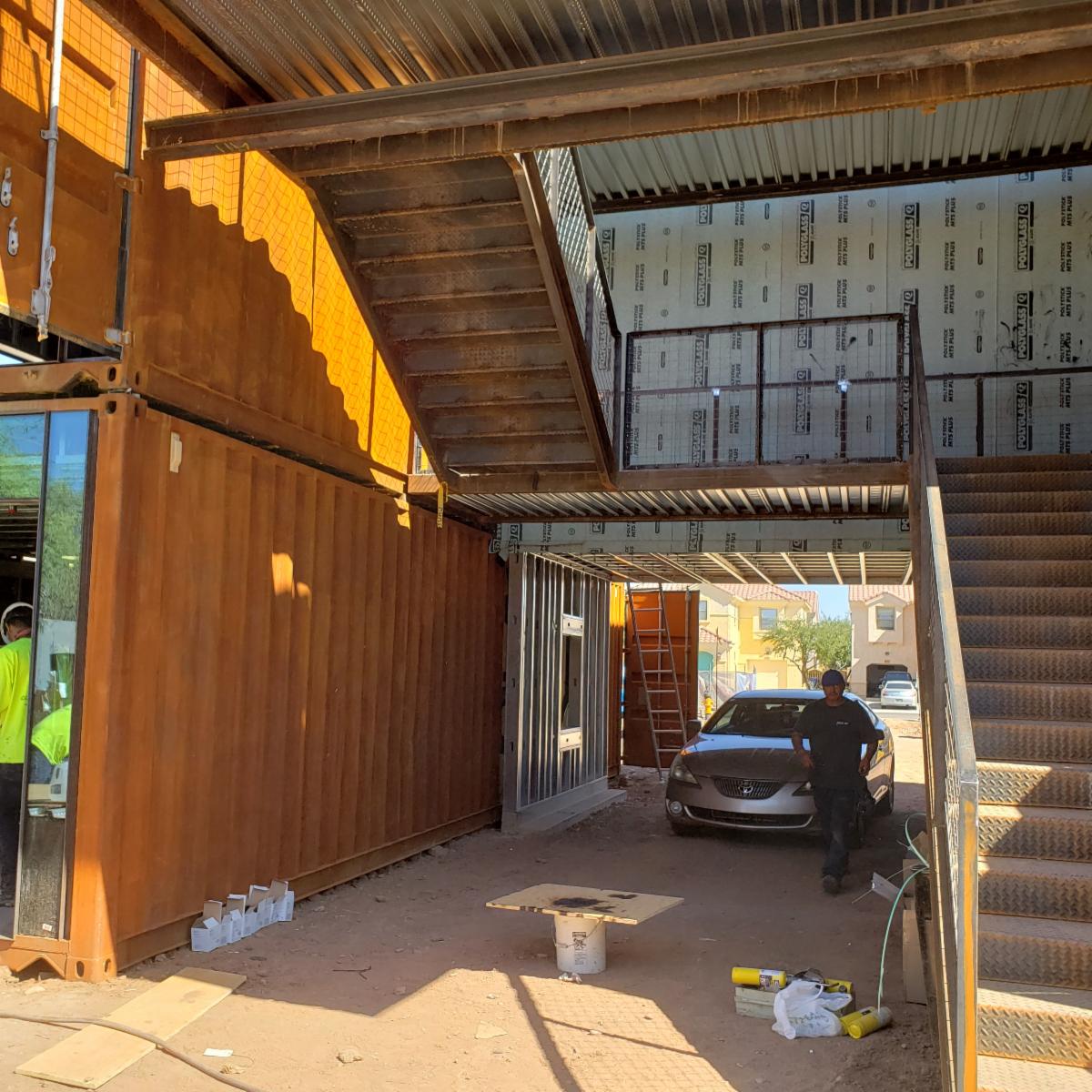
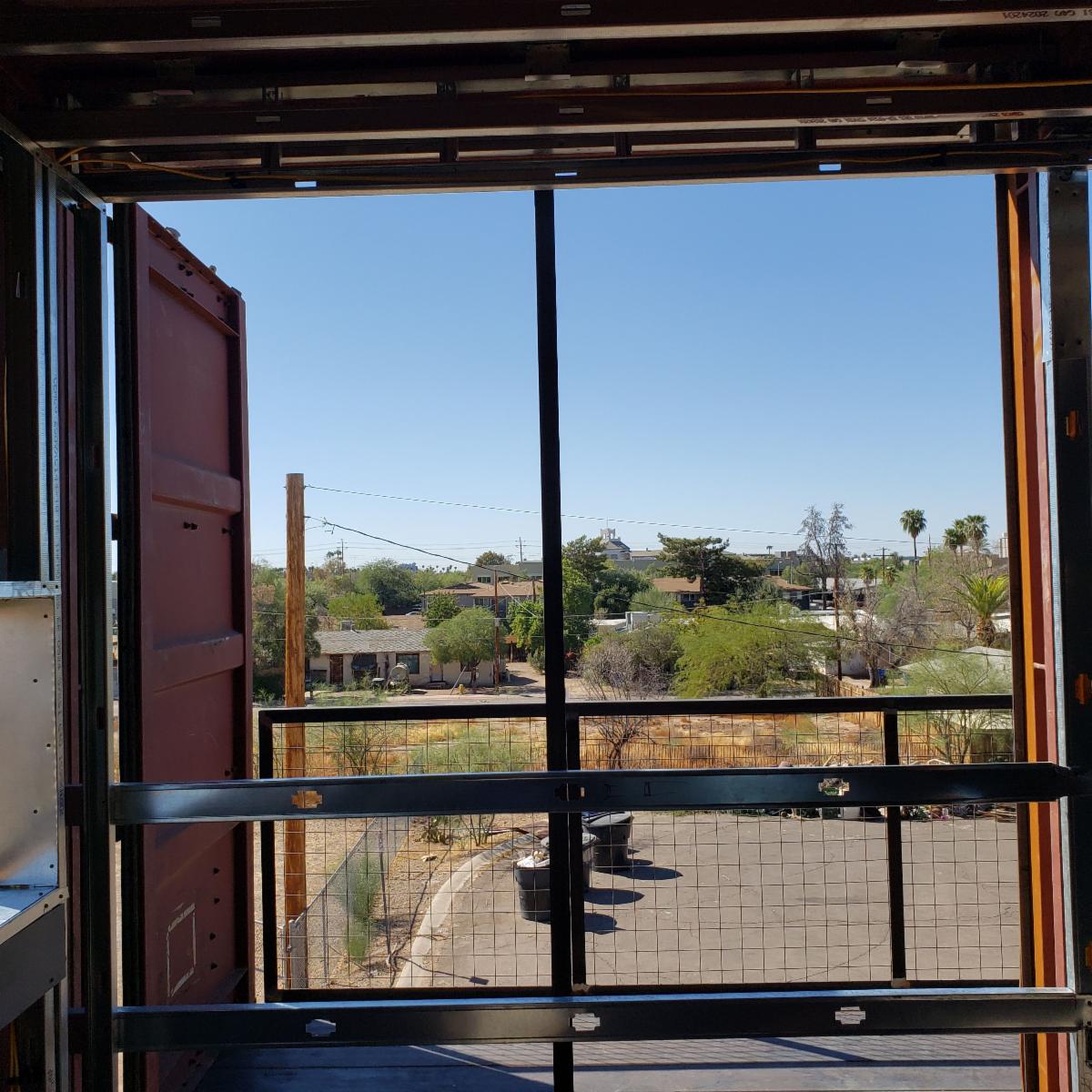
As we all know, one of the results of the Pandemic is that many people are working from home. When I was in Phoenix for the project above, I talked to the plumber on the job, and he pointed out that the market for office space was going to go down with the change in work habits. Why should a company pay a high price for square footage of office space if they can let their employees work from home? Also, companies can have a larger geographic area that people can be recruited from if commutimg is no longer and issue. The whole way back to Atlanta I thought about our conversation.
We've had an office for most of our existence, during the Recession I shut down the office and moved to my house after letting everyone go, and I shut my office down one time when I was mobilized by the Reserves during the war and I was told I was on active duty for 2 years (I wasn't, I was released affter about 9 months).
When I got into the office after my trip and looked at my budget, I made up my mind. No more office. Since I began this business, a lot of technology changed. I never print out plans anymore, but in the first 9 years I did. I'd have to print plans out, take them to a copy place, and get the required reproductions. At that time state licensing boards required a "wet seal" on plans and an original signature on each sheet. Now, if I need hard copies, I send pdf files to a copy place, no printing out. Most of the time I send plans directly to the client with an electronic signature.
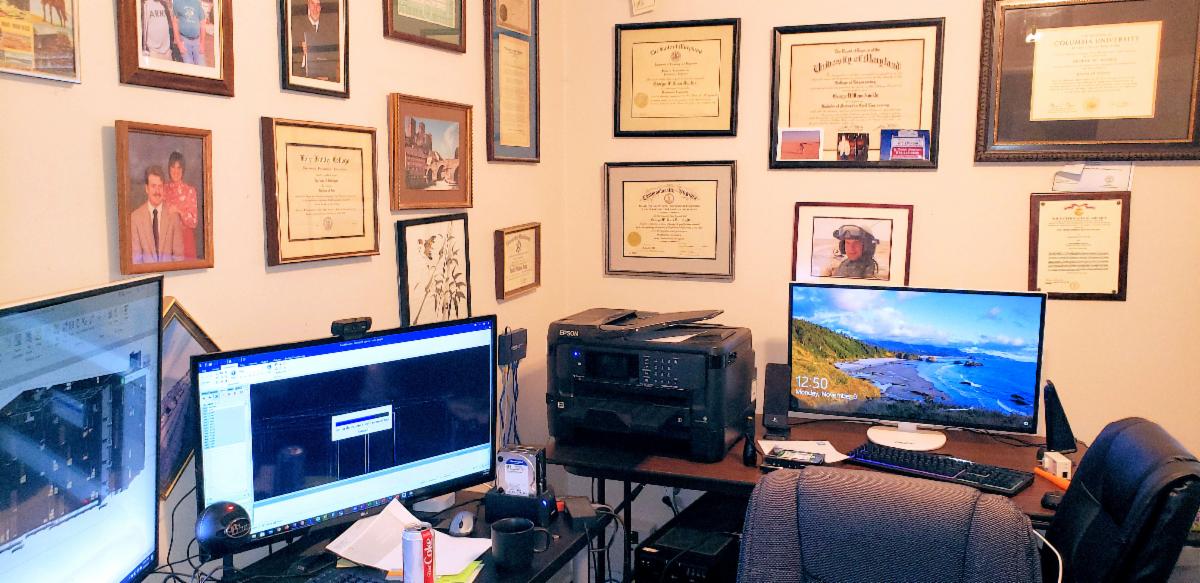
Not having a plotter means I need much less space. Going on, when I started I had a 17" monitor. To go over plans, I had to plot them out and lay them on a table. I'd go over them with a red pen, and then get back on the computer to make changes. Today I have a 47" monitor, so I can look at plans on the monitor at the same size that they print out as. Most of my codes and standards are in electronic format, as are many of my text books. Again, space is conserved (although paper copies of books seem to be much better to me).
The other issue that was a problem working at home was having meetings with other people. There was GotoMeeting, but it was fairly expensive and hard to use. Now we have Zoom, which is much easier to use, and not expensive at all. It's easy to get a meeting going with a number of people, and people use it in their personal lives to talk to family, attend church services, etc... so there is not an issue with someone not understanding the technology.
The final issue was the stigma of working out of your house. I remember talking to a colleague that worked for a large engineering firm, and he referred to someone as "one of these guys that works on his dining room table". In other words, small time. If there was a dog barking in the backround, or your cat got up on your keyboard during a video conference, you lost credibility. Now with so many people working from home, and large companies cutting office space, that's just about everyone. In fact, my parrot, Dewey, is a welcome participants at many video conferences (people ask where he is when I don't have him on my shoulder).