|
|
Hot Weather Safety for Older Adults
July is Heatstroke Awareness Month
Too much heat is not safe for anyone. It is even riskier if you are older or have health problems. It is important to be cautious and get relief quickly when you are overheated. Otherwise, you might start to feel sick or risk a heat-related illness that could cause serious health issues.
Why can extreme weather be even more dangerous for older adults than for younger people? Hotter days can cause difficulty in the body’s ability to regulate its temperature. This can be challenging for older adults who typically do not adjust as well as others to sudden temperature changes. Additionally, older adults are more likely to have chronic medical conditions that affect the body’s response to temperature, and to take prescription medicines that alter the body’s ability to control temperature or sweat.
Heat-related illnesses
Being overheated for too long or being exposed without protection to the sun can cause many health problems. Heat-related illnesses include the following:
-
Heat syncope is a sudden dizziness that can happen when you are active in hot weather. If you take a heart medication called a beta blocker or are not acclimated to hot weather, you are even more likely to feel faint. Rest in a cool place, put your legs up, and drink water to make the dizzy feeling go away.
-
Heat cramps are the painful tightening or spasms of muscles in your stomach, arms, or legs. Cramps can result from hard work or intense exercise. Though your body temperature and pulse usually stay normal during heat cramps, your skin may feel moist and cool. Stop the physical activity you’re doing and rest in the shade or in a cool building. Drink plenty of fluids, such as water and sports drinks containing electrolytes. Do not consume alcohol or caffeinated beverages.
-
Heat edema is a swelling in your ankles and feet when you get hot. Put your legs up to help reduce swelling. If that doesn’t work fairly quickly, check with your doctor.
-
Heat rash is a skin irritation from heavy sweating. It causes red clusters of small blisters that look similar to pimples on the skin. Your skin may feel itchy or you may feel “prickly” tingling pain. Keep the infected area dry, use powder to sooth the rash, and stay in cool areas.
-
Heat exhaustion is a warning that your body can no longer keep itself cool. You might feel thirsty, dizzy, weak, uncoordinated, and nauseated. You may sweat a lot. Your body temperature may stay normal, but your skin may feel cold and clammy. Some people with heat exhaustion have a rapid pulse. Rest in a cool place and get plenty of fluids. If you don’t feel better soon, get medical care. Be cautious because heat exhaustion can progress to heat stroke.
-
Heat stroke is a medical emergency in which the body’s temperature rises above 104°F. Signs of heat stroke are fainting; confusion or acting strangely; not sweating even when it’s hot; dry, flushed skin; strong, rapid pulse; or a slow, weak pulse. When a person has any of these symptoms, they should seek medical help right away and immediately move to a cooler place, such as under shade or indoors. They should also take action to lower their body temperature with cool clothes, a cool bath or shower, and fans.
-
Sun exposure, also known as sunburn, is a sign of skin damage due to extreme or long exposure. Your skin may appear red and tender, develop blisters, start to peel, and be warm to the touch. Severe reactions may cause fever, chills, nausea, or rash. Prevent sunburn by wearing protective clothing that covers your skin and staying out of direct sunlight. Using a broad spectrum sunscreen with an SPF of 15 or higher can also help prevent sunburns, but be sure to reapply often. If you are sunburned, wear lightweight clothing, take cool showers, moisturize affected areas, and stay out of the sun so your skin can heal.
If you are concerned about any of these heat-related illnesses, talk with your doctor.
Check the weather
If the temperature is rising, you may be at increased risk for a heat-related illness. Play it safe by planning ahead for hot days. Visit www.weather.gov, tune in to local radio or TV stations, or check the weather app on your smart phone regularly for forecasts. In addition to the thermometer, pay attention to the heat index, which considers both air temperature and humidity levels, to determine what the temperature actually feels like.
What raises the risk of heat-related illnesses for older adults?
Older adults are at higher risk for heat-related illnesses and death. Factors that put older adults at greater risk may include:
- Health problems such as cardiovascular, lung, or kidney disease
-
Changes in skin caused by normal aging
- Any illness that causes weakness or results in a fever
- Taking drugs such as diuretics, sedatives, tranquilizers, and some heart and high blood pressure medicines that may make it harder for the body to cool itself
- Being on several prescription drugs at the same time
- Having obesity, overweight, or underweight
- Drinking alcoholic beverages
- Living in places without air conditioning or fans
- Becoming dehydrated
Tips to stay safe in hot weather
Things you can do to lower your risk of heat-related illness:
- Drink plenty of liquids, such as water, fruit or vegetable juices, or drinks that contain electrolytes. Avoid alcohol and caffeinated beverages. If your doctor has told you to limit your liquids, ask what you should do when it is very hot.
- If you live in a home without air conditioning or fans, try to keep your space as cool as possible. Limit use of the oven; keep shades, blinds, or curtains closed during the hottest part of the day; and open windows at night.
- If your living space is hot, try to spend time during midday in a place that has air conditioning. For example, go to the shopping mall, movies, library, senior center, or a friend’s home. You may also contact your local health department or city to find out if they have air-conditioned shelters in your area.
- If you need help getting to a cooler place, ask a friend or relative. Some religious groups, senior centers, and Area Agencies on Aging provide this service. You could also consider taking a taxi or other car service or calling your local government to see if they offer senior transportation. Don’t stand outside in the heat waiting for a bus. Contact the Elder Helpline for help with transportation: 866.467.4624.
- Dress for the weather. Wear lightweight, light-colored, loose-fitting clothing. Natural fabrics such as cotton may feel cooler than synthetic fibers.
- Avoid outdoor exercising and other physical activity when it is very hot. Instead, try to find someplace you can be active while staying cool indoors.
- If you must go outside, try to limit your time out and avoid crowded places. Plan trips during non-rush-hour times.
- Make sure to use a broad spectrum sunscreen, SPF 15 or higher, and reapply it throughout the day, especially if your skin will have continuous exposure to the sun. Wear a hat and other protective clothing, and sunglasses. If you do get sunburned, stay out of the sun until your skin is healed and use cool cloths and moisturizers to treat the affected area.
- Ask your doctor if any of your medications make you more likely to become overheated or sunburned.
Key points to remember about hot weather safety
Older people can have a tougher time dealing with heat and humidity. The temperature inside or outside does not have to be high to put them at risk for a heat-related illness.
Headache, confusion, dizziness, or nausea could be a sign of a heat-related illness. Go to the doctor or to an emergency room to find out if you need treatment.
To keep heat-related illnesses from becoming a dangerous heat stroke, remember to:
- Get out of the sun and into a cool, ideally air-conditioned place.
- Drink fluids but avoid alcohol and caffeine.
- Shower, bathe, or sponge off with cool water.
- Lie down and rest.
Resources: https://www.nia.nih.gov/health/safety/hot-weather-safety-older-adults
| |
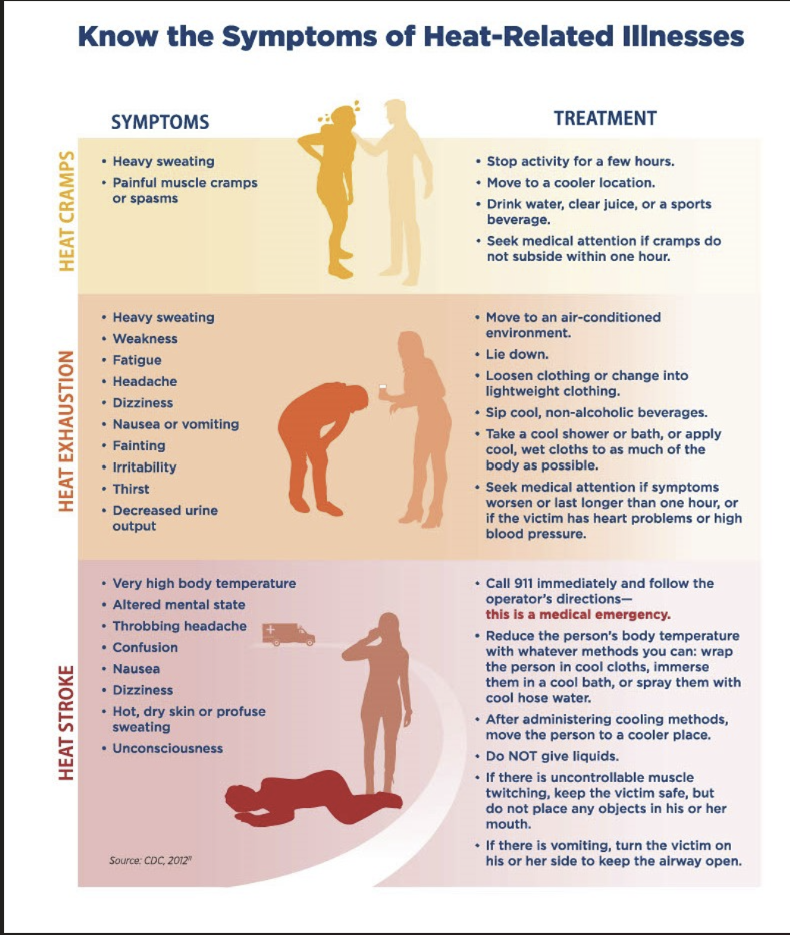
Heat-related Illnesses
How to stay safe in the heat as you volunteer and work
Workers or volunteers exposed to extreme heat or who work in hot environments may be at risk for experiencing heat-related illnesses. Workers, volunteers and supervisors should be trained about heat-related illnesses, symptoms, and first aid.
Types
Outdoor and indoor (warehouses with poor venilation or no air conditioning) workers and volunteers exposed to extreme heat or work in hot environments may be at risk for experiencing heat related illnesses. Heat-related illnesses include heat stroke, heat exhaustion, rhabdomyolysis, heat syncope, heat cramps, and heat rash.
Heat Stroke
Heat stroke can cause permanent disability or death if the person does not receive emergency treatment.
Symptoms of heat stroke include:
- Confusion, altered mental status, slurred speech
- Loss of consciousness (coma)
- Hot, dry skin or profuse sweating
- Seizures
- Very high body temperature
- Fatal if treatment delayed
Take the following steps to treat a worker with heat stroke:
- Call 911 for emergency medical care.
- Stay with the worker until emergency medical services arrive.
- Move the worker to a shaded, cool area and remove outer clothing.
- Cool the worker quickly, using the following methods:
- With a cold water or ice bath, if possible
- Wet the skin
- Place cold wet cloths on the skin
- Soak clothing with cool water
- Circulate the air around the worker to speed cooling.
- Place cold wet cloths or ice on the head, neck, armpits, and groin; or soak the clothing with cool water.
Heat Exhaustion
Heat exhaustion is the body's response to an excessive loss of water and salt, usually through excessive sweating.
Symptoms of heat exhaustion include:
- Headache
- Nausea
- Dizziness
- Weakness
- Irritability
- Thirst
- Heavy sweating
- Elevated body temperature
- Decreased urine output
Treat a worker who has heat exhaustion by doing the following:
- Take worker to a clinic or emergency room for medical evaluation and treatment.
- Call 911 if medical care is unavailable.
- Have someone stay with the worker until help arrives.
- Remove the worker from the hot area and give liquids to drink.
- Remove unnecessary clothing, including shoes and socks.
- Cool the worker with cold compresses or have the worker wash their head, face, and neck with cold water.
- Encourage frequent sips of cool water.
Rhabdomyolysis (rhabdo) is a medical condition associated with heat stress and prolonged physical exertion. Rhabdo causes the rapid breakdown, rupture, and death of muscle. When muscle tissue dies, electrolytes and large proteins are released into the bloodstream. This can cause irregular heart rhythms, seizures, and damage to the kidneys.
Symptoms of rhabdo include:
- Muscle cramps/pain
- Abnormally dark (tea or cola-colored) urine
- Weakness
- Exercise intolerance
- Asymptomatic
Workers with symptoms of rhabdo should:
- Stop activity
- Drink more liquids (water preferred)
- Seek immediate care at the nearest medical facility.
- Ask to be checked for rhabdomyolysis (i.e., blood sample analyzed for creatine kinase).
Heat syncope
Heat syncope is a fainting (syncope) episode or dizziness that usually occurs when standing for too long or suddenly standing up after sitting or lying. Factors that may contribute to heat syncope include dehydration and lack of acclimatization.
Symptoms of heat syncope include:
- Fainting (short duration)
- Dizziness
- Light-headedness from standing too long or suddenly rising from a sitting or lying position
Workers with heat syncope should:
- Sit or lie down in a cool place.
- Slowly drink water, clear juice, or a sports drink
Heat Cramps
Heat cramps usually affect workers who sweat a lot during strenuous activity. This sweating depletes the body's salt and moisture levels. Low salt levels in muscles cause painful cramps. Heat cramps may also be a symptom of heat exhaustion.
Symptoms of heat cramps
- Muscle cramps
- Pain or spasms in the abdomen, arms, or legs
Workers with heat cramps should do the following:
- Drink water and have a snack or a drink that replaces carbohydrates and electrolytes (such as sports drinks) every 15 to 20 minutes.
- Avoid salt tablets.
- Get medical help if the worker:
- Has heart problems.
- Is on a low sodium diet.
- Has cramps that do not subside within 1 hour
Heat Rash
Heat rash is a skin irritation caused by excessive sweating during hot, humid weather.
Symptoms of heat rash include:
- Red clusters of pimples or small blisters
- Usually appears on the neck, upper chest, groin, under the breasts, and in elbow creases
Workers who have heat rash should:
- Work in a cooler, less humid environment, if possible.
- Keep the rash area dry.
- Apply powder to increase comfort.
- Don't use ointments and cream
Resources: https://www.cdc.gov/niosh/heat-stress/about/illnesses.html
https://www.epa.gov/emergencies-iaq/know-symptoms-heat-related-illnesses-infographic
|
|
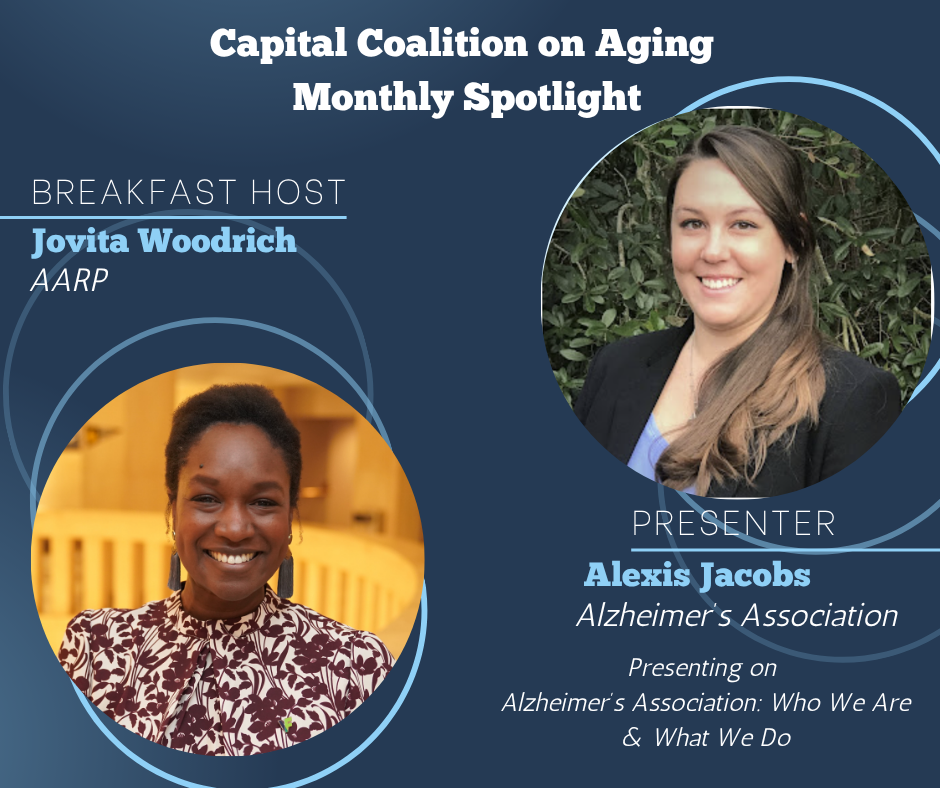
Capital Coalition on Aging
Meeting Reminder
We are slowly growing, thanks to you! Please keep sharing this event!
Join us for our Capital Coalition on Aging (CCOA) meeting, held montly at the Tallahassee Senior Center.
We hope to build back up our attendance to 50-60 each month - a goal we can only accomplish together by sharing the invitation to aging professionals we know that are not current members and reminding our colleagues who are on our member list. Don’t forget to bring your business cards and any information about your organization that you would like to hand out. We look forward to seeing you all there!
Come for breakfast and stay for the presentation and networking!
This month's meeting is July 15, 2026 at 8:30am
| | | | |