Meadows Research Institute for West Texas Water | Tracking the issues, science, and solutions shaping West Texas water | | Nationally Significant Oasis Inspires
a New Conservation Effort | | |
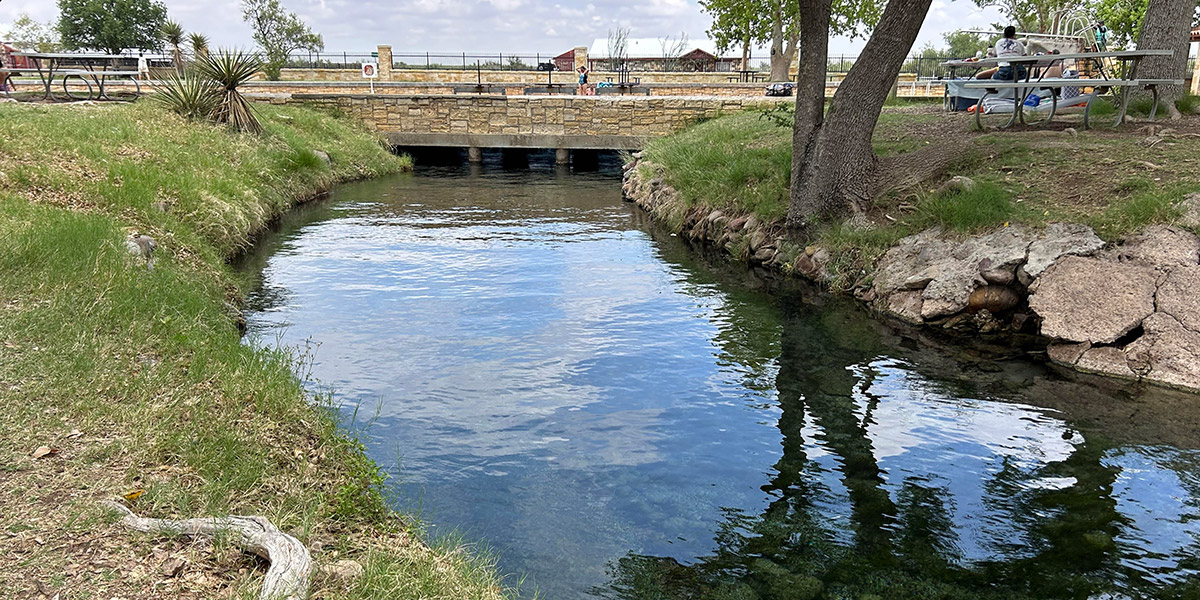
For thousands of years, San Solomon Springs has sustained life in the Chihuahuan Desert. The springs feed Balmorhea State Park’s iconic pool, support rare desert wildlife, and provide a vital source of water in one of the driest regions of Texas.
Today, a growing coalition of researchers, landowners, community leaders and conservation partners is working to ensure those springs continue flowing for generations to come.
The San Solomon Springs Collaborative, housed at the Meadows Research Institute for West Texas Water, brings together stakeholders from across the region to better understand and protect the groundwater systems that sustain the springs.
The effort comes at an important time. Roughly 30 percent of Texas springs have disappeared, and scientists have documented long-term declines in spring flow across the region. While researchers know water reaching Balmorhea originates in the Apache and Davis mountains, many questions remain about how that water moves underground and what factors influence the health of the springs.
“We don't know the big picture yet, which has been the biggest unanswered thing,” said Dr. Kelbi Delaune, assistant professor of natural sciences and research scientist with the Meadows Research Institute. “What we're trying to do is establish not only a groundwater monitoring network, but a landowner and stakeholder collaborative focused on protecting spring flow.”
The collaborative combines research, monitoring and community engagement to build a stronger understanding of the springs and the aquifers that support them.
For Delaune, the work is personal.
“These springs really were everything about my science identity,” she said. “These springs and these systems are really what allow us to exist. If they don't exist, we can't exist.”
As the collaborative grows, organizers hope it will deepen scientific understanding, strengthen community partnerships and build lasting support for one of Texas’ most remarkable desert landscapes.
| | Monitoring Network Follows the Water Underground | | |
Water may be the most important resource in West Texas, but much of it remains hidden from view.
Beneath the ranchlands, mountains, and desert valleys of the Trans-Pecos, groundwater moves through a complex network of aquifers, fractures, and underground pathways. Understanding where that water comes from, how it moves, and how it changes over time is essential to protecting springs, sustaining communities, and informing future water management decisions.
That’s why the Meadows Research Institute for West Texas Water is working to expand a regional groundwater monitoring network across Far West Texas.
The effort builds on decades of groundwater research led by Sul Ross State University scientists and includes monitoring wells in Brewster and Presidio counties, as well as new monitoring efforts associated with the San Solomon Springs Collaborative near Balmorhea.
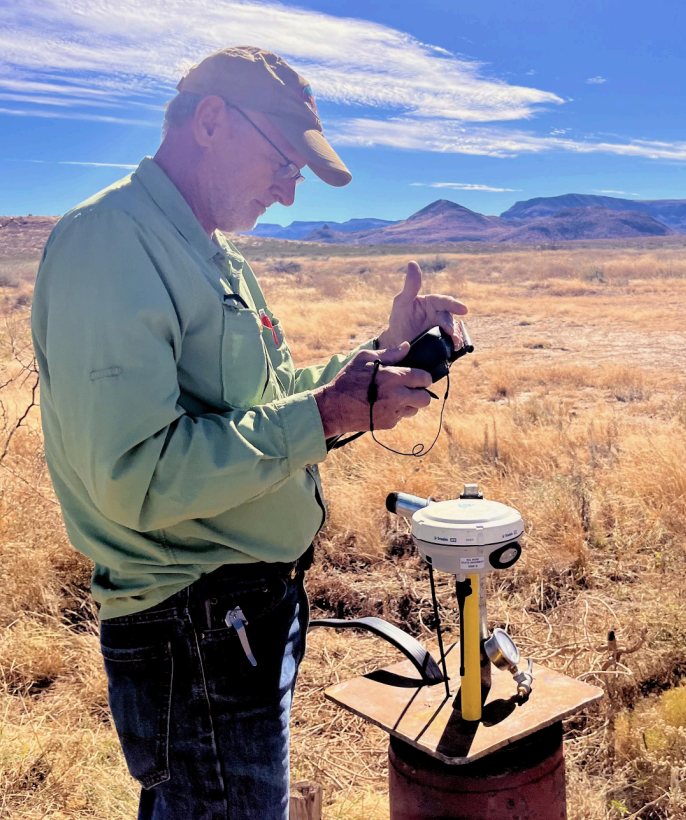
“Much of what we're trying to do is simply understand the system better,” said Dr. Kevin Urbanczyk, senior research scientist at the Meadows Research Institute and professor of geology at Sul Ross State University.
One of the institute's highest priorities is understanding the groundwater system that feeds San Solomon Springs. Scientists know much of the water originates west of Balmorhea, but important questions remain about the specific pathways it follows underground before emerging at the springs.
“We have a very clear idea that much of it is coming from the west,” Urbanczyk said. “But specifically, the path isn't exactly clear. That's what we're looking for.”
Researchers are working with landowners to identify strategically located wells where groundwater levels can be monitored over time, helping fill critical gaps in understanding how water moves across the region.
As the monitoring network grows, so too will the region's ability to better understand one of its most valuable and least visible natural resources.
Photo: Senior Research Scientist Dr. Kevin Urbanczyk leads monitoring efforts to better understand the complexities of groundwater in the Trans-Pecos.
| | Make Every Drop Count: DIY West Texas Rain Gardens | | |
In West Texas, every drop of rain is precious. Unfortunately, much of it runs off before it ever has a chance to soak into the ground.
That's why the Meadows Research Institute for West Texas Water is launching its first public outreach event this summer, a rain garden workshop designed to help community members make better use of the rainfall they receive.
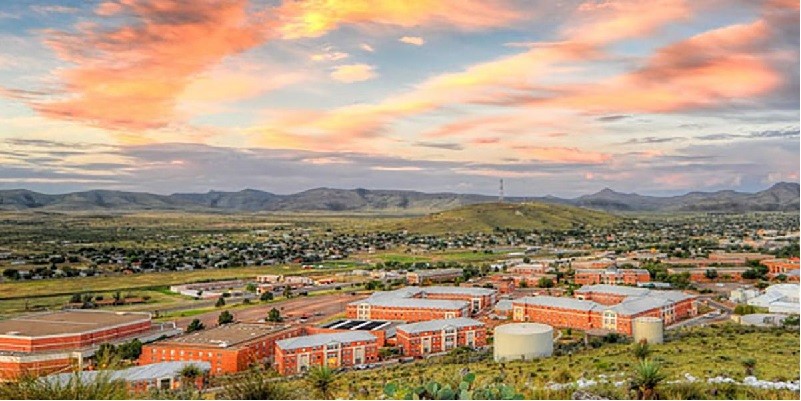
Scheduled for July 20 on the Sul Ross State University campus, the workshop is presented in partnership with the Sul Ross Plant Resources Center to focus on simple, practical techniques to create more resilient landscapes.
Participants will explore several locations on campus and learn how small changes in landscaping can make a big difference. Rain garden design topics include slowing flowing rainwater, improving soil infiltration, reducing erosion, and using native plants — all as practical approaches to drought resilience.
The workshop also offers a glimpse of what the Meadows Research Institute hopes to bring to the region in the years ahead. One of the institute's priorities is helping communities better understand and steward water resources through applied research, education, and practical outreach.
Whether you're a homeowner, a landowner, a renter with some freedom to landscape, an educator, or simply curious about water conservation, this workshop is a chance to learn a few new ideas and spend a morning expanding knowledge about the water that falls on your piece of West Texas.
Date: July 20, 2026
Time: 9–11 a.m.
Location: Warnock Science Building, Sul Ross State University
Registration: Kelbi.Delaune@sulross.edu
As the first public outreach event hosted by the Meadows Research Institute, the workshop marks the beginning of a broader effort to connect research, education, and practical solutions to the water challenges facing Far West Texas.
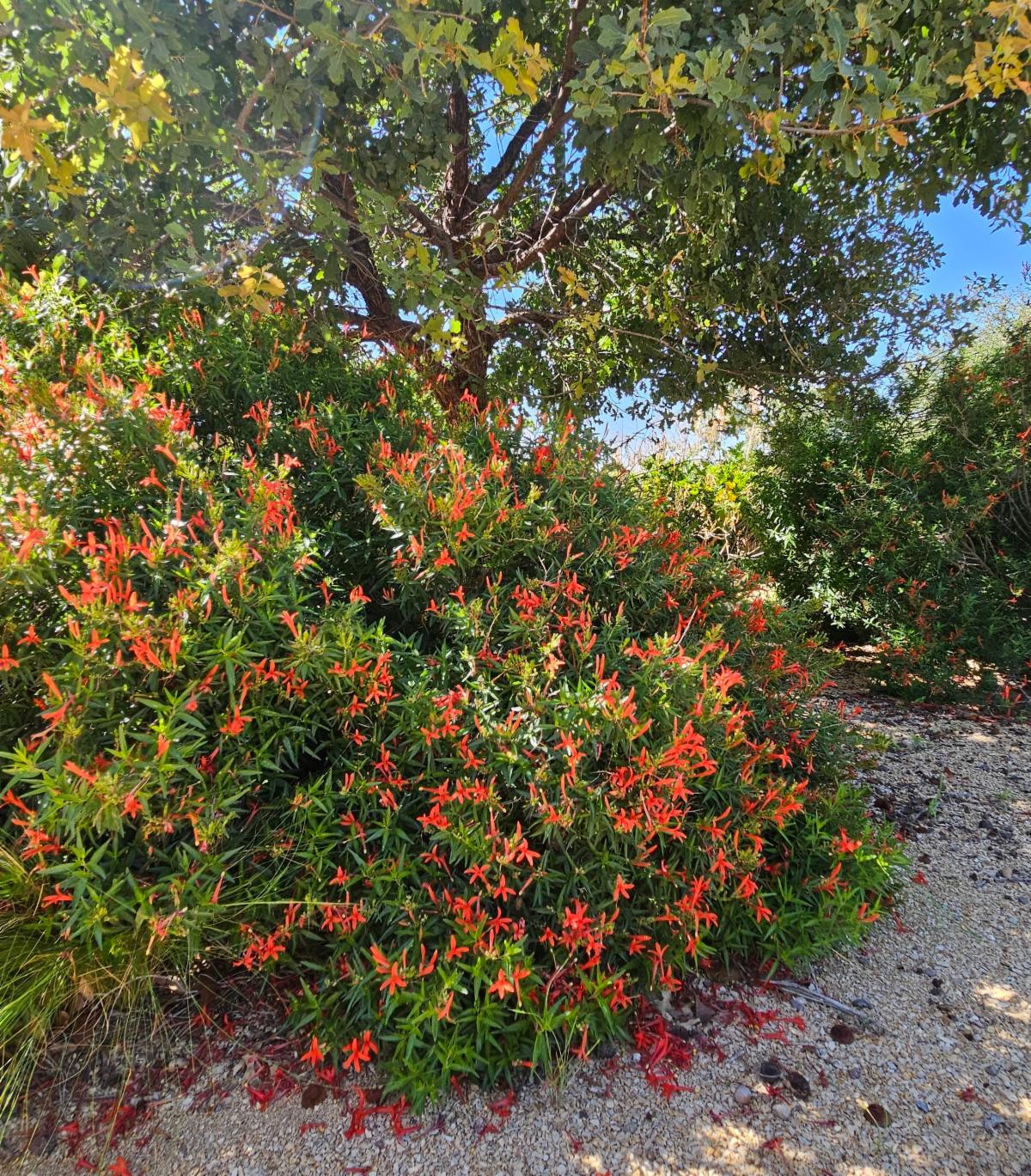
Photo: Hardy, beautiful native plants like Wright’s desert honeysuckle (Anisacanthus quadrifidus) and oak trees (Quercus) found on the Sul Ross State campus are just a few possible species for a rain garden.
| | Geology Capstone Students Practice
Mapping Skills Along Pecos River | | |
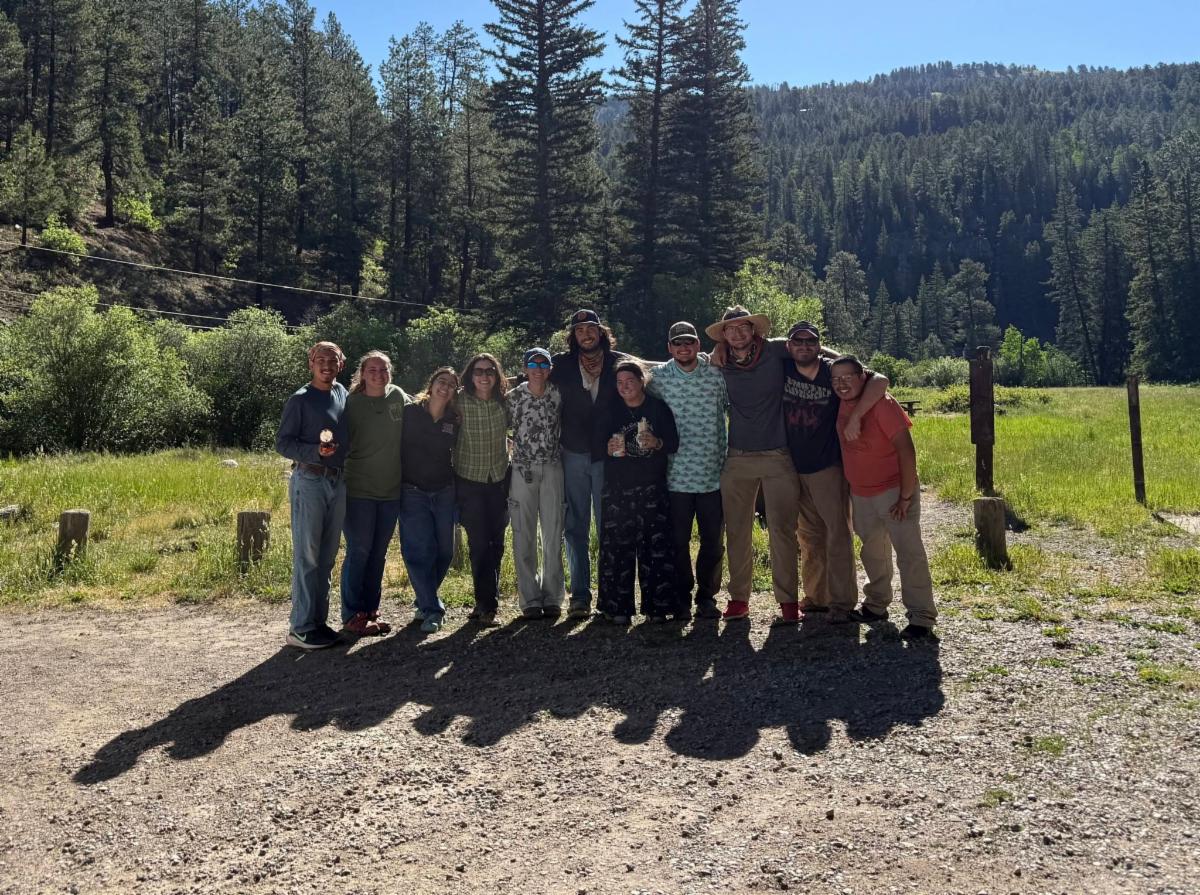
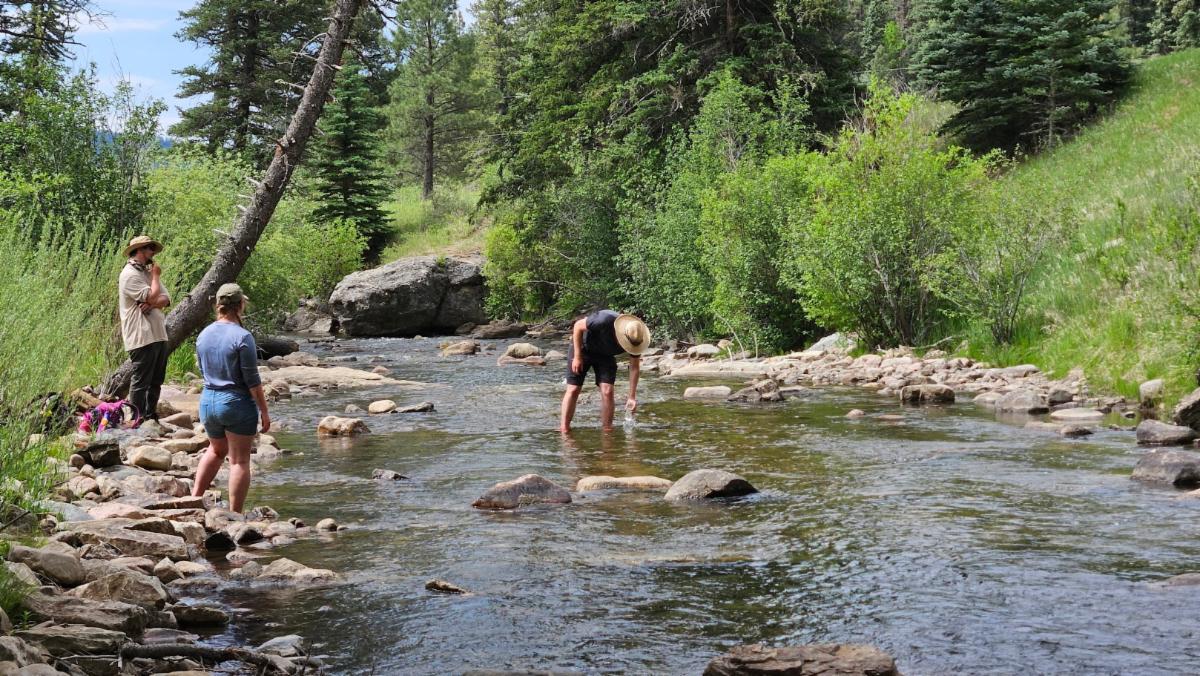
Dr. Jesse Kelsch took her geology students to conduct their capstone field course in northern New Mexico. During 16 days of fieldwork, camping, and traveling, these future professionals and researchers — some of whom will become hydrogeologists and hydrologists — intensively practiced their geologic mapping skills. This intensive study helps them visualize subsurface rock relationships. The geology students also learned about water-budget assessment for a hydrology project on the upper Pecos River (near its headwaters in the Sangre de Cristo Mountains). This is the same Pecos River!
Photo credit Carissa Chambers. Dr. Kelsch and the 2026 students of Sul Ross' GEOL 4601 at Cowles, NM, in the upper Pecos River watershed.
| | Photo credit Jesse Kelsch. Students return to basic principles in their water budget assessment project: How is flow rate measured? These students are assessing how to measure water velocity and water depth with common tools at hand. They compare Pecos River flow rate at multiple sites adjacent to recreational fishing ponds to assess gain and loss from groundwater. Cowles, NM. | | Urbanczyk Shares Crucial Binational
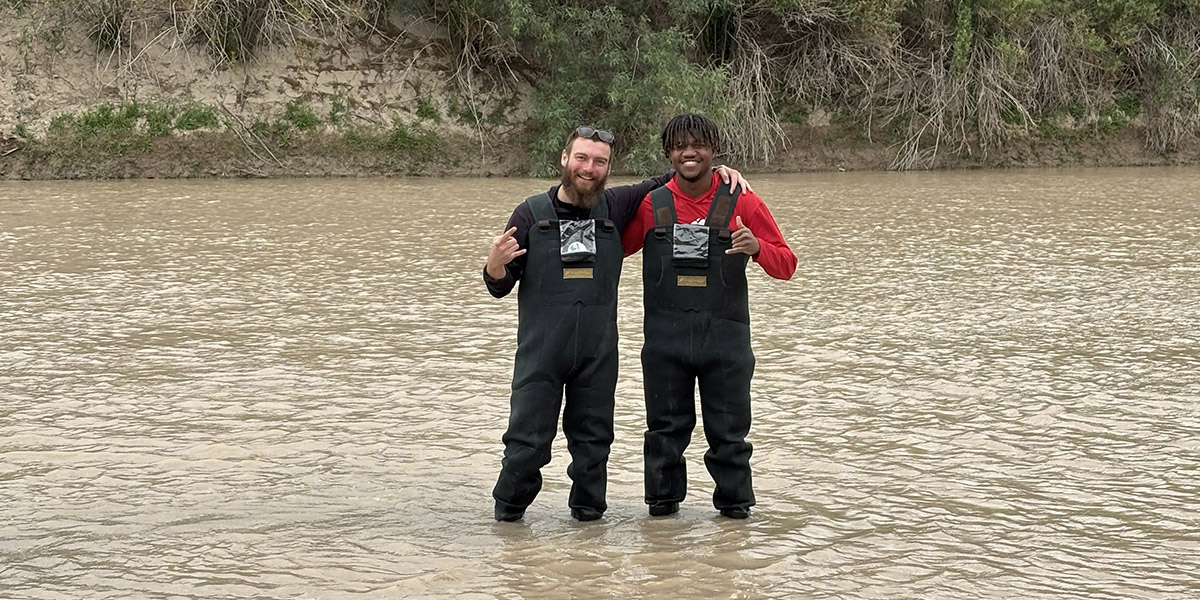
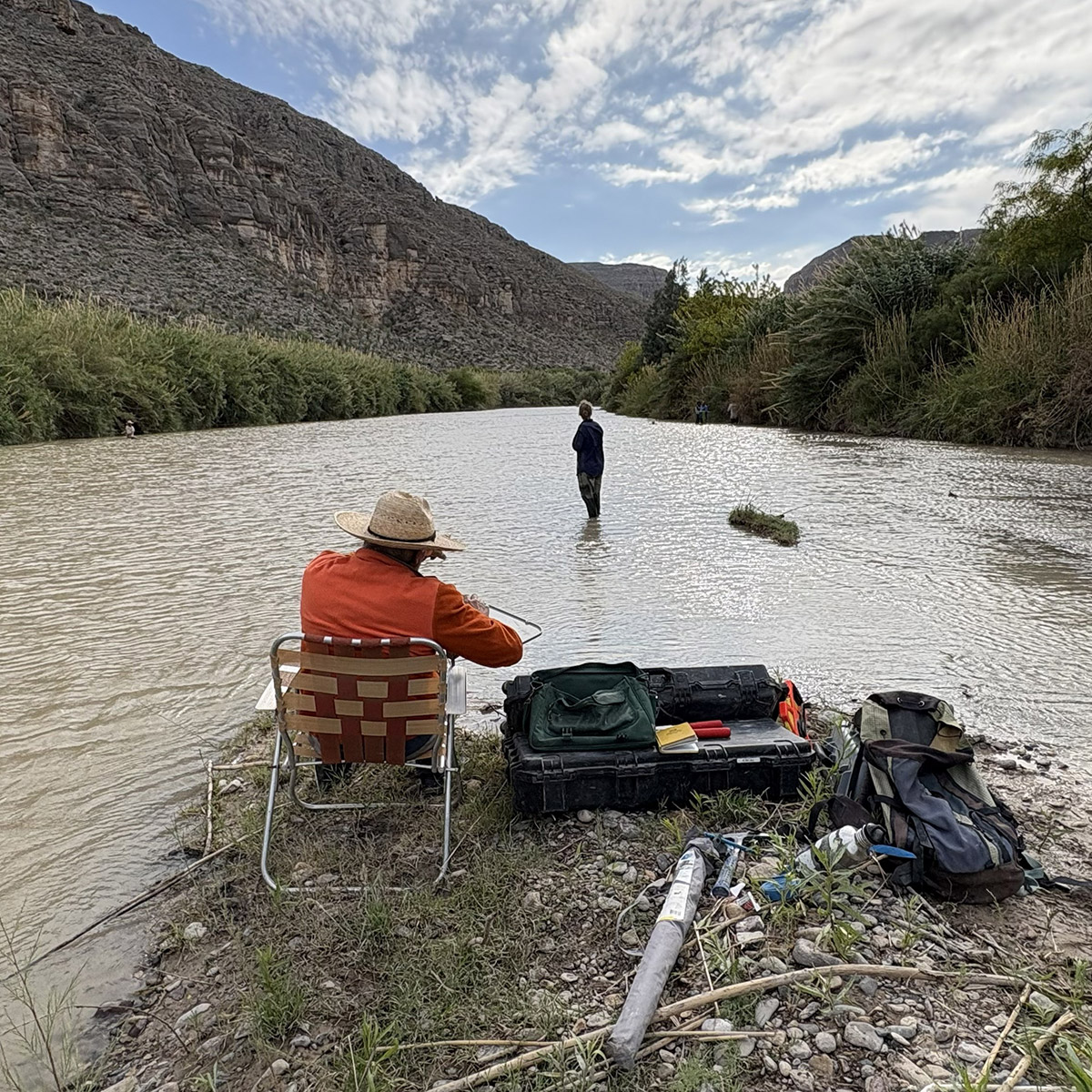
Spring Flow Data at Conference | | Photo: A Texan (left) and a Zimbabwean (right) in the middle of the Rio Grande, Rio Grande Wild and Scenic River, Black Gap Wildlife Management Area, a "cool moment" for two people across the globe to share. | | |
At a groundwater session during the Universities Council on Water Resources meeting in San Antonio (June 8–10), Dr. Kevin Urbanczyk presented a description of the spring flow in the Lower Canyons of the Rio Grande Wild and Scenic River. Dr. Urbanczyk discussed the importance of that water to the groundwater-dependent ecosystem and the binational implications of the flow, considering the chronic low flow that enters the river. Black Gap Wildlife Management Area (WMA) serves as a primary access point to the area.
Earlier in June, Dr. Urbanczyk also participated in a panel discussion about the benefits of having interns work with groundwater conservation districts at the Texas Association of Groundwater Districts.
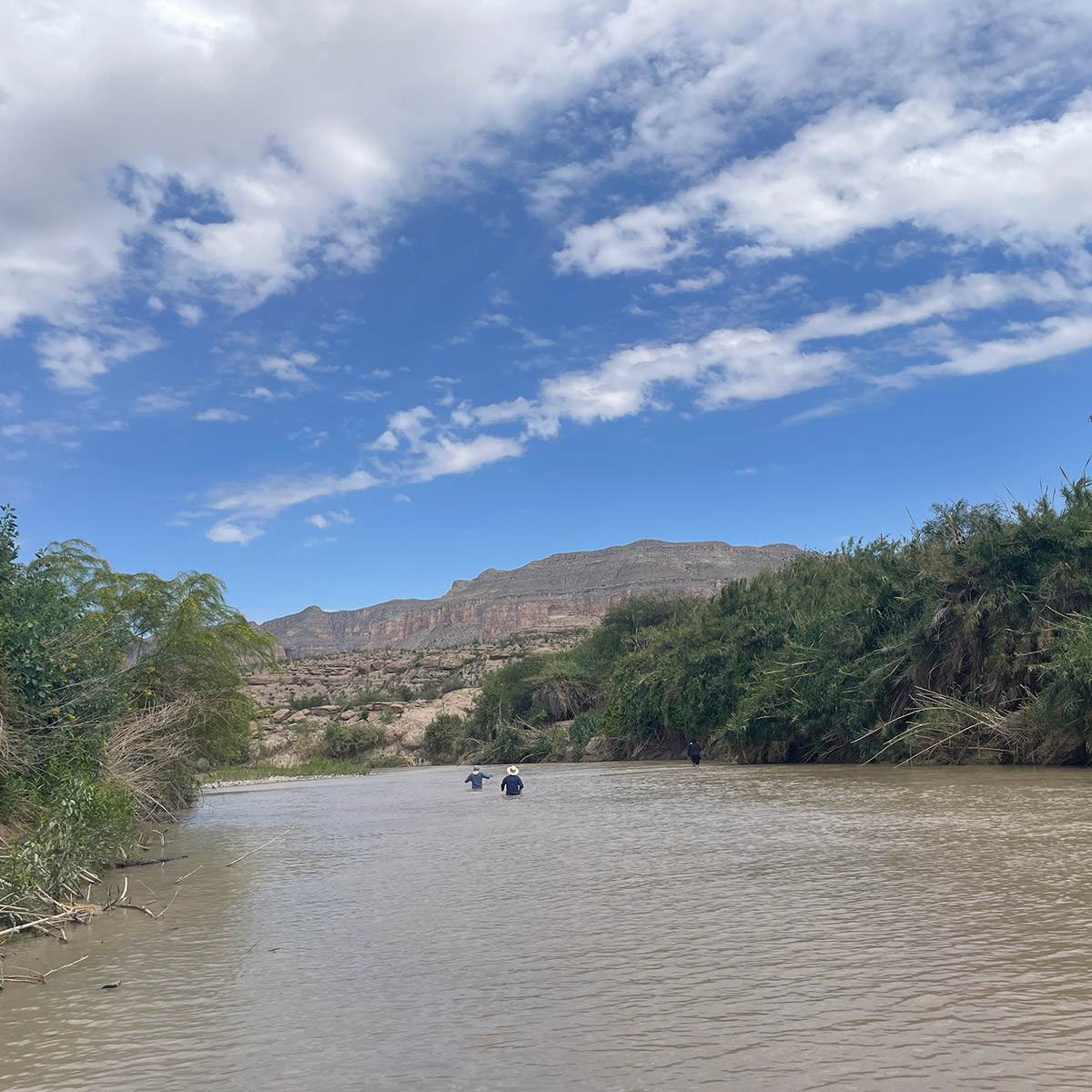
| | Photo: Students measure discharge in the Rio Grande using an Acoustic Doppler Current Profiler (ADCP) and Flowtracker 2 ADV instruments. | | Photo: River science in BGWMA. View upstream of a discharge measurement location. The students carefully tow the ADCP across the river multiple times using a custom cable-way as Dr. Urbanczyk monitors the data on a field laptop. | | August Conference Connects Wildlife and Water Issues | | |
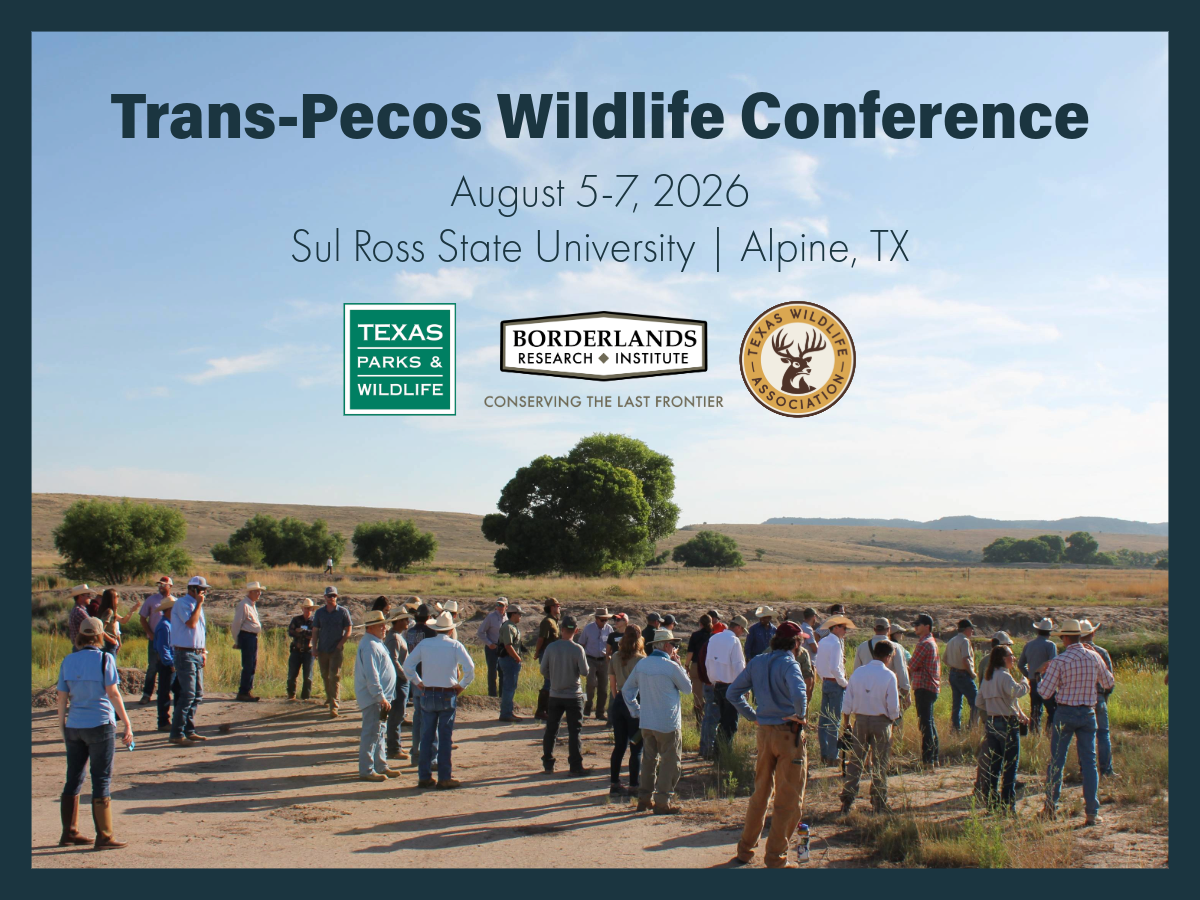
An upcoming wildlife conference offers opportunities to explore West Texas water issues and find new solutions. The Trans-Pecos Wildlife Conference — August 5–7 at Sul Ross State University — coalesces the state’s leading resource stewards from the Borderlands Research Institute, Texas Wildlife Association, and Texas Parks and Wildlife Department.
Water and wildlife are intrinsically linked. From banded vegetation in desert grasslands to the verdant pine forests of sky islands, water shapes every ecosystem in West Texas. Its availability influences where wildlife lives, how habitats function, and how landscapes respond to change.
Water connects every part of these ecosystems, and many of the region's greatest wildlife issues are also water challenges:
• Shifting wetland dynamics present new conditions for migratory waterfowl.
• Border infrastructure impacts riparian corridors along the Rio Grande.
• Invasive plants along the Rio Grande outcompete native species, impact streamflow, and threaten riparian habitat.
• Prolonged drought and brush encroachment are altering watersheds and reducing the quality of habitat for livestock and wildlife such as pronghorn and grassland birds.
The Trans-Pecos Wildlife Conference brings together landowners, wildlife professionals, researchers, and conservationists to explore these issues. Through the latest research and practical management strategies, the conference equips attendees to steward wildlife and their vital resources across the region.
| | Help Shape the Future of Water in West Texas | | |
The Meadows Research Institute for West Texas Water is building something big, and we’re growing the team to match.
Following a landmark launch supported by a $2.75 million commitment from The Meadows Foundation, the institute is expanding its capacity to advance real-world water solutions across Far West Texas.
Now, we’re inviting bold, collaborative leaders to help take the next step.
We are currently hiring for two key roles that will help shape our trajectory from the ground up:
Director, Meadows Research Institute for West Texas Water
This is a rare opportunity to lead a new, mission-driven institute focused on one of the most pressing challenges of our time. The Director will serve as the Institute’s primary ambassador, guiding strategy, building partnerships, advancing research, and securing the resources needed to grow a world-class program rooted in the Trans-Pecos. This role calls for a seasoned leader with deep experience in water or natural resources, and a vision for connecting science, education, and community impact.
Administrative Coordinator
Behind every successful initiative is a strong operational backbone. This position will support day-to-day functions, coordinate communications and logistics, and help ensure the Institute’s work runs smoothly as it scales.
Together, these roles will help build the foundation for a high-impact organization designed to serve communities, landowners, and water managers across the region.
If you’re ready to help shape the future of water in one of the most dynamic and challenging landscapes in Texas, we encourage you to explore these opportunities and apply.
View open positions and apply:
| | Water in the Desert 2026 — Now Available Online | | |
February’s Water in the Desert conference in Alpine brought together landowners, researchers, policymakers, and community leaders for important conversations about the future of water in West Texas. Hosted by the Meadows Research Institute for West Texas Water, the conference highlighted both the challenges facing the region and the collaborative solutions taking shape across the Trans-Pecos.
Now, the ideas and insights shared during the conference are available online. Videos from every conference session — with written session recaps and conference materials — are available free to the public on the Institute’s website.
| | |
“From groundwater challenges to practical solutions, the discussions in Alpine made one thing clear: progress depends on shared knowledge and strong partnerships,” said Billy Tarrant, interim director of the Meadows Research Institute for West Texas Water. “If you joined us, I hope you’ll revisit a few sessions. If you couldn’t attend, this is your chance to catch up.”
You can find the conference material here: Water in the Desert 2026 Conference Archives – Meadows Research Institute
| |
Meet the Team at Meadows Research Institute
for West Texas Water
| | |
The Meadows Research Institute for West Texas Water may be new, but the team behind it brings decades of experience in water science, policy, education, and natural resource management.
While the search continues for a permanent director and an administrative coordinator, institute faculty and staff are already advancing research, expanding partnerships, and laying the foundation for a regional hub focused on water solutions for Far West Texas.
Drawing from disciplines that include geology, aquatic ecology, hydrogeology, public policy, business, and stakeholder engagement, the Meadows Research Institute is uniquely positioned to address the complex water challenges facing the Trans-Pecos region. Together, the team is helping build a collaborative program focused on applied research, workforce development, and technical assistance that serves communities, landowners, and water managers across West Texas.
Get to know the people helping shape the future of water in the desert.
| | Did you enjoy our inaugural newsletter? We’re excited to spread Meadows Research Institute news with you through this e-newsletter and our social media platforms. Please take a moment to share this newsletter or comment on, “like” and share our posts on Facebook, Instagram and YouTube. | | | | |