Summer 2021
Research in Georgia and Beyond
In This Newsletter: 
A focus on evaluation projects: evaluating The Two Georgias Initiative in 11 rural counties and evaluating healthy nutrition standards in Hancock County. Also learn about the EPRC's COVID research and our recent Grant Writing training webinar.
Assessing Progress Toward Health Equity in the Rural South

Cross-site Evaluation of The Two Georgias Evaluation

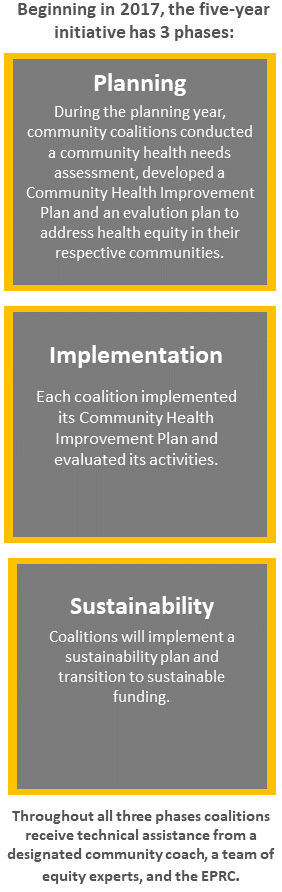
The EPRC is conducting a cross-site evaluation of the Healthcare Georgia Foundation's The Two Georgias Initiative, a place-based grantmaking initiative in which local coalitions work together to achieve greater health equity among rural Georgians. Rural communities suffer significant health disparities relative to urban areas, and also experience internal inequities, particularly by race and poverty level.

Local strategies implemented by the coalitions range widely in their focus, but common priority areas include food access and food security, access to physical activity environments, health care access and utilization, and literacy/education. Additional priorities include economic development, safe and affordable housing, transportation, and community safety.

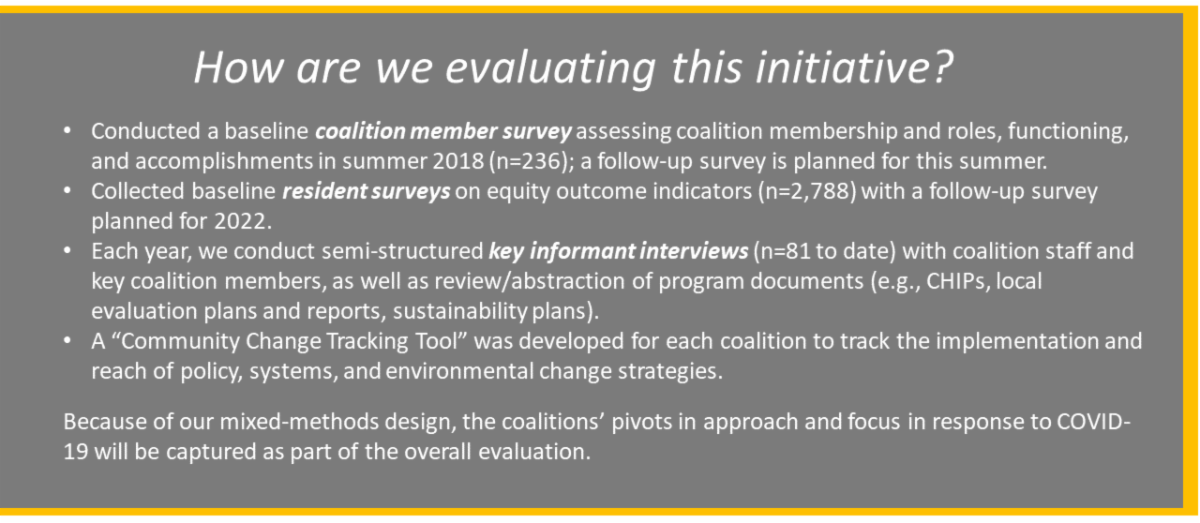
The evaluation uses mixed methods, including key informant interviews, surveys, document review, and a community change tracking tool. Taken together, findings from these data sources will answer evaluation questions on how local coalitions approached equity, strategies implemented, and equity outcomes, and will offer a complete picture of the overall impact of the initiative. Throughout the initiative, we have shared interim reports with the coalitions, the Foundation, and other initiative partners to build capacity, raise awareness, and inform decisions. 
11 Rural Georgia Community
Health Coalitions
Did you know?
We create infographics to make it easier to learn about our research.

Evaluation of Healthy Nutrition Standards in Hancock County, GA
The EPRC is working with the North Central Health District to evaluate their Racial and Ethnic Approaches to Community Health (REACH) grant in Hancock County, GA. REACH is a CDC program that aims to reduce health disparities among racial and ethnic populations with a high burden of chronic disease. Hancock County is a small rural county in central Georgia where more than 70% of its 8,000 residents are Black and resources are limited. In partnership with a local coalition called the Hancock Health Improvement Partnership, REACH staff are implementing strategies that seek to improve nutrition, physical activity, and community-clinical linkages in the county.
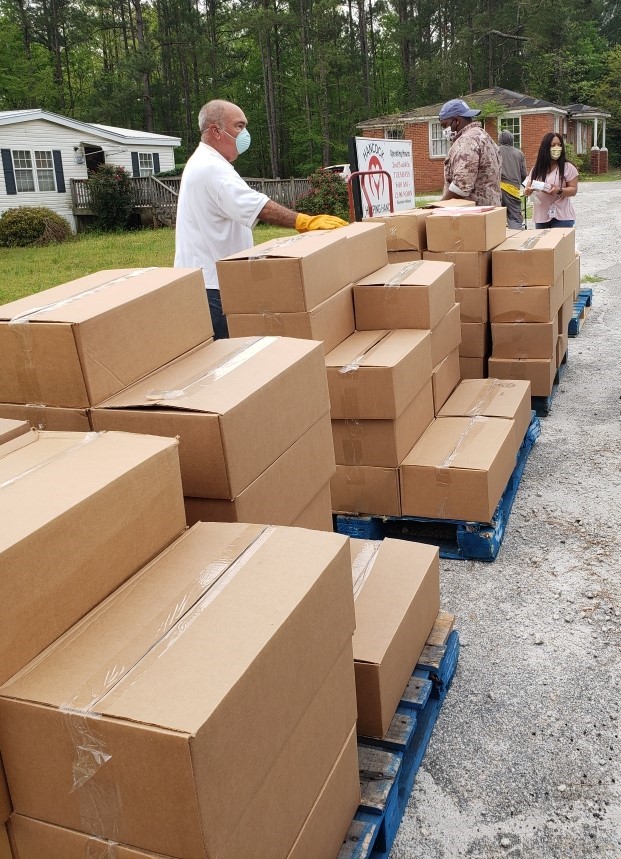
Food pantry volunteers prepare to distribute food boxes to clients
The EPRC is evaluating the implementation of Healthy Nutrition Standards in Hancock County. REACH staff and partners are working with food pantry partners to increase distribution of healthy foods to food pantries and faith-based organizations through adoption of policy, systems, and environmental changes (e.g., procuring large refrigerators to store fresh produce and other perishables, adopting a nutrition policy for orders and donations).

The faith-based work involves implementation of an evidence-based
program in local churches to improve nutrition environments and behaviors. The core evaluation question seeks to understand the extent to which efforts to establish healthy nutrition standards in
Hancock County food pantries and faith-based settings lead to clients and members receiving healthier foods.

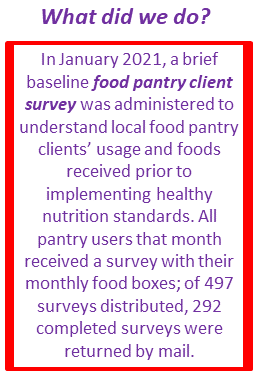
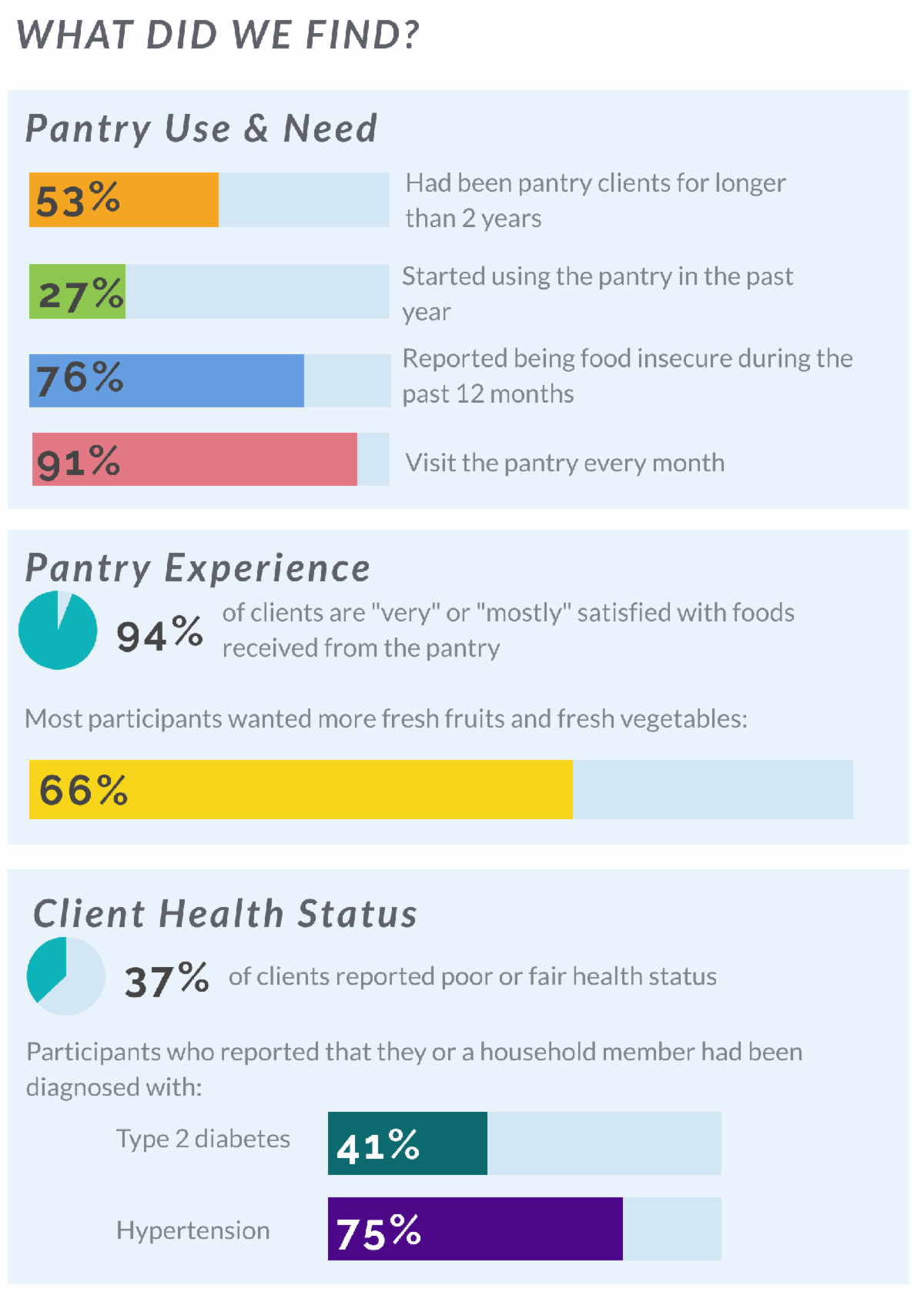
Selected findings are highlighted below and a follow-up survey will determine whether food pantry efforts result in increased distribution of healthy foods and improved client diets and health.
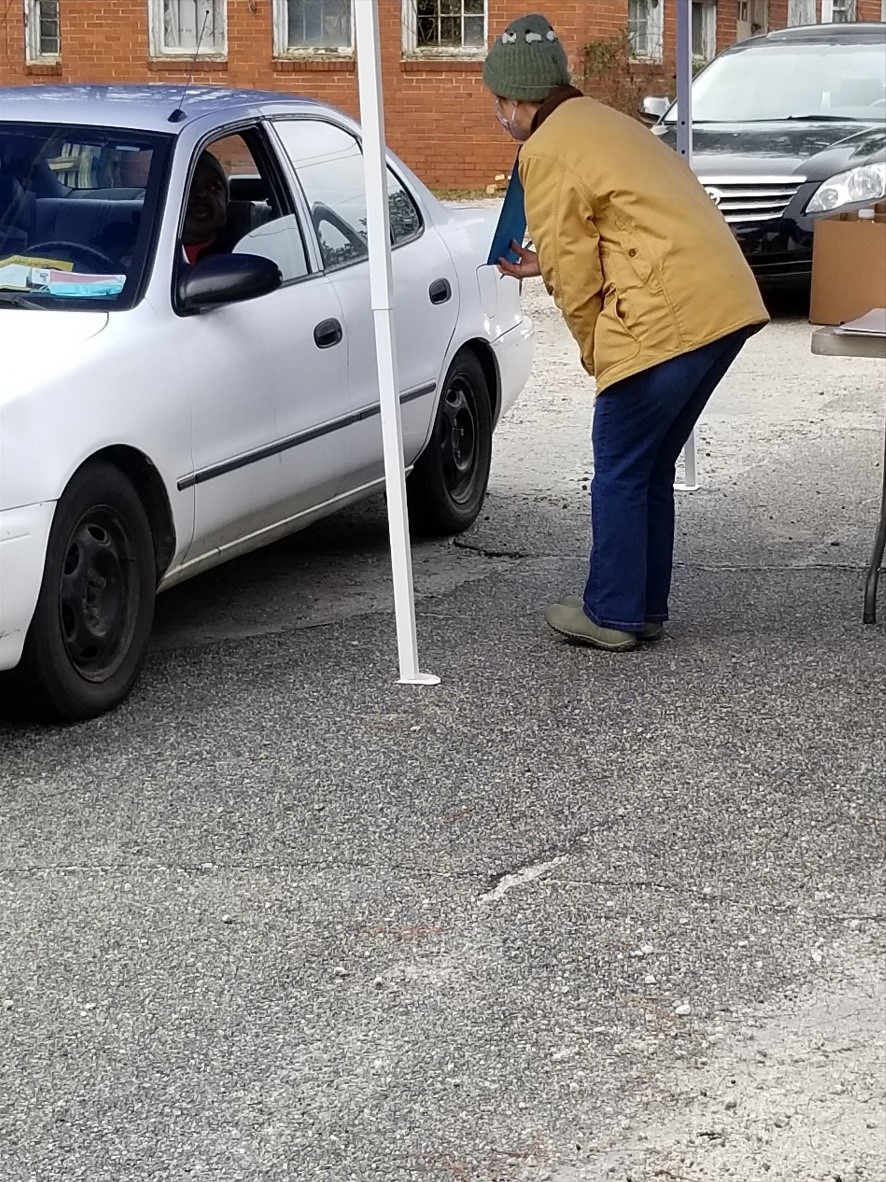
A food pantry volunteer tells a client about the evaluation survey
Learn about our COVID research in SW Georgia
EPRC Training Webinars
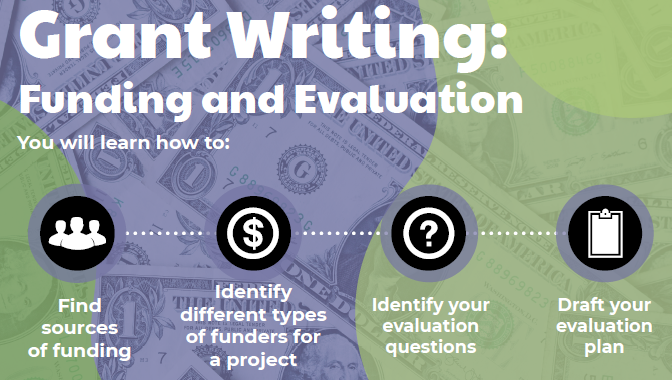
On April 23rd, the EPRC hosted a second training webinar on grant writing, focused specifically on finding funding and evaluation. Twenty-six people attended, most of whom had little to no experience writing a grant proposal before attending the training. After attending, over half of them reported an increased ability to meet the learning objectives: finding sources of funding, identifying different types of funders, identifying evaluation questions, and drafting an evaluation plan. You can find the training materials on the EPRC website here. 
‌
JOIN THE CONVERSATION

Follow us on social media to get all the latest EPRC updates!