Our newsletter sharing PRISSEM's latest efforts to empower HBCU STEM excellence and reminders about important National Science Foundation funding deadlines. 

PRISSEM IS HERE TO SUPPORT YOU

Our last newsletter started with congratulations on the beginning of the Spring semester. And just like that, it's already time wish you a great end to the Spring semester and a happy graduation season. PRISSEM is excited to support you for the remainder of the semester and the upcoming grant writing summer season. We’re sharing timely updates and resources to keep you prepared.


Please continue to be patient if you submitted a proposal to NSF and are waiting to hear about the outcome. While Congress approved a budget for NSF for FY 2026, it has yet to clear the process at OMB as of the date of this newsletter. Funding decisions will be delayed until NSF has its final budget and program directors gain access to funds.


While it seems that many of the latest funding opportunities at NSF focus on AI and Quantum science, please know that the research directorates (for the most part) still have their established programs that fund basic science and accept proposals. We encourage you to submit proposals to programs aligned with YOUR interests and we are available to provide guidance.


We now turn our attention to the FY 2027 budget. In response to the president’s request for significant reductions to science agencies and cuts of over 50% to NSF's budget, NSF has proposed the following in its FY 2027 budget request to Congress:


In FY 2027, NSF will close-out the Directorate for Social, Behavioral, and Economic Sciences. Continuing grants that align with Administration priorities, such as in behavioral and cognitive science, and all impacted employees will be transferred to other parts of the agency. The National Center for Science and Engineering Statistics will operate independently of the directorates and continue to be supported through the R&RA appropriation. 


Please know that Congress has the final say in this, and your advocacy matters.

PRISSEM CELEBRATES

Congratulations to all HBCU faculty on your contributions to prepare another group of graduates to go into the world of graduate or professional school or the workforce. We salute the Class of 2026 and wish them the very best!

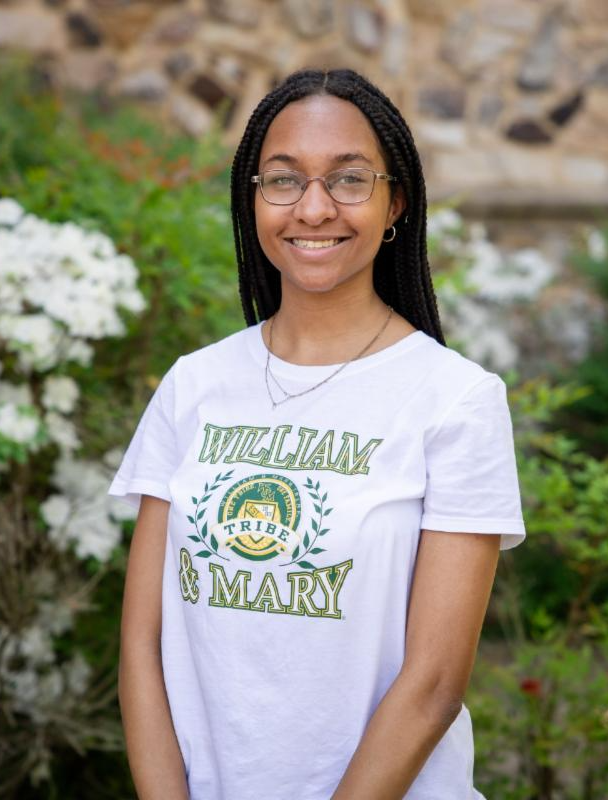
Yes, it’s a family affair! PRISSEM congratulates Sienna Rankins on a successful freshman year as a chemistry major at the College of WIlliam and Mary. Sienna assists us with administrative tasks and is instrumental in bringing this newsletter to you.

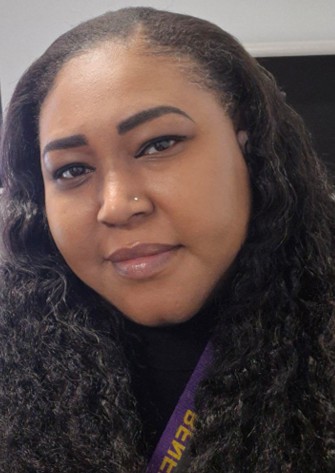
Congratulations to Toni Walters, UDC Assistant Professor of Speech-Language Pathology, on successfully defending her dissertation in April! Toni is a regular member of PRISSEM's writing sessions and our community of HBCU writers joins us in congratulating soon-to-be Dr. Walters! 👏🏽

Meet the HBCU Thrive Fellows

PRISSEM is proud to support a cohort of fifteen HBCU Thrive Fellows from fourteen HBCUs as they develop proposals to the HBCU Excellence in Research program. We are introducing you to three of the fellows in each newsletter in no particular order. Today, please meet: 

Dr. Bethany N. Smith is an Assistant Professor of Biology at Benedict College with expertise in genetics, oncology, and endocrine-related cancers. She has nearly 15 years of experience in basic and translational research spanning nearly 15 years and has served as PI on federally funded projects and produced data used to execute a Phase 2 clinical trial. Additionally, she has contributed to the development of 3 patient-directed patents. Dr. Smith earned her B.S. in Biology from South Carolina State Univ, M.S. in Biology from Delaware State Univ., and Ph.D. in Biological Sciences from Clark Atlanta Univ. She is deeply committed to undergraduate student-centered teaching while utilizing cutting-edge tools, mentoring students, and integrating research into the classroom.

Dr. Yang Liu is a tenure-track Assistant Professor in the Department of Computer Information Systems at North Carolina Central University, where he also holds the title of Duke Power Endowed Professor at the School of Business. His research focuses on artificial intelligence, machine learning, and natural language processing, with applications in public health surveillance, social media mining, and responsible AI. He received a B.S. in Electrical Engineering in 2018 and an M.S. and Ph.D. in Computer Science from North Carolina A&T State University in 2020 and 2024, respectively.

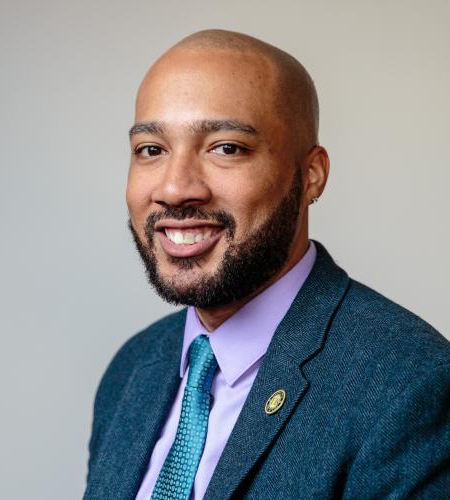
Dr. Davis Dixon is an Assistant Professor of Psychology at Howard University. He specializes in Developmental Psychology and focuses primarily on the educational experiences of Black populations. The overarching question that guides his work is “How can we create safe and welcoming environments for all those involved in the educational enterprise?” To answer this question, he emphasizes the importance of Belonging, Identity, and Culture. Dr. Dixon’s career has spanned both academia and the nonprofit world. He believes in conducting translatable, easy-to-digest, and impactful research across various audiences.

Faculty Opportunities

Time is running out to submit to the AAC&U Journal of STEM Leadership and Broadening Participation which has a call for empirical studies, qualitative analyses, reflective essays, and first-person accounts that focus on the disproportionately negative impacts of recent funding, policy, and priority disruptions on HBCUs and the manners in which HBCU leaders have addressed and overcome them. Please consider contributing to the journal and distribute the call widely.

A professor at Texas Southern University seeks a Python consultant for his grant. If you know of a student or someone interested, please share this link.

In the absence of the solicitation for the HBCU-UP program, which is being revised, faculty have the option to submit unsolicited proposals to the program. Always consult the HBCU-UP program director before pursuing unsolicited proposals. Send your one pager to HBCU_UP@nsf.gov. PRISSEM’s guidance for preparing a one-pager is available here.

HBCU faculty interested in obtaining equipment for research and education can also pursue an Equipment Proposal through the HBCU-UP program. Please follow the guidance in NSF 24-1. This document also lists a number of Other Types of Proposals. Always consult the HBCU-UP program directors when pursuing such proposals.

Advocacy

In light of the president’s 2027 budget request, we continue to urge you to continue to advocate for STEM research and education, with particular attention to the budget requests for funding agencies, notably NSF. Be a part of the movement that will save the NSF Social, Behavioral, and Economics Directorate and restore funding for scientific research. It’s as simple as calling or writing to your congressional representative. It is Congress that ultimately decides what the budget for each agency will look like. Congress’s work on the 2027 budget will begin this summer.


Some organizations have been at the forefront of giving us tools to do so. The American Physical Society has an "Action Center" webpage open to all with helpful information on what we can do. The Save NSF coalition has an Action Toolkit. Check your professional societies and associations for similar calls and MAKE YOUR VOICE heard.


When considering advocacy related to higher education, please be sure to follow all institutional guidelines and understand your options for engagement as a private citizen.

What we're reading...

Claudia recommends that you read the president’s Budget Request and NSF’s Budget Request to Congress. NSF’s 2026-2030 Strategic plan is also an interesting read.


You may also want to learn more about assertions that the federal government utilized ChatGPT to determine whether or not grant awards were DEI focused before cutting existing grants to HBCUs.

In the Future

Upcoming Deadlines

The deadlines appear as they were at the time this newsletter was distributed. Please visit the posted solicitation links below to remain informed of potential changes and abide by all institutional policies before pursuing any opportunity.

Accepted anytime

NSF STEM K-12 - NSF 25-545 


April 14, 2026: Planning Track 1 proposals only  

Improving Undergraduate STEM Education/Professional Formation of Engineers: Revolutionizing Engineering Departments - NSF 24-564 

**All other proposals are due on September 8, 2026**


May 27, 2026: For Planning Proposals

November 18, 2026: For Development Proposals

National Science Foundation Fostering Interdisciplinary Networks to Develop Emergent and Responsive Solutions Foundry - NSF 26-507


July 9, 2026: Letter of Intent (Required)

HBCU Excellence in Research - NSF 23-598

Full proposals are due October 20, 2026


July 21, 2026

CyberAICorps Scholarship for Service - NSF 26-503


Sep 10, 2026

Computer and Information Science and Engineering: Future Computing Research (Future CoRe) - NSF 25-543 

**Note that the solicitation includes the Computer Education Program**


Ready to submit? Contact us to learn more about how we can help.

Upcoming PRISSEM Workshops

April 22, 2026 Morgan State University webinar on Navigating the Restructured National Science Foundation: Opportunities for Morgan State University Faculty.


April 29, 2026, in person 1/2-day workshop at Prairie View A&M University: College of Business Grant Writing Day.


We also look forward to a Writing Workshop with the HBCU THRIVE Fellows, May 17-20, 2026. The workshop will focus on writing a proposal to the HBCU Excellence in Research program.


Please let us know if you would like PRISSEM to give a talk to your STEM faculty about NSF opportunities, grant writing, and other related topics during the upcoming year. 

Visit the PRISSEM Website for more information.

ABOUT US | CONTACT US | www.prissem.com

LinkedIn