|
Weekly Newsletter
Friday, Feb. 27, 2026
| |
Thank you for subscribing to Suncoast Searchlight's newsletter.
We’re here to keep you informed on the local issues that matter most. Each week, we share our latest in-depth reporting, along with the most important stories from around the region, so you stay connected and up to date with what’s happening in your community.
Enjoying this newsletter thanks to a friend? Subscribe here to get it in your inbox. 📬
| | NEW FROM SUNCOAST SEARCHLIGHT & BRADENTON HERALD: | | |
'ON EDGE': POSSIBLE CITIZENSHIP VERIFICATION HAS MANATEE COUNTY NONPROFITS SEARCHING FOR ANSWERS
Local nonprofits fear a provision under consideration in Manatee County to prohibit them from serving undocumented immigrants could jeopardize millions of dollars in funding, causing gaps in critical family services.
Manatee County commissioners are expected to consider a plan to update funding agreements with nonprofits in response to a federal law that bars undocumented immigrants from receiving state and local benefits.
Nonprofits that don’t comply would lose their county funding, which goes toward programs like early childhood development, adult shelters, dental services, sexual assault advocacy and drug addiction recovery.
Reviving a proposal first pitched in September, commissioners contend taxpayer dollars are paying for services for those living in the country without authorization, but haven’t outlined any details about how nonprofits are expected to comply or whether they'll receive additional resources to do so.
Suncoast Searchlight and the Bradenton Herald spoke to leaders at five community nonprofits who all expressed concern and frustration with the proposal. Three asked to remain anonymous due to the political stakes.
They fear the ambiguity of the provision means that without additional support, they won’t have resources to verify the immigration status of everyone they serve – an extra step that could delay crucial help from reaching those in need.
If approved, the updated language would impact at least 86 organizations that receive more than $26 million annually from Manatee County Government.
| NEW FROM SUNCOAST SEARCHLIGHT: | |
WINDOW CLOSING TO ROLL BACK FLORIDA SB 180 HOME RULE LIMITS
The Florida Legislature has just days in the current session to kill controversial provisions in a state law limiting local jurisdictions from regulating growth.
Senate Bill 180, which passed with nearly unanimous approval last year, limits cities and counties from advancing any measures deemed more “burdensome or restrictive” on development in the wake of major storms. The law spurred backlash from local governments that had spent months — in some cases years — crafting planning policies, only to see them struck down by the state.
“When a local government doesn't have the ability to respond to things like hurricanes in a meaningful way, we just continue to make the same mistakes,” said Kim Dinkins, the Policy and Planning Director of 1000 Friends of Florida, an advocacy organization focusing on growth management and conservation that has sought to reverse parts of SB 180.
In Manatee County, where voters elected a slate of commissioners in 2024 who ran on a platform of curbing sprawl, SB 180 had immediate impacts. When commissioners advanced measures to restore wetlands protections and raise impact fees on developers, the Florida Department of Commerce threatened litigation.
Citing fears that Gov. Ron DeSantis would remove them from office, commissioners backed off. A similar fight played out in Orange County, which joined a lawsuit alongside Manatee, Fort Lauderdale, Naples and other local jurisdictions challenging the law. The issue has spurred blowback across civil society groups, including environmental and conservation-focused organizations, good government groups and libertarian activists.
Now, the state Senate has passed a bill largely reversing that preemption on local planning. But the Florida House of Representatives has not moved on a companion bill — with the end of the legislative session looming.
Dinkins spoke with Suncoast Searchlight this week about the group’s efforts to overturn aspects of SB 180 and how the law has impacted local governments.
| | NEW FROM SUNCOAST SEARCHLIGHT: | | |
FEELING OVERWHELMED BY MISINFORMATION ONLINE? SARASOTA PANEL SAYS SLOW DOWN
An Internet scammer posing as Taylor Swift to sell cookware sets. An audio clip of what appears to be then-President Joe Biden telling Democrats not to vote in the New Hampshire primary. Photos of President Donald Trump tussling with law enforcement during a court arraignment.
All went viral. None were real.
In an era of AI-generated deepfakes and algorithm-driven feeds, distinguishing fact from fiction has grown more difficult — and more important — than ever.
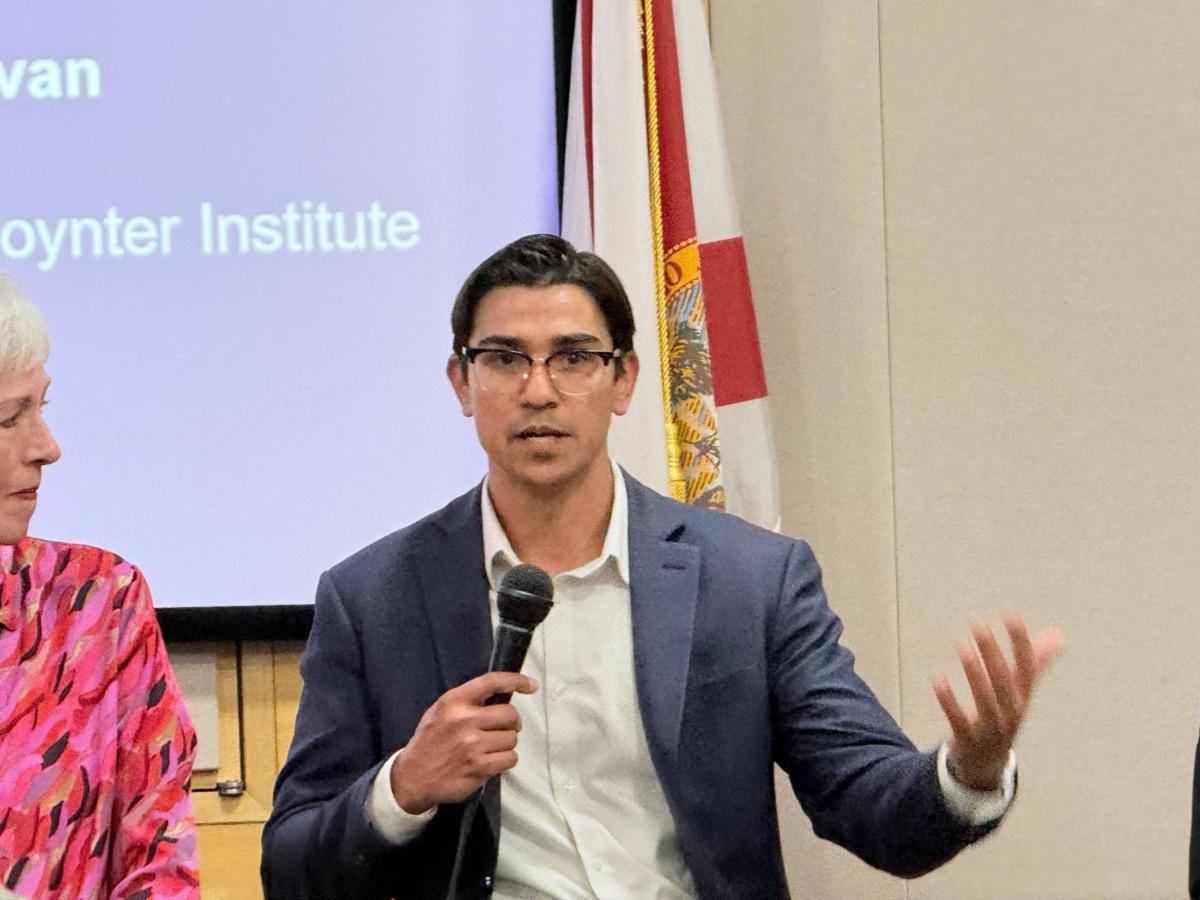
That reality drew dozens of residents to Selby Library last week for a community forum hosted by Suncoast Searchlight called “Asking Questions in a Noisy World.” The event focused on helping residents navigate an increasingly confusing digital information landscape.
For the first time, more Americans last year reported receiving their news from platforms like Facebook, YouTube and TikTok rather than from television broadcasts or traditional news websites. In an environment designed to capture attention and provoke emotion, half-truths often travel faster than corrections — and trust in journalism has fallen to historic lows.
“Each individual person now has the burden of saying: ‘Is that true? How do I know that’s true?’ And that’s exhausting and sometimes impossible,” said Joy Mayer, founder of Trusting News, a Sarasota-based national nonprofit organization that helps journalists earn trust with their audiences.
Mayer was joined on the panel by Vilia Johnson, co-president of the League of Women Voters of Sarasota County and Alex Mahadevan, director of MediaWise at the Poynter Institute, a global nonprofit journalism training and research organization based in St. Petersburg.
Suncoast Searchlight Investigative Editor Josh Salman moderated the discussion, which was the fourth in the newsroom’s ongoing community engagement series sponsored by Gulf Coast Community Foundation. The series is part of the entities’ shared commitment to strengthen civic engagement and foster dialogue around issues shaping the region.
| |
SUNCOAST SEARCHLIGHT HIRES VETERAN INVESTIGATIVE JOURNALIST JOHN DUNBAR
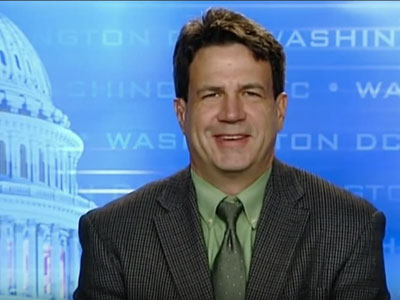
Suncoast Searchlight is pleased to announce that veteran investigative journalist John Dunbar will join the newsroom as its newest watchdog/investigative reporter.
Dunbar brings more than 25 years of experience as an investigative reporter and editor, including 15 years at the nonprofit, award-winning Center for Public Integrity in Washington, D.C., where he ultimately served as CEO. During his tenure, the organization won numerous national honors, including a Pulitzer Prize for its work on the Panama Papers project.
Over the course of his career, Dunbar has written, edited and managed major projects on the influence of money in politics, on financial regulation and on government accountability. Most recently, Dunbar served as executive editor of the Daytona Beach News-Journal, where he led statewide investigative efforts and newsroom training initiatives.
Earlier in his career, he worked at Bloomberg Industry Group, The Associated Press in Washington, D.C., and, closer to home, The Florida Times-Union.
In a statement, Dunbar reflected on the role of nonprofit journalism in a time of political division and shrinking local newsrooms: "I don't know that there is a perfect journalism model out there, but I'm pretty certain ... the staff and the board at Suncoast Searchlight have got something special going on here, and I am incredibly honored to be a part of it."
| | |
Suncoast Searchlight partners with Gigafact to produce weekly fact briefs — concise, 150-word news stories that take real claims circulating online and fact check them. Each brief offers a direct “yes” or “no” answer to the question or claim, followed by a clear explanation backed up by credible, high-quality sources.
THIS WEEK'S FACT BRIEFS:
| | HERE'S WHAT ELSE WE RECOMMEND READING THIS WEEK | | |
FOR SARASOTA'S PROPOSED PERFORMING ARTS CENTER, PARKING REMAINS A PUZZLE
FROM WSLR
Next week, proponents of a new performing arts center will present a changed and scaled-down plan to the Sarasota City Commission. Parking — all paid for by the city — may not be at the center of attention, but it should be, as Gretchen Cochran reports. A consulting firm calculated seven years ago that to serve the new SPAC (short for Sarasota Performing Arts Center), 1,400 parking spaces would be needed and could be satisfied with a parking structure, 112 spots from the cultural district and 870 spaces throughout the Rosemary District. The new plan proposes two parking garages with 750 spaces total, one three stories and one four stories, sitting south of the new auditorium. They would be used by park visitors as well as SPAC patrons.
READ/HEAR THE STORY HERE
MARINE EXPLORER AND CONSERVATIONIST HAD LED A LIFE OF DARING
FROM SARASOTA OBSERVER
After a life spent in the ocean, Osprey resident Scott Cassell knows a lot about marine animals. For instance, he knows it's not a good idea to use an underwater camera that can fit inside a shark's mouth. While filming for Discovery Channel's "Shark Week," in 2011, he was leaning out of the shark cage, close enough to see the tiny tooth-like denticles on the skin of the female great white sharks. But male great whites are much more aggressive than females, notes Cassell. As he looked down, he saw something white accelerating vertically towards him. "I couldn't get back in the cage fast enough because I'd gone so far out, my scuba tank on my back kind of got stuck on top of the bar," he said.
READ THE STORY HERE
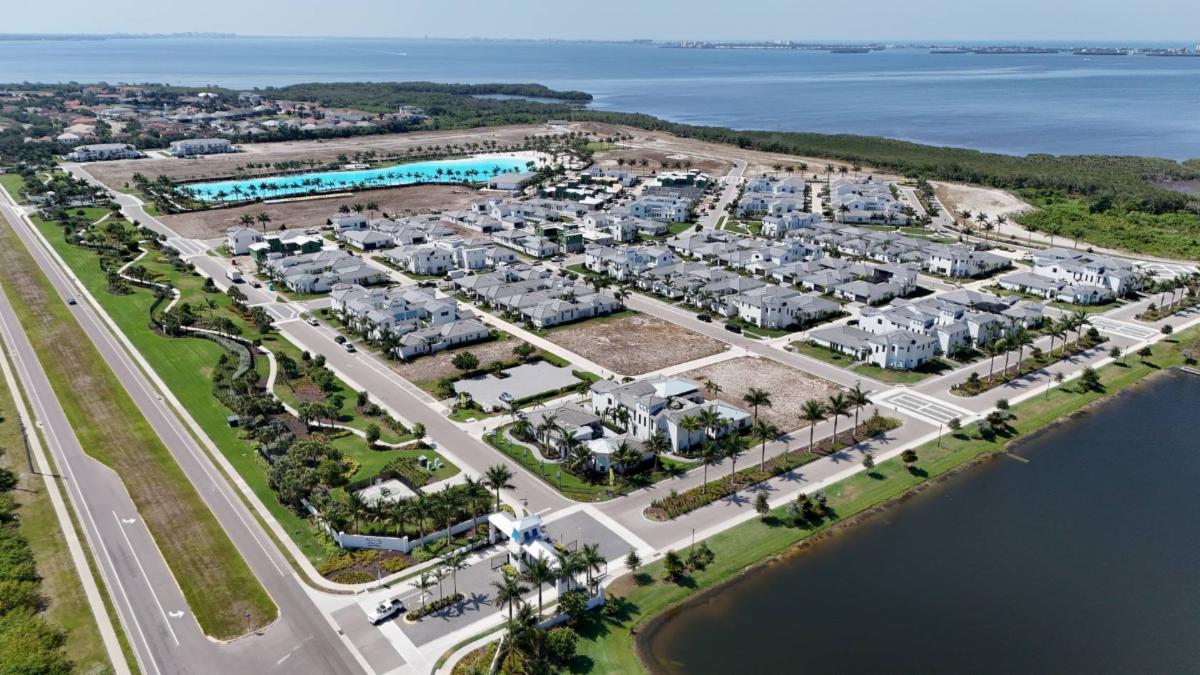
WHERE WOULD MANATEE COUNTY PORT FOR CRUISE SHIPS GO? TAKE A CLOSER LOOK
FROM BRADENTON HERALD
On a sunny February morning, the blue-green flats of Terra Ceia Aquatic Preserve are calm, clear and shimmering with light, waters like stained glass encircling a small island that locals call “Paradise.” From above, the island is a splotch of green brush and white sand just south of Interstate 275. From ground level, it’s a world of its own. Tiny crabs skitter the shoreline. Oysters dangle on mangrove roots. Seabirds dive shallow waters inhabited by fish and sea turtles. Despite its proximity to the highway, this pocket of Tampa Bay has a quiet calm that makes it feel removed from urban Florida — an atmosphere that attracts wildlife and nature-seekers. But some worry that could soon change.
READ THE STORY HERE
DID YOU KNOW YOU CAN USE YOUR LIBRARY CARD TO GET FREE ACCESS TO LOCAL CULTURAL ATTRACTIONS?
FROM SARASOTA MAGAZINE
What can’t your library card do? You can use it to check out books, ebooks, music and movies, of course; use computers, printers and copiers for free; “borrow” a mobile hotspot to get online; and attend free programs and classes. And now, thanks to Sarasota County Libraries and Historical Resources’ new “Culture Pass” program, adult residents with a library card can use it to get free or discounted access to local theaters, museums and more — Asolo Repertory Theatre, the Bishop Museum of Science and Nature, Urbanite Theatre, Big Cat Habitat, Imagine Museum, the Museum of Fine Arts in St. Petersburg, Azara Ballet, Peace River Botanical and Sculpture Gardens and the Van Wezel Performing Arts Hall, with more partners to come in the future.
READ THE STORY HERE
HUNDREDS SPEAK OUT AGAINST A PROPOSED USF SARASOTA-MANATEE TRANSFER TO NEW COLLEGE
FROM WUSF
Around 300 alumni, students and business owners gathered at the University of South Florida Sarasota-Manatee campus Wednesday night to oppose plans to give the campus to New College of Florida. They say there's still time to save the campus. Gov. Ron DeSantis placed the transfer in his budget proposal and said he wants to hand over the campus by July 1. This week, a House subcommittee advanced a bill that would transfer the 32-acre campus and $53 million in dorm debt to New College. The Senate takes it up Monday.
READ THE STORY HERE
GRAND JURY RETURNS PRESENTMENT IN HOPE FLORIDA INVESTIGATION
FROM FLORIDA TRIDENT
A grand jury investigating the diversion of millions of dollars in public funds to the Hope Florida Foundation has produced a presentment that remains confidential while a legal challenge plays out, the Florida Trident has learned through official responses to public records requests. A presentment is a report by a grand jury that is intended to publicly express its views of governmental misconduct, inefficiency or misuse of public funds when that conduct falls short of a chargeable crime as long as it arises from a lawful inquiry the grand jury was empowered to conduct.
READ THE STORY HERE
STEALTH TAX PROPOSAL SURFACES AS SARASOTA COUNTY SPENDING OUTPACES REVENUE
FROM FLORIDA TRIDENT
Sarasota County staff is preparing to float new tax options at next week’s budget workshop before the County Commission — including one tax that would not appear on property tax bills — after internal budget documents show spending growth is forcing the county to consider dipping into reserves, shifting money between funds, and reducing services. The Feb. 26 workshop materials outline two major revenue options: a Public Service Tax (PST) that could impose up to a 10% tax on electricity, gas, and water bills, and the creation of separate Municipal Services Tax Units (MSTUs) for the Sheriff and libraries.
READ THE STORY HERE
BARANCIK FOUNDATION AWARDS NEARLY $11.3 MILLION TO COMMUNITY NONPROFITS
FROM SARASOTA HERALD-TRIBUNE
When Charles and Margery Barancik established a private family foundation in 2014, they said their goal was to make a meaningful difference in the lives of others. Their focus was education, humanitarian causes, arts and culture, the environment, and medical research. This week the Charles & Margery Barancik Foundation reached a new milestone, announcing $11,285,000 in new community grants to surpass more than $202 million of philanthropy in 12 years. The foundation's history of support for nonprofits serving Sarasota, Manatee, and DeSoto counties includes an $11.8 million round of grants in February 2024 and $8.1 million in July 2025.
READ THE STORY HERE
AS FLORIDA PUSHES SCHOOLS TO QUASH PROTESTS, STUDENTS FACE MIX OF PUNISHMENTS
FROM TAMPA BAY TIMES
Liam Fisher hadn’t been thrilled with the nation’s direction. “I don’t particularly like (that) our country is sending untrained people, arming them, giving them money to kidnap people, murder them,” said Fisher, 17, referring to recent federal immigration enforcement activities in Minnesota. So in early February, the St. Petersburg High School senior and his friends decided to stage a protest during classes. “We wanted it to be heard,” Fisher said. He was later cited for a major campus disruption on par with making a bomb threat, receiving a three-day out-of-school suspension — a punishment his family immediately challenged.
READ THE STORY HERE
DECISION REVERSAL? PINE VIEW STUDENT ARTICLES PUBISHED
FROM THE DAILY SUN
Nearly a month after Pine View School's principal stopped two student news stories from being published, the decision has been reversed. Students and staff are unsure of the reason. The district denies a rejection ever occurred. But according to a student First Amendment advocacy nonprofit, their letter to the Sarasota County Schools seems to have influenced the reversal. The two articles, a story and an editorial, were being withheld from publication without clear reason from Principal Stephen Covert until two weeks ago.
READ THE STORY HERE
| | |
DID YOU MISS OUR PREVIOUS NEWSLETTER?
HERE'S WHAT WE SHARED:
| | |
HOW NEW COLLEGE TURNED HOUSING DOLLARS INTO A FUND FOR ATHLETICS
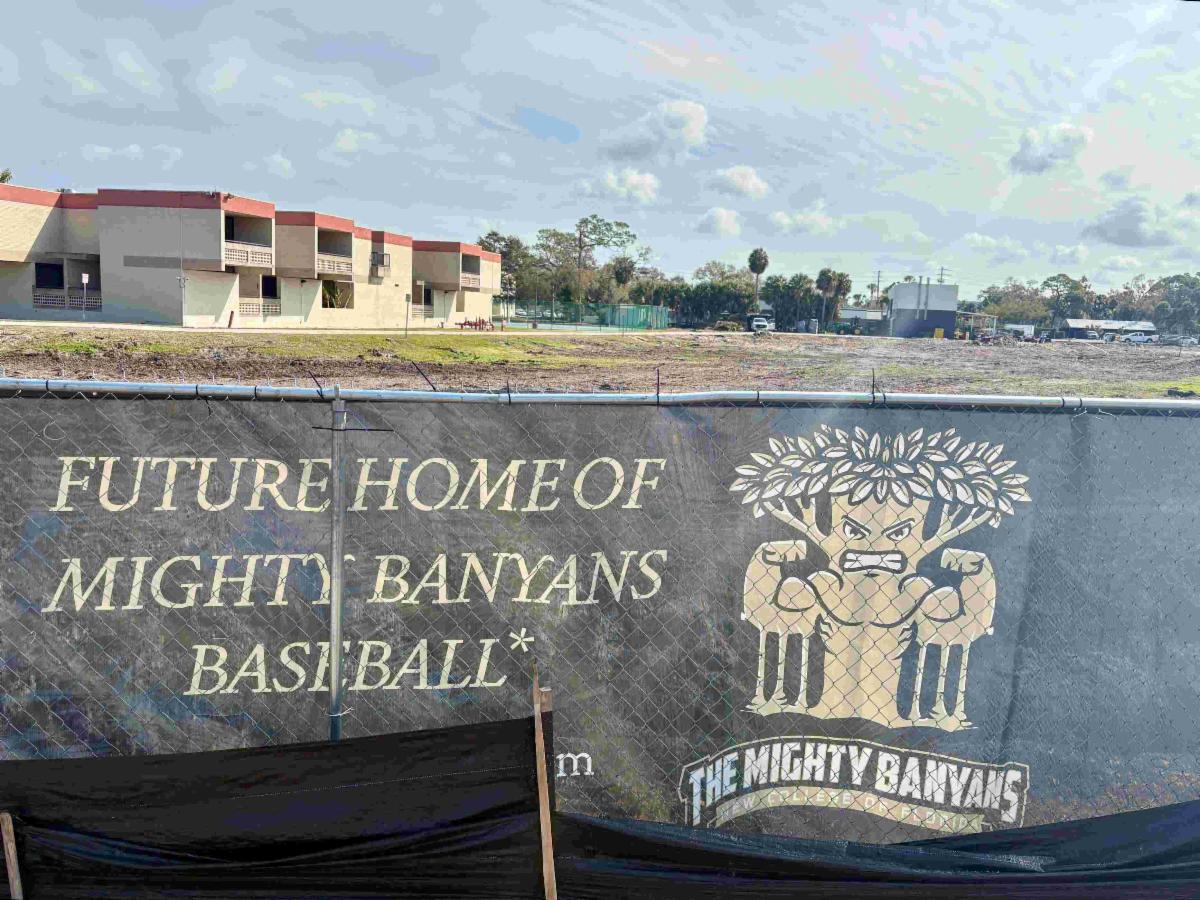
At a time when New College of Florida faces a longstanding housing shortage for students, the school is planning to shift $2.5 million earmarked for dorms to instead fund a baseball field.
The move stems from a landmark National Collegiate Athletic Association settlement this summer allowing universities to pay student athletes.
After the NCAA settlement in June cleared the way for schools to begin sharing revenue directly with college athletes, universities across the country faced a new financial challenge: how to pay for it. In response, the Florida Board of Governors moved to temporarily allow universities to transfer “auxiliary” funds — money generated by student fees for operations like campus bookstores, dining and housing — into athletics.
The rule change was designed to give schools with major athletic programs like the University of Florida, the University of South Florida and Florida State more flexibility to cover those new costs and remain nationally competitive in recruiting and retaining athletes.
Now, New College is invoking the rule change to divert money from its auxiliary housing fund to break ground on a baseball field as it seeks to build its athletics program.
The move reflects its push to foreground athletics in its student offerings. At the same time, the school has sought to reshape itself as a conservative institution.
It also comes as the school faces an ongoing housing shortage after a 2023 mold outbreak in its historic I.M. Pei dormitories forced students into hotels, dorms on the nearby University of South Florida Sarasota-Manatee campus and even briefly, portable trailers.
| |
COLD SNAP REVEALS GENEROSITY — AND GAPS — IN SARASOTA'S HOMELESSNESS SERVICES
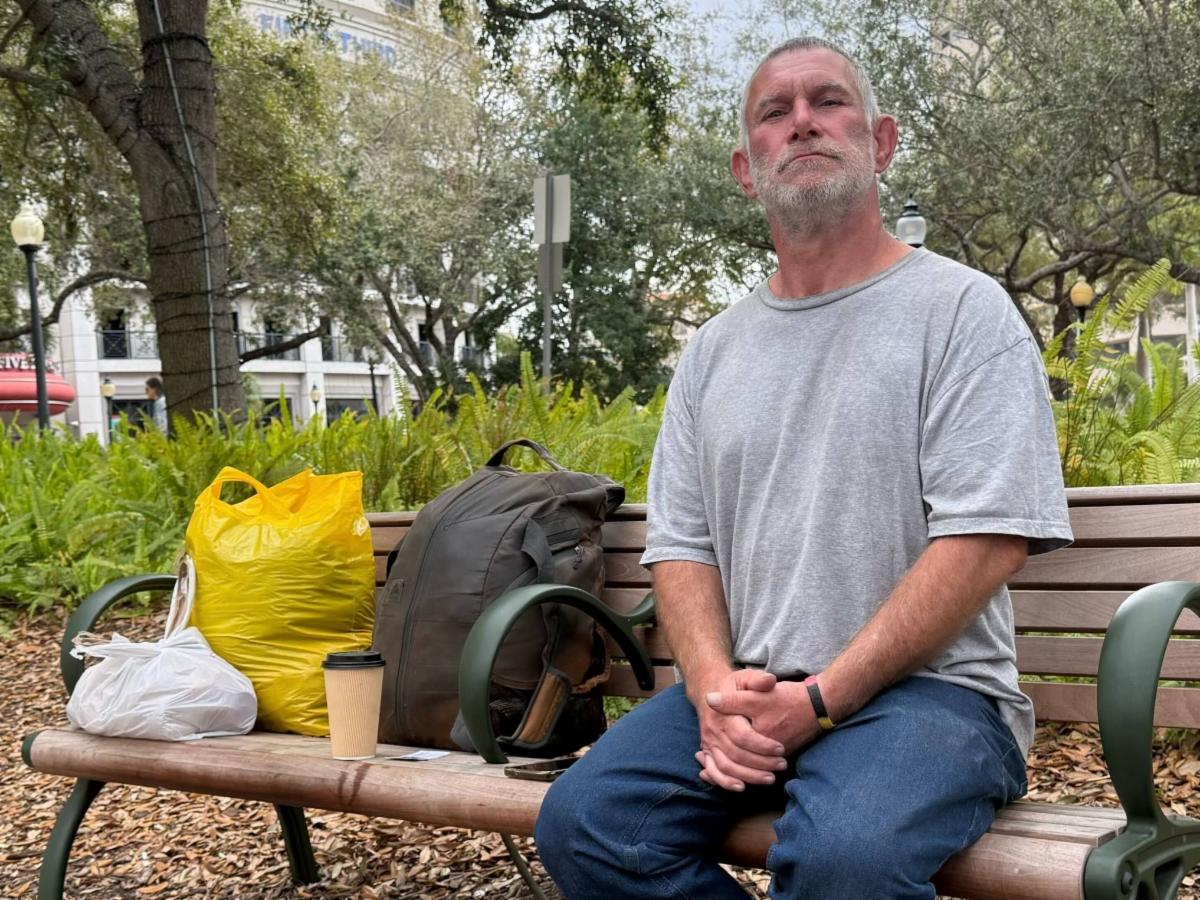
During a recent record-breaking cold snap that saw temperatures plummet below freezing on some nights, Sarasota’s homeless population faced life-or-death decisions unheard of this far south in the Sunshine State.
Joe Reuth, executive director of local nonprofit Resurrection House, was there at 5 a.m. on those cold mornings, opening over three hours earlier than usual to ensure people were showered, fed and dressed for the cold.
“Compassion and caring is essential, especially in the cold weather,” Reuth said. “It’s the difference between life or death. When they come into our day center, they're literally cold to the bones, shaking, definitely in need of warmth and a hot beverage, and that's what we provide.”
The dangerously cold weather began in January when an Arctic air mass pushed deep into Florida, sending overnight temperatures across the Suncoast into the low 30s. Wind chills made it feel even colder — in the 20s at times — and scattered snow flurries were reported in parts of the region.
In a place where average January and February lows hover in the mid-50s and freeze warnings are uncommon, multiple nights near or below freezing marked one of the most unusual stretches of winter in recent memory and posed acute danger for people living outdoors.
Those bone-chilling temperatures may be waning, but the struggles faced by people experiencing homelessness won’t melt away with them.
| |
A BOLD AFFORDABLE HOUSING PLAN SPUTTERED. NOW SARASOTA IS TRYING AGAIN
Nearly two years ago, Sarasota’s then-City Manager Marlon Brown had an ambitious idea to purchase downtown property near City Hall and turn it into large-scale affordable housing.
In an effort that would become the first-of-its-kind across Florida, Brown secured millions of dollars in pledges from the area’s largest philanthropic foundations and millions more earmarked from the Florida Legislature.
With the support of city commissioners, Brown’s plan would see the city take direct control over the development, own the property and supply nearly 200 units of attainable housing in two high-rise buildings on First Street, with a groundbreaking anticipated in mid-2025.
It was uncharted territory in Sarasota. Development of affordable housing is typically done on less expensive land facilitated with complicated financing that often requires tax credits. Instead of high-rise development, these projects are typically not more than three or four stories — an exception being Lofts on Lemon, which is five stories — and involve partnerships with developers that have decades of experience in the highly regulated industry.
Even then, deals can take years to go from plans on paper to shovels in the ground. What Brown proposed would speed up the timeline, deliver more units and keep the city in full control along the way.
Sarasota spent more than $7 million on two parcels in September 2024.
A month later, Brown resigned. The anticipated groundbreaking never happened. Promised foundation dollars never materialized. And the project seemingly languished as Sarasota cycled through two interim city managers.
But it is now stirring again.
| | |
JUDGE REJECTS CHALLENGE TO CONTROVERSIAL SIESTA KEY LAND SWAP
A judge this week rejected a last-ditch effort to unwind a controversial Siesta Key land deal, clearing the way for a home to be built on property the county once bought to preserve.
The legal challenge, filed in December by Lourdes Ramirez of the nonprofit Protect Siesta Key, sought to block a key provision in a settlement between Sarasota County and Siesta Key businessman Michael Holderness.
Under that agreement, the county would trade its preservation parcel at 162 Beach Road — valued at $2.8 million — for Holderness’ four beachfront lots valued at less than $100,000 combined. The deal also would let Holderness build a 5,000-square-foot house on the county-owned lot despite the county having denied similar requests when the land was privately owned; that’s because it sits behind a coastal setback line.
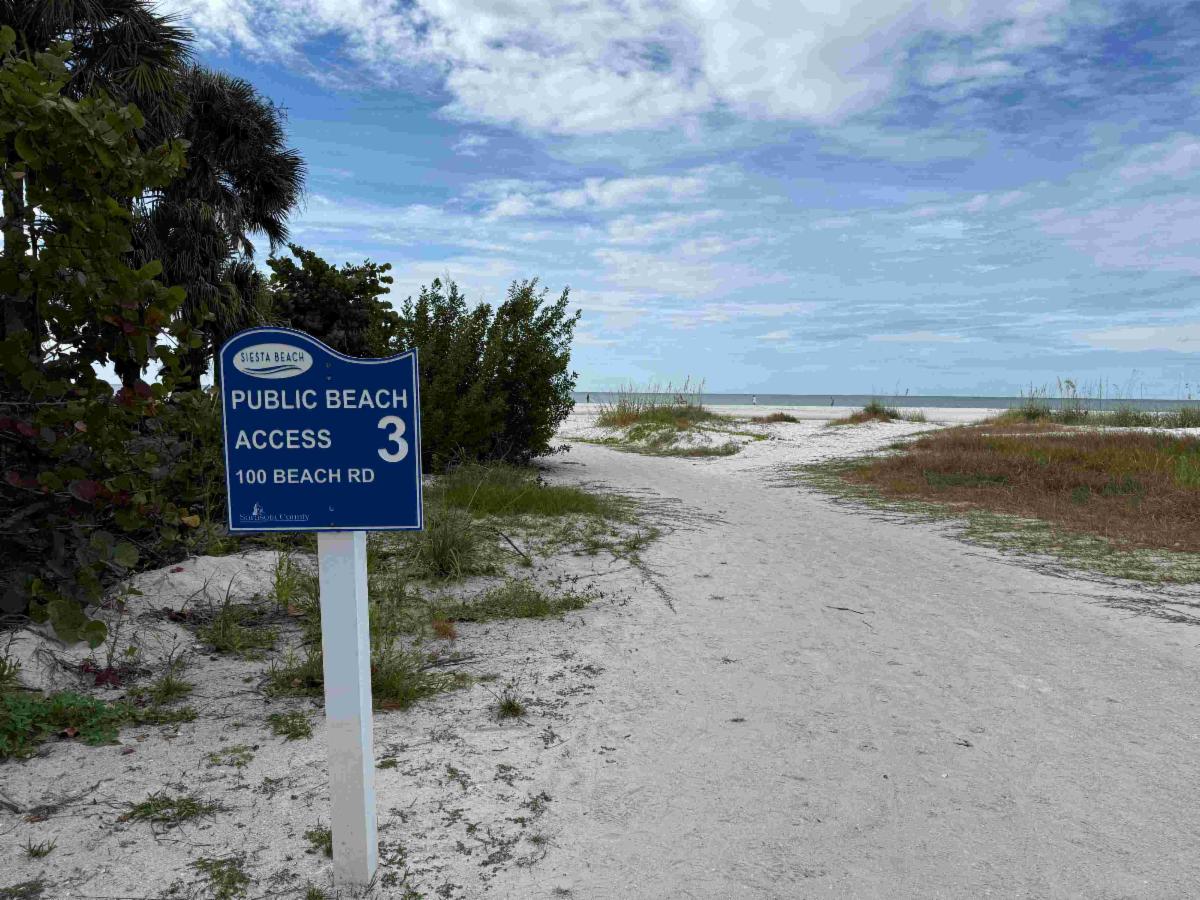
The agreement was made to end a federal lawsuit Holderness had filed against the county over property rights tied to his four beachfront parcels near Beach Access 3. In that case, he argued that public beach access signage near his property invited trespassers and that the county infringed on his rights as a waterfront land owner.
By trading those parcels to the county, he said, they would become a part of the public beach. In exchange, he would get a lot on which he could build a house.
But Ramirez and other petitioners argued the county had no legal authority to give up land it bought for preservation and allow a house to be built.
Circuit Judge Hunter Carroll ruled Tuesday that Ramirez and the other plaintiffs did not have legal standing to challenge the county’s decision.
| |
FLORIDA BILL WOULD LET HOMEOWNERS RECALL COMMUNITY DEVELOPMENT DISTRICT BOARDS
A new bill in the Florida Senate would add more homeowner protections and oversight to the boards that control governing decisions within community development districts across the state.
The proposed reform would add provisions that allow homeowners living in these districts to organize recall elections to remove members of the governing bodies over grounds like malfeasance, neglect, incompetence, a felony conviction or the inability to perform official duties.
But the bill does not allow these communities to recall the initial board members appointed by the real estate developer, who often maintain control over spending decisions and district governance for decades with little oversight and no homeowner input.
“I would have probably had a hard time moving it forward if we started messing around with that,” said Sen. Kristen Arrington (D-Kissimmee), who sponsored the measure.
The legislation comes in response to a group of residents upset with how their CDD has been run in Osceola County – and no current resource to oust the board members they believe are responsible for a series of alleged misdeeds, including embezzlement and public records violations.
It also follows months of ongoing reporting by Suncoast Searchlight, which published the “Power and Profit” series last year exposing how real estate developers are reshaping Florida’s housing market through the unchecked proliferation of these independent special districts.
| |
SUNCOAST SEARCHLIGHT WINS FLORIDA PRESS CLUB HONORS
Journalists at Suncoast Searchlight were honored with six awards from the Florida Press Club for education, business, environmental coverage and in-depth reporting.
The statewide awards were presented Saturday evening during a ceremony in West Palm Beach. They are the first media honors for Suncoast Searchlight since the nonprofit newsroom’s official launch in February 2025. The awards honored work produced in Florida and published between June 1, 2024 and May 31, 2025.
Suncoast Searchlight investigative reporter Alice Herman took first place in the Class B education category for stories that focused on New College of Florida, including an article about a Chinese professor fired under a controversial state law that limits public universities from employing people from so-called “countries of concern.”
Investigative Editor Josh Salman and former data reporter Kara Newhouse also won first place in the Class B business journalism category for their stories on Florida’s greenbelt law.
The series revealed how the state loophole is costing Sarasota and Manatee counties millions in lost revenue by allowing developers to tap a decades-old law meant to preserve agriculture and shrink the taxes on pastures they intend to pave over.
“I’m incredibly proud of the work produced by our team,” said Emily Le Coz, Suncoast Searchlight’s executive editor-in-chief. “What makes these honors especially meaningful is that all of this work was done within our first few months of publishing. It reinforces why we launched Suncoast Searchlight — to deliver ambitious, deeply-reported journalism on the issues shaping people’s lives across our region.”
Suncoast Searchlight also was awarded second and third-place honors in the annual competition for work on environmental coverage, general news, in-depth reporting and public service journalism.
| |
GOT A TIP OR STORY IDEA?
Share your tips and story ideas using our online form. Your name and contact info will be kept confidential.
| |
|
Suncoast Searchlight is a 501c3 nonprofit news organization whose mission is to produce investigative and explanatory journalism that serves and empowers the residents of Florida’s Suncoast region (Sarasota, Manatee, and DeSoto counties). We shine a light on critical issues affecting our community. Through independent reporting and collaboration with diverse media partners, we foster transparency, accountability and an informed citizenry, ensuring that all voices are heard and that the public has access to the information they need to drive meaningful change.
CONTACT US:
Suncoast Searchlight
PO Box 99 Sarasota, FL 34230
(941) 724-4450
| | www.suncoastsearchlight.org |
| | | |