NEW RIVER VALLEY PROJECT CONSTRUCTION UPDATE | | |
Construction Progress Continues at Cambria and Radford | Thank you for your interest in VPRA’s New River Valley project! This project will enhance freight and extend passenger rail service along the corridor between Roanoke and the New River Valley (NRV). In 2024, VPRA and Norfolk Southern came to an agreement for purchase of the Manassas Line and operating rights on Norfolk Southern’s main line (N-Line) that will allow for expanded service, a passenger station at Cambria Rail Yard in Christiansburg, and a layover facility in Radford. | | Future Passenger Station at Cambria | | |
Construction on the future New River Valley passenger rail station is progressing on schedule.
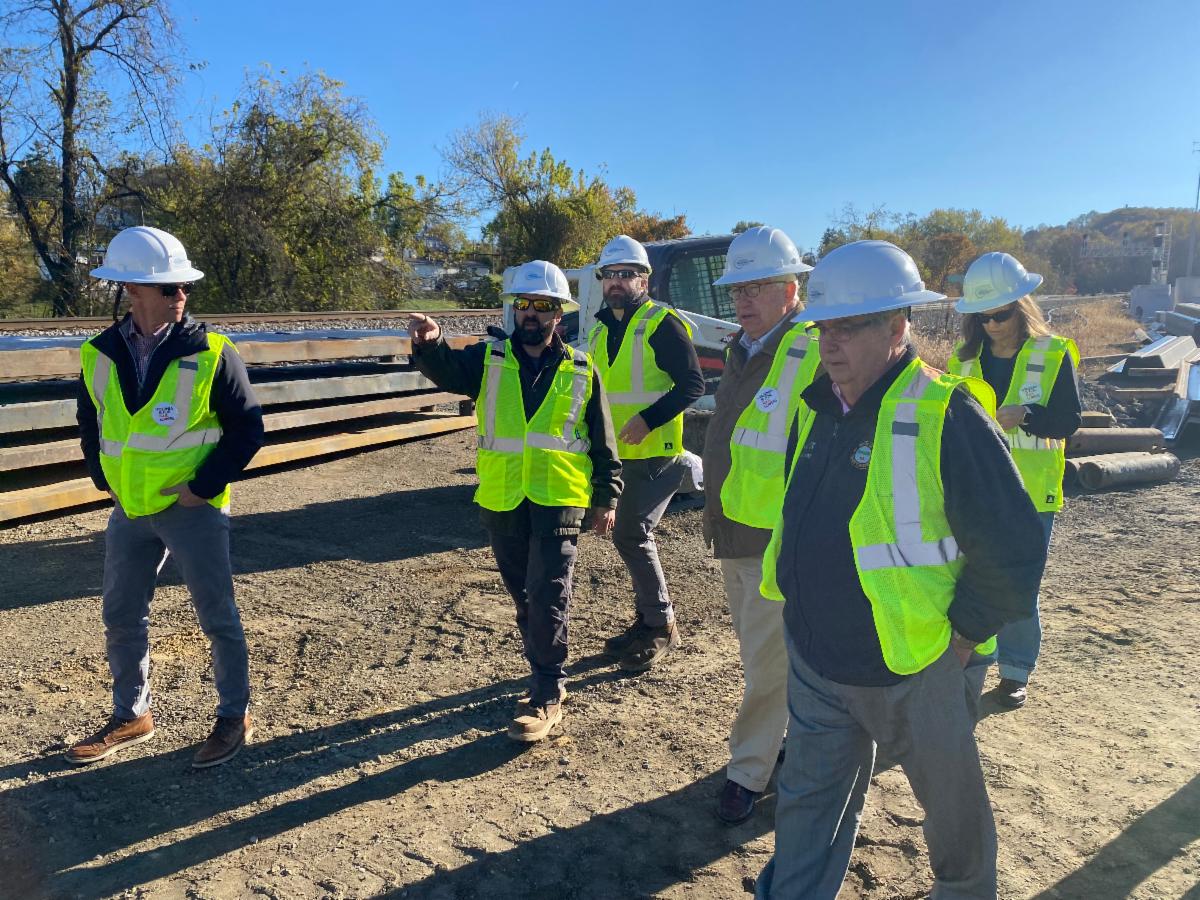
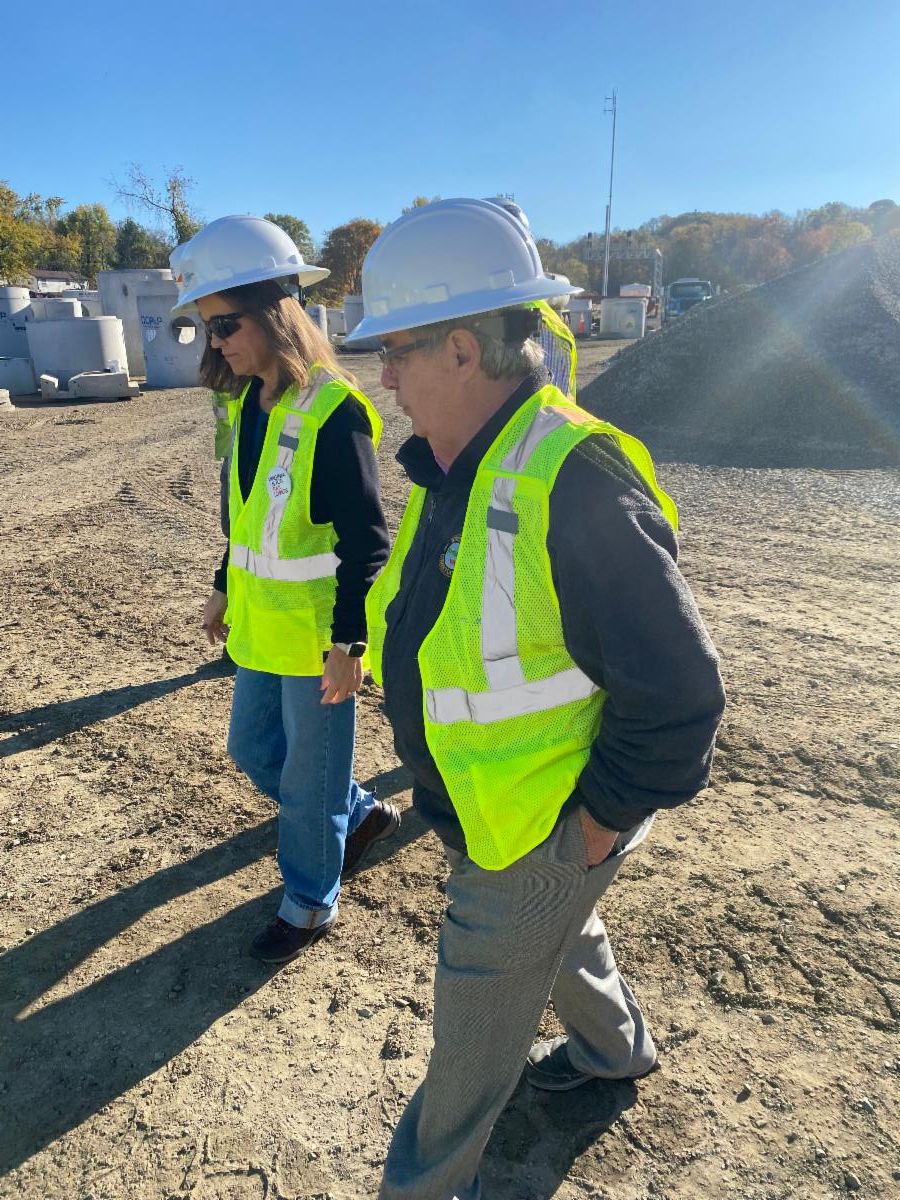
In October, Christiansburg Mayor and NRV Passenger Rail Station Authority Board Chair Michael Barber, Montgomery County Administrator and NRV Passenger Rail Station Authority Board Vice Chair Angela Hill, NRV Passenger Rail Chair Dr. Raymond Smoot, and NRV Regional Commission Executive Director Kevin Byrd joined VPRA and Norfolk Southern representatives for a tour of the future station site at Cambria.
| | Dr. Smoot, Mayor Barber, Administrator Hill, and Mr. Kevin Byrd tour the construction site with VPRA and Norfolk Southern staff
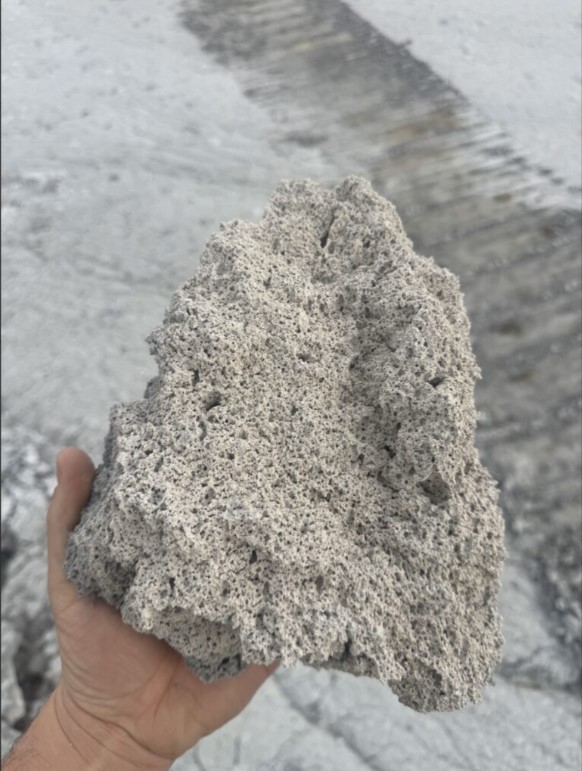
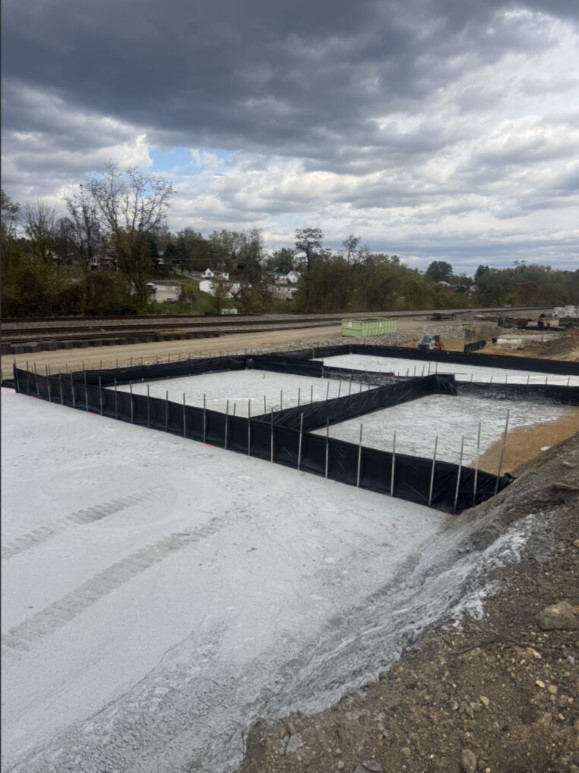
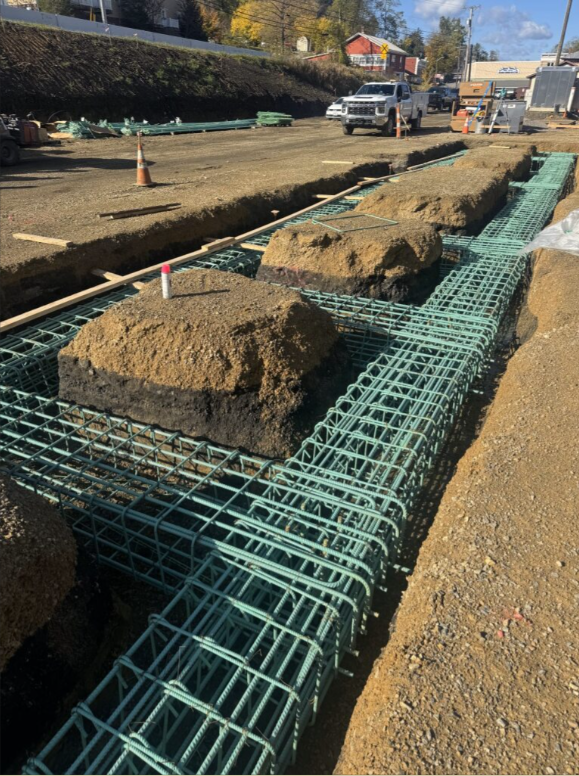
| | Mayor Barber and Administrator Hill | | Crews are continuing to install erosion and sediment measures, as well as storm sewer structures and piping. The contractor has poured tiers of cellular concrete into silt fence quadrants in what will become the parking lot area. Cellular concrete is a type of lightweight concrete that’s filled with tiny air bubbles, making it much lighter than regular concrete, but strong enough to use for leveling the ground in this area. Excavation will continue along the west end of the future platform, where the contractor will fill in with concrete beams that will support the eventual platform. The grade beams are supported by over 100 drilled pier foundations along the nearly 1,000-foot platform. | | Cellular concrete is lighter than normal concrete. It’s easy to pour and good for filling large areas without adding a lot of weight. | | Silt fences act as a form or barrier which helps hold the liquid cellular concrete in place while it sets. | | Epoxy-coated reinforced steel makes up the interior structure of what will become the concrete grade beam used to support the future platform. | | |
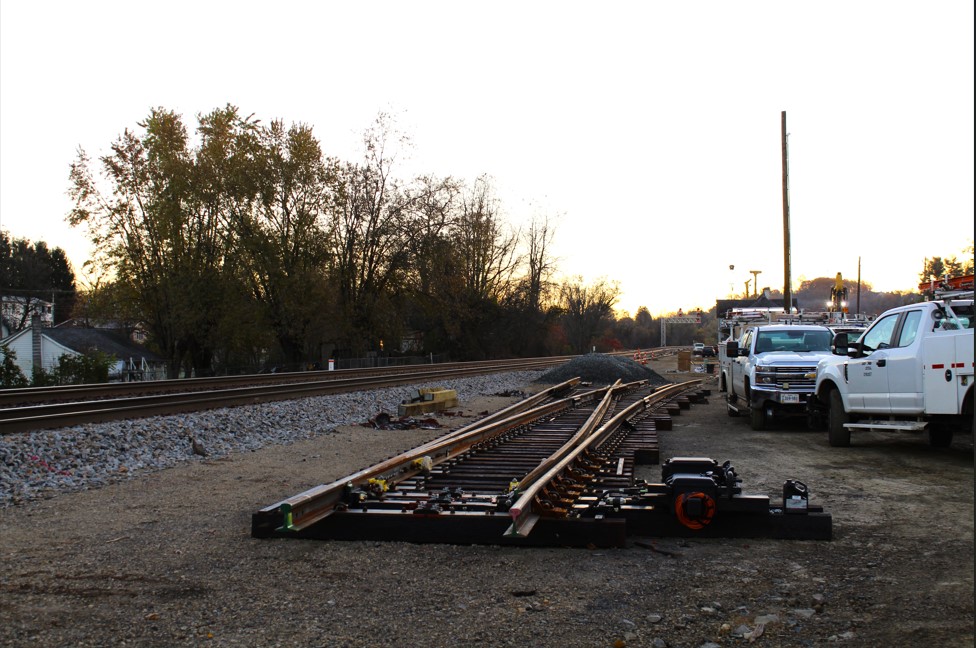
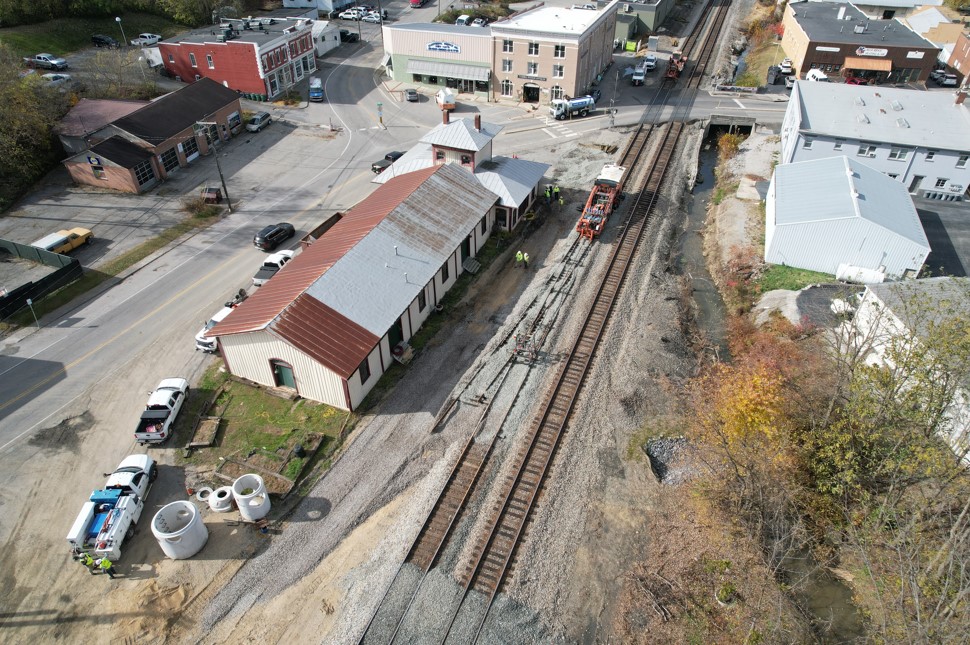
Norfolk Southern has delivered the necessary track components to build the pocket track which will bring passenger trains to the platform, including rails, cross ties, and turnouts. Crews have installed the western turnout, which is a piece of rail infrastructure that lets a train move from one track to another.
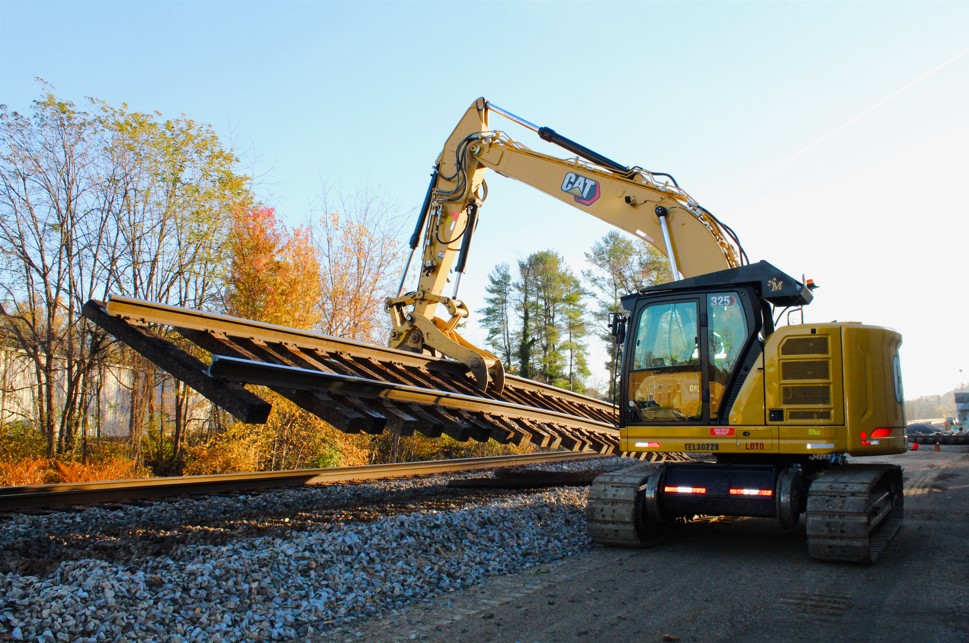
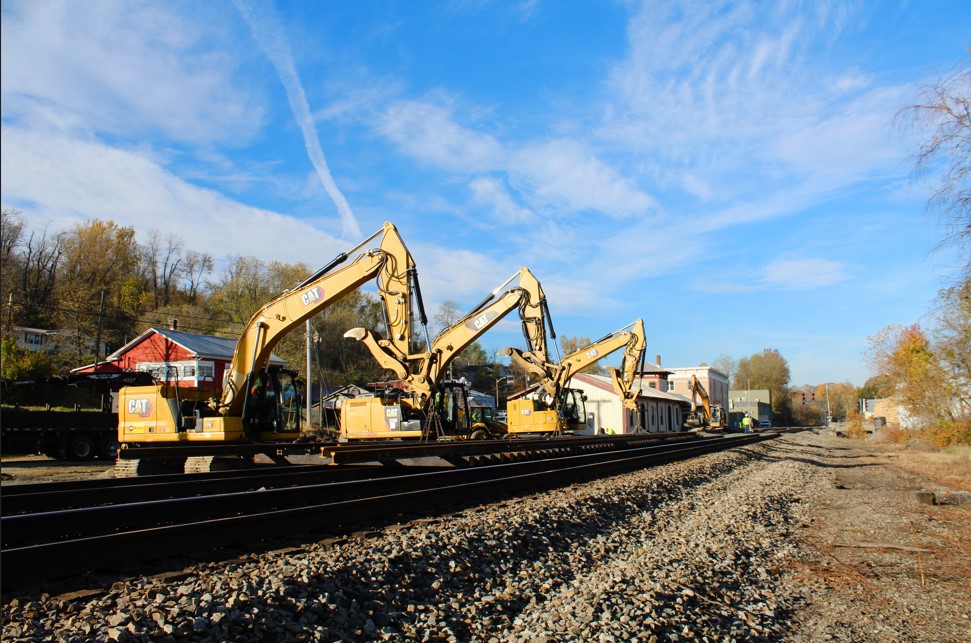
| | Installing a Railroad Turnout | | The installation of a railroad turnout is a complex and precise operation that requires a coordinated effort between skilled personnel, specialized equipment, and thorough planning. The process began with site preparation, where crews cleared, leveled, and stabilized the designated area to create a solid foundation. The ballast — the crushed stone beneath the track structure — was carefully graded to achieve the required elevation and alignment for proper drainage and long-term stability. | | The preassembled turnout before installation | | An excavator removes a portion of track to make room for the turnout | | |
Prior to installation, the turnout assembly was pre-built offsite as a complete “skeleton” consisting of ties and rail fastened together. Preassembly improves accuracy, reduces on-track construction time, and minimizes disruptions to train operations.
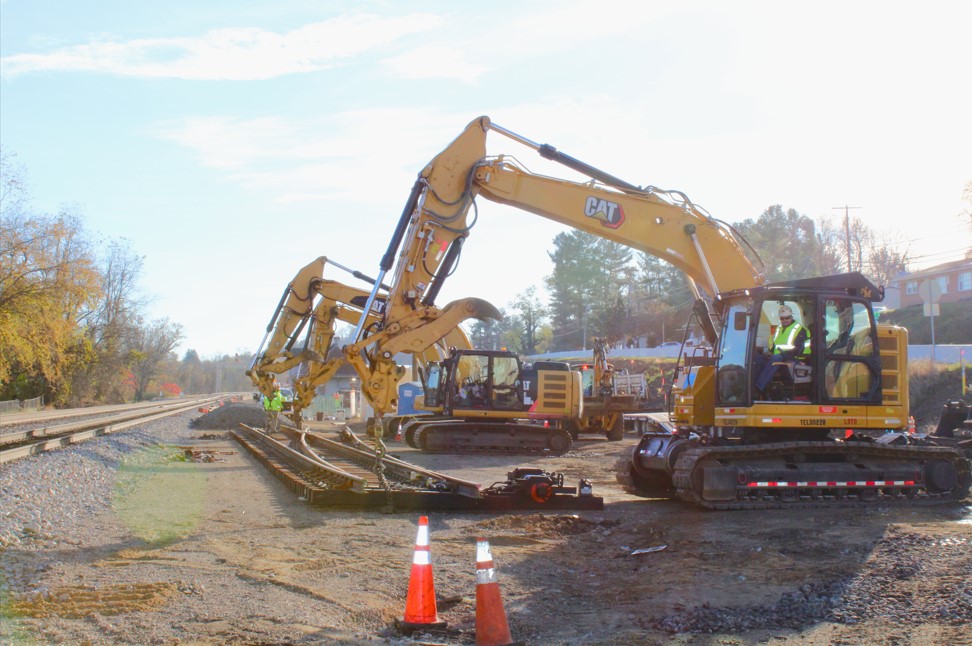
Once the existing section of mainline track was marked and measured, crews systematically removed the designated portion using excavators and track tools to create the opening for the new turnout. The preassembled turnout was then transported and precisely maneuvered into position, guided by equipment operators and ground personnel to ensure proper alignment with the adjoining rail segments.
| | After placement, the rail ends were fixed using bolted joint bars to achieve a secure and continuous running surface. The track structure was then ballasted, tamped, and smoothed to bring it to final grade and alignment specifications. These final adjustments ensure the switch, which is the mechanism that moves the turnout, operates smoothly and safely under load. | | Above & Below: Excavators work in tandem to move the preassembled turnout into position | | The newly installed turnout connects the platform track, which runs parallel to the mainline, allowing passenger trains to transition seamlessly between the two. This connection provides access for westbound movements toward the Radford layover facility, improving operational flexibility and overall system efficiency. | | The new turnout installed, jointed, and ballasted | | |
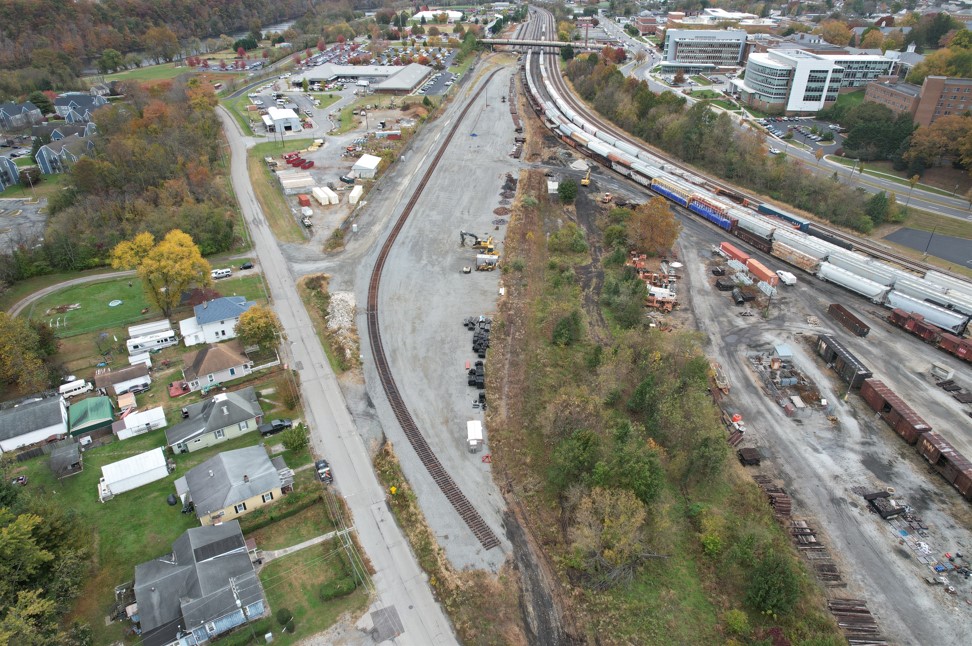
At the future layover facility in Radford, light poles have been installed between the tracks, along the retaining wall, and up to the overpass. Additional electrical conduits are being installed, allowing for the installation of communications components and wiring.
The switch and portions of the connecting tracks from the mainline to the layover tracks have been finalized. The switch, cross ties, rail, and ballast are fully installed along this connection, and the track has been set to final elevation.
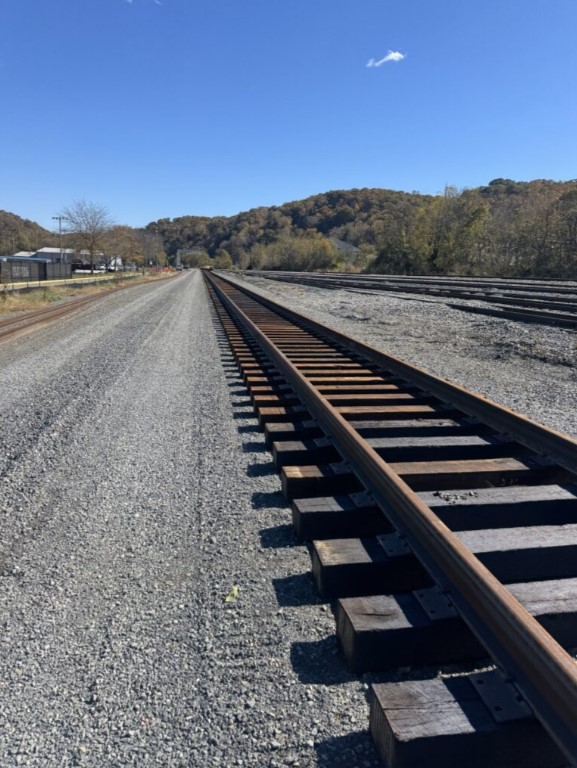
Contractors will continue to place the Maintenance of Way track west of the overpass. Ties and rail have been set, fastened, and “skeletonized.” To “skeletonize” the rail means the basic framework of the track has been set, but the surface is not finished yet (it now forms a bare skeleton of a track that holds its shape and alignment but isn’t yet fully supported or ready for trains). The tracks will be finished when the contractor adds the ballast, or crushed rock, to level the final track.
| | An example of the skeletonized track at Radford, pre-ballasting | | Maintenance of Way track at Radford, looking east | | We are looking forward to watching construction progress at both Cambria and Radford. Please reach out to VPRA with any questions about construction or the New River Valley Project at contactus@vpra.virginia.gov, or at 804-303-8700. | | | | |