|
Written by Kieran Delamont, Associate Editor, London Inc. | |
WORKFORCE
Yup, it’s bad out there
A new mid-year analysis from Glassdoor paints an unfortunately grim picture of the workplace
| | |
IT’S BEEN A heck of year and it’s only July. You’re probably feeling some version of this sentiment: the world of work and careers has been moving what feels like especially quickly this year; among the words you might choose to describe 2026 are ‘stressful, challenging and intense.’
Job search and career platform Glassdoor chose another one in their mid-year check-in: ‘grim.’
“The first half of 2026 paints an unfortunately grim picture of the workplace,” Glassdoor wrote in the report, in which the employer review platform checks up on its 2026 predictions. Looking at labour force data and the general state of vibes, it basically summarized that its negative predictions were spot-on, the hopeful predictions haven’t panned out and its worried guesses have been worse than expected.
For instance, it predicted that employees and leadership would grow further apart; that one got a ‘spot-on.’ It predicted that forever layoffs would dominate the jobs cycle; that one has been true. But Glassdoor also predicted that AI would not have much of an impact on workers (yet), and for that it graded the prediction ‘worse than expected.’
On just about every point, Glassdoor reports the mood among the workforce is more sour, the outlook less hopeful and the anxiety more ever-present than they predicted at the start of the year.
One of the clearest data points Glassdoor saw was the deterioration of employee satisfaction and their trust in senior leadership. “Mentions of misalignment, disconnect and distrust are up significantly in 2026, compared to 2025,” it wrote in the review. “Overall, these terms point to a chasm where employees feel like they can’t trust their leaders to keep their best interests in mind.”
Hovering in the background, of course, is layoffs — something Glassdoor says are now a common feature of the current job market. “Layoffs are still top of mind for workers, and anxiety about layoffs and job security are still skyrocketing,” the report stated. “Layoffs have a persistent negative effect on culture, lasting even multiple years after the initial layoff, suggesting that the anxiety from this trickle of forever layoffs is not going to disappear anytime soon.”
So, was there any good news? Well, not really — at least not in Glassdoor’s opinion. The report is clear from the beginning that it’s been a grim start to the year. But hey, we can always finish strong — so here’s hoping the back half of the year brings better news.
| |
AI
Our AI guilt complex
Canadians are using AI at work in increasing numbers, and with that increase comes something else: guilt
| | |
ACCORDING TO A new survey from Employment Hero, 43 per cent of Canadians harbour a feeling of guilt about their use of AI and LLM tools to produce work, with those feelings getting stronger as you look at the younger segments of the workforce, with 56 per cent of Gen Z workers reporting “guilt about integrating these technologies into their employment routines.”
For Employment Hero’s researchers, the results landed as a bit of a paradox. On the one hand, increasing adoption of AI is an expressed goal of the country’s AI strategy. On the other hand, people feel uncomfortable about that.
“While technological proficiency is rapidly transforming into a fundamental requirement for modern business operations, the cultural acceptance of these digital assets remains fragmented,” they wrote. “This lack of clarity has driven a substantial number of staff members to alter their workplace transparency, with 34 per cent of individuals admitting to hiding their AI use from their employers.”
Many, the researchers also found, have a simple strategy for concealing it — using their personal tools and accounts, beyond the reach of workplace monitoring.
“There is a real contradiction emerging for young workers,” said Employment Hero’s Kevin Fitzgerald. “They are being told that AI skills will be critical to their careers, and many are clearly enthusiastic about building those skills, but they still feel guilty when they actually use the tools.”
One of the pressing questions for Canadian firms is how to respond to this finding. Many want to see AI used more in the office, and more thoughtfully, but are running into a dynamic where so much of its use is either being concealed or shrouded in guilt. Fitzgerald says that the answer to that is greater transparency and guidelines.
“This research shows that Canada’s challenge isn’t AI adoption, it’s AI confidence,” said Chris Pinkerton, managing director at Employment Hero Canada. “Workers already recognize AI is becoming an essential workplace skill, but many still feel they need to hide using it because they don’t have clear guidance or confidence in what’s acceptable. The organizations that will succeed won’t simply be the ones adopting AI fastest. They’ll be the ones that create a culture where employees feel empowered to use it responsibly, transparently and confidently.”
| |
| |
Terry Talk: Is AI making us smarter or frying our brains?
| AI can help us work faster, but could it be slowly eroding our ability to think critically? In this Terry Talk, Ahria Consulting president & CEO Terry Gillis explores the concept of “brain fry”, a growing concern highlighted in the Harvard Business Review. As AI becomes part of our daily workflows, many people are experiencing decision fatigue, distraction, overwhelm and the mental strain of constantly prompting, monitoring and managing technology. The real risk isn’t that AI will replace our thinking. It’s that we'll stop exercising it. | | | |
WORKSPACE
What’s that smell?
The boss’s new secret weapon: Pumping perfume into the office
| | |
STEP INTO A high-class office these days and you might wonder, “What’s that smell?” Perhaps it’s the smell of money, but increasingly it’s something else — an office’s ‘signature scent,’ a new (and very indulgent) feature of the Class A-iest of Class A office real estate.
“Big companies across the world are now developing their own distinctive aromas, sometimes with lavish assistance,” reads a report in the Financial Times. It cites companies like Air France, which has a “comforting musky scent” in its airport lounges; WeWork, which created a fragrance called Verdure that smells like “grounding patchouli and calming lavender;” as well as Goldman Sachs and JPMorgan, both of which declined to disclose what custom scents they were spraying in the office.
Companies behind ‘office scenting’ as it’s known, say it can be a powerful part of creating an office environment that encourages productivity, relaxation and — yes — one that workers want to return to.
“Scent has a profound impact on our mood, memory and energy levels, making it a priority to ensure that your office space or studio is curated accordingly for customers as well as employees,” wrote scent company Aroma360. “A relaxing and welcoming office culture makes it easy to work and play hard, no matter your industry. Creating a space where employees feel inspired and motivated to do their best work is a critical consideration for any business leader.”
Air Aroma, the company the worked with coworking space company WeWork on their ‘Verdure’ fragrance, said there’s tangible benefits to office scenting. “Research shows that people who work in scented areas demonstrate a higher self-efficiency and are more likely to adopt efficient work strategies,” the company said. “Studies have shown typing errors significantly reduce when workers are exposed to lemon and lavender fragrances and increased performance in speed and accuracy was found when scents such as peppermint were diffused. Tech and creative businesses want to inspire and stimulate their employees, as they understand that inspiring surroundings can have a direct effect on employee creativity.”
Not all are convinced this trend will roll down from the ivory towers into the real world, though. “I struggle to understand why other employers are bothering to drench their air diffusion systems with essential oils, no matter how expertly brewed,” wrote the Financial Times’ Pilita Clarke, who points out that those who appear to believe most in office scenting are, well, the scent companies.
“The effect of smells on workers is relatively understudied, but larger analyses of what workers really want in an office show air odour tends to come well behind a host of other factors,” said Clarke. “I look forward to being persuaded that floral, musky scents are a serious adornment to working life. In the meantime I suspect I will be quite happy without them.”
| |
LEGISLATION
Canada is killing the non-compete (sort of)
Bill C-31 signals a clear shift towards enhancing employee mobility and labour market competition nationwide
| | |
|
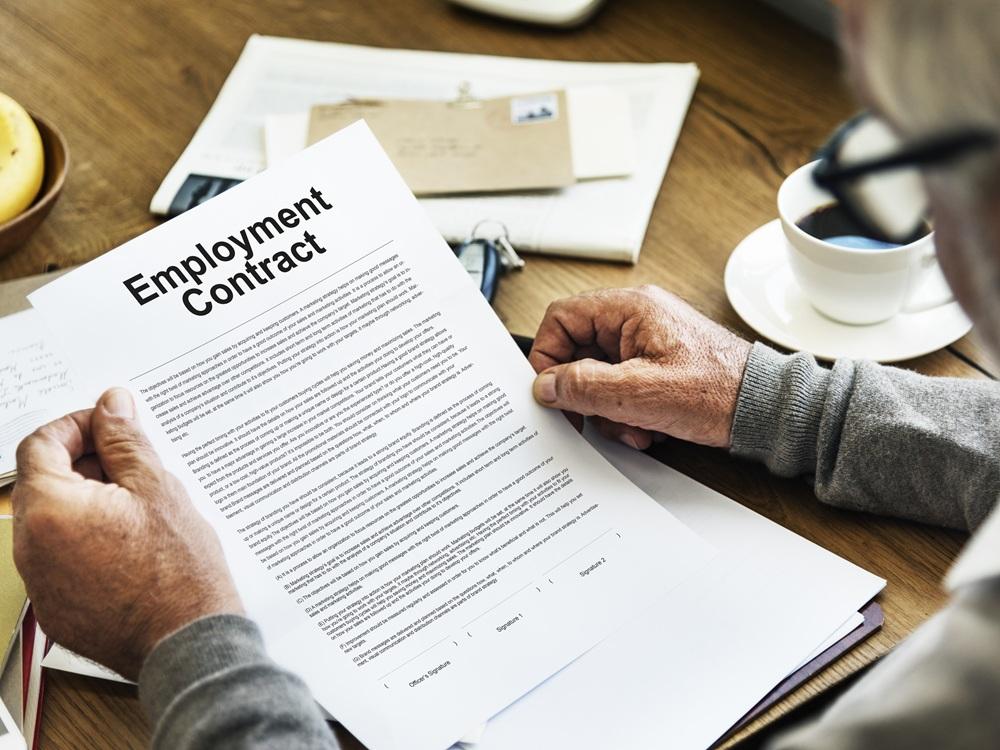
BILL C-31 IS currently making its way through Parliament in Ottawa, and it could mean an end to non-compete clauses in employment contracts. Well, sort of — it would apply only to federally regulated workplaces (think, banks, airlines, telcos and so on, although Ontario banned non-compete clauses in all other workplaces province-wide in 2021).
The bill would, per HR Reporter, define a non-compete clause broadly, “as any term that prohibits an employee from engaging in any business, work, occupation, trade, profession, project or other activity in competition with the employer’s federal work, undertaking or business following the end of the employment relationship.”
What’s got HR folks excited is not just the end of non-competes in the narrow band of federally regulated industries, but also the possibility that by leading federally, Canada might finally be able to kill the non-compete nationwide.
“One jurisdiction will adopt a change, and then over time we see that being adopted in other jurisdictions,” said George Vuicic, partner at Hicks Morley in Toronto. “I wouldn’t be surprised if we start to see that play out elsewhere,” predicting that the NDP governments of Manitoba and British Columbia would be likely adopters of the trend.
Many economists are also happy to see the non-compete go the way of the dodo as well. “[The] prohibition on non-compete clauses has done more to foster economic prosperity, growth and innovation than any government subsidy or handout,” wrote Matt Malone, for the CD Howe Institute in 2021, praising California’s ban on non-competes. “Knowledge spillovers are a critical factor in building vibrant and prosperous economies where innovation occurs. That requires letting employees job hop — something they cannot do when they’re shackled by restraints which prevent them for working.”
Malone reasoned that the only reason non-competes exist is to benefit the employer over the worker, who might otherwise be able to join (or become) the competition were it not for a non-compete. “Employers like to say non-competes are justified because they protect trade secrets,” Malone said. “But that’s not what non-competes do. They prevent people from working.”
The flipside of the argument, in favour of non-competes, is that they incentivize companies to spend more on training. Researchers with the Smith School of Business at Queens University argue that insofar as non-competes disincentivize employer training, the workforce can become less skilled overtime. “Blanket bans on the enforcement of non-compete agreements may have short-term gains as workers flow into jobs in which they are more productive,” they wrote, “but have long-term consequences in terms of a less-skilled workforce.”
In any case, it will be a while until the regulations come into force — the bill still needs to work its way through parliamentary committees before it approaches a final vote.
|
| | | | |