The Narrative of
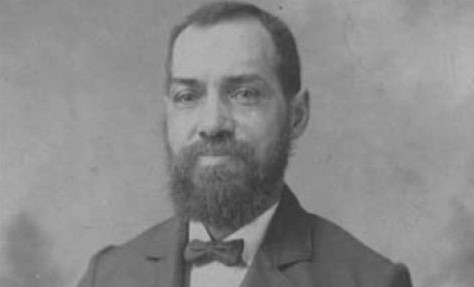
Wallace Turnage
(1846-1916)
and his
Escape to Freedom
described in a 2008 lecture
by
David Blight
And that moment of freedom - that moment of escape. That opportunity might come when you would least expect it. And you have to make a choice every time. Do I go and risk everything or do I not?
I'll tell you one little story in the midst of that ....
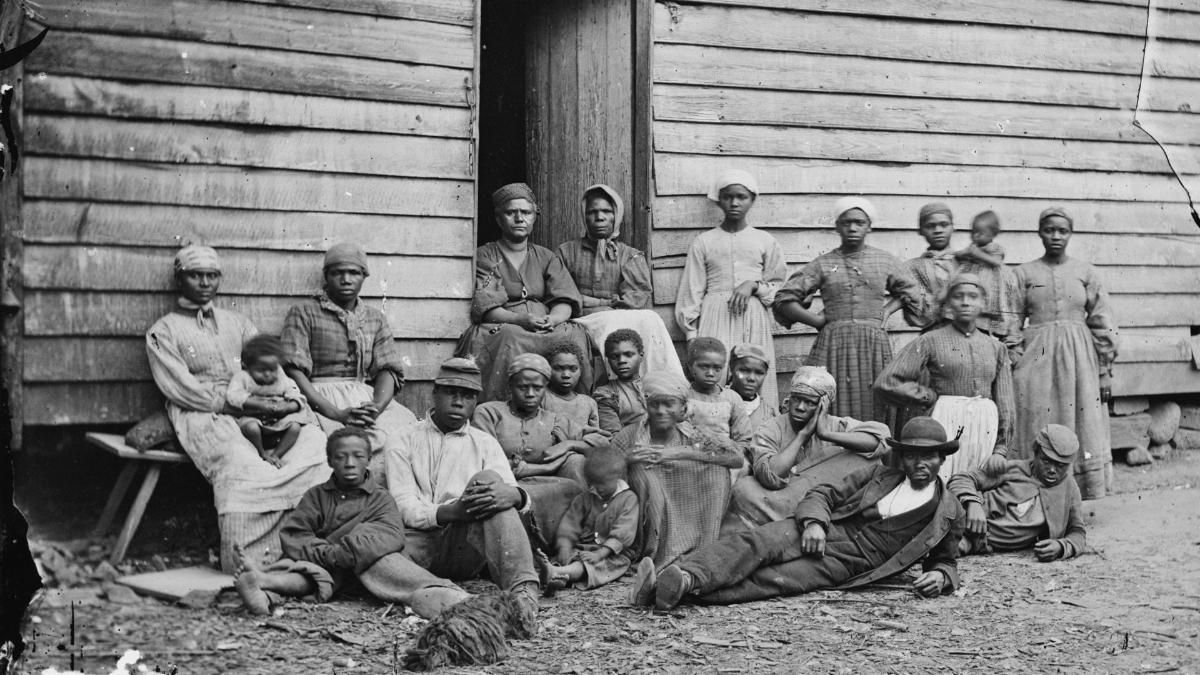
A young slave named Wallace Turnage was born on a little tobacco farm in Greene County, North Carolina in 1846. Sold by his indebted owner to a Richmond, Virginia slave trader named Hector Davis who was one of the largest slave traders in the United States and who kept enormous records.
In 1860 Wallace spent about six months working in the three-story slave jail auction house in Richmond. His job, every day, was preparing the slaves in what was called "the dressing room" to take them out to the auction floor. And one day he was simply told, "boy, you're in the auction." And he was sold to an Alabama cotton planter named James Chalmers.
Seventy-two hours later, by train, he found himself on a huge cotton operation in Pickensville, Alabama which is right on the Mississippi border -- a plantation with about 85 slaves.
And the narrative he left us - which was discovered and dropped into my lap a few years ago - that extraordinary narrative he left is the story largely of his five attempts to escape in the midst of the war from the age of 14 to 17.
Wallace Turnage was one passionate, half-crazy - one might say - no doubt traumatized, teenage slave who just couldn't be controlled. He ran away four times into Mississippi; he was always trying to get up to northern Mississippi to get to the Union army which he knew had control of the whole northern tier of Mississippi by late Spring 1862. He would always go up the Mobile and Ohio Railway line.
At one time he was at-large for four and one-half months hiding in other slave cabins and hiding in the woods, in the forest, in gullies and wherever he could hide. And he was always captured. He was trying actually to get to Corinth and the big contraband camp in Corinth and he almost made it on his fourth try.
|
|
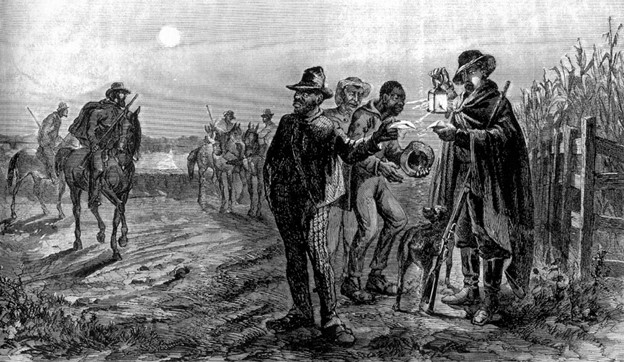
He kept being captured by slave patrols and Confederate patrols. His master would always come after him because he was so valuable. He'd been sold for $950 dollars, the first time out of North Carolina. He was sold for $1,000 to old Chalmers in Richmond and, in early 1863, Chalmers got fed up of constantly trying to retrieve this kid. So he took him down to Mobile Alabama and sold him at the slave jail there in the spring of 1863 -- for $2,000 dollars. |
|
Wallace's fifth and final escape attempt - the one that succeeded - came after a vicious beating. He had been beaten before, more times than he could count. He'd been put in neck braces and leg chains and ankle chains and wrist chains and he experienced every kind of brutality that slavery could wreck upon a teenage kid.
One day he crashed his master's carriage and the master got so angry he took him to the slave jail, hired the jailer to give him thirty lashes with the ugliest whip they had. They had this contraption that would make you bleed with every lash.
At the end of it he is standing there naked, bleeding and his master says "go home'" and instead of going home he put his clothes back on and he walked right through the Confederate army - a garrison of 10,000 troops - where he was no doubt simply mistaken for yet another Black camp hand.
And at dusk he just crossed through the Confederate camp and walked out of Mobile. This would be his final escape, a three week trek - which he narrates in remarkable ways - down the western shore of Mobile Bay for 25 miles through a snake and alligator infested swamp now known as the Fowl River Estuary.
|
|
One day was especially hard. He describes how he prayed when he got out to the tip of Mobile Bay. The tide brought in an old rickety rowboat which he tipped over. From the rowboat he took a plank of wood and started rowing out into the ocean. And, in quite dramatic form, he describes how a wave is about to swamp his little boat when he hears oars -- the oars of a Union gunboat with eight sailors aboard. They said "jump in" and he jumped in. And as he sat in their boat "the Yankee sailors," he said, "were struck with silence" when they looked at him.
The sailors took him to a fort on Sand Island. They clothed and fed him -- the first kind act by a white person the 17-year old Turnage had ever experienced. And the next day they took him to Fort Gaines on Dauphin Island which is the big beautiful sand island at the mouth of Mobile Bay. And he was brought before the Union commander of all of the forces in the area, Gordon Granger, who interrogated him, probably because they wanted intelligence about Confederate forces around Mobile.
General Granger gave him two choices. He could either join a Black regiment which they were forming at that very time in the Gulf Region or he could become a servant to a white officer. And Wallace chose the latter. Didn't tell us why but probably because he had enough suffering. He'd seen enough of his own war with the Confederacy.
And he served out the war for another year as the mess cook for a captain from a Maryland regiment whose name was Junious Turner. And Wallace was with that regiment in Baltimore, Maryland in August 1865 when it was mustered out. He lived three years in Baltimore and moved to New York City where he lived the rest of his life to 1916.
By 1870 I found him in a census manuscript living in the
300 block of Thompson Street which, you and I call, Greenwich Village. Somehow he got his mother and his four siblings out of North Carolina. They were all living in a tenement house surviving as part of the first generation of a Black working class - former slaves - in a northern city.
Wallace Turnage lived until 1916. He is buried in Cypress Hill Cemetery in Brooklyn, New York.
[Transcribed and condensed by the editor from "The Civil War and Reconstruction Era, 1845-1877," a podcast of a series of lectures by David W. Blight, Professor of American History, Yale University, Spring 2008. David Blight is the author of numerous books including A Slave No More and the 2019 Pulitzer Prize-winning Frederick Douglass : Prophet of Freedom.]
|
|
When Freedom Comes
No one has spent more time thinking about freedom than the people denied it. For enslaved people they spent their entire lives thinking and dreaming about what they will do when freedom comes and what freedom means. So they are outside the circle of freedom but they are looking inside of it. And many people are dreaming and thinking about and imagining new worlds.
-- By Kidada Williams, Associate Professor of History at Wayne State University. She is host of Seizing Freedom, a podcast which uses first-hand accounts from diaries, newspapers, speeches, and letters.
by
The Fisk Jubilee Singers
|
|
|
|
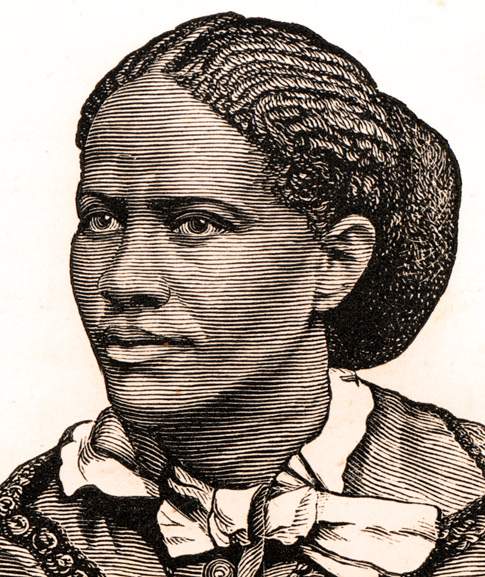
Frances Ellen Watkins Harper (1825-1911)
Abolitionist, women’s suffrage advocate and poet
I ask no monument, proud and high
To arrest the gaze of the passers-by;
All that my yearning spirit craves,
Is bury me not in a land of slaves.
Artwork: Dickinson College.
|
|
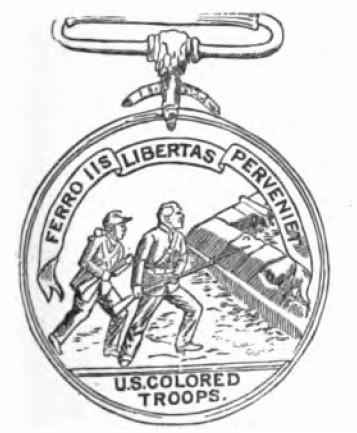
Ferro iis libertas perveniet
Freedom will be theirs by the sword
|
During the Civil War over 180,000 soldiers served in the United States Colored Troops (USCT), regiments in the US Army. Eighty percent of these men came from the eleven Confederate states and the border slave states of Delaware, Kentucky, Maryland and Missouri. They fought to free their enslaved brothers and sisters and to preserve the Union. Women were not allowed to enlist in the army but assisted the war effort as cooks, spies, nurses, and scouts.
|
|
|
|
|
|
|