SoCo Correspondent delivers the latest news from the County of Sonoma, twice a month, to your email inbox. Subscribe in English or Spanish and share with your friends and neighbors. | | Rebecca Hermosillo makes history as Board chair, sets tone for year of challenge and collaboration | | |
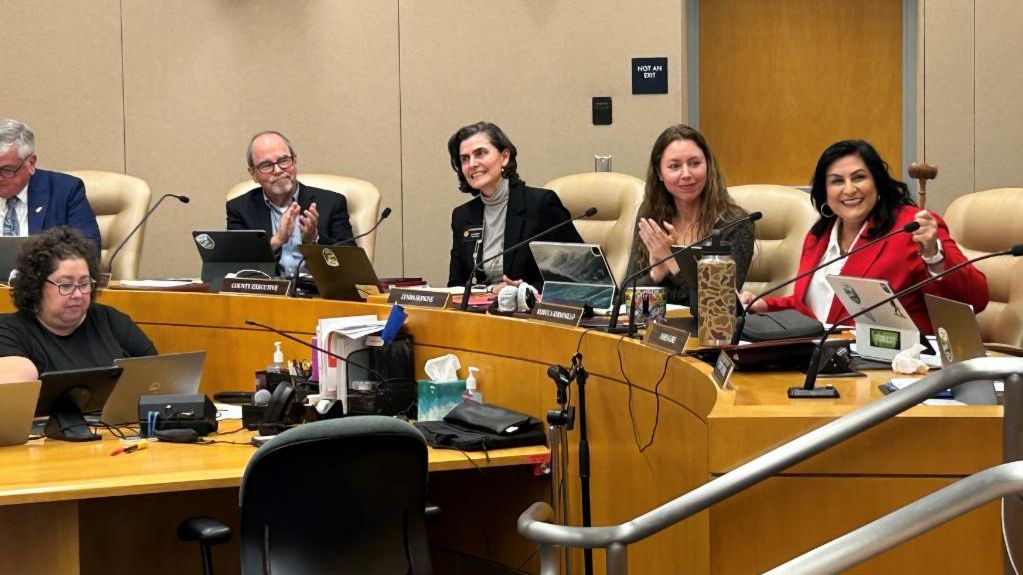
“I recognize the significance of this moment,” Supervisor Rebecca Hermosillo said, taking a deep breath. Moments earlier, her colleagues on the Sonoma County Board of Supervisors had unanimously elected her 2026 chair, making her the first Latina to lead the five-member body in the County of Sonoma’s 176-year history.
“I am here because my parents sacrificed, because so many friends and families worked twice as hard to get where they are for a better chance for themselves and their families,” Hermosillo noted. Those values – and a commitment to protecting vulnerable communities and the environment – must be reflected in the Board’s policies and actions in the year ahead, she said Jan. 6 in her opening comments as chair.
Economic uncertainty and shifting priorities at the federal and state levels will pose challenges in the coming year, Hermosillo warned, noting that counties across California are being asked to do more with less.
“Fiscal responsibility will be essential. We must continue to be careful stewards of our limited public resources so that Sonoma County remains resilient, and prepared for the future,” Hermosillo said. “But with uncertainty also comes the opportunity to be problem solvers, to listen more deeply, to strengthen collaboration, to build meaningful public and private partnerships, and to ensure that everyone feels seen, heard, and valued in the decisions we make from this dais every Tuesday.”
The Board of Supervisors elected Supervisor Chris Coursey as vice chair and Supervisor David Rabbitt as chair pro-tem for 2026. Outgoing Chair Lynda Hopkins used her closing remarks to thank her colleagues and the more than 4,300 full- and part-time County employees for their service to the public.
“We have amazing human beings who show up every day to make our community just a little bit better. To be a part of that team is really the greatest privilege of my working life,” Hopkins said.
| | Measure I update: Board of Supervisors approves five-year plan to invest $150 million in local families | | |
When Sonoma County voters approved Measure I, they made a clear choice: this county invests in young children and the families who raise them. Now, that decision is turning into action.
The Board of Supervisors last month approved a five-year spending plan outlining how Measure I funds will be used to improve child care, children’s health and family support services across the county through 2031.
The plan was developed by the First 5 Sonoma County Commission, which oversees the independent public agency that administers funding from Measure I and Prop. 10, the statewide tobacco tax. It is guided by the Measure I Community Advisory Council, a Board-appointed group of parents, service providers and local leaders. Measure I, the quarter-cent sales tax approved by Sonoma County voters in November 2024, began generating revenue last April and is expected to bring in about $32 million annually.
“Voters asked us to invest in our kids and our future, as well as the people who care for our children. This plan shows exactly how that promise is being kept,” said Supervisor Rebecca Hermosillo, who also serves on the First 5 Sonoma County Commission. “Measure I is already helping families find child care, and supporting the workforce that cares for our kids, and is strengthening our children’s health. This five-year plan keeps those investments focused, transparent and rooted in community.”
Over the next five years, the plan will direct $150 million in funding from Measure I and Prop. 10 into programs that help children from before birth through age 5 get a strong start. The largest investments focus on children’s health and early care and education. This includes expanding access to pediatric and perinatal mental health care, lactation and doula services, and bringing health supports closer to where families live and work. It also includes helping families find and afford child care, improving pay and training for providers, and investing in safe, high-quality early learning spaces, especially in communities with limited options.
Another portion of the plan supports community outreach and partnerships, helping local organizations connect families to resources and respond quickly during emergencies.
Some Measure I dollars are already at work. Last year, $10 million was allocated to support child care providers, expand facilities and grow the workforce for child and perinatal mental health care. First 5 Sonoma County plans to roll out new funding opportunities this spring.
“Measure I allows us to take thoughtful, strategic, long-term action to strengthen systems that have been inadequately resourced for decades while also ensuring we can respond to pressing community needs,” said Angie Dillon-Shore, executive director of First 5 Sonoma County
| | Affordable housing fee program shows early results | | |
A County program designed to lower the cost of building affordable housing is already helping projects move forward in unincorporated areas of Sonoma County.
The program, adopted by the Board of Supervisors last March, removes County park and traffic impact fees for affordable units through the end of 2026 or until a new fee study is adopted, whichever occurs first. The goal is to reduce barriers to building affordable homes while the County updates how those fees are calculated.
So far, building permits have been issued for 71 affordable housing units eligible for the program. Eliminating the fees has reduced development costs by more than $587,000, easing financial pressure on projects at a critical stage of construction.
At the same time, the County is updating a 2020 study that determines how much new housing should contribute toward parks and transportation infrastructure needed by the residents who live there. A draft of the updated study is expected to go before the Board of Supervisors later this year.
The Dec. 16 update fulfills a commitment made by the Board of Supervisors to provide a report on the program before the end of the year, giving the public a clear view of how the policy is working.
“This program lowers the cost of building affordable homes,” said Supervisor Lynda Hopkins, 2025 chair of the Board of Supervisors. “By tracking how many homes move forward and how public dollars are used, we can make sure this policy is delivering on its promise to our community.”
| | Cavedale Road reopens after major landslide repairs, restoring a vital route | | |
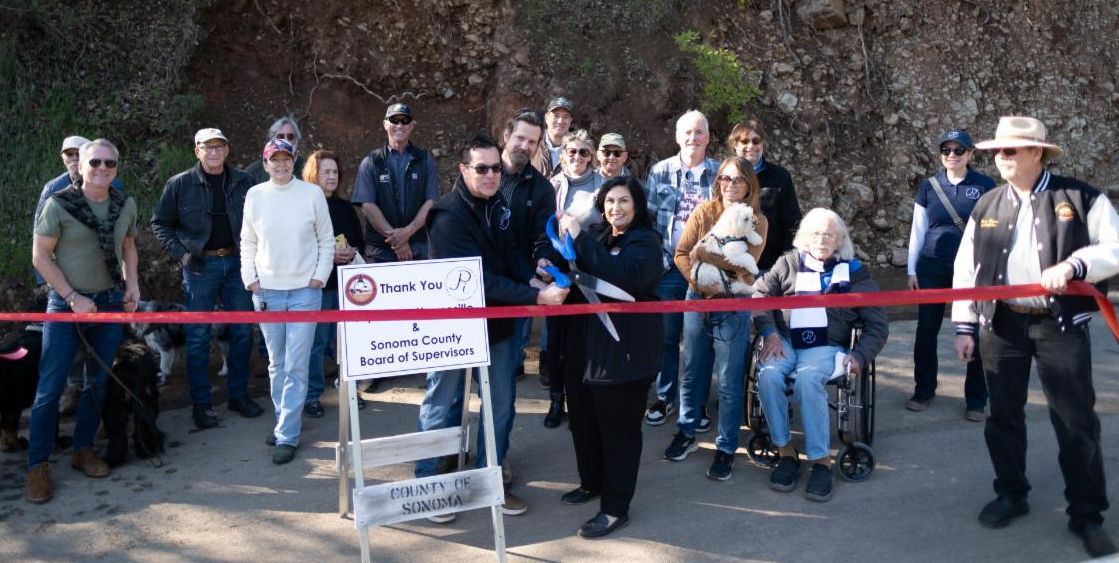
Supervisor Rebecca Hermosillo and Public Infrastructure Director Johannes Hoevertsz celebrate the reopening of Cavedale Road at the Jan. 9 ribbon-cutting ceremony.
After months of construction to repair damage from two major landslides, Cavedale Road reopened last week, restoring a critical connection for residents and emergency responders in east Sonoma County.
Sonoma County Public Infrastructure marked the milestone Jan. 9 with a ribbon-cutting ceremony alongside a new retaining wall that will protect the hillside roadway from landslides during winter storms.
“Cavedale Road serves as a key route for nearby residents and emergency services, and repairing two landslide sites at once was no small feat. It required careful planning, coordination and a commitment to reopening the road as quickly as possible,” said District 1 Supervisor Rebecca Hermosillo, who represents the Sonoma Valley. “This work restores full use of the road and significantly improves its resilience during severe weather.”
Although the two landslide areas were within walking distance of one another, each required a different engineering solution. At the upper slide area, crews removed unstable material, reshaped the hillside and installed fabric and grouted rock slope protection to control erosion. The roadway was then rebuilt with a new base and asphalt surface, allowing that section to reopen early for emergency access during construction.
At the lower slide area, work involved deep excavation, embankment reconstruction and construction of a reinforced retaining wall supported by steel soldier piles, concrete panels and ground anchors designed for long-term stability. Crews also installed drainage systems and completed final paving and roadway safety improvements, including guardrails.
“The Cavedale community worked closely with the County as this project moved forward,” said Johannes Hoevertsz, director of Public Infrastructure. “That collaboration helped us deliver a roadway that is safer, stronger and better prepared for the conditions we’re seeing this winter.”
The Cavedale Road reopening follows recent repairs and reopenings on North Fitch Mountain Road, West Soda Rock Lane and Westside Road. Construction on Wohler Bridge is scheduled to resume this spring, and Giovanetti Road remains in design, with work planned later this year.
| | County fiscal outlook stable for now, uncertainty ahead | | |
The County government is on track to end its fiscal year in June with a balanced budget, but spending cuts will likely be needed next year to avoid a deficit, according to a new forecast presented to the Board of Supervisors.
Staff currently project a $4.7 million shortfall in the 2026-27 fiscal year, equal to about 0.6 percent of total General Fund spending. If the local economy slows moderately, the deficit could grow to an estimated $17.3 million.
The projected shortfall is driven primarily by sharp increases in the cost of insurance, an issue facing local governments across California. The County’s share of employee health insurance costs are expected to increase 14 percent next year, while the cost of general liability insurance is projected to jump 23 percent.
The Dec. 16 budget update also highlighted risks tied to state and federal funding, which support many safety net services. New federal requirements for nutrition and health care programs are expected to increase County administrative costs by requiring additional eligibility checks. At the same time, the state is facing its own budget challenges, limiting its ability to backfill funding reductions.
The County Executive’s Office will work with departments this spring to develop a recommended budget. Across-the-board cuts are not anticipated, though some departments may face pressure to reduce costs. In April, the Board of Supervisors will hold a series of workshops to review the recommended budget and give residents a chance to weigh in. Public hearings on the final proposed budget will begin June 9.
“In a time of ongoing uncertainty, early identification of challenges helps us safeguard essential services, support our workforce, and minimize disruptions for the people who rely on County programs each day,” said Supervisor Lynda Hopkins, 2025 chair of the Board of Supervisors.
| | Health officer warns residents not to eat wild mushrooms after local death | | |
'Death Cap' mushrooms (Amanita Phalloides) shown in various stages of development. (Photo from California Department of Public Health)
A Sonoma County man died early this month after eating wild mushrooms, prompting the County’s top health official to issue a public advisory urging residents not to consume wild mushrooms.
The warning comes amid an unusually high number of poisonings statewide. Between Nov. 18 and Jan. 4, there were 35 cases of wild mushroom poisoning reported in California, including three deaths and three liver transplants. In an average year, fewer than five cases of mushroom poisoning are reported statewide.
“Early rains and a mild fall have led to profusion of the toxic death cap mushrooms in Northern California,” said Dr. Michael Stacey, Sonoma County’s interim health officer. “Eating wild mushrooms gathered without expert identification can be unsafe. Some harmful varieties closely resemble edible mushrooms, even to experienced foragers.”
County health officials stress that the only way to be sure a mushroom is safe is to not eat wild mushrooms at all. Residents are advised to avoid mushrooms picked by friends or family, closely supervise young children playing outdoors, and keep pets away from areas where mushrooms grow. Mushrooms should only be purchased from trusted grocery stores or retailers. Cooking, boiling, freezing or drying mushrooms does not make poisonous varieties safe to eat.
Poisoning symptoms may not appear for 6 to 24 hours, and early nausea can signal a more serious reaction. Even if symptoms improve, severe liver damage can develop days later. Anyone who may have eaten a poisonous mushroom should seek medical help immediately – do not wait for symptoms to appear.
| | Community invited to serve on Martin Luther King Jr. Day at Andy’s Unity Park | | |
Martin Luther King Jr. Day is national day of service, a time to honor Rev. King’s legacy not only through reflection but through action that strengthens communities and advances the values he championed: unity, dignity and service to others.
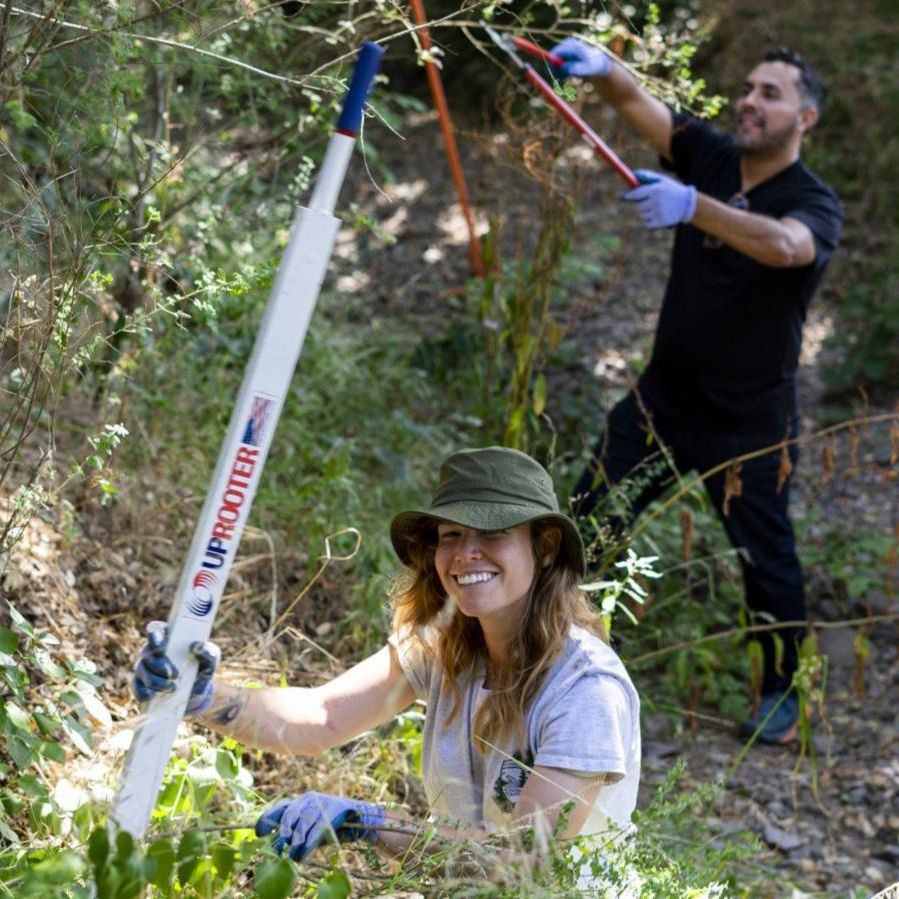
In that spirit, Sonoma County Regional Parks invites residents to take part in the Martin Luther King Jr. Day of Service from 9 a.m. to noon on Monday, Jan. 19 at Andy’s Unity Park, 3399 Moorland Ave., Santa Rosa. Volunteers will help spread mulch, improve park paths and pull weeds. All tools and supplies will be provided, along with snacks and drinks, and lunch will be served afterward. Parking fees are waived for participants.
Volunteers are encouraged to register in advance.
| | New plans strengthen Sonoma County’s emergency response | | |
Sonoma County has updated two essential plans that strengthen how local agencies work together during an emergency and kick-start recovery efforts without delay.
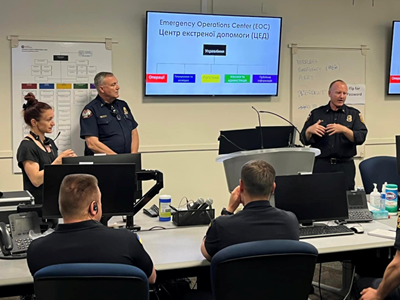
The first is an updated Emergency Operations Plan, the County’s playbook for coordinating the response to large emergencies that affect more than one city or agency. Written in plain language, the plan clearly explains who does what during a crisis – from opening the County’s Emergency Operations Center to sharing information with the public and working with partners like nonprofits, faith-based groups and local businesses. The update also makes the plan easier to navigate and more accessible, with new graphics and Spanish translation.
The second is a brand-new Recovery Operations Plan, focused on helping the County move quickly from response to recovery once the immediate danger has passed. The plan lays out how the County will support housing, health services, the local economy, infrastructure and natural resources, with recovery planning starting as soon as an emergency begins.
The plans, approved by the Board of Supervisors on Dec. 16, were shaped by community input gathered by the Department of Emergency Management during 15 public meetings across Sonoma County last year.
“No single agency can handle a major disaster alone,” said Supervisor Lynda Hopkins, 2025 chair of the Board of Supervisors. “These plans strengthen coordination across local governments, nonprofits and community partners so help reaches people faster when it matters most.”
| |
|
Joshua A. Myers, a seasoned attorney with more than two decades of experience, has been appointed County Counsel. He succeeds Robert Pittman, who is retiring.
Myers will lead the Sonoma County Counsel’s Office, which acts as the legal adviser to the Board of Supervisors and more than two dozen County agencies. His responsibilities will include providing real-time legal advice during Board of Supervisors meetings and overseeing in-house attorneys and outside counsel that work on public liability, labor issues, land use and environmental compliance, law enforcement, health care, probate, public works, special districts, and contracts.
Myers joined the County in 2009 and has served as Chief Deputy County Counsel since 2020.
Previously, he worked for law firms in Santa Rosa and in New Mexico. He has a law degree from the University of New Mexico.
| | Join the conversation at SoCo Chat | | |
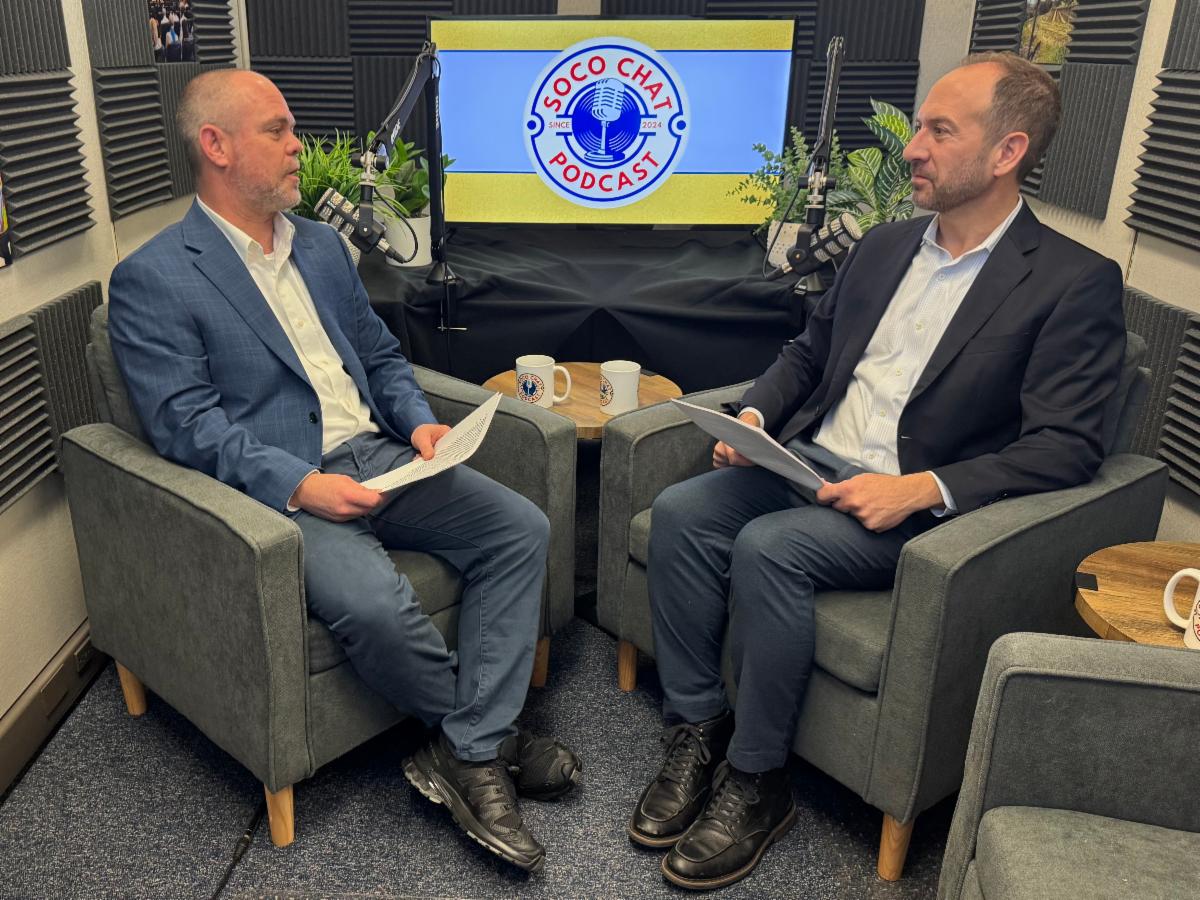
Matt Brown, left, supervising County communications specialist, speaks with Dr. Michael Stacey, the County’s interim health officer, during a new episode of SoCo Chat out today.
Respiratory virus season is here in Sonoma County, and experts warn cases could rise in the weeks ahead. Dr. Michael Stacey, the county’s new interim health officer, joins SoCo Chat to break down the latest trends with COVID-19, flu and RSV. How can you stay healthy this winter? Dr. Stacey has some practical tips. We clear up confusion around new federal vaccine guidance for children, share where to find reliable health information, and dig into a concerning spike in toxic mushroom poisonings.
Subscribe to SoCo Chat on Spotify, Apple Music, Amazon Music and YouTube, and check out our growing library of episodes in both English and Spanish (Descubre nuestra creciente selección de episodios en inglés y español). Recent guests and topics of discussion have included:
- Need a puppy? The Sonoma County Animal Shelter has lots of them – and would love to send one home with you. Shelter Supervisor Emma Diemert shares some practical tips for adopting and offers guidance on how you can keep your animals safe over winter. Plus, learn how fostering a pet can make a big difference without a full-time commitment.
- Thousands of Sonoma County families rely on CalFresh to put food on the table, but the recent federal government shutdown temporarily eliminated that safety net. When federal funding stops, hunger doesn’t. Allison Goodwin, CEO of Redwood Empire Food Bank, shares how her team is stepping up to meet the surge in need – and what each of us can do to help make sure no one in our community goes hungry.
- Federal budget cuts could have significant impacts in Sonoma County, affecting everything from housing and health care to infrastructure and social services. Deputy County Administrator Peter Bruland explains what’s at stake – and why the County may face some tough choices in the future.
- Open Doors is a new initiative that will make it easier than ever for people to get help with food, housing, child care and much more. It’s based on a simple concept: It shouldn’t matter which door you knock on first, whether it’s a County agency or one of the hundreds of local nonprofits that are joining in this effort. Every door should be open, and every door should take you to the services you need. Angela Struckmann, director of the Sonoma County Human Services Department, explains how Open Doors works and why it could transform the way people connect with services in our community.
| | Find room to grow with a County job | | |
The County currently has more than 40 job openings posted on its website. How can you improve your chances of landing one?
Sign up for the next Start Here! class, which provides an overview of the County of Sonoma’s job application, examination and selection processes. The next two-hour class will be held Feb. 4 at 10 a.m. on Zoom.
The free class is intended for the public, whether you are looking for a new position now or planning for a future employment opportunity. Participants will learn how to submit a thorough application, best practices for the interview and examination, and much more.
Contact us at careers@sonoma-county.org to register for the Feb. 4 class or sign up for our mailing list to be notified of future classes.
| | Adopt the pet of the week | | |
My name is Tiger. I’m a 4-year-old male pit bull terrier who was brought to the shelter in July. I weigh 58 pounds and my heart is as big as my smile. My caregivers say I am calm and easygoing, but I light up with a stuffed toy or a game of fetch. Whether on a walk, car ride, or enjoying a nap, I’m happiest when I am by your side. Will you bring me into your family?
Tiger is one of dozens of cats, dogs, rabbits and other animals at Sonoma County Animal Services in need of adoption.
| | Volunteer and employment opportunities | | |
(stories may require subscriptions)
| | Upcoming meetings and events | | Upcoming meetings and events | | Getting outside and enjoying the county | | A story published in the Dec. 13 newsletter incorrectly described new rules for fences in rural residential areas. The rules will allow certain fences up to 6 feet in height in the front yard and along roadways, and up to 8 feet in side and rear yards. An updated version of the story can be viewed here. | | Follow us online or contact us via email | | | | |