SoCo Correspondent delivers the latest news from the County of Sonoma, twice a month, to your email inbox. Subscribe in English or Spanish and share with your friends and neighbors. | | Sonoma County leads California in reducing homelessness, but progress faces new threats | | |
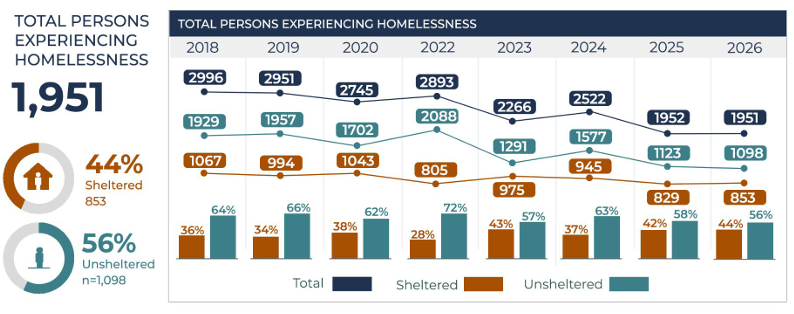
While homelessness has surged across much of California over the last 15 years, Sonoma County has moved in the opposite direction, cutting its homeless population by 57% since 2011 – the largest decline in the state. But now, after years of progress, the numbers have stopped falling, funding is drying up and the people who remain homeless face increasingly complex challenges.
The County’s annual Point-in-Time Count identified 1,951 people experiencing homelessness this year, virtually unchanged from 2025. The findings were presented to the Board of Supervisors on Oct. 27 in a new report that examines who is experiencing homelessness, the barriers they face and the challenges ahead.
Sonoma County’s Continuum of Care Homeless Coalition ranked first in reducing homelessness among 40 COC regions tracked consistently in California since 2011, according to federal data analyzed by the Department of Health Services. The Coalition coordinates efforts by government agencies, nonprofits and community groups to help people find and maintain stable housing.
Much of that progress coincided with investments in permanent housing. Between 2011 and 2025, the County and its partners more than quadrupled the number of permanent housing beds – places where people can live long term, rather than stay temporarily in shelters. But that trend reversed this year as pandemic-era subsidies expired, eliminating 480 permanent housing beds, or nearly one in five of the 2,482 available in 2025.
Meanwhile, the needs of people experiencing homelessness are becoming more complex. Chronic homelessness – generally involving a disability and prolonged or repeated homelessness – increased 12% to 818 people. Among people surveyed, three in four reported at least one disabling condition, compared with 55% last year. The findings point to a growing need for intensive support services, including medical care, mental health treatment and help maintaining stable housing.
The report challenges assumptions about where homelessness begins: Nine out of 10 people surveyed were already living in Sonoma County when they became homeless. One in five became homeless after losing a job. Nearly half identified unaffordable rent as an obstacle to finding permanent housing. Almost one in 12 was under age 25, a 46% increase in youth homelessness from the previous year.
Overall, the count remained stable despite a 17% reduction in County funding to many homeless-service organizations. With pandemic funding exhausted and other resources under pressure, officials warned fewer people may be able to get the housing and support they need to escape homelessness.
“We’ve made extraordinary progress by investing in housing and working together across our community. But we’re standing at the edge of a cliff,” said Nolan Sullivan, director of Health Services. “The funding that helped us make these gains is disappearing just as more people need intensive services to regain stability. The question now is whether we can sustain what we’ve built – or watch years of hard-won progress begin to unravel.”
| | What happens to your ballot after Election Day? | | |
The polls closed Tuesday night, but it could take up to four weeks to finish counting and verifying every vote. And that’s exactly how California’s election process is designed to work.
The reason? California intentionally makes voting convenient, giving voters multiple ways to cast a ballot. But state and county election officials have also built in safeguards to make sure every valid ballot is counted accurately. That takes time.
The vast majority of Sonoma County votes by mail, and those ballots will continue to trickle in over the next five days. Vote-by-mail ballots postmarked by Election Day can still be counted if they arrive by Nov. 10. That means the results reported on election night are preliminary and may change as more ballots are counted.
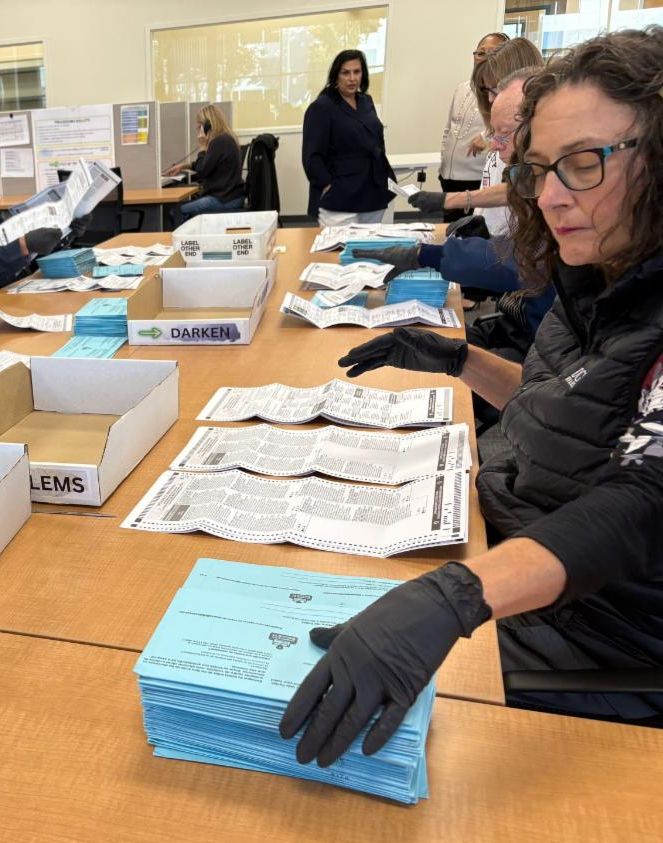
Every vote-by-mail ballot goes through several checks before it can be counted. First, election workers compare the signature on the return envelope with signatures on file. If the signature is approved, the ballot is then removed from its envelope, inspected for damage and scanned.
If a signature doesn’t match, election workers notify the voter and give them a chance to resolve the issue by Nov. 25. If a ballot is damaged or can’t be read by a scanner, two election workers copy the voter’s selections onto a new ballot so it can be counted. Election workers also compare Vote Center rosters with voter activity reports to make sure each voter’s participation is recorded accurately.
Provisional ballots and ballots cast by people who registered on Election Day require additional eligibility checks. Election workers must verify that each voter is registered, eligible to vote and hasn’t already cast another ballot in the election.
To check the accuracy of vote-counting machines, election workers select batches of ballots at random – sampling 1% of mail-in ballots and ballots cast in person at Vote Centers – and recount them by hand. The hand count is then compared with the machine totals to see if the numbers match.
All of this work takes place in public view and must be completed before the Dec. 3 deadline for finalizing results. Residents can observe ballot counting in person at the Registrar of Voters’ new office at 3880 Brickway Blvd., near Charles M. Schulz–Sonoma County Airport.
“Every ballot matters, whether it arrives weeks before Election Day or right at the deadline,” said Registrar of Voters Evelyn Mendez. “We take the time to check every ballot carefully because voters deserve results they can trust.”
| | Board of Supervisors approves $1.5 million to expand support for immigrant communities | | |
The Board of Supervisors on Oct. 27 approved a $1.5 million agreement with VIDAS, short for Vital Immigrant Defense Advocacy and Services, to expand legal assistance, mental health services and other support for local immigrants and their families.
The two-year initiative will strengthen a countywide network of community organizations that help immigrants obtain legal representation, access culturally responsive mental health care and connect with essential services. It will also support multilingual outreach, immigration-related psychological evaluations and assistance for families facing immigration enforcement actions.
“Our immigrant communities are vital to our county, and they are facing enormous pressure and uncertainty. As a county we have a responsibility to help provide additional resources to meet their needs,” said Supervisor Rebecca Hermosillo, chair of the Board of Supervisors. “We listened to the organizations working directly with these families, and they told us where the greatest needs are. On a 5-0 vote, we backed up our commitment with funding to close those gaps and make sure more families can get help when they need it most.”
| | |
VIDAS will coordinate the initiative with 16 community partners, including legal service providers, mental health organizations and community-based groups. The project, called Sonoma County Immigration Support: A Blueprint for Belonging, will operate six community hubs that help residents find assistance and guide them through referrals and follow-up services.
The investment responds to gaps identified during a March meeting convened by the Board of Supervisors’ ad hoc committee exploring ways to support local immigrants. More than 40 people who work with immigrant communities identified pressing needs for affordable immigration legal representation, mental health care and better coordination among service providers.
In April, the Board set aside the $1.5 million as part of a broader effort to protect local immigrants’ civil rights and strengthen community support. The action followed a January 2025 resolution affirming the County’s commitment to protecting residents regardless of immigration status.
| | Mark West neighbors turned shared vision into new community park | | |
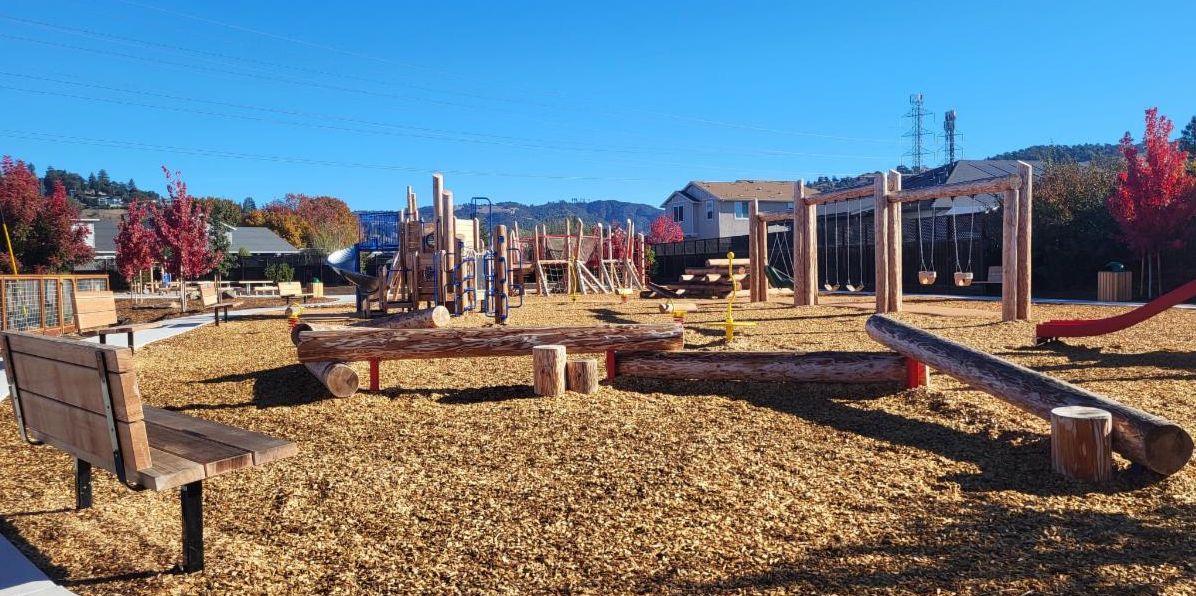
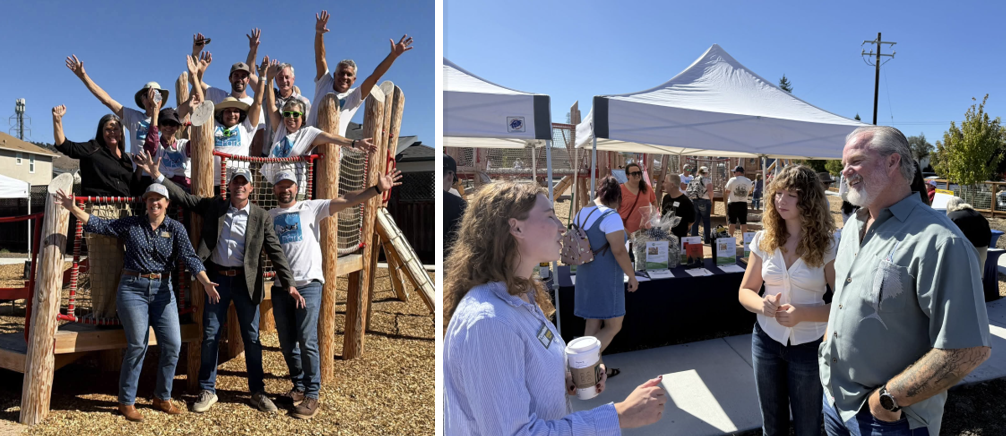
Nine years after the Tubbs Fire destroyed a daycare center in Mark West, the property has been transformed into a small park where children can play, neighbors can gather and a community can continue healing.
Mark West Area Community Park celebrated its grand opening Oct. 10, marking another milestone in the county’s recovery from the 2017 wildfires. The 1-acre park on Old Redwood Highway was envisioned and championed by local residents, who formed the nonprofit Mark West Area Community Fund to bring their idea to life. Working with Sonoma County Ag + Open Space and Sonoma Land Trust, they secured the property and created a public gathering place with a playground and picnic facilities.
Ag + Open Space contributed nearly $1.17 million toward the $1.8 million property acquisition and secured permanent protections ensuring the land remains conserved and available for public recreation. An additional $300,000 grant supported park planning and development.
“This park is proof of what neighbors can accomplish when they come together around a shared vision,” said District 4 Supervisor James Gore, who represents north Sonoma County. “The Mark West community made this happen, and it will take that same spirit of generosity and commitment to keep the park thriving for generations to come.”
The park is owned and operated by the Mark West Area Community Fund, a local nonprofit that depends on donations to cover landscaping, playground maintenance, cleaning, repairs and other operating costs. Community fundraising is also helping advance plans for the Chief Doug Williams Memorial Gazebo, one of the park’s remaining improvements.
| | Transit agencies join forces to improve bus service, connections to SMART | | |
Sonoma County’s three local bus systems are joining forces to transform a patchwork of overlapping routes into a coordinated transportation network that provides more than 2 million rides a year.
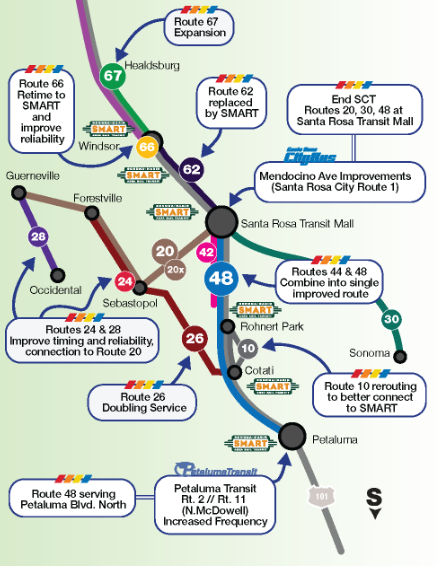
The Board of Supervisors on Oct. 27 endorsed proposed changes to County bus routes and schedules as part of a regional effort to reduce overlapping service, improve connections and make better use of limited resources.
By eliminating unnecessary duplication along busy corridors, Sonoma County Transit, Santa Rosa CityBus and Petaluma Transit aim to provide more frequent service and better connections without requiring additional funding.
“Our transit agencies are recognizing that the best way to serve residents is to work together, not operate independently,” said Supervisor Rebecca Hermosillo, chair of the Board of Supervisors. “By coordinating routes, we can improve services, help more people move around the county and get to work or school, while also making better use of public dollars. This is innovative, and what regional cooperation should look like.”
The changes are part of the Marin-Sonoma Coordinated Transit Service Plan, or MASCOTS, a broader effort by nine Bay Area transit and funding agencies to improve public transportation across Sonoma and Marin counties. Although the three local bus systems remain independent, they are planning routes and schedules together as though they were one agency, with the goal of making transfers easier and improving connections to SMART trains.
The proposed improvements reflect what riders have told transit planners they want most: more frequent, reliable buses and better connections between services.
For example, Santa Rosa CityBus plans to run buses every 15 minutes along Mendocino Avenue, allowing Sonoma County Transit to end some regional routes at the Santa Rosa Transit Mall rather than continue along the same corridor.
The changes are scheduled to take effect next February.
| | Sonoma County Transit celebrates new electric buses and charging system | | |
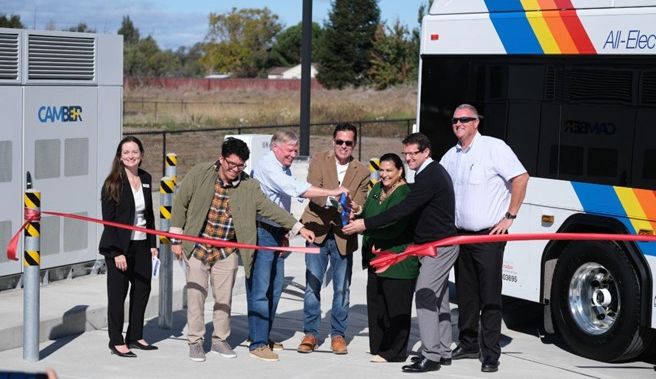
Sonoma County Transit has taken another step toward cleaner, more reliable transportation with the addition of seven electric buses and a new charging system designed to keep buses operating during power outages.
County leaders celebrated the milestone at an Oct. 26 ribbon-cutting ceremony in Santa Rosa, marking the completion of a project made possible by years of planning and collaboration among local, state and federal partners.
The seven new 40-foot buses bring Sonoma County Transit’s zero-emission fleet to 18 vehicles. The new charging system includes backup power to keep buses charged during power outages, strengthening the agency’s ability to provide emergency transportation – a role it played during the 2017 and 2019 wildfire evacuations.
“The new electric buses and charging system represent an important investment in cleaner transportation and reliable public service,” said Supervisor Rebecca Hermosillo, chair of the Board of Supervisors. “They will help reduce emissions while strengthening Sonoma County Transit’s ability to serve our community every day and during emergencies.”
Sonoma County Transit serves more than 2,700 passengers daily on 19 routes, connecting residents with jobs, medical appointments and other destinations. All nine local routes are fare-free.
The County plans to add more electric buses as it works toward electrifying most of its heavy-duty transit fleet by 2030.
| | A new roadmap for safer walking, biking and rolling in Sonoma County | | |
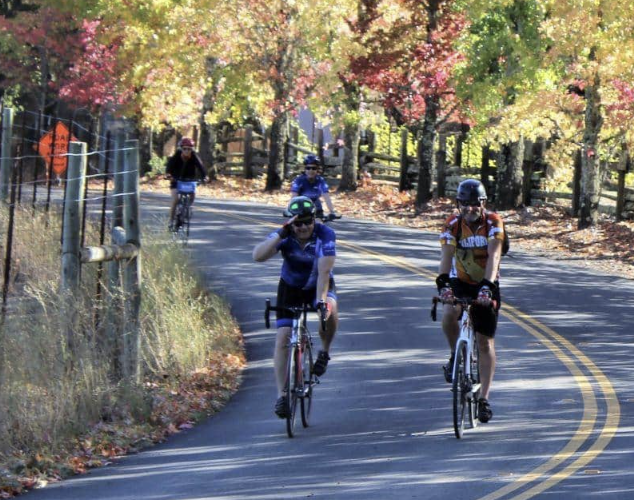
For people who walk or bike in Sonoma County, getting from one place to another isn’t always as simple as it sounds. Roads without bike lanes or safe places to walk can make some trips difficult. A new plan adopted by the Board of Supervisors on Oct. 27 aims to make walking and biking safer and easier.
The Active Transportation Plan replaces the County’s 2010 Bicycle and Pedestrian Plan with updated policies and a revised list of potential projects, including improved bike lanes, safer pedestrian crossings and better connections between communities in unincorporated Sonoma County.
“Safe, accessible walking and biking routes are essential to healthy, connected communities,” said Supervisor Rebecca Hermosillo, chair of the Board of Supervisors. “This plan reflects the priorities we’ve heard from residents and gives us a roadmap for making meaningful improvements that will benefit Sonoma County communities for years to come.”
How does the County decide which improvements to pursue first? Projects are ranked by safety, equity, access to schools and public transit, and whether they would connect existing walking and biking routes. The goal is to create safer, more comfortable routes for people of all ages and abilities.
Developed by Permit Sonoma in partnership with the Sonoma County Transportation and Climate Authorities, the plan reflects three years of collaboration among residents, advisory committees and County agencies. Community workshops, pop-up events and surveys helped shape the proposed improvements.
The County’s plan completes a regional effort to improve walking and biking routes across Sonoma County. All nine cities have adopted similar plans. Together, the plans will help the County and cities coordinate improvements, connect routes across their borders and strengthen applications for state and federal funding.
The Board’s action sets priorities for future improvements but does not fund or authorize construction. Individual projects can move forward once funding is secured and necessary approvals are obtained.
Want to see what’s proposed in your community? Visit PermitSonoma.org/ATP to explore interactive maps of potential projects and read the full plan.
| | Free Veterans Day parking at Sonoma County Regional Parks | | |
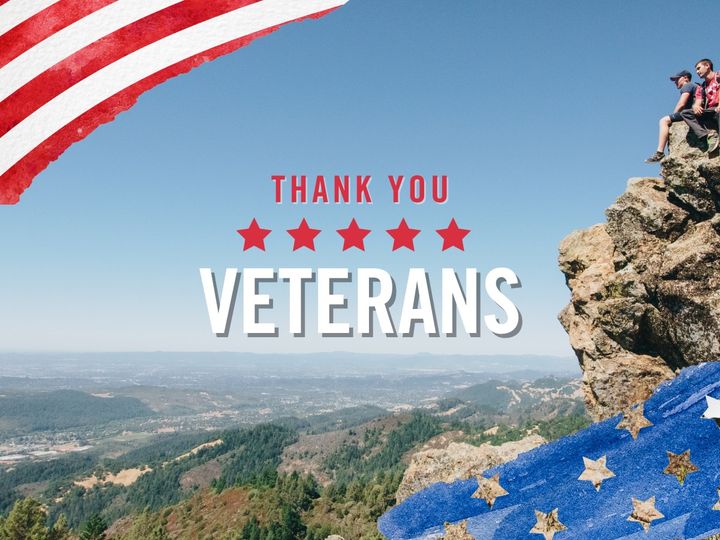
Veterans, active-duty military personnel and their families can enjoy free parking at all Sonoma County Regional Parks on Veterans Day, Wednesday, Nov. 11.
The annual offer, made in partnership with the Board of Supervisors, honors the contributions of those who have served in the military. No special pass is required, but visitors should be prepared to show proof of veteran or active-duty military status, such as a military or veteran identification card or discharge certificate. Sonoma County residency is not required.
Regional Parks also offers a year-round Distinguished Veterans Day-Use Pass, which provides free parking to veterans with qualifying disabilities, former prisoners of war and Medal of Honor recipients.
With more than 60 parks, trails and beaches, there’s no shortage of places to explore coastal landscapes, hike scenic trails and enjoy the outdoors.
| | Join the conversation at SoCo Chat | | |
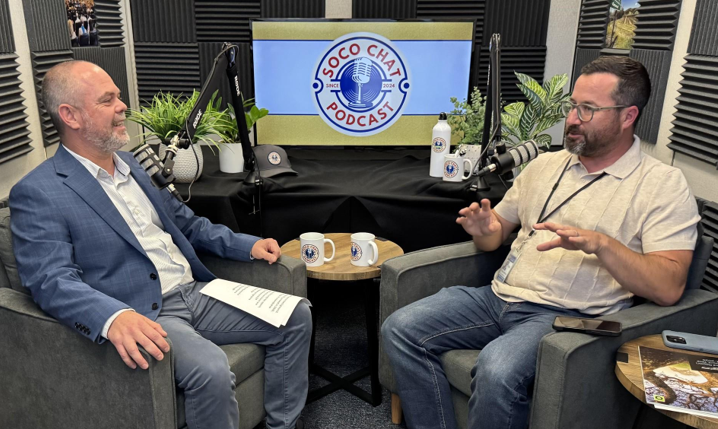
Matt Brown, left, supervising communications specialist in the County Executive’s Office, interviews Nolan Sullivan, director of the Department of Health Services, during a new episode of SoCo Chat.
Sonoma County residents are already seeing the effects of Measure O, the quarter-cent sales tax that voters approved in 2020 for behavioral health and homelessness services. The funding is helping to ensure that the county’s most vulnerable residents have access to mental health, housing and community resources. But the funding is not unlimited. Measure O has a sunset date of 2031 and will require renewal at the ballot box. Nolan Sullivan, Sonoma County’s Director of Health Services, discusses the importance of Measure O and the impact it is having on our community.
Subscribe to SoCo Chat on Spotify, Apple Podcasts, Amazon Music and YouTube, and check out our growing library of episodes. Recent guests and topics of discussion have included:
- Election Day may be over, but the work of counting ballots and verifying results continues. Why does it sometimes take days or even weeks to determine the winners? And what safeguards are in place to ensure every eligible vote is counted accurately? Sonoma County Registrar of Voters Evelyn Mendez explains how elections are administered, what happens behind the scenes after polls close, and how her office works to protect the integrity of the vote in an era of election misinformation.
- When disaster strikes, Sonoma CART jumps into action to protect animals in Sonoma County. The volunteer-run nonprofit works alongside Sonoma County Animal Services and other local agencies to help evacuate, shelter and reunite animals with their owners during emergencies. Angie Martin, community outreach manager with the Sonoma Community Animal Response Team, explains the group’s role during a disaster, what you can do to prepare your animals for an emergency, and how you can support their work.
- Sonoma County urgently needs more foster families to provide safe, stable homes for children who cannot remain with their parents. Meg Easter Dawson, program development manager at Valley of the Moon Children’s Center, discusses the realities of foster parenting, the support available to foster families, and the profound difference a caring adult can make in a child’s life. Learn who can become a foster parent, what to expect from the process, and how you can help create a brighter future for a local child in need.
| | Find room to grow with a County job | | |
The County currently has more than 30 job openings posted on its website. How can you improve your chances of landing one?
Sign up for the next Start Here! class, which provides an overview of the County of Sonoma’s job application, examination and selection processes. The next two-hour class will be held Nov. 12 at noon on Zoom.
The free class is intended for the public, whether you are looking for a new position now or planning for a future employment opportunity. Participants will learn how to submit a thorough application, best practices for the interview and examination, and much more.
Contact us at careers@sonomacounty.gov to register for the Nov. 12 class or sign up for our mailing list to be notified of future classes.
| | Adopt the pet of the week | | |
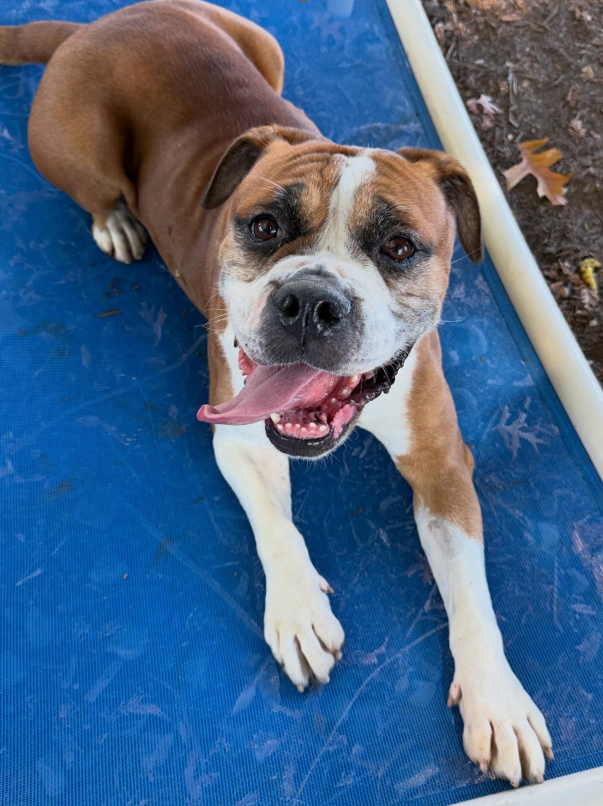
Meet Panda. This 6-year-old female bulldog mix is an absolute doggie dreamboat. Our staff and volunteers are completely smitten with this sweet girl, but she’s been at the shelter since July and needs a loving forever home. Could Panda be your perfect match?
Panda is among dozens of cats, dogs, rabbits and other animals at Sonoma County Animal Services in need of adoption.
Animal Services helps match pets and families through an adoption process designed to support your lifestyle and the animal’s needs. Shelter staff are ready to assist with applications, answer questions and share details about each animal’s health, temperament and care. All animals adopted through the shelter go home spayed or neutered, microchipped and up to date on vaccinations, giving your new companion the healthiest start possible in your forever home.
| | Get involved with County government | | |
Government is only as good as the people who step forward to serve. There are many opportunities available now to support the community by serving on County boards, commissions and committees. Here are just three examples:
-
Independent Citizens Pension Committee – Provides independent oversight and review of the Sonoma County Employees’ Retirement Association, helping ensure transparency, accountability and responsible administration of the County’s retirement system.
-
IOLERO Community Advisory Council – Advises the Independent Office of Law Enforcement Review and Outreach on community concerns, public safety issues and opportunities to strengthen transparency, accountability and trust between law enforcement and the community.
-
Local Task Force on Integrated Waste Management – Advises the County on solid waste management, recycling, waste reduction and resource recovery strategies to support sustainable waste management practices throughout Sonoma County.
Check out the full list of vacancies and discover how you can help shape the future of Sonoma County.
| | Volunteer and employment opportunities | | |
(stories may require subscriptions)
| | Upcoming meetings and events | | Upcoming meetings and events | | Getting outside and enjoying the county | | Follow us online or contact us via email | | | | |