Issue 57

July 23, 2026

Time to Read: 6 minutes


-Hot Take-

The real factory experts aren’t in the corner office; they’re the ones eating lunch in the break room with coolant on their boots.

Joke of the Week

Q: Why was the endmill always invited to parties?

A: It really knew how to cut loose.

Ask a CAM Pro

Real shop problems. Answers from people who have been there.

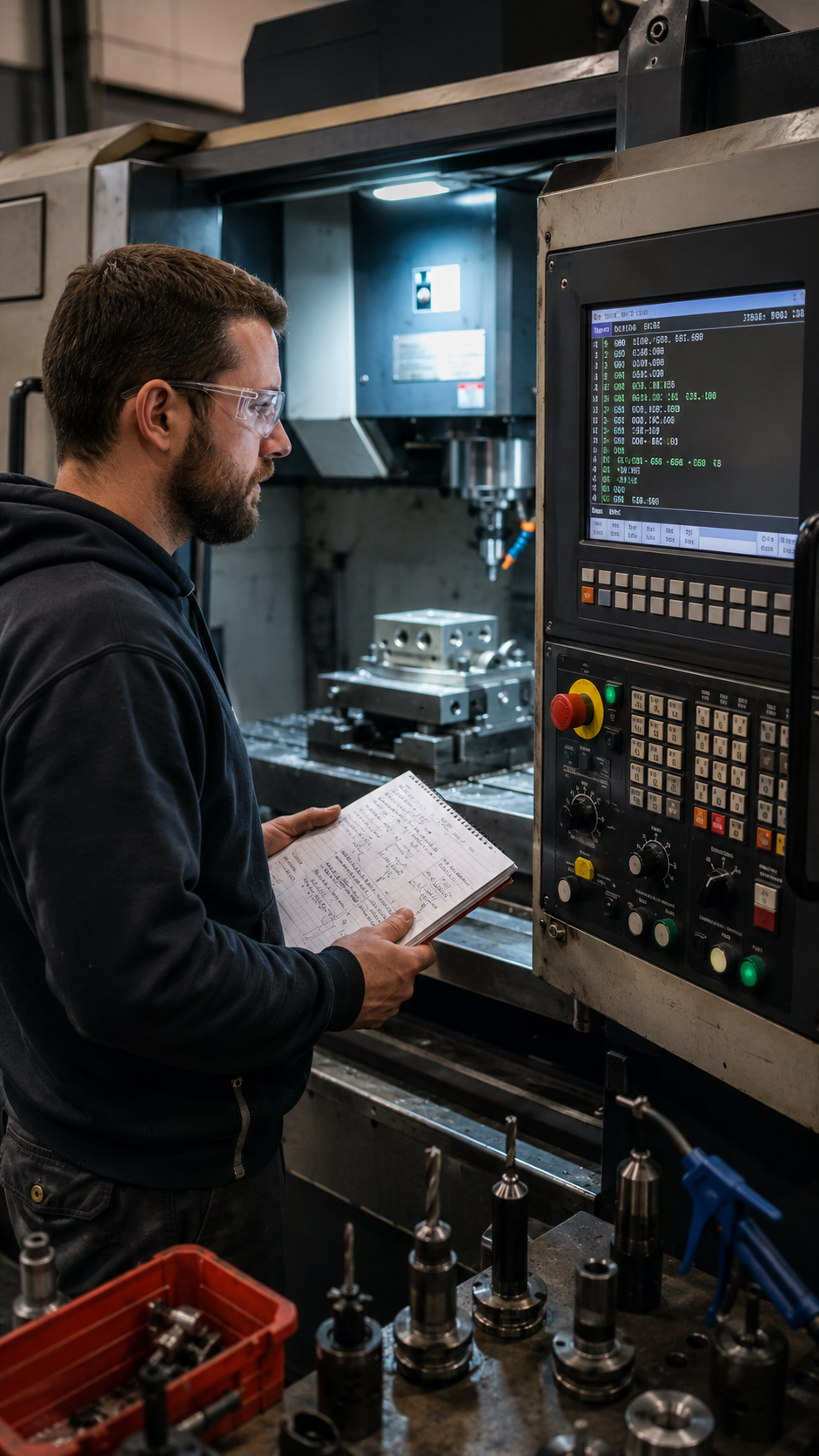
How do I plan balanced cutting forces through CAM settings?


Cutting forces influence nearly every aspect of a machining operation: surface finish, tool life, part accuracy, spindle load, and machine stability. When the load spikes or shifts unevenly, parts start to move, tools deflect, and chatter takes over. Planning for balanced cutting forces begins with your CAM strategy. It starts with controlling tool engagement, cutting direction, and chip thickness from the very beginning. 


Start with toolpath style.

Choose strategies that keep radial engagement consistent. Adaptive or constant-engagement toolpaths are designed to maintain more consistent cutter engagement, helping distribute cutting forces more evenly across the tool. Traditional offset toolpaths can create higher cutting loads in corners and during abrupt direction changes, which leads to chatter and wear.


Control your stepovers and stepdowns.

The ratio between radial and axial engagement determines how steady your tool load stays. When appropriate, a smaller radial stepover combined with greater axial engagement spreads the cutting load over more of the tool's flute length and can produce a more consistent cutting force. If part geometry requires greater radial engagement, adjust your feeds and speeds accordingly to maintain a stable chip load.


Choose the right tool for the strategy.

Tool geometry plays a major role in cutting forces. Variable-helix end mills, appropriate flute counts, and minimizing tool stickout can all reduce vibration and help maintain a more consistent cutting load.


Use climb milling for stability.

Climb milling generally produces better surface finishes and lower cutting forces by reducing rubbing and allowing the cutter to enter the cut at maximum chip thickness before exiting at minimum chip thickness. This often results in better tool life, improved dimensional accuracy, and reduced tool deflection, especially in harder materials. Conventional milling still has its place, but climb milling is generally preferred on modern CNC machines whenever workholding and machine conditions allow. 


Keep feed per tooth and chip thickness consistent.

Program feeds and speeds based on engagement, not just diameter. At lower radial engagements, radial chip thinning occurs. If appropriate for the application, increasing feed per tooth can maintain the desired chip thickness.


Use arc or tangent entries and exits.

Whenever possible, avoid straight plunges into solid material and abrupt exits. Lead in with a smooth ramp or helical move, and lead out tangent to the surface. These small details reduce sudden changes in cutting forces that can show up as vibration or witness marks.


Distribute cutting forces through sequencing.

For delicate or thin-walled parts, alternate cutting directions or sides to balance cutting forces on each wall. Removing material evenly from both sides of a feature helps prevent bending or warping.


Apply smoothing filters carefully.

Extremely fine toolpath tolerances or excessive short line segments can prevent the machine from maintaining programmed feedrates, leading to unnecessary acceleration and deceleration. When appropriate, use smoothing or arc-fitting features available in your CAM software to produce cleaner, more efficient tool motion.


Monitor and tune with real feedback.

If your machine supports load monitoring, watch the spindle load graph while cutting. Adjust stepover, feed, or lead angles until the spindle load remains as consistent as possible. A steady spindle load often indicates more consistent cutting forces.


Bottom line:

Balanced cutting forces come from consistent engagement, efficient toolpaths, and stable machine motion, not simply slower feeds and speeds. When cutting forces remain consistent, tool life improves, surface finishes become more predictable, and your machine spends more time cutting instead of fighting vibration.


Have a programming question?


Send it in for the next edition of Ask a CAM Pro!

Shop Floor Debate

How far ahead can your shop realistically see its workload?

Last week's debate: The manufacturing knowledge pipeline isn’t online. It’s standing at the machine next to you, and last week’s poll results prove it.

From the Floor

Teaching G-Code So No One Gets Burned


"I get asked whether operators still need to understand G-code now that CAM is everywhere. My answer? You bet your ass.


Not every crash comes from bad code, but not knowing what M-codes and G-codes actually do has burned more than a few people.


Some of these machines are worth millions. Owners do not want button-pushers. They want people who understand what the code is telling the machine to do.


That is why I teach anyone who will listen, from greenhorns to old hands."

-Veteran Machinist

CNC Underground: Afterhours

Phil Miller of Star Machine joined CNC Underground: Afterhours to discuss his unique journey from growing up Amish to building and running a successful CNC machining shop. This episode is packed with insights on adapting to new technology, fostering a strong shop culture, and overcoming the challenges of entrepreneurship in manufacturing.


Key Takeaways:

  • Uncover why clearly defining your ideal customer and learning to say no can be game changers for a young shop.
  • Find out how work ethic, honesty, and psychological safety are essential for building a positive team culture and training the next generation.
  • Gain practical advice on transforming mistakes into learning opportunities and why sharing knowledge, rather than hoarding it is key to business growth.

Video of the Week (Powered by GibbsCAM)

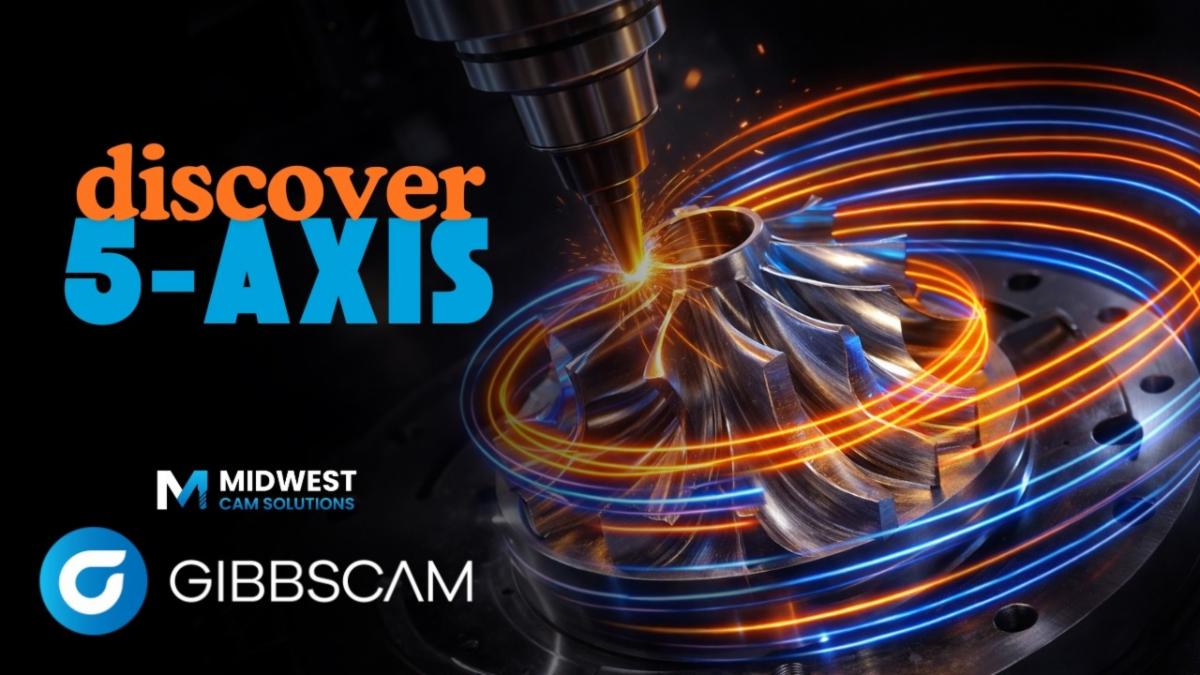
GibbsCAM 5-Axis Webinar & Capabilities

Learn how to create, control, and simulate 5-axis toolpaths in GibbsCAM, including simultaneous machining, swarf milling, drilling, gouge protection, and collision checking.

CAMedy Central

Industry Intel

America Wants A Manufacturing Comeback. Which One Will It Get?

US manufacturing construction spending has surged, but whether that turns into a genuinely stronger industrial base depends on which of five possible futures takes hold: consolidation, domestic "fortress" isolation, subsidy dependence, hard-tech innovation, or automation, with real success hinging on building lasting capability and growth rather than just new factories.


H.R. 1 at Work: 50 Manufacturing Tax Wins in 50 States

Marking the one-year anniversary of the 2025 tax law, the National Association of Manufacturers released a collection of success stories from all 50 states showing manufacturers crediting the law's permanent tax provisions for new investment, hiring, wage increases and facility expansions, with NAM leaders and Republican lawmakers using the examples to push Congress to protect the law's provisions.


Sunnen Products Co. Launches Machine Buy-Back Program

Sunnen Products is letting manufacturers sell back or trade in their existing Sunnen honing machinery for a newer model, with each returned unit inspected, serviced and resold as part of a warranty-backed pre-owned equipment line meant to cut acquisition costs and extend the life of precision machinery.

Manufacturing Survey

Manufacturing policy is being shaped now. Shops should have a say.

Tariffs. Supplier risk. Federal policy shifts. The 2026 Reshoring Survey captures how manufacturers are actually responding and what's driving their decisions.


In 10 minutes, you'll be able to see exactly how your strategy compares to peers, and your input shapes data used by policymakers and economic developers across the country.


Take the survey → Get the full results.

Industry Growth (Open Jobs)

A few hot openings across the industry this week:


Tool Room Machinist - Kurt Manufacturing - Coon Rapids, MN


Process Engineer, 5-Axis CNC Programmer/Machinist - Vanpro Inc. - Cambridge, MN


CNC Machinist/Programmer - Herman Mold & Tooling, Inc. - Fairfield, IA


Manufacturing & Quality Engineering Manager - AG Growth International Inc. - Sioux Falls, SD


Weekend Shift Machinist - Doosan Bobcat NA US - Wahpeton, ND


Tool & Die Maker - Valmont Industries - Valley, NE


CNC Machinist (3-Axis & 5-Axis) - G.H. Tool & Mold - Washington, MO


CNC Machinist - Spirit AeroSystems - Wichita, KS

Trade Show & Event Radar

July 29-30

Advanced Manufacturing Expo

Grand Rapids, MI

Sept 5

Minnesota Manufactured Day - Minnesota State Fair

Falcon Heights, MN

Sept 14-19

IMTS

Chicago, IL

Oct 6-7

Top Shops Conference

Cleveland, OH

Oct 21-23

FABTECH

Las Vegas, NV

Oct 28-29

MD&M Midwest

Minneapolis, MN

Nov 11-13

Titans of CNC Boombastic Show

Flower Mound, TX

Did someone forward you this newsletter?

Subscribe to get your own copy every week.