|
Hello!
As the school year winds down and summer approaches, May is often a time of reflection, transition, and planning ahead. For many families, it can also bring increased awareness of academic, emotional, social, or behavioral challenges that may have become more noticeable throughout the year.
At McCaskill Family Services, we understand that every child, teen, and family has unique strengths and needs. Whether you are seeking support for anxiety, ADHD, learning differences, executive functioning, autism, relationships, or emotional wellness, our team is here to help.
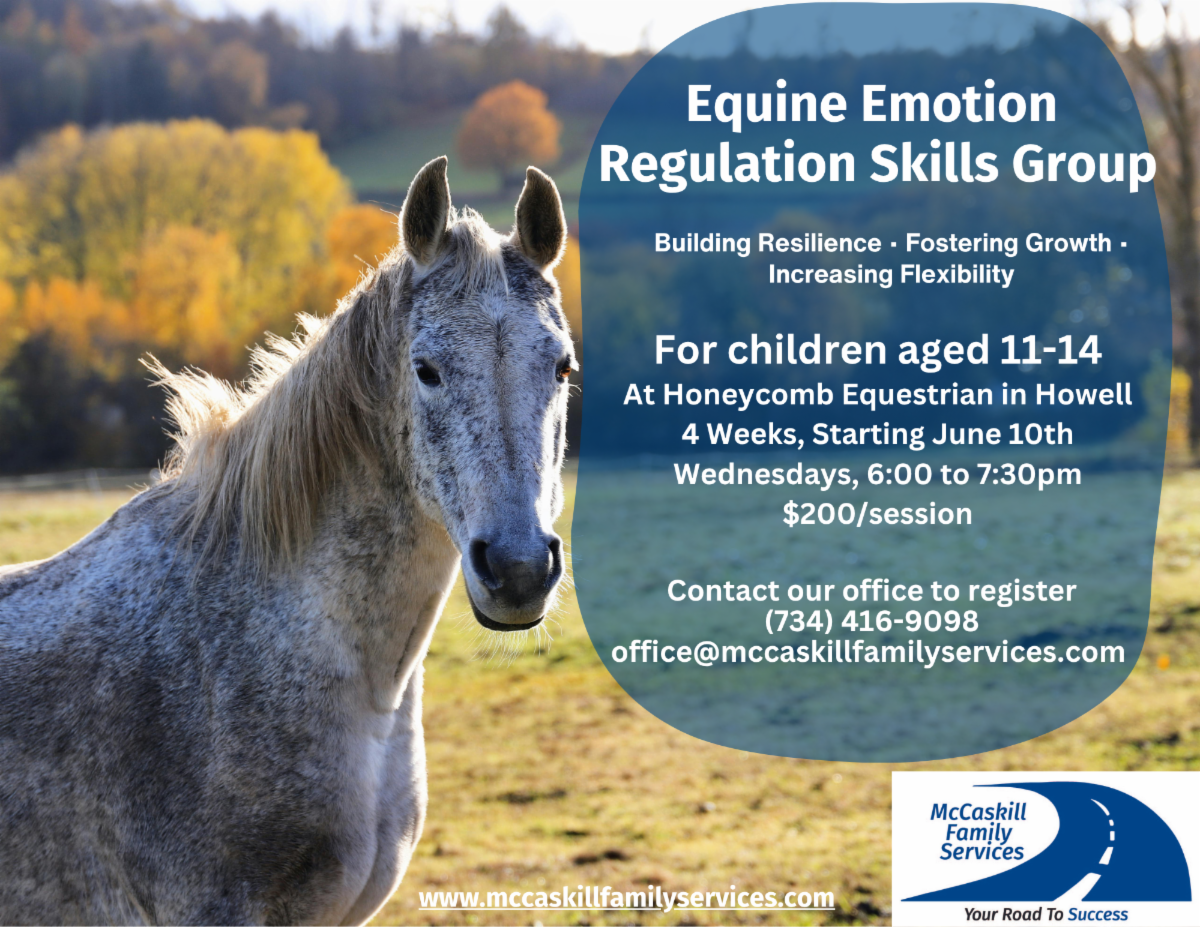
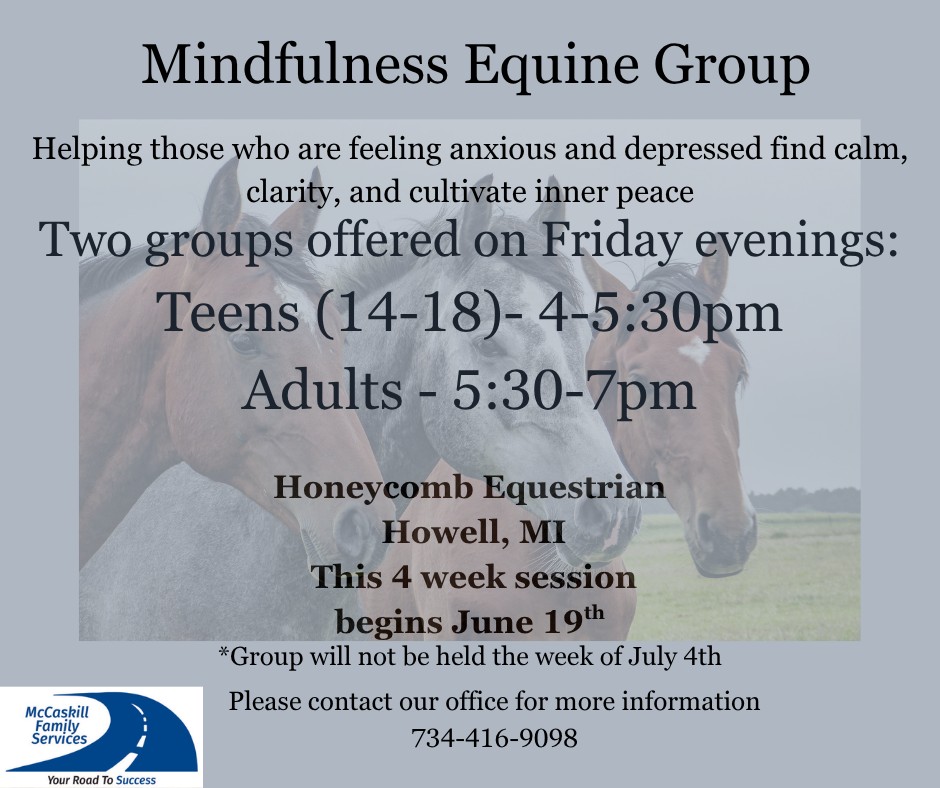
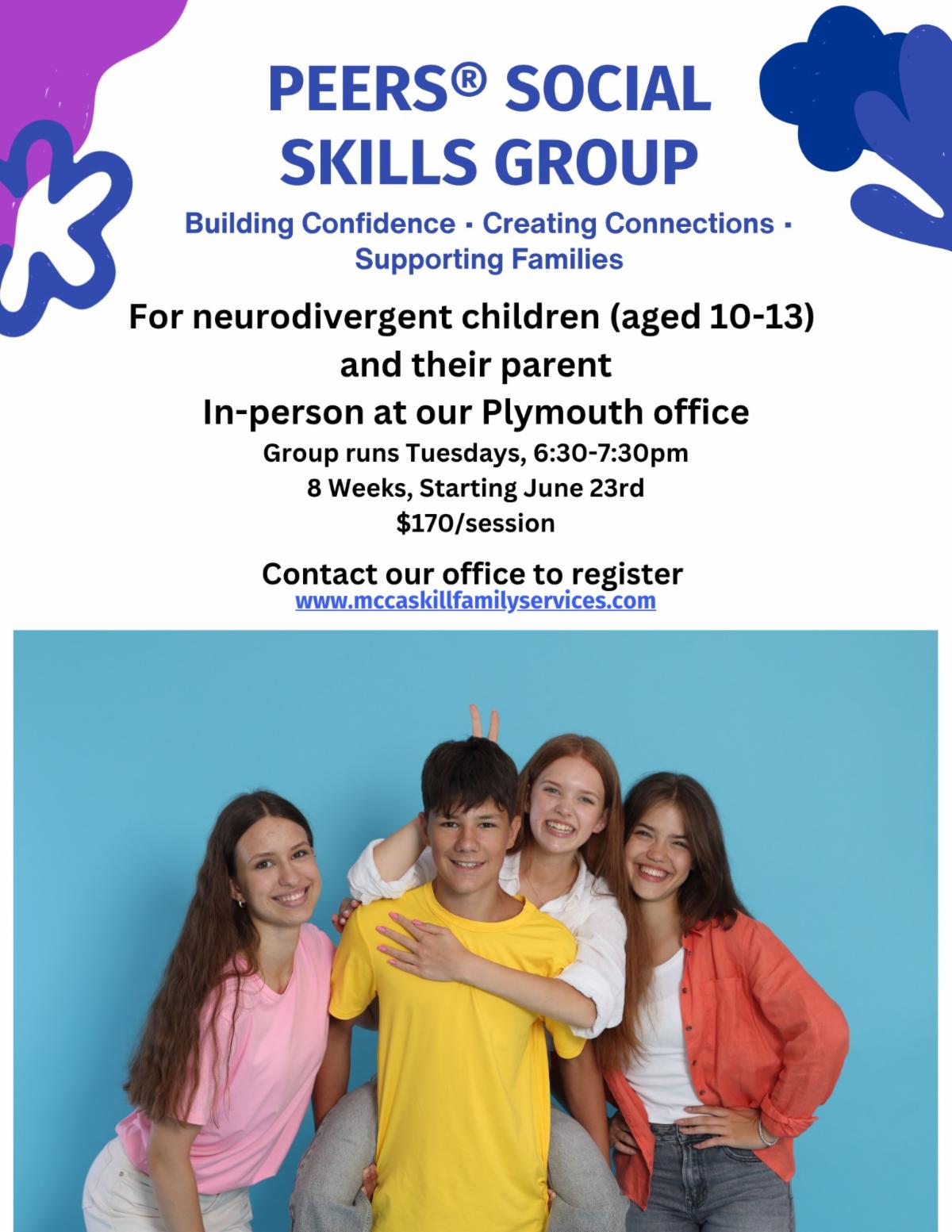
This month, we are also encouraging families to think ahead about summer and fall scheduling. Summer can be an ideal time for neuropsychological and educational evaluations, joining one of our teen equine therapy groups, social skill building, and support planning before the next school year begins.
We wish all of our families, community partners, and schools a wonderful spring season and are grateful to be part of your journey.
All my best,
Dr. Pam McCaskill
office@mccaskillfamilyservices.com
734-416-9098
| | |
McCaskill Family Services Newsletter
Term: Spring | Issue 77| May 29, 2026
| |
Demystifying the Testing Process🔍
If the idea of psychological testing feels intimidating, you’re not alone. In this post, MFS therapist, Jaclyn Rink, M.S., breaks down exactly what to expect, from your first appointment to receiving your final report, so you know how we work to provide thoughtful, individualized care.
| |
At McCaskill Family Services, we specialize in working with adults, children, teenagers and families with various presenting issues. If you or someone you know could benefit from our services, please contact us. Our clinicians are trained in empirically-based techniques, and would be happy to promptly schedule an appointment in person or via tele-health. We can be reached by phone at 734-416-9098 or by email at office@mccaskillfamilyservices.com.
| | This summer, we’re excited to offer several specialty groups designed to help children, teens, and adults build confidence, strengthen coping skills, and feel more connected. Whether through horses, mindfulness, or evidence-based social skill building, these groups offer supportive spaces for growth! Check our website (links below) for more information. | | Awareness and Recognition Spotlight | This Month We Recognize: AAPI Heritage Month | |
Asian American and Pacific Islander (AAPI) Heritage Month is a time to recognize and celebrate the many cultures, stories, and contributions within AAPI communities. It also gives us the opportunity to reflect on how immigration experiences and cultural beliefs can shape mental health and how people think about asking for help.
Many AAPI families have stories rooted in resilience, sacrifice, and starting over. Parents, grandparents, and other family members may have faced challenges such as leaving familiar communities, adjusting to new cultures, language barriers, financial stressors, or experiences of discrimination while building a life in a new place. These occurrences often shape family values around hard work, perseverance, and caring for one another and your community.
At the same time, conversations about mental health may feel difficult in some families or communities. For many, admitting to personal struggles could be seen as a “weakness” that should be handled privately. Some individuals may worry about letting down loved ones or being misunderstood.
Language barriers and a lack of awareness of how or where to get help may also prevent individuals from receiving treatment. Creating spaces where people feel safe, understood, and respected can help reduce stigma and make those conversations feel more approachable.
Mental health care works best when it takes culture, family experiences, and personal values into account. During AAPI Heritage Month, we’re reminded of the importance of listening with curiosity, honoring everyone’s lived experiences, and working to make support feel more accessible for those in our community.
| *We acknowledge that numerous important heritage/awareness months and religious/cultural observances may occur at the same time. While we are highlighting one in this issue, this choice is not intended to diminish the significance of others. In alignment with our commitment to cultural humility and ethical professional practice, we aim to approach these acknowledgments thoughtfully and remain mindful of the diverse identities and experiences represented within our community. |
A monthly newsletter addition from our
Dietitian and Eating Disorder Recovery Team.
How To Get A "Summer Bod"
| |
Step 1: Have a body
Step 2: Be between the dates of June 21st to September 22nd (or Memorial to Labor Day depending on your stance)
There is a lot of pressure this time of year to change your body for summer but there's no need! Instead of focusing on changing your body, below are some alternatives to foster a healthy relationship with your body.
1. Filter out the messages you receive - limit your exposure to social media, people, or things that promote unrealistic body standards.
2. Wear clothes that fit you NOW - clothes should adapt to your body, not the other way around.
3. Focus on different experiences - engage in the physical joys of summer (swimming, sand between your toes, green grass, etc.) instead of focusing on appearance.
4. Set boundaries - especially around body talk and know when to shut down comments that negatively impact you.
5. Practice self-compassion - be kind to yourself and understand that body image struggles are often influenced by societal pressures.
| |
A monthly addition from our team of relationship experts: covering important topics, information, and answering common questions about romantic relationships.
| | |
May is also Mental Health Awareness Month, a time dedicated to increasing understanding, reducing stigma, and encouraging open conversations about mental health. Mental health challenges can affect many areas of life, including romantic relationships. Stress, anxiety, depression, trauma, or burnout may show up as withdrawal, irritability, increased conflict, communication difficulties, reduced intimacy, or feeling emotionally disconnected. While these struggles can place strain on a relationship, research consistently
shows that supportive, emotionally responsive relationships can also play an important role in resilience and recovery.
How to Support a Partner Struggling with Their Mental Health
- Listen without rushing to fix the problem.
Research shows that feeling heard and emotionally validated can reduce distress and strengthen connection. Focus on listening with empathy rather than immediately offering solutions.
- Validate their experience.
Simple statements like, “I’m here for you,” or “That sounds really hard,” can help your partner feel supported and less alone. Validation does not mean you agree with everything — it means you acknowledge their feelings as real and important.
- Support healthy routines together.
Studies show that sleep, movement, social connection, nutrition, and stress management all play a role in mental health. Small shared habits — like taking walks or eating meals together — can promote stability and connection.
- Be patient and consistent.
Recovery and healing are rarely linear. Consistent emotional support, reliability, and compassion often matter more than saying the “perfect” thing.
- Encourage professional support when needed.
Mental health challenges often improve with evidence-based treatment such as therapy, medication, or support groups. Gentle encouragement and practical support (like helping them find resources) can be helpful.
- Take care of your own mental health too.
Supporting a struggling partner can be emotionally draining. Maintaining your own boundaries, support system, and self-care helps you stay present and supportive over time.
| | |
Hi there! My name is Sierra Sands and I'm a masters level clinician at McCaskill Family Services who specializes in the treatment of Anxiety, Body Image/Self-Esteem Issues, Depression, Interpersonal Conflicts, and Struggling to Launch/Survive for Young Adults. I am also part of our comprehensive psychological evaluation team.
Thank you so much for staying in touch with the practice and I hope that you can use some of the useful information from our newsletter. If you or someone you know would like to schedule an appointment with me, please contact our office at 734-416-9098 or email us at office@mccaskillfamilyservices.com.
| |
409 Plymouth Road, Suite 250, Plymouth, MI 48170 • 734.416.9098
| | | | | |