|
Do you like your job?
It may not be as bad as you might think.
What about this…
…implemented during the reign of Henry VII and only abolished in 1901 by Edward VII, the role of ‘groom of the stool’ required the holder to take the monarch to the toilet, check whatever went on in there and clean the regal bottom afterwards.
In more recent times, a list of rotten jobs included:
- Miner, because of the danger;
- Portaloo cleaner, work not to be sniffed at;
- telemarketer, because of all the hang-ups;
- and traffic warden, just the ticket.
I think there is another job. A job that you must have done something seriously bad in a previous life to end up doing.
What is it?
Estates manager in the NHS.
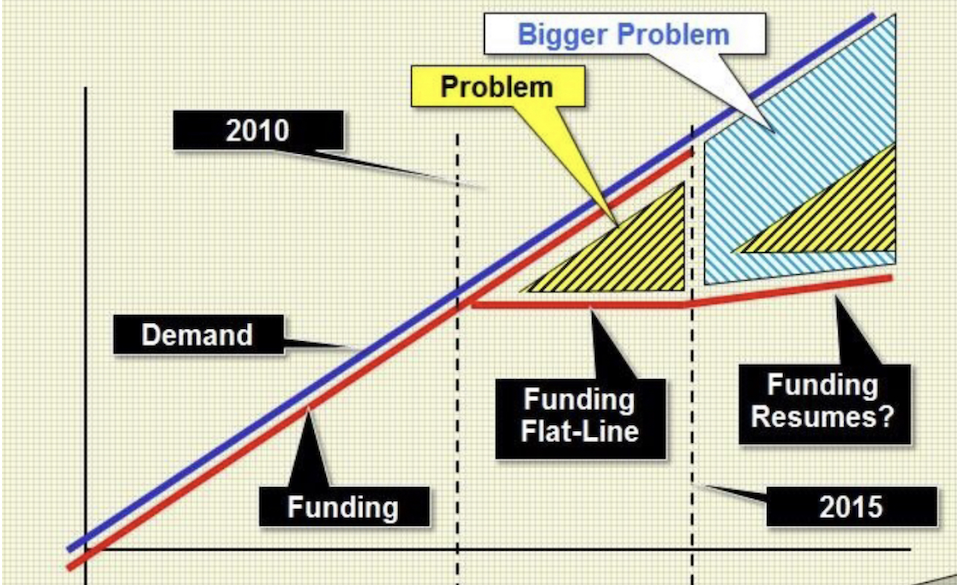
It’s a huge job, saddled with statutory duties, endless demand and more lately, propping up hospitals that should have been condemned years ago.
Starved of the capital to refurbish, no money to renew and no cash to replace. Making one pound do the job of two.
Estates managers are the gaffer-tape, the Acrow-prop and the Screw-Fix of the NHS.
The Health Foundation tell us;
‘… the [NHS] maintenance backlog more than doubled in real terms between 2015/16 (£6.4bn) and 2023/24 (£13.8bn), with the fastest growth in the highest risk category… urgent repairs to prevent catastrophic failure or disruption to clinical services.
The DH+ recently allocated a total of £750 million capital for backlog maintenance.
It’s like a spit in the ocean.
Stepping back and looking at the wider picture:
- trade tariffs;
- global unrest;
- war;
- and according to Charmer the threat of more war;
- jammed-up prisons and legal system;
- social care on its knees;
- and just about every other public service near collapse;
- pressures on the Treasury;
- and the Chancellor’s fiscal rules…
… we have to be grown up… the scale of the disrepair of the NHS estate is probably beyond resolution…
… there is simply not enough money in the economy to fix it and there won't be any time soon.
The 40 hospital programme, or is it 30, or 20, or 10, or some? Who knows. It’ll be pushed so far into the future I doubt I will live long enough to see a ribbon cut.
Is there a solution? There are other funding options.
-
Sovereign Bonds, but they add to national debt and the Treasury won’t like it.
-
NHS Infrastructure Bank, investment cash administered and allocated independently by the bank, by-passing the Treasury, they won’t like that.
-
Capital Allowance flexibility, some FTs have got capital they can’t spend, coz it adds to the the CDEL and the Treasury don’t like it.
-
Change our thinking to encompass the ‘social return’, adjust the-value-for-money calculation to reflect the unique, long-term return of healthcare as a public asset and a productivity tool… the Treasury don’t like changing their thinking.
The solution… get rid of the Treasury!
Are there any more realistic solutions? If not solutions, are there other ways out? Work-arounds. Any clues? Ask the un-askable...
... do we need more hospitals if we could just repair the ones we have? Mmmm... well..
... patient dwell times for accidents, happenstance, heart attacks and the routine will get shorter as technology develops, that’s good news.
That will reduce the demand on space.
Diagnostic kit will get smaller, portable and may redefine 'the place'.
Aside from that, it’s tricky. What about fixing two things? Maybe, just maybe we might Houdini out of the problem?
Failure demand…
… the collapse of social care means getting on for two million vulnerable people no longer get the care they need. Hence the +65s are the biggest users of healthcare and should not be.
They are also the most difficult to discharge. One Trust had 26% of it's beds occupied with delayed transfers.
Fix social care and hospitals can fix their flow and create the headroom for more elective procedures and shorter bed stays.
The failure of social care creates demand.
It’s the same for the under 9yrs, the second biggest users. Sort out health visitors, school nurses, sure-starts and the problem goes away.
Capacity paradox…
… the more capacity you create, the more you’ll fill it up. We know that’s true. The moment the NHS provides more beds, they fill.
The solution is root-cause analysis. Stop the highest users getting sick in he first place… fix what happens outside hospital and that means social care.
All roads lead to Rome… and all solutions lead to social care.
The health system is just that, a system.
Instead of the usual stinkin' thinkin', we need some system-thinking.
|