Dear {First Name},
I began by writing a reader's digest version of this project then decided to send the full story. It's also in "the book".
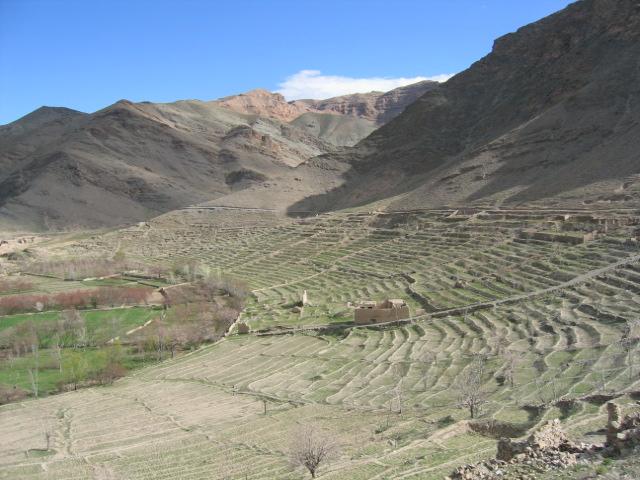
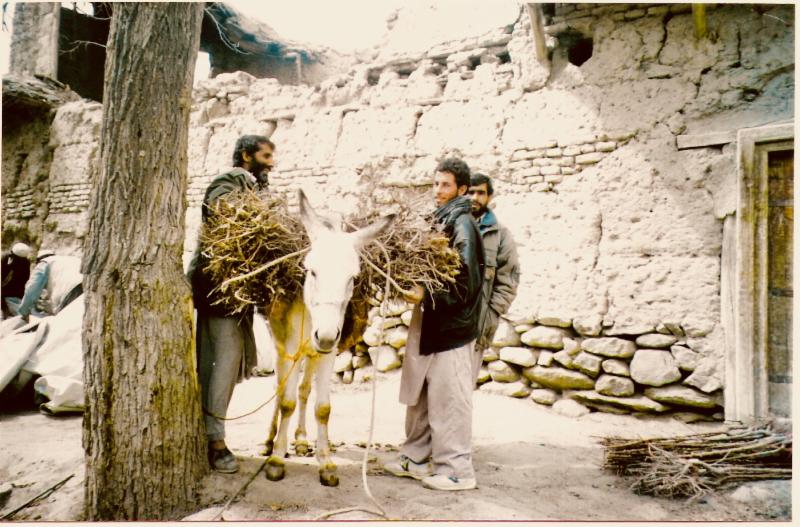
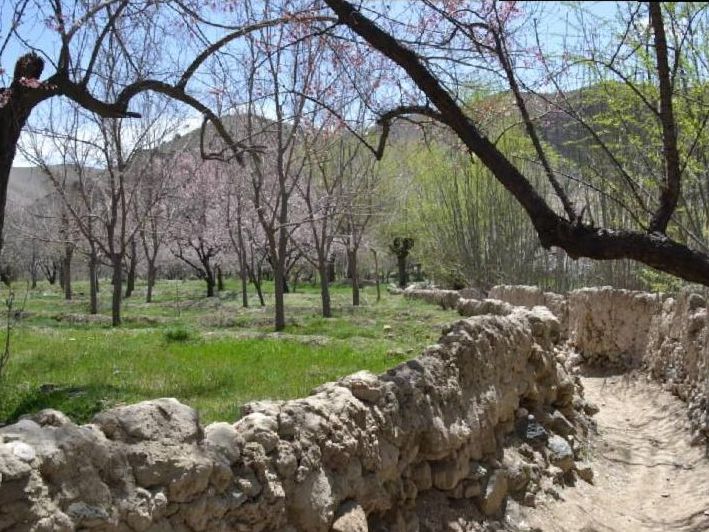
The first school we funded was built in the village of Lalander. It is unfortunately within rocket range of Kabul. The mujahideen, under the leadership of warlord Gulbuddin Hekmartyr, fired thousands of rockets into Kabul from Lalander during Russia’s occupation. In retaliation the Russians came to Lalander, destroyed homes and aqueduct systems, planted land mines and turned fruit trees into firewood. Restoring water and orchards to the valley was very high on Lalander’s wish list.
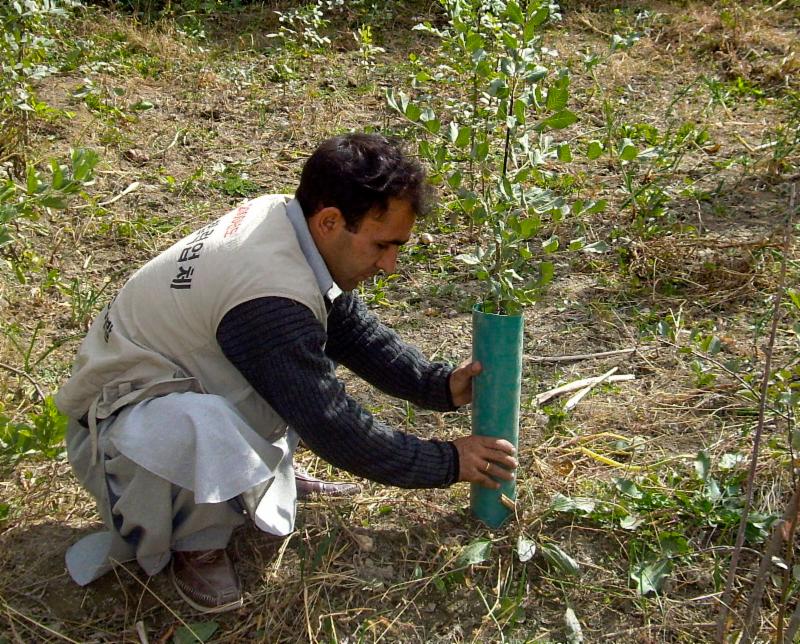
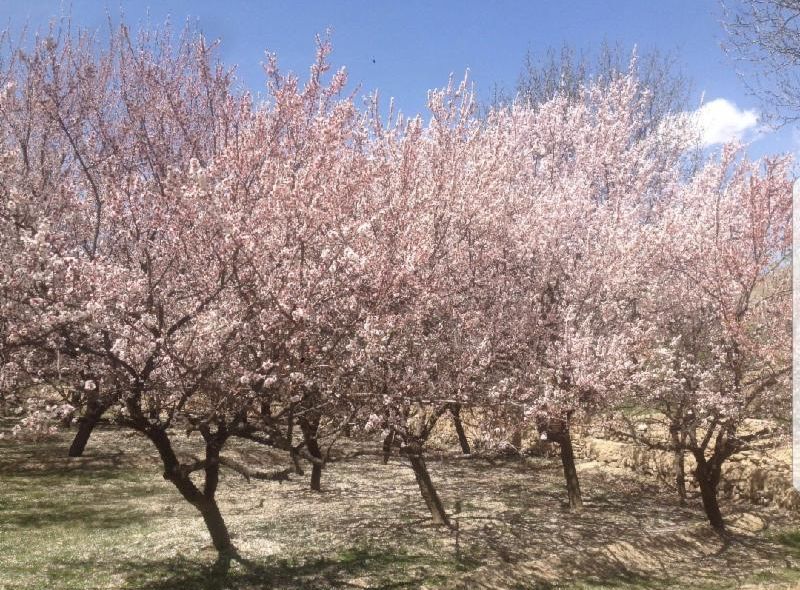
We decided to buy small fruit trees, known as cuttings, for the farmers living in the valley. Farmers were given sixty cuttings, an amount we were told was the maximum that should be planted on a jerib(half acre). They were given a choice of fruit. Seventy percent chose apricot and thirty percent chose apple. The cuttings averaged one dollar and twenty-five cents each.
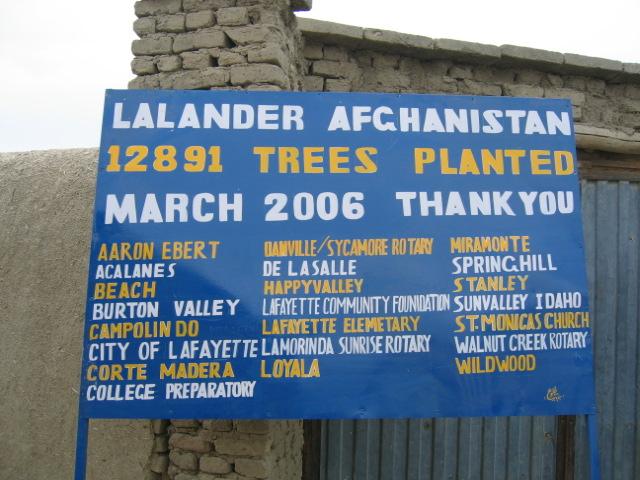
In 2006 we were able to buy twelve thousand eight hundred and ninety-one. This was made possible by those listed below, and a fundraising drive held at Corte Madera school in Portola Valley, California, organized by Aaron Ebert, a student at the time. Students at Corte Madera raised ten thousand dollars.
A farmer living in Lalander owned a tree farm in the valley that had six thousand fruit trees. We bought every tree he had. He was a very happy farmer! The balance was purchased from a family who owned five nurseries in Kabul. One of their sons told me they had eighty thousand fruit trees. I asked him how many other organizations were buying fruit trees from them for the farmers. As far as anyone knew, we were the only aid organization buying fruit trees for farmers.There is a two to three-week window in the spring when cuttings must be transplanted. You miss the window and cuttings can't be transplanted until the fall or the next year. We were at the end of that window.
I was astounded to learn we were alone in providing fruit trees. One objective in Afghanistan was and continues to be reducing the production of opium. Transplanted cuttings will not produce commercial quantities of fruit for four to five years. Poppy seeds on the other hand can produce two crops a year, require less water to grow, and generate significantly more income within a year. To their credit farmers in Lalander chose fruit trees over poppy.
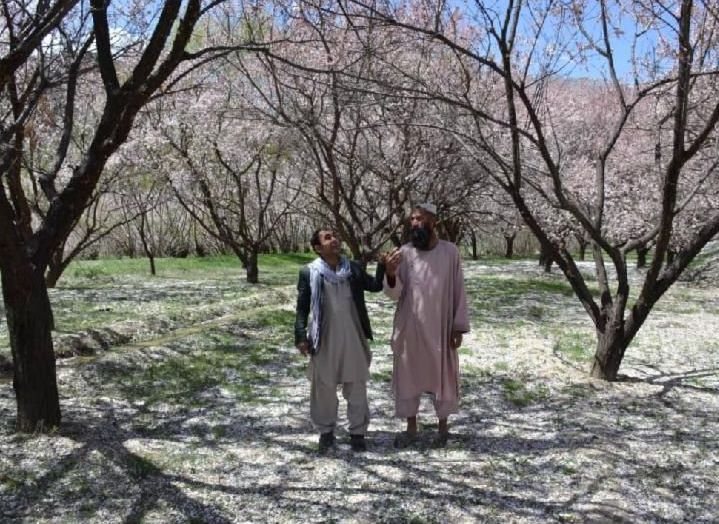
We supplied more trees in 2007, bringing the total to over twenty-two thousand, at an average cost of $1.25 per. That was enough for 366 jeribs (183 acres). Over three hundred farming families received at least 60 trees.
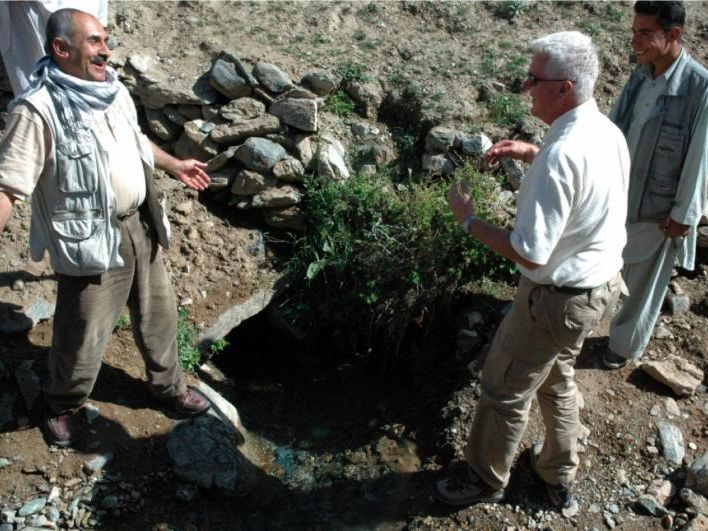
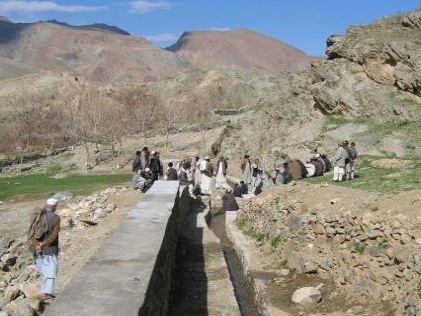
TIE also paid the cost of constructing an irrigation system that bought water from a natural spring to a terraced hillside that hadn't been planted for years. It just needed water.
By the end of 2007 Lalander had a new school, 22,000 fruit trees and a hillside ready to be planted, all provided by TIE's supporters. That, by the way is just the big stuff. By then the entire valley knew how much we cared.
What happened from that time forward, every village asked me to visit or their leaders tracked me down in Kabul.
We did and continue to make a difference in the lives of thousands, in several villages, refugee camps, and for Afghan street children and their families.
Budd