|
Dear Octet community,
Greetings to you from Cambridge, where the weather has turned cold and the multicolored leaves now cover the ground. In thinking about autumn, a favorite poem by Emily Dickinson comes to mind:
Autumn
The morns are meeker than they were -
The nuts are getting brown -
The berry’s cheek is plumper -
The rose is out of town.
The maple wears a gayer scarf -
The field a scarlet gown -
Lest I sh'd be old-fashioned
I’ll put a trinket on.
What was Dickinson trying to convey? My Protestant sensibilities interpret this poem as a tribute to God's generosity through nature's transcendent beauty. And the last couplet? The significance of the trinket? Perhaps it is that meager, yet important human contribution to the festivities. Let's leave our reservations and restraint behind and joyously celebrate the bounty of God's grace and goodness. Even the simplest of these expressions can be transformed into something unexpectedly significant.
Happy Thanksgiving!
| | |
Mia Chung-Yee
Executive Director
| |
-
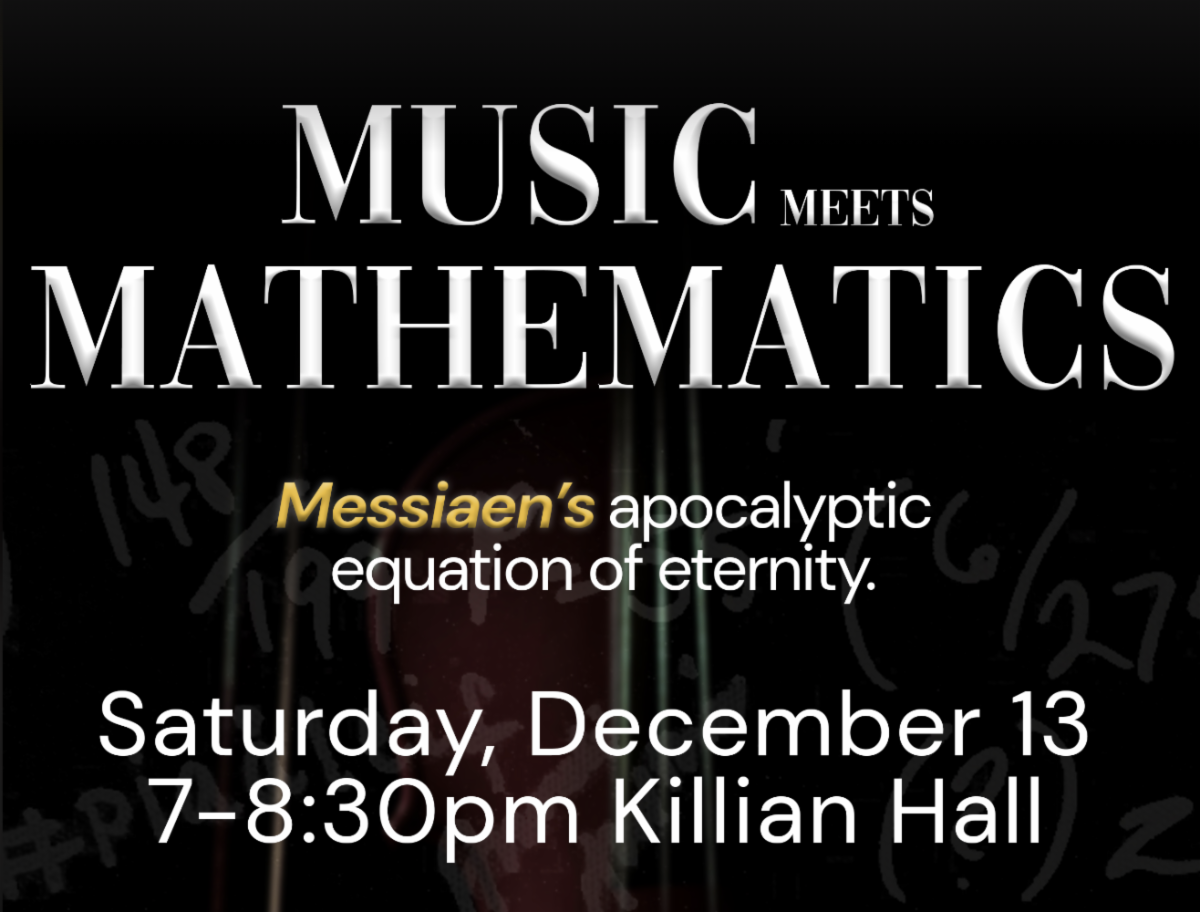
Join us on December 13th for Octet’s very first concert!
-
Read Nathan Barczi's essay exploring the meaning of reason.
-
Around the MIT community: An interview with our friend Christian Yoon in MechE.
- Our IAP offerings: the meaning of work, disagreeing well, and Van Gogh!
- ... and more!
|
| |
We’re thrilled to be hosting a new kind of event: a combined concert and lecture exploring Olivier Messiaen’s Quartet for the End of Time. Join us on December 13th at 7:00pm!
| | |
Messiaen wrote and first performed this quartet while a prisoner of war in a Nazi prison camp. His extraordinary work is based on ideas ranging from prime-number mathematics to apocalyptic theology.
To introduce the piece, Professor Andrew Shenton (Boston University) will share a short lecture unpacking Messiaen’s mystical and mathematical vision. Then, we’ll hear the quartet itself with a live performance by Professors Natalie Lin Douglas (Violin), Eran Egozy (Clarinet), Carol Ou (Cello), and Mia Chung-Yee (Piano).
As always, there will be food — we’ll have snacks and conversation after the concert. Please RSVP for free to ensure an accurate headcount.
| | |
What is "rationality"?
In this essay, Senior Theologian Nathan Barczi considers a Christian — as opposed to a secular — understanding of rationality.
If rationality is "capacity, or a power - a tool to be wielded in pursuit of achieving whatever it is that we might want," we run into all sorts of problems. "Where do one’s aims come from? If rationality determines what is true, how does it identify the good and the beautiful?"
Read Nathan's essay to consider how Christians articulate a robust account of reason.
| | Interview: Christian Yoon, MechE | | |
Get to know another MIT community member! We sat down for an interview with Christian Yoon, who's pursuing his Master's in Mechanical Engineering, to ask him about life, faith, and flourishing at MIT.
Christian says, "One of the essential principles of the Christian faith is that we cannot rely on ourselves — that we are actually wholly dependent on God, in everything from our daily breath to our research and our vocation, and what we're doing at MIT."
Check out the full interview:
| | Sneak Peek: Octet's IAP offerings | | It's not too early to think about IAP! Here's a preview of what we'll be hosting this January . . . | | |
What do you actually want to do with your life?
Success is a tricky thing to define. Checking off boxes on a career ladder? Maybe “doing what you love”? Or getting on a 30 under 30 list? And once you’ve defined success, searching for it can leave you disillusioned, anxious, and in crisis — as most MIT students have already found out after a midnight mental breakdown.
"Finding a Place to Work, and Putting Work in its Place," taught by Cullen Buie (MechE), will work through how to navigate the big questions of work, meaning, and identity.
| | |
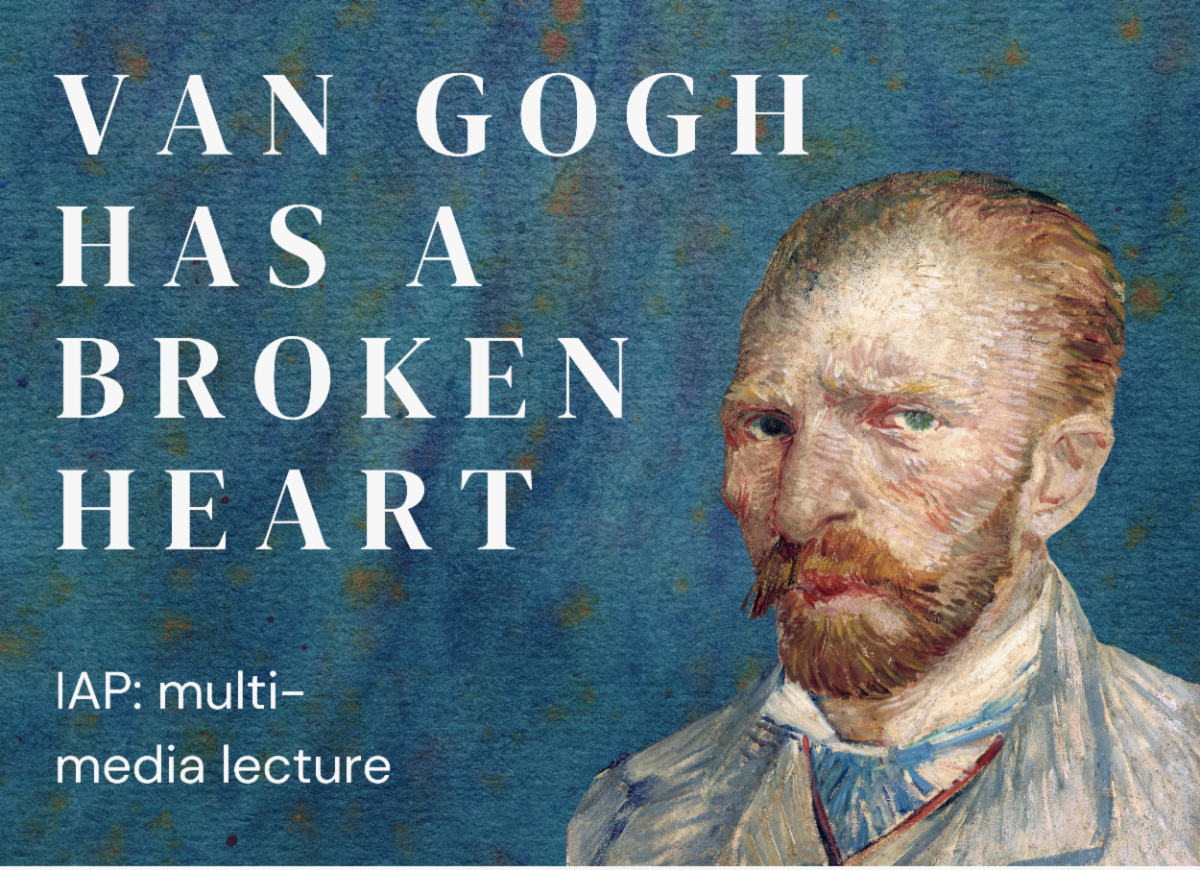
One of the most heart-breaking parts of Van Gogh’s story is how he is often remembered for his outbursts and mental health. And yet, his suffering is inseparable from the globally celebrated body of work he left behind.
"Van Gogh Has a Broken Heart" will outline the details of the fateful night Van Gogh cut off his ear, and examine what it looks like to steward one another’s pain and suffering. Van Gogh’s life shows us that to really know a person is, at least in part, to know them by their sorrows. Be gentle. This is a hard world.
| | |
In these polarized times, what does it mean to disagree well? This mini-course of four sessions is a workshop to equip you with skills of empathic intelligence. If you’ve ever avoided a hot-button topic because you were afraid of conflict — or if you’ve alienated people because you’ve expressed unpopular opinions — "Disagreeing Well" will walk through practical ways to disagree better.
| | |
Contemplative Prayer Lunch continues
Each Wednesday, MIT staff, students, and faculty gather to eat lunch and practice contemplative prayer together. Please feel free to join us at noon in W11's Main Dining Room.
Want to join us? Text JOIN to (833) 459-3187 to receive details by text.
| | |
Consider a gift to Octet
We're supported by generous individuals and grants. Did you know that you can give to Octet through the MIT Fund? If you're already giving to MIT, we'd love for you to consider designating some of your gifts to Octet.
| |
. . . & think about giving monthly
Monthly participation, no matter how much or how small, is especially helpful. It gives us a regular foundation as we reach faculty, staff, and students with gospel-centered practices that promote human flourishing.
| | |
Connect with the Octet Collaborative
on social media!
| | |
The Octet Collaborative seeks to serve the MIT community and will gratefully consider featuring your event, news, and work. If you'd like to feature something within A View from the Dome, please reach out to the appropriate contact below.
| | | | |