Having trouble viewing this email? click here to read online. | | |
Time is this elusive thing.
One minute you're getting married, the next your kids have graduated college. One second you're 40 and the next you're looking at retirement. How is that possible? I gather it has something to do with how the earth travels around the sun.
Yesterday it was February and we were dreaming of summer. Welcome to July. Heat wave anyone?
| | |
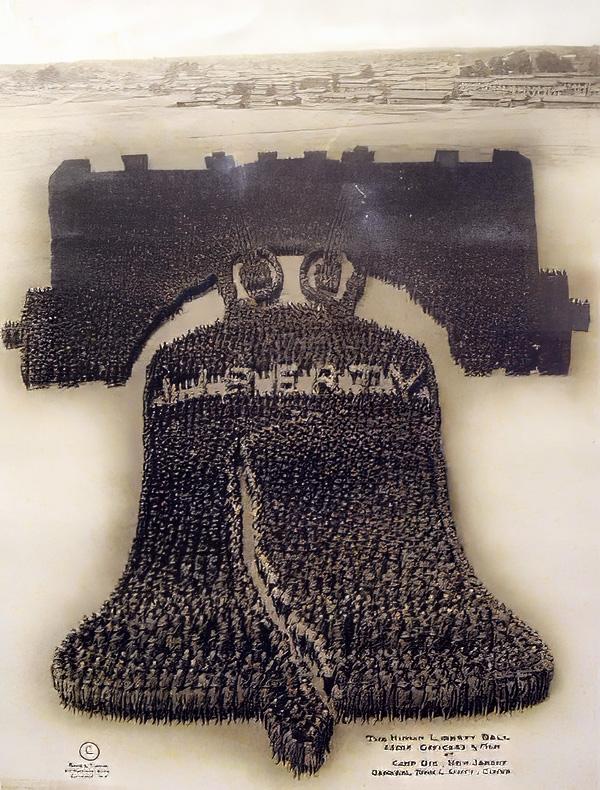
We celebrate our independence on the 4th. Here are 25,000 servicemen forming the Liberty Bell at Camp Dix (New Jersey) in the fall of 1918. Happy they weren’t headed overseas.
| | |
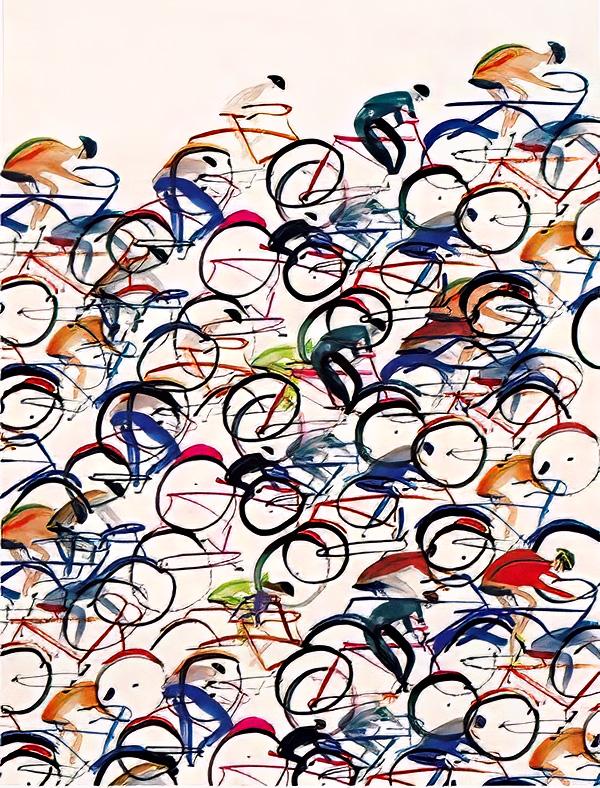
Art by Sarah Jacoby.
The Tour de France. July 5-27th! Astonishing athletes. Magnificent little French towns.
What more could you want?
| | Quiz #1 Mighty Casey My Aunt Fanny | | |
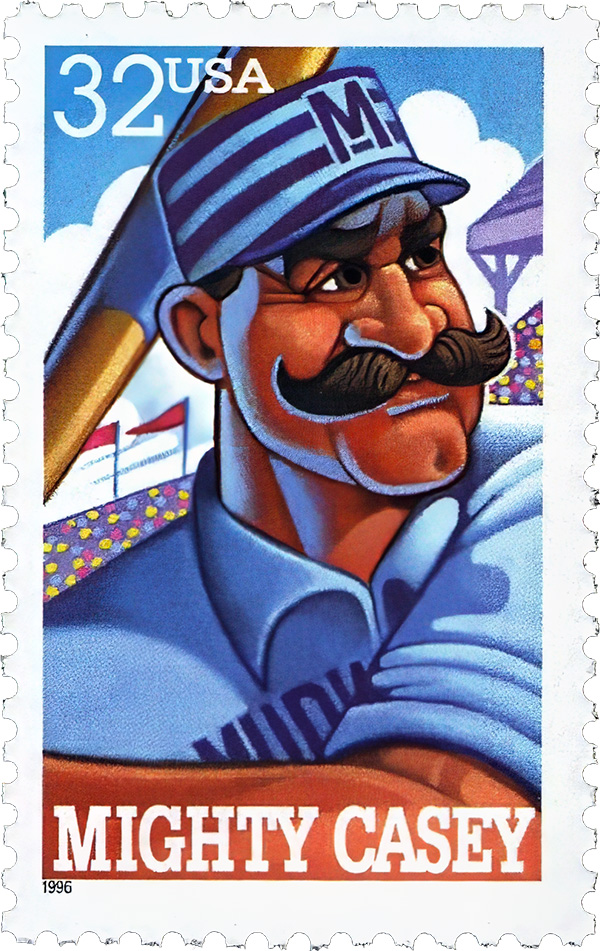
You know the story. He struck out. Failed in the clutch.
So, quiz question: How many runs did the Mudville 9 score on the day Casey struck out. This is the batting order of the Mudville Slugs:
Flynn
Blake
Casey
Hobbes
Davis
Shlabotnick
Thayer
Cooney
Barrows
We’re told also that in the ninth inning Casey came to bat for the fourth time, with two men on and two men out.
Casey struck out, leaving the team with another loss. How many runs did Mudville score altogether?
Tell us here and win something wonderful. (actually a gift card)
| | |
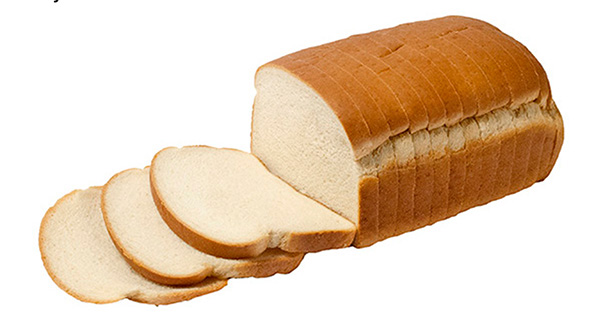
THE YEAR WAS 1943, and Americans were in crisis. Across the Atlantic, war with Germany was raging. On the home front, homemakers were facing a very different sort of challenge: a nationwide ban on sliced bread. What?
“To U.S. housewives it was almost as bad as gas rationing—and a whale of a lot more trouble,” announced Time magazine on February 1, 1943. The article goes on to describe women fumbling with their grandmothers’ antiquated serrated knives. “Then came grief, cussing, lopsided slices which even the toaster refused, often a mad dash to the corner bakery for rolls.”
| |
The ban on sliced bread was just one of many resource-conserving campaigns during World War II. In May 1942, Americans received their first ration booklets and, within the year, commodities ranging from rubber tires to sugar were in short supply.
When the government rationed nylon, women resorted to drawing faux-nylon stockings using eyebrow pencils and when sugar and butter became scarce, they baked “victory cakes” sweetened with boiled raisins or whatever else was available.
| | |
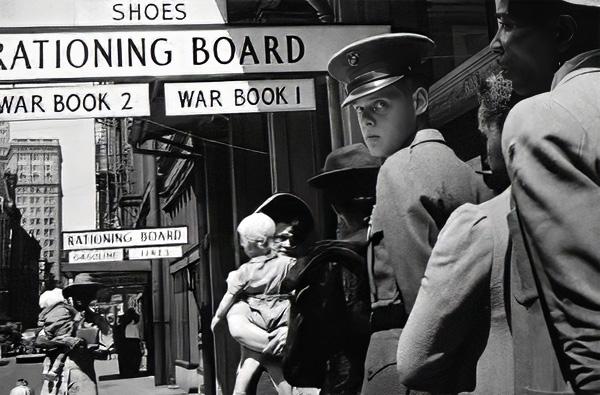
March 1943: A line at a rationing board in New Orleans, Louisiana. JOHN VACHON / STRINGER / GETTY IMAGES
So by January 18, 1943, when Claude R. Wickard, the Secretary of Agriculture and head of the War Foods Administration, declared the selling of sliced bread illegal, patience was already running thin. Since sliced bread required thicker wrapping to stay fresh, Wickard reasoned that the move would save wax paper, not to mention tons of alloyed steel used to make bread-slicing machines.
Americans railed against the idea of living without sliced bread. The backlash was immediate. “I should like to let you know how important sliced bread is to the morale and saneness of a household,” wrote an indignant Sue Forrester from Fairfield, Connecticut, in a letter to the editor of The New York Times.
“My husband and four children are all in a rush before, during and after breakfast. Without ready-sliced bread I must do the slicing for toast—two pieces for each—that’s ten. For their lunches I must cut by hand at least twenty slices, for two sandwiches apiece. Afterward, I make my own toast. Twenty-two slices of bread to be cut in a hurry.”
On January 24, less than a week after the ban, the whole thing began to unravel. New York Mayor Fiorello LaGuardia made a public announcement that bakeries that already had bread-slicing machines could carry on using them.
By March 8, the government decided to abandon the wildly unpopular measure. “Housewives who have risked thumbs and tempers slicing bread at home for nearly two months will find sliced loaves back on the grocery store shelves tomorrow in most places,” noted the Associated Press.
See how good you got it?
| | |
It’s just a detail from the painting, Van der Paele Madonna by Jan van Eyck in 1436. C’mon, take another look. It’s astonishing.
Here’s the full size painting.
| | A Bookstore Owner Remembers... | | |
A very nice, well-appointed lady spends about an hour browsing the stock, including the locked cases. After building a rather formidable stack of unrelated books worth over $3,500 (including some very scarce Mark Twain first editions), I couldn't resist asking: “What do you collect?”
“Oh nothing, but I will purchase these.”
(My curiosity getting the better of me) “A gift?”
“No. I am going to use them to decorate my daughter's bathroom.”
(Silly me! I failed to notice that the books were all various shades of green. This is a good thing, since the books will soon be color-coordinated with the mold).
“Let me help you carry these out to your car.”
Phone call - grownup
I have a book I want to sell.
What is it?
It's by John Stainback. It's called "The Wayword Bus"
Who's the publisher?
I just said, John Stainback
He's the author, sort of. Let's try again, what does the copyright page say?
Where's that?
Sorry, I can't use it. Thanks for calling.
Phone call...
I have a bunch of old books I want to sell on e-bay. Can you tell me what they are worth?
Why would I want to do that?
My friend said to call you and that you know a lot about books.
You are missing my point. Why should I waste my time helping you?
So I can know what reserve to put on my books.
I charge for appraisals.
Well this isn't an appraisal. I just want to know what they are worth.
Sorry, you will have to call someone else. Good luck!
Woman mid-thirties, pondering a purchase
I have never read a book this long. It would really have to be good for me to read this one (149 pgs.).
Woman, in her mid 30s
Do you have the "Titanic" book?
No.
I'd like to read it.
Uh huh.
Did you know it's a true story, except for the romantic part?
(this is worse than I thought!)
You have a book I want, but it's $30. Would you take less? I just want to look at the pictures.
Have you read all these books?
Of course! I never sell a book without reading it first.
(Real long pause)
When do you watch TV?
Phone call...
Are you hiring?
No.
Good! Can I have your company's name?
Why?
I have to tell the Unemployment Department that I am looking for a job.
This is the Unemployment Department. Can I get your name?
(click)
Phone call…
I have a rare book.
What do you have?
It's called Sea Wolf.
By London.
Yea.
What makes you think it's rare?
It's signed by him.
Is it a first edition?
Yea.
Who is the publisher?
Dell.
It's a paperback?
Yea.
What year was it published?
1976.
He must have been pretty old when he signed it.
Yea, he was.
I have to go now.
Do you want to buy it?
No.
Customer fills out search card: 16 Chapels
(me) Oh, you're after books on European Churches?
No, just books about the 16 Chapels.
16 Chapels?
Yea, you know the one with the big painting on the ceiling.
We will let you know what we find - once we stop convulsing.
| | |
We know what we call a person from New Yawk. And certainly we know what we call those from Massachusetts.
But, what do you call a person from Connecticut?
Today we’d call them a Connecticuter or a Connecticutian (or, colloquially, a Nutmegger), but in a 1987 address etymologist Allen Walker Read announced that he’d also found these options:
- Connecticotian, used in 1702 by Cotton Mather
- Connecticutensian, used in 1781 by historian Samuel Peters
-
Connectican, used in 1942 in a letter to the Baltimore Evening Sun
- Connecticutan, used in 1946 by book reviewer John Cournos
-
Connecticutite, used in 1968 by an anonymous reviewer in Playboy
He also found several jocular forms:
- Connecticutie, a pretty girl of Connecticut (used in 1938 by Frank Sullivan of Mrs. Heywood Broun and in 1947 by a journalist about Clare Boothe Luce)
- Connecticanuck, a Connecticut person of French background
- Connectikook, an oddball or eccentric from Connecticut
- Connecticutup, a prankster from Connecticut
“Especially in language, exuberance accounts for much that happens.”
(Allen Walker Read, “Exuberance, a Motivation for Language," (Word Ways 21:2 [May 1988], 71-74. He gives his documentation in “What Connecticut People Can Call Themselves,” Connecticut Onomastic Review No. 2, 1981, 3-23.
| | In September 2023, geophysicists across the world started picking up a very odd signal coming from the ground under their feet. | | |
A seismometer in the Arctic recorded it. Another in Antarctica registered its presence. It could be detected everywhere. It was a single vibration frequency, as regular as a metronome.
For over a week, the Earth chimed like a struck bell. One pulse every 90 seconds, every hour of every day, for 9 days.
In seismology, the term for this is a USO: an Unidentified Seismic Object. That forced researchers across the globe - 68 scientists from 40 institutions in 15 countries – to join forces to track down the signal’s source.
What they found was a geological event that happens often – rarely on this size. A wall of a mountain-sized glacier collapsed, plunging 25 million cubic meters of rock and ice into the waters of the fjord. The resulting cataclysmic backsplash of water - a megatsunami - was around 650 ft tall (nearly as tall as the Golden Gate Bridge is long) and triggered a wave around 325 ft high racing 50 miles across the fjord to smash against the other side of it.
So far, so dramatic. But then the waves refused to dissipate. They pounded back and forth across the fjord again and again, almost perfectly reflected by the other side and hardly losing any of their colossal energy.
The technical term for this is a seiche, pronounced “saysh” - a standing wave oscillating in a large body of water - and it’s a phenomenon frequently dangerous to human life, due to how it can defy the tide and seemingly come out of nowhere. (In 1844, one in Lake Erie breached a 14-foot sea wall and killed 78 people.)
For 9 days, this seawater sloshed back and forth like disturbed bath-water, transferring energy into the bedrock of the fjord with every impact against the sides of the fjord - and that regular 90-second beat rippled out across the whole world:
This collaborative international detective-work resulted in a conclusion: since the landslide was triggered by the melting glacier.
If you are interested there is a fascinating video with before and after photos. https://www.youtube.com/watch?v=60T9TKuuujs&t=271s
| | |
Ok, so you can read whatever you want. But, start this and you won’t be able to put it down. Mainly because it is so freakin’ terrifying in its clarity and passionless prose.
Simply put, one nuke starts a series of events that, well…it doesn’t turn out real good for anyone. Or thing. Read it in 15 hours.
This is not a red vs. blue thing. This is a what in the heck might happen if somehow – someone lobbed the first nuke.
| | |
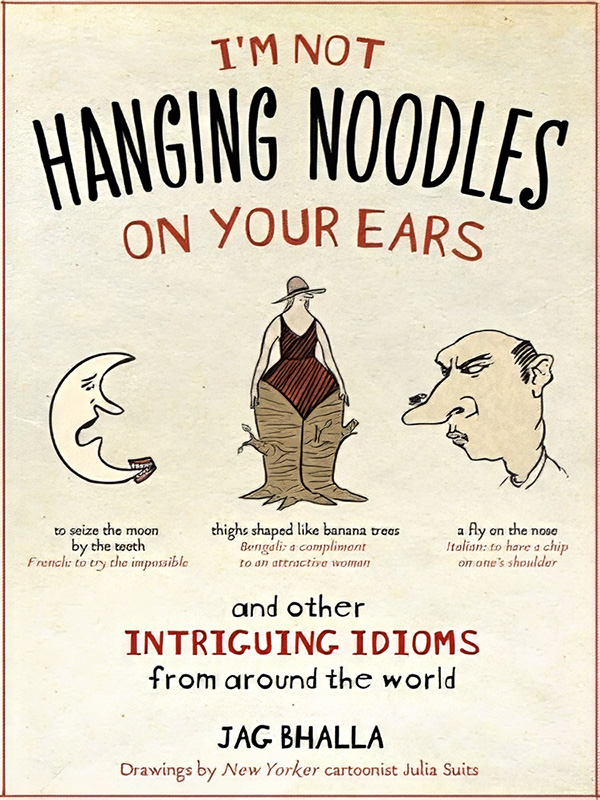
With that title, what other adjective could one use to describe the book than “quirky”? It’s a compilation by Jag Bhalla, who describes himself as an amateur idiologist, or student of idioms. He presents a thousand or so amusingly odd examples from around the world.
An idiom is an expression whose meaning can’t be deduced from those of the individual words. If you say that you’ve nipped a problem in the bud, put a spoke in someone’s wheel or hauled a worker over the coals, complain that a relative is the black sheep of the family or that your ears are burning, you will be understood by other native English speakers, but run a severe risk of confusing foreigners.
Similarly, Jag Bhalla claims that in Colombia, a Spanish speaker might say he has been swallowed like a postman’s sock, by which he means he is hopelessly in love. This might be because the object of his love has thighs as shapely as banana trees, in Bengali a compliment to an attractive woman.
But if the tomatoes have faded, as a Russian might put it, love has gone; Arabic speakers are said to express the same idea through commenting that you’re getting on each other’s heads. You may indeed be like a dog and a monkey, a Japanese way of saying you’re on bad terms. Trying to comprehend the reasons for such idiomatic constructions is like climbing a tree to catch a fish, a Chinese way of voicing the idea that a thing is impossible, or trying to seize the moon by the teeth, a French equivalent.
The author says that he has relied on the translators of his reference books for all his examples and accepts that native speakers in some cases might not recognize the references because the idioms are obsolete or the translator got it wrong. He also says, “This horde of plundered international idioms is intended for low-commitment sampling and easy reading.” It’s definitely for dipping into, not for reading all the way through at once.
The title, by the way, is said to be a Russian idiom. Its English equivalent is “I’m not pulling your leg”. Seriously.
| | |
"The best thing for being sad," replied Meryln, "is to learn something. That is the only thing that never fails."
"You may grow old and trembling in your anatomies, you may lie awake at night listening to the disorder in your veins, you may miss your only love, you may see the world about you devasted by evil lunatics, or know your honour trampled in the sewers of baser minds.
There is only one thing for it then - to learn.
Learn why the world wags and what wags it.
That is the only thing which the mind can never exhaust, never alienate, never be tortured by, never fear or distrust, and never fear of regretting. Learning is the thing for you. Look at what a lot of things there are to learn - pure science , the only purity there is.
You can learn astronomy in a lifetime, natural history in three, literature in six. And then, after you have exhausted a milliard lifetimes in biology and medicine and theo-criticism and geography and history and economics - why, you can start to make a cartwheel out of the appropriate wood, or spend fifty years learning to begin to beat your adversary at fencing.
After that you can start again on mathematics, until it is time to learn to plough."
| | |
Yes, he’s won a Tony and an Emmy and he’s friends with everyone in Hollyweird. Who is he? Tell us here and perhaps you’ll take home a prize as well.
By the by – more than 400 of you played last month - the most in the 10 years we’ve been doing the contest. So David went crazy and picked and even dozen winners
Chris C, Paul B, Fran Z and Albert P correctly (along with 216) identified Pauley Parette from NCIS while Don H, Daniel C, Rich A, Jennifer Mc, Todd C, Stanley N, Linda B and Larry C and 341+ recognized Mr. Reaggae himself, Ziggy (Robert/Bob) Marley.
Congrats to everyone who entered and thanks so much for playing.
| | |
OK, it’s hot. And sticky. And you still don’t have A/C, so perhaps it’s only natural that you should utter an epitaph that you’d like to take back, later.
Or…you could try one of these instead and not have to apologize.
(aka: Dave Letterman’s Top 10 Ways To Tell You To Go To…)
10. Go put the horseshoes on a goose – Basque
9. Go to the park and paint the ceiling - Poland
8. Go to the moon and make potato pancakes - Germany
7. Go hit your head on a corner of tofu and die - Japan
6. Go comb a monkey (Brazil)
5. Go ski into a spruce (Finland)
4. Go fry some asparagus (Colombia)
3&2 were juuuuuust this side of vulgar
1 Go back home, your mother made you waffles. (France)
Bonus:
Go milk a duck (1932)
Go and kiss your aunt (1920)
Go roll your hoop (1901)
Go fry your face and play with the gravy (1890)
Go to Putney on a pig (1845)
Go and give the dog a bath (Portuguese)
I said good day, sir (British English)
| | |
Which drink will get you through the summer best? Please vote here:
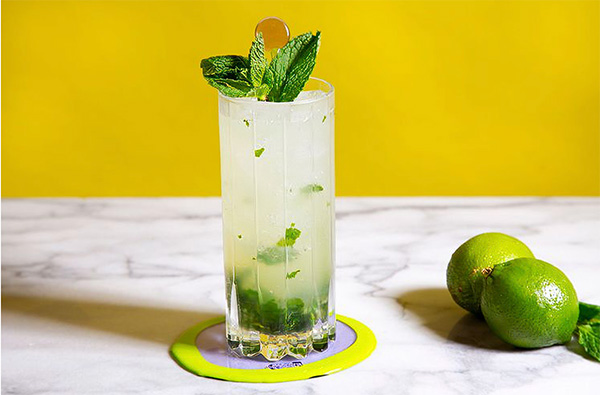
1. Mojito
| | |
Ingredients
• 4 mint leaves
• 1/2 once simple syrup
• 2 ounces white rum
• 3/4 ounce lime juice, freshly squeezed
• Club soda, to top
• 2 mint leaves, for garnish.
Directions
- In a cocktail shaker, lightly muddle mint with simple syrup.
- Add ice, lime juice, and the rum and briefly shake well.
- Strain into an ice-filled highball glass and top with the soda.
| | |
Ingredients
• 3 tablespoons lemon sorbet
• 1/2 ounce vodka
• 1 ounce prosecco
• 1 lemon wedge (for garnish)
Directions
- Scoop sorbet, Prosecco, and vodka into a small bowl. Whisk til smooth. Pour into a glass - garnish with a wedge.
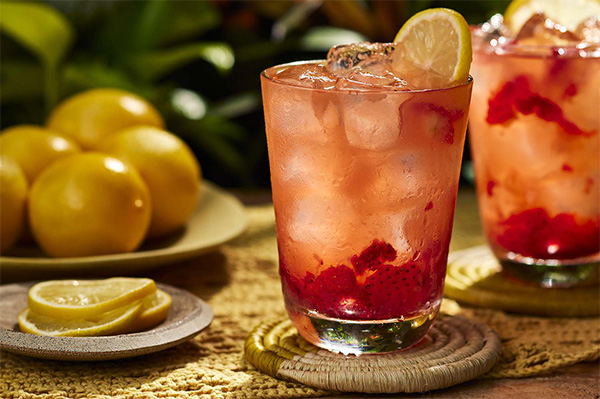
| 3. Meyer Lemon and Strawberry Caipirinha | | |
Ingredients
• 5 small strawberries, hulled ( about 3/4 cup)
• 1 ounce fresh Meyer lemon juice ( juice from 1 whole Meyer lemon)
• 5 teaspoons granular sugar
• 5 ounces cachaca (such as Germana Soul)
• 1 Meyer lemon wheel, for garnish
Directions
- Combine strawberries, lemon juice, and sugar in a cocktail shaker. Muddle together just enough to break down strawberries and macerate with sugar.
- Add cachaça and ice. Shake vigorously until well chilled and sugar has time to incorporate, about 15–20 seconds.
- Strain drink into a glasses filled with fresh ice. Garnish with a lemon slice.
| | |
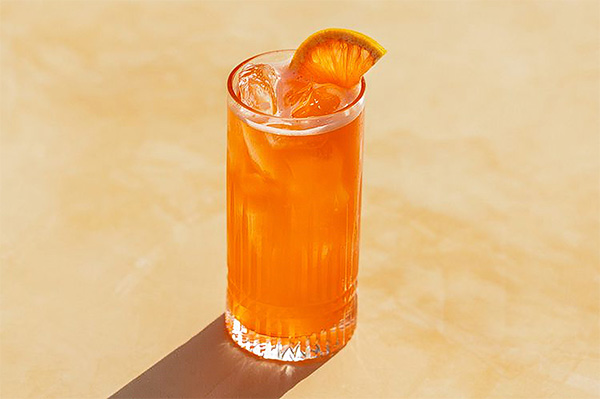
Ingredients
• 1 ounce gin
• 1 ounce Campari
• 1 1/2 ounces fresh lemon juice
• 1/2 ounce simple syrup
• Club soda, to top
• Orange or grapefruit slice, for garnish
Directions
- Add all ingredients except club soda and garnish to a cocktail shaker filled with ice
- Shake for 10-15 seconds until well chilled, then strain into a Collins glass over fresh ice.
- Top with club soda and garnish with an orange or grapefruit slice.
| | |
danielsenergy.com
Daniels Energy: CT License S1-385517 HOD#19 /
Daniels Propane. LLC: #846 CT License S1-302857
| | | | | |