Having trouble viewing this email? click here to read online. | | |
First things first. In the October newsletter was an article about things we hoped to do before summer ended. One of those things was “to find out more about blood cancer and maybe find a cure.”
HOWEVER, the phrasing of that line included the “F” word.
We apologies for its inclusion and any offense it may have engendered. This is a family newsletter and we have strived for more than a decade to keep it clean, non-partisan and, well, fun.
We promise to do a better job of editing going forward.
| | Since We're Talking Elections | | |
We thought that a brief (well, mostly) review of how two Italian cities elected their governments might help us value how we do it. Or not. (this is an abridged version)
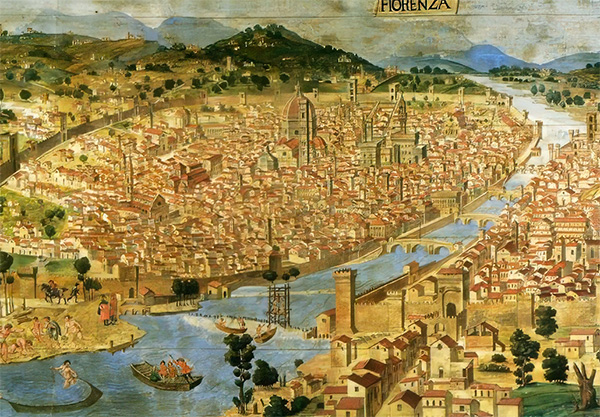
Florence
In the 13th century city-state of Florentine, democracy was exclusive. Wage laborers, people in debt and women were excluded. But all others could directly participate in government of their country: 5,000–8,000 people out of 25,000–50,000 adult citizens.
Political parties were forbidden (actually, the word party was invented as a slur, something that people do not remember now). The main mechanism of democracy was casting lots.
Florence was subdivided into four quarters, sixteen neighborhoods and twenty-one corporations (seven major ones representing rich citizens and fourteen minor ones representing poor citizens): every citizen was a member of one of those.
Initially, Corporations were associated with professions. Nobles renounced their nobility and joined corporations to be able to participate in the government. For instance, nobleman Dante Alighieri entered the corporation of Doctors and Apothecaries, and the ancestors of Niccolo Machiavelli registered in the corporation of Winemakers.
The main legislative body was Signoria. It consisted of eight Priors (two representing every quarter, six representing major corporations and two representing minor corporations) and one Gonfalonier of Justice, the chairman. They ruled the city during the period of two months only and then replaced by others.
However, it could take major decisions only in common with other bodies such as Twelve Good Men (three persons from every quarter, mostly rich people) and Sixteen Gonfaloniers (one from every neighborhood). These three bodies (Signoria, Twelve Good Men and Sixteen Gonfaloniers) were all chosen by lot.
The judicial and military power belonged to the podestà, a foreign citizen with good reputation, legal education and a military company or at least a group of armed servants. Florentines believed that a foreigner would be a more impartial judge in Florentine discussions. A podestà was invited to Florence for six months.
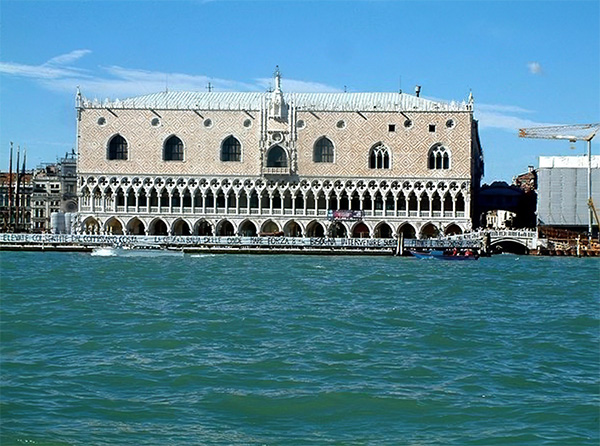
Now let’s consider the Venetian Republic.
For more than five centuries (from 1268 to 1797) the procedure to elect the doge (chief of state) did not change.
1. Choose 30 members of the Great Council by lot.
2. These 30 people are reduced by lot to 9.
3. These 9 people choose 40 other people.
4. These 40 are reduced by lot to 12.
5. These 12 people choose 25 other people.
6. These 25 people are reduced by lot to 9.
7. These 9 people choose 45 other people.
8. These 45 people are reduced by lot to 11.
9. These 11 people choose 41 other people.
10. These 41 people elect the doge.
Complicated? Probably. But, it guaranteed what was probably the most stable government in the history of mankind. And, though he was elected for life, the power of the chief of state in Venice was very much limited.
He could not appear in public without other officials present (security from populism). He could not meet foreign diplomats or open foreign dispatches without other officials present (security from collusion with foreign governments). He could not possess any property in a foreign land. However, he had a nice place to live.
| | Witchcraft & The Norwegian Sami Drum | |
We tell you these things – because we think you might find them interesting.
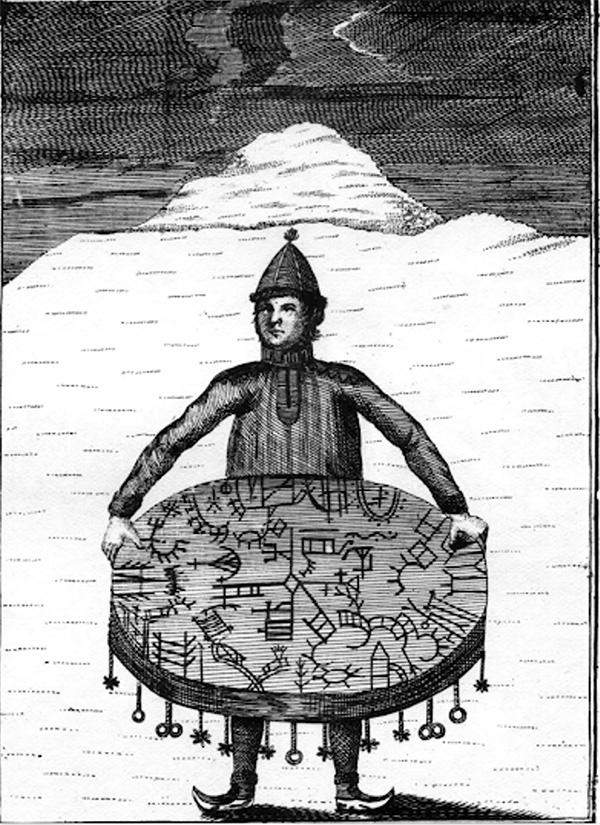
Starting in 1609, owning this drum was. A crime punishable by death in the Kingdom of Denmark-Norway. In 1767, a Norwegian priest sketched and documented one.
Knud Leem arrived in Finnmaker (Northern Norway) as a missionary and developed deep bonds with the Sami people. Learned their language, wore their clothes and observed and performed shamanic traditions.
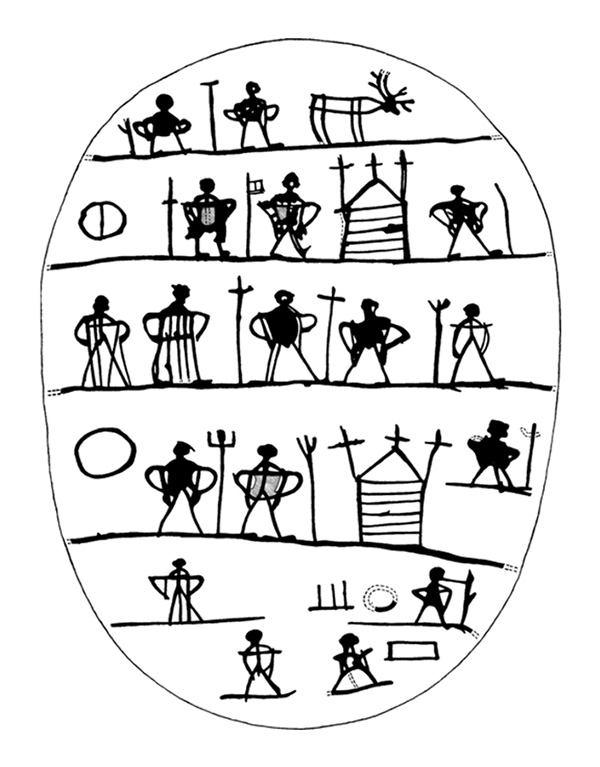
While hundreds of these drums were being burned in a pogrom, an engraver transferred the drawings onto copper plates to save the symbols.
| |
The drums were used to call on the gods, the living and the dead and were used to answer questions such as the location of a lost reindeer, the luck of the hunt or which sacrifice to offer. Clearly witchcraft to some.
In 1692 at nearly 100 years of age, a Sami shaman names Anders Poulsen was tried for witchcraft. All because of the images on – and the use of – the Sami drum. It didn’t end well for Anders. More here: https://en.wikipedia.org/wiki/Sámi_drum
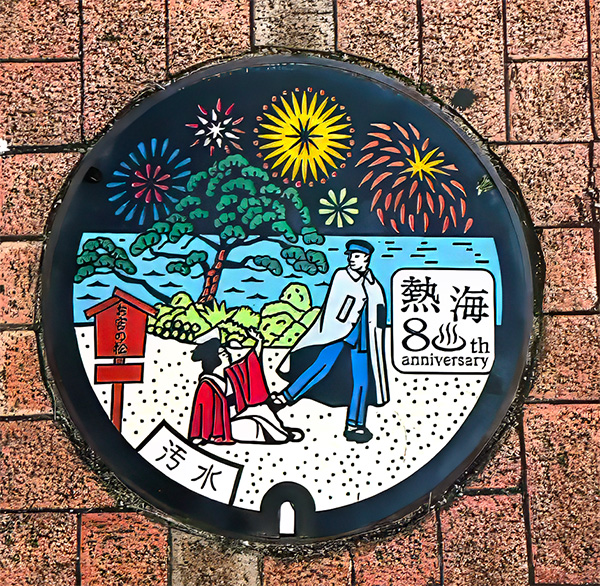
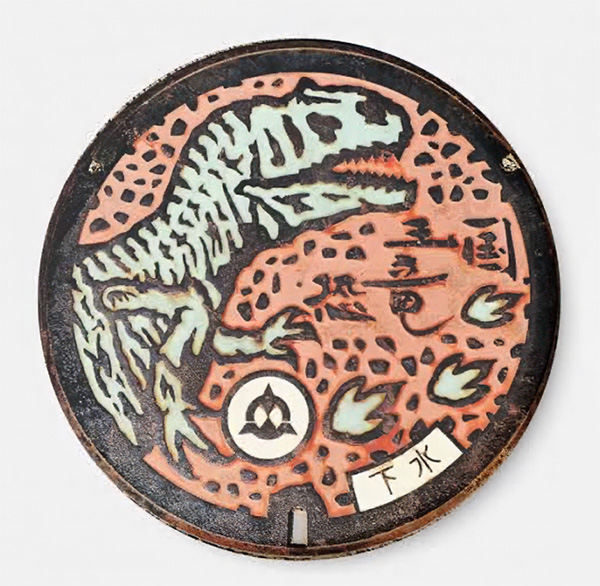
| | Some cultures embrace the opportunity to elevate the daily life experience with a bit of art – sometimes in the most unusual places. Like the manhole covers of Japan. | | |
OK, I’m sorry.
After nearly 300 total entries last month we made the quizzes in October….a wee bit harder. So no one played.
Well, only 41 of you recognized George Grande (of WTNH-TV and one of the first ESPN anchors and long time anchor Hannah Storm of ESPN. Richard A and Joe B provided very clear answers.
As for the other guys – hardly anyone recognized the Jerky Boys – an admittedly obnoxious comedy duo fo the ‘90s. Lisa J and Maggie S were among the even fewer who knew. So, this month we’re back to making it easy.
Just name the movie – and two of its stars here and you’re back in the hunt for a gift card!
| | |
See, this is why you open each month’s “This Just In…” so you can see things you….well….rarely see. Like..
Secret Worlds by Kutub Uddin, Bangladesh/UK | Winner, Portfolio Award
Kutub Uddin reveals a magical and often surreal world of slime moulds that can barely be seen with the naked eye.
In this image – Tiny Dancers – an immature Cribraria aurantiaca is at a tiny and often overlooked stage in its life. Uddin became interested in slime moulds in 2024, and devotes much of his time to revealing this hidden world – exploring his local woodlands in West Sussex, where fallen logs and damp forest floors provide opportunities for discovering these fascinating organisms.
More here:
https://www.theguardian.com/environment/gallery/2026/oct/14/wildlife-photographer-of-the-year-2026-winners-in-pictures
| | |
This looks like a photograph. It’s not.
It’s an oil painting made in 1883 by Peder Mørk Mønsted.
It’s called, The Woodland Glade. Sunlight pours down through a high forest canopy and scatters across the ground in a thousand shifting patches of gold and shadow, each one placed with a precision that hardly seems possible for a human hand.
In his own day Mønsted was celebrated for exactly this. He was admired enough to travel the world and, in 1893, to be received as a personal guest of King George I of Greece, a king who had himself been born a Danish prince, painting the royal family and the countryside there.
But Mønsted had two misfortunes: he painted landscapes rather than important people, and he did it just as the art world was falling out of love with this kind of realism, deciding that all that loving exactitude had had its day.
So his name slipped almost entirely out of art history. And yet his paintings never stopped being loved: they circulate endlessly online, reposted by people who fall for a sunlit forest and, most of the time, have no idea who made it.
The man has been forgotten, but the light he captured never has.
Leonardo da Vinci once said it best: “A beautiful body perishes, but a work of art dies not.”
| | I admit it. We’ve posted this before. But somehow it just seems that we need to be reminded of it from time to time. | | |
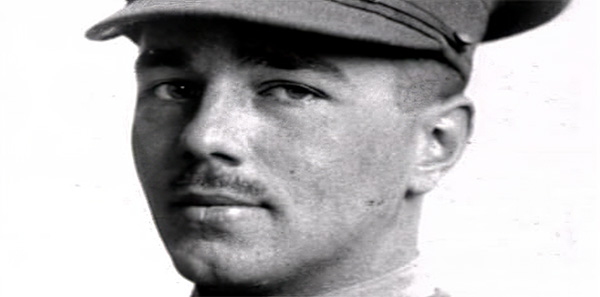
Poet Wilfred Owen Undated Photograph
What passing-bells for these who die as cattle?
—Only the monstrous anger of the guns.
Only the stuttering rifles’ rapid rattle
Can patter out their hasty orisons.
No mockeries now for them; no prayers nor bells,
Nor any voice of mourning save the choirs,—
The shrill, demented choirs of wailing shells;
And bugles calling for them from sad shires.
What candles may be held to speed them all?
Not in the hands of boys, but in their eyes
Shall shine the holy glimmers of goodbyes.
The pallor of girls’ brows shall be their pall;
Their flowers the tenderness of patient minds,
And each slow dusk a drawing-down of blinds.
—Wilfred Owen, “Anthem for Doomed Youth” 1917
It’s kind of ironic that virtually the only photos that exist of the poet Wilfred Owen are of him in uniform. He was a passionate opponent of war in general, of the banal worship of the “glories” of war and of the patriotism that birthed war. Indeed, he died as a result of the war he was so bitterly critical of, being shot 1 week before the armistice that ended World War I
| | |
OK...so this will be hard. But, to at least make you smile - click the link....
https://www.reddit.com/r/WillAndGrace/comments/1iyiw5c/this_is_nurse_trainee_pittman_shell_be_taking/
This is for those of you who really want a challenge. We’ve got two others for those who just want to have some fun.
In 1882, Lewis Carroll (yes, THAT Lewis Carroll) invented a game he called MischMash:
The essence of this game consists in proposing a ‘nucleus’ (i.e., a set of two or more letters, such as GP, EMO, IMSE), and then trying to find a ‘lawful word’ (i.e., a word known in ordinary society and not a proper name), containing it.
Thus, ‘maGPie,’ ‘lEMOn,’ and ‘hIMSElf’ are lawful words containing the nuclei GP, EMO, and IMSE.He sent these nuclei to his godson.
What English words contain these fragments?
OLS
VY
NGU
EWH
STEN
Just give us three of the five and you’ll have a shot at a special gift card – one donated by our friends at R. Julia & Company in Middletown.
| | |
First, you gotta get it. Fresh. Across town. On Wednesday afternoon.
Then stuff it, cut up all those veggies, make the gravy, peel and soak and mash the potatoes, cream the corn, bake the rolls, open three different cans of cranberry sauce, bake a pie, bake a second pie (different flavor cause grandma doesn’t like hot apples), and don’t forget Louise who’s a vegan now. So maybe….fish for her?
Wait…maybe there’s a better way.
Open a can of tuna for Louise and…
| | |
WHITE BOLONGNESE
Yield:4 servings
- Extra virgin olive oil
- ½ sweet onion, peeled and finely chopped
- 2 medium carrots, peeled and finely chopped
- 1 stalk celery, finely chopped
- Sea salt and Freshly ground black pepper
- 1 pound mild Italian pork sausage meat, removed from casings
- 1 pound ground beef (not lean)
- 1 ½ cups dry Italian white wine
- 1 cube beef bouillon dissolved in 2 cups simmering water
- 1 ½ ounces dried porcini mushrooms rehydrated in 3 cups lukewarm water
- ⅓ cup heavy cream
- 1 pound rigatoni
- ¾ cup freshly grated Parmigiano-Reggiano cheese
PREPARATION
Step 1
Add oil to a large, deep sauté pan to coat the base and place over medium-high heat. When the oil shimmers, add the onion, carrots and celery and sauté until glassy and just tender, about 5 minutes. S&P Add the sausage and beef to the pan, breaking it into walnut-size pieces, and brown well.
Step 2
Pour in the wine and keep at a rapid simmer until the pan is almost dry. Then pour in 1 ½ cups beef bouillon and lower the heat to medium. Simmer gently, uncovered, until the bouillon is nearly gone, stirring now and then. Meanwhile, chop the rehydrated porcini into small pieces, reserving the liquid.
Step 3
Add mushroom liquid to the sauce to cover the meat halfway (about 1 cup) along with the porcini and continue simmering until the sauce is loose about 10 minutes. S&P. Fold in the cream. Remove from the heat and cover.
Step 4
Cook rigatoni until firm in the center. When the pasta is almost done, scoop out 1 cup of pasta water and reserve. Drain pasta, then return it to the pot. Pour the pasta sauce on top, fold in with a wooden spoon. The pasta should not be dry. Add a little pasta water or mushroom liquid to loosen it. (It will continue to soak up sauce on the way to the table.) Serve in one large bowl or in individual bowls, passing the cheese at the table.
| | You Just Might Need This... | | We’re in the 11th month of our 100th year celebration and our November winner is Richard B. from Durham. We thank him for being with us year in and year out – as we do each and everyone of you. | | |
November kicks off the holiday season of movies. Big and small – coming to the Cineplex and to Netflix. This month’s quiz requires you to match the movie – with the line from the movie. Get 8 out of 10 correct (wicked easy) and you may win a lovely Amazon gift card. (provide your answers like this: 1G.2F,3A etc....) please.
Line
1, “Gentlemen, you can’t fight in here, it’s the war room.”
2. “I drink your milkshake.”
3. “It ‘s the stuff dreams are made of.”
4. “I’m just one stomach flu away from my goal weight.”
5. “The Dude, abides.”
6. “The greatest trick the devil ever pulled, was convincing the world he didn’t exist.
7. “Round up the usual suspects”
8. “You’re a very nosy fellow kitty cat…”
9. “Watch the skies…keep looking, keep watching the skies.”
10. “On Wednesday we wear pink.”
Movie
A-Mean Girls
B- Chinatown
C-There will be blood
D-Maltese Falcon
E-The Devil Wears Prada
F-Dr. Strangelove
G-The Big Lebowski
H-The Thing
I-The Usual Suspects
J-Casablanca
| | A Timely Reminder At Thanksgiving Dinner | | |
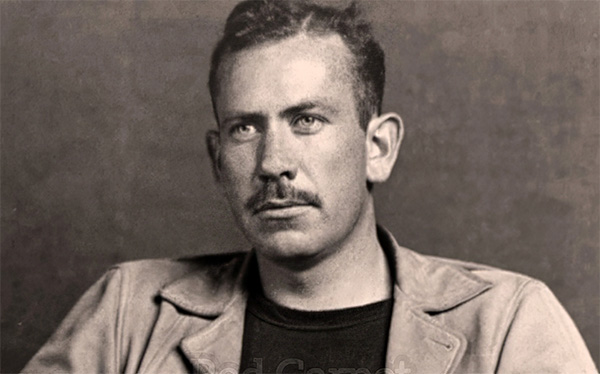
John Steinbeck once did something few writers would ever dare. He hid in a migrant camp under a fake name — just to see if America would treat him like one of its own. It didn’t.
It was 1936, the heart of the Great Depression. Steinbeck kept hearing stories — families from Oklahoma and Texas, farmers who had lost everything to dust and drought, flooding into California in broken trucks. They came chasing a dream, but what they found was hunger, hate, and fields owned by men who saw them as less than human.
Newspapers called them “Okies.” Politicians called them “a problem.”
Steinbeck couldn’t just write about it from a distance. “If you want to understand a man’s pain,” he once said, “you have to walk with him in the mud.” So he borrowed an old car, put on torn clothes, and vanished into the San Joaquin Valley. For weeks, he lived among the migrant workers — sleeping under the stars, eating scraps, and sharing stories by dying campfires.
He watched mothers try to hush their crying babies with songs instead of food. He saw children digging through trash for rotten fruit. “You have no idea how terrifying hunger sounds when it cries,” he later wrote. “It changes the shape of a man’s face.”
Every night, after the others slept, Steinbeck sat by a lantern and scribbled — pieces of dialogue, sketches of faces, small moments of grace in a world built on suffering. Out of those notes came The Grapes of Wrath.
When it was published in 1939, it shook America to its core. Growers burned the book in public. Politicians called him a liar. Churches banned it from shelves. But the people who had lived those lives — the ones with blistered hands and dust in their lungs — they wept. “He told the truth,” one farmer said. “At last, someone saw us.”
The FBI opened a file on him, calling his work “dangerous” and “un-American.” He received death threats. Armed men from the Associated Farmers of California watched his home day and night. A friend once asked if he was scared. Steinbeck just smiled and said, “No. I’m ashamed it took me this long to pay attention.”
He won the Pulitzer, then the Nobel Prize, but he never forgot the camps. “I am not a writer of escape,” he said. “I am a writer of the people who cannot escape.”
John Steinbeck didn’t just write about the American Dream — he lived with the people who were denied it. And in the dust and hunger, he found not just despair, but dignity — the kind that refuses to die, even when everything else is gone.
| | |
danielsenergy.com
Daniels Energy: CT License S1-385517 HOD#19 /
Daniels Propane. LLC: #846 CT License S1-302857
| | | | | |