Pleasant Bay Fisheries Study Takes a Four-Season View of the Bay | |
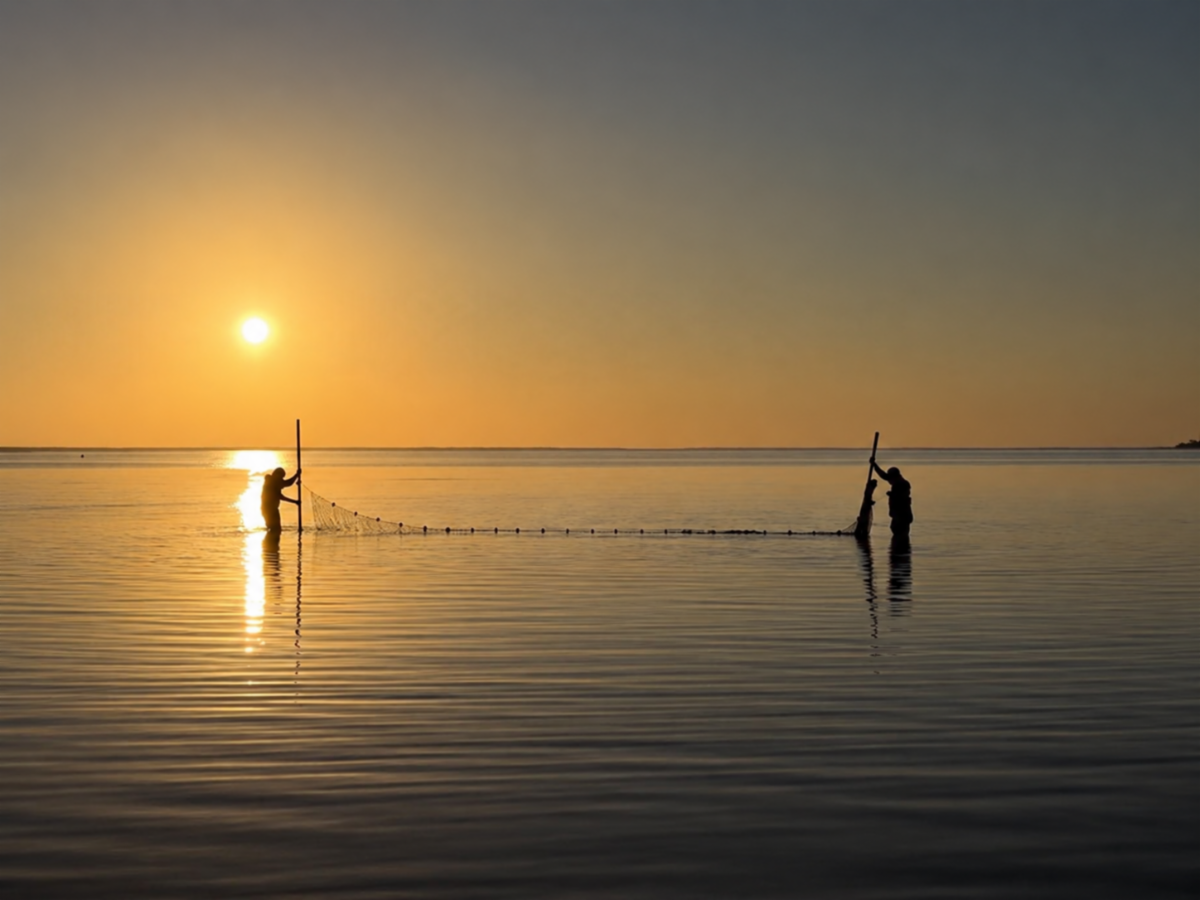
The Pleasant Bay Fisheries Study is well underway, gathering data across the seasons to build a more complete picture of fish and other marine life throughout the Bay.
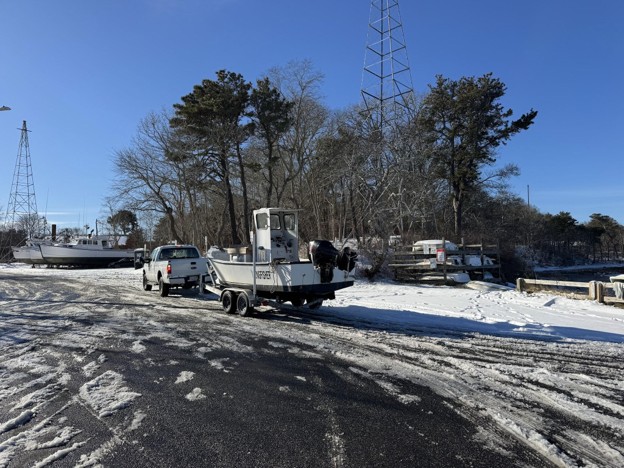
A colder and snowier-than-usual winter presented some challenges for project scientist Owen Nichols and his team from the Center for Coastal Studies (CCS). To ensure that the study captures a full and balanced four-season dataset, the research period will now extend through August 2027.
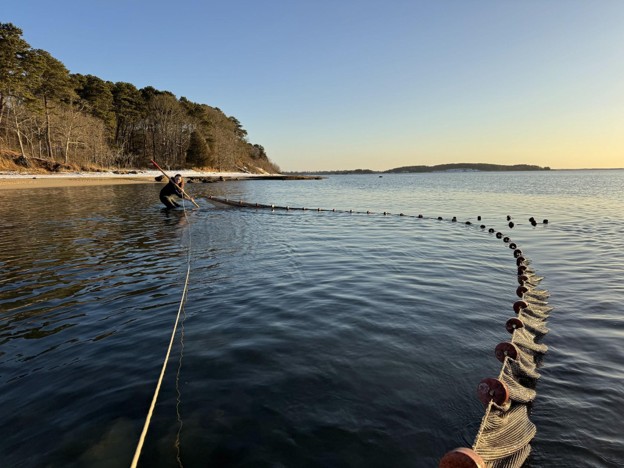
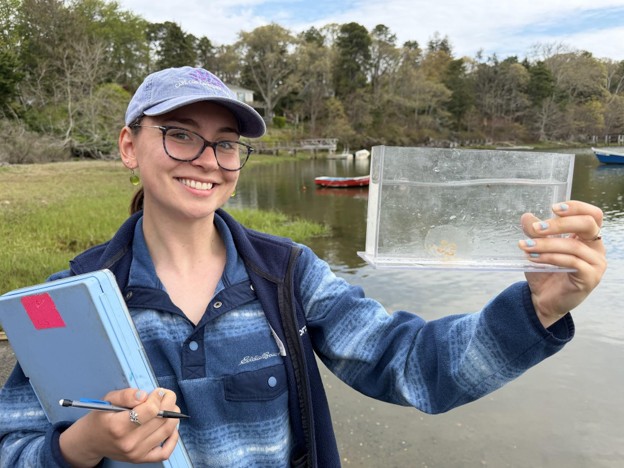
Researchers are using several sampling methods, including seining, box traps and small research trawls. Recent intertidal sampling has documented a diverse assortment of species, including flounder, pinfish and toadfish. The team has also observed invasive Manila clams and is planning targeted intertidal surveys to better understand their distribution within Pleasant Bay.
As the study progresses, Friends of Pleasant Bay hopes to offer opportunities for community participation and observation. Watch for updates in The Current.
Private funding makes this research possible. To support the Fisheries Study, visit friendsofpleasantbay.org/fisheries or contact info@friendsofpleasantbay.org.
| | |
APCC’s State of the Waters: A Look at Pleasant Bay
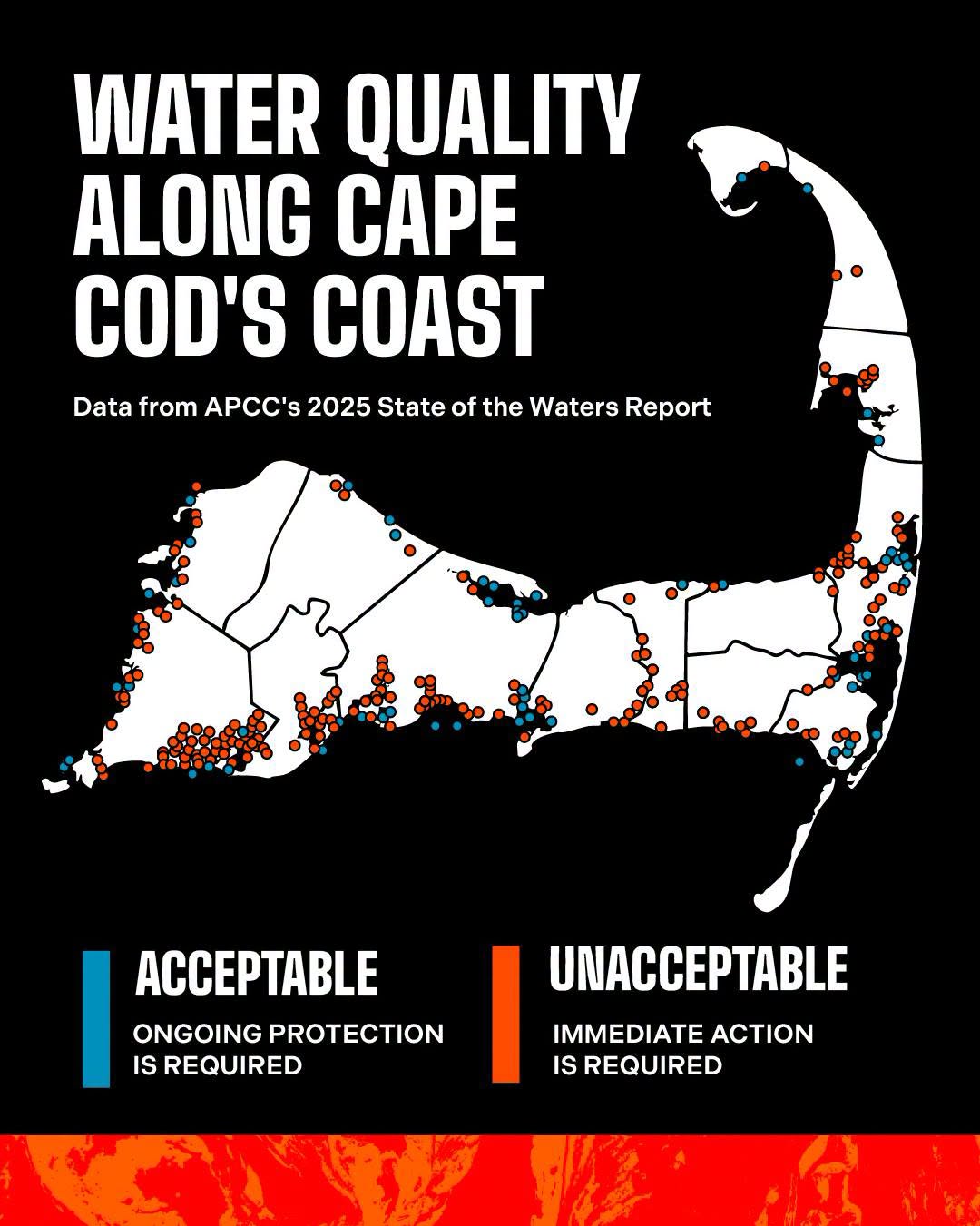
As Orleans, Chatham, Harwich and Brewster continue their work to improve water quality throughout the Pleasant Bay watershed, the Association to Preserve Cape Cod’s most recent State of the Waters report provides a useful snapshot of conditions across the Bay.
APCC classifies coastal monitoring locations as either “acceptable” or “unacceptable” based on its water-quality criteria. On the 2025 map, numerous monitoring locations within the Pleasant Bay system are shown as unacceptable, while some nearby locations are classified as acceptable.
The results reflect the complexity of Pleasant Bay, a large estuarine system made up of coves, rivers, inlets and areas that differ in their circulation and connection to open water. Water quality can therefore vary considerably from one part of the system to another.
Management of the Pleasant Bay watershed is coordinated through the Pleasant Bay Alliance, an intermunicipal partnership of Orleans, Chatham, Harwich and Brewster. Read more.
| |
Friends of Pleasant Bay Endorses Question 6
Question 6 would dedicate existing sales-tax revenue from sporting goods to protecting water, land and natural resources across Massachusetts.
Friends of Pleasant Bay has joined more than 100 conservation organizations, businesses and other groups in endorsing Question 6, a statewide ballot initiative organized by Nature for Massachusetts.
If approved by voters, Question 6 would dedicate a portion of the state sales tax already collected on sporting goods—including items such as camping gear, fishing equipment and golf clubs—to a new Nature for All Fund. According to the campaign, the fund could provide as much as $100 million annually for projects that protect drinking water, conserve forests, farms and wildlife habitat, and create or improve parks, trails and other public green spaces. The proposal would not establish a new tax. The fund would be administered through a public oversight board and would be subject to annual reporting requirements.
FoPB chose to endorse Question 6 because its purposes closely intersect with the organization’s own mission and decades of work on Pleasant Bay. Protecting water quality, conserving habitat and open space, supporting public access, and strengthening the resilience of natural systems are all central to our work and the long-term health of the Bay.
Question 6 will appear on the Massachusetts ballot this fall. With Election Day approaching, FoPB encourages members and friends to learn more about the proposal.
| |
OneCape 2026 Comes to Pleasant Bay
Registration is now open for the Cape Cod Commission’s annual OneCape Summit, to be held November 16 at Wequassett Resort in Harwich.
The daylong event brings together local, state, and national experts to explore some of Cape Cod’s most pressing challenges, including environmental stewardship, climate resilience, infrastructure needs, and sustainable economic opportunities. The program includes plenary and breakout sessions, networking opportunities, and an evening reception.
This year’s gathering will take place right here on Pleasant Bay, making it an especially fitting venue for conversations about the Cape’s environmental and community future.
Learn more and register for OneCape 2026.
| | | | |
Who’s Passing Through Pleasant Bay This October?
| | | |
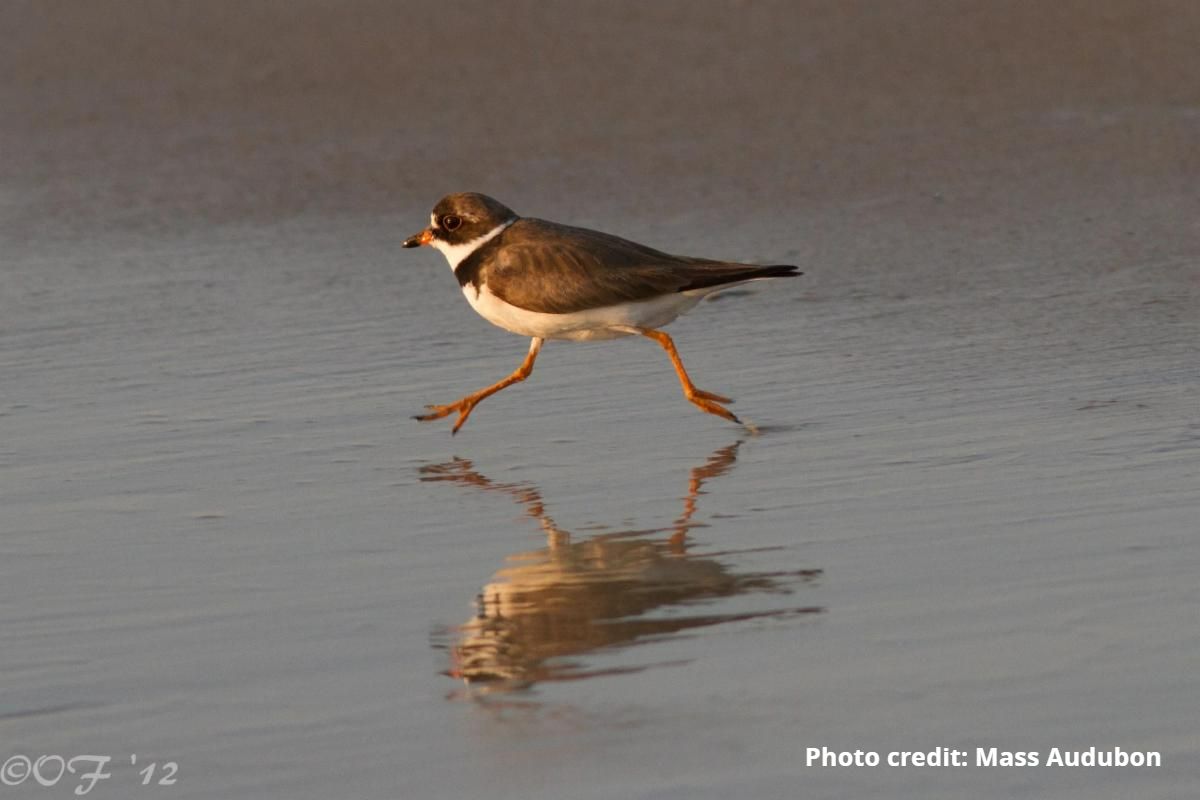
October is an especially interesting month for birdwatching around Pleasant Bay. Fall migration is still underway, but the mix of birds is changing: some species are moving south, some are arriving for the colder months, and others are taking advantage of the Bay’s protected coves, marshes, beaches, and tidal flats to feed and rest.
Here are five species you may encounter around Pleasant Bay in October:
- Black-bellied Plover — Often seen on beaches and tidal flats. By fall, it has usually lost the bold black belly of breeding season and appears much paler gray and white.
- Greater Yellowlegs — A tall shorebird with bright yellow legs and a long, slightly upturned bill. It often feeds actively in shallow water.
- American Black Duck — A familiar coastal species that becomes increasingly noticeable in fall and winter, especially around sheltered coves and salt marshes.
- Northern Harrier — Watch for this long-winged raptor flying low over marshes as it hunts.
- Common Loon — As fall advances, loons become more common in coastal waters after leaving inland breeding areas. Their striking summer plumage gives way to a subtler gray-and-white winter appearance.
Pleasant Bay provides migrating and wintering birds with exactly what they need: shallow feeding areas, mudflats rich in invertebrates, protected coves, and extensive salt-marsh habitat.
So this October, bring binoculars along on a walk by the Bay and see who is passing through. The bird you spot today may be hundreds of miles farther south within a few weeks.
| | | | |