View as webpage

Weekly Roundup | October 15, 2025

Artificial intelligence offers new powers to reporters tackling data projects

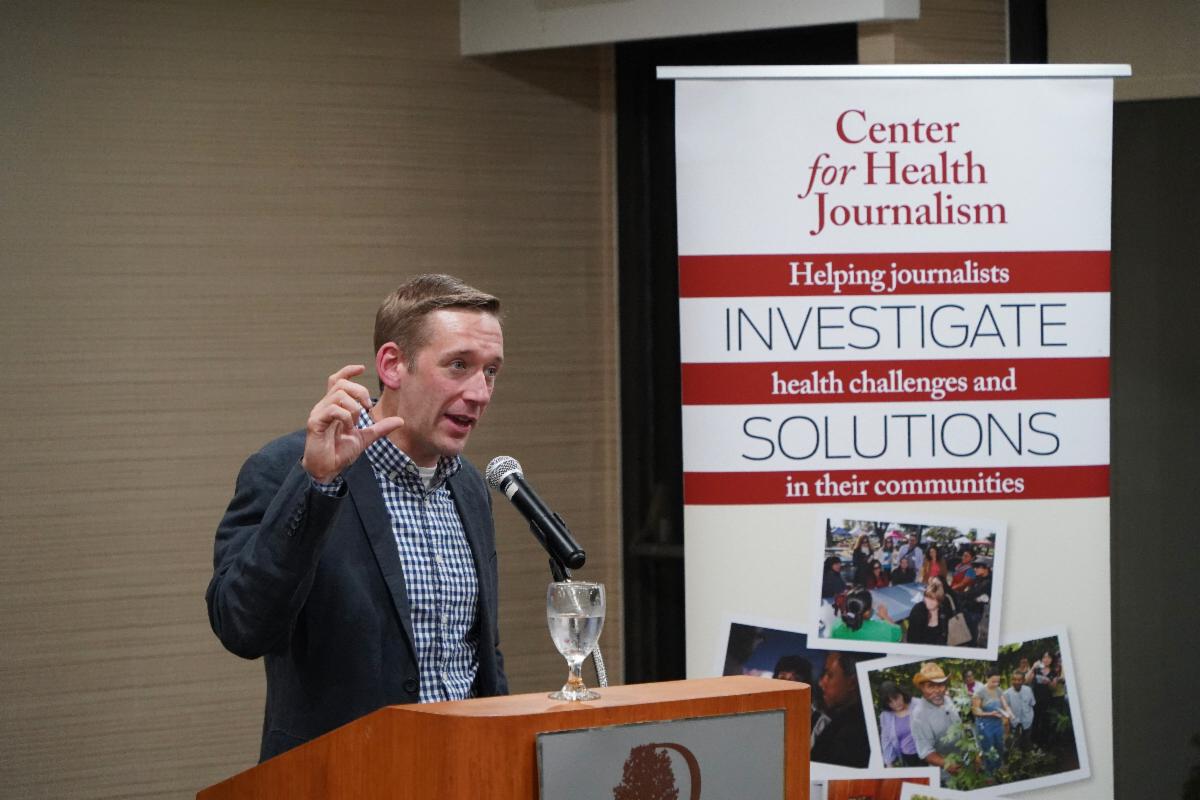
Chase Davis, an early pioneer in journalistic uses of artificial intelligence, delivered the keynote address at the USC Center for Health Journalism’s 2025 Data Fellowship in Los Angeles. (Photo by Kevin Wu/Center for Health Journalism)

The rise of artificial intelligence has raised grave questions about its environmental toll, its impact on the labor market, and even its potential status as an existential threat to humanity.


Journalists can and should have a healthy dose of skepticism about AI, Chase Davis told the Center for Health Journalism’s 2025 Data Fellows. But for reporters trying to dig up the truth, AI can also be a powerful tool to handle practical problems that pop up routinely while reporting, he said.


“I tend to think that the best uses of generative AI are extremely, extremely boring,” said Davis, a pioneer in journalistic uses of AI who has worked for the Minnesota Star Tribune and The New York Times.


Davis, the keynote speaker for the 2025 program, encouraged reporters to think creatively about how AI can help them find and tell better stories, not just the “low-hanging fruit” of generating headlines or three-bullet story summaries.


AI can make the painstaking work of data journalism faster, Davis said, and can also make the field more accessible to journalists: Instead of poring over programming languages like R or Python, a reporter can prompt AI to write the code they need, he explained.


But Davis also cautioned journalists not to check their journalistic standards at the door when using AI: Its results should be rigorously verified and fact-checked, he said.


With AI still in its infancy, Davis sees “an opportunity to take this technology that no one has really figured out yet and turn it toward the bits of our mission that matter.”

Read more in Clara Harter's column here: An early AI pioneer shares how the ‘vibe coding’ revolution could reshape data journalism

We're seeking a Collaborative Editor

The USC Annenberg Center for Health Journalism is seeking to hire a veteran editor to lead our award-winning nonprofit journalism collaborative that works with ethnic media news outlets across California on stories of health and health equity. The Collaborative News Editor will create educational programming, serve as project editor, mentor reporters at different skills levels and lead a learning and reporting effort that brings together five to seven outlets in California.


As project manager, you’ll nurture esprit de corps and build a virtual newsroom among the reporters, newsroom leaders and their editorial colleagues, brainstorming on story ideas, editing copy and developing a learning curriculum with the program design and priorities established in collaboration with participating newsrooms. You will also be expected to track outcomes and contribute to reports on our progress. Here are prior stories from the past two years of the initiative, which won 14 regional and national awards in its first year.


This is a 40 hour per week, grant-funded, hybrid, staff position based in Los Angeles, with two days a week in-office.


Interested? Apply
here.

Read more from our community!

How a trauma-informed approach to domestic violence stories puts survivors first


By Kellie Schmitt, Center for Health Journalism

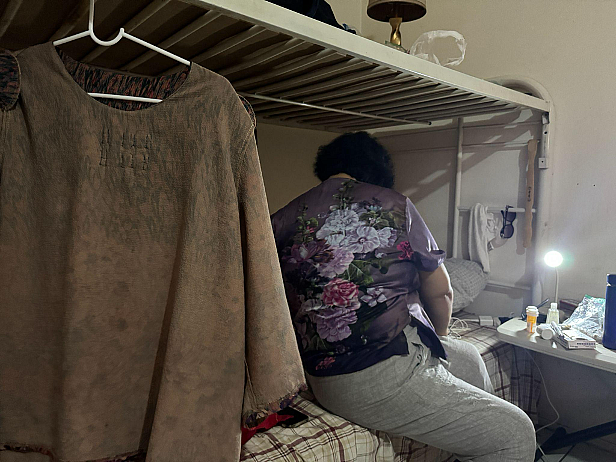
Elderly Chinese immigrants crammed into garage dormitories: Inside Southern California's family hotels


By Jian Zhao, World Journal

Butte County Mental Health Diversion court brightens futures; challenges remain


By Yucheng Tang, ChicoSol

Not a subscriber, yet? You can sign up for The Weekly here or The Health Divide here.
Facebook  Instagram  LinkedIn  X  YouTube

USC Annenberg/Center for Health Journalism | Kerckhoff Hall, 3rd Floor 734 W Adams Blvd | Los Angeles, CA 90089 US