| | John Riggi, National Advisor for Cybersecurity and Risk at the AHA, and William Walders, EVP and Chief Digital and Information Officer at The Joint Commission, explain why surviving a prolonged cyber outage hinges on one accountable executive, board-level priority, and treating clinical continuity as the mission. | | | |
| | Jason Hill, MD, System Vice Chair, Hospital Medicine and Innovation at Ochsner Health, explains how the system turned patient throughput into a coordinated engine, why front-end access rivals back-end length of stay, and how Epic's Cosmos Median Length of Stay tool predicts patient stays right at the moment of admission. | | | |
| | Anahi Santiago, CISO, ChristianaCare; Krista Arndt, Associate CISO, St. Luke’s University Health Network; Antonio Davis, Director of Information Security/CISO, Northeast Georgia Health System; and Robert Butler, Director, Information Security, Netskope, examine why visibility into shadow and vendor-introduced AI must come before governance. | | | |
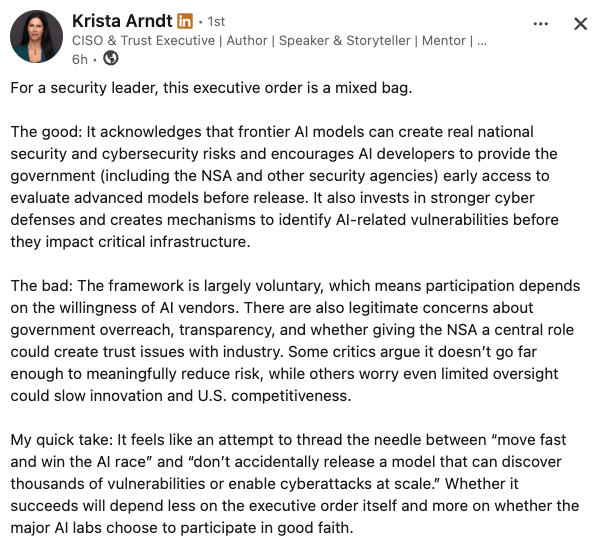
| | A new FBI alert warns that Chinese military intelligence is recruiting personnel with access to classified or sensitive information through fake job offers posted on professional networking sites and job platforms, a threat with direct stakes for healthcare. | | | |
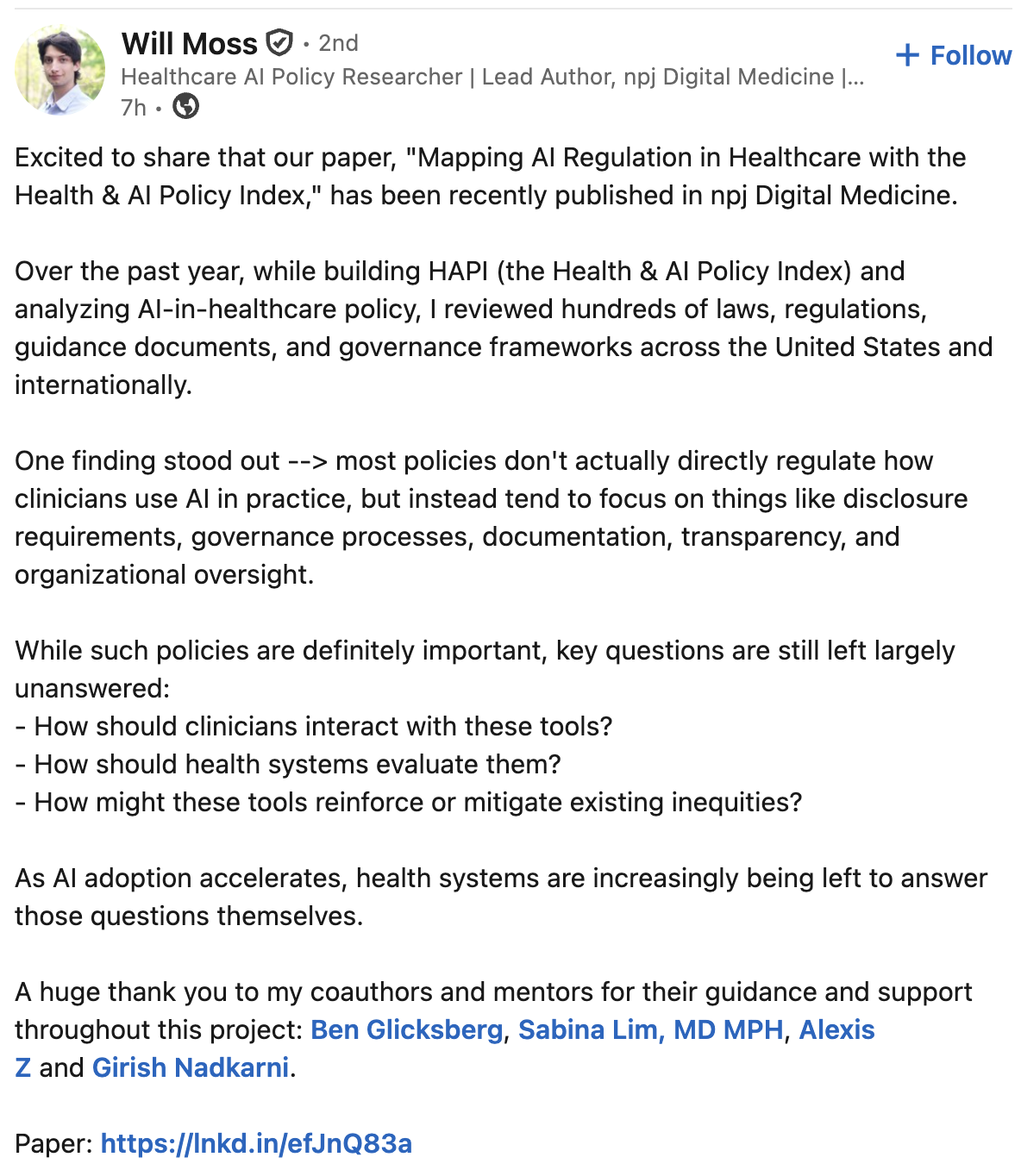
| | The AMA has adopted policies calling for evidence attribution, validation, transparency, and explainability standards in AI clinical decision support, along with regular audits of AI-driven clinical review tools triggered by significant changes to models, training data, or clinical guidelines. | | | |
| | Gartner has named four cybersecurity threats where attackers now hold a clear advantage: deepfakes, AI application compromise, prompt injection, and software supply chain attacks. The company is urging security leaders to adopt layered controls, embed AI-specific mitigations through frameworks such as TRiSM, and build comprehensive software inventories. | | | |
| | A new report from Health-ISAC lays out best practices for managing third-party identity and access, as vendor exploitation drives a growing share of healthcare breaches. Drawing on three use cases, the guidance treats identity governance, federated authentication, and network segmentation as complementary controls. | | | |
| | Deepak Kumar, Assistant Professor of Computer Science and Engineering at UC San Diego, explains how social media exposes the patient and provider toll of hospital ransomware attacks that national breach databases routinely miss. Analyzing Facebook and Reddit data spanning 212 separate attacks, his team found the two platforms offer complementary views of operational disruption. | | | |
| | Quanyan Zhu, associate professor of electrical and computer engineering at NYU Tandon School of Engineering, examines how autonomous AI is outpacing the insurance built to cover it. As agents move from generating information to taking real action, a loss can occur with no breach at all, leaving standard cyber policies silent. | | | |
| | Ken Nepple, MD, Clinical Professor and Associate CHIO at University of Iowa Health Care, warns that point-solution AI tools built separately for inpatient, ER, and clinic settings carry blind spots that create dangerous omissions. As a single provider context switches across these settings, juggling fragmented tools adds cognitive load. | | | |
| | Daniel Yang, MD, VP of AI & Emerging Technologies at Kaiser Permanente, endorses a new NEJM Catalyst framework from Stanford Healthcare for monitoring portfolios of health AI. He describes how QA and monitoring carry conflicting meanings across IT, clinical, and business audiences, creating organizational confusion. The framework resolves this by distinguishing system integrity, performance, and impact. | | | |
| | A new IEEE Security & Privacy article, based on the NIST-convened ConnectCon workshop of 45 experts, identifies the human element as a cybersecurity “hard problem” and challenges the reliance on training completion rates. The authors argue for measuring behavior change, easing cognitive load, and treating staff as security partners. | | | |
| | John Lee, MD, an emergency physician at Edward Hospital Naperville and Epic consultant, writes that Epic earned its market dominance through decades of internal R&D while competitors pursued acquisitions that produced technical debt. He points to Cosmos as a compounding data moat that AI will deepen. | | | | |
Click Here to Register for Any of the Webinars Below
Leaning Into Internal Development: Expanding the Build Option for New Application Requests (6/16)
- John Halamka, MD, President, Mayo Clinic Platform
- Melek Somai, MD, MPH, VP, Chief Technology & Product Officer, Inception Health – The Innovation Arm of Froedtert ThedaCare Health
When to Pull the Plug: Strategies for Building an Application Decommissioning Discipline (7/15)
- Zafar Chaudry, MD, Former SVP – Chief Digital Officer & Chief AI and Information Officer, Seattle Children's
- Adar Palis, SVP of Clinical & Revenue Cycle Applications, Providence
- Juan Rojas, MD, Associate CMIO, Rush University Medical Center
| | |
Click Here to Access These Events & Our Entire Streaming Library
Governing AI Data Flows: Strategies for Securely Enabling Clinicians (Sponsored by Netskope)
- Anahi Santiago, CISO, ChristianaCare
- Krista Arndt, Associate CISO, St. Luke’s University Health Network
- Antonio Davis, Director-Head of Information Security (CISO), Northeast Georgia Health System
- Robert Butler, Director, Information Security, Netskope
Optimizing Patient Throughput: Technology Strategies for Discharge Efficiency – Sponsored by iHarbor, the University of Maryland Medical Systems's Innovation Center
- Sonney Sapra, Chief Information and Technology Officer, UVA Health
- Juan Rojas, MD, MS, Associate CMIO, Rush University Medical Center
- Warren D'Souza, SVP/Chief Innovation Officer, University of Maryland Medical System
AI ROI in Health Systems: Use Cases Delivering Measurable Value in 2026
- Shakeeb Akhter, SVP/Chief Digital & Information Officer, Children's Hospital of Philadelphia
- David Chou, Experienced Health System IT Executive
| | | | |