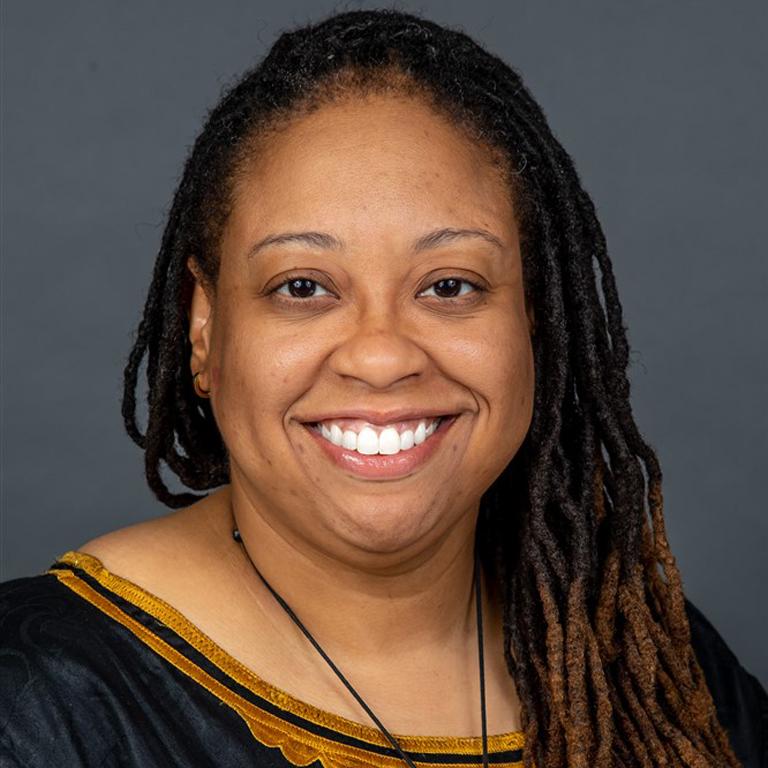
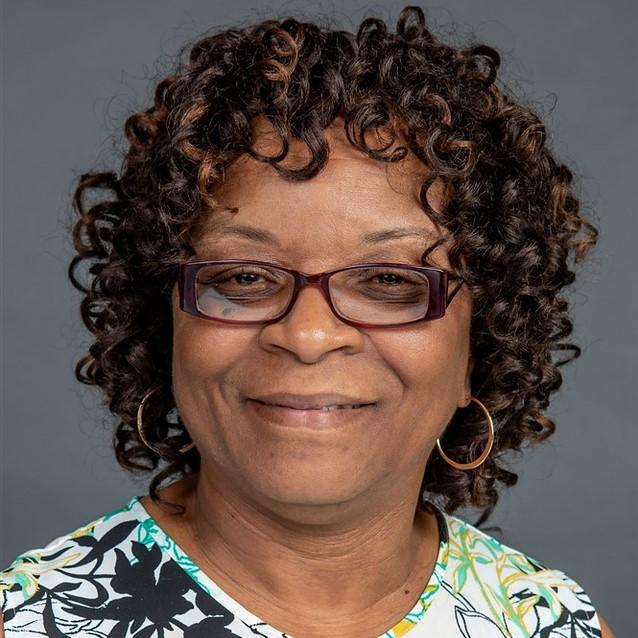
Did you know ACPE has an Anti-Bias Working Group (ABWG)? Have you ever wondered what we do? As we begin work in 2022, we see our work as integral to ACPE’s mission, vision and values. ACPE’s mission is to positively affect people’s lives by nurturing connections to the sacred through experiential education and spiritual care. The ABWG’s mission is to resource ACPE to embed and embrace anti-bias and antiracism at every level and at every expression of our organization. ACPE’s vision is to create measurable and appreciable improvement in spiritual health that transforms people and communities in the US and across the globe. The ABWG’s vision is to champion the anti-bias and anti-racist orientation and practices that are essential to cultivating spiritual health and wellbeing.
|
|
Early bird registration is now open for the 2022 Joint ACPE/APC Conference! The conference theme this year is “Freedom, Wonder, and Liberation: Anti-Bias Practices of Spiritual Care and Education” and will feature dynamic plenary sessions from Dr. Linda James Myers, Carol Wayne White, Dr. Robyn Henderson-Espinoza, and Erin Law.
For ACPE Members: To ensure that you receive the correct pricing, please use the email that was included in your invitation email. If you have questions, please email events@acpe.edu before registering.
|
|
The deadline to declare for the Spring 2022 Certification Subcommittees for CECs in the "old" certification process is February 28. Anyone wanting to meet a subcommittee this spring for Certification must fill out the Letter of Intent/Appx 10. Sheilah Hawk will invoice you the $100 Meeting Fee upon receipt of the completed form. Email certification@acpe.edu with any questions.
|
|
ACPE and APC invite you to support our efforts to provide this critical and dynamic educational program for our professionals in spiritual care. Your support will help us to bring the dream of healing this hurting world into reality, so that together we may create a better future for all. |
|
|
|
Once a month the ACPE Professional Ethics Commission (PEC) posts a couple of statements from our Code of Professional Ethics for ACPE Members.
|
|
|
|
Multi-factor authentication (MFA) is when a website or application requires additional information besides a username and password to sign in. Because of ongoing internet security concerns, you are probably already using MFA with other accounts like your work log in or banking.
|
|
|
|
The Accreditation Commission is seeking additional Portfolio Reviewers to participate in the annual review of center portfolios. Serving as a Portfolio Reviewer is a great way to better understand portfolio requirements and to engage with other centers about the ways they run their programs.
|
|
|
|
The ACPE Psychotherapy Commission is excited to announce its 2022 Psychotherapy Webinar Series! These webinars are provided free of charge to ACPE members, as a benefit of membership.
|
|
|
|
The Foundation for ACPE Service Awards Committee invites you to nominate yourself or a colleague for recognition of outstanding contributions or service to ACPE, the field(s) of spiritual care, pastoral counseling, and/or psychotherapy.
|
|
|
|
Ecumenical Theological Seminary (Detroit, MI) has a unique 2-year DMin program that has a special focus for ACPE CECs and CEs. For more information, contact Aarti Ahuja Director of Recruitment and Enrollment Manager at 313-831-5200 x224 or email: aahuja@etseminary.edu.
|
|
It is difficult to capture all of the brilliance that became known during the Harlem Renaissance. What a time that must have been! Clarissa Scott Delaney was a bright light of Harlem that burned out way too soon (she died at 26). In addition to poetry, she was a social worker and studied the conditions of Black children in her community. There is something both freeing and haunting in this poem: |
|
Joy
by Clarissa Scott Delaney
Joy shakes me like the wind that lifts a sail,
Like the roistering wind
That laughs through stalwart pines.
It floods me like the sun
On rain-drenched trees
That flash with silver and green.
I abandon myself to joy—
I laugh—I sing.
Too long have I walked a desolate way,
Too long stumbled down a maze
Bewildered.
|
|
Many of us saw malls as so much more than sites of commercial gluttony. They were social locations, places where older couples went to walk, where teens gathered just to hang out, and where there always seemed to be buzz about a new store coming in. That was then. Today malls are at best passe’ and in some contexts have become a part of suburban blight. Check out this series of images from malls well past their glory days:
|
|
This Week on the Calendar |
February 14
St. Valentine's Day (Christianity)
Pope Gelasius assigned February 14 as Saint Valentine's Day in 496 CE. This day commemorates the death of Saint Valentine of Rome, who, according to tradition, was martyred on February 14 ca. 270 C.E. Saint Valentine's Day was not associated with romantic love until the High Middle Ages, when legends and stories about Valentine were written and popularized by Geoffrey Chaucer and his circle.
February 15
Nirvana Day (Buddhism)
Celebrates the day when the historical Buddha achieved complete Nirvana, upon the death of his physical body. This day marks the Buddha’s death and when he reached Nirvana at the age of 80. Nirvana is the end to all wanting, and thus the end to all suffering that craving brings about. Buddhists who observe Nirvana day often do so by examining their lives, in order to make changes needed to help them achieve perfect peace.
Lantern Festival (Taoism)
The New Year celebration ends with the lantern festival when the first full moon enters the New Year
February 16
Vasant Panchami (Hinduism)
This festival is dedicated to Saraswati, the goddess of learning. On this day, schools and colleges often organize special worship of Saraswati, many participate in special activities at Hindu temples, and young children are taught their first words.
Magha Puja (Buddhism)
Magha Puja is the day the Buddha addressed a meeting of 1250 arhats: spiritual practitioners that had reached a certain level of enlightenment. The Buddha introduced to them these principles: cease from evil, do what is good, and cleanse one's mind. On this day, temples in Thailand hold candlelight processions, walking clockwise three times around the Uposath Hall-- once for the Buddha, once for the Dharma, and once for the Sangha.
|
|
Seeking an ACPE Associate Certified Educator or ACPE Certified Educator to join a collaborative team of four CPE Educators and 30 Board Certified Chaplains
|
|
3 Residency Positions – Rotate between Geriatric, Intensive, and Spinal Care 4 Fellowship Positions – Geriatric, Chemical Dependency, Mental Health and Palliative Care
|
|
Other Educational Opportunities |
|
ACPE: The Standard for Spiritual Care & Education |
|
ACPE is the standard for spiritual care and education. Our diverse membership includes Certified CPE Educators, Spiritually Integrated Psychotherapists, Spiritual Care Professionals and Practitioners, Pastoral Counselors, Chaplains, Faith Communities, and Seminaries. Our multi-disciplinary, multi-faith, multi-racial community of professionals provides education, connection, and formation through continuing education, networking, and leadership development.
ACPE is the premier, Department of Education recognized, organization that provides the highest quality CPE programs for spiritual care professionals of any faith and in any setting. We do this through a rigorous accreditation and certification process for centers and educators that provide CPE.
The depth of our training enables students to realize their full potential to strengthen the spiritual health of people in their care as well as themselves.
ACPE members are actively engaged in a wide variety of professional development activities including communities of practice, conferences, spiritual care research, and informal networking. We are more than just an association: we are a movement committed to the transformation of the human suffering.Our opportunities for formation and community enrich our member's work of healing and transforming people and communities in the US and across the globe.
|
|
|
|
|
|
|