|
Transparency in Congress and a well-informed electorate are vital to preserving our self-governing Constitutional Republic. My constituents deserve to know how their members of Congress vote, which is why I have explained every vote I have cast in Congress since I was first elected.
To read more about my votes and see the full list with explanations of all the legislation considered this week by the House, please click here.
Wednesday, May 20
I voted “Yes” on S. 2393, the Fiscal Year 2025 Veterans Affairs Major Medical Facility Authorization Act. This bill authorizes appropriations for the Department of Veterans Affairs (VA) to construct a new hospital facility in St. Louis, Missouri. Our veterans have put their lives on the line to defend our freedom and should always receive the benefits they earned in a transparent, effective, and affordable manner. This bill ensures that this VA facility strengthens services by providing quality healthcare to the St. Louis community. This bill passed the House by a vote of 405-5.
I voted “Yes” on H.R. 1993, the 25th Anniversary of 9/11 Commemorative Coin Act. This bill, which I cosponsored, directs the Treasury Secretary to mint 50,000 gold coins and 400,000 silver coins in commemoration of the 25th anniversary of the September 11, 2001, terrorist attacks on the United States. Twenty-five years after the horrific attacks of September 11th, we have a responsibility to honor the memories of those we lost, pray for those still suffering from health impacts from 9/11, and honor the first responders whose bravery and courage were unmatched. All proceeds from the commemorative coins will be given to the National 9/11 Memorial & Museum in New York City. This bill passed the House unanimously by a vote of 415-0.
I voted "Yes" on H.R. 3234, the Keeping Deposits Local Act. This bill gives community banks greater flexibility to accept larger reciprocal deposits, freeing up more capital for local lending and investment. Community banks in Upstate New York don't have the sprawling branch networks of the big Wall Street institutions, and unnecessarily restrictive deposit regulations put them at a competitive disadvantage that hurts the small businesses and families that rely on them. This bill builds on bipartisan legislation enacted in 2018 and takes the next logical step in giving community banks the flexibility they need to grow, compete, and invest in the communities they serve. This bill passed the House by a vote of 405–0.
I voted "Yes" on H.R. 4544, the American Access to Banking Act. This bill directs federal financial regulators to streamline the application process for forming new banks and credit unions. This bill also improves communication with applicants and coordination between state regulators and the Securities and Exchange Commission. The number of new bank charters has collapsed in recent decades, only 3 were approved between 2012 and 2016, creating real barriers to competition and financial access, particularly in rural and underserved communities. New York's 24th District is home to many families and small businesses that depend on community banks, and the consolidation of the banking sector into large institutions threatens the local relationships that make community banking work. This legislation takes a commonsense step toward rebuilding a pipeline of new community banks and credit unions for consumers that lack access to traditional financing. This bill passed the House by a vote of 405–4.
I voted “Yes” on H.R. 5317, the Community Bank Deposit Access Act of 2025. This bill changes the treatment of certain types of deposits, so they are no longer classified as brokered deposits for Community Banks. Outdated regulations place community banks at a disadvantage, stifling their ability to serve our rural communities and businesses. This bill updates regulations to allow for more competition and ensure that financial institutions can best serve their communities while maintaining strong fiduciary standards. This bill passed by a vote of 393-16.
I voted "Yes" on H. Res. 1299, 21st Century ROAD to Housing Act. This sweeping bipartisan legislation addresses the root of the housing affordability crisis by expanding supply, cutting unnecessary regulatory barriers to new construction, modernizing HUD programs, and reforming outdated banking rules that have prevented community banks from financing the new homes that families in Upstate New York desperately need. New York is currently short of at least 400,000 housing units to meet demand, and rising construction costs, zoning constraints, and regulatory delays have made a bad situation worse. This bill streamlines the permitting process through pre-approved home designs, modernizes the HOME Program, updates manufactured housing rules, expands community and rural banks' access to stable deposits for local lending. Most importantly, this bill delivers on President Trump's commitment to limit institutional investors from crowding out everyday Americans in the housing market. New York families have experienced the strain of housing affordability firsthand, and this legislation gives builders, banks, and local communities the tools they need to finally move the needle and make housing more affordable. This bill passed the House by a vote of 396–13.
I voted “Yes” on S. 1003, Lulu’s Law. This bill requires the Federal Communications Commission (FCC) to issue an order explicitly permitting the transmission of wireless emergency alerts to mobile phones in the event of a shark attack. The Integrated Public Alert & Warning System is the Federal Emergency Management Agency’s (FEMA) national system that provides authenticated emergency and life-saving information to the public, including national alerts, public safety alerts, and AMBER Alerts. This bill is named after Lulu Gribbin, an Alabama teenager who nearly lost her life in a tragic 2024 shark attack on the Florida Gulf Coast. This bill ensures that vital safety alerts include warnings of these types of incidents to prevent future incidents like the one that nearly killed Lulu. This bill passed the House by a vote of 401-6.
I voted “Yes” on H.R. 2616, the Stopping Indoctrination and Protecting Kids Act. This bill prohibits federal funds to teach radical gender ideologies in schools and requires parental consent before schools can change students’ pronouns or change any sex-based accommodations, including locker rooms or bathrooms. There have been far too many stories of teachers and schools conspiring to conceal information from parents to promote these radical gender ideologies. This is not only abusing taxpayer funds, but violates the central principle that parents know how best to care for their child. This bill builds upon President Trump’s Executive Order 14168, “Defending Women from Gender Ideology Extremism and Restoring Biological Truth to the Federal Government” and Executive Order 14190, “Ending Radical Indoctrination in K-12 Schooling”. Together with these executive orders, the Stopping Indoctrination and Protecting Kids Act will help protect parental rights and will stop radical gender ideologies from infiltrating our schools. This bill passed the House by a vote of 217-198.
Thursday, May 21
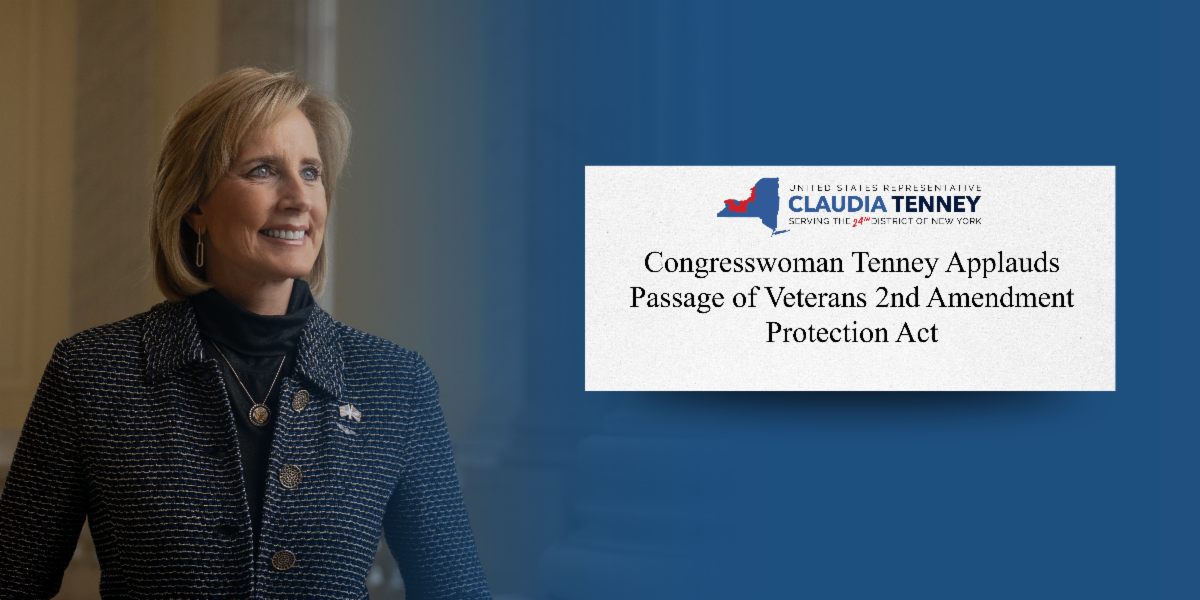
I voted “Yes” on H.R. 1041, the Veterans 2nd Amendment Protection Act. This bill prohibits the VA from reporting a veteran as incapable of owning a firearm for using a fiduciary to manage their benefits. As a Constitutional Conservative, one of my top priorities throughout my time in public service has been to preserve and uphold the sacred right to bear arms, and I will always fight against efforts to infringe on our Second Amendment. No veteran should have their rights infringed for using a fiduciary to manage their benefits through the complicated VA system. This bill will protect our veterans’ rights and ensure our veterans do not have to fear using a fiduciary if they need one. This bill passed the House by a vote of 216-201.
I voted “Yes” on H.R. 1329, the Smithsonian American Women’s History Museum Act. This bill would authorize the transfer of federal land on the National Mall from an agency to the Smithsonian Institution for the purposes of the construction of the Smithsonian American Women’s History Museum. Great women, such as Susan B. Anthony, who led the suffrage movement, and others who have contributed so much to our nation, should be honored and remembered. Additionally, this bill ensures that only biological women may be highlighted in the museum. I am disappointed that all of my Democrat colleagues voted against this commonsense bill, despite 127 Democrats cosponsoring this bill. The Democrats’ Trump Derangement Syndrome is out of control and the fact that they refuse to support a bill to create the American Women’s History Museum because President Trump is in office is disgraceful. Unfortunately, this bill failed to pass the House by a vote of 204-216.
I voted “Yes” on H.R. 6047, the Sharri Briley and Eric Edmundson Veterans Benefits Expansion Act. This bill enacts several veterans’ benefits reforms through the Department of Veterans Affairs (VA). Specifically, this bill increases the additional monthly supplemental payment for certain severely disabled veterans receiving the highest levels of aid and attendance compensation, expands VA home loan eligibility to certain members of the National Guard and Reserve, and provides surviving spouses with greater benefit stability. Congress, the Department of Defense (DOD), and the Department of Veterans Affairs (VA) have a duty to serve our military community, and this bill takes care of our Gold Star families, severely wounded veterans, and ensures that our National Guard and Reserve veterans have access to VA benefits. This bill passed the House by a vote of 235-179.
|