Have Questions? Contact Me Here

Ways & Means Hearing with USTR Jamieson Greer

This week, I questioned U.S. Trade Representative Jamieson Greer during a Ways and Means Committee hearing on Canada’s unfair trade practices that are harming farmers and producers across NY-24. Canada is our top export market, yet it continues to impose discriminatory barriers, including restricting U.S. dairy access, blocking American wine and spirits from store shelves in most provinces, and prohibiting bulk imports of fresh fruits and vegetables. These practices are well documented in the National Trade Estimate Report and have persisted despite years of negotiations under USMCA. As Ambassador Greer made clear, Canada and China are the only countries currently retaliating economically against the United States. Upstate New York producers deserve a fair shot. I will keep pushing to hold Canada accountable, enforce our trade agreements, and ensure our farmers, wineries, and businesses can compete and succeed.

Cracking Down on Medicare Fraud

This week, I also spoke during a Ways and Means Committee hearing to highlight the growing Medicare fraud crisis and its impact on seniors in Upstate New York. Last fall, I raised concerns with CMS after uncovering suspicious billing activity, including one doctor who billed more than $600 million between 2020 and 2025. While that led to enforcement action, the problem is far bigger. In places like Los Angeles County, more than 1,400 new home health agencies have flooded the system since 2020, driving spending to nearly six times the national average and distorting Medicare data nationwide. The consequences are being felt here at home, where access to care is declining. In NY-24, home health admissions have dropped nearly 40 percent since 2018, and nearly half of patients referred for care never receive it. Fraud is not just costing taxpayers, it is limiting care for seniors who rely on these services. We must keep working to restore accountability, protect taxpayer dollars, and ensure our seniors can access the care they need.

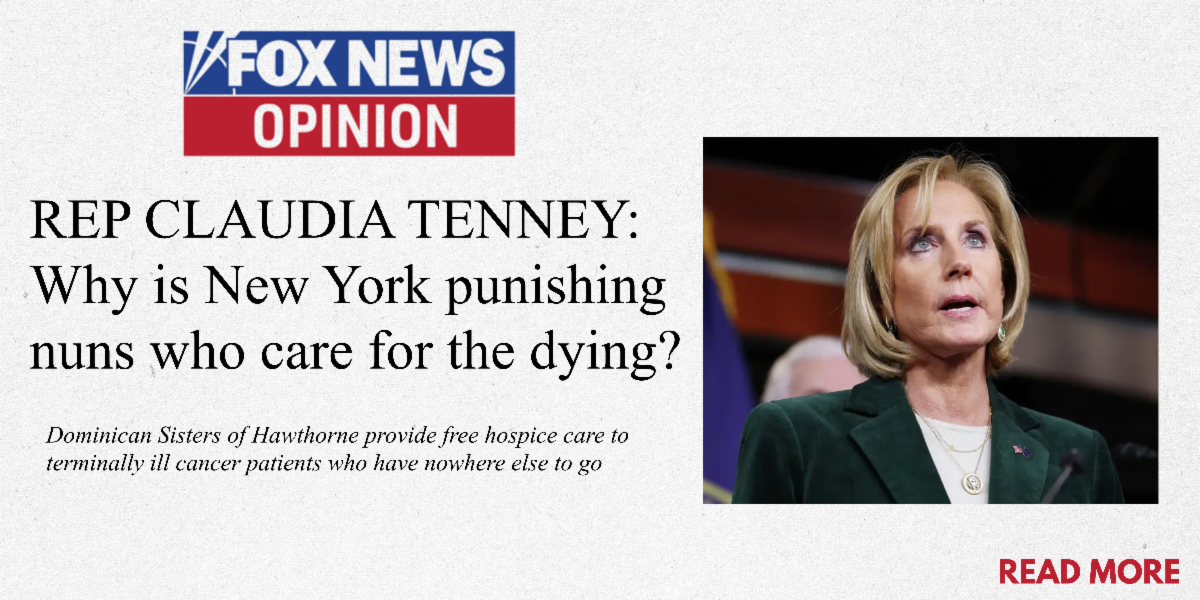
Why is New York Punishing Nuns Who Care for the Dying?

New York’s radical policies are threatening the Dominican Sisters of Hawthorne, who have spent more than a century providing free hospice care to terminally ill cancer patients with compassion and dignity. These sisters do not take a dime from patients or taxpayers, yet Albany is now targeting them with fines, loss of licensure, and even jail time for refusing to violate their faith under new state mandates. At a time when families are struggling with rising costs, outmigration, and a lack of access to affordable care, New York should be supporting those who serve the most vulnerable, not punishing them. This is about more than one group. It is about protecting religious freedom, defending common sense, and ensuring our state stands with those who care for others, not against them. 


READ MY FULL OP-ED HERE

As your representative in Congress, my top priority is championing legislative initiatives that benefit you and your families. Each week, I review numerous bills and letters, engaging in thorough discussions with members of our community to determine which actions to support and address your needs. Below are a few bills I recently cosponsored.


H.R. 1529, the Access Technology Affordability Act of 2025: This bill would establish a refundable tax credit for blind and vision-impaired individuals to purchase assistive technology. Specifically, it would provide a tax credit of up to $2,000 for qualified expenses, including devices such as Braille assistive devices. Access to assistive technology plays a critical role in supporting disabled individuals’ employment and independence, and this legislation helps reduce financial barriers and expand access to these tools.


H.R. 1522, the Federal Retirement Fairness Act: This bill would allow certain federal employees to make catch-up retirement contributions for periods of temporary or seasonal federal service that were not previously credited toward retirement benefits. Some federal workers, such as certain postal employees, begin their careers in temporary roles before transitioning to permanent positions, which can affect their retirement eligibility. This legislation helps provide a pathway for those employees to receive credit for their service and ensures more equitable treatment in federal retirement benefits.


H.R. 1256, the Long-Term Care Transparency Act: This bill would require greater transparency in the ownership and management of long-term care facilities that participate in federal programs overseen by the Department of Health and Human Services (HHS). Increased transparency in facility ownership can improve oversight, accountability, and the quality of care provided to residents. This legislation helps ensure that patients and families have access to clear information when making long-term care decisions.

My Votes Explained

Transparency in Congress and a well-informed electorate are vital to preserving our self-governing Constitutional Republic. My constituents deserve to know how their members of Congress vote, which is why I have explained every vote I have cast in Congress since I was first elected. 


To read more about my votes and see the full list with explanations of all the legislation considered this week by the House, please click here.


Monday, April 20

I voted “Yes” on H.R. 1681, the Expediting Federal Broadband Deployment Reviews Act. This bill establishes an interagency force to prioritize the review of authorization requests for the placement and operation of a communications facility on federal lands. This commonsense bill will help expand broadband access for more Americans and ensure accountability in the federal permitting process. This bill passed the House by a vote of 384-9. 


I voted “Yes” on H.R. 5200, the Emergency Reporting Act. This bill requires the Federal Communications Commission (FCC) to hold annual public hearings on uses of the Disaster Information Reporting System and on the number and duration of telecommunications service outages, including outages that prevented access to 9-1-1 emergency services. Having secure, resilient communications infrastructure after natural disasters is vital to public safety. This bill increases transparency on issues that prevent our communities from remaining connected to first responders through reliable communication networks. This bill passed the House by a vote of 386-7. 


Tuesday, April 21

I voted “Yes” on H.R. 2010, the Kari's Law Reporting Act. This bill requires the Federal Communications Commission (FCC) to publish a report on the implementation of Kari’s Law of 2018. Kari’s Law requires that multi-line telephone systems (MLTS) that allow businesses or households to hold two or more phone calls simultaneously be set up to enable users to dial 911 without having to dial any additional digit or access code, such as the number 9. These requirements took effect on February 16, 2020. Maintaining a reliable emergency response system is imperative, and this bill ensures that homes and businesses can easily get connected with first responders. This bill passed the House by a vote of 405-5. 


I voted “Yes” on S. 1020, A bill to require the Federal Energy Regulatory Commission to extend the time period during which licensees are required to commence construction of certain hydropower projects. This bill authorizes the Federal Energy Regulatory Commission (FERC) to extend construction deadlines for hydropower projects that were licensed before March 13, 2020. The bill would also authorize FERC to reinstate certain expired hydropower project licenses for up to 6 years. Ensuring hydropower projects remain on time and functional is imperative to enhancing our energy production. This bill ensures that affordable hydroelectric power production remains on time and that domestic energy production continues to meet our growing energy needs. This bill passed the House by a vote of 394-14. 


I voted “Yes” on H.R. 2493, Improving Care in Rural America Reauthorization Act of 2025. This bill reauthorizes several federal grant programs that improve access to health care in rural communities through Fiscal Year (FY) 2030. Specifically, the bill reauthorizes the Rural Health Care Services Outreach Program, the Rural Health Network Development Planning Program, and the Small Health Care Provider Quality Improvement Program, all administered by the Health Resources and Services Administration (HRSA). Across Upstate New York and rural communities nationwide, too many families struggle to access timely medical care, and strengthening rural health care is essential so that families receive the care they deserve. This bill reauthorizes essential funding for rural and underserved communities while ensuring transparency and accountability for programs that use taxpayer dollars. This bill passed the House by a vote of 406-4. 


Wednesday, April 22

I voted “Yes” on H.Res. 1182, Expressing support for rural communities across the United States as stewards of the environment, major suppliers of United States energy resources, critical providers of food production and manufacturing capacity, and drivers of national economic stability, and recognizing the work of the House of Representatives in the 119th Congress in support of those vital communities. This resolution recognizes the vital role that our rural communities, including those in Upstate and Western New York, play in feeding our families and driving our economy. House Republicans will continue fighting for rural communities and ensure our work continues to focus on strengthening agricultural production, keeping our communities safe, supporting rural healthcare initiatives, and improving domestic energy production. This resolution passed the House by a vote of 220-196, with 2 members voting present. 


I voted “Yes” on H.R. 4690, the Reliable Federal Infrastructure Act. This bill repeals certain federal mandates on building energy efficiency. Specifically, this prohibits denying a building from obtaining certification as a green building or a high-performance green building solely on the basis of direct or indirect fossil fuel consumption. Electrification requirements endanger the stability of our critical infrastructure, jeopardize our national security, and inflate construction costs. Eliminating outdated, costly, and burdensome federal building mandates will reduce costs, expand options for powering buildings, and ensure taxpayer dollars are not wasted. This bill passed the House by a vote of 215-202. 


I voted “Yes” on H.R. 6387, the FIRE Act. This bill amends the Clean Air Act to make it easier for states to undertake wildfire mitigation activities. Reducing burdensome regulations and supporting states’ wildfire mitigation efforts are imperative to keeping communities safe. This bill provides clarity for air quality planning, reduces costly and unnecessary regulatory burdens on local communities, and encourages important wildfire mitigation efforts to protect the public. This bill passed by a vote of 220-198. 


Thursday, April 23

I voted “Yes” on H.R. 5587, the HEATS Act. This bill waives federal permitting requirements for geothermal exploration and production activities conducted on non-federal lands if the federal government holds an interest of less than 50 percent of the subsurface or the operator received a state-level drilling permit. Under current law, a geothermal operator must obtain federal permits for exploration of federal and privately owned land, and these permits are often duplicative of state permitting requirements. This bill improves the energy exploration process, eliminates redundant permits, and ensures the safe exploration of energy resources to advance President Trump's energy affordability policies. This bill passed the House by a vote of 231-186. 

Women in Agriculture Day

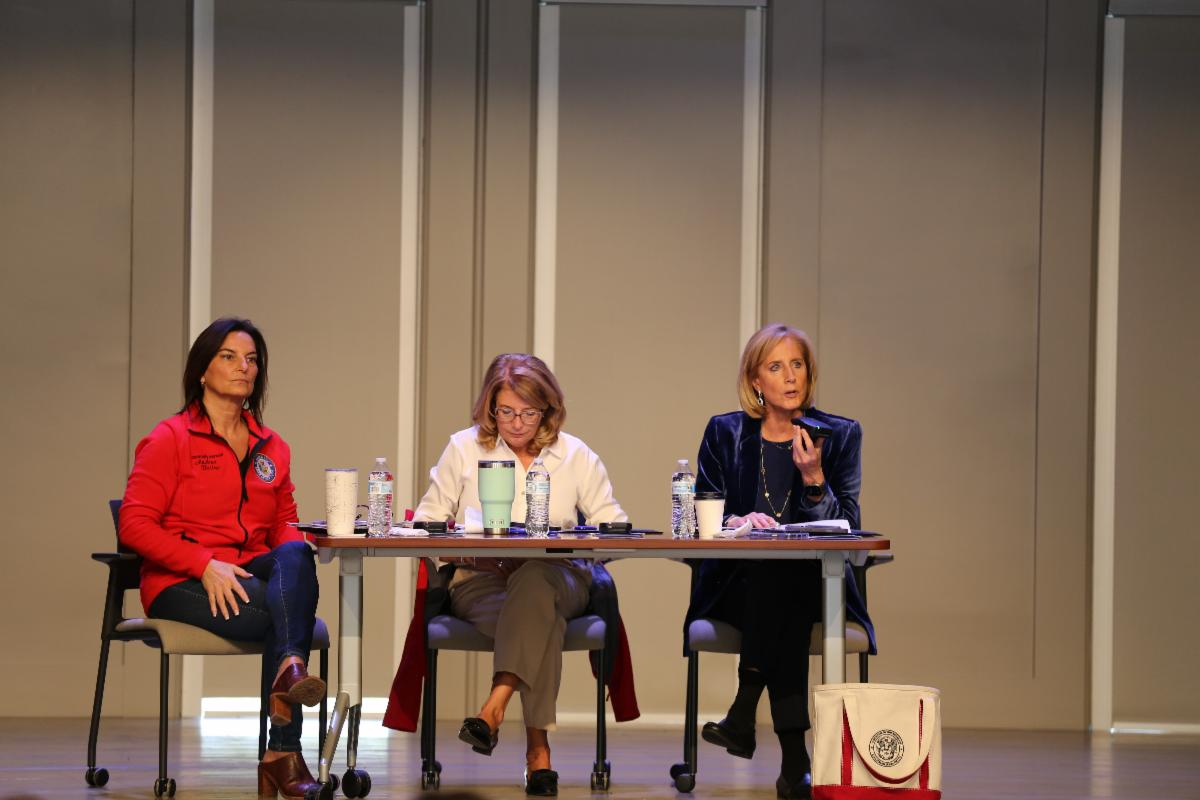
I recently joined Assemblywoman Bailey and Senator Helming for the Women in Agriculture Day in Avon, where I had the opportunity to meet with local organizations and speak directly with the hardworking women who are helping drive agricultural success across our region. We discussed the challenges facing our farmers and the work being done to support agriculture in Upstate New York. Agriculture is the backbone of NY-24, and hearing firsthand from those leading this vital industry is critical to delivering real support and better results for our communities.

Mount Morris Dam

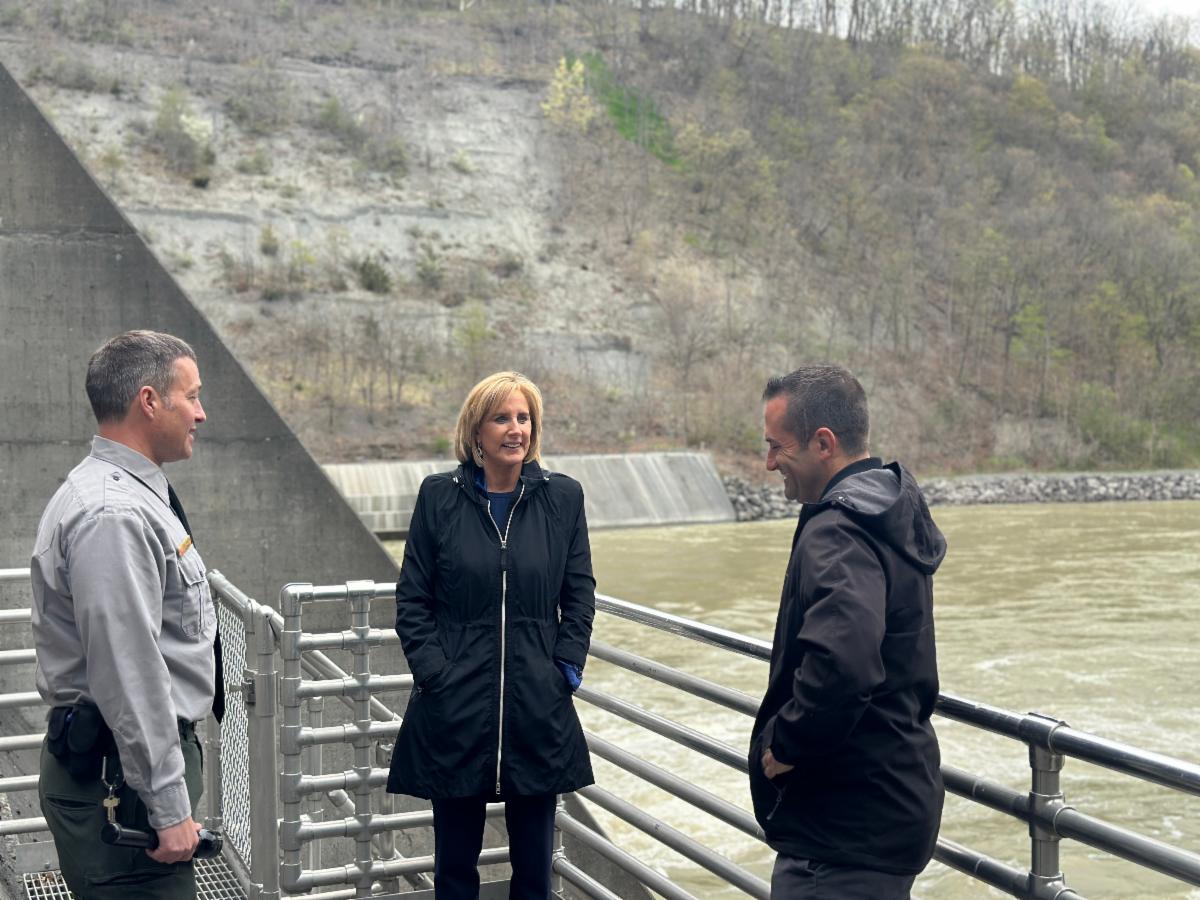
This week, I visited the Mount Morris Dam for a tour led by the U.S. Army Corps of Engineers, where we learned more about this critical piece of infrastructure that protects communities across our region. Built in 1952, this federally operated flood control dam plays a vital role in managing water flow along the Genesee River, helping prevent flooding and protecting more than 160,000 residents downstream, including communities all the way to Rochester. The dam has already prevented billions of dollars in potential damage and continues to serve as a key safeguard for families, farms, and businesses across Upstate New York. It was great to see the important work being done to maintain this system and ensure our communities remain safe and resilient.

CAP New York Wing Change of Command

Our office joined members of the Civil Air Patrol New York Wing for their Change of Command Ceremony at Hancock Field, recognizing the transition of leadership from Colonel Thomas Carello to Colonel Michael Woolfolk. The Civil Air Patrol plays a critical role in supporting emergency response, aviation training, and youth development across our state, and their work has a direct impact on communities throughout NY-24. Events like this highlight the dedication, professionalism, and service of those who step up to lead. I am grateful for Colonel Carello’s leadership and look forward to working with Colonel Woolfolk as he takes on this important responsibility.

Update

Last week's newsletter incorrectly identified Lt. Gen. Edward D. Love. The correct name is John K. Love.

Need Help with a Federal Agency? Call us today.

If you or someone you know ever needs assistance with a federal agency, we are just a phone call away and are ready to help you! Please contact my Canandaigua Office at 585-869-2060, my Oswego Office at 315-236-7088, or my Lockport Office at 716-514-5130. I am honored to have the opportunity to represent you.

Have News or Updates to Share? Email Me!

If you have updates regarding events in the community or other news to share from across New York's 24th District, please visit the "Contact Me" page on my website to share it with me. My team will try to include as many of your updates from around #NY24 as we can each week.


tenney.house.gov

Facebook  X  Instagram