This Week in Farm to School | |
Farm to school connects local agriculture, schools, and partners to benefit students, educators, farmers, families, and communities. | |
|
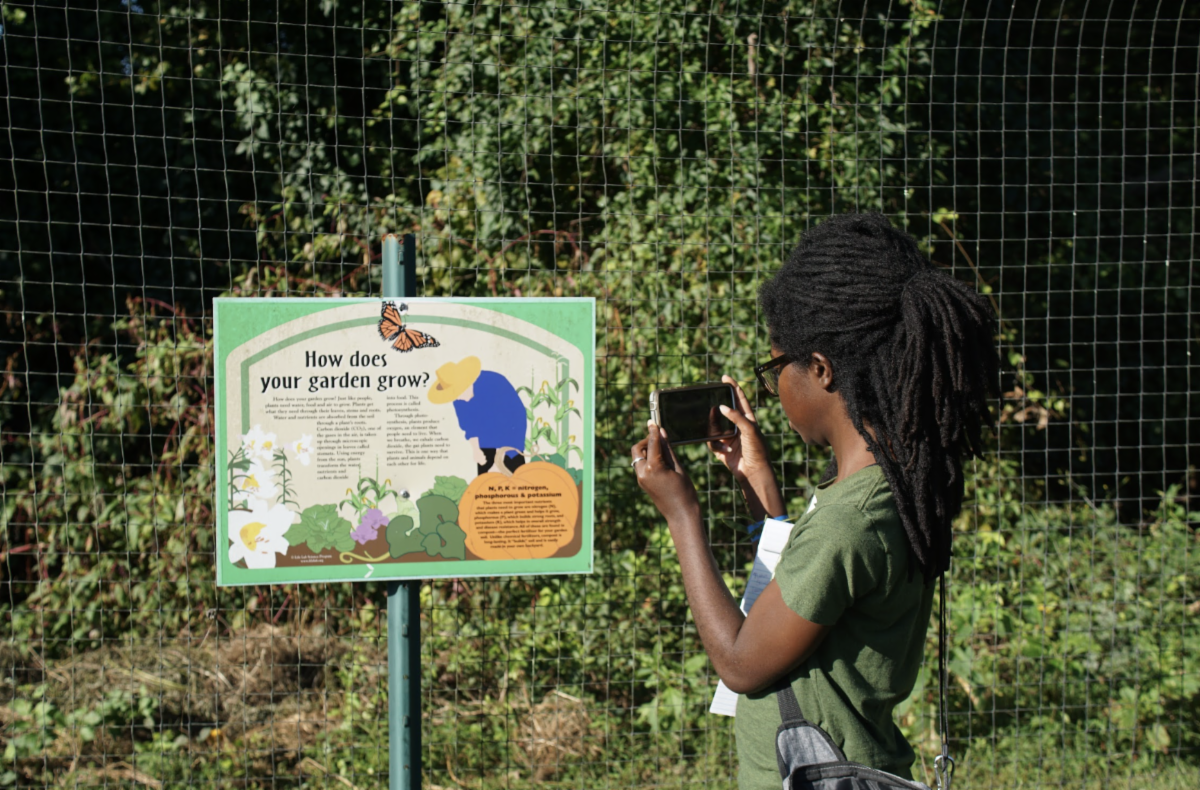
Celebrate National Garden Month!
Springtime is here and we are sure there is so much gardening underway! Here are a few gardening resources you can use to celebrate National Garden Month!
Be sure to share with us on social media (@F2SCoalitionNC) on how you are celebrating National Garden Month!
| |
|
Economic Impact Assessment of Public Incentives to Support Farm to School Food Purchases
May 18, 2023 // 1 pm - 2 pm ET
Farm to school projects have widely been supported by policymakers with funding provided at state and federal levels. Still, many of the economic outcomes of this inflow of policy and funding remain unclear. In 2018, New York State announced the 30% NY Initiative that substantially increases school lunch reimbursements if School Food Authorities purchase at least 30% of their lunch ingredients as New York food products. With detailed food purchasing data from Buffalo Public Schools, the second-largest school district in the state, and the largest School Food Authority to qualify for enhanced reimbursement, researchers estimate the gross and net economic impacts of the policy through a customized input-output model. Join the webinar to hear results from the study, which was led by Professor Todd Schmit, Cornell Dyson School of Applied Economics and Management, and supported by Shayna Krasnoff, MS, ’22, and Cheryl Bilinski, Cornell Cooperative Extension Harvest NY.
Register here.
| |
District Community Engagement
May 24, 2023 // 4 pm - 5:15 pm ET
This is part two of a webinar series hosted by the School Garden Support Organization Network. This webinar will cover how district offices engage their district community in their school gardens, including how to run peer learning communities for teachers across a district and establish community partnerships.
Register here.
| |
Recording: How to Sell to K-12 Schools Webinar
The Center for Environmental Farming Systems’ Farm to School Initiative hosted a webinar to share more about the Local Food for Schools Program and how to sell local food to K-12 Schools in NC. Elena Toro Rogers, Food Specialist at NC State, shared NC Cooperative Extension Food Safety resources. Heather Barnes, Marketing Specialist at NCDA&CS walked through what farmers need to know to sell to schools directly and through NCDA's Farm to School Program. Gabe Cumming, Co-Founder and Associate Director of Working Landscapes shared his experiences as a vendor.
View the recording here.
| |
|
Ten Things to Know About Selling Produce to Schools
This resource, created by the North Carolina Department of Agriculture’s Farm to School Program, explains the various ways School Nutrition Programs can purchase local produce. It also explains different regulations, what is considered local, and how much produce schools buy.
Learn more here.
| |
|
Healthy Meals Incentives
The U.S. Department of Agriculture’s Food and Nutrition Service (FNS) has established the Healthy Meals Incentives Initiative to promote the nutritional quality of school meals through food systems transformation, School Food Authority recognition and technical assistance, the generation and sharing of innovative ideas and tested practices, and grants.
Learn more here.
| |
|
Top Ten Tips for Gardening with Kids
KidsGardening shares ten tips to keep in mind when gardening with kids. These tips help students feel engaged and empowered in the garden!
Learn more here.
| |
|
Perspective | School Meal Debt Has No Place in North Carolina
Alecia Sanders, Partner Engagement Coordinator with the North Carolina Alliance for Health, has written a perspective for EdNC exploring the ultimate cost of school meal debt in North Carolina.
Read more here.
| |
|
Why Food Justice is Necessary
FoodPrint explores why food justice is imperative, acknowledges our country’s history of injustice, and highlights many inspiring models to follow and support.
Learn more here.
Defining ‘Nutrition Equity’ and Modeling the Future of Food Systems in Neighborhoods
Researchers from Case Western Reserve University identify three key attributes needed for a community’s food system to be nutritionally equitable: economic opportunity, food security, and fair access to fresh and healthy foods.
Learn more here.
| |
|
USDA NIFA Beginning Farmer and Rancher Development Program RFA
Today! Deadline: April 27, 2023
The primary goal of the BFRDP is to help beginning farmers and ranchers in the United States and its territories enter and/or improve their successes in farming, ranching, and management of nonindustrial private forest lands, through support for projects that provide education, mentoring, and technical assistance to give beginning farmers and ranchers the knowledge, skills, and tools needed to make informed decisions for their operations and enhance their sustainability. Applications from partnerships and collaborations that are led by or include nongovernmental organizations (NGOs), community-based organizations (CBOs), and school-based agricultural education organizations (SAEOs) with expertise in agricultural training and outreach for beginning producers will be given priority in funding. Awards may range from $49,000 - $750,000.
Learn more and apply here.
School Nutrition Foundation Equipment Grants
Deadline: April 30, 2023
The School Nutrition Foundation is teaming up with industry partners to provide new kitchen equipment to districts. Apply now for the 2023 SNF Equipment Grant Program, featuring applications for five grants! Eligible applicants have the opportunity to win equipment grants, each worth between $20,000 to $100,000 of equipment. Applications and photos must be submitted by a School Nutrition Director. There is a submission cap of 30 applications for each grant.
Learn more here.
Plant to Grant Challenge
Deadline: May 7, 2023
This Plant a Seed Day, Big Green is awarding grants to nonprofits that activate their communities to plant seeds. A $25,000 grant will be given to the organization with the most pledges, and five $5,000 grants will be selected randomly.
Learn more here.
Cooperative Agreements for School-Based Trauma-Informed Support Services and Mental Health Care for Children and Youth
Deadline: May 8, 2023
The purpose of this program is to increase student access to evidence-based and culturally relevant trauma support services and mental health care by developing innovative initiatives, activities, and programs to link local school systems with local trauma-informed support and mental health systems, including those under the Indian Health Service. With this program, SAMHSA (Substance Abuse and Mental Health Services Administration) aims to further enhance and improve trauma-informed support and mental health services for children and youth. Eligibility is statutorily limited to State Education Agencies, Local Educational Agencies, and Indian Tribes (as defined in section 4 of the Indian Self-Determination and Education Assistance Act) or their Tribal Educational Agencies, a school operated by the Bureau of Indian Education, a Regional Corporation, or a Native Hawaiian Educational Organization.
Learn more here.
Healthy Meals Incentives Grants for Small and/or Rural School Food Authorities
Deadline: May 26, 2023
The U.S. Department of Agriculture’s Food and Nutrition Service (FNS) and Action for Healthy Kids have worked together to offer competitive grants (up to $150,00 per School Food Authority) for small and/or rural SFA’s to support their efforts to improve the nutritional quality of their school meals and meet the Healthy Meals Incentive Recognition Awards criteria.
Learn more here.
|
|
|
Healthy School Meals for All Toolkit
This toolkit from the Center for Science in the Public Interest (CSP) provides resources for advocates to improve school meals. The focus of this toolkit is advocacy at the state and local levels, but many of the resources provided can be used for federal advocacy as well. Topics covered include strengthening nutrition standards, increasing access to free meals, and funding for training, technical assistance, and kitchen equipment for operators.
Learn more here.
| |
|
Open Comment Period for Community Eligibility Provision Participation Change
Due May 8, 2023
The USDA’s Food and Nutrition Service is requesting comments on their proposed rule to expand access to the Community Eligibility Provision (CEP). CEP is a program in which the federal government covers the cost of all reimbursable meals served by a school, regardless of whether a particular student qualifies for free or reduced-cost meals. Currently, a school must serve at least 40 percent low-income students in order to be eligible for this program. USDA’s proposed change would lower the threshold required to participate in CEP from 40 percent to 25 percent. This would greatly increase the number of schools eligible for CEP, and in turn, increase the number of students benefiting from free meals for all.
Learn more here.
Child Nutrition Programs: Revision to Meal Patterns Consistent with the 2020 Dietary Guidelines for Americans
USDA has extended the deadline to May 10, 2023 for public comment on the proposed rule, “Child Nutrition Programs: Revisions to Meal Patterns Consistent With the 2020 Dietary Guidelines for Americans”. The proposed rule contains new Child Nutrition regulations regarding the School Breakfast Program, National School Lunch Program, Summer Food Service Program, and Child and Adult Care Food Program. USDA proposes allowing schools to include locally grown, raised, or caught as a requirement for vendors bidding to provide food for their school meal programs. In addition, USDA proposes updating the Buy American provision by setting a limit of 5% of total food costs on non-domestic food purchases. USDA is also proposing to make nutrition standards more stringent by reducing sodium, increasing whole grains, and decreasing added sugar (which will impact the ability of elementary and middle schools to offer flavored milk) among other suggested changes. School Nutrition professionals and other stakeholders are encouraged to review the proposed rule and related materials and submit comments regarding the impact of the proposed rule on students, School Nutrition Programs, schools, and districts.
Learn more here.
| | | | |