Reforest Montgomery receives national merit award
We are excited to share that on April 27, the Reforest Montgomery program was honored with a Merit Award at the Excellence in Sustainability Annual Awards as part of the American Planning Association’s National Planning Conference in Detroit, Michigan! The Excellence in Sustainability Annual Awards honors projects, policies, plans, and people who show exemplary leadership and inspiration in sustainability planning and implementation. Reforest Montgomery was considered among many other great initiatives for the Environment, Climate, and Energy category.
| | | This award highlights Montgomery Planning’s commitment to conservation and reforestation in Montgomery County. | |
Open for public review: Updated Forest Conservation Technical Manual
Montgomery Planning invites the public to review Montgomery County’s newly updated Forest Conservation Technical Manual – the first comprehensive update in more than 30 years. This important revision reflects recent changes to the county’s Forest Conservation Law, including new state requirements, and introduces new chapters, expanded guidance, and modernized exhibits to better support professionals preparing Natural Resource Inventories/Forest Stand Delineations, Forest Conservation Plans, and other related plans and reports for Montgomery Planning review.
For review: Updated/Draft Montgomery Planning Forest Conservation Manual
References: Montgomery County 1992 Trees Technical Manual; Maryland 2024 Forest Conservation Act Technical Manual
Your feedback is a vital part of this process. The review period will conclude with a virtual presentation and public input session on Tuesday May 19 from 2 p.m. to 3 p.m. – please join to provide your feedback! The meeting will be held online and you will need to RSVP to receive a link to the meeting.
Have questions or want to send your comments in advance of the meeting? Please contact Kristin Taddei at kristin.taddei@montgomeryplanning.org.
| |
Water alerts
With summer quickly approaching, it is more important than ever to make sure your trees are watered. Young or newly planted trees need at least 25 gallons of water each week, especially when temperatures are above 85 degrees and rain is infrequent. It is vital that they receive water slowly for better absorption. Two methods for watering your young trees include:
- Leave your hose on a trickle or use the mist setting on your hose attachment. Place the hose at the base of the tree (under the tree’s canopy but not touching the tree’s trunk) for 1-2 hours, moving it around the base of the tree regularly.
- Use a 15- to 25-gallon watering bag, which can be found at local nurseries or home improvement stores.
We also offer helpful watering reminders through the Reforest Montgomery Water Alert. Alerts are sent weekly during periods of high heat and/or low rain.
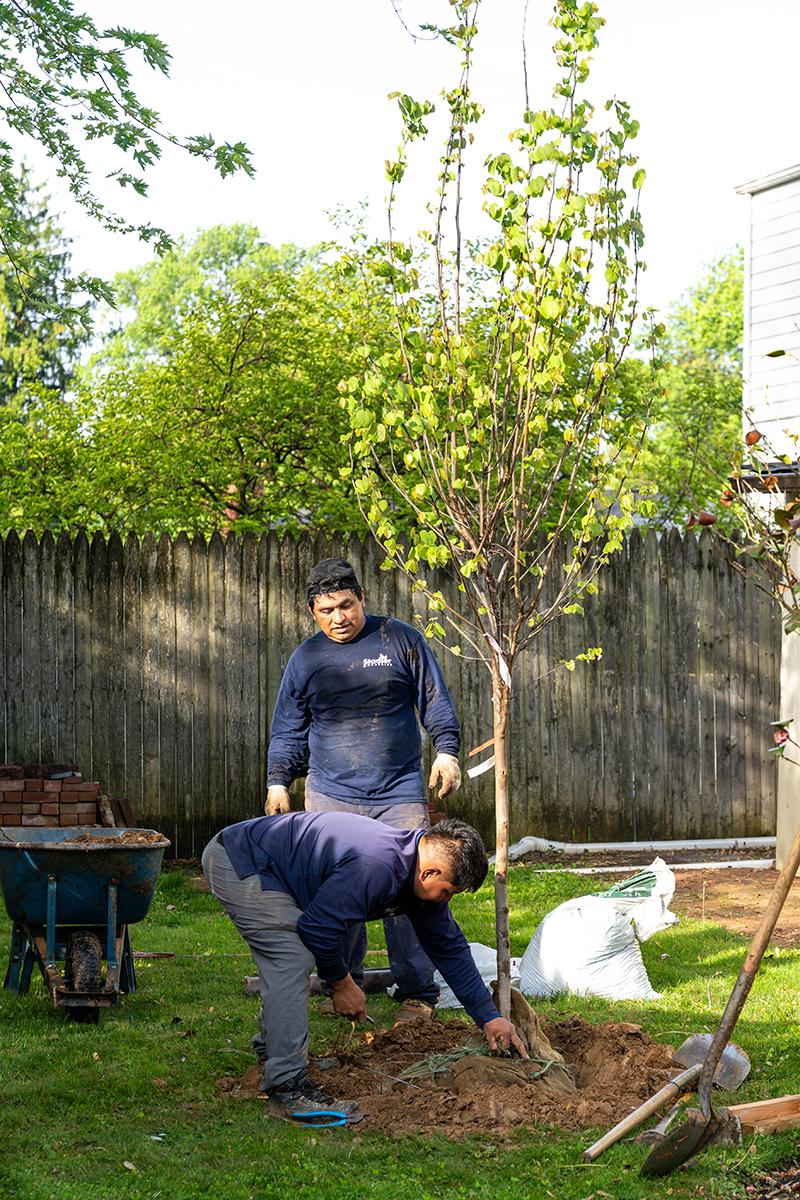
| | A young Redbud tree is placed in Rockville in April 2026 as a part of the Reforest Montgomery program. | |
Native tree spotlight: Black gum or Black Tupelo (Nyssa sylvatica)
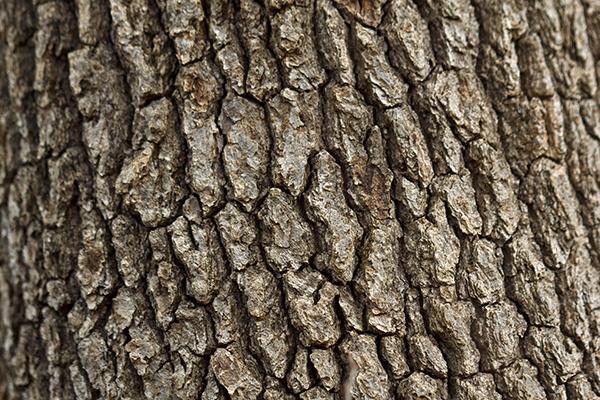
If you’re looking to plant a native tree this spring, the black gum tree is a great choice! It’s native to the U.S. East Coast, ranging as far north as Maine and as far south as Florida and west to Texas. It is a medium-sized deciduous tree in the Tupelo family that grows to a mature height of around 30 to 50 feet. It has a notable deeply furrowed, gray/brown bark that is often compared to alligator hide. Other common names for this tree include black tupelo, sourgum, pepperidge, and tupelo-gum.
The black gum tree is well known for its vibrant fall foliage, perfect as a landscaping tree. During the autumn season, the tree displays various hues of yellow, orange, scarlet red, and even purple. The tree also has high wildlife value, as its fruits attract many birds and other wildlife. Additionally, nectar from the tree’s inconspicuous spring flowers provides substantial nutrition for native pollinators.
Black gums are very versatile, adaptable, and climate change resilient. They can grow in both wet and dry soils, can withstand large ranges of temperatures, and are resilient against a variety of pests and diseases. Black gums are also ideal for urban areas because they efficiently absorb carbon dioxide and filter other pollutants, significantly improving air quality.
| | Potterfield, T. (2012). Nyssa sylvatica (sour gum, black tupelo) Bark. Flickr. License Type: CC BY-NC-SA 2.0 | | |
Reforest Montgomery recibe el premio al mérito nacional
¡Nos complace compartir que el 27 de abril, el programa Reforest Montgomery fue galardonado con un Premio al Mérito en los Premios Anuales a la Excelencia en Sostenibilidad como parte de la Conferencia Nacional de Planificación de la Asociación Estadounidense de Planificación en Detroit, Michigan! Los Premios Anuales a la Excelencia en la Sostenibilidad honran proyectos, políticas, planes y personas que muestran un liderazgo e inspiración ejemplares en la planificación e implementación de la sostenibilidad. Reforest Montgomery fue considerado entre muchas otras grandes iniciativas en la categoría de Medio Ambiente, Clima y Energía.
| | | Este premio destaca el compromiso de Montgomery Planning con la conservación y reforestación en el condado de Montgomery. | |
Abierto para revisión pública: Manual técnico de conservación forestal actualizado
Montgomery Planning invita al público a revisar el Manual técnico de conservación forestal del condado de Montgomery, el cual ha sido actualizado recientemente, siendo esta la primera actualización integral en más de 30 años. Esta importante revisión refleja los cambios recientes en la Ley de Conservación Forestal del condado, incluidos los nuevos requisitos estatales, e introduce nuevos capítulos, lineamientos ampliados y anexos modernizados para brindar un mejor apoyo a los profesionales que preparan Inventarios de recursos naturales/Delineaciones de rodales forestales, Planes de conservación forestal y otros planes e informes relacionados para la revisión de Montgomery Planning.
Para revisión: Actualizado/Borrador del Manual de conservación forestal de Montgomery Planning
Referencias: Manual técnico de gestión de árboles del condado de Montgomery de 1992; Manual técnico de la Ley de Conservación Forestal de Maryland de 2024
Sus comentarios son una parte crítica de este proceso. El período de revisión concluirá con una presentación virtual y una sesión de comentarios públicos el martes 19 de mayo de 2:00 p. m. a 3:00 p. m.; ¡únase para proporcionar sus comentarios! La reunión se llevará a cabo en línea y deberá confirmar su asistencia para recibir un enlace a la reunión.
¿Tiene preguntas o desea enviar sus comentarios antes de la reunión? Póngase en contacto con Kristin Taddei en kristin.taddei@montgomeryplanning.org.
| |
Alertas de agua
A medida que se acerca el verano, es más importante que nunca asegurarse de regar sus árboles. Los árboles jóvenes o recién plantados necesitan al menos 25 galones de agua por semana, especialmente cuando las temperaturas son superiores a 85 grados y la lluvia es poco frecuente. Es fundamental que reciban agua lentamente para una mejor absorción. Dos métodos para regar sus árboles jóvenes:
- Deje la manguera goteando o utilice el ajuste de llovizna en el accesorio de la manguera. Coloque la manguera en la base del árbol (debajo de la copa del árbol pero sin tocar el tronco) durante 1 a 2 horas, moviéndola alrededor de la base del árbol regularmente.
- Utilice una bolsa de riego de 15 a 25 galones, que se puede encontrar en viveros locales o tiendas de mejoras para el hogar.
También ofrecemos útiles recordatorios de riego a través de la alerta de agua de Reforest Montgomery. Las alertas se envían semanalmente durante períodos de mucho calor o poca lluvia.
| | En Rockville, en abril de 2026, se planta un joven árbol del amor (redbud) como parte del programa Reforest Montgomery. | | |
Árbol nativo destacado: Tupelo o tupelo negro (Nyssa sylvatica)
Si está buscando plantar un árbol nativo esta primavera, ¡el tupelo es una excelente opción! Es nativo de la costa este de EE. UU., que se extiende desde el norte de Maine, hasta el sur de la Florida y al oeste hasta Texas. Es un árbol caducifolio (pierde sus hojas cada otoño y vuelve a brotarlas en primavera), de tamaño mediano de la familia de los tupelos que alcanza una altura adulta de unos 30 a 50 pies. Tiene una corteza gris/marrón marcadamente surcada que a menudo se compara con la piel del caimán. Los nombres comunes en inglés de este árbol incluyen black tupelo, sourgum, pepperidge y tupelo-gum.
El tupelo es conocido por su vibrante follaje otoñal, ideal para paisajismo. Durante la temporada de otoño, el árbol exhibe varios tonos de amarillo, naranja, rojo escarlata e incluso morado. El árbol también tiene un alto valor para la vida silvestre, ya que sus frutos atraen a muchas aves y a otros animales silvestres. Además, el néctar de las discretas flores primaverales del árbol proporciona una nutrición sustancial a los polinizadores nativos.
Los tupelos negros son muy versátiles, adaptables y resistentes al cambio climático. Pueden crecer tanto en suelos húmedos como secos, soportar amplios rangos de temperaturas y son resistentes a una variedad de plagas y enfermedades. Los tupelos negros también son ideales para las zonas urbanas ya que absorben el dióxido de carbono de manera eficiente y filtran otros contaminantes, lo que mejora significativamente la calidad del aire.
| | Potterfield, T. (2012). Corteza de Nyssa sylvatica (tupelo negro). Flickr. Tipo de licencia: CC BY-NC-SA 2.0 | | | |
About Reforest Montgomery
Reforest Montgomery, supported by the Forest Conservation Fund, plants trees and forests throughout Montgomery County. This program offers residents a variety of options to get involved with reforestation programs in Montgomery County and provides property owners incentives to plant trees within the county such as free trees and reforestation for property owners, discounts on native trees, and more.
| | | | |