Rider safety and horse welfare | |
|
|
|
Rider safety and horse welfare in equestrianism
Jess Irving MRes
| |
|
Equestrian sports are commonly concluded as one of the most dangerous sports, both for riders and equine athletes. One of our earlier short communications showed researchers had identified clear links between improvements in equine welfare, and subsequent reduction of reactivity and spooking behaviour, resulting in improved rider safety. Whilst traditional horse training practices were often harsh, ‘dominance-based’ approaches, which failed to consider horse welfare, there has been a rise in scientific literature and professional riders promoting more welfare-centric, reward-based methods of training. Over the last decade, canine training methods have come under scrutiny, and a large overhaul has taken place. Many canine trainers are now advocating for reward-based, ‘fear-free’ methods of training, using the operant conditioning principles of positive reinforcement (providing a rewarding stimulus, for example a treat, to increase the likelihood of a behaviour being performed again) and negative punishment (the removal of a rewarding stimulus to decrease the likelihood of a behaviour being performed again). This typically presents as rewarding the behaviour we wish to see, and ignoring the behaviour we do not want to see repeated.
In our earlier reviews, we have additionally identified the risks to equestrianism’s social licence, and conflict behaviours in ridden horses. Whilst a large proportion of canine trainers in the UK are using reward-based methods, horse training predominantly focuses on using negative punishment (involving the application of something unpleasant to the horse until the horse performs the desired behaviour, such as pulling on a bit until the horse stops, or whipping until the horse moves faster) and negative reinforcement (the removal of the negative stimulus when the horse performs the desired behaviour e.g. stopping whipping, spur pressure, or pulling on the bit). Despite learning theory principles underpinning all aspects of animal training, previous work identified most equestrians, even qualified coaches, have a limited understanding of learning theory[1,2]. The lack of learning theory knowledge is likely to contribute to poorly-timed application of aversives, causing confusion, reducing learning and potentially impeding welfare.
Classical and operant conditioning (associative learning) and habituation and sensitisation (non-associative learning) are the most widely utilised models of animal learning[3]. The widespread use of pressure and release in equine training (e.g. Dually headcollars) is based upon negative reinforcement methods, whereby an unpleasant stimulus is applied and removed from the animal as soon as they offer the desired behaviour[3], and the reward is the removal of the unpleasant stimulus. Despite such learning theory methods being widely used and promoted by trainers, coaches and horse owners, lack of understanding of learning theory is likely to inhibit appropriate timing of application/removal of the aversive stimulus. The same issues can arise with the use of positive punishment in horse training (e.g. use of a whip when horse refuses a jump) – if the aversive is not applied at the correct time, confusion for the horse and lack of learning are likely to occur. The use of positive punishment in training has additionally been associated with learned helplessness and negatively impacts the horse/human relationship[4].
|  | |
The use of positive reinforcement training for horses over the last decade has been met with mixed opinions – there have been concerns it may promote biting, ‘mugging’ or harassment to people[5]. Recent research has identified that the use of reward-based methods may promote a positive affective state which promotes learning[6], whereas horses trained using punishment-based methods are more likely to have negative affective states, with such training methods having adverse affects on performance and the human-animal bond[7]. It is likely that the use and application on training methods are will impact horse learning, behaviour, performance and welfare – and a lack of knowledge of learning theory may further perpetuate these issues.
A recent publication by scientists at the Central Queensland University in Australia sought to determine whether equestrians’ knowledge of learning theory principles was associated with horse welfare and rider safety. The researchers recruited 394 Australian sport and recreational riders from a range of disciplines via social media, and participants were required to complete a questionnaire which covered riders’ understanding of learning theory, rider safety and satisfaction and horse welfare. The majority of respondents were female, and most respondents were intermediate (49%) or advanced (38%) level riders. Nearly one quarter of respondents correctly identified all learning theory terminology. Within specific terminology, 99% identified positive reinforcement correctly and 59% correctly identified punishment, however only 28% correctly identified negative reinforcement.
Welfare scores from the questionnaire evidenced that most respondents’ horses were in ‘good’ welfare, with the majority living outdoors with one or more conspecifics, however better knowledge of learning theory did not appear to influence welfare measures. Most horses had performed hyperactive behaviour within seven days prior to completing the questionnaire, with spooking being the most common hyperactivity behaviour performed, yet better knowledge of learning theory did not influence behavioural hyperactivity. Similarly, knowledge of learning theory did not decrease the likelihood of rider accidents and injuries, and rider competency was not impacted by learning theory knowledge. The study concluded that whilst greater emphasis has been placed on training, learning theory principles and promotion of reward-based training methods in ethical equestrianism, knowledge of learning theory was lower than expected in sports and recreational riders. The authors did identify that their results were contradictory to earlier literature (e.g.1,2,8), who identified rider safety and horse welfare improved as knowledge of learning theory increased, and deduced this may have been related to poor survey construction. Assessing knowledge of learning theory via questions and scenarios in a questionnaire is likely to always be more challenging than assessing participants in focus groups, and therefore future studies looking into rider or trainer knowledge and welfare and safety outcomes could consider recruiting stakeholders and individuals into small focus groups.
With the spotlight continuing to shine on equestrian sports in terms of welfare, safety and the risks to social licencing, measures equestrians can take to improve horse welfare and rider safety should be implemented. Whilst the current study failed to identify links between improved rider knowledge of learning theory, horse welfare and rider safety, older publications do show a positive impact. Inhibited welfare in horses is a systemic, multi-faceted issue, and the authors identified the task of improving welfare is inhibited by the complexity and size of the issue. Nevertheless, without engaging equestrians and promoting the benefits of alternative training approaches, it is unlikely that riders may seek alternative approaches to training alone. The authors suggested the development of a new training framework may be the best approach to engage equestrians, challenge traditional mindsets and provide new directions for horse training. Whilst we are considering the tack we ride in, the image we portray to the general public and how we are portrayed in the media, maybe it is additionally time for us all to consider the way we train horses, brush up on our knowledge of learning theory, and seek alternative approaches for starting, training and managing our horses to improve welfare. After all, surely the most dangerous phrase in any avenue of life is “but we have always done it this way?”.
| |
|
Click here to read the full original publication
________________________________________________
References:
1. Brown SM, Connor M. Understanding and application of learning theory in UK-based equestrians. Anthrozoös. 2017;30(4): 565–579. https://doi.org/10.1080/08927936.2017.1370216
2. Warren-Smith A, McGreevy P. Equestrian coaches’ understanding and application of learning theory in horse training. Anthrozoös. 2008;21(2):153–162. https://doi.org/10.2752/175303708X305800
3. McLean AN, Christensen JW. The application of learning theory in horse training. Appl Ani Beh Sci. 2017;190:18–27. https://doi.org/10.1016/j.applanim.2017.02.020
4. McGreevy P, McLean A. Punishment in horse-training and the concept of ethical equitation. J Vet Beh. 2009;4(5):193–197. https://doi.org/10.1016/j.jveb.2008.08.001
5. Hockenhull J, Creighton E. Unwanted oral investigative behavior in horses: A note on the relationship between mugging behavior, hand-feeding titbits and clicker training. App Ani Beh Sci. 2010;127(3–4):104–107. https://doi.org/10.1016/j.applanim.2010.08.008
6. Merkies K, Franzin O. Enhanced understanding of horse–human interactions to optimize welfare. Animals. 2021;11(5):1347. https://www.mdpi.com/2076-2615/11/5/1347.
7. Haverbeke A, Laporte B, Depiereux E, Giffroy JM, Diederich C. Training methods of military dog handlers and their effects on the team's performances. App Ani Beh Sci. 2008;113(1):110–122. https://doi.org/10.1016/j.applanim.2007.11.010
8. Hawson LA, McLean AN, McGreevy PD. (2010). The roles of equine ethology and applied learning theory in horse-related human injuries. J Vet Beh. 2010;5(6):324–338. https://doi.org/10.1016/j.jveb.2010.06.001
| |
|
Measuring Rider Harmony Using Dynamic Technique Analysis
Michelle Quinlivan PhD
| |
|
Harmony. An often-used buzz word in equestrianism but what does it mean? It is defined as “the state of being in agreement or concord” and harmony in the equestrian sense is essentially the same, where both horse and rider are working together as one. There are many elements required from both participants in the attainment of harmony, such as clear communication and mutual trust; however, in terms of rider technique, considerable importance is placed on positioning and use of the pelvis. To coordinate their movements, the rider’s pelvis must move in synchronisation with the horse’s back in a forward and backward motion.
It is commonly perceived that a neutral pelvis, which is not tilted towards the front (anteriorly) or towards the back (posteriorly), is required to achieve harmony (Figure 1). So, it follows that experienced riders will have a neutral pelvis, however, is this something that we can assess objectively in riders? Can we evaluate rider performance using precise quantitative measurements rather than (sometimes flawed) human judgement? Dr Celeste Wilkins from the University of Hartpury’s Margaret Giffen Centre for Rider Performance, sought to answer these questions in her PhD research. She presented some of her findings at the Saddle Research Trust’s 4th International Conference in December 2021. A link to her full thesis can be found in the references below.
| 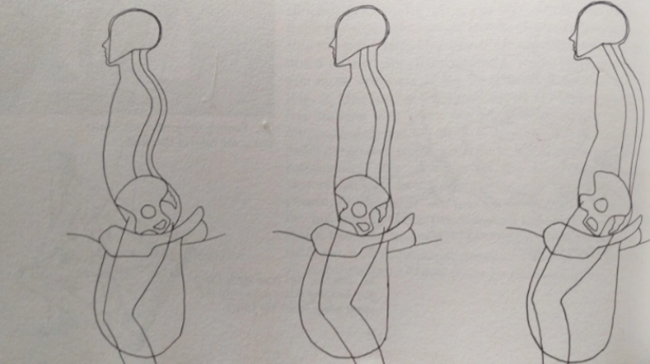 | |
Figure 1. L to R, pelvis in anterior tilt, neutral and posterior tilt, from Centered Riding, S. Swift | |
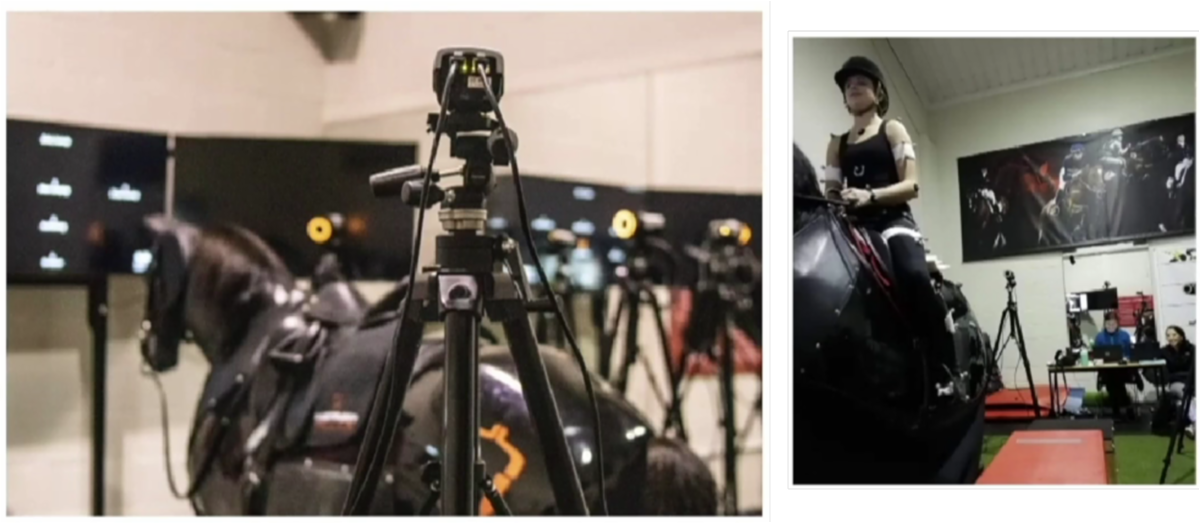
Dr Wilkins undertook pelvic positioning assessments in competitive female dressage riders, using a riding simulator and Qualisys motion capture, in a controlled laboratory setting (Figure 2). The use of the simulator allowed for the collection of rider data while eliminating environmental and equine variables. All test riders were subjected to identical “horse” movements or oscillations so the calibre of horse didn’t influence results. | |
Figure 2: Riding simulator and cameras, C. Wilkins, SRT presentation | |
|
In the literature, as well as in the coaching setting, riders are usually classed by competition level and pelvic posture is assessed when horse and rider are static (stationary). In her initial research, Dr Wilkins wanted to see if there was a relationship between static and dynamic (in-motion) pelvic posture and whether competition level should be considered (Wilkins et al., 2020). She determined pelvic tilt in 35 competitive dressage riders, taking measurements for mean, minimum and maximum pelvic tilt along with range of motion (ROM). Results showed that pelvic tilt (anterior, posterior or neutral) is not influenced by competition level; therefore, the theory that to achieve harmony you need to have a neutral pelvis was not proved here. Also, there was no relationship between the static pelvic posture and the mean dynamic pelvic tilt. As Dr Wilkins put it, “you can’t predict how the rider will move from how they sit”.
As harmony describes the similarity of movement between two bodies, in this case, the horse and the rider, Dr Wilkins next wanted to see if we could quantify the degree of synchronicity. For this she used the continuous relative phase (CRP) variable which is used extensively in other sports to analyse coordination between two moving bodies. Measuring harmony over the entire movement cycle of the stride, the CRP between rider pelvic pitch and the up-down displacement of the riding simulator was analysed in both medium and extended trot.
When looking at the CRP between different body parts and the simulator movements, none had as strong or consistent coupling between movement cycles as the pelvis. The trunk was significantly more variable than the pelvis, whereas the head and the foot were in turn significantly more variable in their coordination pattern, than the pelvis or trunk. The results suggest that the independent seat achieved through the pelvis is not influenced by the head and feet moving outside of the rhythm of the riding simulator. Interestingly, in simulated extended trot, the greater movement demands resulted in more consistent trunk movement coordination to the riding simulator.
| |
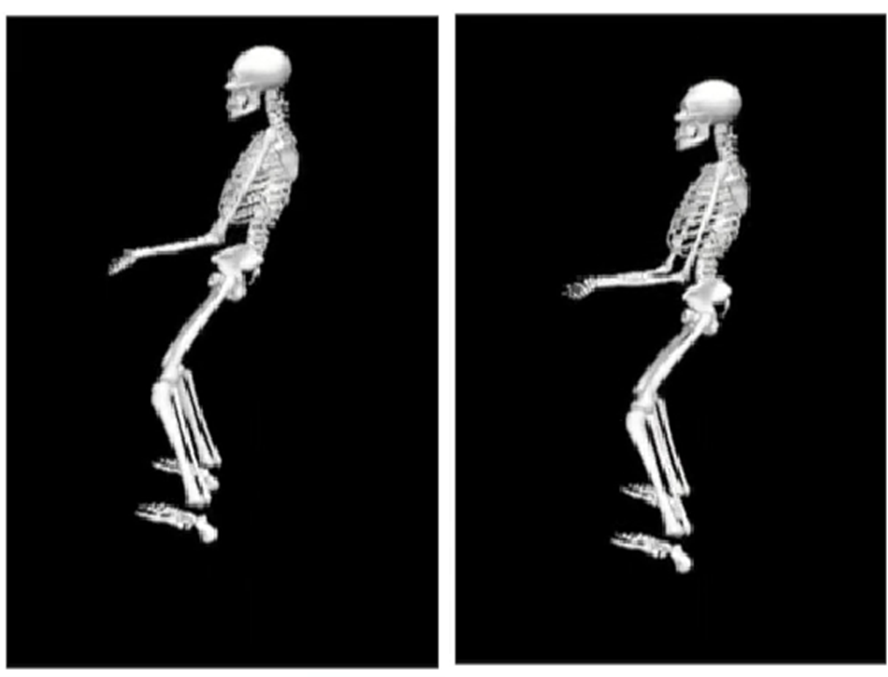
Can riders by grouped based on the pattern of pelvic movements they use or their strategy to achieve rider harmony? In her research, Dr Wilkins found three distinct movement patterns in riders. Strategy 1 was characterised by the trunk and pelvis rotating opposite to each other. The pelvis had a high ROM (Figure 3) and small trunk ROM. The riders were not likely to maintain this strategy from medium to extended trot. Strategy 2 was characterised by the trunk and pelvis rotating together where the trunk and pelvis had similar ROMs. However, in extended trot, the trunk ROM increased to make up for the larger movement. Strategy 3 was characterised by the trunk reaching maximal posterior rotation just after the pelvis. There was more pelvis than trunk ROM in medium trot but similar ROMs for both in extended trot. | |
Figure 3 - Strategy 1, peak pelvic posterior tilt (L) and peak pelvic anterior tilt (R). | |
It is likely that more movement strategies could be found with an extended group of test participants or with the use of live horses; however, the methods described here provide an informative starting point for analysing riders based on their movements rather than on more subjective measures which may be open to bias. From a coaching perspective, this method of quantifying harmony between horse and rider could have great potential to improve rider technique by providing more informed rider training cues. | |
|
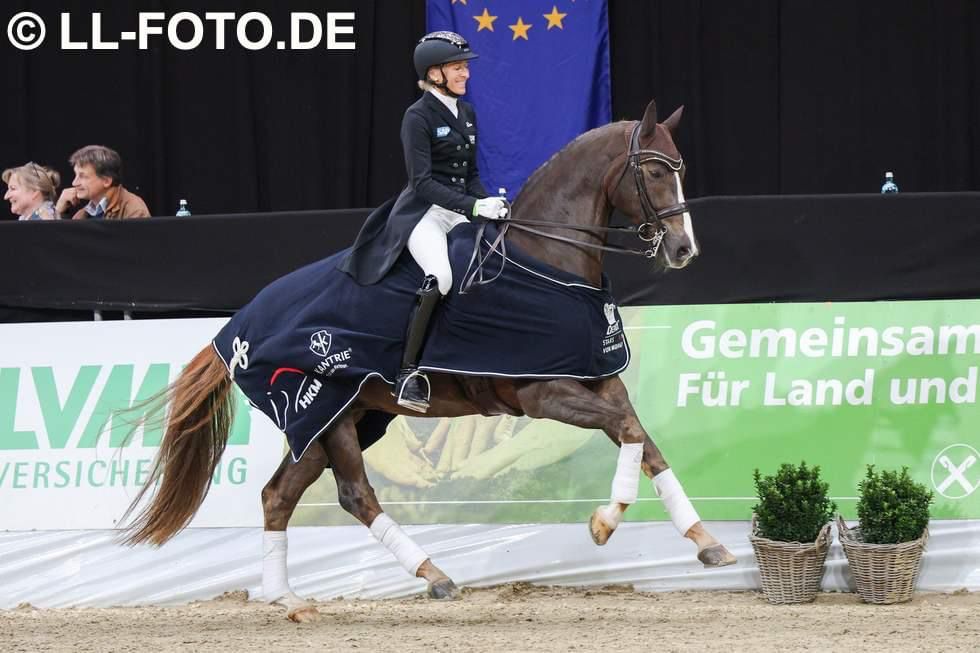
This month we've picked Ingrid Klimke riding Firlefranz, together the harmony and lightness shines through - even with a rug in the way!
Photo credit: LL-FOTO.DE
| | | | |