|
Eyes to See
~ Kelly Anderson, S.S.L., Ph.D
Associate Professor of Biblical Studies for the Major Seminary, Saint Charles Borromeo Seminary + Ambler, Pa.
The Samaritan in the Gospel is an outcast for two reasons: first, he is a leper, and by Torah prescriptions he must be separated from the community (Lev 13:45-46), and second, he is a Samaritan, called an allogenes by Jesus, a word meaning something like “other genes,” or “other roots,” usually translated as “foreigner.” But the Samaritan is allowed to be part of the Jewish lepers who cry out to Jesus, begging him for mercy. And Jesus doesn’t say yes or no to their request, but instead, perhaps testing them, commands them to go to the priests who would determine whether the leprosy was healed and they could return to the community (Lev 13-14). And here, the Samaritan would be in a quandary, for his priests are not in Jerusalem, but at Mt. Gerizim where the Samaritans worship.
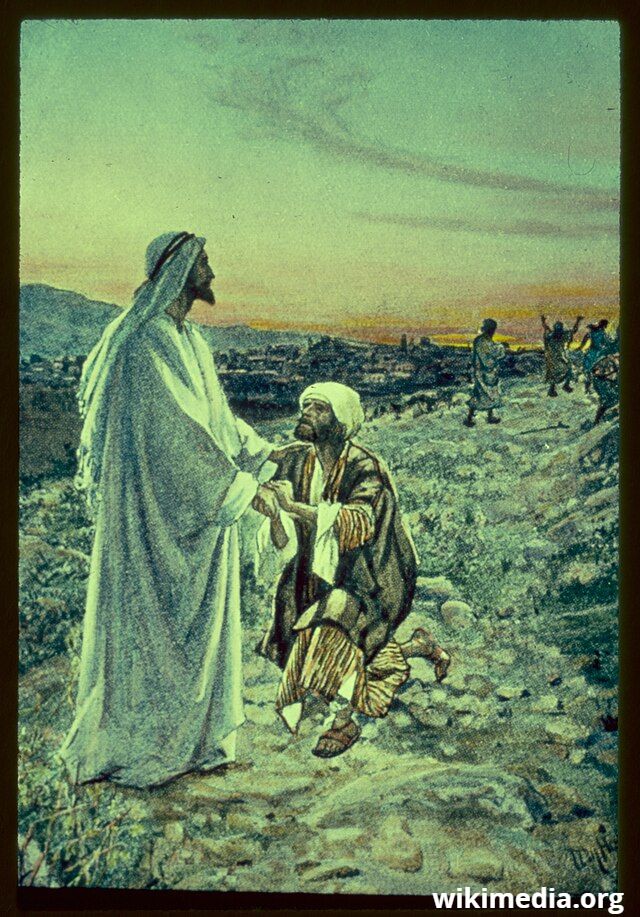
But as he was going, he sees (ἰδὼν) that he has been healed, returns to Jesus, glorifies God in a loud voice, falls at Jesus’ feet, and gives thanks. But what exactly does he see? His actions mirror those of the shepherds who see the angelic host, and then return, glorifying God (Luke 2:20) and the centurion under the cross who sees how Jesus breathes his last and glorifies God (23:47; cf. 18:43). Each of these recognize the power of God flowing from Jesus Christ, and they glorify God, for God is made manifest in Jesus. So, the Samaritan does not just see that he has been healed, but sees that his cleansing and healing come from Jesus Christ.
When the Samaritan recognizes that Jesus is greater than any priest, and he separates himself from both his Samaritan and leper community, and falls as Jesus’ feet and gives thanks (εὐχαριστῶν), that is, he worships Jesus as God. And Jesus gives him another, greater gift: because he has eyes to see, he is also now saved. The outcast has found his place: in the heart of Jesus who healed and saved him.
|