Clarity is the elimination of mental clutter. — James Clear | | |
Some of you may be wondering about the Falmouth Road Race. For the first time since 2015, I will not be participating this year. That doesn't mean that I won't run it again, it just means that this is not the year.
I am sure I will think of something else to challenge myself, but this month I am going to enjoy NOT running 7 miles in 70% humidity with 12,000 people. It will be another year that I won't be Beat by a Girl.
| | |
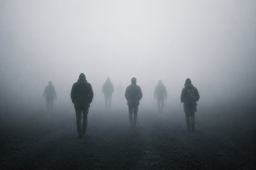
There are three kinds of fog. One settles over the road and makes it difficult to see where you are going. Another type settles inside your head and does pretty much the same thing. I have also discovered a third type.
Atmospheric fog can turn a familiar road into unfamiliar territory. Brain fog can make a familiar task seem strangely difficult. In either case, the natural reaction is often to try harder—to turn on more lights, concentrate more intensely and push forward. Sometimes that helps. Sometimes it only creates more glare.
The other kind of fog that affects businesses, organizations and the people who lead them.
| |
Leadership fog.
Leadership fog appears when the direction is unclear, priorities compete with one another and people are unsure what matters most.
It can happen during a change in leadership, a financial setback, the loss of an important customer, a merger, a reorganization or a difficult period in the marketplace. It can also develop gradually, without one dramatic event.
One new priority is added. Then another. A decision is delayed. Responsibilities become less clear. Meetings multiply. Communication becomes inconsistent.
Eventually, everyone is busy, but no one is completely certain where the organization is going.
The road is still there. People just cannot see it clearly.
| |
More Activity Is Not Always More Clarity
When leaders sense uncertainty, they often respond by increasing activity.
They schedule more meetings, request more reports, distribute more information and create more detailed plans.
It feels productive. But activity and clarity are not the same thing.
Sometimes more information is the leadership equivalent of turning on the high beams in thick fog. The light reflects back and makes it even harder to see.
Employees usually do not need to know everything a leader knows. They do need to understand:
- What has changed?
- What has not changed?
- What matters most right now?
- What am I expected to do?
- When will I hear more?
A leader who can answer those questions may not eliminate the fog, but can make it much easier for people to continue moving safely through it.
| |
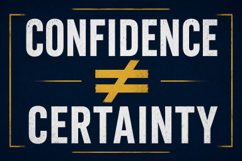
Confidence Is Not the Same as Certainty
One of the greatest pressures leaders face is the expectation that they should always know the answer.
- Employees want reassurance.
- Boards want plans.
- Customers want confidence.
- Everyone wants to believe the person in charge can see farther down the road than they can.
Sometimes the leader can. Sometimes the leader cannot. Good leadership does not require pretending to see what cannot yet be seen.
A leader can say:
- “We do not have every answer yet, but here is what we know.”
- “We cannot predict exactly what will happen, but here is our next step.”
- “We will continue to gather information and adjust as circumstances change.”
That is not weakness. It is honesty combined with direction.
False certainty may sound reassuring temporarily, but it becomes damaging when reality proves otherwise. People can usually tolerate uncertainty better than they can tolerate being misled.
The leader’s responsibility is not always to provide a perfect prediction. It is to provide enough clarity for people to take the next responsible step.
| |
Leaders Create Landmarks
When we drive a familiar road, we often rely on landmarks without consciously realizing it. A particular building tells us the next turn is coming. A traffic light lets us know we are getting close. A sign confirms we are still headed in the right direction.
Fog removes those landmarks.
Leadership fog does the same thing.
Employees may no longer know how success will be measured. They may be unclear about who has authority to make a decision. They may not understand whether the old priorities still apply.
When leaders fail to provide landmarks, people create their own. Rumors become landmarks. Assumptions become landmarks. The opinion of the loudest person in the room becomes a landmark.
Good leaders replace those unreliable signals with clear priorities, visible decisions and consistent communication. They tell people where the organization stands, what is most important and what progress looks like. They do not have to explain every mile of the journey. They do have to make sure people know where the next turn is.
| |
Slow Down Without Stopping
When driving through fog, slowing down is wise. Stopping in the middle of the road is not. That is an important leadership distinction.
Some leaders react to uncertainty by moving too quickly. They make major decisions simply because they feel pressure to do something. Others become paralyzed. They delay every decision until they have information that may never become available.
Neither response is particularly helpful. The better approach is controlled progress.
- What do we know?
- What do we still need to learn?
- What decision must be made now?
- What decision can wait?
- What would cause us to change direction?
These questions allow an organization to continue moving without pretending that every answer is already available.
Sometimes a team needs only three things from its leader:
- Here is what matters most.
- Here is who is responsible.
- Here is when we will review our progress.
That may not clear the entire road, but it can clear the next hundred feet.
| |
Recognizing Fog in Other People
Leadership fog does not always come from strategy or organizational change. Sometimes it comes from the people themselves.
A capable employee may suddenly seem distracted. Someone who normally makes decisions quickly may begin to hesitate. A dependable colleague may miss details or struggle to complete an assignment. The easiest reaction is judgment.
- Why are they moving so slowly?
- Why can’t they figure this out?
- Why isn’t the work finished?
A better question may be: What is preventing them from seeing clearly?
They may be overwhelmed by competing priorities. They may lack information. They may be worried about making the wrong decision. They may be carrying a personal concern no one else can see. Leaders cannot solve every problem for every person.
They can, however, avoid making the fog worse. Sometimes the most useful leadership question is not, “Why isn’t this done?” It is, “What do you need in order to move forward?” The answer may be a decision, a clearer priority, an additional resource or simply permission to focus on one thing instead of five.
| |
Observe. Act. Stay With It.
Leadership fog is a good example of why Observational Leadership matters.
First, Observe.
Notice the confusion. Listen for competing interpretations. Pay attention when capable people begin moving in different directions.
Then, Act.
Clarify the priority. Make the decision that has been delayed. Remove unnecessary work. Communicate what people need to know.
Finally, Stay With It.
One announcement rarely clears organizational fog. Leaders need to repeat the message, check understanding and remain visible until people regain their bearings.
The fog may not lift immediately. That does not mean the leadership response has failed. It means the leader must continue providing landmarks until the road becomes clearer.
There will always be moments when leaders cannot see the entire journey. The goal is not to pretend otherwise. The goal is to reduce the glare, establish the next priority and help people continue moving with confidence.
You do not have to see the entire road. But as a leader, you do have to help others see the next responsible step.
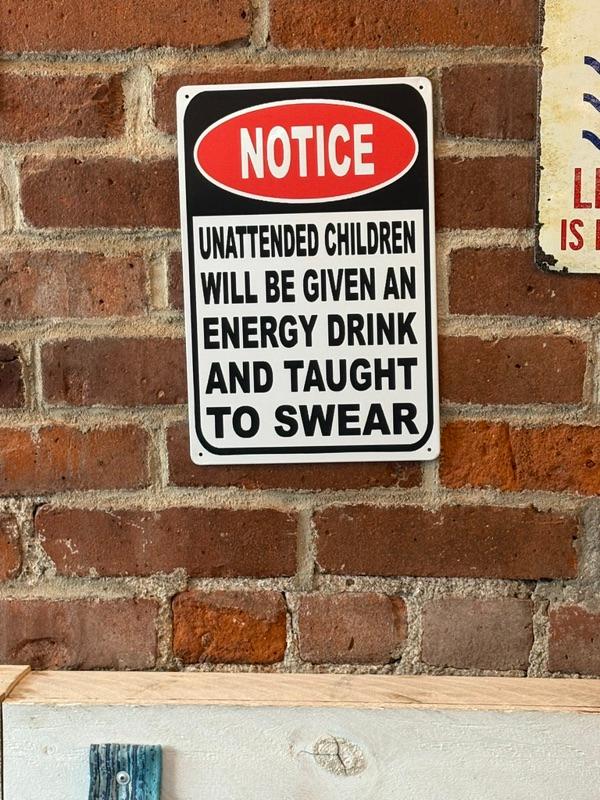
| | Surprise Photo at the End: In a Restaurant in Hull | | If you are reading this on a social media platform, click below and you'll automatically receive a 'different' story every week on Wednesday. | | |
The Roll Call of states and countries where readers reside: Arizona, California, Colorado, Connecticut, Delaware, Florida, Georgia, Hawaii, Illinois, Indiana, Iowa, Kansas, Kentucky, Louisiana, Maine, Massachusetts, Michigan, Mississippi, Missouri, Montana, New Hampshire, New Jersey, New Mexico, New York, North Carolina, North Dakota, Ohio, Pennsylvania, Puerto Rico, Rhode Island, South Carolina, South Dakota, Tennessee, Texas, Vermont, Virginia, Washington and Washington DC, Wisconsin plus Canada, Conch Republic, Australia and the United Kingdom.
| | |
Ed Doherty
774-479-8831
www.ambroselanden.com
ed-doherty@outlook.com
Forgive any typos please.
| | | | | |